


Planning an event takes time, effort, and budget, but none of that matters if people can’t find it online.
That’s where SEO for events comes in. It helps your event appear in search results when people are looking for things to attend, whether it’s for ones like “festivals near me” or “marketing conferences 2026.”
This SEO guide for event marketing will show you how to optimize your event pages, target the right keywords, and increase your visibility in search engines so you can attract more attendees and drive ticket sales organically.
What is Event SEO?
Event SEO is the practice of optimizing your event website and digital content to rank higher in search engine results pages (SERPs).
Unlike traditional page optimization, SEO for events is more time-sensitive.
This is because you have a strict deadline to capture traffic and get better rankings before the event actually starts.
An SEO event strategy involves targeting specific keywords, structuring your site so Google can read it easily, and building authority through external links (also known as inbound links).
When you follow a successful event SEO strategy, you can connect directly with people who are looking for the experience you offer.
Why SEO Matters for Event Planners
SEO is a critical component of an effective and profitable event marketing strategy.
While social media and paid advertising are great for building quick and targeted awareness, they require constant spending. If your budget dries up, so do your traffic and clicks.
Organic search provides a sustainable, cost-effective way to attract event attendees.
Here is why you need a strong event SEO strategy:
- High-intent traffic: People searching Google for events are usually ready to take action and buy tickets.
- Reduced costs: Organic traffic lowers your overall customer acquisition cost, freeing up your budget for other essential activities.
- Brand credibility: Ranking highly on Google signals trust and authority to potential attendees.
- Long-term value: If you run recurring annual events, a strong SEO foundation means you will rank even faster next year.
How People Search for Events
To capture the right audience, you must understand exactly how they search.
This is where many event marketers get it wrong. Ranking isn’t just about visibility; it’s about matching what users are looking for at each stage of their journey.
As Sophie Roberts from Koozai, a digital agency based in Southampton, explains:
One of the most effective approaches to event SEO is focusing on user intent rather than just visibility. When promoting events such as UK Sommelier of the Year, we found that success came from addressing the full range of queries potential attendees or entrants might have. Effective event SEO is ultimately about creating a central, authoritative resource that meets user needs at every stage. When that is achieved, both rankings and conversions tend to follow.
- Sophie Roberts, Managing Director at Koozai
In practice, this means understanding the different types of searches people make.
Search intent falls into three main categories.
Informational
In this early stage, users are looking for broad ideas.
They might search for "things to do in Chicago this weekend" or "best tech conferences SF."
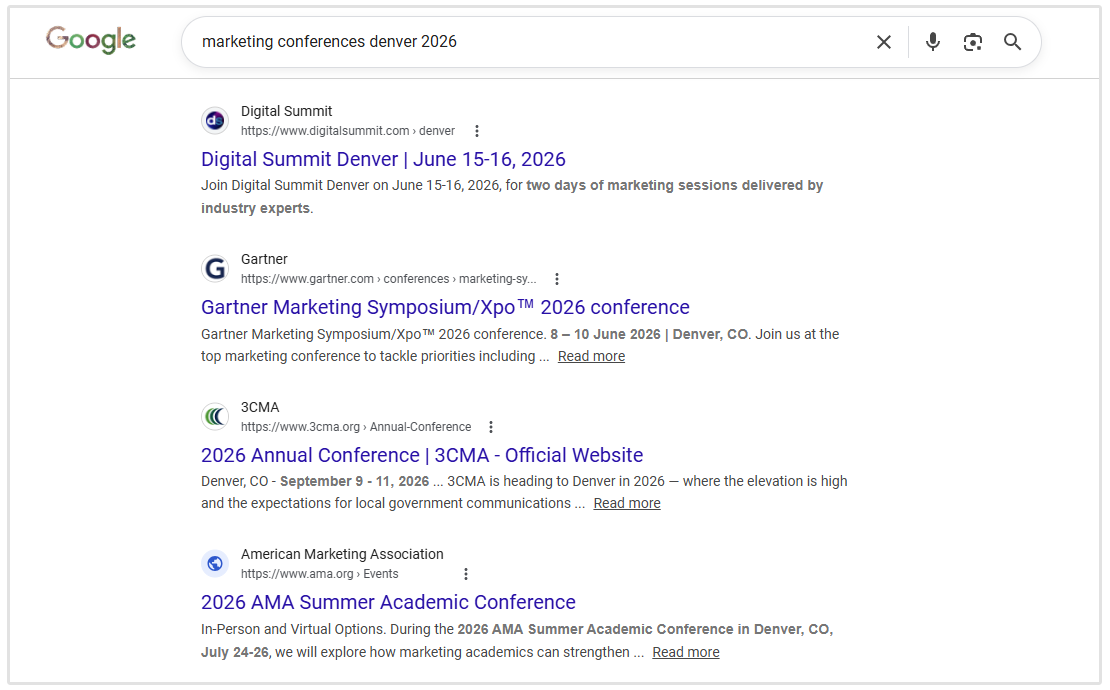
They do not have a specific event in mind yet. You can capture this traffic by creating helpful guide articles or listicles on your blog.
Related Reading: What are Informational Keywords and How to Use Them
Navigational
Navigational searchers already know your event exists.
They type specific queries like "Coachella 2026 dates" or "TechCrunch Disrupt location."
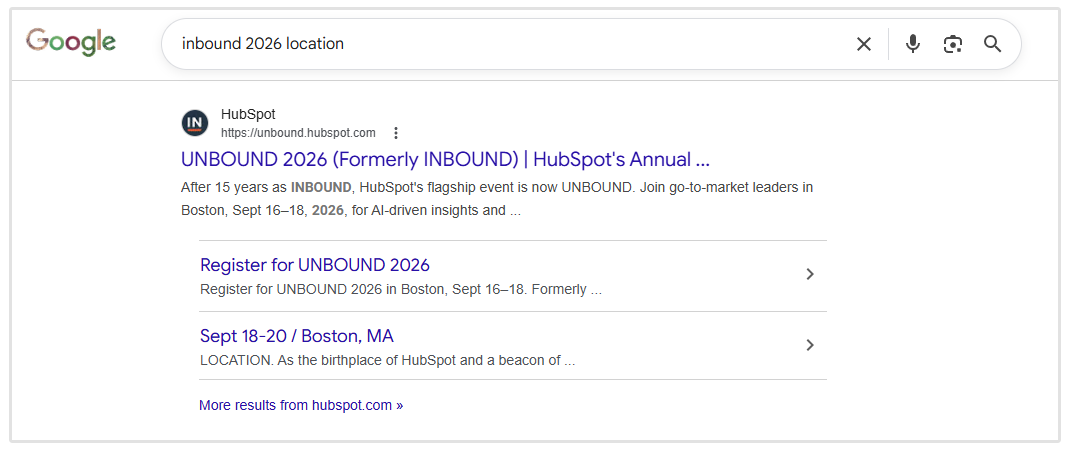
Your goal here is to ensure your official website ranks above third-party news sites so you control the messaging and the ticketing process.
Transactional
People using transactional keywords in Google have their credit cards ready.
They search for "buy Token2049 tickets" or "register for HubSpot Inbound summit."
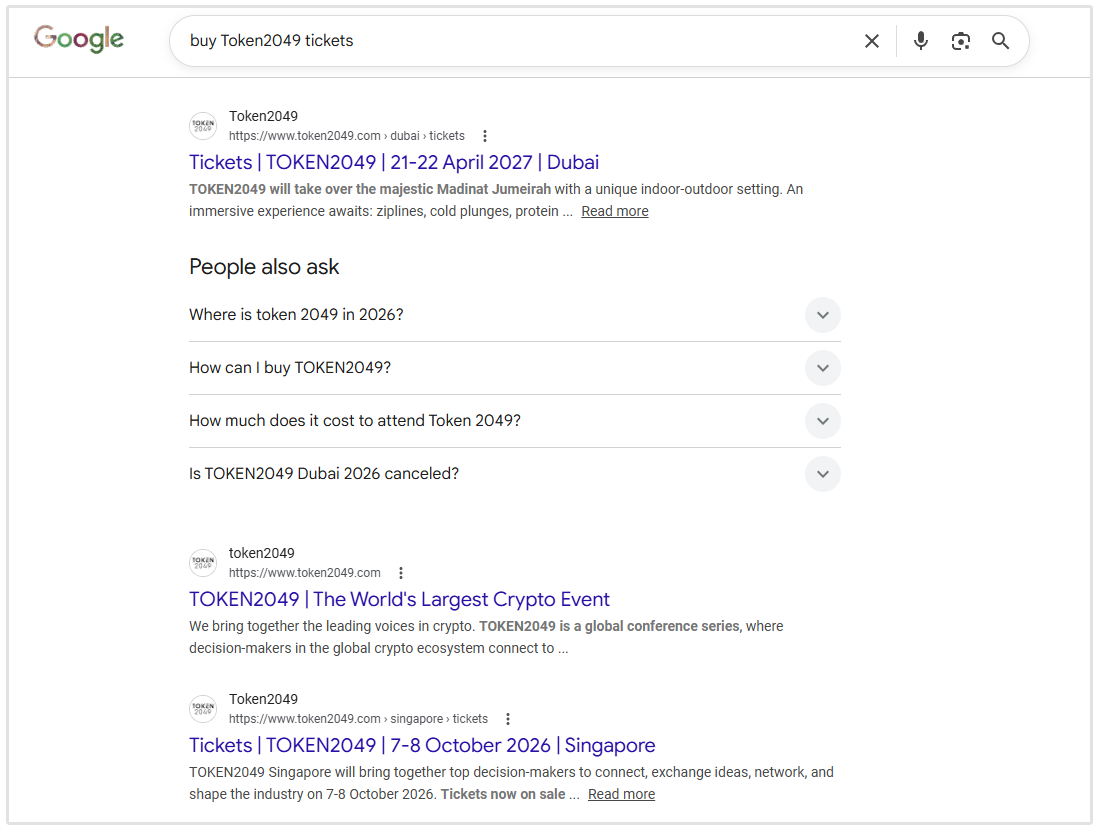
Your transactional pages must be perfectly optimized with clear calls-to-action so nothing stands in the way of a completed sale.
Did you know there are 9 types of keywords in SEO? Check out our blog post on the different types of SEO keywords to learn how you can use them in your event SEO marketing.
How to do SEO for Events
Executing a successful event SEO campaign requires a mix of technical updates, content creation, and off-site promotion.
Let’s take a closer look at how you can optimize your event SEO to attract and bring in more event attendees.
1. Keyword Research for Events
Every great SEO strategy begins with finding the right keywords.
You need to know exactly what phrases your target audience types into Google.
Finding High-Intent Event Keywords
Use tools like SEOptimer’s Keyword Research Tool to identify terms with solid search volume and clear intent.
Important: Look for location-based phrases.
A search for "food festivals in Austin" shows much higher intent than a broad search for "food festivals."
Another great tip is to look at similar event websites to see what keywords they currently target.
You can easily do this with the Search by Domain option in our Keyword Research Tool.
Simply paste the website you want to investigate and our tool will show you all of the keywords they are using and ranking for.
For instance, let’s imagine that you want to promote your cybersecurity marketing conference that you’re hosting in Austin.
I’d take similar conferences like Cyber Marketing Con and add their domains to our keyword research tool.
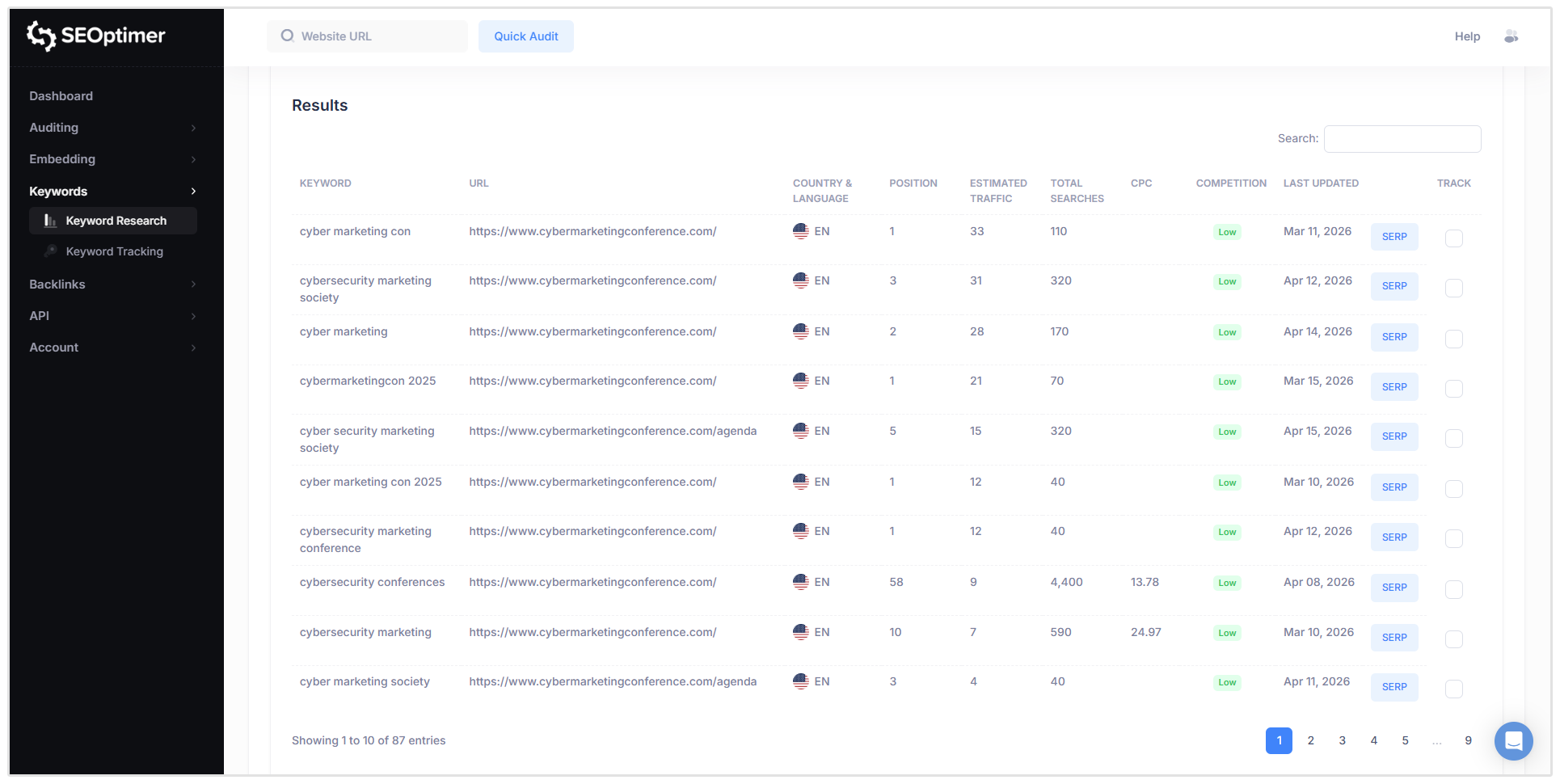
By doing so, you can get a good overview of the keywords competing events are using along with keyword data such as:
- Total Searches
- Competition
- CPC
Primary vs Secondary Keywords
Your primary keyword is the main focus of your page.
Let's take the example of a SaaS marketing conference in Londong.
The event promotors might create a dedicated registration page using the primary keyword "SaaS marketing conference London."
Secondary keywords are related terms that provide context.
In our example of the SaaS marketing conference, the secondary keywords might be as "B2B networking events," "marketing summit tickets," or "London tech events."
Sprinkle these secondary terms naturally throughout your content and main pages to capture a wider variety of search queries.
2. On-Page SEO for Events
On-page SEO involves optimizing the actual content and HTML source code of your website.
This tells search engines exactly what your page is about.
Optimizing Titles & Meta Descriptions
Your title tag and meta description are your first impression on the search results page. (see the below screenshot of the search results containing the title and meta description for Service World Expo)
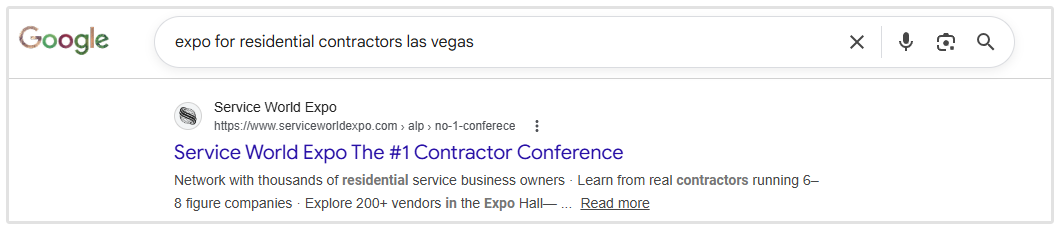
It's important that you keep your title tag under 60 characters and place your primary keyword near the front.
Your meta description should be under 155 characters and include a compelling reason to click.
Here’s another example of the title and meta description for a food and wine festival in Austin:
- Title: Austin Food & Wine Festival | Austin, TX | November 7-9, 2025
- Description: Austin Food & Wine Festival will be presented at Auditorium Shores, in Austin, TX on November 7-9, 2025. Stay connected for upcoming announcements, artist news, giveaways, and more!
Writing SEO-Friendly Event Descriptions
Avoid simply posting a time, date, and location within the title and meta description.
Event marketers should write detailed, engaging descriptions of what attendees will experience.
Mention key speakers, musical acts, or special activities. This provides search engines with more text to crawl and helps visitors understand the true value of your event.
Using Headings & Content Structure
Break your content up using clear H2 and H3 headings.
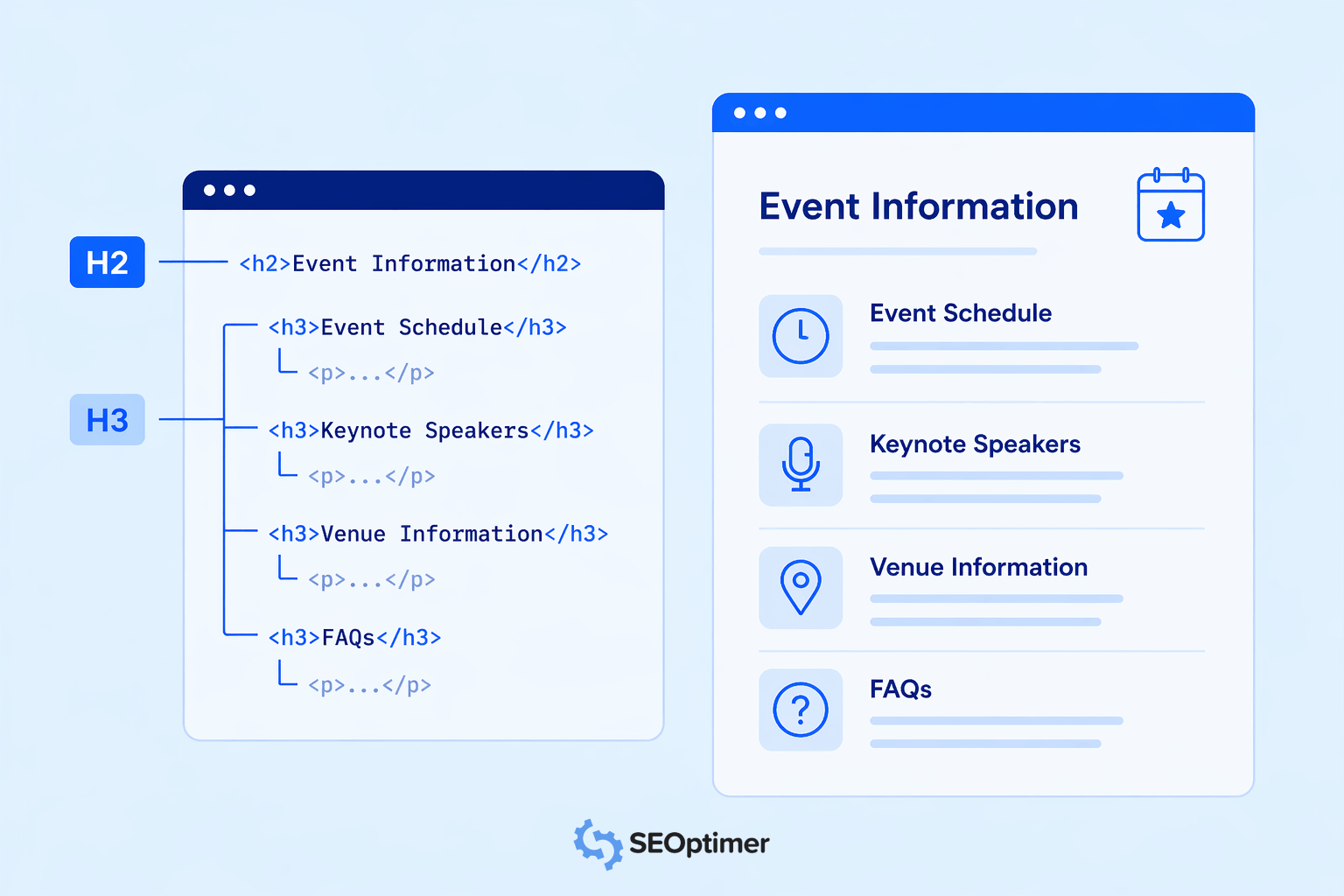
This makes your page highly readable for visitors and helps Google understand your content hierarchy.
Use headings for sections like "Event Schedule," "Keynote Speakers," and "Venue Information."
Image Optimization
As much as high-quality images and videos help sell your event, they can also hurt your event SEO if they’re not properly optimized.
Large media files are one of the biggest reasons event pages load slowly and slow pages don’t rank well or convert visitors into attendees. Since most users are browsing events on mobile, speed matters even more.
Compress your photos before uploading them to keep your load speeds fast.
Always add descriptive alt text to your images.
If you feature a photo of a main stage, your alt text should read "Main stage crowd at the 2025 Chicago Jazz Festival," rather than a generic file name like "IMG_1234.jpg".
Knowing what to optimize is one thing, but understanding what’s actually holding your event pages back is where most people struggle.
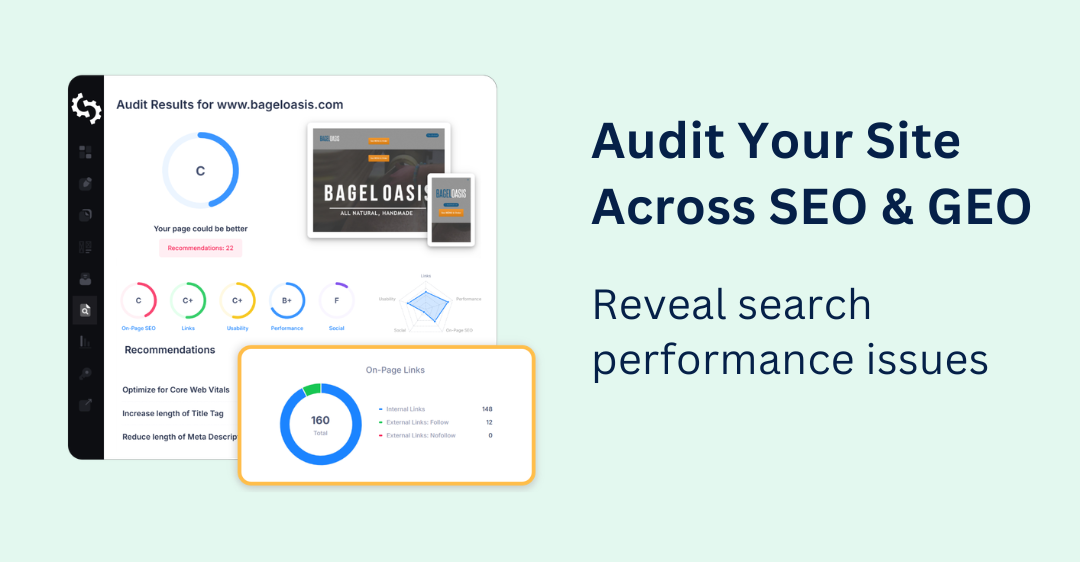
Each SEOptimer site audit includes a detailed on-page SEO summary, showing exactly which elements are optimized and which need improvement. This includes title tags, headings, keyword consistency, and internal linking.
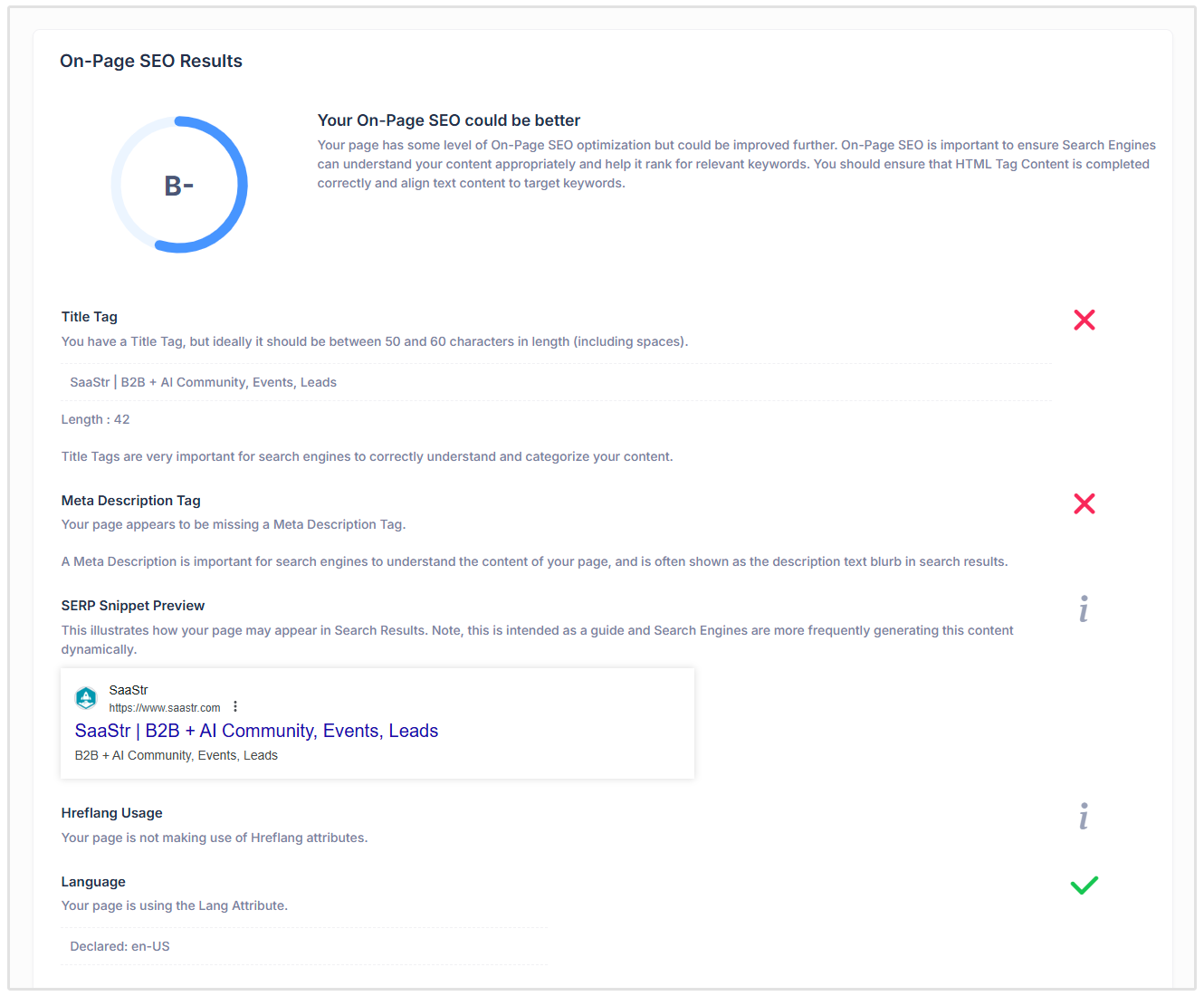
Our site audits also includes GEO (Generative Engine Optimization) checks, giving you insight into how well your content is optimized for AI-driven search. This includes factors like LLM readability, rendered content, and structured data signals.
Run a free audit of your site today!
3. Add Events Schema Markup
If you’re serious about SEO for events, adding event schema markup is one of the most important things you can do.
Event schema is structured data (a piece of code) that tells search engines exactly what your event is about.
This includes the name, date, location, ticket details, and more.
Brian Vastola from MRB Marketing recommends that adding event schema is one of the most impactful things marketers can do to promote their events.
Implementing Event Schema markup on your event page helps search engines understand the details of your event. This increases the chances of it appearing in rich results, like Google's event listings, which can significantly boost visibility.
- Brian Vastola, CEO at MRB Marketing
When implemented correctly, this allows Google to display your event in the “Event Pack” which is a rich results section that appears directly in search results for queries like “events near me” or “concerts this weekend.”
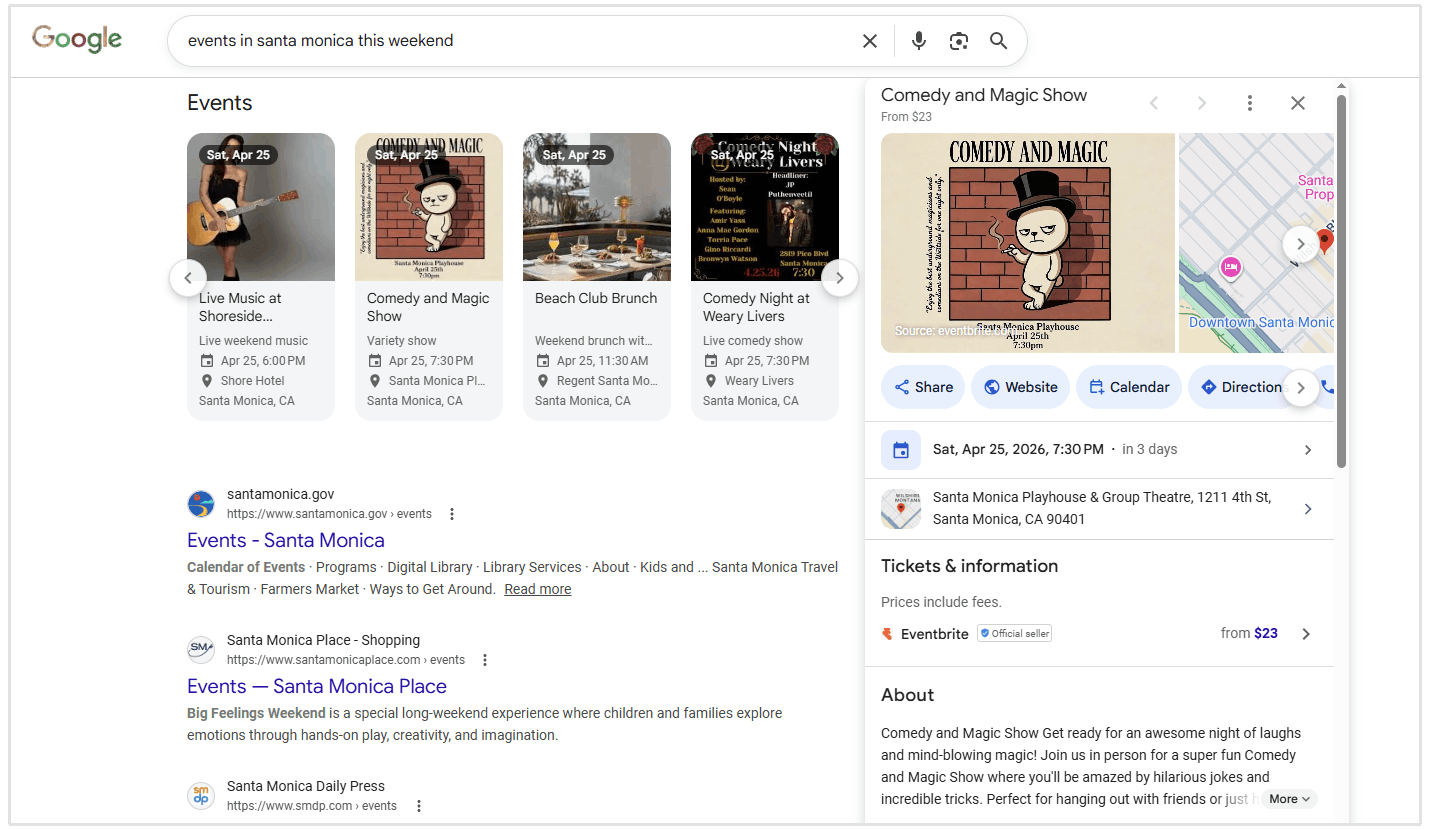
There are several ways to implement event schema, depending on how your website is built. The right approach depends on whether you’re using an event platform, a CMS, or a fully custom site.
Using Event Platforms (Automatic Implementation)
If you’re hosting your event on platforms like Eventbrite or Meetup, event schema is often added automatically in the background.
This is the easiest option, especially for non-technical users.
However, it’s still important to verify that the schema is correctly implemented and includes all key event details. Incomplete or incorrect schema can prevent your event from appearing in rich results.
Adding JSON-LD Schema Manually
For custom websites, the most reliable method is adding schema using JSON-LD, which is Google’s preferred format.
This involves inserting a small block of structured data into your page’s HTML. The code defines your event details in a format search engines can easily understand, including the event name, date, and location.
Using Schema Generators
If you’re not comfortable working with code, schema generators like Instant Schema provide a simple alternative.
These tools allow you to enter your event details into a form and generate the required JSON-LD markup automatically. You can then copy and paste the code into your website without needing any technical experience.
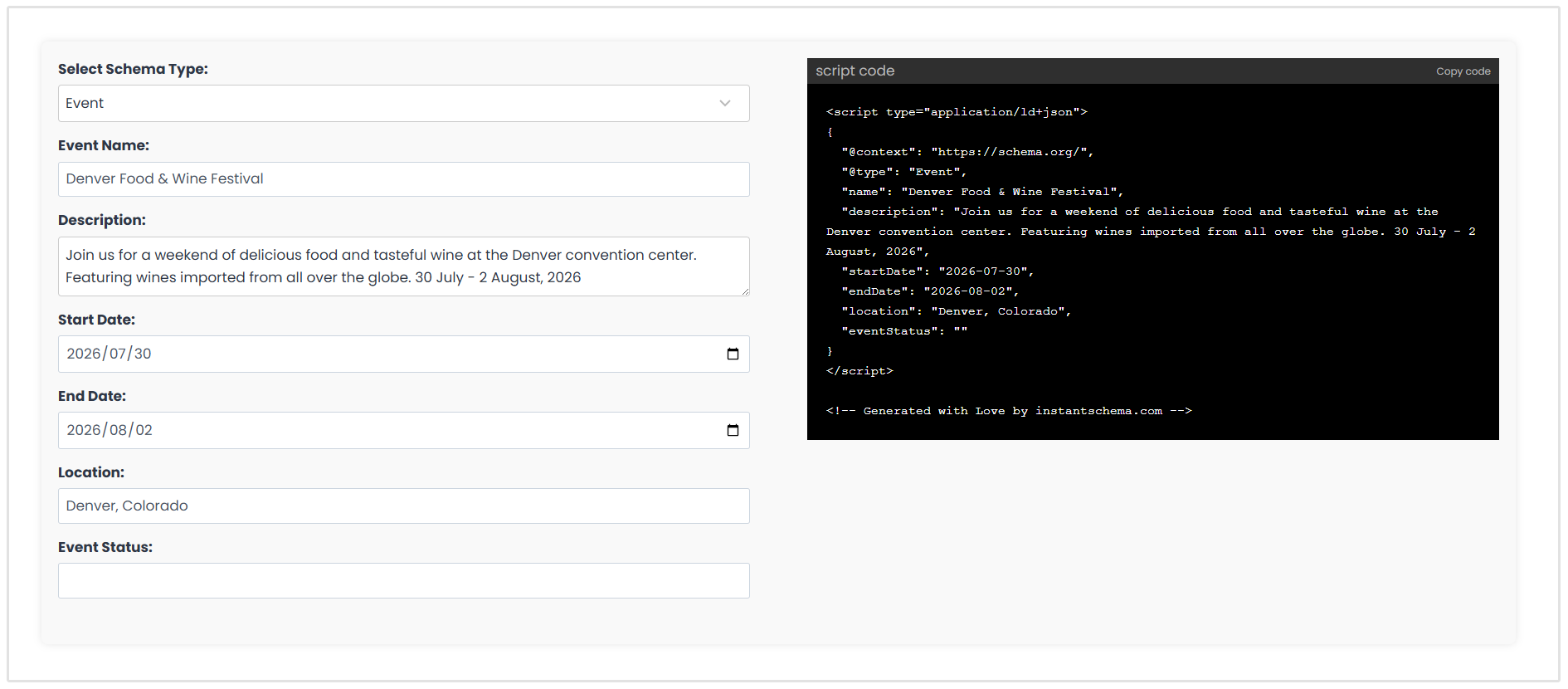
If your site is built on WordPress, this process is even easier.
Plugins like Rank Math or Yoast SEO include built-in schema features that let you add structured data directly from your dashboard.
With these plugins, you can:
- Select “Event” as a schema type
- Fill in your event details (date, location, description)
- Automatically generate and apply the schema to your page
This removes the need to manually edit code and ensures your event schema is implemented correctly.
Testing and Validating Your Schema
Once your schema is live, testing is essential.
Use tools like Google’s Rich Results Test or even our free Schema Tester to confirm that your event data is valid and eligible for enhanced search features.
This step ensures there are no errors and that search engines can correctly interpret your event information.
4. Technical SEO for Events
Technical SEO is what ensures your event pages can actually be found, crawled, and ranked by search engines.
You can have perfectly optimized content, but if your site is slow, broken, or difficult to access, your SEO for events efforts will fall on its face.
Mobile Optimization is Essential
Most users searching for events are doing so on their phones, like when they’re looking for something to do this weekend or buying tickets on the go.
If your event page isn’t fully responsive, difficult to navigate, or requires too much zooming and scrolling, users will leave and Google will notice.
Your event pages should:
- Load cleanly on all screen sizes
- Have easy-to-tap buttons (especially for ticket purchases)
- Display key information (date, location, CTA) clearly above the fold
Ensure Your Website Loads Quickly
Event pages often rely heavily on images, videos, and third-party scripts (like ticketing tools), which can slow down your site if not optimized.
If your page takes more than a few seconds to load, users are likely to bounce.
To improve speed:
- Compress images and videos
- Limit unnecessary scripts and plugins
- Use caching and a reliable hosting provider
Faster pages rank better and convert more visitors into attendees.
Check if Event Pages are Crawlable and Indexable
Search engines need to be able to access and understand your event pages. If your pages aren’t indexed, they simply won’t appear in search results.
Common issues to check:
- Pages blocked by robots.txt
- Missing or incorrect canonical tags
- Event pages not included in your sitemap
You should also ensure each event has its own dedicated, indexable page rather than being buried in JavaScript-heavy listings.
Technical SEO can quickly become complex, especially when you’re managing multiple event pages or recurring events.
The good news is that each SEOptimer audit includes a detailed technical SEO breakdown, helping you identify issues that may be limiting your visibility.
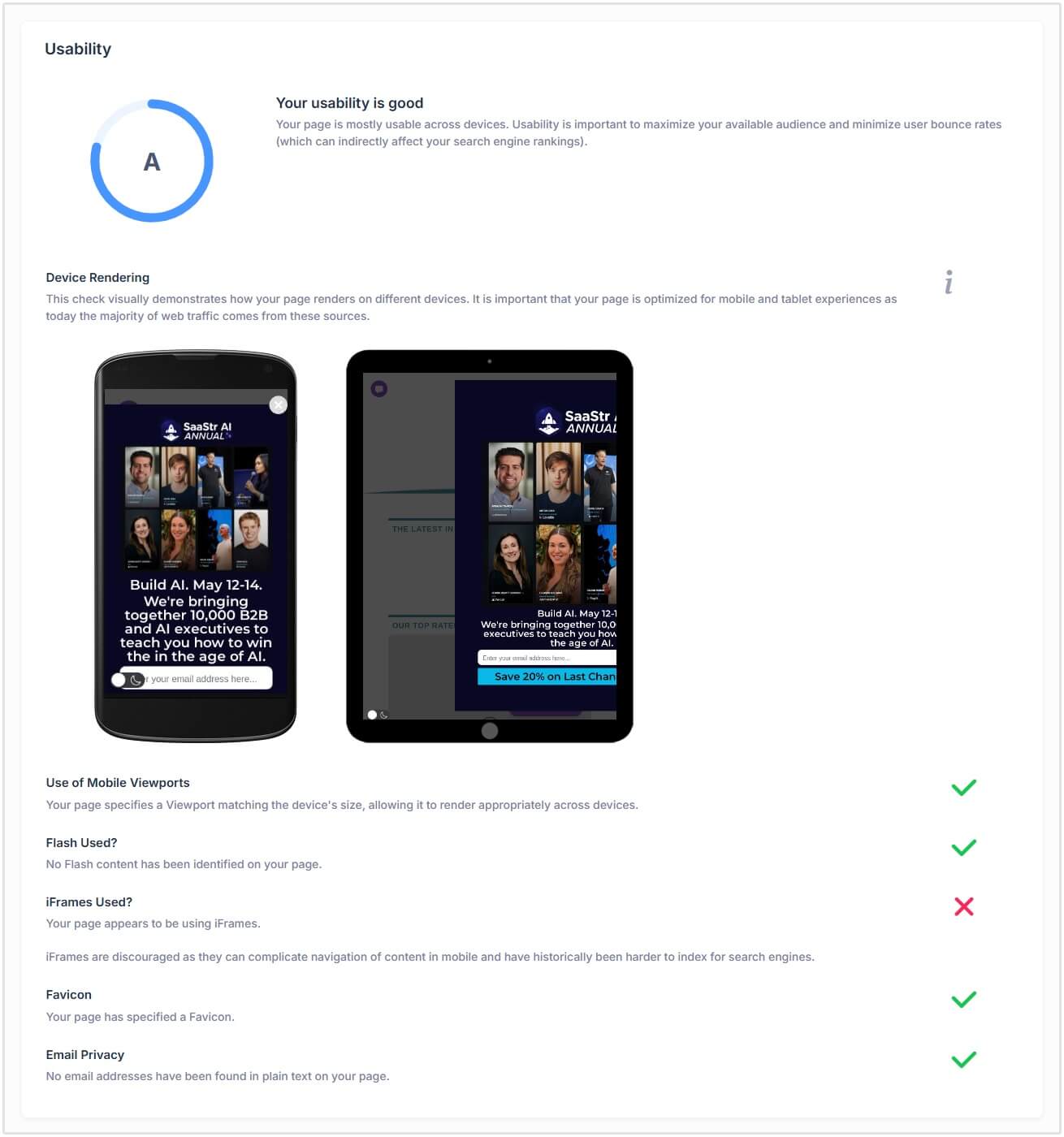
This includes checks for:
- Page speed and performance
- Mobile usability
- Crawlability and indexing issues
- Core technical errors affecting search engines
Instead of manually digging through your site, you get a clear, actionable overview of what needs to be fixed to improve your event SEO performance.
5. Build Backlinks to Your Event Website
When you get a backlink from a reputable site, Google views your site as more authoritative.
Reach out to your event sponsors, guest speakers, and local business partners.
Ask them to mention your event on their blogs and link directly to your registration page.
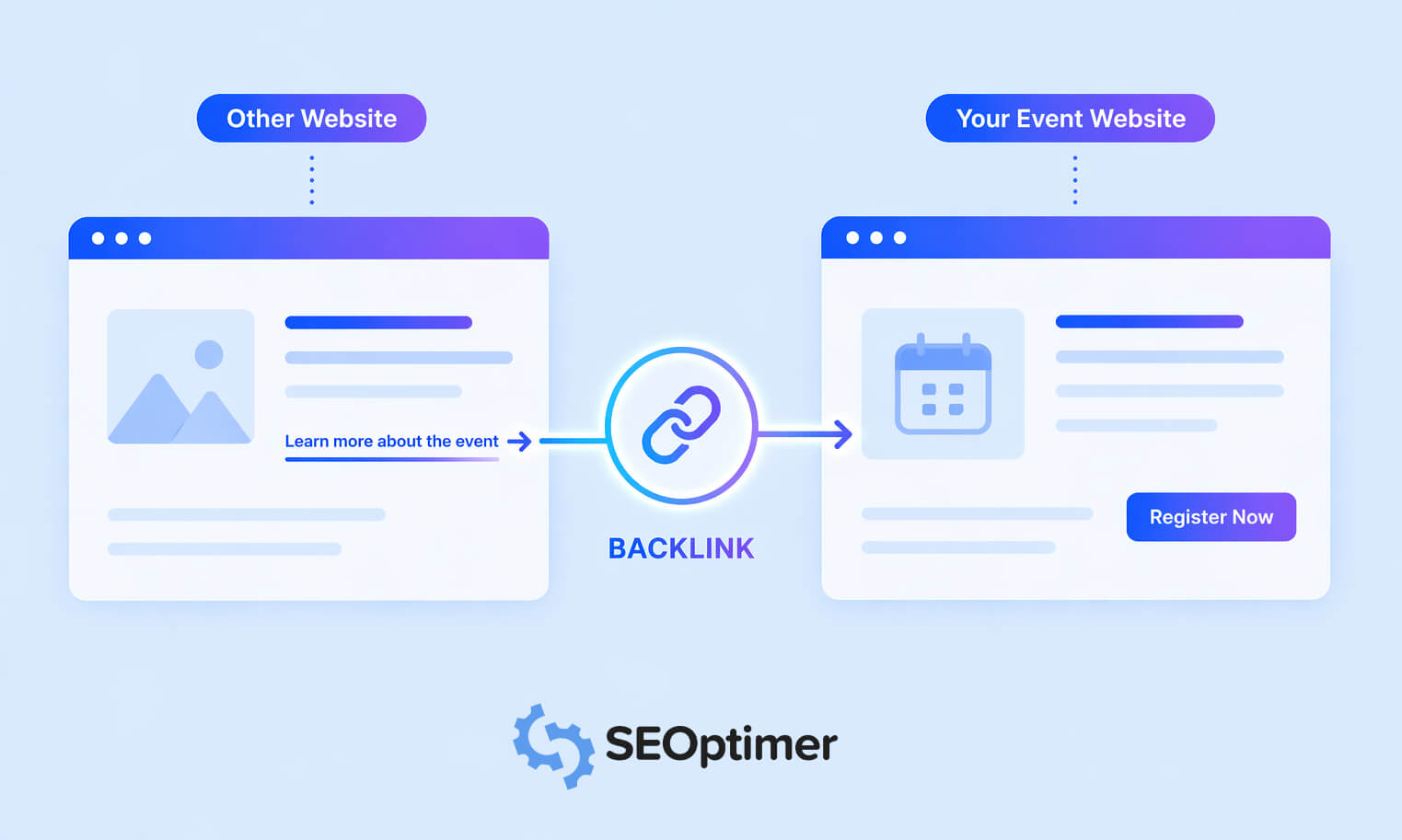
You can also offer exclusive interviews or behind-the-scenes content to industry publications in exchange for a link back to your site.
While these are some of the easiest ways to get started, effective link building goes far beyond simple outreach. If you want to scale your event SEO and build higher-quality backlinks consistently, it requires a more strategic approach.
Check out these in-depth guides on link building to learn how to build authoritative links to your event website:
- How to Build Backlinks for a New Website
- Backlink Exchange: How to Build Links without Getting Penalized
- 8 Most Important Metrics for Link Building Success
6. Local SEO for Events
If you are hosting an in-person gathering, local SEO is your best friend.
You want to capture people searching for activities in your specific city or town.
Use Location-Based Keywords
Ensure your city, state, and neighborhood are featured prominently on your website.
For instance, if you're marketing a startup conference in Seattle, you can use phrases like "downtown Seattle tech meetup" rather than just a broad keyword like "tech meetup."
Event Listings & Directories
Next, submit your event to local tourism boards, community calendars, and industry-specific directories.
Sites like Eventbrite, local news outlets, and regional chambers of commerce often have free event listings. These platforms not only put your event in front of an active local audience, but also provide valuable backlinks that support your event SEO.
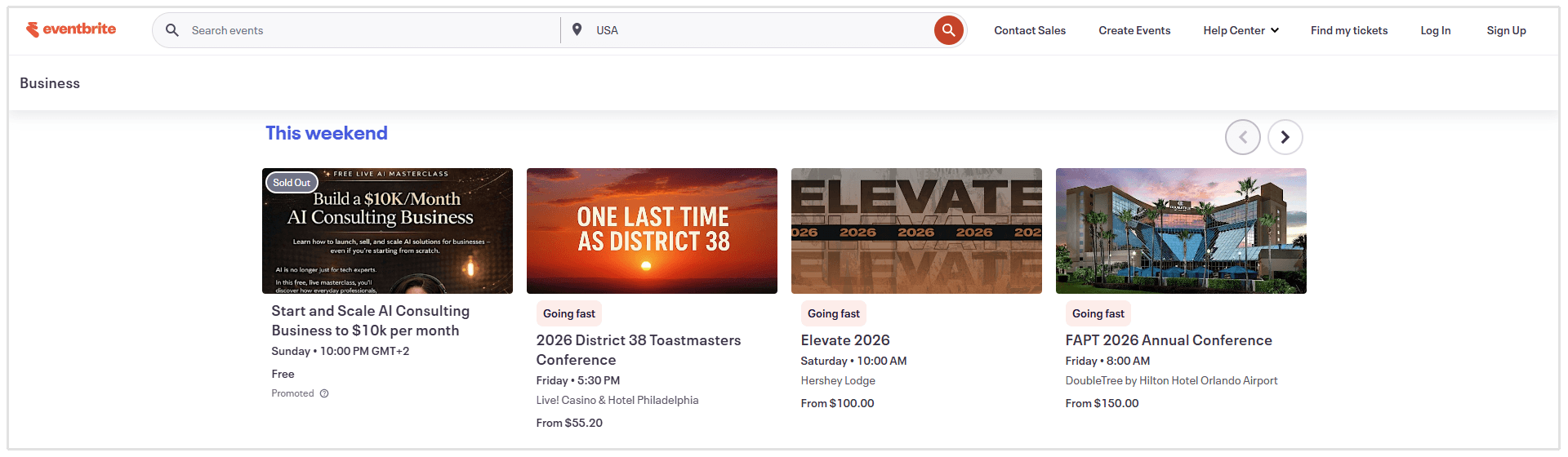
Leveraging well-known platforms can also boost trust and visibility, as Matt Anson explains:
I like to use platforms such as Eventbrite to promote and manage events for my clients. Not only does it rank well in search engines, but it’s also a trusted and recognisable brand. By leveraging that trust, you can give your own event an uplift.
Add your event on Eventbrite, embed the ticket widget on your website, and promote both locations through social media, email campaigns, and client updates.
- Matt Anson, Chief Marketing Officer at Real Coder
7. Content Marketing for Event SEO
A good content strategy gives you multiple opportunities to rank for different search terms.
Pre-Event Content
Generate excitement before tickets go on sale.
Begin by writing blog posts announcing your speaker lineup, sharing travel guides for out-of-town guests, or detailing what to pack.
Emmanuel Tamrat, the Founder of Blindspot Agency, says that event marketers need to build supporting content around the event.
The easiest option is to make city guides based on affinity interests since most attendees for local events want to grab coffee, brunch, or drinks before or after that specific event.
For larger events and budgets, this includes detailed interactive/embedded maps, more detailed guides, relevant, related blog posts, and relevant service pages which can all capture long-tail search demand.
Doing this can build your search presence early.
During Event Content
Keep the momentum going while the event is live.
Publish daily recap blogs, share photo galleries, and post short video clips.
This captures traffic from people searching for live updates or news about your gathering.
Post-Event Content
Do not abandon your website once the doors close.
Publish a comprehensive wrap-up article, share presentation slide decks, and post attendee testimonials.
This evergreen content continues to attract visitors and builds a massive SEO advantage for next year's event.
Matias Rodsevich is the CEO and Founder of PRLab and he has found that this is one of the most overlooked opportunities in SEO for events:
We run several summits throughout the year, and a well-structured post-event recap regularly outperforms the original event page in organic traffic over time. Press releases add reach and backlinks when timed well. But post-event content is where most organizers leave the biggest SEO opportunity untouched.
8. Promoting Your Event across Platforms
Search engines pay attention to signals from across the web. Promoting your event on various platforms helps drive direct traffic and supports your broader SEO goals.
Facebook Events
Create an official Facebook Event.
Fill out every detail meticulously and link back to your official website for ticket sales.
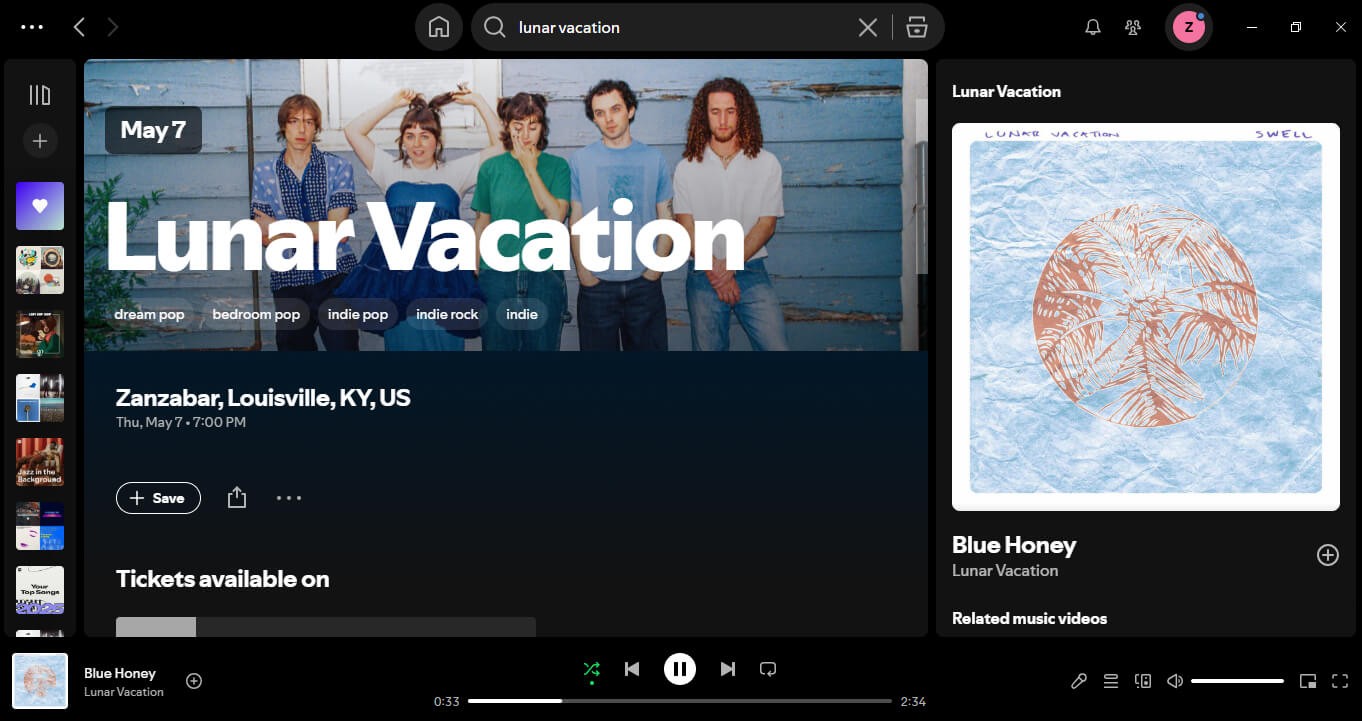
Add Gigs to Spotify
If you are marketing a live music gig, ensure the show appears on Spotify.
Spotify automatically pulls concert data from approved ticketing partners like Ticketmaster, Eventbrite, and Posh.
When fans listen to an artist, they will see your upcoming event right on the artist's profile.
PR and News Releases
Draft a compelling press release announcing your event.
Distribute it to local journalists, industry bloggers, and PR syndication networks.
A well-placed article on a major news site provides a massive boost to your domain authority.
9. Measuring Event SEO Success
You cannot improve what you do not measure.
It’s essential that you connect your website to Google Analytics 4 and Google Search Console to track your performance.
Monitor your organic search traffic and rankings to see how many people discover your site through Google.
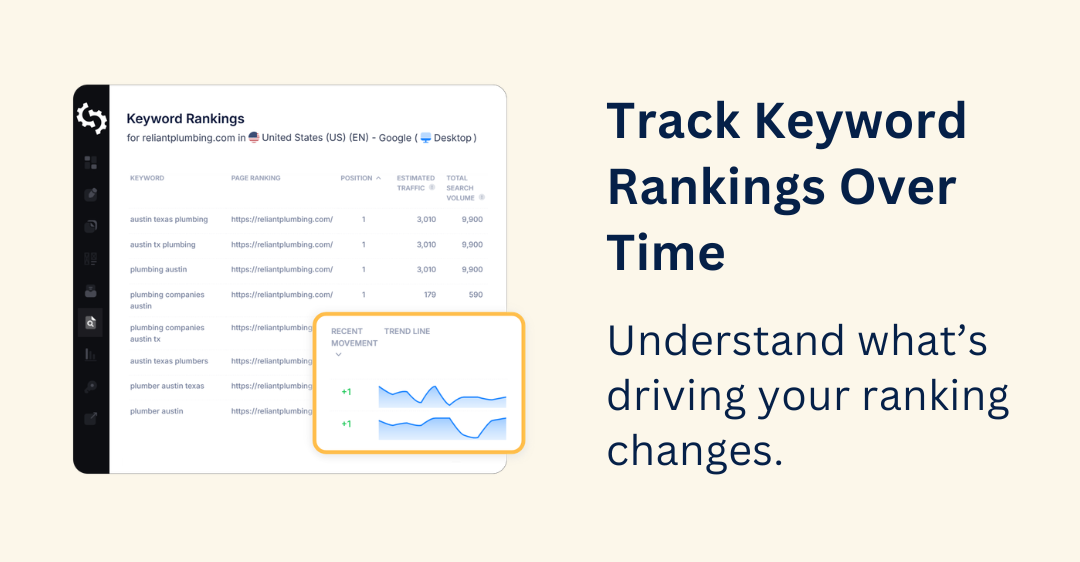
You can also check and monitor your keyword rankings with SEOptimer to ensure you are climbing the search results for your target phrases.
Most importantly, track your conversion rate. Knowing exactly how many organic visitors actually purchase a ticket allows you to calculate the true return on investment of your SEO efforts.
SEO Timeline for Events (When to Start)
Unfortunately, SEO takes time.
Search engines need weeks or even months to crawl your site, understand your content, and adjust your rankings.
Use the following timeline to ensure your website and pages are optimized for searchers before your event begins.
3–6 months before
- Conduct comprehensive keyword research.
- Publish your main event landing pages.
- Optimize your title tags, meta descriptions, and headers.
- Start publishing pre-event blog content (e.g., speaker announcements, city guides).
1–2 months before
- Focus heavily on building backlinks from sponsors and partners.
- Distribute press releases to local and industry media.
- Submit your gathering to local event directories.
- Implement Events Schema markup on your registration page.
During the event
- Publish daily recaps and photo galleries.
- Encourage attendees to tag your official website and social accounts.
- Update any schedule changes immediately on your site.
After the event
- Publish a detailed "key takeaways" blog post.
- Upload video recordings of keynote speeches.
- Transform your current event pages into a "waitlist" page for next year's gathering to preserve your hard-earned SEO authority.
Conclusion
Implementing SEO for events is not a one-time activity; it is a continuous process of optimizing, promoting, and measuring efforts.
By understanding search intent, choosing the right keywords, and building a technically sound website, you can put your event directly in front of an eager audience.
Start optimizing your website today, follow the timeline outlined above, and watch as organic search traffic helps you sell out your venue faster than ever before.