Schema.org Structured Data
Our Schema.org Structured Data tool scans your webpage to identify and validate Schema.org structured data.
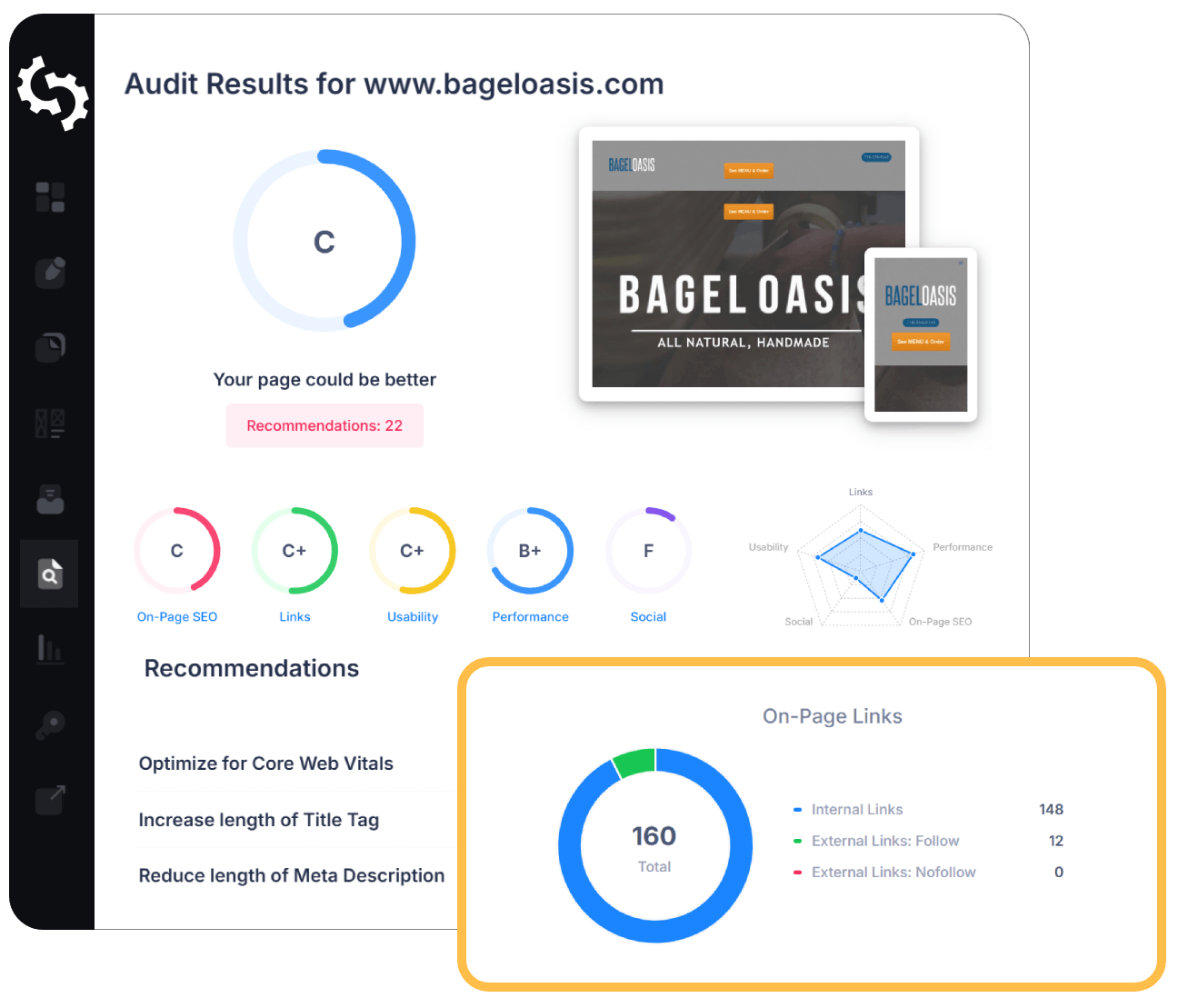
SEO Audit Any Site in Seconds
+ Comprehensive SEO / GEO Tools for Every Function
Run over 100 checks on your website across On-Page SEO, Usability, Performance, Social and Links. Now with GEO in every report. SEOptimer also offers keyword research, rank tracking, backlinks and a full site crawler.

About Schema.org Structured Data
What is Schema.org structured data?
Schema.org structured data is markup added to a page that states, in a machine-readable form, what the page means: that this is a recipe, that this number is a price, that this string is an author name and that person is the same person referenced elsewhere.
Ordinary HTML describes how content should look. Structured data describes what the content is, which is the part a machine cannot reliably infer from layout alone. A price and a weight look identical to a parser until something says otherwise.
It changes nothing visually. A schema tester is the only practical way to know whether it is there, since the whole point is that it is written for machines rather than readers.
Does structured data still matter in 2026?
It is the mechanism behind most rich results: star ratings, prices, event dates, FAQ expanders, recipe cards, breadcrumb trails. Those occupy far more space in a result than a plain listing and are correspondingly harder to scroll past.
It is not a ranking factor in itself, and it is worth being clear about that. What it changes is how a listing looks, and appearance drives clicks, which is a different mechanism to the same end.
Google has withdrawn support for some rich result types over the years, so the specific payoff shifts. The underlying value of stating what your content means does not.
How structured data relates to AI search
This is where it has become most valuable, and the shift is significant. A model reading unstructured prose has to infer that a number is a price rather than a weight, or that a date is a publication date rather than an event. Structured data removes that inference entirely.
Unambiguous facts are the ones most safely quoted. A system deciding whether to state something in an answer is more comfortable doing so when the page has declared it explicitly rather than implied it in a sentence.
Marking up authorship, organisation and publication dates also helps establish provenance, which matters increasingly to systems deciding which sources are trustworthy enough to cite at all.
Which types are worth marking up
Start with what your pages actually are rather than with what produces the most decorative result:
- Organization and WebSite, once, to establish who publishes the site.
- Article or BlogPosting with author and publication date, for editorial content.
- Product with price and availability, for anything sold.
- LocalBusiness with address and opening hours, for anywhere with a physical presence.
- BreadcrumbList, which is cheap and improves how the URL line reads in results.
- FAQPage only where the page genuinely answers questions, not as a formatting trick.
Structured data best practices
- Use JSON-LD, the format search engines recommend and the easiest to maintain.
- Mark up only what is genuinely visible on the page; describing content a visitor cannot see risks a manual penalty.
- Choose the most specific type that fits rather than a generic one.
- Fill the recommended properties, not just the required minimum.
- Keep it in step with the page. Stale prices and past event dates in markup are worse than none.
- Validate after template changes, which is when markup silently breaks.
What this tool checks
The schema tester reports whether the page carries any Schema.org structured data.
It confirms presence rather than correctness: it does not validate the syntax, check that required properties are present, or judge whether the type is appropriate. A pass means markup exists, which is the first of several questions rather than the last.
Where to go next
Structured data works alongside the descriptive metadata a page already carries. Check the title tag and meta description that appear in the same result, and preview how the listing looks overall with the SERP preview tool.
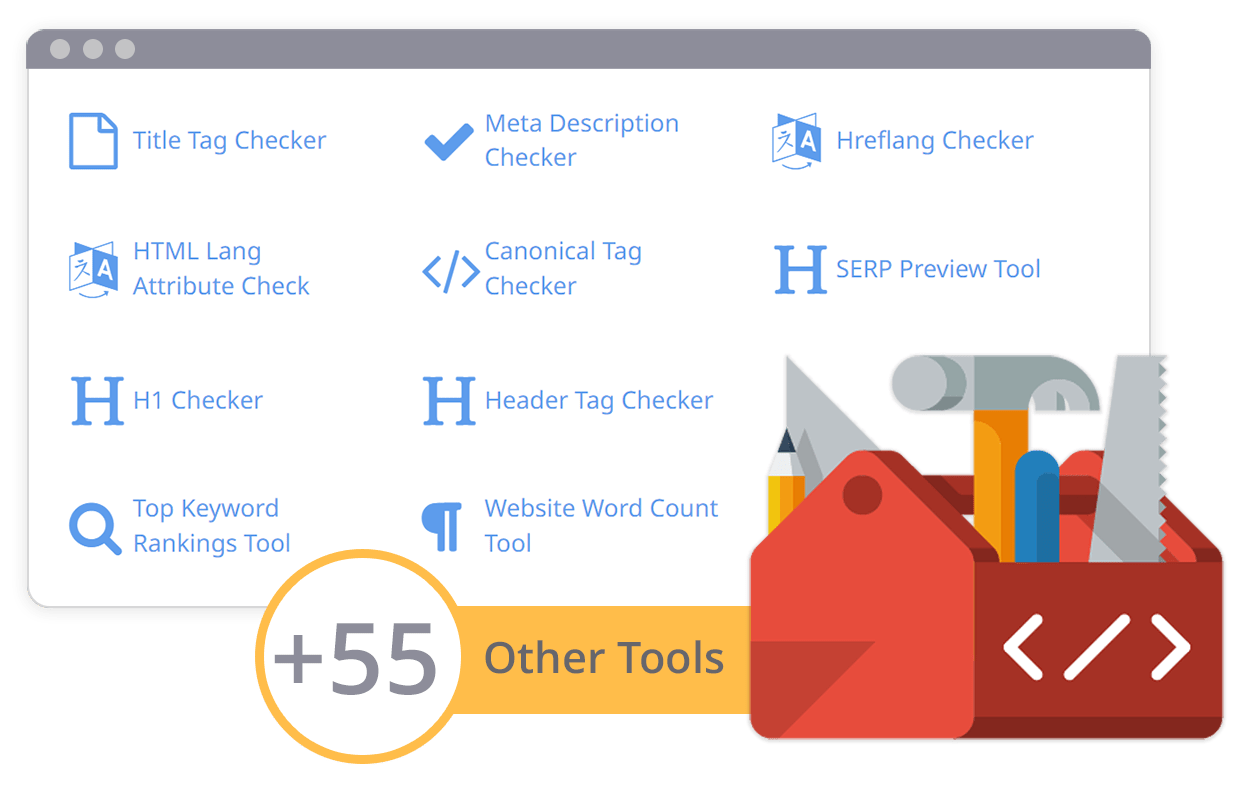
Comprehensive SEO Toolbox with over 55 Tools
Check Titles, Meta Descriptions, Headings, Schema, Core Web Vitals, SSL and Robots.txt. Generate Meta Tags, Sitemaps and .htaccess Rules, minify CSS, JS and HTML, and draft copy with our AI Writing Tools - instantly and for free.
Further Reading
See More
Schema Markup for AI Search: Complete Guide
Roughly 43% of consumers now use AI-powered tools daily when researching brands or businesses online. (source)
And Search Engine Lan...

How to Structure Content to Get Cited in AI Answers
How to Structure Content for AI Citations
Put the main point at the top of each section.
Make headings describe the exact quest...

On-Page SEO: Complete Guide + Checklist for 2026
What is On-Page SEO?
On-page SEO is the process of optimizing the content and elements on a webpage so that search engines can bette...

How to Drive Up Your CTR and SEO
What Is CTR?
CTR stands for Click Through Rate, and is defined as the percentage of people who click a search result after seeing it.
To see...