


Fresh content can help your website stay visible in both traditional search results and AI-generated answers, but that doesn’t mean you need to only change the old publication date.
Google prioritizes current information when a search calls for it, such as recent statistics, product recommendations, software guides, or breaking news.
AI search engines also rely on up-to-date sources to produce accurate responses and citations.
For more evergreen topics, however, relevance, quality, and authority may matter far more than when the content was published.
So, how much does content freshness really affect SEO and AI visibility? In this guide, we’ll unpack Google’s freshness factor, explore how AI platforms use current information, and explain when refreshing your content is genuinely worthwhile.
What is Fresh Content?
Fresh content is any newly published or meaningfully updated content that provides current, accurate, and relevant information to its audience.
This can include creating entirely new content for SEO, but publishing something from scratch isn’t the only way to create fresh content.
You can also refresh an existing page by updating outdated statistics, replacing old examples, adding new insights, revising product information, or expanding sections that no longer fully address the search intent.
Examples of fresh content include:
- A new article covering a recent industry development
- A product comparison updated with current features and pricing
- A guide revised to reflect changes in software or best practices
- A statistics page containing the latest available research
- An older blog post expanded with new examples, expert insights, or FAQs
Content freshness is all about the substance of a page, and not just the date displayed at the top.
Changing the publication date or making a few minor wording edits does not make an outdated article fresh if the underlying information remains the same.
What is Content Freshness in SEO?
Content freshness in SEO refers to how current, accurate, and relevant the information on a webpage is at the time someone finds it through search.
The amount of freshness a page needs depends largely on its subject.
An article about the latest SEO trends may require regular updates, while a guide explaining how to tie a tie could remain useful for years with very few changes.
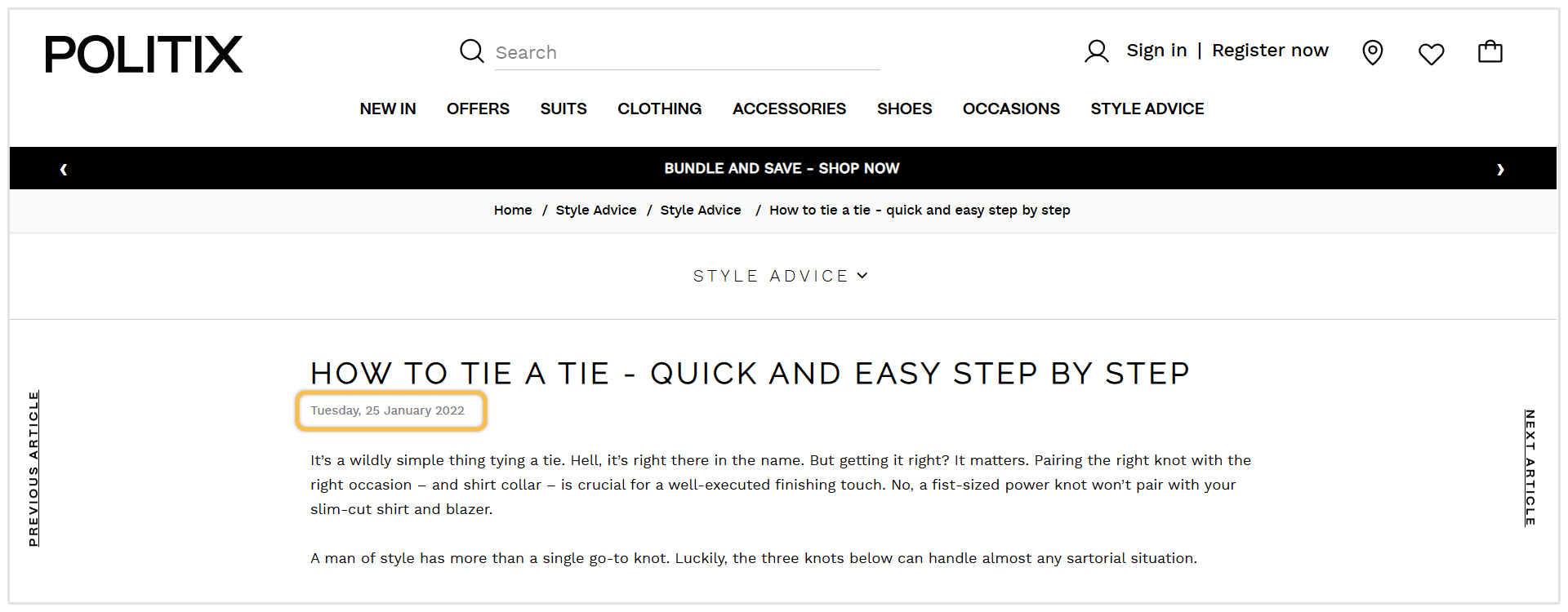
Content freshness is therefore not about constantly rewriting every page on your website. It is about ensuring that each page is as current as its topic and audience require.
It is also worth remembering that search engines need to recrawl an updated page before they can process its new information. Your website’s structure and crawl depth can influence how easily search engines discover and revisit important pages.
Making a change does not mean Google will immediately recognize it or that the page will automatically rank higher once it does.
What is Google’s Freshness Factor?
Google’s freshness factor describes the role recency can play in determining which pages appear for a particular search.
Rather than favoring the newest content for every keyword, Google uses what it calls query deserves freshness systems. These systems are designed to identify searches where people are likely to expect recent information and show fresher results accordingly.
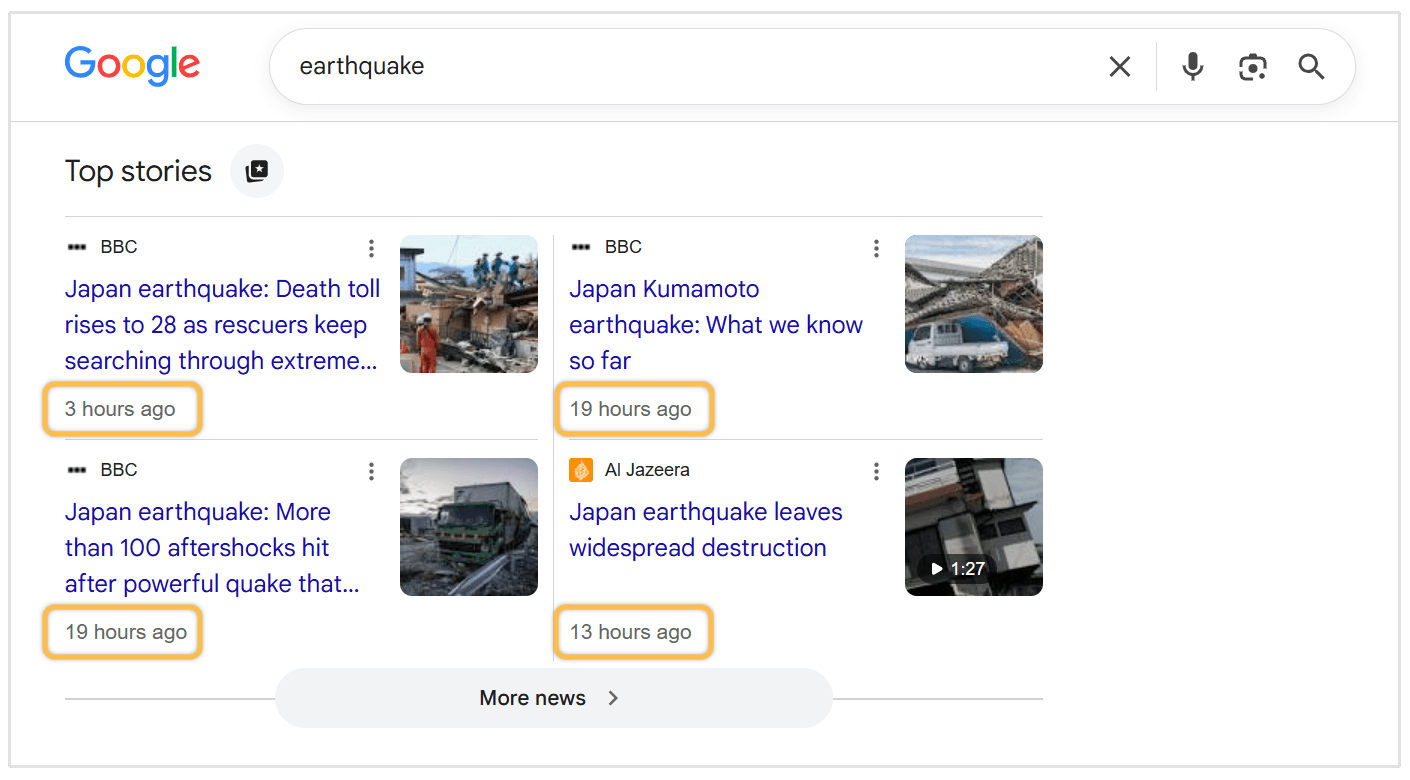
Suppose someone searches for “earthquake.”
Under normal circumstances, Google might return resources about earthquake safety and preparedness.
If a major earthquake has just occurred, however, the same search is more likely to produce breaking news and recent updates.
Freshness may be particularly important for searches involving:
- Rapidly developing events
- Recently released products
- Upcoming or recurring events
- Trending topics
- Current prices and availability
- Software that changes regularly
- Laws, policies, or regulations
- “Best” lists and product comparisons
By comparison, searches involving established historical facts, basic definitions, or stable processes do not necessarily need the newest result. For these queries, an older page can still perform well if it remains accurate, helpful, and better suited to the search intent.
This is why Google’s freshness factor should not be treated as a universal ranking boost.
Updating a publication date alone will not automatically improve a page’s position.
Google specifically advises publishers not to artificially freshen an article without adding significant new information or making another meaningful change.
When a page has been substantially updated, Google recommends displaying the updated date clearly and using consistent datePublished and dateModified structured data. However, these dates help Google understand when the content changed; they do not replace the need for helpful, reliable, people-first content.
Google’s freshness factor doesn't want to know which page is newest, instead it asks if a particular search requires a more current answer?
Why Fresh Content Matters for SEO
Fresh content matters for SEO because outdated pages gradually become less useful to both search engines and the people using them. As industries evolve, products change, and new information becomes available, a page that once answered a query well may no longer provide the best possible response.
Keeping important pages current can support your SEO performance in several ways.
It Keeps Information Accurate
Outdated prices, broken links, old screenshots, and superseded advice can quickly undermine trust. Regularly reviewing your content helps ensure that visitors receive reliable information and aren’t left wondering whether the rest of the page is still accurate.
It Helps Content Match Current Search Intent
The type of answer people expect from a search can change over time. A keyword that once produced basic informational guides might later favor comparison pages, step-by-step tutorials, videos, or tools.
Refreshing a page gives you an opportunity to reassess the search results and adjust the content to better reflect what users are currently looking for.
It Creates Opportunities to Improve the Page
Even if your information remains technically correct, competing pages may offer newer research, clearer explanations, better visuals, or more complete answers.
Protects the Value of Existing Rankings
Content can lose visibility when it becomes outdated or competitors publish more useful alternatives. Refreshing important pages before they fall too far behind can help preserve the rankings, backlinks, and authority they have already earned.
This can be more efficient than waiting for traffic to disappear and attempting a full recovery later. In that sense, content freshness is not only a growth tactic; it is also a form of SEO maintenance.
Does Content Freshness Matter for AI Search and LLMs?
Yes, content freshness can affect visibility in AI search when a system needs to retrieve information from the web to answer a current question.
An LLM may answer using information learned during its initial training, but tools such as ChatGPT Search, Perplexity, Gemini, Copilot, and Google AI Overviews can also retrieve webpages when generating a response.
For these retrieval-based answers, recently published or meaningfully updated content gives the system access to more current information.
A University of Toronto study compared sources returned by Google with those cited by web-enabled versions of GPT-4o, Claude, and Perplexity.
For consumer electronics, the median age of cited content was:
- 62 days for Claude
- 80 days for GPT-4o
- 90 days for Perplexity
- 130 days for Google
The difference was even greater for automotive searches.
Claude and GPT-4o cited content with a median age of 148 and 162 days, respectively, compared with 493 days for Google.
Across both categories, sources cited by Claude and GPT-4o were typically 40% to 70% newer than those surfaced by Google.
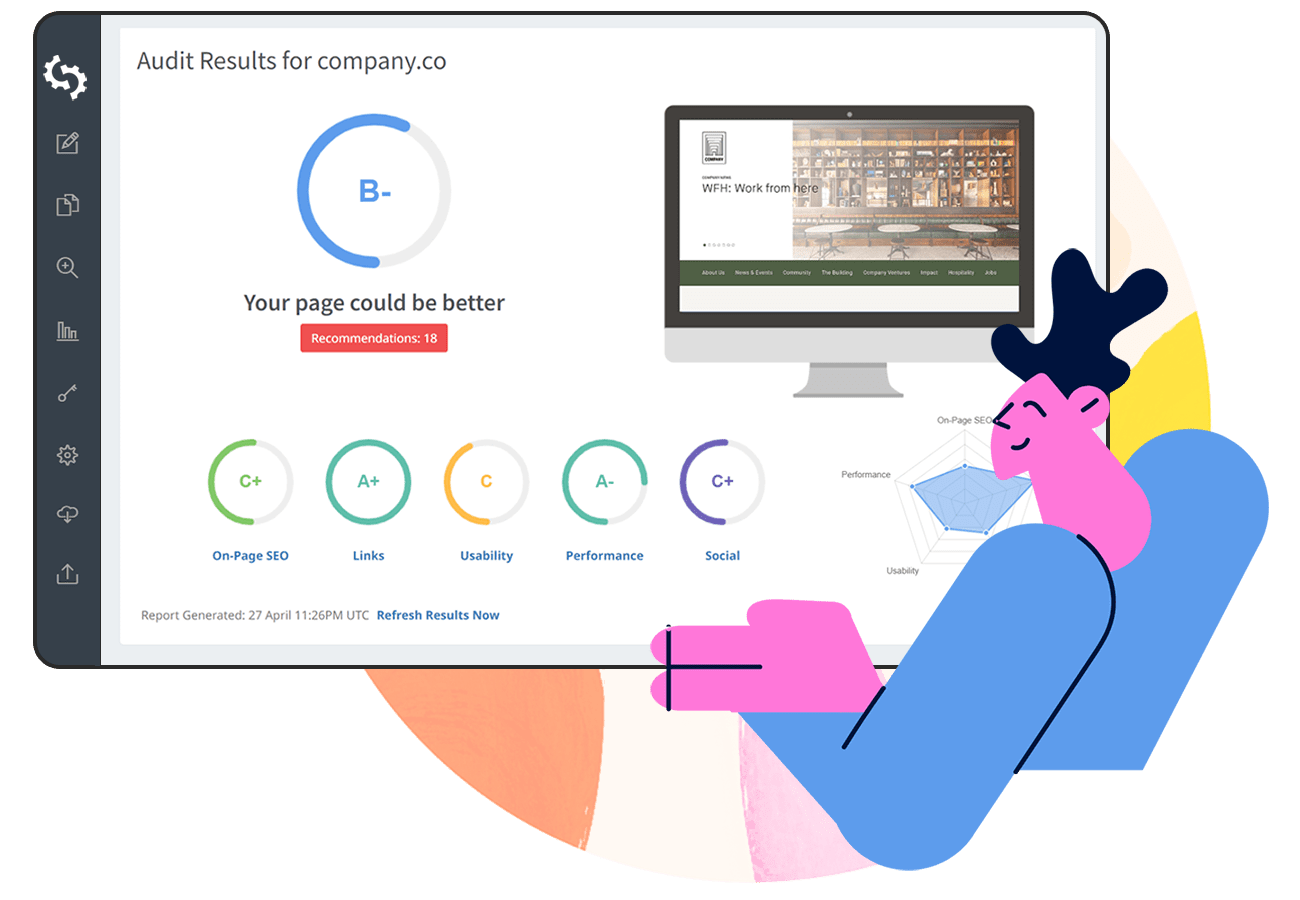
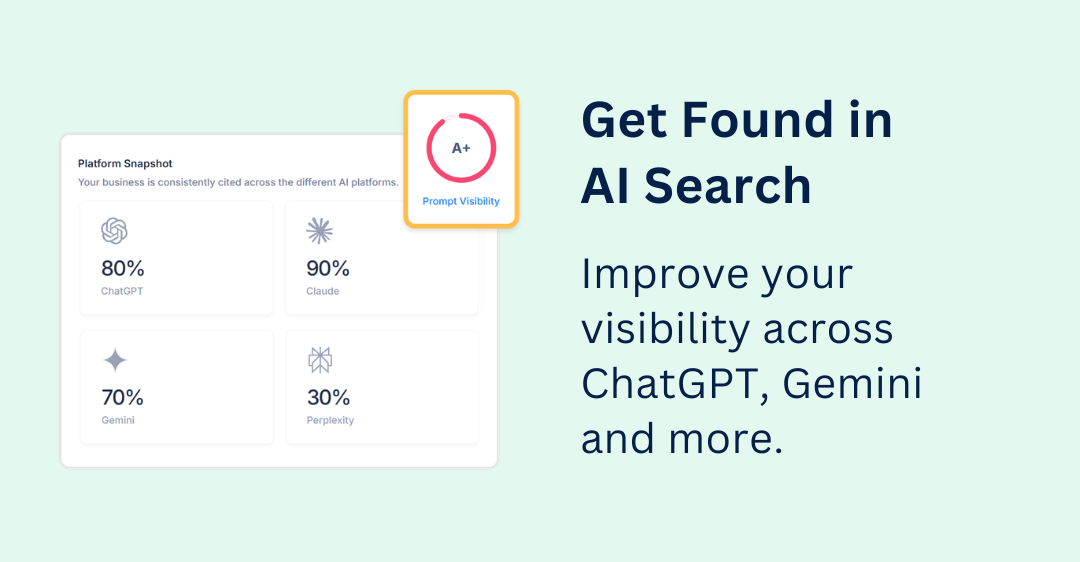
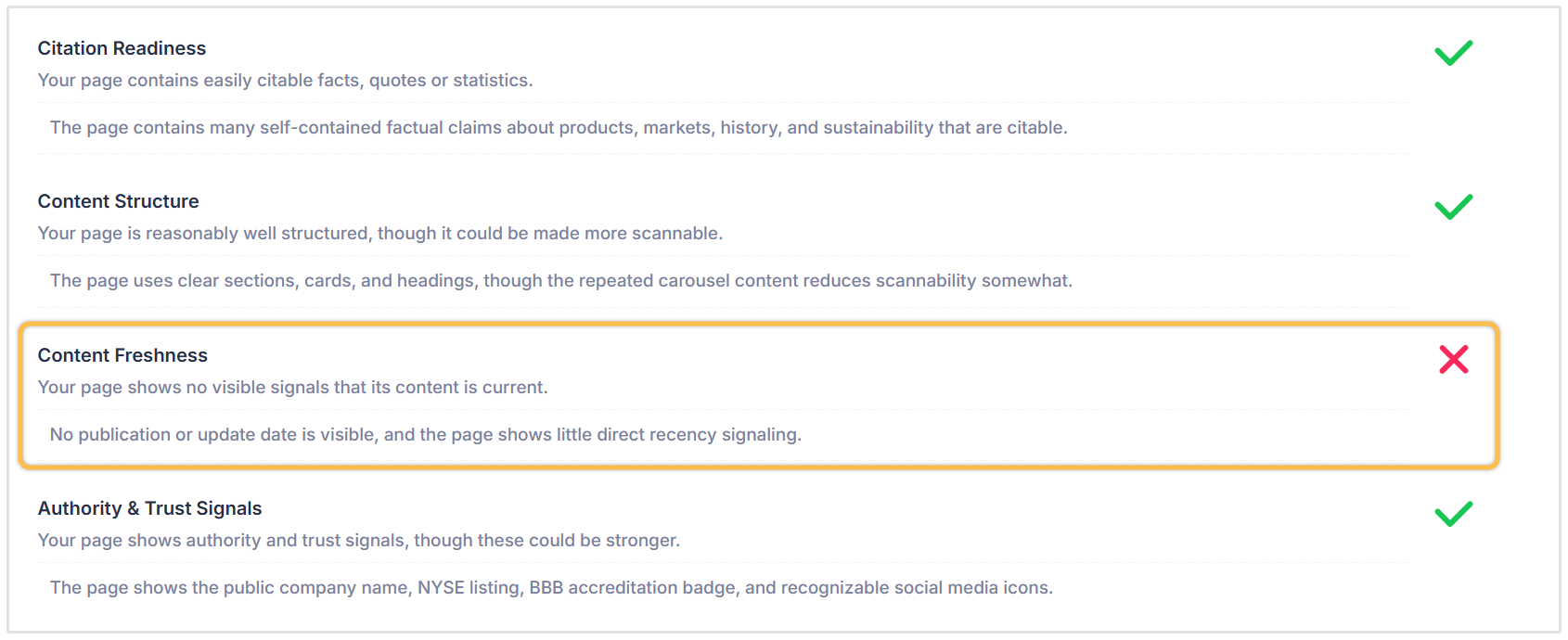
SEOptimer’s comprehensive GEO Audit includes an AI-powered Freshness Factor check that evaluates whether a page contains recent dates, current references, and other indications that its information is actively maintained.
Note: the study is a recent university preprint rather than a peer-reviewed journal article, so we should describe it as “research” or a “study,” not as definitive proof.
Related Reading: How to Optimize for AI Search, According to Google
Fresh Content does not Guarantee an AI Citation
Although current information may make a page more suitable for time-sensitive prompts, freshness is only one part of LLM optimization.
AI search systems still need to determine whether a page provides useful evidence for the specific question.
A recently updated article may be passed over if it offers a vague answer, lacks supporting evidence, or only mentions the subject briefly. Whereas,an older resource may remain the stronger source if it explains the topic more clearly and reliably.
Factors that can affect whether content is selected include:
- Its relevance to the user’s exact question
- The authority and trustworthiness of the source
- Clear, factual statements that can support the answer
- Original information or first-hand expertise
- Crawlability and eligibility to appear in search
- Agreement with other credible sources
Google has confirmed that pages must be indexed and eligible to appear in Google Search with a snippet before they can be shown as supporting links in AI Overviews or AI Mode. However, meeting these requirements does not guarantee inclusion.
To understand what may be limiting your visibility, try SEOptimer’s GEO Audit.
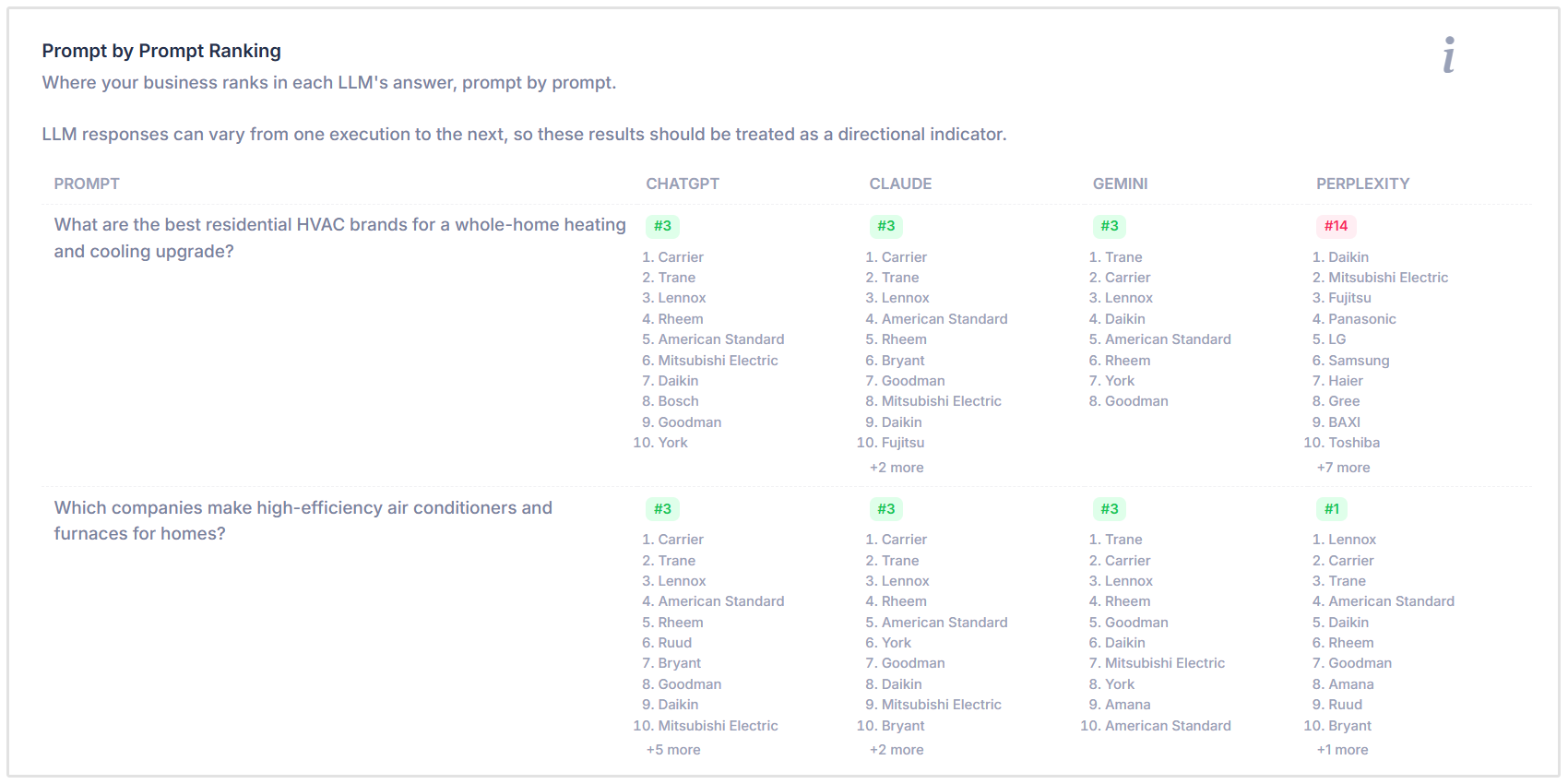
It can help you:
- See whether your brand appears for relevant prompts across leading AI platforms
- Identify which of your competitors AI engines cite instead
- Check whether AI crawlers can access your content
- Evaluate your page’s freshness, clarity, and answer alignment
- Uncover technical and on-page issues that could make your content harder for LLMs to retrieve or understand
These insights give you a clearer picture of how AI platforms interpret your website and where you can make improvements that will move the needle.
Content that should Be Updated Frequently
Some content loses its usefulness quickly because the underlying information changes regularly. These pages should be reviewed whenever a relevant change occurs rather than waiting for an arbitrary update date.
Content that typically requires frequent updates includes:
- Pricing and product pages: Revise prices, features, availability, and plan details as soon as they change.
- Product comparisons and “best” lists: Add new options, remove discontinued products, and reassess whether previous recommendations still hold up.
- Software and technical guides: Update instructions when interfaces, features, integrations, or workflows change.
- News and industry coverage: Add meaningful developments as a story or trend evolves.
- Statistics and research roundups: Replace superseded figures and include the latest available studies.
- Legal, financial, and regulatory content: Review advice whenever relevant laws, policies, or requirements change.
- Event information: Keep dates, locations, schedules, speakers, and registration details accurate.
- Local business information: Update opening hours, contact details, service areas, and other information customers may rely on.
- SEO and AI search guidance: Revisit recommendations as search features, algorithms, and platform capabilities evolve.
The appropriate review cycle will vary even within these categories.
A pricing page should be updated immediately after a price change, while a product comparison might only need a detailed review every few months.
Content that can be Updated Less Frequently
Evergreen content covers subjects that remain relatively stable over time. These pages do not need constant rewriting simply to appear active, especially when they continue to answer the reader’s question accurately.
Examples include:
- Definitions of established concepts
- Historical articles and timelines
- Foundational educational resources
- Tutorials for processes that rarely change
- Original interviews and opinion pieces
- Case studies documenting a specific project or period
- Reference material based on established facts
That doesn’t mean evergreen content should be published and permanently forgotten.
It should still be reviewed occasionally to check for broken links, outdated examples, unclear explanations, and new questions that could make the page more useful.
How to Identify Content that Needs Refreshing
Review your analytics and Google Search Console data to find pages experiencing a sustained decline in:
- Organic impressions
- Search rankings
- Clicks
- Click-through rate
- Conversions
This gradual loss of search visibility and traffic is often called content decay.
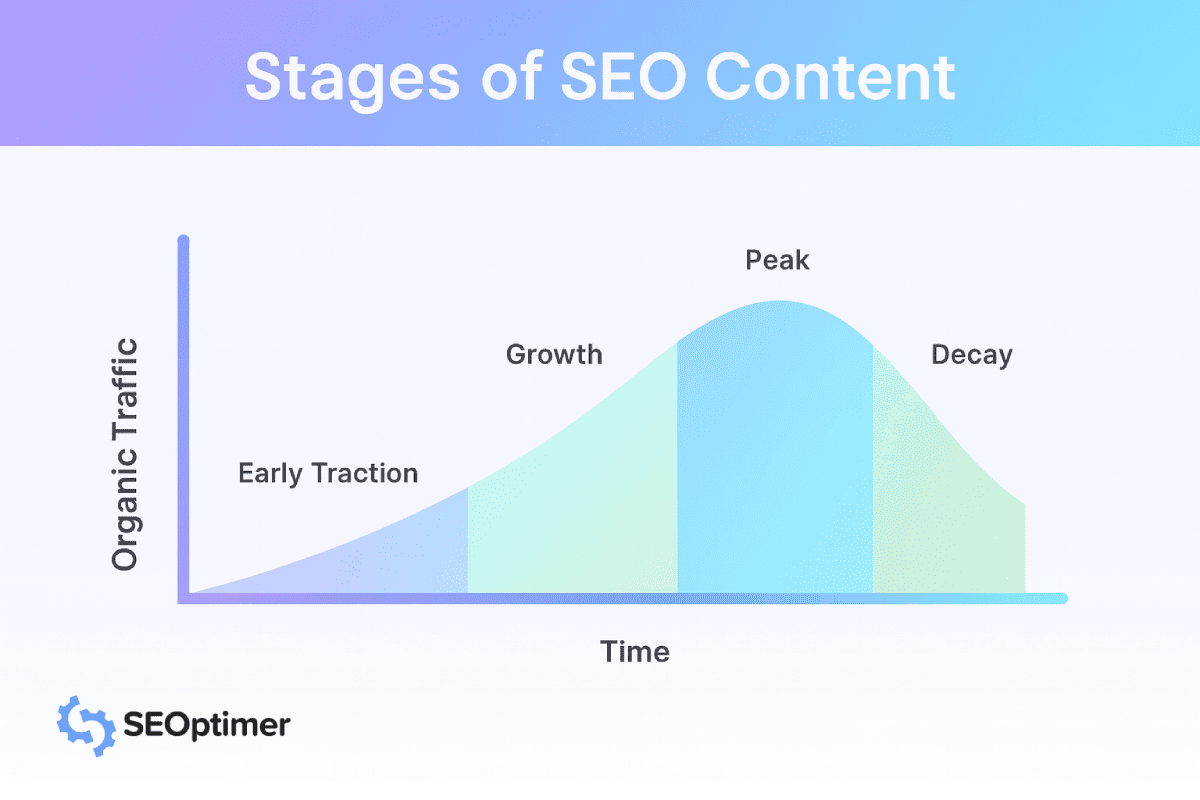
It can happen when information becomes outdated, competitors publish stronger resources, or search intent changes beyond what the page currently addresses.
However, declining traffic does not always mean the content needs refreshing. Seasonality, lower search demand, technical issues, algorithm updates, and increased competition can produce similar patterns. Compare performance over a meaningful period and investigate the cause before deciding what to update.
How to Refresh Content for Better SEO and AI Visibility
Use this quick checklist when updating an existing page:
- Recheck the current search intent and top-ranking results
- Replace outdated facts, statistics, examples, and screenshots
- Remove broken links and cite current, trustworthy sources
- Add useful insights, FAQs, or sections that are currently missing
- Make important answers clear, concise, and easy for AI systems to extract
- Improve headings, formatting, images, and overall readability
- Add relevant internal links to and from the page
- Confirm that AI crawlers can access the updated information, including any content rendered with JavaScript
- Update the dateModified markup by following relevant schema markup best practices, and only change the visible date after making meaningful updates.
- Request reindexing and use AI prompt tracking to monitor rankings, traffic, conversions, AI mentions, and citations
A proper content refresh involves much more than changing a few sentences or adding the current year to the title.
For a complete step-by-step process, read our in-depth guide on how to update old content, including how to choose pages, improve them, and measure the results.
Conclusion: Fresh Content Should Add Real Value
Fresh content can improve your visibility in traditional search results and AI-generated answers, but only when the update makes the page more accurate, relevant, or useful.
Google’s freshness factor applies most strongly to searches where information changes frequently, while grounded AI systems need current sources to produce reliable answers.
However, neither Google nor AI platforms will favor a page simply because it has a newer date.
The best approach is to focus your efforts where content freshness genuinely matters. Regularly review time-sensitive and commercially important pages, watch for signs of content decay, and make meaningful updates based on changing information and search intent.