


What is Local SEO?
Local SEO is the process of improving your online presence so your business appears when people search for products or services in a specific area.
For example, when someone searches for “dentist near me,” “best coffee shop in Brooklyn,” or “plumber in Chicago,” Google tries to show businesses that are relevant, nearby, and trustworthy.
Local SEO helps your business show up in places like Google Maps, the local pack, and regular search results when nearby customers are looking for your services and products.
Why Local SEO Matters
Local SEO matters because local searches are often made by people who are ready to take action.
When someone searches for a nearby business, they are usually not just browsing. They may be looking for directions, checking opening hours, comparing reviews, calling a business, or deciding where to buy.
Data from Google shows that 76% of people who search on their smartphones for something nearby visit a business within a day, and 28% of those searches result in a purchase.
That is what makes local SEO so valuable. It helps your business appear at the exact moment someone is looking for a product or service you offer in their area.
A strong local SEO presence can help your business:
- Appear in Google Maps and local search results
- Drive more calls, website visits, and direction requests
- Build trust through reviews and accurate business information
- Attract nearby customers who are ready to buy
- Compete with other businesses in your area
Local SEO is also important because customers use online information to decide whether they can trust a business.
According to Google, businesses with a complete Google Business Profile are 2.7 times more likely to be considered reputable. Customers are also 70% more likely to visit and 50% more likely to consider purchasing from businesses with a complete profile.
Reviews play a major role too.
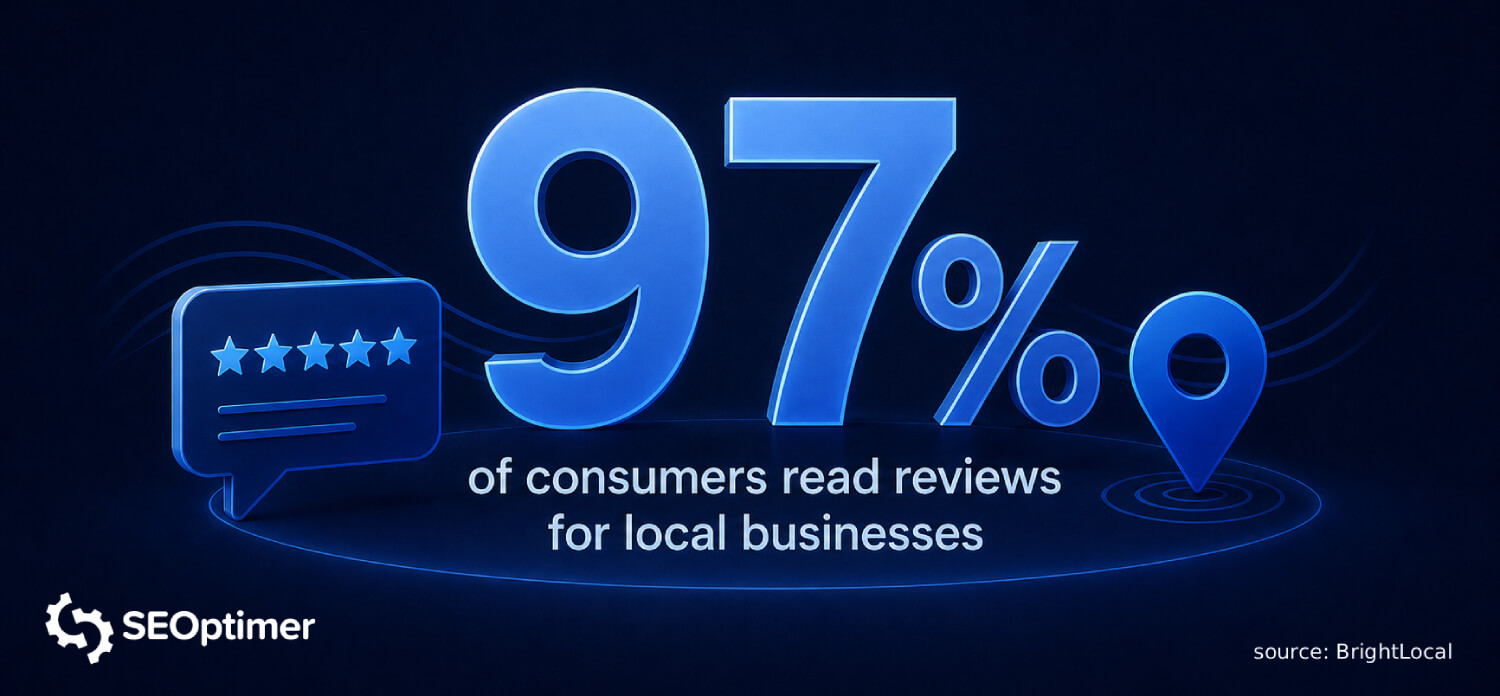
BrightLocal’s 2026 Local Consumer Review Survey found that 97% of consumers read reviews for local businesses.
Positive reviews can make people more likely to choose your business, while negative reviews can push them toward a competitor.
So, if your business serves customers in a specific location, local SEO is not just about getting more traffic.
It is about getting found by the right people, in the right area, at the right time.
How Local SEO Works
Local SEO helps search engines understand what your business does, where it is located, and whether it is relevant to local searchers.
When people search for local products or services, Google may show your business in three main places:
- Local Pack
- Google Maps
- Local organic search results
Local Pack / Map Pack
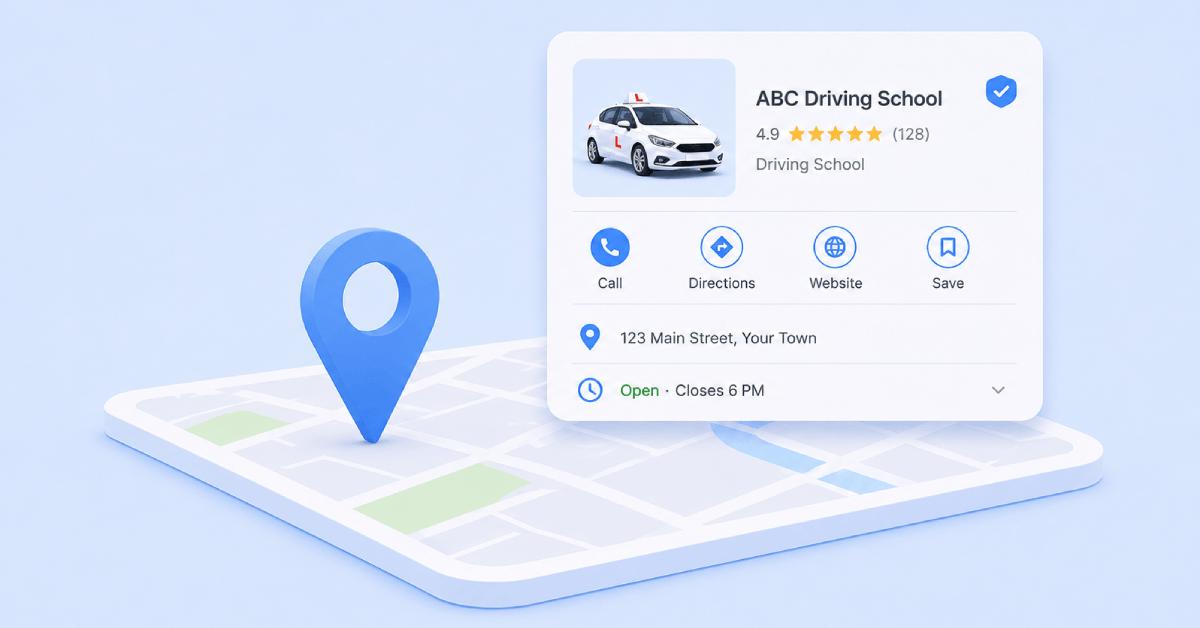
The Local Pack is the group of business listings that often appears near the top of Google alongside a map. These listings typically show your business name, reviews, address, phone number, hours, and website.
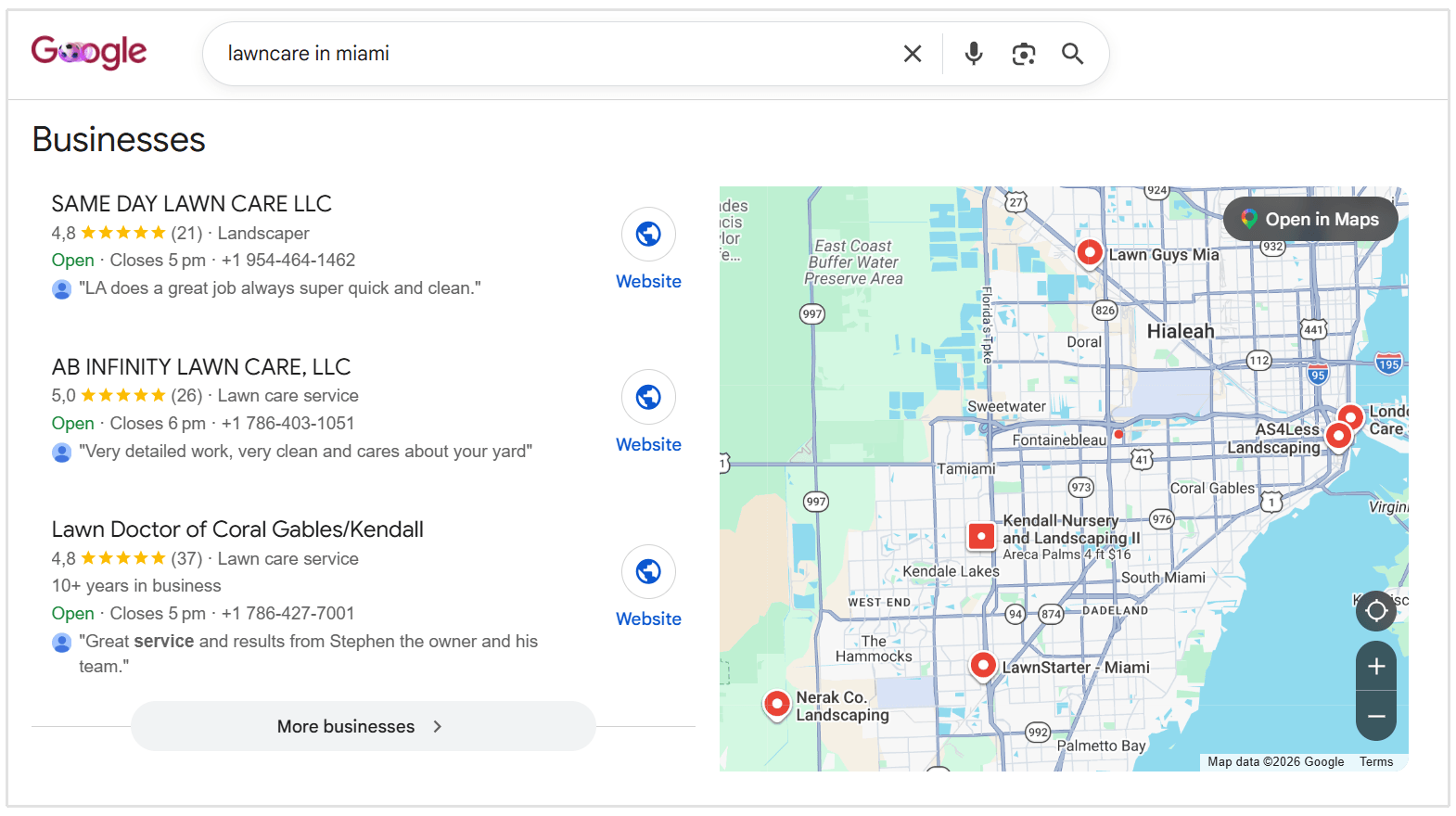
Ranking here depends largely on having an optimized Google Business Profile, accurate business information, and positive reviews.
Google Maps
Google Maps helps users find nearby businesses and get directions, contact details, and reviews. Many customers search directly in Maps, making it an important source of local visibility.
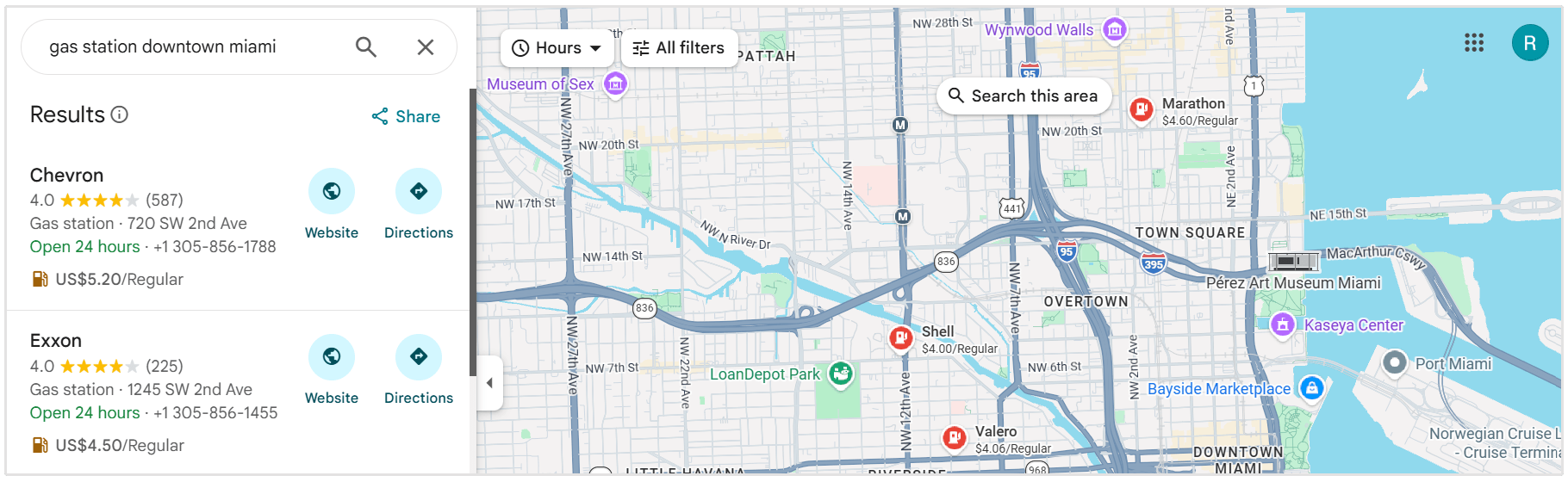
To improve your rankings, keep your Google Business Profile complete and accurate, and encourage customer reviews.
Local Organic Results
Local organic results are the standard website listings that appear in search results.
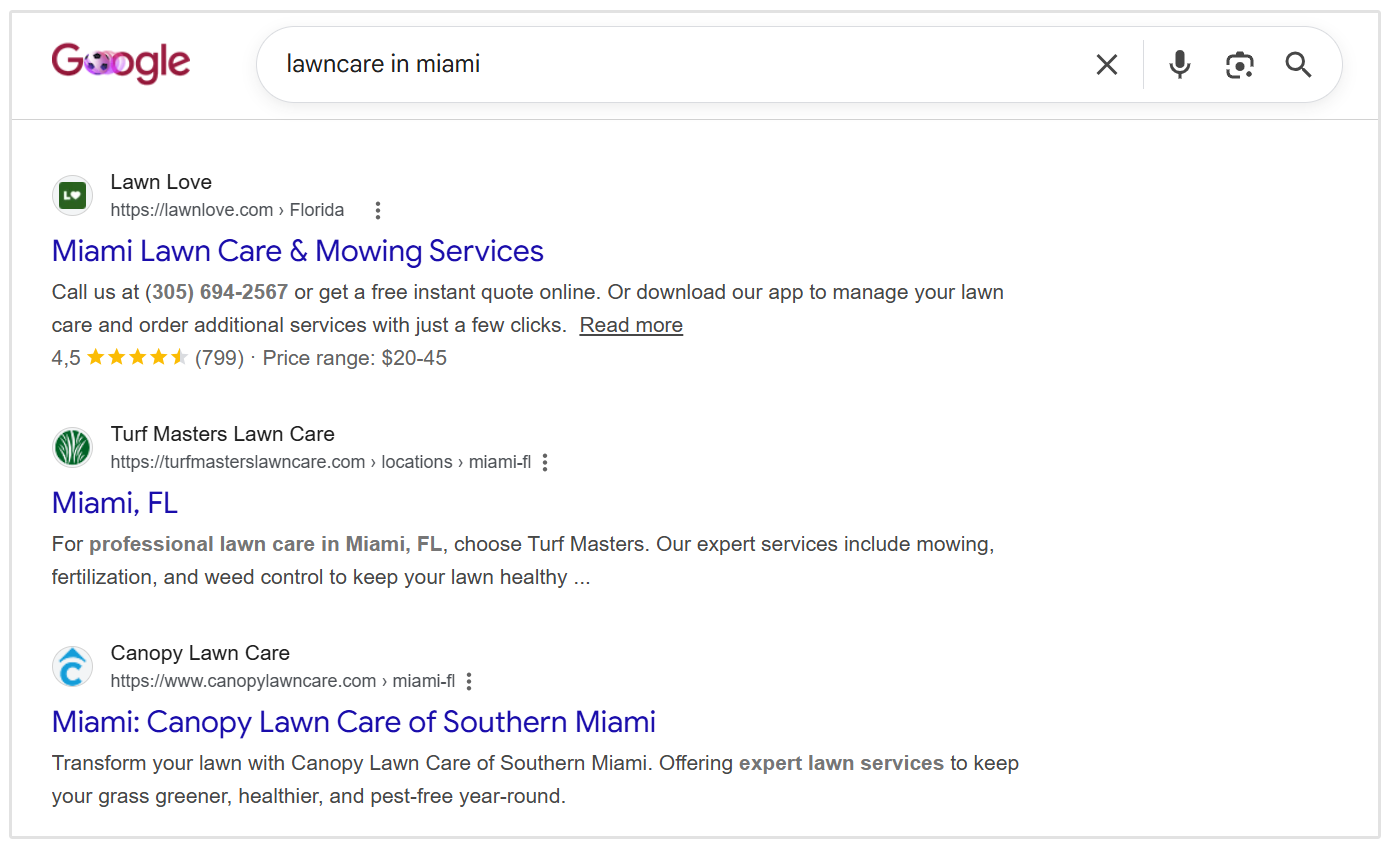
These rankings rely more on your website SEO, including local keywords, location pages, content quality, backlinks, and technical optimization.
Local Pack vs Local Organic Results
The Local Pack and local organic results are two different parts of Google’s search results.
The Local Pack is the map section that shows nearby businesses. These results are based heavily on your Google Business Profile, your location, your reviews, and how relevant your business is to the search.
Local organic results are the regular website results that appear on the search page. These rankings are based more on your website, including your service pages, location pages, content, backlinks, and technical SEO.
So, if you want to appear in the Local Pack, you need to optimize your Google Business Profile. And if you want to rank in local organic results, you need to optimize your website.
Local SEO Ranking Factors
Google uses several signals to decide which businesses appear in local search results. The three main local ranking factors are relevance, distance, and prominence.
According to Google, these factors help determine the best local results for each search.
1. Relevance
Relevance refers to how closely your business matches what someone is searching for.
For example, if someone searches for “emergency plumber,” Google wants to show businesses that clearly offer emergency plumbing services.
You can improve relevance by choosing the right Google Business Profile categories, adding accurate services, and using clear local keywords on your website.
2. Distance
Distance refers to how close your business is to the searcher or to the location used in the search.
For example, someone searching for “coffee shop near me” will usually see nearby coffee shops first.
You cannot control where the searcher is, but you can make sure your address, service areas, and location details are accurate across your website and business listings.
3. Prominence
Prominence refers to how well-known and trusted your business appears online.
Google may look at signals such as reviews, ratings, backlinks, directory listings, and mentions across the web.
You can improve prominence by getting more positive reviews, building local citations, earning local backlinks, and keeping your business information consistent online.
Relevance is about what you do, distance is about where you are, and prominence is about how trusted your business appears to be.
How to Improve Your Local SEO
Optimize your Google Business Profile
Your Google Business Profile is one of the most important parts of local SEO. It helps your business appear in Google Search and Google Maps when people look for products or services in your area.
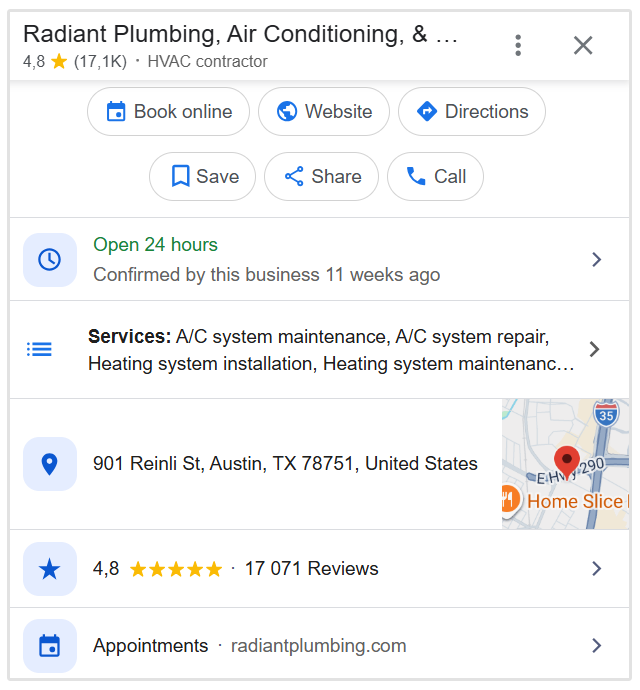
Start by making sure your profile is complete, accurate, and up to date.
This includes adding or checking:
- Your business name
- Address or service area
- Phone number
- Website URL
- Opening hours
- Business category
- Products and services
- Business description
- Photos and videos
- Reviews and review responses
Your business category is especially important because it helps Google understand what your business does. Choose the most accurate primary category, then add secondary categories where relevant.
You should also keep your opening hours updated, especially during holidays or seasonal changes. If a customer sees the wrong hours and arrives when you are closed, that creates a poor experience and can lead to negative reviews.
Photos can also make your profile more appealing. Add clear images of your storefront, team, products, services, or completed work. For service businesses, this could include before-and-after photos, branded vehicles, or images of your team on-site.
Reviews are another major part of your Google Business Profile. Encourage happy customers to leave reviews, and make sure you respond to both positive and negative feedback. This shows potential customers that your business is active, trustworthy, and engaged.
You can also use Google Posts to share updates, offers, events, or announcements directly on your profile. While posts may not be the biggest ranking factor, they help keep your profile fresh and give customers more reasons to choose your business.
Many businesses forget about their Google Business Profile once they set it up, but regularly adding new photos to your profile is a great way to strengthen your profile.
- Daniel Houle, Founder of Azuro Digital
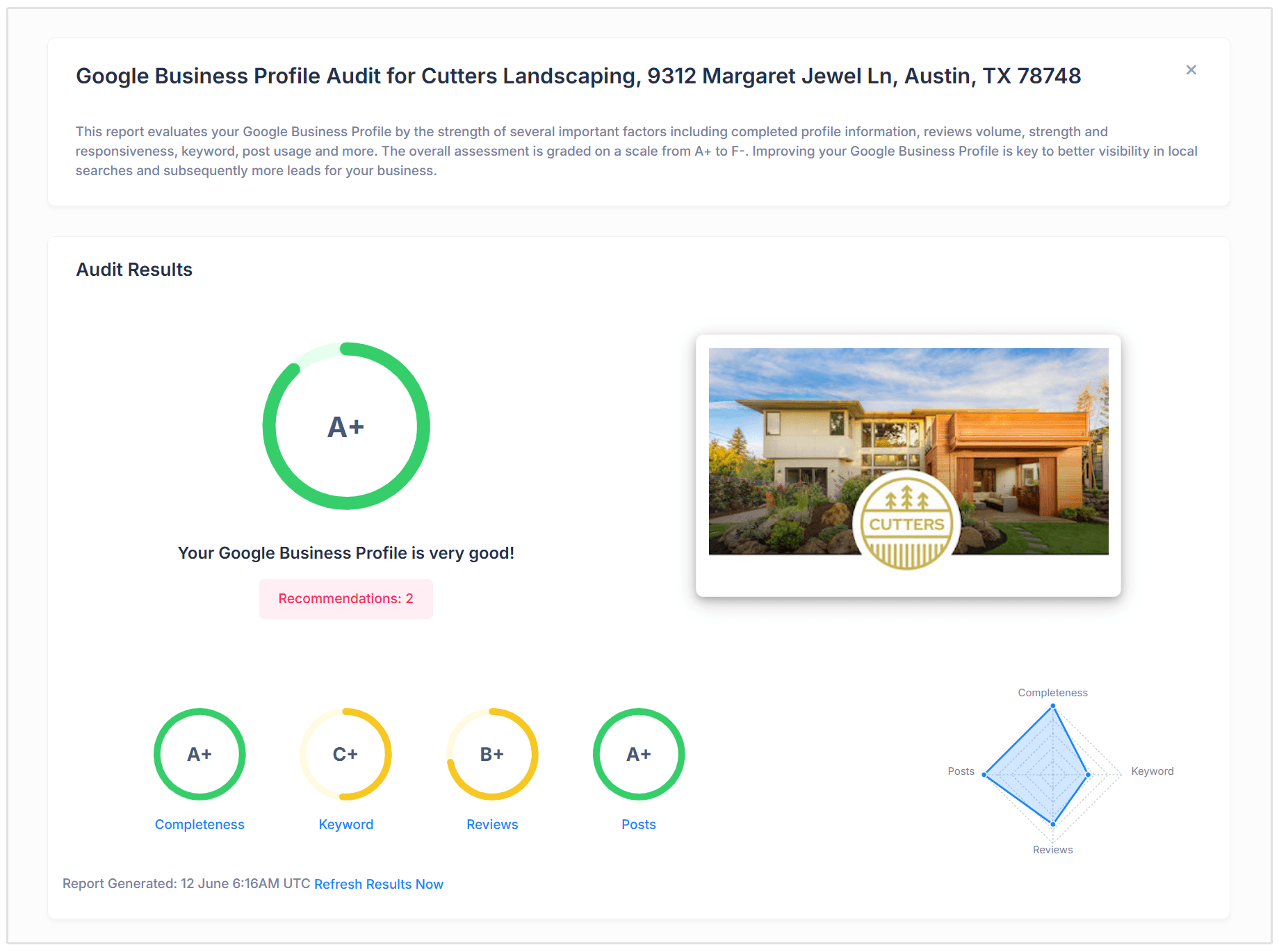
To make sure your profile is fully optimized, you can also run a Google Business Profile audit.
Our GBP Audit tool checks important profile elements such as profile completeness, keyword usage, reviews, recent posts, and overall performance, giving you a clearer view of what needs to be improved.
Find Local Keywords
Local keywords help search engines understand what your business offers and where you offer it.
These are usually keywords that combine your product or service with a specific location.
For example, instead of only targeting “dentist,” a local dental practice might target keywords like “dentist in Austin,” “emergency dentist Austin,” or “teeth whitening in Austin.”
Using the right local keywords is important because people often search with clear local intent. They are not just looking for general information. They are looking for a nearby business that can help them.
Start by thinking about the services you offer and the areas you serve. Then create keyword combinations around:
- Your main services
- Your city or town
- Nearby suburbs or neighborhoods
- “Near me” searches
- Specific customer needs, such as “emergency plumber” or “family lawyer”
You can also use our Keyword Research tool to find accurate data on monthly search volumes, ranking difficulty, SERPs, CPC, and more for your chosen keywords.
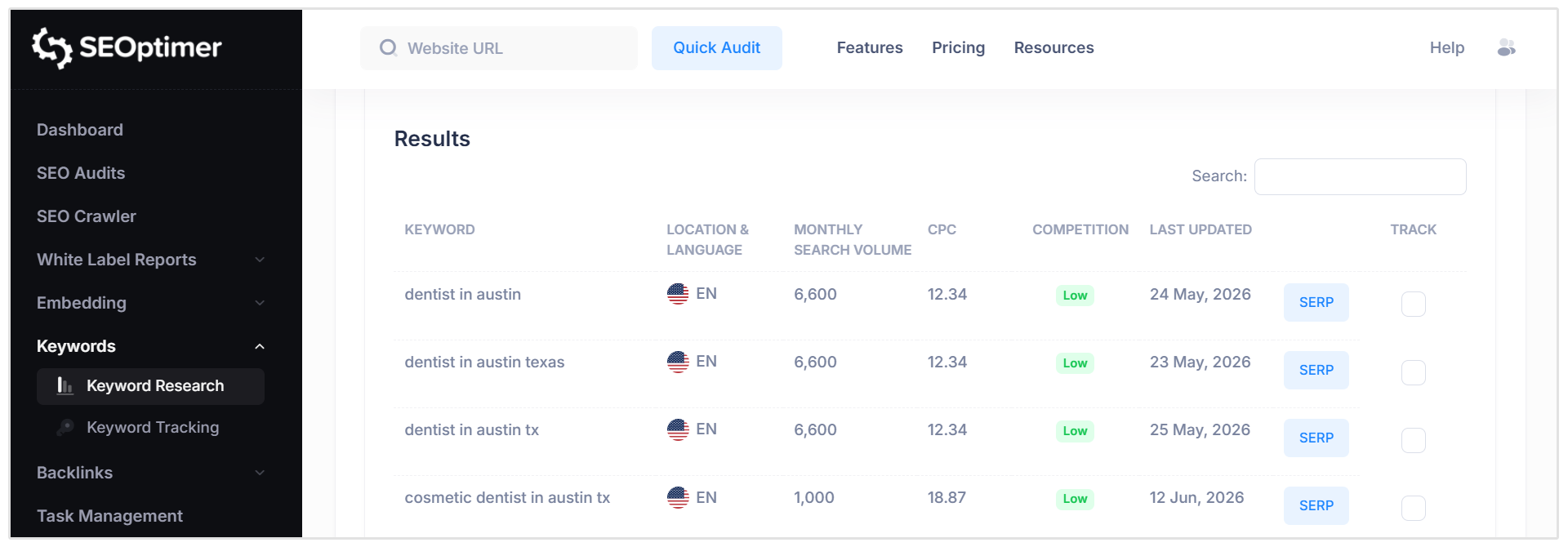
Once you have your local keywords, use them naturally across your online presence.
On your Google Business Profile, you can include relevant keywords in your:
- Business description
- Products and services
- Google Posts
On your website, use local keywords in your:
- Page titles and meta descriptions
- Headings
- Service pages
- Location pages
- Body content
- Image alt text
- Internal links
For example, if you are a plumber in Denver, your website should make it clear that you offer plumbing services in Denver and the surrounding areas.
A good example of this is Benjamin Franklin Plumbing of Denver.
Their website clearly uses location-based keywords in important areas, including the page heading “Denver Plumbing Company” and body copy that mentions “professional Denver plumbers” and the wider Denver metro area.
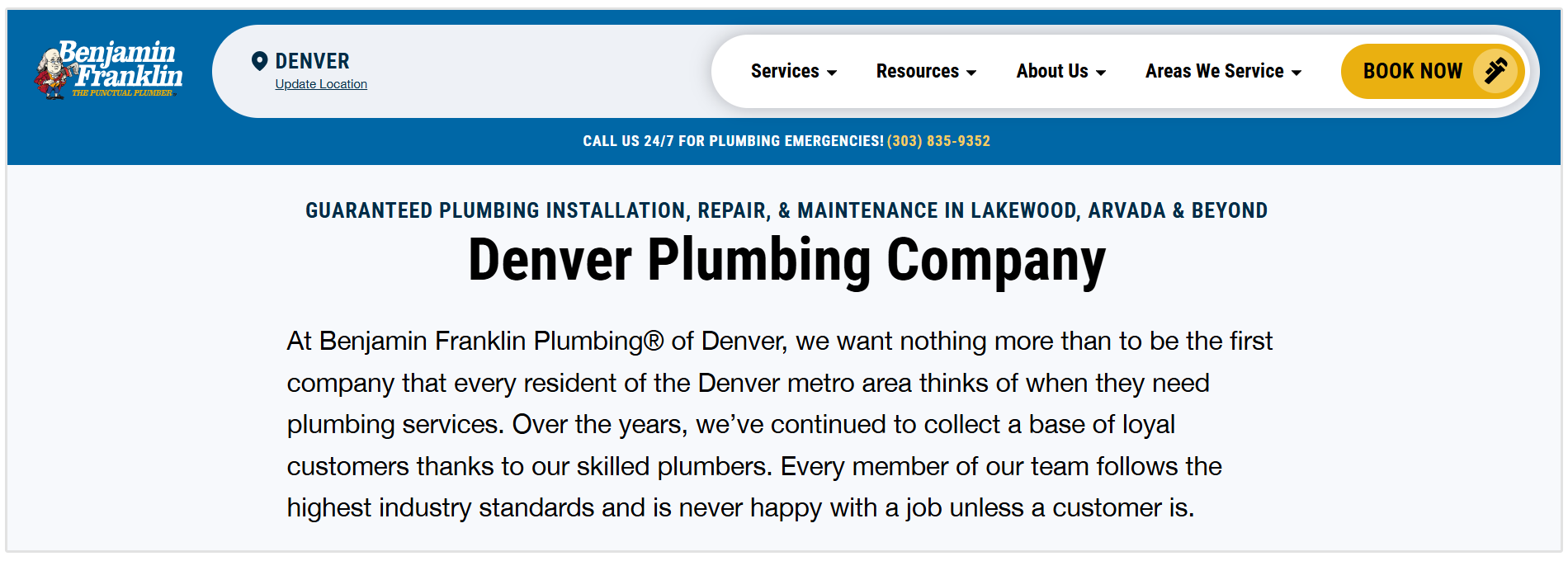
The page also references nearby areas they serve, such as Westminster, Arvada, Littleton, Lakewood, Broomfield, Thornton, Boulder, and Wheat Ridge.
This helps both users and search engines understand that the business provides plumbing services in Denver and surrounding locations.
The goal is not to stuff keywords everywhere. It is to use them naturally in the places where they help explain your business, services, and location.
Optimize your Website for Local Search
While your Google Business Profile helps you appear in the Local Pack and Google Maps, your website helps you rank in local organic search results.
To optimize your website for local search, make sure it clearly explains what your business does, where you are located, and which areas you serve.
Start with the basics:
- Add your business name, address, and phone number to your website
- Include your location in important page titles and headings
- Create dedicated pages for your main services
- Add location pages if you serve multiple areas
- Write clear content that explains your services and service areas
- Make sure your website is mobile-friendly
- Improve page speed and technical SEO issues
- Add internal links between related service and location pages
For example, instead of having one general “Services” page, a local business could create separate pages for each core service, such as “Emergency Plumbing,” “Drain Cleaning,” and “Water Heater Repair.”
Each page can then include relevant local details to help Google and users understand where the service is available.
You should also make sure your contact details are easy to find. Add your address, phone number, opening hours, and service areas to key pages such as your homepage, contact page, and location pages.
Stephanie Long is the founder and CEO of Mrs. SEO, an agency that provides SEO services and training to businesses of all types.
She shared another great tip on optimizing your website for local search. She mentioned that for each website she optimizes, she makes sure to reflect the full geographic range of the client’s potential customers.
I make sure to include a list of all of the cities/regions that my client’s business serves at the bottom of every page. This type of specificity better positions the site for more impressions, which ultimately leads to more clicks.
- Stephanie Long, Founder and CEO of Mrs. SEO
A well-optimized website gives search engines more context about your business and gives customers the information they need to contact, visit, or book with you.
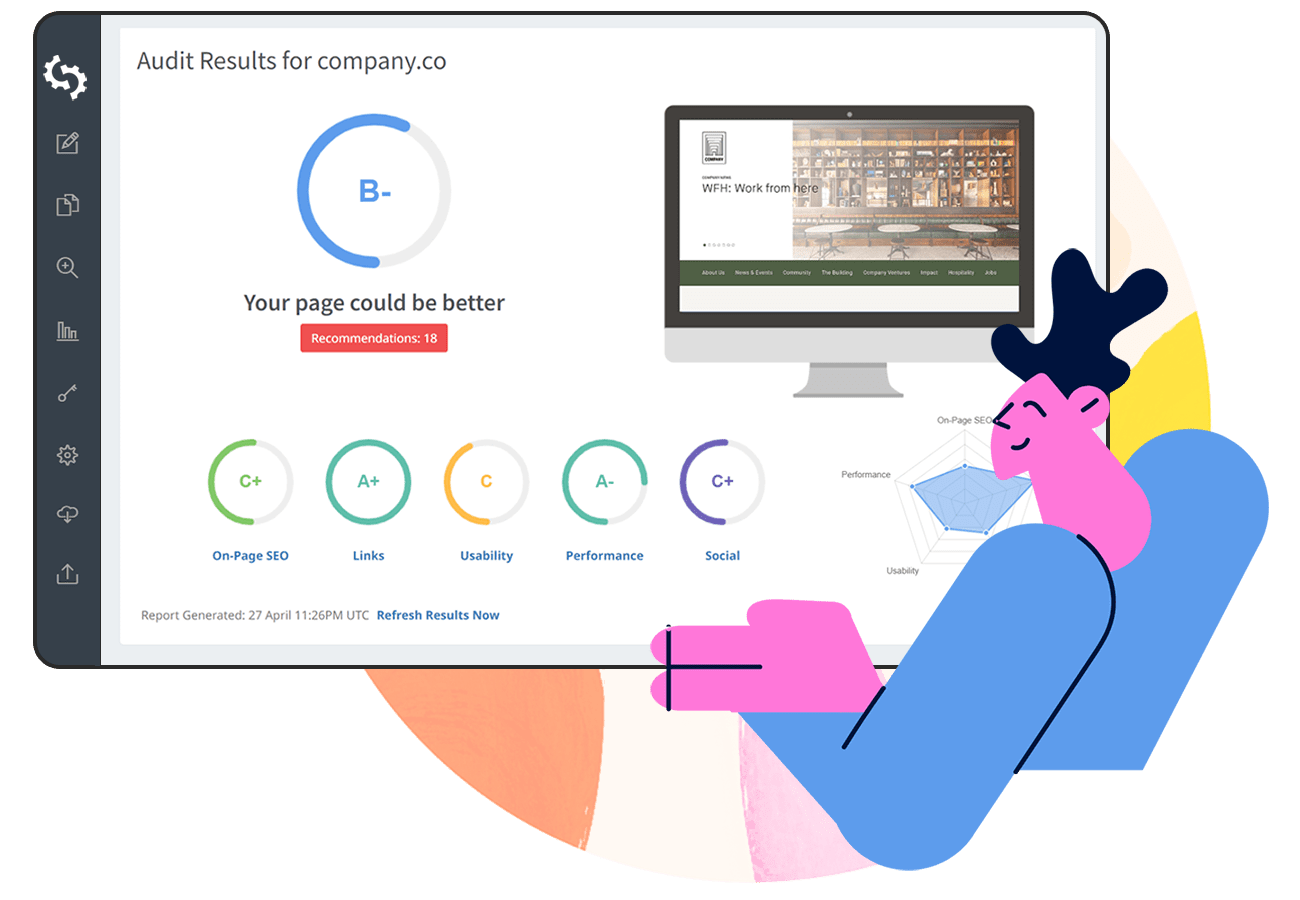
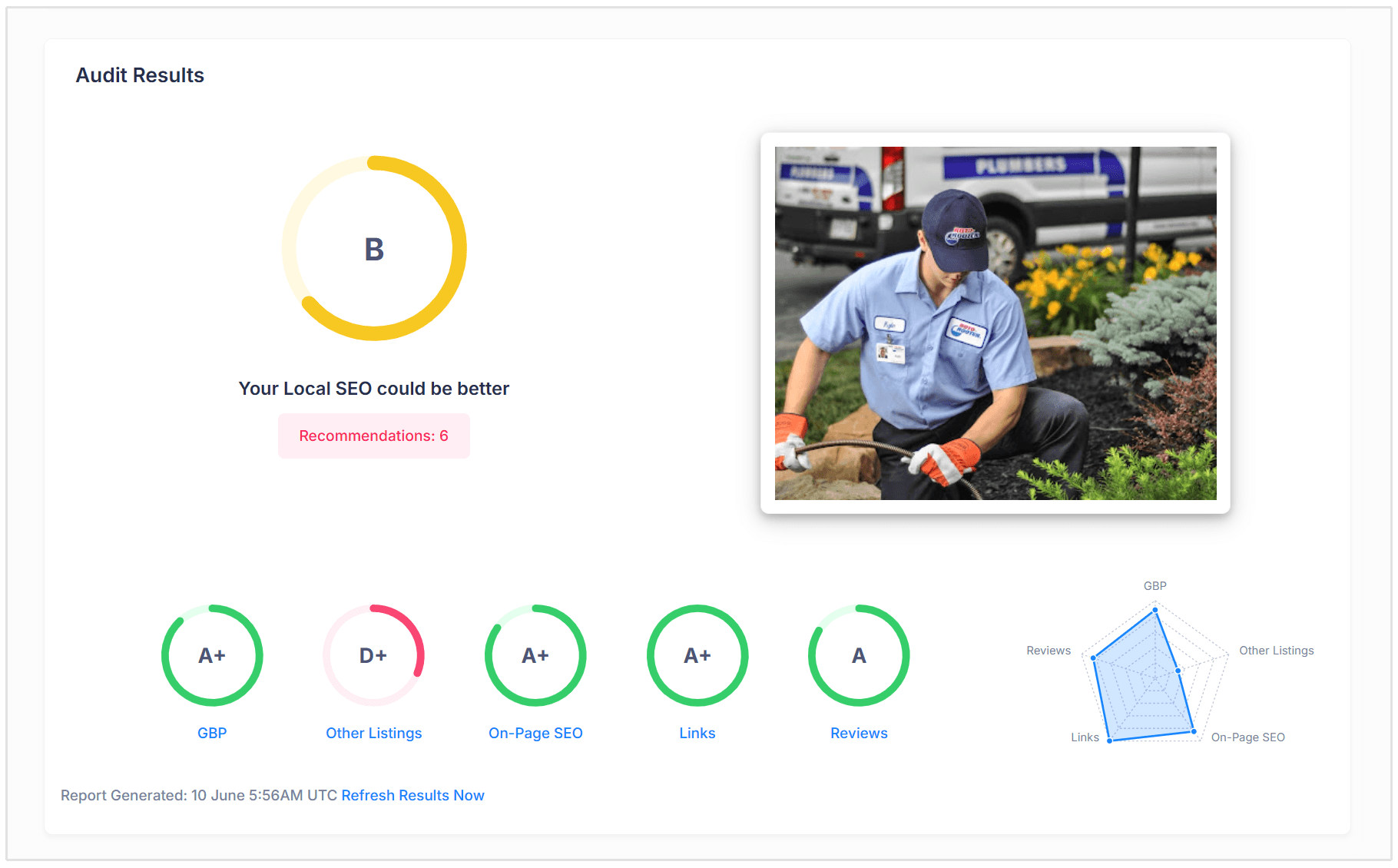
To find areas for improvement, you can run a local SEO audit with SEOptimer.
The tool specifically checks important local SEO elements, including your website’s on-page SEO, local keyword usage, Google Business Profile performance, local rankings, reviews, and business listings.
Create Location Pages
If your business serves more than one city, suburb, or neighborhood, location pages can help you rank for searches in each area.
Instead of trying to rank one generic page for every location, create a dedicated page for each important area you serve.
For example, a plumbing company that operates across several cities could create pages such as:
- Emergency Plumber in Denver
- Emergency Plumber in Boulder
- Emergency Plumber in Aurora
Each page should be written for that specific location, not copied and reused with only the city name changed.
A good location page should include details such as:
- The services available in that area
- Local landmarks, neighborhoods, or nearby areas served
- Customer reviews or testimonials from that location
- Photos of work completed in the area, if available
- Clear contact details and calls to action
- Directions or parking information, where relevant
- FAQs specific to that location
This helps both users and search engines understand that your business genuinely serves that area.
Location pages are especially useful for multi-location businesses, franchises, clinics, law firms, home service companies, agencies, and service-area businesses like cleaning companies.
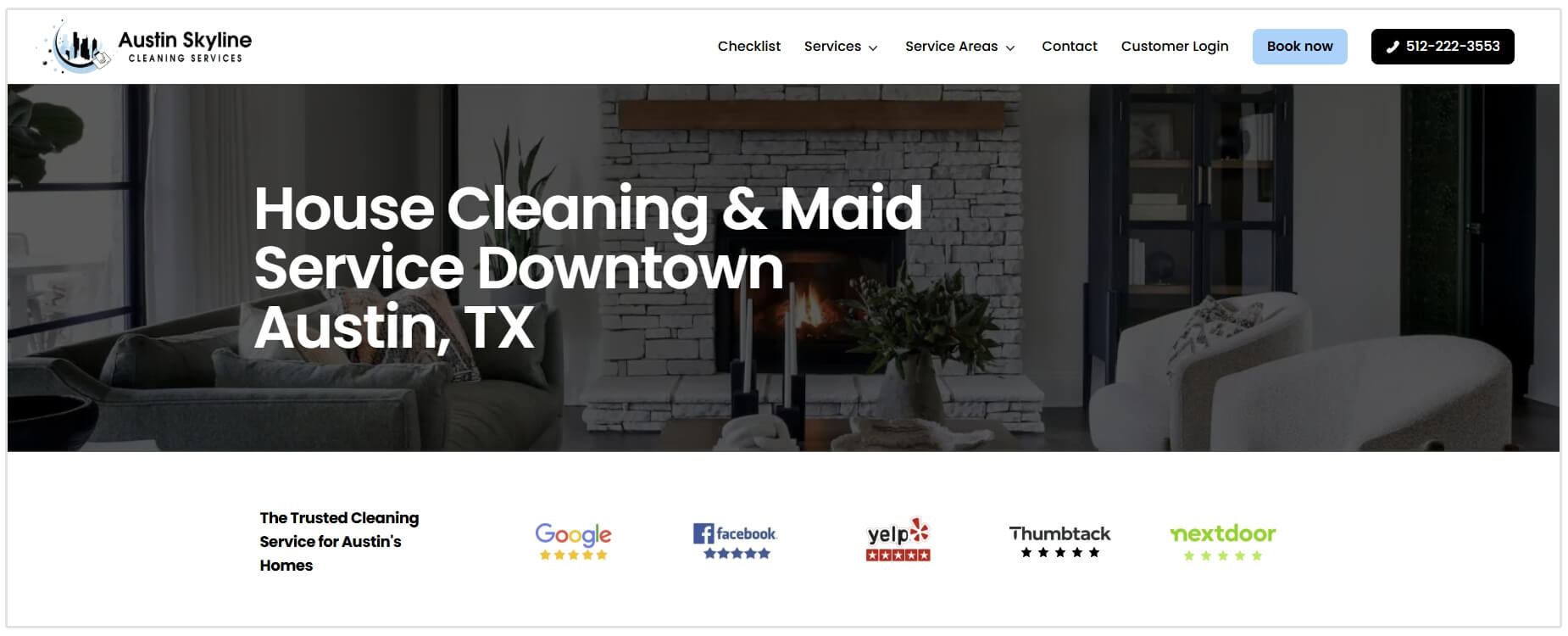
The goal is to make each page useful on its own. If every location page says almost the same thing, it will be harder for Google to see why each page deserves to rank.
Strong location pages give you more opportunities to appear in local organic search results and help customers quickly find the information most relevant to their area.
Improve Mobile and Page Experience
Many local searches happen on mobile devices, especially when people are looking for nearby businesses while they are out and ready to take action.
If your website is slow, difficult to use, or hard to read on a phone, visitors may leave and choose another business instead.
Make sure your website is mobile-friendly and easy to navigate. Important details such as your phone number, address, opening hours, services, and booking options should be simple to find.
You should also check that your pages load quickly, buttons are easy to tap, and forms are simple to complete on smaller screens.
A better page experience helps users find what they need faster. It can also support your local SEO performance by making your website more useful, accessible, and trustworthy.
Keep NAP Information Consistent
NAP stands for name, address, and phone number.
This information should be consistent everywhere your business appears online, including your website, Google Business Profile, social media profiles, online directories, and local listings.
Even small differences can create confusion.
According to SEO consultant Chris Burdick, the single highest-leverage move in local SEO that most businesses skip is getting their NAP data right everywhere.
Name, address, phone number inconsistencies across directories quietly destroy local pack rankings, and nobody notices because the damage is distributed across a hundred citations rather than one obvious broken page.
- Chris Burdick, SEO Consultant
For example, using different phone numbers, old addresses, or slightly different business names across platforms can make it harder for search engines and customers to trust your business information.
Keeping your NAP information consistent helps search engines verify your business details and gives customers confidence that they are contacting or visiting the right business.
Our Local SEO Audit checks your business information across several important online platforms, including Bing Places, Apple Business Connect, Yelp, and Yellow Pages.
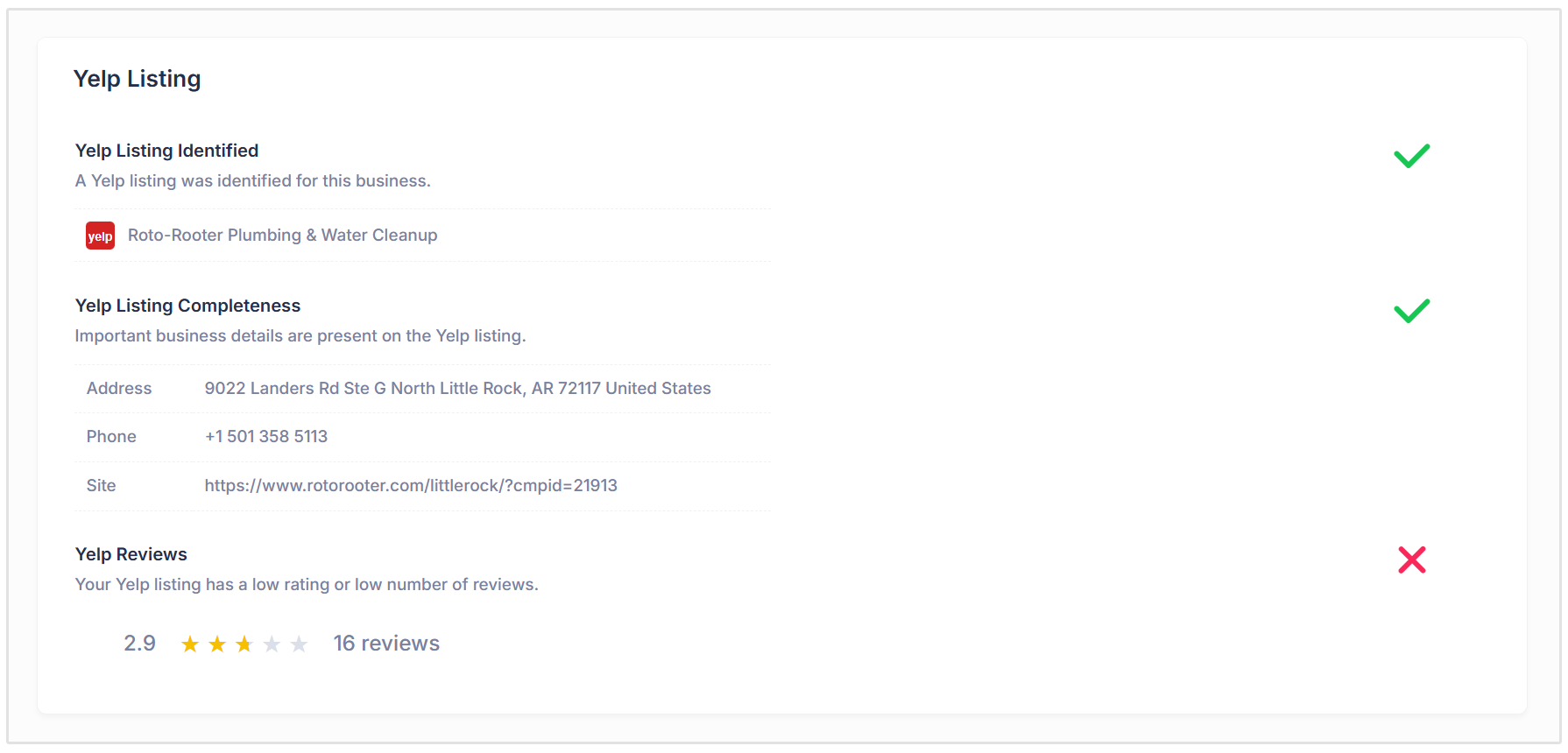
This helps you quickly spot inconsistent or missing listings so you can fix them before they affect your local visibility.
Build Local Citations and Listings
Tying into NAP consistency, you should also build citations and create listings on relevant business directories.
A local citation is any online mention of your business’s name, address, and phone number. These citations can appear on platforms such as business directories, review sites, maps, social media profiles, and industry-specific websites.
The more accurate citations you have across trusted platforms, the easier it is for search engines to verify your business information.
Important places to list your business may include:
- Google Business Profile
- Bing Places
- Apple Business Connect
- Yelp
- Yellow Pages
- Local chambers of commerce
- Industry-specific directories
But remember, you have to make sure every listing uses the same business name, address, phone number, website URL, and opening hours.
Local citations can help improve your local visibility, but only when they are accurate and consistent. Poor-quality or outdated listings can create confusion, so it is worth checking them regularly.
Get and Respond to Reviews
We touched on reviews earlier, but they are important enough to deserve their own section.
Reviews influence how potential customers see your business. They can also support your local SEO by helping search engines understand whether your business is active, trusted, and relevant.
Kriszta Grenyo is the COO at Suff Digital, and one of her top tips for local businesses is to invest in their reviews.
Whether they are good or bad, they contribute to a ranking factor for Google SEO. It’s social proof.
Making it a habit to respond to both positive and negative reviews can help Google better understand your businesses reputation and relevance. Think of it as a PR opportunity and use words that would help strengthen your local relevance for important search terms.
- Kriszta Grenyo, COO at Suff Digital
That is why it helps to have a simple review management and generation strategy.
Start by asking happy customers to leave a review shortly after a positive experience. This could be after a completed appointment, purchase, delivery, consultation, or project. Make the process easy by sending them a direct review link by email, SMS, or WhatsApp.
You should also respond to reviews regularly.
Thank customers for positive feedback, and respond professionally to negative reviews. A calm, helpful response can show future customers that you take feedback seriously and care about customer experience.
A basic review strategy should include:
- Asking satisfied customers for reviews
- Making it easy to leave a review
- Responding to both positive and negative reviews
- Monitoring reviews across platforms
- Looking for recurring feedback or complaints
- Avoiding fake reviews or incentives that break platform guidelines
Reviews help build trust, improve customer confidence, and give your business more credibility in local search.
Build Local Backlinks
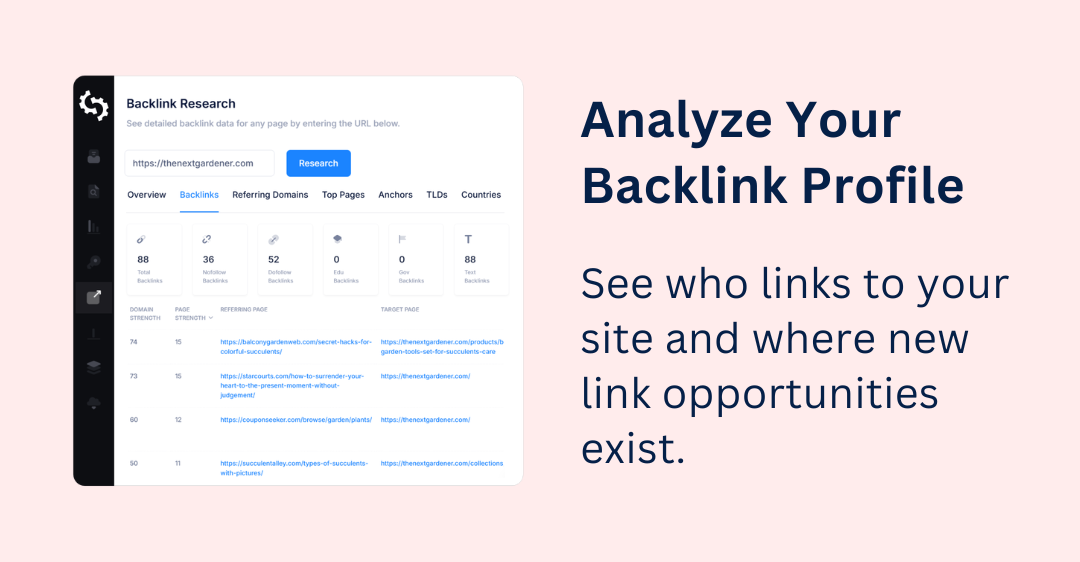
Backlinks are links from other websites to your website.
For local SEO, links from relevant local websites can help show search engines that your business is connected to the area you serve.
These links can come from local news sites, chambers of commerce, community organizations, event pages, sponsorships, suppliers, business partners, or local directories.
Robert Javage, the founder of Javage SEO, told us that one of the most overlooked components of local SEO is backlinks and networking.
Google and AI search engines evaluate your website’s trustworthiness largely based on who is talking about you online.
Backlinks, brand mentions, and citations are the external validation signals that confirm you are an authority in a specific industry.
Therefore, it’s important to strengthen your existing network and intentionally expand it through partnerships, local organizations, and relevant industry events to build online authority.
For example, a local restaurant could earn backlinks by sponsoring a community event, being featured in a local food guide, or partnering with nearby businesses.
Good local backlink opportunities include:
- Local business directories
- Community websites
- Local newspapers or blogs
- Event sponsorship pages
- Charity or nonprofit partnerships
- Local supplier or partner websites
- Industry-specific directories
The goal is not to get as many links as possible. It is to earn relevant, trustworthy links that make sense for your business and location.
Strong local backlinks can support your website’s authority, improve local organic rankings, and help more customers discover your business through trusted local sources.
Local SEO for Service-Area and Multi-Location Businesses
Local SEO looks slightly different depending on how your business serves customers.
A business with one physical location, a service-area business, and a multi-location company all need local SEO, but they should not approach it in exactly the same way.
Service-Area Businesses
Service-area businesses travel to customers instead of serving them at a storefront. This includes businesses like plumbers, electricians, cleaning companies, landscapers, mobile mechanics, and pest control companies.
For these businesses, the goal is to show which areas you serve without pretending to have physical offices in each location.
Your website should clearly list your service areas, and your Google Business Profile should be set up with the correct service area settings. You can also create helpful service-area pages for important cities or suburbs, as long as each page is unique and genuinely useful.
For example, a cleaning company could explain which suburbs it serves, what services are available in each area, typical booking times, and any local details customers may need to know.
Related Reading: Local SEO for Service Based Businesses
Multi-Location Businesses
Multi-location businesses have more than one physical branch, office, or store.
For these businesses, each location should have its own Google Business Profile and its own location page on the website. This helps customers find the branch closest to them and gives search engines clear information about each location.
Each location page should include the correct address, phone number, opening hours, services, photos, reviews, and directions for that specific branch.
For example, a dental group with three clinics should not send every local searcher to one generic contact page. Each clinic should have its own page that explains where it is, which services it offers, and how patients can book at that location.
The main goal is to avoid treating every location or service area as the same. The more specific and helpful your local information is, the easier it is for customers and search engines to understand where you operate and which location is most relevant.
Related Reading: Local SEO for Multiple Locations
How to Track Local SEO Performance
Once you start improving your local SEO, you need to track whether your efforts are actually working.
Local SEO performance can vary by location, device, and search engine. For example, your business might rank well in one city but not in another, or perform differently on mobile compared to desktop.
Some of the most important local SEO metrics to track include:
- Local keyword rankings
- Google Maps and Local Pack visibility
- Website traffic from local searches
- Calls, form submissions, and direction requests
- Google Business Profile views and actions
- Review growth and average rating
- Local landing page performance
One of the most useful ways to measure progress is by tracking your local keyword rankings over time.
SEOptimer’s Local Rank Tracker shows how your keywords perform in specific locations, giving you a more accurate view of your local search visibility.
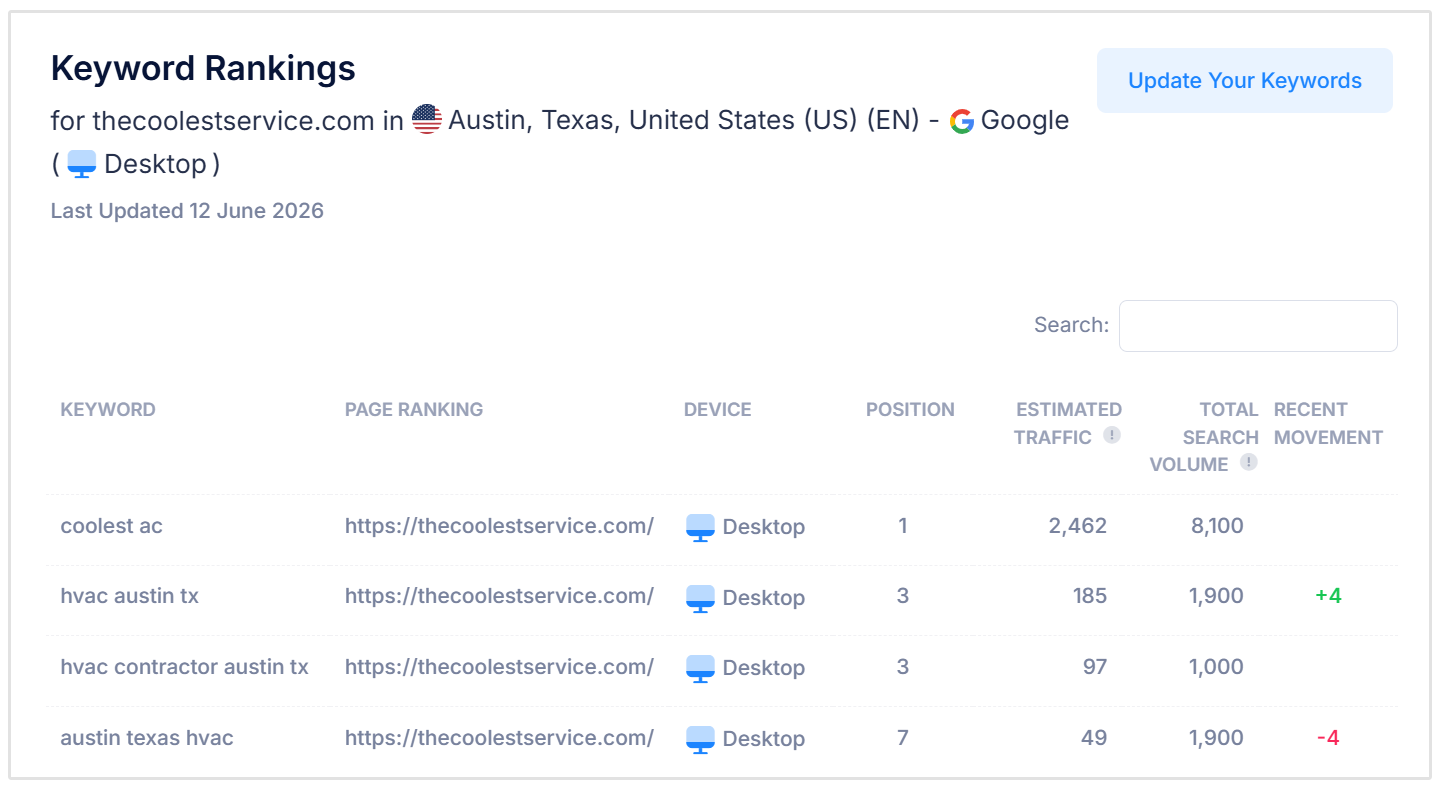
You can track rankings at a granular level, including city, state, county, and postcode. You can also monitor performance across mobile and desktop devices, as well as Google and Bing search engines.
To access the tool, go to your SEOptimer dashboard, click Keywords, and then select Keyword Tracking.
From there, you can add your keywords and choose the specific location you want to track.
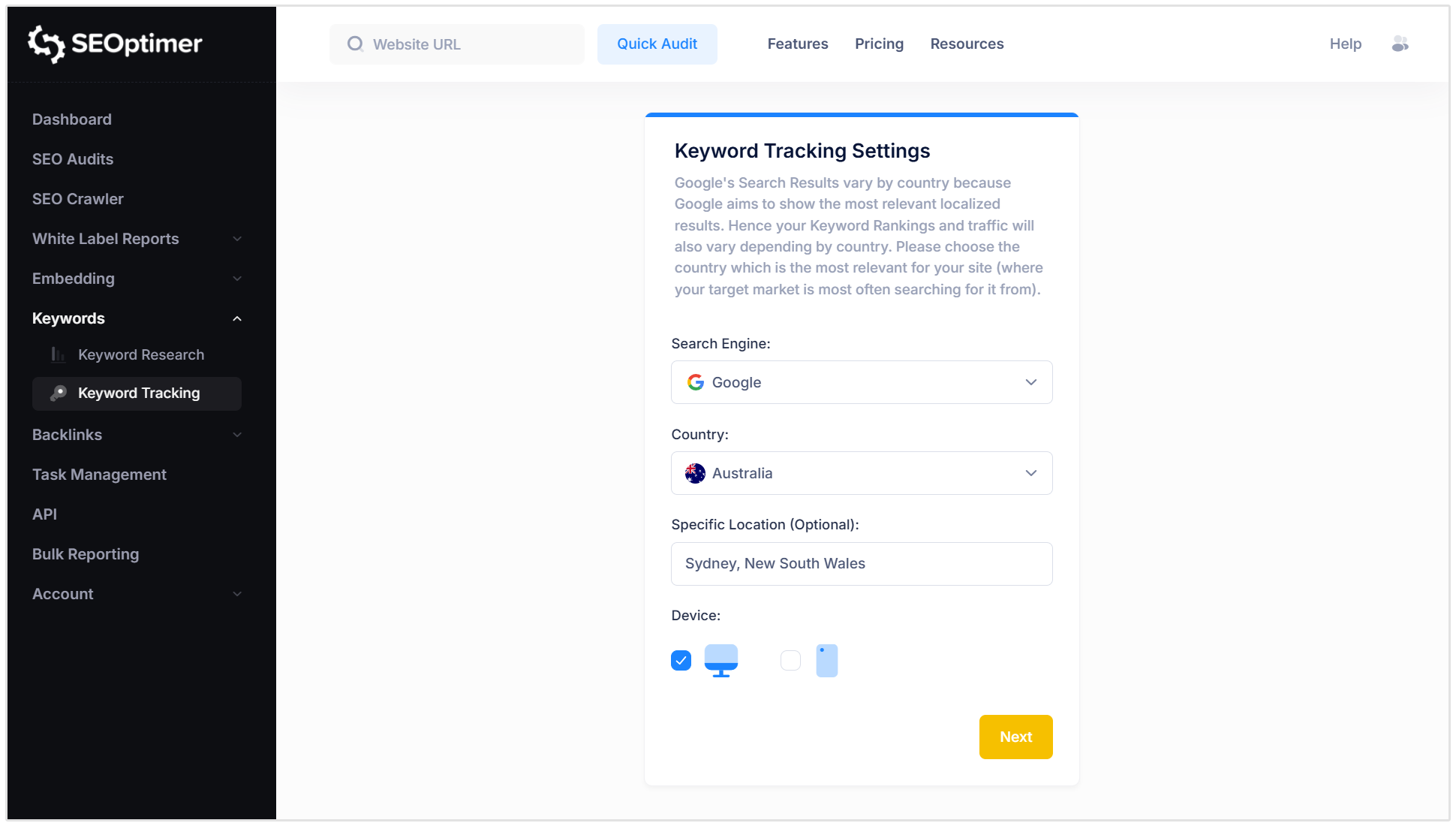
This is especially useful for agencies managing multiple clients or locations, as well as businesses targeting specific service areas.
Instead of relying on broad ranking data, local rank tracking helps you see how visible your business really is in the areas that matter most.
FAQs
What is the difference between SEO and local SEO?
SEO focuses on improving your visibility in search results in general, while local SEO focuses on helping your business appear for searches in a specific area.
For example, a national ecommerce store may use SEO to rank for product-related searches across the country. A local business uses local SEO to reach nearby customers who are more likely to call, visit, book, or request directions.
How long does local SEO take to work?
Local SEO results can vary depending on your competition, location, website quality, Google Business Profile, reviews, and existing online presence.
Some improvements, such as updating your Google Business Profile or fixing incorrect business listings, can make a difference fairly quickly. Other efforts, such as building local backlinks, creating location pages, and improving rankings, usually take longer.
How do I know if my local SEO is working?
You can track local SEO performance by monitoring your keyword rankings, Google Maps visibility, website traffic, calls, form submissions, direction requests, reviews, and Google Business Profile actions.
Using a local rank tracking tool can also help you see how your rankings change across different locations, devices, and search engines.
Is Google Business Profile important for local SEO?
Yes, your Google Business Profile is one of the most important parts of local SEO because it helps your business appear in Google Maps and the Local Pack.
And the best part is, it’s completely free to create a profile. All it takes is your time.
Do reviews help local SEO?
Yes, reviews can help local SEO because they show both customers and search engines that your business is active and trusted.
Positive reviews can improve customer confidence, while regular review responses show that your business is engaged. Reviews are especially important in Google Maps and the Local Pack, where customers often compare nearby businesses before making a decision.
Conclusion
Local SEO helps your business get found by nearby customers when they are ready to call, visit, book, or buy.
By improving your Google Business Profile, website, local keywords, listings, reviews, and rankings, you can increase your visibility across Google Search, Google Maps, and local organic results.
To see where you can improve, run a local SEO audit with SEOptimer and get a clearer view of your website, Google Business Profile, listings, reviews, and local rankings.