


LLM optimization can help increase the chances of your website being mentioned or cited in answers generated by ChatGPT, Gemini, Claude, and other AI platforms.
If your site isn’t being mentioned or cited in AI, it usually means these systems are struggling to access your content, understand your brand, or find enough credible information to support mentioning it.
There are dozens of LLMO tactics and so-called hacks you could try. In this guide, we’ll look at the most important and most effective LLM optimization tactics you can focus on first if you want to build a stronger presence in LLM-generated answers.
What is LLM Optimization (LLMO)?
LLM optimization (LLMO) is the process of improving your website and online presence so that large language models can more easily find, understand, and reference your brand.
The main objective of LLMO is to increase your chances of being mentioned or cited in answers generated by AI platforms such as ChatGPT, Gemini, Claude, and Perplexity.
How does LLM Optimization Work?
LLM optimization works by making information about your website and brand easier for AI platforms to find, understand, and trust.
LLMs gather information from sources such as websites, search results, public datasets like Common Crawl, directories, and other third-party platforms like Reddit, Quora, etc.
They use these signals to understand what your brand does and whether it is relevant and credible enough to be mentioned or cited in an answer to a user’s question.
If you want to increase the likelihood that LLMs will mention or cite your brand, you need to focus on these three key pillars:
- Making your website accessible to AI crawlers
- Creating content that LLMs can easily understand
- Building your brand’s authority across the web.
LLM Mentions vs LLM Citations
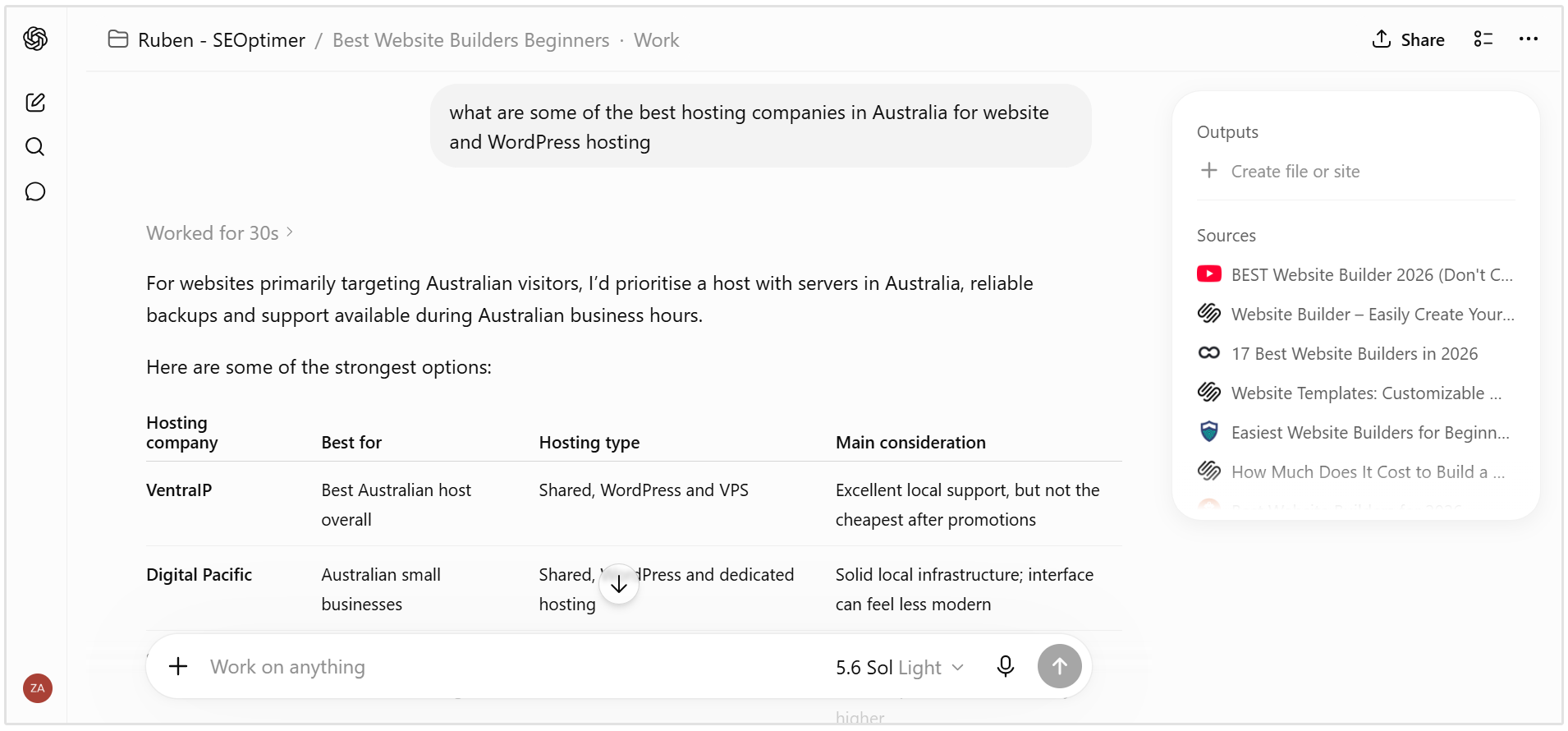
An LLM mention occurs when an AI-generated answer names or discusses your brand, even if it doesn’t link to your website.
For instance, here is an example of an AI mention when I asked ChatGPT for the best hosting companies in Australia. As you can see it mentions providers like VentraIP and Digitla Pacific, but no citation or source link back to either companies.
An LLM citation occurs when the answer includes a link to your website as a source. For example here we can see an example of a citation in Gemini when I asked it for creating me a list of the accounting software for small businesses in South Africa:
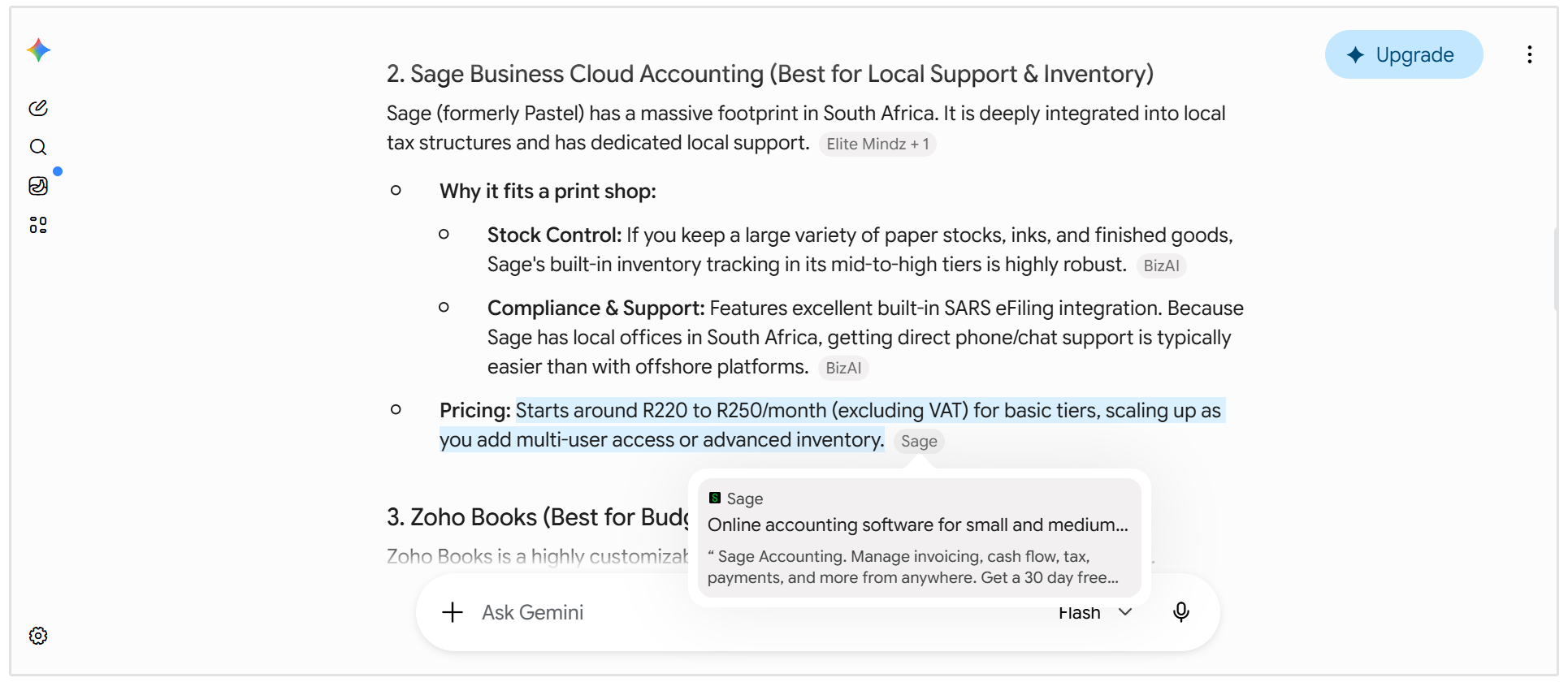
Citations are slightly better in that they can also send referral traffic directly to your site.
How to Optimize for LLMs
Build a Strong SEO Foundation
LLM optimization still starts with good SEO. AI platforms often rely on search results and crawlable web content to find reliable information, so a technically sound and well-optimized website gives your brand a stronger chance of being discovered and cited.
Brendon Kraham, Google’s Vice President of Search and Commerce for Global Ads Solutions, recently shared an excellent article explaining why a strong SEO foundation remains essential for improving visibility in generative AI search. As he puts it:
Your existing investment in solid, foundational SEO is your launchpad for AI success. That’s why good SEO is good GEO (or AEO, or AI SEO, or whatever). The great thing about focusing on a solid foundation is that it gives you permission to stop wasting time on misleading tactics.
- Brendon Kraham, Google’s Vice President of Search and Commerce for Global Ads Solutions
A solid SEO foundation includes:
- Logical website structure and internal linking
- Descriptive page titles and headings
- Fast loading speeds and mobile responsiveness
- Crawlable, indexable pages
- Relevant backlinks from trusted websites
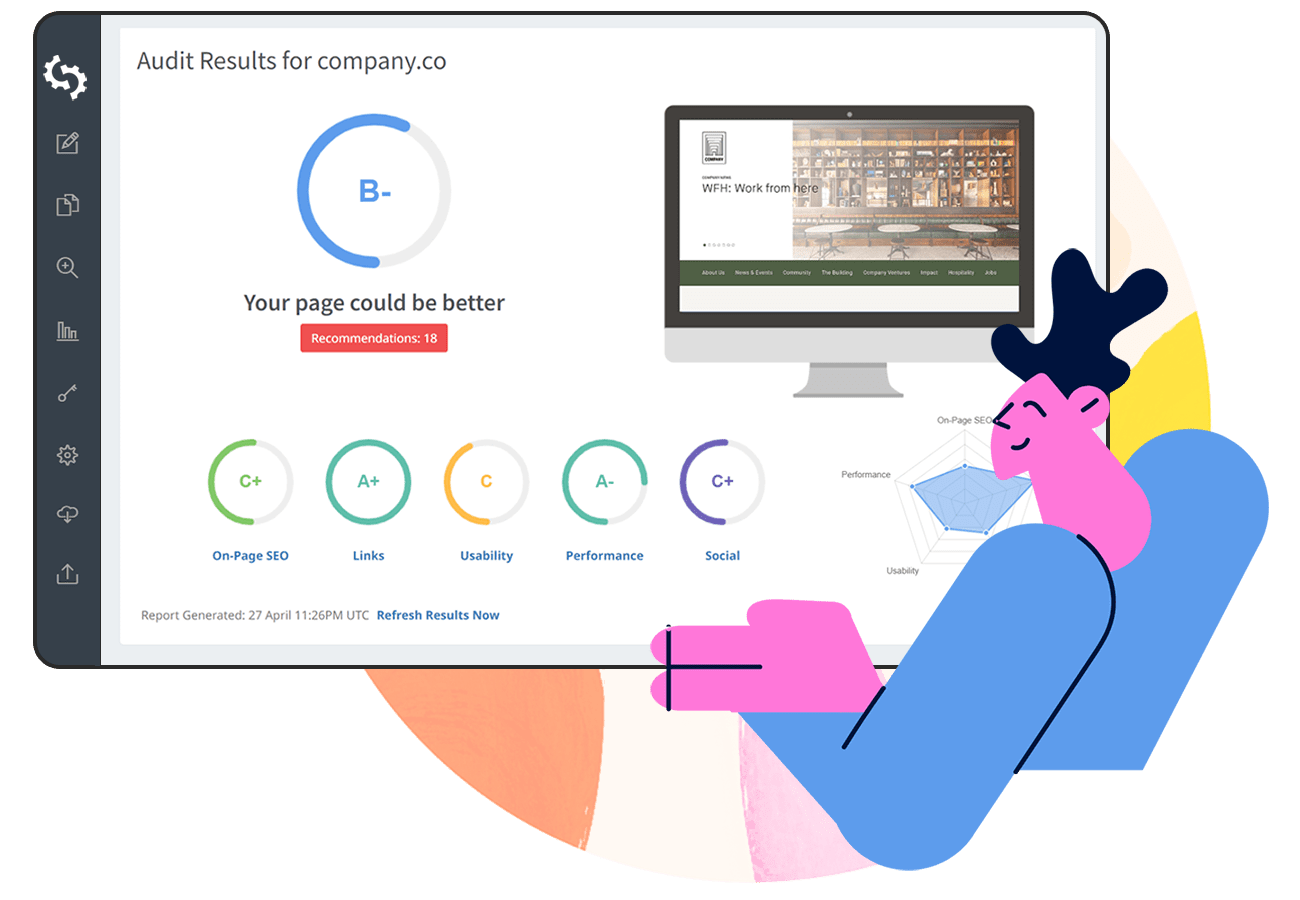
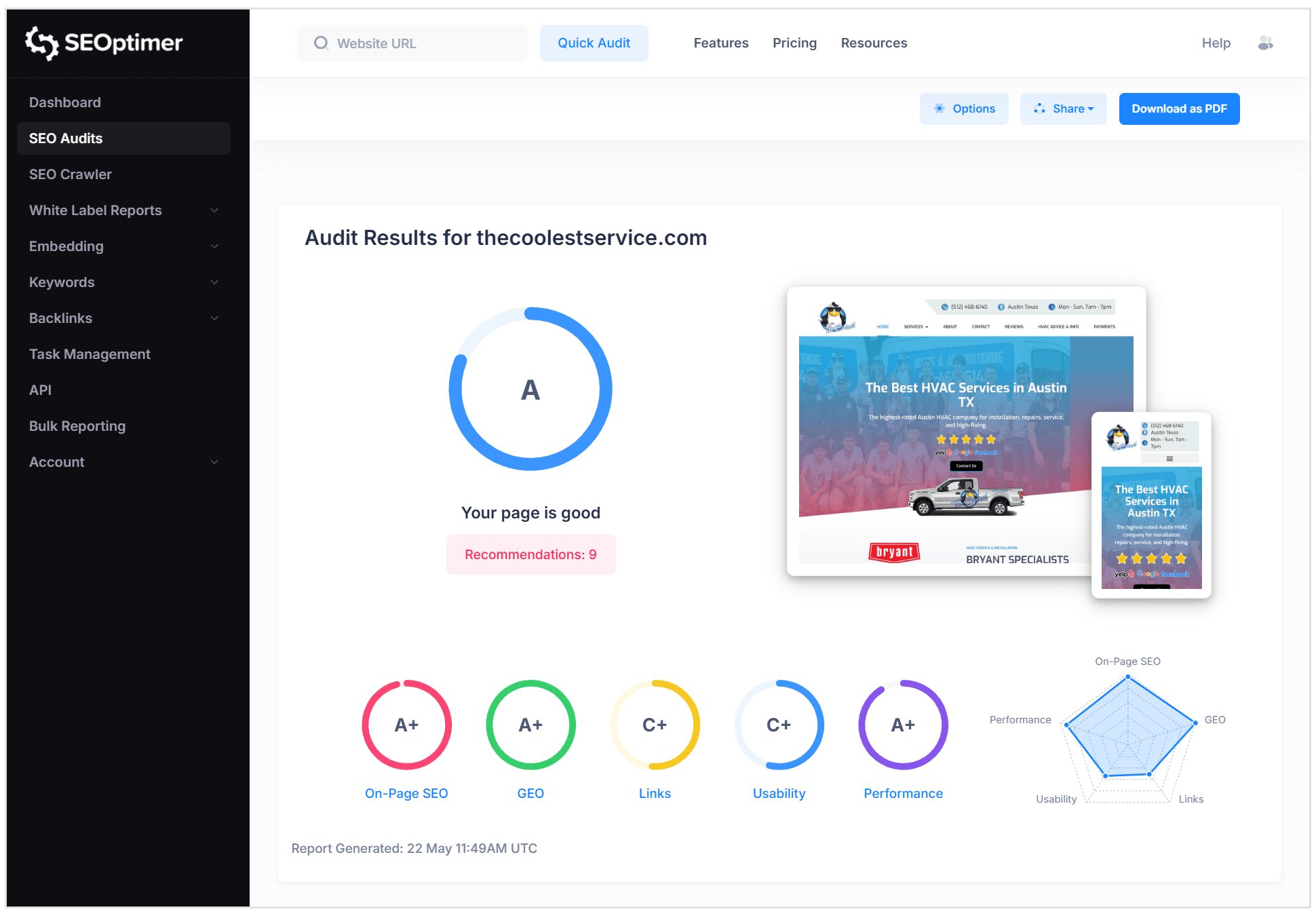
You can use SEOptimer's comprehensive SEO Audit tool to analyze your website and identify the SEO issues that may be holding it back.
Each audit reviews your on-page SEO, technical performance, usability, links, and other important signals, giving you clear recommendations on what to improve first.
Make Sure LLMs can Access Your Website
Before an LLM can mention or cite your content, its crawlers need to be able to access it.
Different AI platforms use their own crawlers to search the web, retrieve information for user questions, or collect data that may be used to improve future models.
Examples of AI crawlers include:
- OAI-SearchBot for appearing in ChatGPT search results
- GPTBot for content that may be used to improve OpenAI’s models
- Claude-SearchBot for Claude’s search results
- Claude-User for retrieving pages in response to user requests
- Google-Extended for controlling whether Google may use content to improve Gemini models
Review your robots.txt file and security settings to make sure you haven’t accidentally blocked the crawlers you want accessing your site.
You should also ensure that your important pages are:
- Publicly accessible
- Indexable by search engines
- Included in your XML sitemap
- Connected through internal links
- Free from broken redirects and server errors
- Not hiding essential content behind logins or JavaScript
Our dedicated GEO Audit report includes a dedicated GEO Accessibility section that checks your site’s AI crawler permissions, rendered content, robots.txt configuration, and other important accessibility elements.
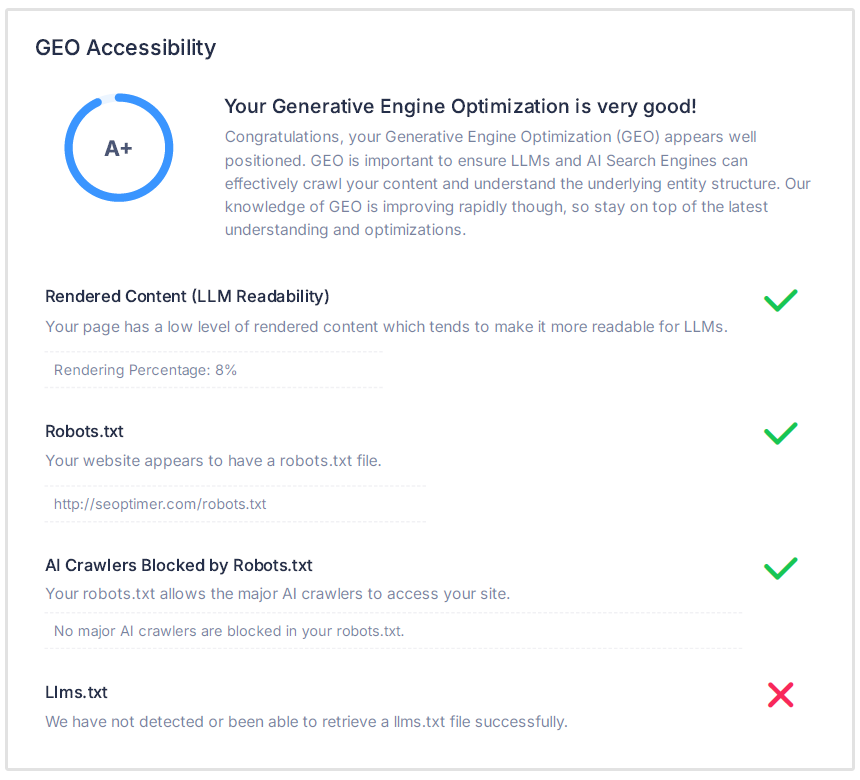
This makes it easy to identify anything that may prevent LLMs from finding and processing your content.
Make it Clear what Your Brand Does
LLMs need clear and consistent information to understand who your brand is, what you offer, and which topics your business is relevant to.
Make sure your website clearly explains your products or services, target audience, location, expertise, and key differentiators.
Keep this information consistent across your About page, social profiles, business directories, review platforms, and other third-party websites.
The easier it is for an LLM to understand what your business does and verify that information elsewhere, the more confidently it can mention your brand in a relevant response.
Create Original Content
With more content being published than ever before, simply repeating information that already exists gives LLMs little reason to cite your website.
Original content offers something they can’t find everywhere else, making your site a more valuable source.
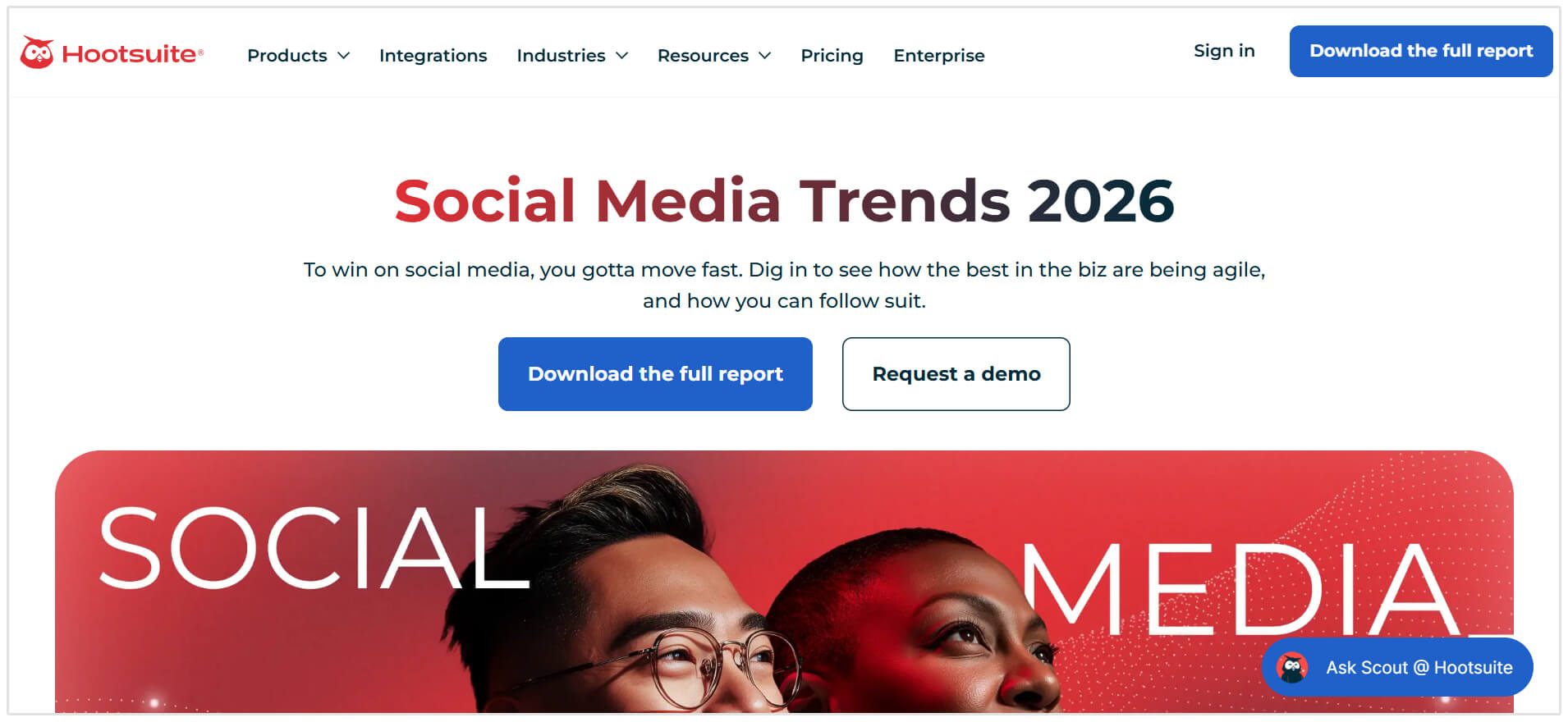
This could include:
- Original research or survey results
- First-hand experience and expert opinions
- Proprietary data and industry statistics
- Case studies with real outcomes
- Unique examples, frameworks, or comparisons
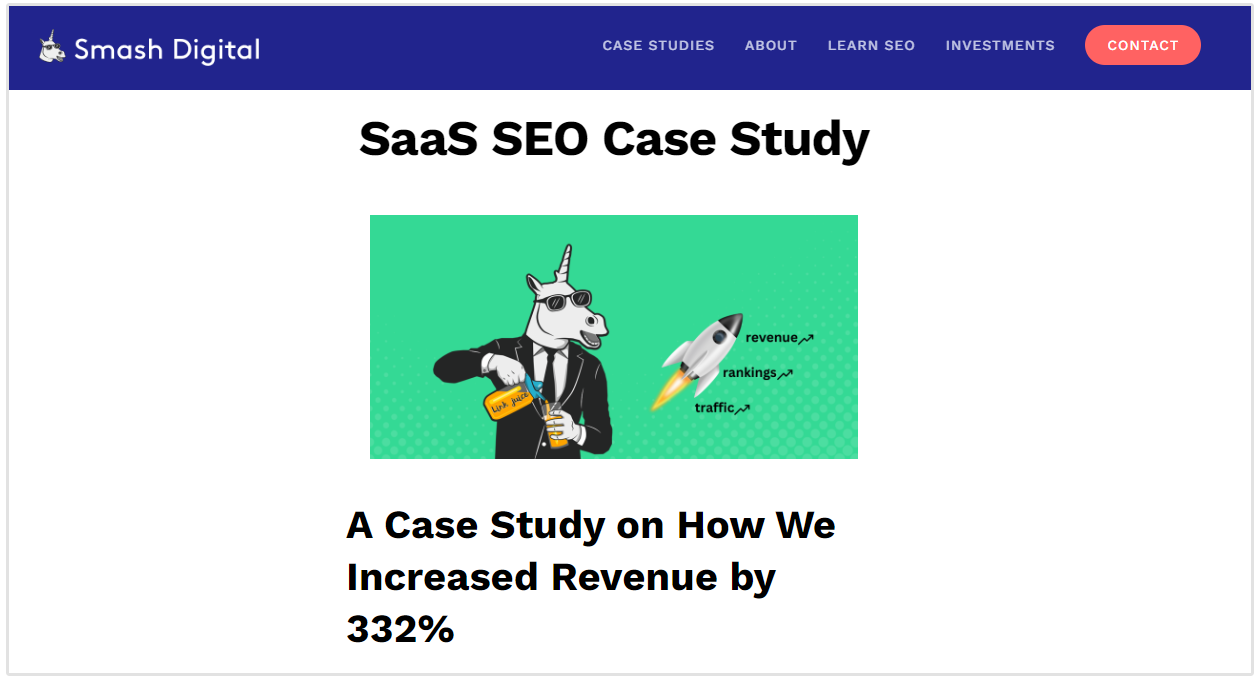
The content doesn’t necessarily need to be long, it just needs to add something new.
In a world of unlimited content, first-hand knowledge and original insights give both readers and LLMs a genuine reason to choose your website over another summary of the same information.
Add Quotes and Statistics
Quotes and statistics make your content more specific, credible, and useful.
Instead of making a general claim, you can support it with expert insight or a measurable data point that LLMs can easily extract and reference.
A study conducted by researchers from Princeton University, Georgia Tech, the Allen Institute for AI, and IIT Delhi found that adding relevant quotations, statistics, and credible source citations could improve content visibility in AI-generated responses by up to 40% within its experimental setting.
For the best results:
- Quote recognized experts or people with first-hand experience
- Use specific and recent statistics
- Link back to the original source
- Include enough context to explain what the data means
- Avoid adding numbers or quotes simply to decorate the page
But remember, a statistic is only valuable when it helps answer the reader’s question.
Target Conversational Questions and Prompts
People tend to use longer and more specific questions when searching with LLMs.
For instance, instead of searching for a broad keyword such as carry-on luggage, a consumer might ask: What is the best lightweight carry-on suitcase for international travel that costs less than $150?
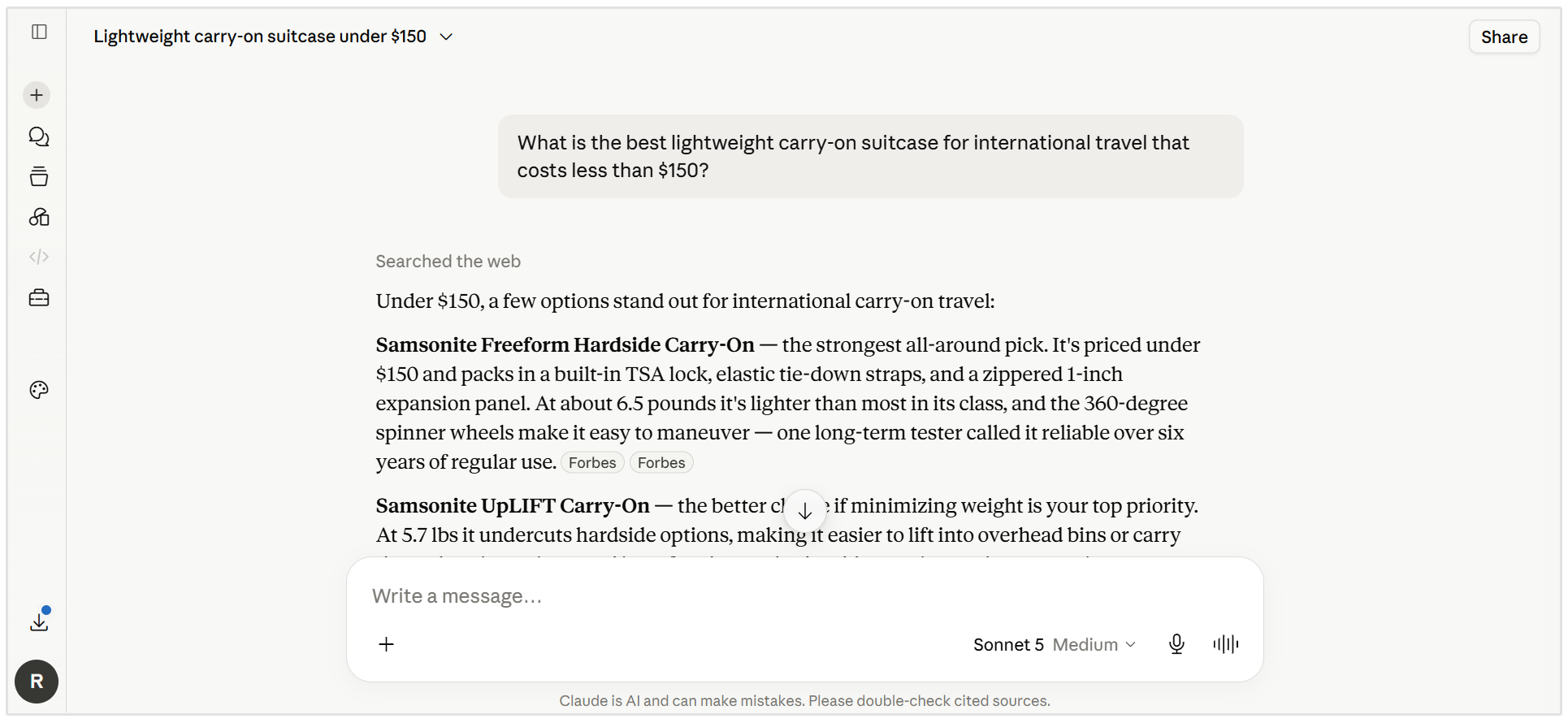
Create content that answers these detailed questions by considering factors such as the customer’s budget, preferences, circumstances, and intended use.
Look for prompts involving:
- Problems customers want to solve
- Product comparisons
- Recommendations for specific audiences
- “Best for” use cases
- Budget or pricing requirements
- Advantages and disadvantages
- Alternatives to popular products
You can find these questions in customer reviews, support requests, social media comments, forums, search suggestions, and traditional keyword research tools.
Traditional SEO keywords still help you identify the broader topic. And conversational prompts take that topic one step further by addressing the exact situation behind the search.
Add Relevant Structured Data
Structured data helps search engines understand specific details about a page, such as the organization behind it, its author, products, reviews, or business information.
This can support richer search results and reinforce important details about your brand.
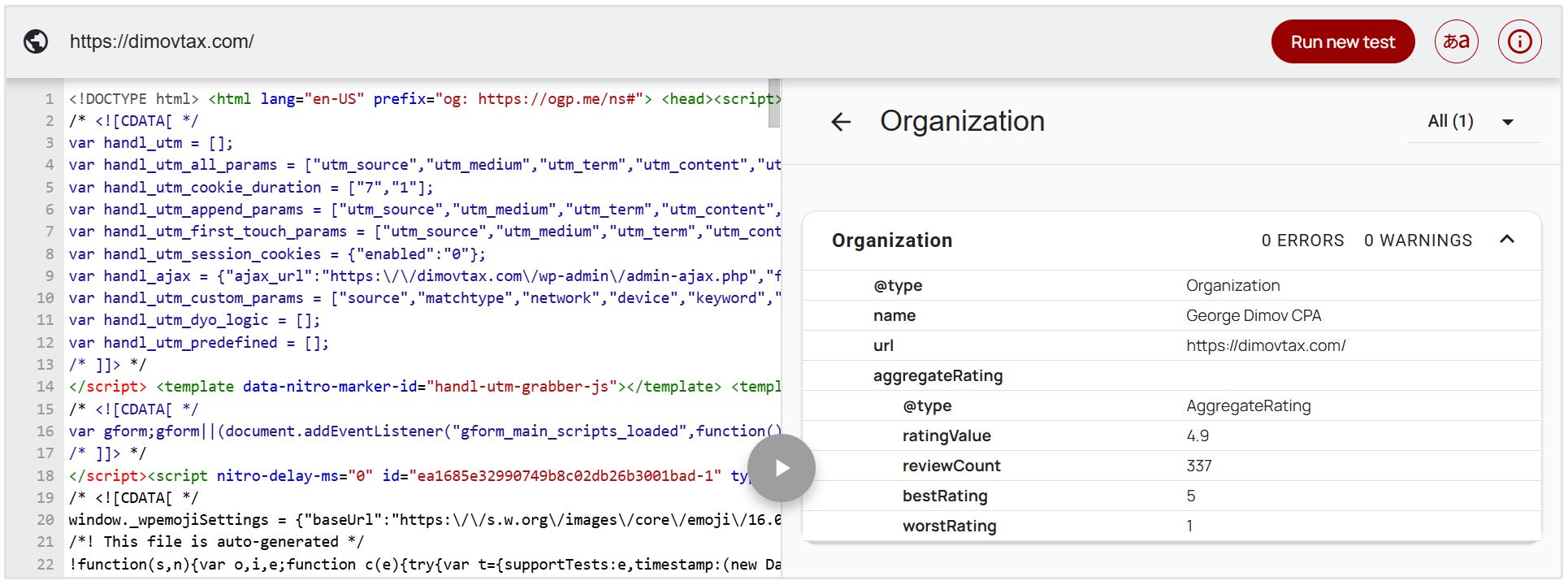
However, structured data shouldn’t be treated as a shortcut to LLM visibility.
Google has confirmed that there is no special schema markup required to appear in AI Overviews or AI Mode. It simply recommends using relevant structured data and ensuring that it matches the content visible on the page.
Structured data isn't required for generative AI search, and there's no special schema.org markup you need to add. However, it's a good idea to continue using it as part of your overall SEO strategy, as it helps with being eligible for rich results on Google Search.
- Google Search Central
Recent research also suggests that schema alone has little direct impact on AI citations.
Ahrefs tracked 1,885 pages that added JSON-LD structured data and found no meaningful increase in citations across Google AI Overviews, Google AI Mode, or ChatGPT.
The study focused on pages already receiving AI citations, so it doesn’t prove that schema has no value, but it does show that adding it is unlikely to be a magic LLMO hack.
Use structured data where it genuinely describes the page, such as:
- Organization
- Person
- Article
- Product
- LocalBusiness
- SoftwareApplication
- BreadcrumbList
Think of structured data as supporting information rather than a ranking signal you can rely on. It can make your website’s entities and attributes clearer, but strong content, crawlability, authority, and relevance still do the heavy lifting.
Earn Mentions on Authoritative Third-Party Websites
LLMs don’t rely only on what a business says about itself.
They also consider how that brand is described across the wider web. Mentions on credible third-party websites can confirm what a company sells, who its products are for, and why it deserves to be recommended.
For example, imagine a company selling non-toxic household cleaning products. If respected home and lifestyle publications include the brand in product comparisons, reviews, and recommended lists, LLMs have independent sources supporting its connection to non-toxic cleaning.
You can earn these mentions through:
- Digital PR and original research
- Product reviews and comparisons
- Relevant “best of” listicles
- Expert contributions to industry publications
- Trusted directories and review platforms
- Partnerships and customer case studies
- Interviews, podcasts, and webinars
Prioritize websites that are relevant to your category and already appear as sources for the prompts you want to target.
Invest in UGC Content
User-generated content gives LLMs real conversations about how people experience, compare, and describe your brand.
Platforms such as Reddit, Quora, YouTube, specialist forums, review websites, and social communities contain detailed discussions about products and services. These conversations often include the natural questions, opinions, use cases, and comparisons that also appear in AI prompts.
For example, a meal-kit company might describe itself as convenient and affordable.
But a Reddit discussion comparing its portion sizes, vegetarian options, delivery reliability, and value for couples provides much more specific context for an LLM answering a product recommendation question.
This doesn’t mean posting promotional links in every vaguely relevant Reddit thread. Instead, focus on generating genuine participation by:
- Building an active community around your product category
- Encouraging customers to share honest reviews and experiences
- Answering relevant questions without forcing a sales pitch
- Partnering with creators who already speak to your audience
- Hosting AMAs or expert discussions
- Monitoring conversations and correcting inaccurate information
- Using customer feedback to create genuinely useful content
You want to encourage authentic conversations with your audience.
Spammy posts, fake reviews, and undisclosed promotions can damage your reputation with both communities and potential customers.
Strengthen Your Backlink Profile
Backlinks can support LLM visibility by helping your pages rank, get discovered, and build authority in traditional search. This is important because AI platforms often use search indexes to retrieve sources for their responses.
However, backlinks shouldn’t be treated as a direct LLM ranking factor.
Their value of having a strong backlink profile is that it can improve the likelihood that your content is found and considered alongside other credible sources.
Focus on earning links from relevant, trustworthy websites through:
- Original research and industry data
- Digital PR
- Expert commentary
- Useful guides, tools, and templates
- Product reviews and comparisons
- Partnerships and industry associations
- Reclaiming brand mentions that don’t currently link to your site
Quality beats quantity here. One relevant editorial link can be far more valuable than dozens of links from unrelated directories.
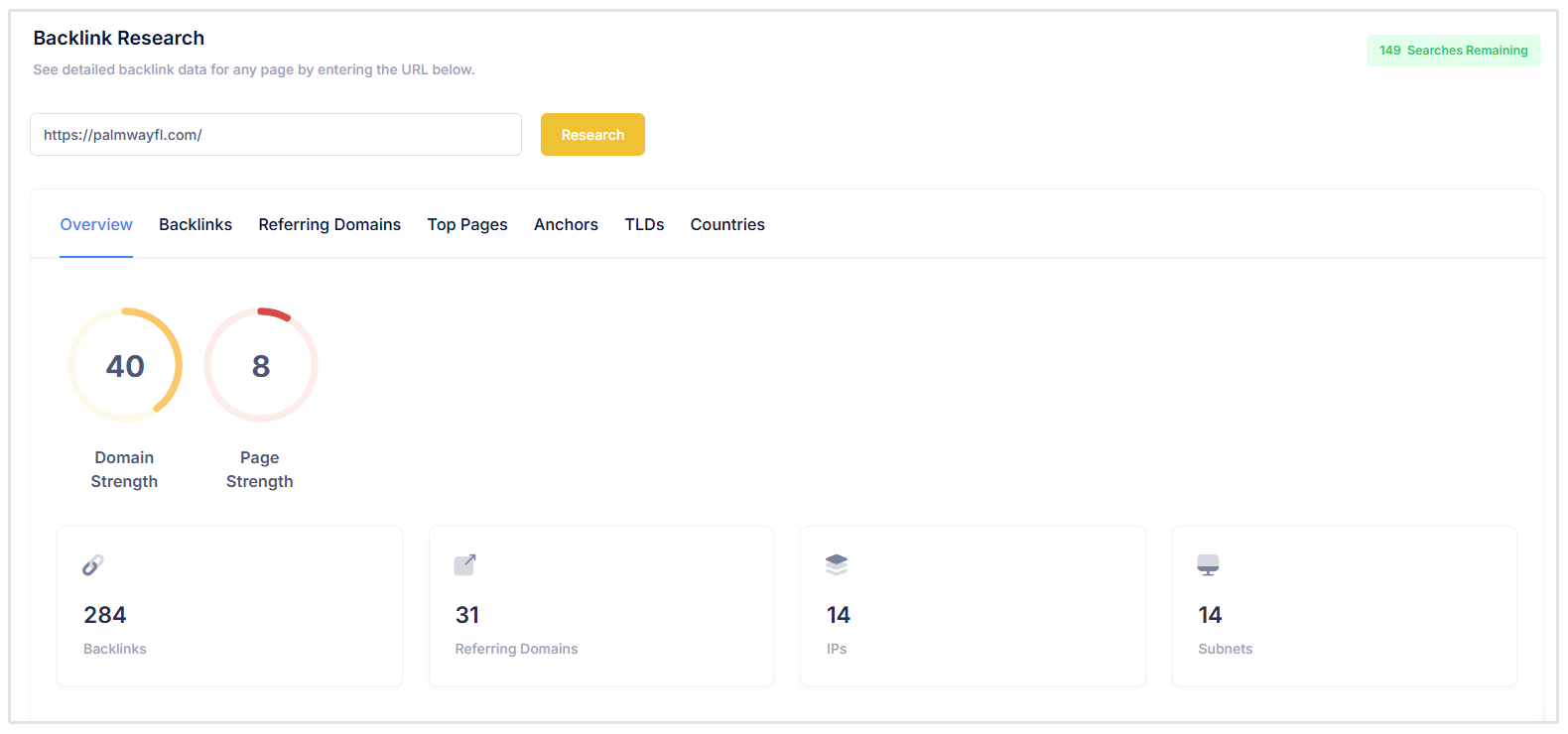
Use SEOptimer’s free Backlink Checker to review which websites link to you, assess the quality of those links, and compare your backlink profile with competitors.
Consider Creating an llms.txt File
An llms.txt file provides LLMs with a simple, structured overview of your website and links to the pages you consider most important. It is placed in the root directory of your site, much like a robots.txt file.
However, adding an llms.txt file is not a magic bullet for LLM visibility. It won’t automatically get your brand mentioned, improve your authority, or guarantee that AI platforms will cite your content. The format is still an emerging proposal, and it has not been formally adopted by every major LLM provider.
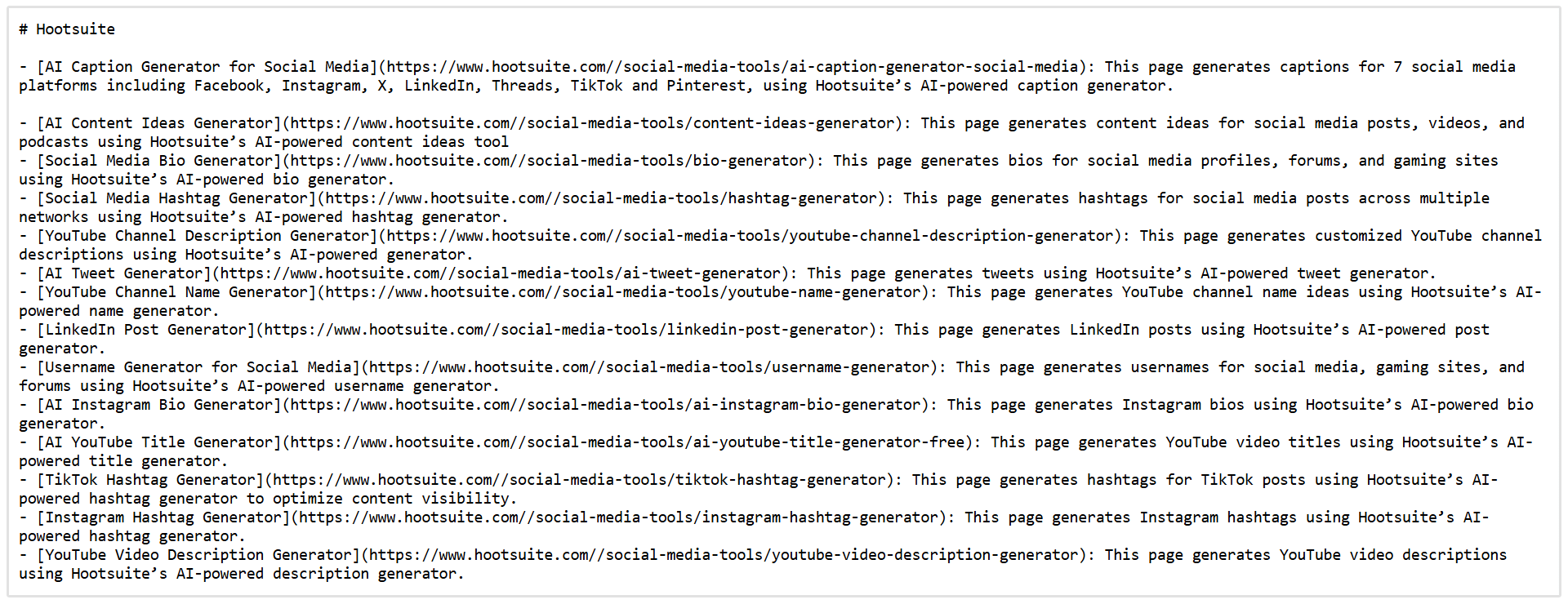
Think of it as a supporting resource that may make your website easier for AI systems to navigate and understand.
It should complement—not replace—crawlable content, strong SEO, original information, authoritative mentions, and quality backlinks.
If you create one, keep it concise and include:
- A clear description of your website
- Your most important products or services
- Links to key pages and documentation
- Brief descriptions of what those pages contain
- Accurate, up-to-date information
SEOptimer’s GEO Audit checks whether your website has an llms.txt file and whether it is accessible, helping you identify a potential gap without overstating its impact.
How to Check if Your Site is AI-Ready
Want to know whether your website is ready to be found, understood, and recommended by LLMs? Run a SEOptimer GEO Audit.
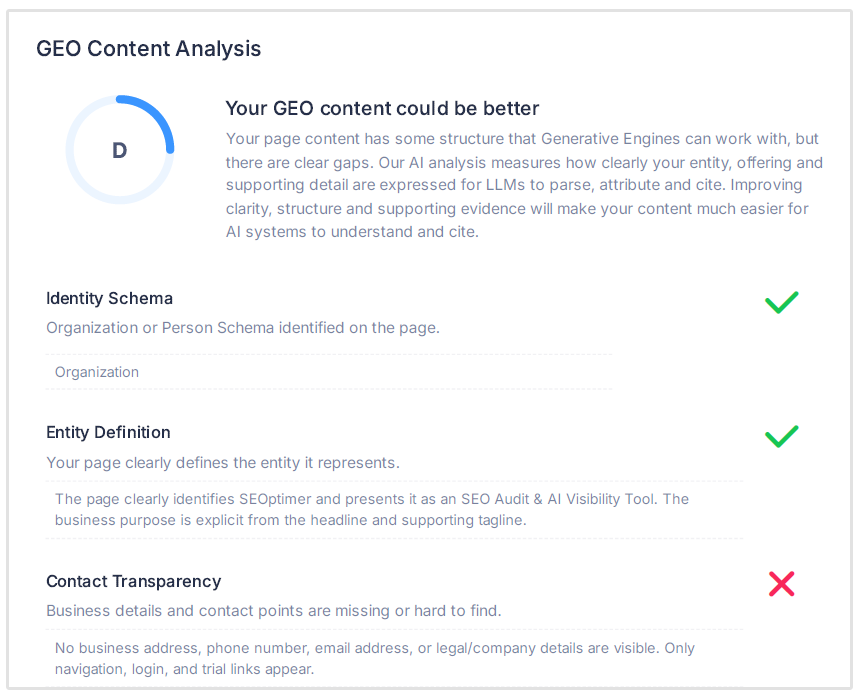
The report evaluates your website across four key areas:
- GEO Accessibility: Checks rendered content, LLM readability, robots.txt, AI crawler access, llms.txt, XML sitemaps, and noindex directives.
- GEO Content Analysis: Reviews how clearly your brand is defined and evaluates identity schema, contact transparency, answer alignment, citation readiness, content structure, freshness, and trust signals.
- GEO Prompt Visibility: Tests whether your business appears in relevant answers across ChatGPT, Claude, Gemini, and Perplexity. It also compares your citation rate, average position, and share of AI visibility against competitors.
- On-Page SEO: Checks the essential SEO elements that support discovery, including title tags, meta descriptions, headings, image alt text, canonical tags, crawlability, and structured data.
You’ll receive an overall GEO grade, individual scores for each section, and prioritized recommendations showing exactly where your site needs improvement. You can also see the top searches where your website is already being cited in Google AI Overviews.
Instead of guessing why your website isn’t appearing in AI-generated answers, the SEOptimer GEO Audit gives you a clear picture of how accessible, understandable, credible, and visible your brand currently is.
Run your GEO Audit today and find out whether your website is ready for LLM search.
LLM Optimization FAQ
How is LLM optimization different from SEO?
SEO focuses on improving a website’s visibility in traditional search results, while LLM optimization focuses on earning mentions and citations in AI-generated answers.
The two overlap considerably because strong content, crawlability, authority, and backlinks benefit both SEO and LLM visibility.
Can LLM optimization guarantee that my website will be mentioned?
No. LLM responses can vary by platform, prompt, location, and even between repeated searches. LLM optimization cannot guarantee a mention, but it can improve the signals that help AI platforms access, understand, and trust your website.
How long does it take to see results from LLM optimization?
There is no fixed timeframe. Improvements may appear relatively quickly on platforms that retrieve live web content, while other changes can take weeks or months to be discovered and processed.
Your existing authority, competition, and the quality of your improvements will also affect the timeline.
How can I track whether my brand is being mentioned by LLMs?
Test relevant discovery and recommendation prompts across platforms such as ChatGPT, Claude, Gemini, and Perplexity.
Track whether your brand appears, its position in the response, which pages are cited, and how its visibility compares with competitors. SEOptimer’s GEO Audit automates this by evaluating your prompt visibility across all four platforms.
Do I need an llms.txt file to appear in LLM-generated answers?
No, an llms.txt file is not required to be mentioned or cited by LLMs, and major AI platforms have not universally adopted the format.
It can provide a structured overview of your website and important pages, but it should be treated as a supporting measure rather than a replacement for accessible content, good SEO, and strong authority signals.
Conclusion
LLM optimization is still evolving, so there’s no single tactic that will guarantee your brand a place in every AI-generated answer. Start with a strong traditional SEO foundation, see how your brand currently appears across different AI platforms, and focus on the areas where you’re falling behind.
Most importantly, keep testing and refining your approach as AI search continues to change.