

An AI search competitor analysis helps you understand how competing brands appear in ChatGPT, Gemini, Perplexity, Claude, and other AI tools/platforms.
Just as you track competitor rankings in Google, you should monitor which brands or competitors AI tools mention, recommend, and cite for prompts relevant to your business.
In this guide, we’ll show you how to identify your AI search competitors, compare their visibility with your own, and manually track the results using our free tracking template.
What is a Competitor AI Visibility Analysis?
A competitor AI visibility analysis compares how often your brand and its competitors appear in answers generated by ChatGPT, Gemini, Perplexity, and Claude.
Unlike competitive intelligence in traditional SEO, which focuses on organic rankings, backlinks, and keywords, AI visibility analysis looks at signals such as:
- How often each brand is mentioned
- Which brands are recommended for relevant prompts
- Which websites are cited as sources
- Where brands appear within AI-generated answers
Doing this helps you identify which competitors are gaining the most exposure in AI search, understand why they are being mentioned, and uncover opportunities to improve your own visibility.
This process is often called AI prompt tracking because it measures which prompts cause AI tools to surface your brand or its competitors.
What is the Difference between Mentions and Citations?
A mention occurs when an AI platform includes your brand name in its response. For example, Gemini might recommend your company as one of the best options for a particular product or service.
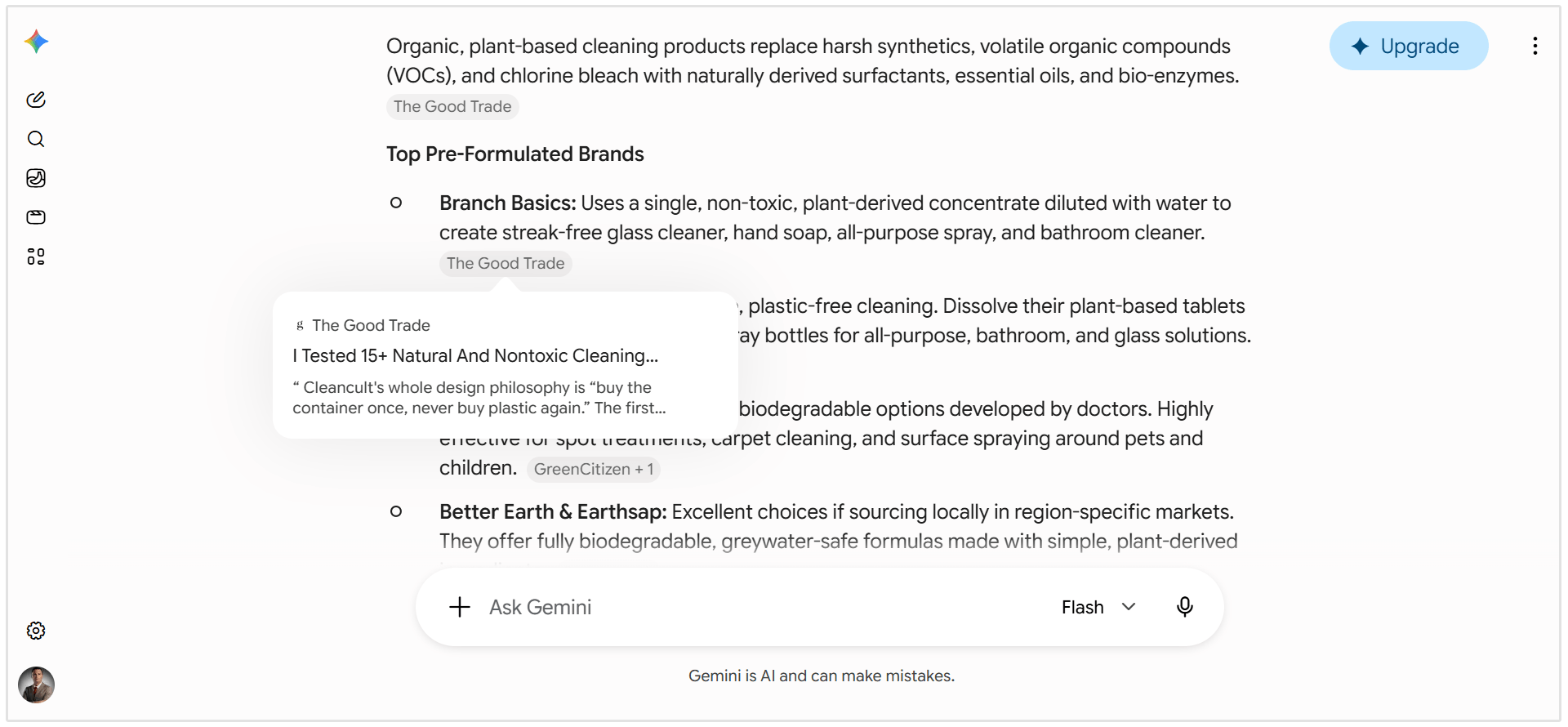
A citation occurs when the platform references a page from your website as a source, usually with a link.
For instance, when I asked Gemini for the "best organic cleaning products," it suggested a list of brands like Branch Basics, Blueland, and Puracy, but with links to a list of blog articles reviewing options.
AI can also reference or pull information from your website (for example, quoting a blog post or using its data) without explicitly recommending your brand as a solution or listing it as an option.
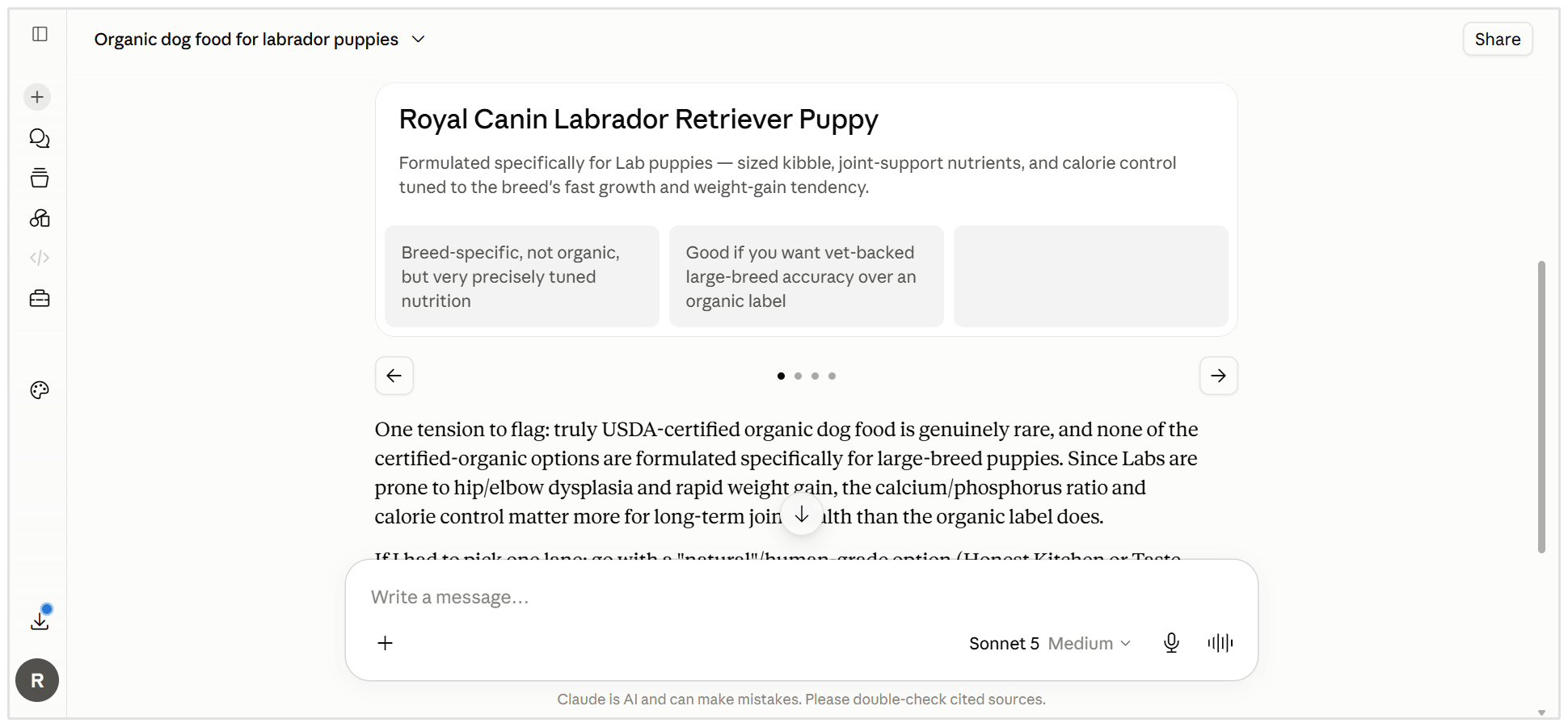
For example, I asked Claude for a list of the best dog food for a labrador puppy, and it suggested a few brands but with no links to any external sites or blogs.
Tracking both gives you a more complete picture of your visibility in AI search.
Why Analyze Competitor AI Visibility?
Analyzing competitor AI visibility shows how your brand compares with others.
It can help you:
- Identify competitors receiving more mentions and citations
- Discover the prompts and topics where competing brands appear
- See which competitor pages AI platforms use as sources
- Find gaps where your brand could earn more visibility
- Track changes in your competitive position over time
- These insights give you a clearer idea of what is driving competitor visibility and where to focus your own GEO efforts.
How to Check Competitor AI Visibility Manually
You can run a basic competitor AI visibility analysis manually by testing relevant prompts across the major AI platforms and recording which brands appear.
Because AI responses can change between searches, this process should be repeated consistently to identify meaningful patterns rather than relying on a single response.
1. Create a Representative Prompt Set
Start by creating a list of prompts that potential customers might use when researching your products, services, or industry.
To demonstrate this, we will use an HVAC business as our example.
You should include different types of search intent.
So for an HVAC business, a prompt set can be the following:
- Informational: “How do HVAC systems work in a home?”
- Problem-solving: “Why is my air conditioner not cooling properly?”
- Comparison: “What are the best HVAC companies near me compared to each other?”
- Recommendation: “What are the best HVAC contractors for residential installation?”
- Purchase-focused: “Which HVAC company offers 24/7 emergency repair and financing options?”
Use natural, specific prompts that reflect how your target audience actually asks questions.
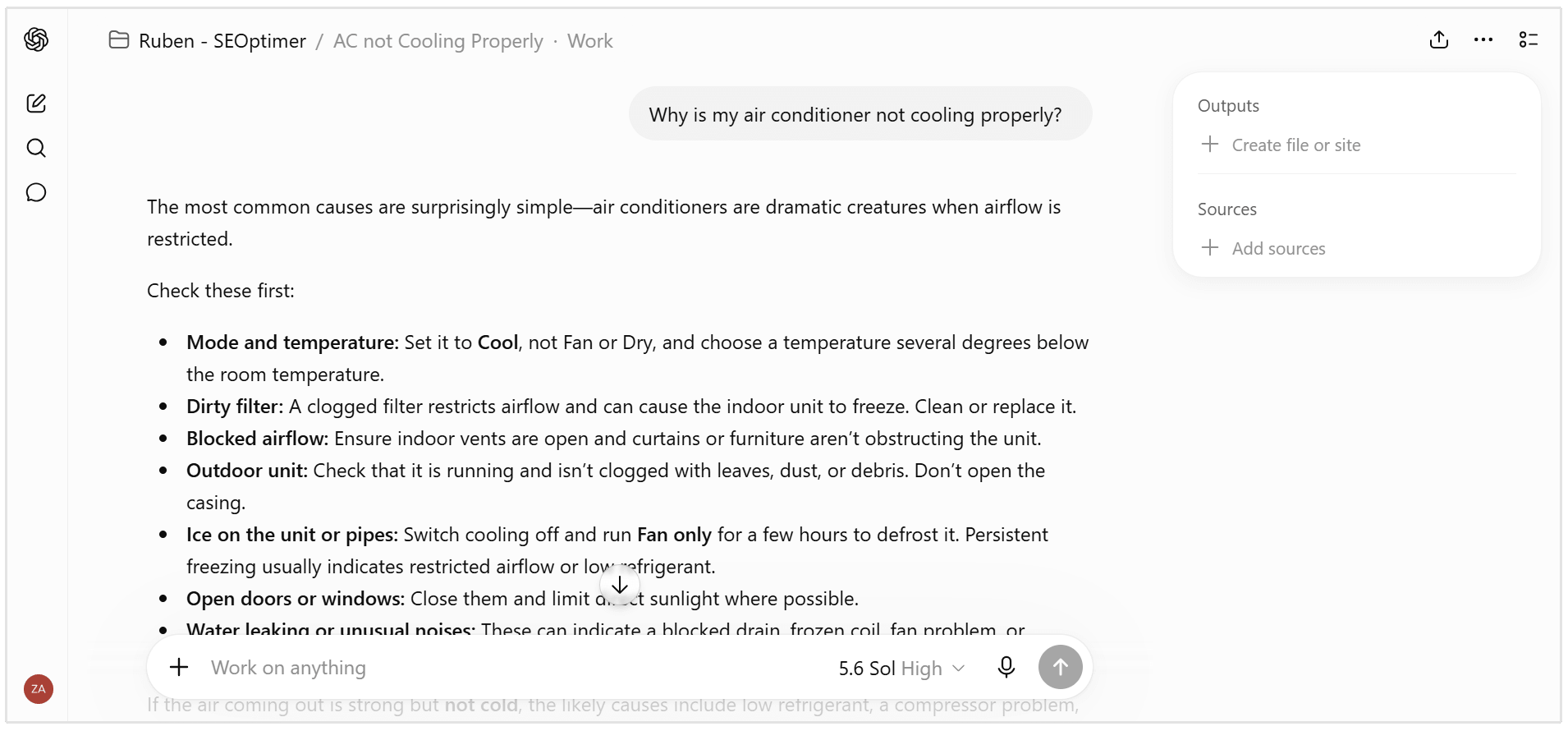
You should also include prompts for different products, services, use cases, locations, and stages of the buyer journey.
2. Test the Same Prompts across Platforms
Enter each prompt into the AI platforms you want to analyze, such as:
- ChatGPT
- Google Gemini
- Microsoft Copilot
- Perplexity
- Claude
Use the exact same wording on every platform to make the results easier to compare.
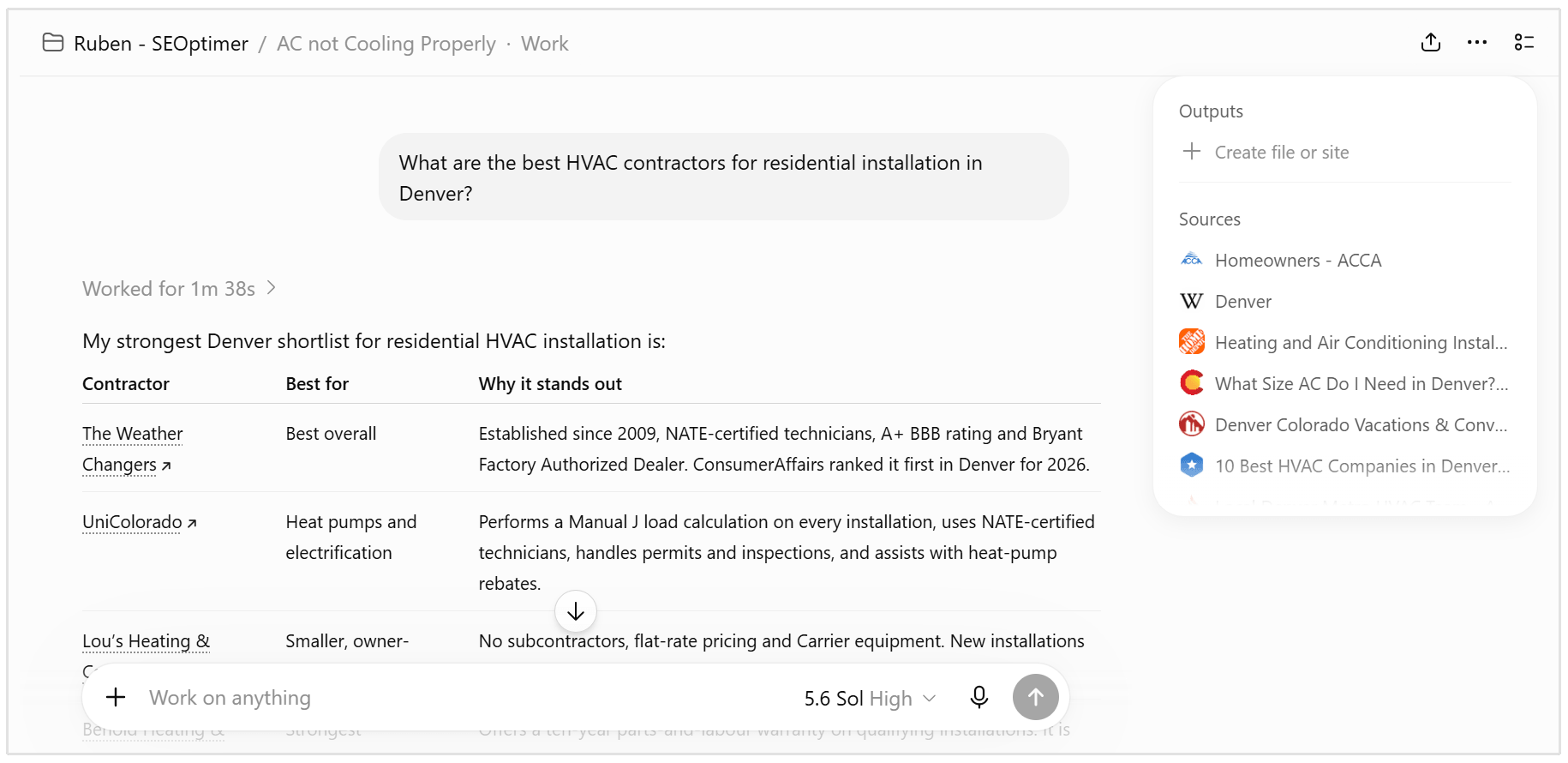
Where possible, begin a new conversation for each prompt because previous messages can influence the response and produce different recommendations.
You should also try to keep settings, location, and login status consistent throughout the analysis.
3. Record Each Result
Create a spreadsheet and record the results generated for every prompt and platform.
To make this easier, use our free AI Search Competitor Visibility Tracking Template, then select File > Make a copy to save an editable version to your own Google Drive account.
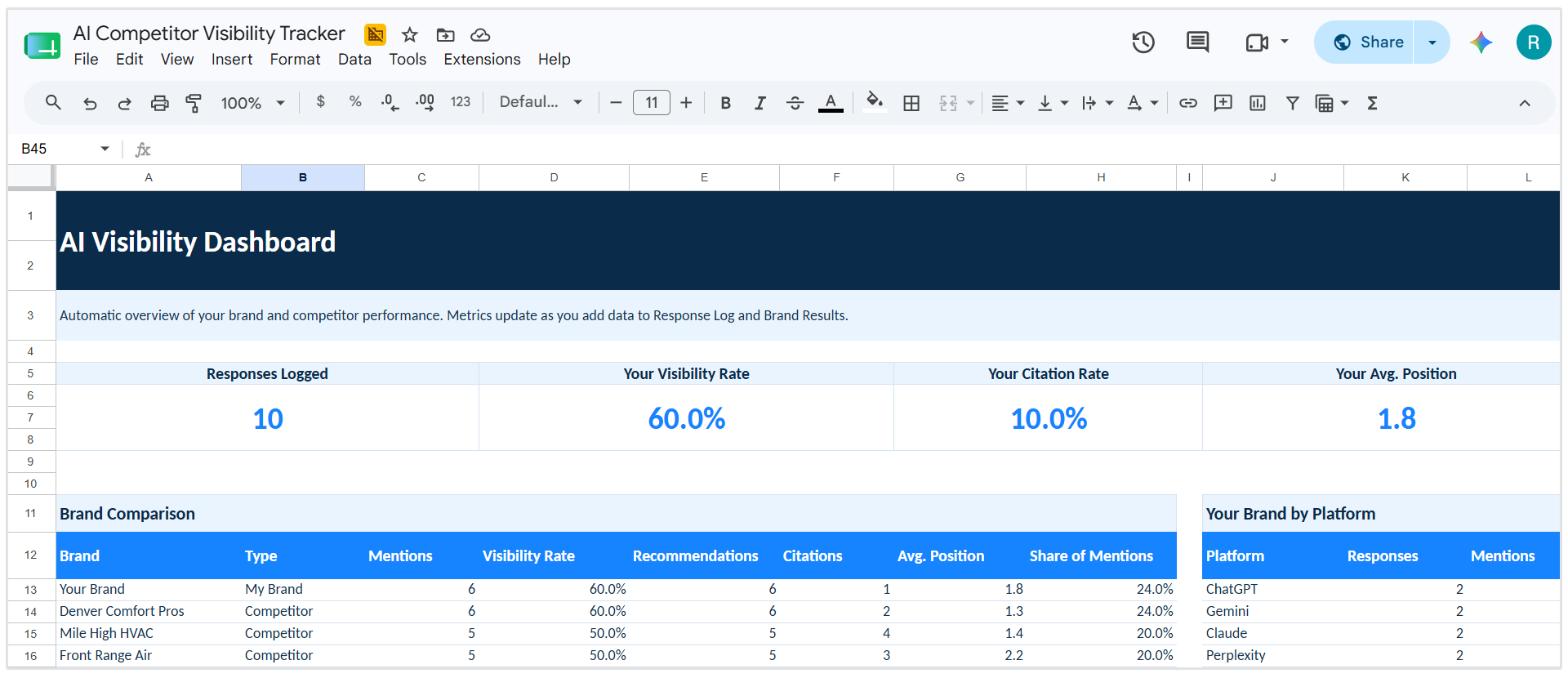
For each response, you can manually track:
- Whether your brand was mentioned
- Which competitors were mentioned
- The order in which the brands appeared
- Whether a brand was recommended or only referenced
- Which websites and pages were cited
- The overall context or sentiment of each mention
- The date the prompt was tested
You can then calculate how often each brand appears across your prompt set.
This gives you a basic visibility score and helps identify the competitors dominating particular topics, platforms, or stages of the customer journey.
Save the original responses or take screenshots where possible. This makes it easier to verify the data and compare how answers change over time.
4. Repeat the Analysis Consistently
The same platform can produce different answers for an identical prompt depending on model updates, newly available information, and normal variation between responses.
Repeat the analysis on a consistent schedule, such as monthly or quarterly, using the same core prompts and methodology.
You can add new prompts as customer behavior or your product offering changes, but keep your original set intact so that you can make reliable comparisons over time.
Regular testing helps you determine whether competitor visibility is persistent or temporary and whether your GEO efforts are improving your brand’s position in AI-generated answers.
How to Instantly Analyze Competitor AI Visibility with SEOptimer
Manually checking prompts can give you useful insights, but it quickly becomes time-consuming when you need to compare several brands across multiple AI platforms.
SEOptimer’s GEO Audit automates this process. It generates relevant prompts for the business, tests them across leading AI platforms, and brings your brand and competitor data together in one report.
Here’s how to use SEOptimer to analyze your competitors' visibility in AI.
1. Run a GEO Audit
Log in to SEOptimer, go to White Label Reports, and select GEO Audit as the report type. Enter the website URL, review the available report options, and run the audit.
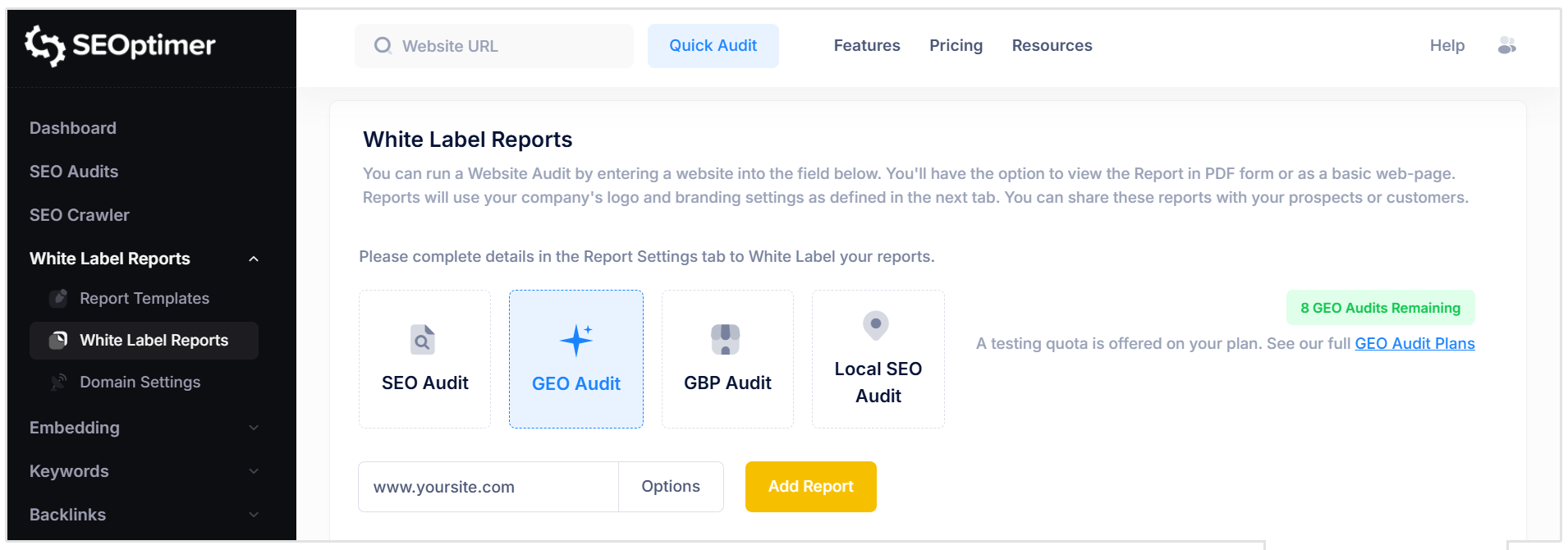
Once the audit is complete, go down to the Prompt Visibility section.
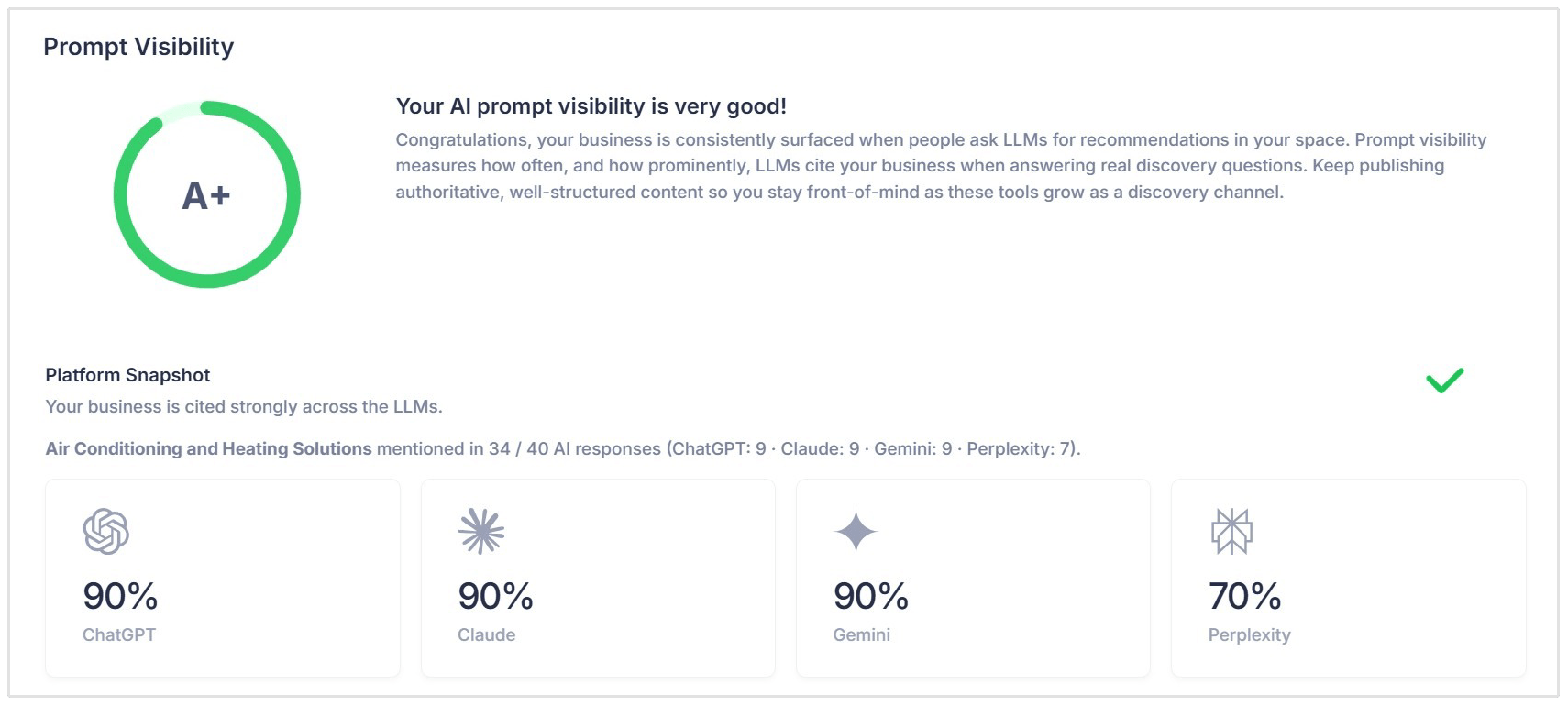
This is where you can see how often the business appears in AI-generated responses and how its visibility compares with competing brands.
The GEO Audit tests visibility across four of the most popular AI platforms:
- ChatGPT
- Claude
- Gemini
- Perplexity
Instead of entering prompts into each platform manually and copying the responses into a spreadsheet, you get a single report showing the results across all four.
You can read our complete walkthrough of SEOptimer’s GEO Audit for a closer look at every section of the report.
2. Review the Prompts Selected for the Business
SEOptimer analyzes the website’s content, business category, products or services, and target location to generate a set of relevant, high-intent prompts.
These are synthetic prompts designed to reflect the types of questions a potential customer might ask when looking for a business like yours.
For example, an HVAC company might be tested for prompts such as:
- “What are the best residential HVAC brands for a whole-home heating and cooling upgrade?"
- “Which companies make high-efficiency air conditioners and furnaces for homes?"
- “What are the best smart thermostat and HVAC system combinations for a house?”
- “Which companies are known for premium air conditioning and heating solutions for homes?”
Reviewing these prompts helps you understand the topics, services, and customer needs being used to measure visibility.
AI platforms do not provide a complete list of every real prompt that users enter. The selected prompts therefore provide a representative sample rather than a record of every AI conversation in which the business could appear.
3. Check Visibility by AI Platform
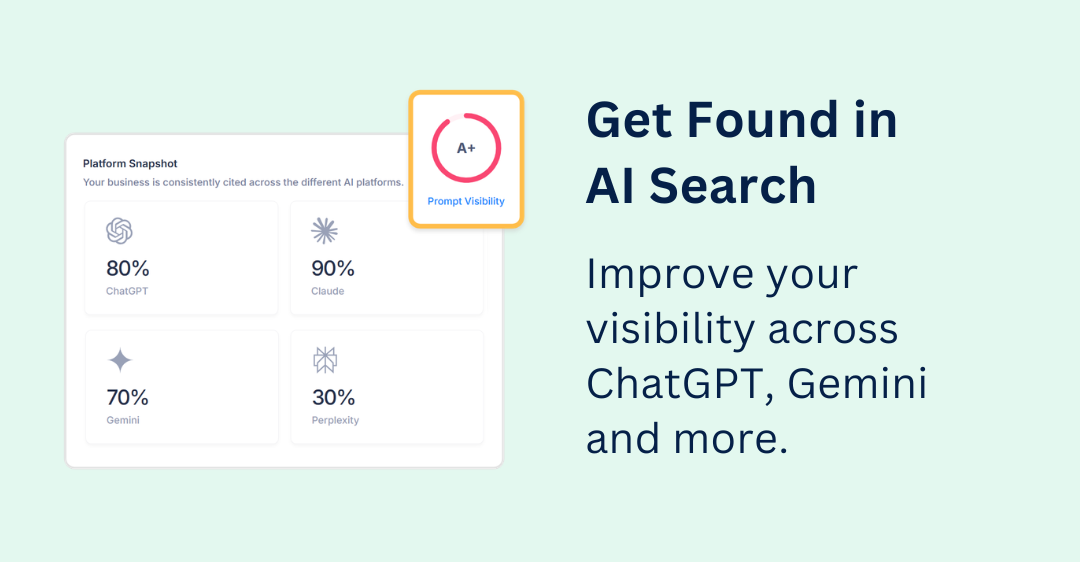
The Platform Snapshot results show the percentage of tested prompts in which your brand appeared on ChatGPT, Claude, Gemini, and Perplexity.
This allows you to quickly see where your brand is performing well and where it has limited or no visibility.
For example, your business might appear for 60% of the prompts tested on ChatGPT but only 40% on Gemini. Because SEOptimer tests the same prompt set across each platform, you can make a more consistent comparison between them.
4. Identify the Brands AI Considers your Competitors
The Competitor Visibility results identify the businesses recommended alongside or instead of your brand.
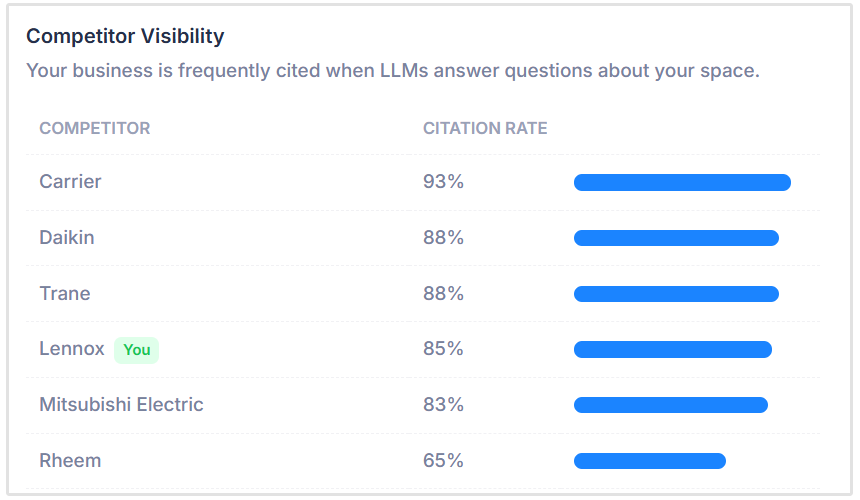
These may include competitors you already track in Google, but the results can also uncover brands you had not previously considered direct competitors.
Your competitors in AI search are not always the same websites competing with you for traditional organic rankings. AI platforms may frequently recommend a well-known national brand, a niche specialist, a local business, or even a company with weaker Google rankings.
Pay particular attention to brands that appear:
- Across several different prompts
- On multiple AI platforms
- For high-intent product or service queries
- In higher positions than your brand
- When your own brand is not mentioned
These are the businesses currently receiving the strongest visibility within the AI conversations that matter to your customers.
5. Find Prompts where Competitors Appear but you do not
The Prompt by Prompt Ranking section provides a detailed breakdown of every prompt tested. It shows whether your brand appeared, which competitors were recommended, and where each brand was positioned within the response.
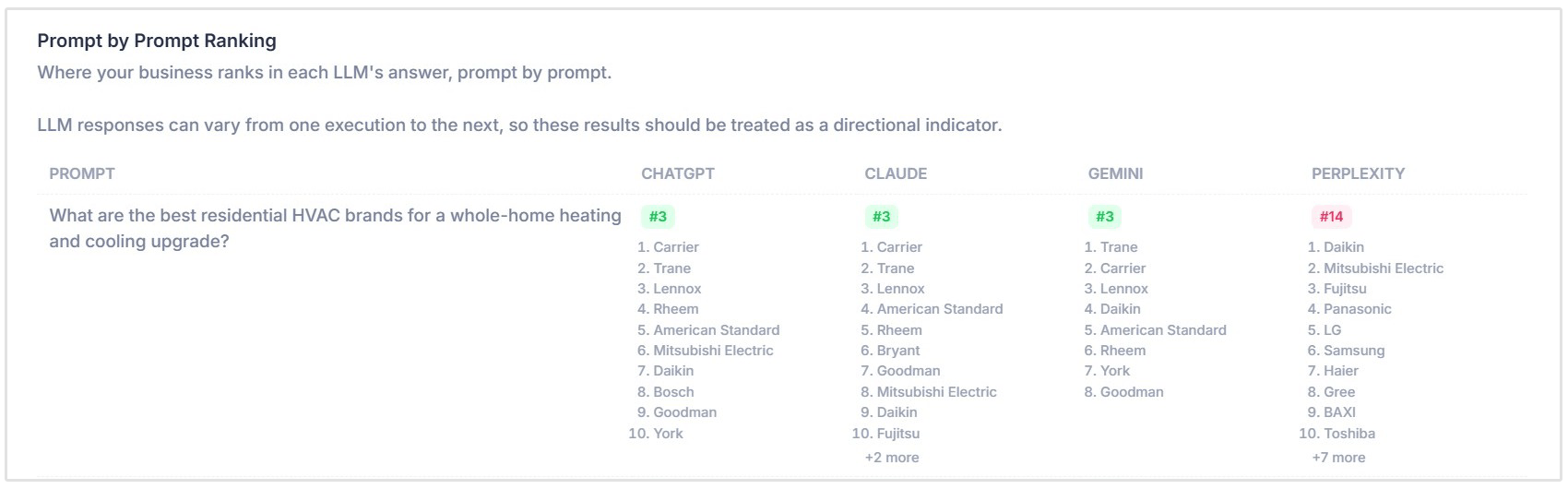
Look for prompts where one or more competitors appear but your brand does not. These are your most obvious AI visibility gaps.
For example, an HVAC company might appear for a general prompt about local contractors but be absent from prompts concerning emergency repairs, commercial installations, or energy-efficient systems.
If competitors consistently appear for those prompts, they may have stronger content or clearer information supporting those services.
These gaps can help you decide where to:
- Create new service or product pages
- Add clearer information to existing pages
- Answer important customer questions
- Strengthen your brand’s association with a particular service or topic
- Earn mentions and citations from authoritative third-party sources
Start with gaps linked to commercially valuable prompts. Improving visibility for questions asked close to a purchase decision is likely to be more valuable than appearing for broad informational prompts.
6. Compare Average Positions
Being mentioned is important, but where a brand appears within the response also matters.
The Competitor Average Position metric shows the average ranking position of each brand whenever it was recommended. A lower number indicates that the brand generally appeared closer to the top of the recommendations.
For example, an average position of 2.6 means the brand was usually one of the first businesses listed, while an average position of 4.5 indicates that it tended to appear further down the response.
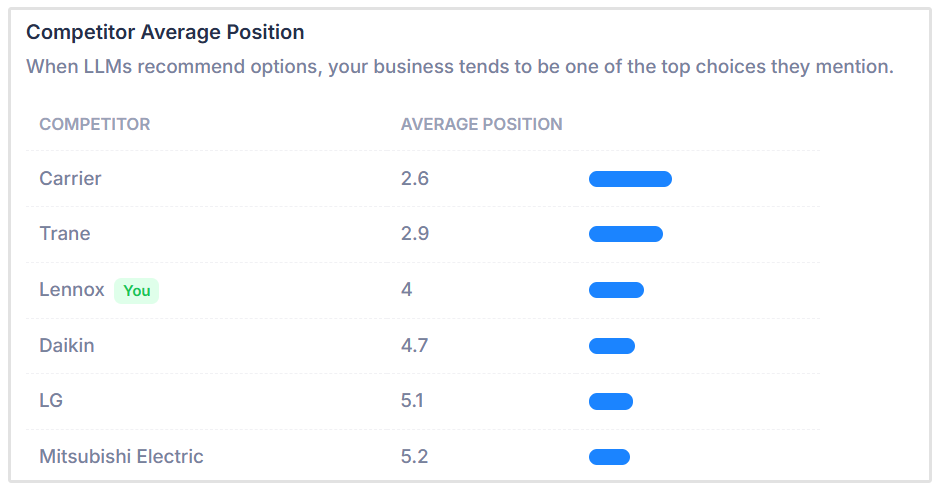
Average position should not be viewed on its own. Because it is calculated only for responses in which the brand appeared, a competitor could have a strong average position but be mentioned for relatively few prompts.
Compare average position with how frequently each brand appears to understand both:
- Reach: How many relevant responses include the brand
- Prominence: How highly the brand is positioned when it appears
The strongest competitors will usually perform well across both measures.
7. Compare Competitor Dominance
The Competitor Dominance results show each brand’s overall share of visibility across the tested prompts and AI platforms.
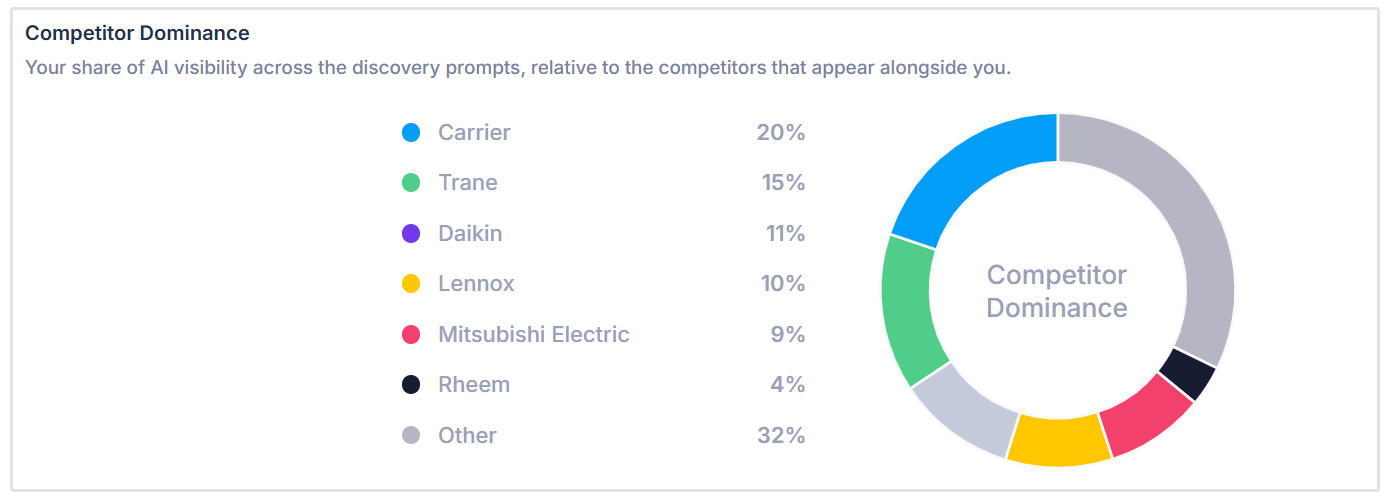
This gives you a quick view of which businesses dominate the competitive landscape rather than forcing you to analyze every response individually.
A competitor with a high dominance score is not simply appearing for one or two prompts. It is consistently occupying space across the wider set of AI-generated recommendations.
Why might Competitors be More Visible in AI Search?
Competitors may be more visible because AI platforms have stronger or clearer evidence about who they are, what they offer, and why they are relevant to a particular prompt.
There is no single factor that guarantees inclusion in an AI-generated answer. However, stronger competitors often have one or more of the following advantages:
Greater Topical Relevance
A competitor may have more comprehensive content covering the product, service, location, or problem mentioned in the prompt.
For example, a dedicated page about emergency HVAC repairs provides a clearer relevance signal than a general services page that only mentions emergency repairs briefly.
More Third-Party Mentions
AI platforms often learn about brands from sources beyond their own websites. Competitors may be mentioned more frequently in industry publications, review websites, business directories, comparison articles and forums like Reddit,
These independent references can help establish that a business is recognised within its category.
More Authoritative Citations
A competitor may have content that is regularly linked to or cited by reputable websites. Original research, statistics, expert commentary, detailed guides, and useful resources are particularly likely to earn citations.
Review the sources cited in AI responses to see which competitor pages are being used and what makes them useful.
Clearer Brand and Entity Information
AI systems need to understand what a business is, where it operates, and which products or services it provides.
Competitors may have clearer and more consistent information across their website, structured data, Google Business Profile, social profiles, directories, and third-party sources.
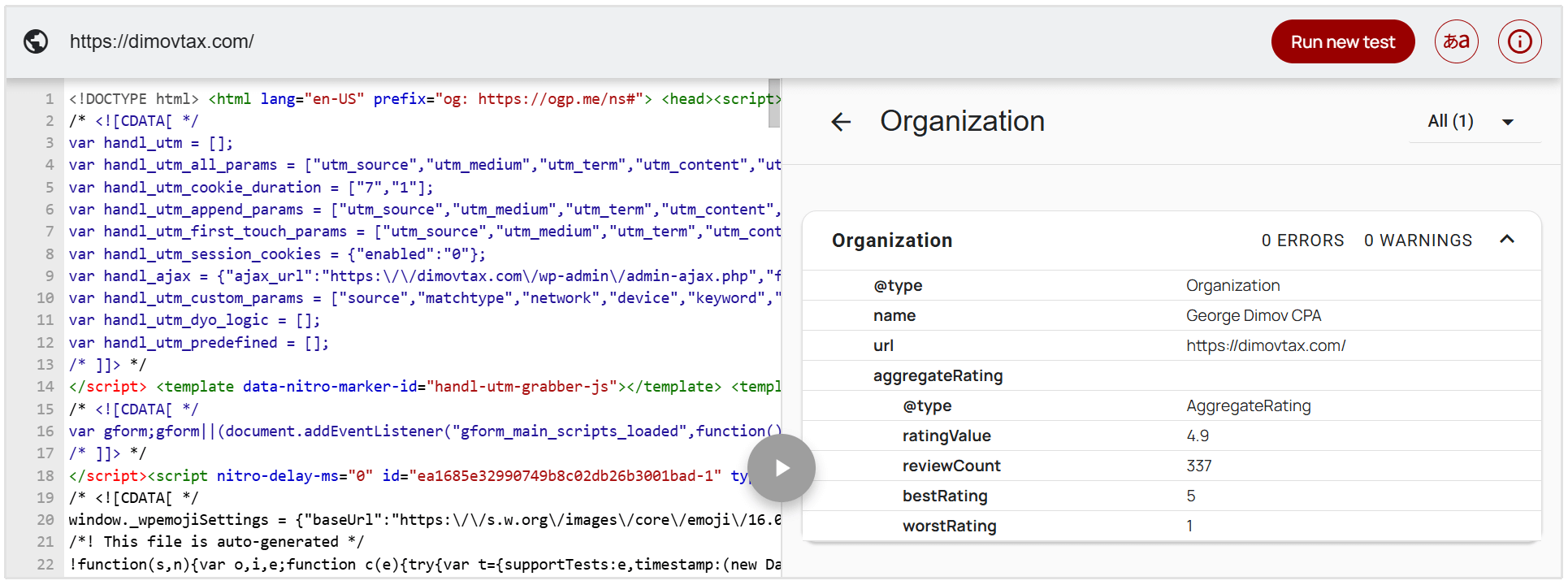
Conflicting or incomplete information can make it harder for an AI platform to confidently recommend a brand.
Content That Directly Answers the Prompt
Competitors may structure their content around the specific questions customers ask.
Clear headings, concise answers, FAQs, comparison tables, product details, pricing information, and service descriptions make relevant information easier to identify and use in an AI-generated response.
See our guide on how to structure content for AI citations for practical ways to make information easier for AI platforms to extract and reference.
Better Content Freshness
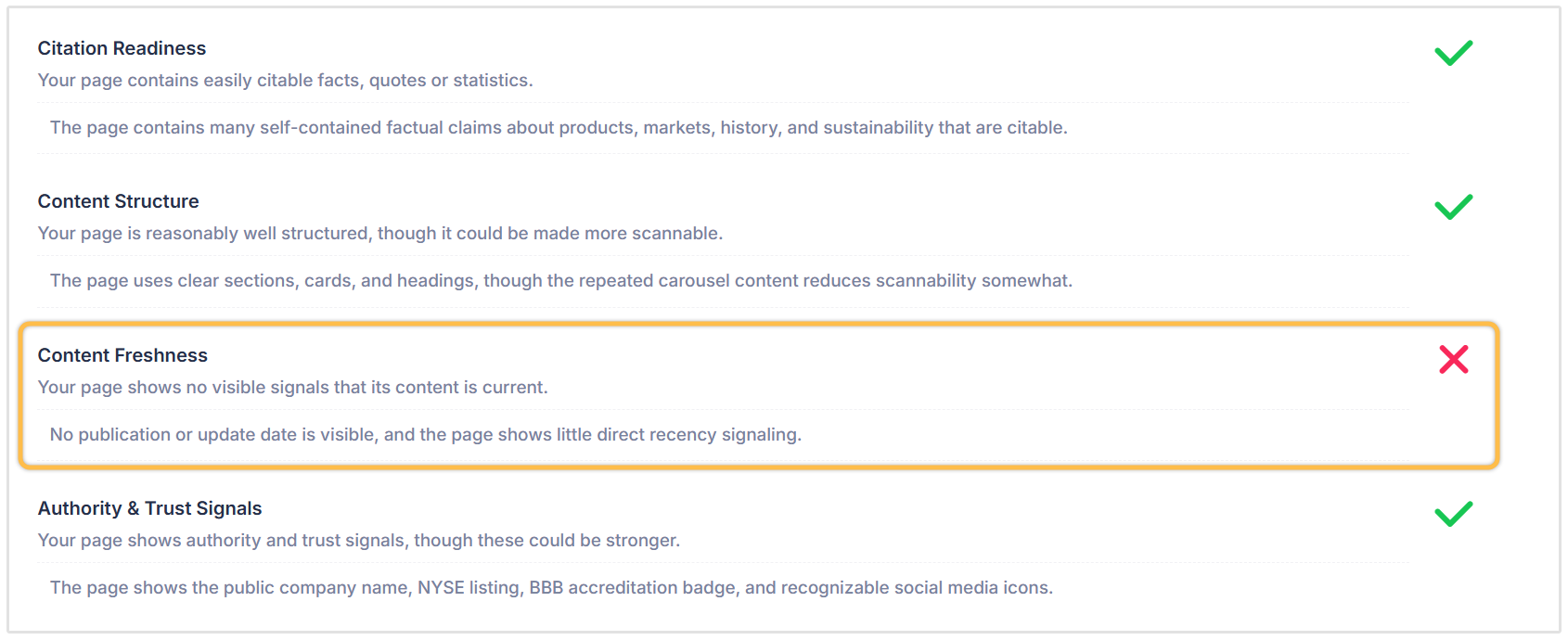
AI platforms may favour sources containing current (also known as fresh content) and accurate information, particularly for prompts involving prices, product features, regulations, statistics, or recommendations.
A competitor that regularly updates important content may therefore be selected over a website containing outdated or incomplete information.
SEOptimer’s comprehensive GEO Audit includes an AI-powered Freshness Factor check that evaluates whether a page contains recent dates, current references, and other indications that its information is actively maintained.
Better Technical Accessibility
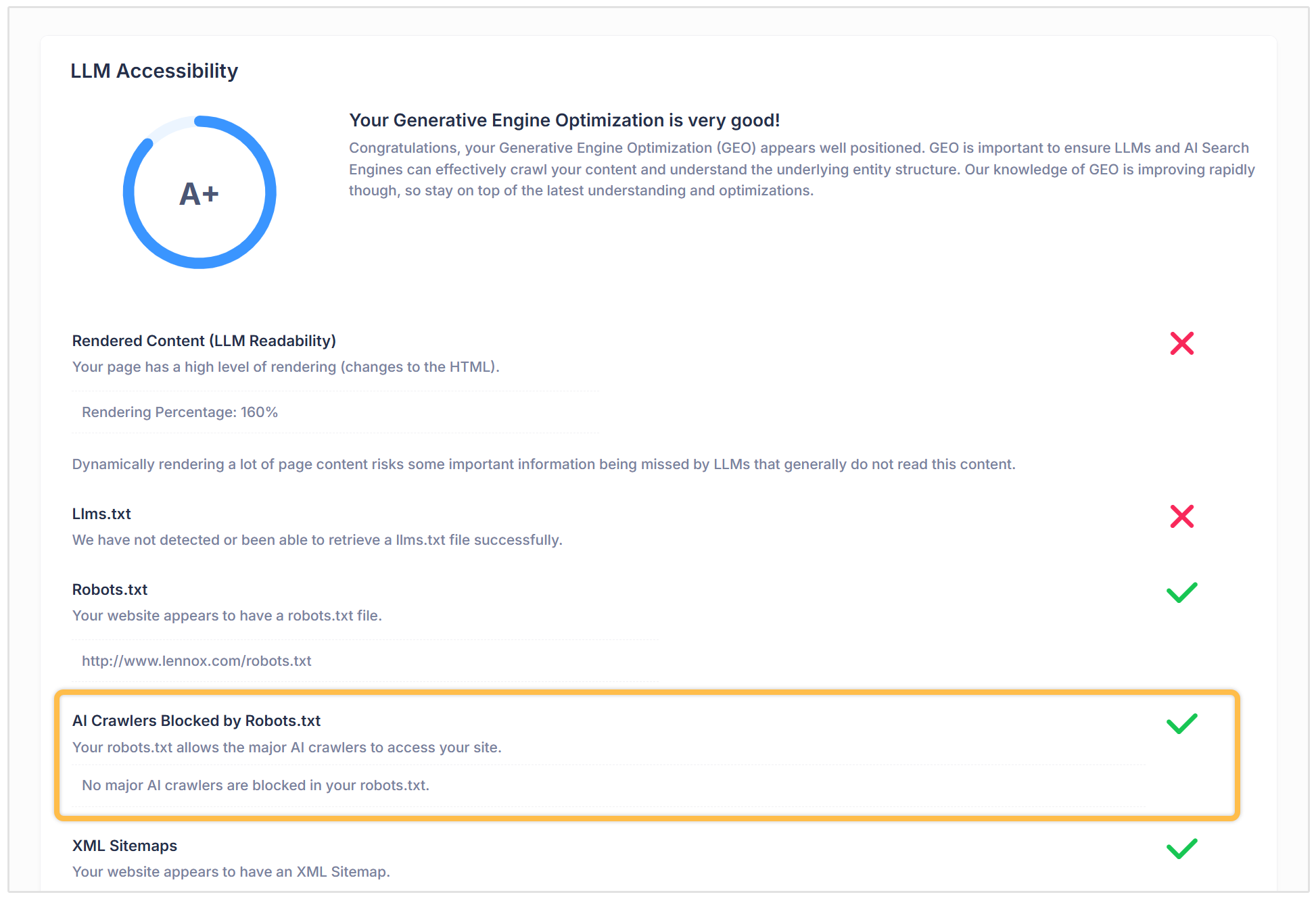
Your content cannot contribute to an AI-generated answer if the platform cannot access or interpret it properly.
Competitors may have fewer issues involving:
- Blocked AI crawlers
- Important content hidden behind JavaScript (If important information is loaded using JavaScript, you should also verify that AI systems can access the website’s rendered content.)
- Incorrect robots.txt directives
- Poorly structured pages
- Missing or inaccurate schema markup
- Inconsistent canonical tags
Start by checking your site's AI crawlability to confirm that relevant AI bots are not being blocked from accessing the website.
Stronger Local Trust Signals
For location-based prompts, competitors may have a better-optimised Google Business Profile, more customer reviews, consistent business listings, or stronger locally relevant content.
These signals can make a competitor appear more established and relevant when an AI platform recommends businesses within a particular area.
The best way to understand a competitor’s advantage is to examine the prompts where they appear and you do not. Review the pages being cited, the information presented in the response, and the third-party sources supporting the recommendation.
This gives you a practical list of content, authority, entity, and technical improvements to prioritise instead of guessing why a competitor is ahead.
Wrapping Up
AI search competitor analysis shows which brands are being mentioned, recommended, and cited for the prompts that matter to your customers, giving you the insights needed to prioritize your LLM optimization efforts.
You can check this manually, but the process becomes difficult to manage across multiple prompts, competitors, and AI platforms.
Our GEO Audit brings these insights together, making it easier to compare visibility, uncover competing brands, and identify prompts where your business is missing.
Use these findings to prioritise the content, authority, and technical improvements that can strengthen your presence in AI-generated answers. Then, run GEO Audits regularly to track whether your visibility is improving and how your competitors’ positions change over time.
Get your GEO Audit today to see how your brand compares.