

Key Takeaway: AI visibility is how often your brand gets mentioned, cited, or recommended in answers from AI tools like ChatGPT, Gemini, Perplexity, and Google AI Overviews.
For the last two decades, marketers have been chasing higher Google rankings. But search has gone through a major shift the last 3 years.
People now type questions into ChatGPT, ask Gemini for product picks, or read Google's AI Overviews instead of clicking through a list of blue links. This change has created a new set of challenges for businesses and marketers.
If your brand doesn't show up in these AI-generated answers, you risk becoming invisible to your audience.
In this guide, you'll learn what AI visibility is, why it matters, how it differs from traditional SEO, what influences it, and how to measure it.
Related Reading: How to Rank in AI Overviews (with Insights from Top SEO Experts)
What is AI Visibility?
AI visibility is how often and how prominently your brand, website, products, services, or content appears in responses generated by AI tools like ChatGPT, Google Gemini, Perplexity, Claude, and Google AI Overviews.
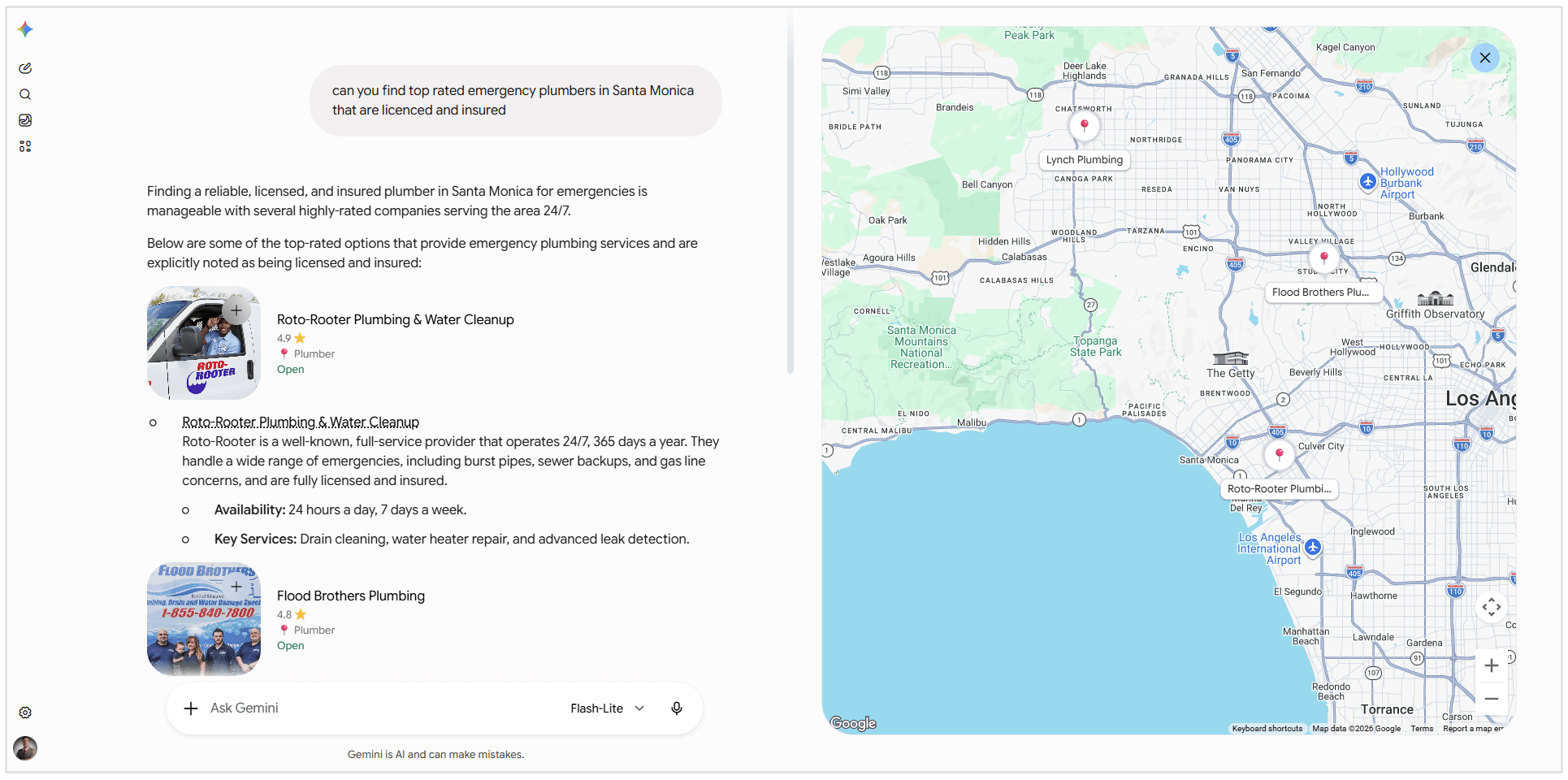
Instead of measuring where you rank in traditional search results, AI visibility looks at whether AI tools mention, cite, or recommend your brand when someone asks a relevant question.
AI visibility generally takes two forms:
- Mentions: Your brand is named in an AI-generated answer, even if there is no link back to your website.
- Citations: The AI-generated answer includes a clickable link to your website as a source.
Earning this kind of visibility suggests that your brand, website, or content is being recognized as relevant to the topic the user is asking about.
AI visibility is shaped by whether AI systems recognize your brand as a credible, relevant answer.
- Whitney Hart, Chief Strategy Officer at Avenue Z
Why AI Search Visibility Matters
AI search has become one of the main ways people discover products, compare options, and make decisions. ChatGPT alone now has more than 900 million weekly users.
And according to Similarweb’s 2026 AI Brand Visibility Index, 35% of US consumers now use AI at the product discovery stage, compared to 13.6% who use traditional search for the same purpose.
The visitors AI sends your way are valuable, too.
Some reports estimate that AI search visitors are 4.4x more valuable than traditional organic search visitors, likely because they have already done their research before clicking.
Here’s why AI visibility deserves your attention right now:
- AI answers can reduce website clicks: AI tools often answer the question fully inside the chat. Meaning users don’t need to click through to an external website.
- AI recommendations can influence buying decisions: When your brand is mentioned positively in an AI answer, that mention can influence how users compare and shortlist options.
- Competitors can appear more than you do: When competitors are mentioned more often or more favorably, they can win the consideration set before a prospect ever sees your website.
- AI results can change often: AirOps’ 2026 State of AI Search report found that only 30% of brands stay visible from one AI answer to the next, and just 20% remain present across five consecutive runs. That makes consistent monitoring essential.
How is AI Visibility Different from Traditional SEO Visibility?
I think it’s important to remember that AI visibility is an extension of SEO, and not an entire replacement for it.
As Aled Nelmes, CEO & Founder at Lumen SEO, puts it:
The good news for business and website owners is that the factors that influence AI visibility are very similar to those that have always influenced Google search visibility. That's why many websites that were already performing well on Google are also performing well on AI Search without having to make any major changes to their strategy.
- Aled Nelmes, CEO & Founder at Lumen SEO
Core signals like relevance, authority, and a good page experience still matter. But AI tools surface information differently from traditional search engines.
Traditional SEO works on a ranking model. Your page competes for positions one through ten, users scan the results, and they click through to your site.
AI visibility works more like an answer inclusion model. AI tools pull information from different sources, combine it into a single response, and decide whether your brand, website, or content should be included in that answer.
A few key differences between AI visibility and traditional SEO stand out:
- SEO focuses on rankings, while AI visibility focuses on mentions and citations. In traditional SEO, moving from position five to position one can make a big difference. With AI visibility, is it all about your brand being included in the answer or not.
- Search results show links, while AI tools create summarized answers. AI tools often combine information from multiple sources into one response. That means your content needs to be clear, well-structured, and easy to extract.
- Traditional SEO is mostly search-engine focused, while AI visibility is multi-platform. SEO has traditionally focused on Google and, to a lesser extent, Bing. AI visibility requires tracking how your brand appears across ChatGPT, Perplexity, Gemini, Claude, Google AI Overviews, and other AI-powered search experiences.
- Traditional SEO rewards strong pages, while AI visibility also rewards fresh and useful information. Freshness can play a role in whether content is selected or cited by AI systems. According to several sources, content updated within two months earn more AI citations than older content. (Related Reading: How to Refresh Old Content for SEO and the Age of AI)
What Influences AI Visibility?
AI tools weigh several signals when deciding which brands to mention and which sources to cite.
Here are the biggest factors that influence AI visibility.
Helpful Website Content
AI models are trained to favor content that is "helpful, honest, and harmless."
That means clear definitions, direct answers, and genuinely useful information win compared to generic filler content.
Content that gives the answer up front and then backs it up with context is far easier for AI to extract and reuse.
We're also learning that longer pages are not fully crawled by LLMs as they are resource-intensive. So, moving key takeaways, data points, and summaries to the top of the page is important.
- Jon Clark, Managing Partner at Moving Traffic Media
Topical Authority
One great blog post rarely builds lasting AI visibility on its own.
AI tools connect your brand to a subject when you publish consistently around it.
Be sure to cover a topic deeply, link related pages together, and over time AI learns to associate your brand with that area of expertise.
Stop thinking in keywords and start thinking in topics. A site that covers a subject properly gets referenced.
- Raphael Gomes, Founder at Arara SEO
Brand Mentions across the Web
Brands that show up across credible sources like independent reviews, news articles, and industry publications appear more often in AI answers.
Each mention gives AI another place to discover and learn about you.
As Oksana Famuliak from Octopus Agency says regararding mention on authoritatives sites:
AI repeats what credible third parties say about you, so external validation carries more weight than anything on your own domain.
- Oksana Famuliak, Co-Founder & SEO Specialist at Octopus Agency
Clear Entity Information
AI doesn't just match keywords, it also recognizes entities like brands, products, and people.
To strengthen your entity signals:
- Use consistent brand naming across your website, social profiles, and directories.
- Build a clear, specific "about" page that explains what you do and who you serve.
- Add schema markup that defines your organization, products, and authors.
- Keep your messaging consistent so AI builds an accurate picture of your brand.
Structured Content
Structuring your pages clearly makes it easier for AI to find and cite the right section.
Some generally good tactics include:
- A logical heading hierarchy (H1 → H2 → H3) with no skipped levels.
- Question-based headings that mirror how people phrase queries.
- Self-contained sections that make sense on their own.
- Bullet points, comparison tables, and FAQ sections.
- A short answer at the start of each section, before the details.
Citations, Reviews, and Trusted Sources
Content that includes relevant statistics, citations, and expert quotations can perform better in AI-generated responses.
In the original GEO study from Princeton, Georgia Tech, and IIT Delhi, researchers found that optimization methods such as adding citations, quotations from relevant sources, and statistics could improve source visibility in generative engine responses by up to 40%.
Third-party sources also matter.
Reviews on platforms like G2 and Trustpilot, along with discussions on communities like Reddit and Quora, can shape how AI tools understand and describe your brand, especially when those pages are publicly available and indexed.
If your brand isn't being mentioned in Reddit threads, YouTube videos, or trusted review sites, you’re basically invisible to the model.
- Gabriela Gonzalez, Marketing Manager at CreativeWorks Systems
That does not mean brands should try to manipulate these platforms. It means your broader online reputation, reviews, and third-party mentions can become part of the information AI tools use when generating answers.
How to Measure AI Visibility
Measuring AI visibility looks nothing like checking a keyword ranking.
Instead of one number, you're tracking how AI tools respond to the questions your audience actually asks.
Here's how to track AI visibility.
1. Pick Your Prompts
Build a list of prompts based on what your users might ask at each buying stage.
This includes questions on:
- Research (what is X)
- Comparison (X vs Y, best tools for…)
- Evaluation (is X worth it, X reviews)
2. Decide What to Track
For each prompt, monitor these core metrics:
- Mentions: Does your brand appear in the answer at all?
- Citations: Does the answer link to your site?
- Position: Where does your brand appear relative to competitors?
- Sentiment: Is your brand described positively, neutrally, or negatively?
- Share of voice: How does your mention rate compare to rivals?
3. Gather the Data
You can track manually by entering each prompt into your chosen platforms and logging the results in a spreadsheet.
Or you can use a dedicated software to track AI visibility that can help automate the process.
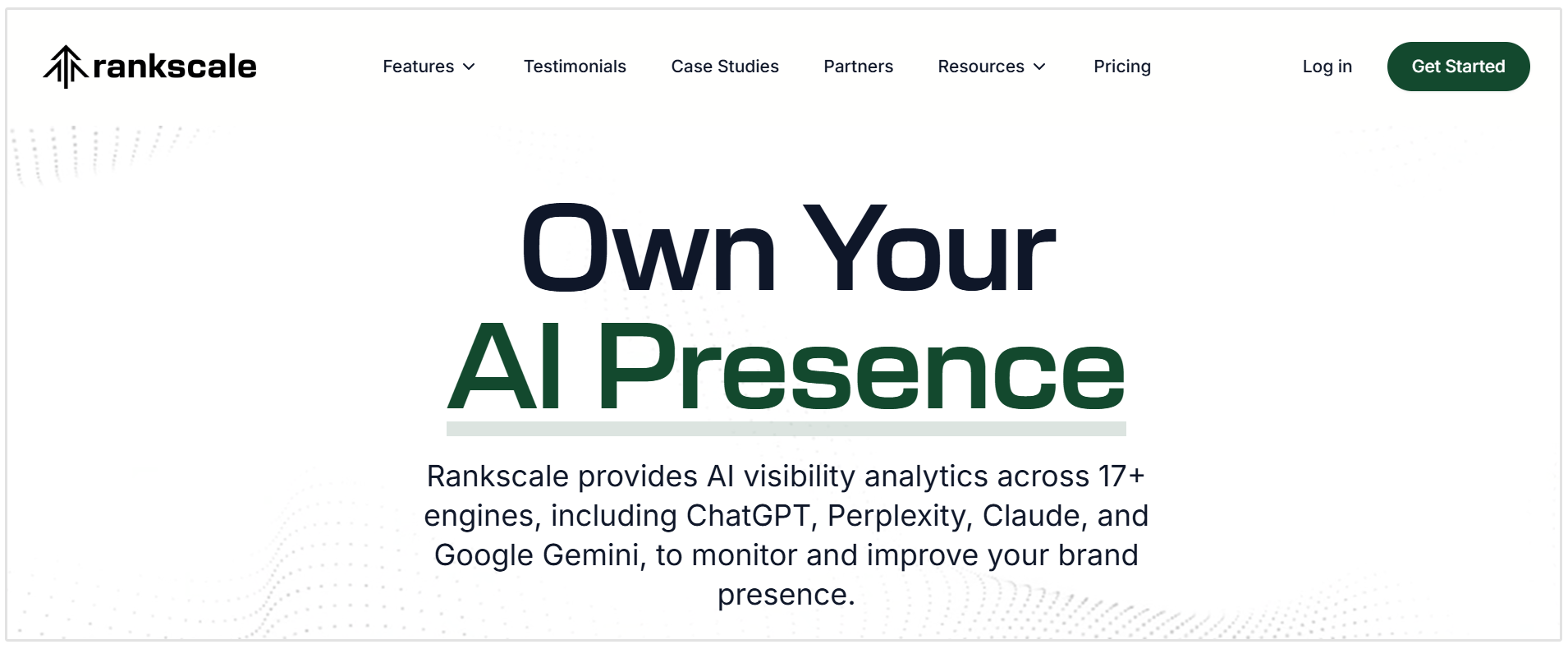
Platforms like Conductor, Rankscale, and LLM Pulse track mentions, citations, sentiment, and competitive benchmarks across multiple AI tools at once.
How to Check Your AI Visibility
If you want to improve your AI visibility, the first step is understanding how well your website is currently set up for AI search.
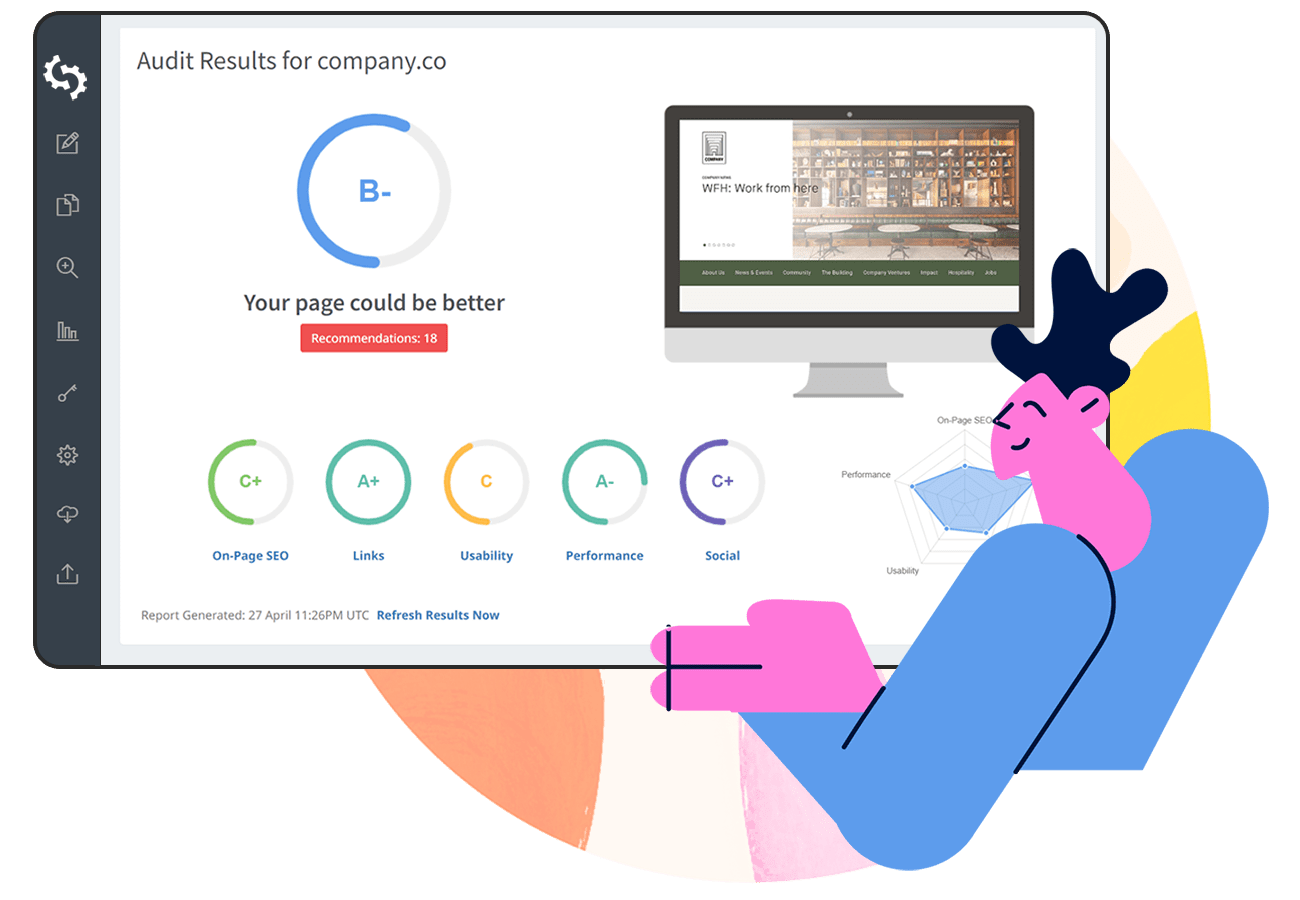
SEOptimer includes GEO checks in every SEO audit, giving you a quick way to review whether your site has the right signals in place for AI-driven search experiences.
The audit checks for things like LLMs.txt, Identity Schema, AI Overview presence, and LLM readability, helping you uncover areas where your site may need improvement.
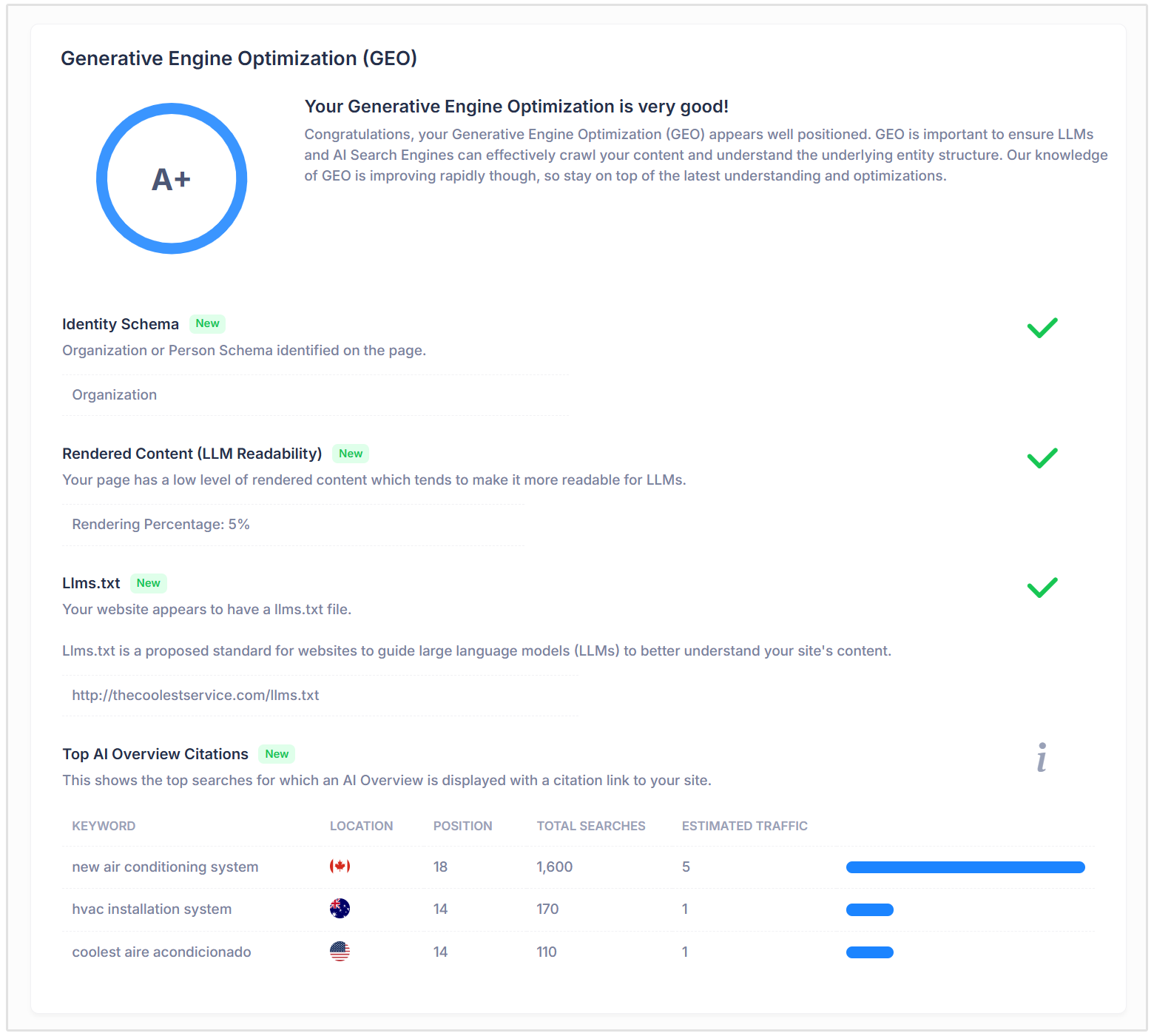
This gives marketers, agencies, and business owners a practical starting point for improving visibility across both traditional search and AI-generated results.
Conclusion
AI search isn't slowing down. In fact, it's becoming a primary way people find, compare, and choose brands.
The businesses that win won't just rank on Google. They'll be the ones AI can confidently understand, summarize, and recommend.
The good news is that strong AI visibility builds on habits great marketers already practice: publishing helpful content, earning trusted mentions, structuring information clearly, and keeping it fresh.
Want to improve your rankings and appearance in LLMs? Check out our detailed guide on LLM SEO and how you can get cited by ChatGPT, Claude, and Gemini.
Frequently Asked Questions
What does AI visibility mean?
AI visibility means how often and how prominently your brand is mentioned, cited, or recommended in answers generated by AI tools like ChatGPT, Gemini, Perplexity, and Google AI Overviews.
It measures your presence in AI-generated answers rather than your ranking in search results.
What is a good AI visibility score?
There's no single universal benchmark, since scores vary by tool and industry.
Most AI visibility platforms calculate a score out of 100 based on how often you're mentioned and cited compared to competitors.
The best way to judge your score is to benchmark against your direct competitors and track whether your number improves over time.
Is AI visibility the same as SEO?
No, but they're closely related. SEO focuses on ranking higher in traditional search results, while AI visibility focuses on appearing in AI-generated answers.
They share many of the same foundations so optimizing for both at once gives your brand two paths to reach your audience.
How is AI visibility different from GEO and AEO?
AI visibility is the outcome you measure. GEO and AEO are techniques and methods used to improve that outcome.
Related Reading: SEO vs. GEO: What are the Main Differences?
How long does it take to improve AI visibility?
This depends on your starting authority, content quality, and how competitive your niche is. Some brands might see early success and others may take longer to start seeing results.