

When someone uses Google, they can compare multiple results and decide which website they trust.
AI search works a little differently.
ChatGPT, Claude, Gemini, and Google AI Overviews can combine information from several sources into one response. They may also cite particular websites or recommend specific businesses, products, and services.
So, how can you demonstrate that your website is a credible source for AI to cite and/or mention?
This is where AI search trust signals come in.
AI search trust signals are visible and verifiable indicators that demonstrate the credibility of your business, content, and authors. They can include author credentials, customer reviews, and many more (which we’ll discuss later).
Many of these signals are not entirely new ideas.
Some of them build on Google’s E-E-A-T (Experience, Expertise, Authoritativeness, and Trustworthiness), which have helped businesses build trust with customers and search engines for years.
In this article, we’ll explain the most important AI search trust signals and show you how to strengthen them on your website.
What are AI Search Trust Signals?
AI search trust signals are pieces of evidence that help establish whether a website, business, or content creator is legitimate, knowledgeable, and reliable.
They provide context about who published the content, why that person or organization is qualified to cover the topic, and whether its claims can be supported.
There is no single trust signal, special tag, or universal “AI trust score.”
Instead, credibility is built through a combination of signals.
As Chris Coussons, Founder of Visionary explains:
“I think the important thing is how those signals build on each other. If you’re claiming expertise in an area, that should be backed up in different ways across the site rather than relying on one author bio or case study to do all the work.
With AI making generic content so easy to produce, things like original research, first-hand experience, and actual results give businesses something much more difficult to copy.”
- Chris Coussons, Founder of Visionary
Some of these signals appear directly on your website, including:
- Author names and credentials
- Customer testimonials
- Case studies
- Original research
Other signals come from external sources.
These include customer reviews, backlinks, press coverage, industry mentions, external profiles, and listings in reputable directories.
Together, these signals create a wider credibility footprint around your brand.
For example, any business can describe itself as an industry leader.
However, that claim becomes more believable when it is supported by a long operating history, detailed case studies, genuine customer reviews, and mentions from independent publications.
The AI Trust Signal Categories
AI search trust signals can be grouped into four broad categories:
- Identity signals: Who is behind the website and content?
- Expertise signals: What experience or qualifications do they have?
- Evidence signals: Can their claims be supported and verified?
- Reputation signals: Do customers and independent sources recognize their authority?
The stronger and more consistent these signals are, the easier it becomes for AI to understand why your website should be considered a credible source.
Why do Trust Signals Matter for AI Search
Trust signals give AI search platforms more information they can use to evaluate a potential source.
They can help:
- Confirm that a real business or person is behind the website
- Demonstrate relevant knowledge and first-hand experience
- Support claims with verifiable evidence
- Show that customers and industry organizations recognize the business
- Establish consistency between the website and independent sources
Consider two websites making the same claim.
One provides no author, supporting source, or evidence.
The other identifies the author, explains their qualifications, links to original research, and supports the claim with a detailed case study.
The second website gives both people and AI platforms more reasons to consider its information credible.
However, trust signals do not guarantee that your website will appear in an AI-generated answer.
Relevance, content quality, technical accessibility, and the specific query will also influence which sources are selected.
How AI Search Trust Signals Relate to E-E-A-T
AI search trust signals are closely connected to Google’s E-E-A-T framework: Experience, Expertise, Authoritativeness, and Trustworthiness.
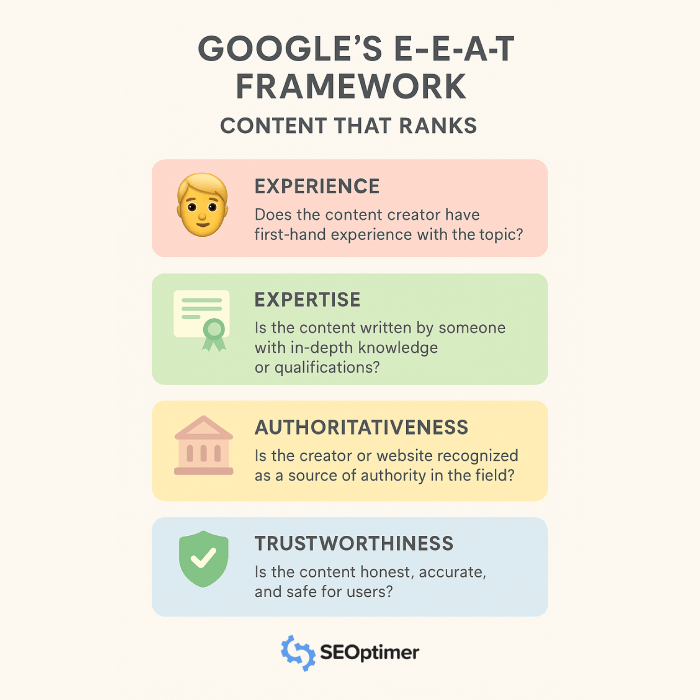
Google has explained that its generative AI search features use its existing Search ranking and quality systems. This means many of the same qualities associated with helpful and reliable content remain relevant in AI-powered search.
It is important to note that E-E-A-T is not a single Google ranking factor or score.
Google uses a combination of signals to identify content that demonstrates these qualities. Google also describes trust as the most important element because experience, expertise, and authority all contribute to whether a source can ultimately be trusted.
Trust becomes even more important for Your Money or Your Life topics, commonly known as YMYL. These include subjects that could affect someone’s health, financial stability, legal rights, or safety.
In these industries, inaccurate information can have serious consequences. Clear authorship, appropriate qualifications, reliable sources, and expert review are therefore particularly important.
11 AI Search Trust Signals that Build Website Credibility
Clear Business Identity
Your website should make it immediately clear which business is responsible for its content, products, or services.
Display your business name consistently and explain what the company does, where it operates, and who is behind it.
Reliant Plumbing is an excellent example of a business doing this the right way. Their homepage features several "blocks" that tell visitors and AI what their business is about, their services, a short history segement, and several other elements about their business.
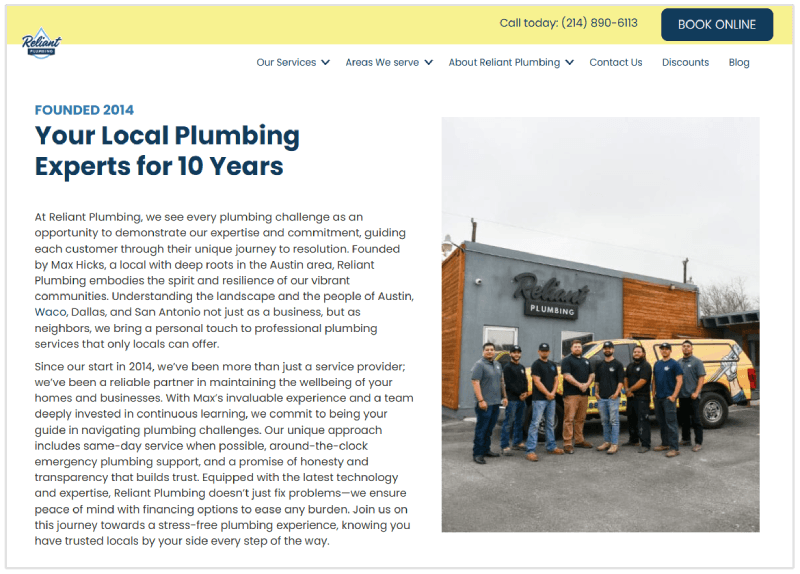
You can also include details such as your founding date, years of experience, ownership, company history, and key milestones.
An informative About page is one of the best places to bring these details together.
The information should also remain consistent with your Google Business Profile, social media accounts, business directories, and other public profiles.
Social Media and Google Business Profile
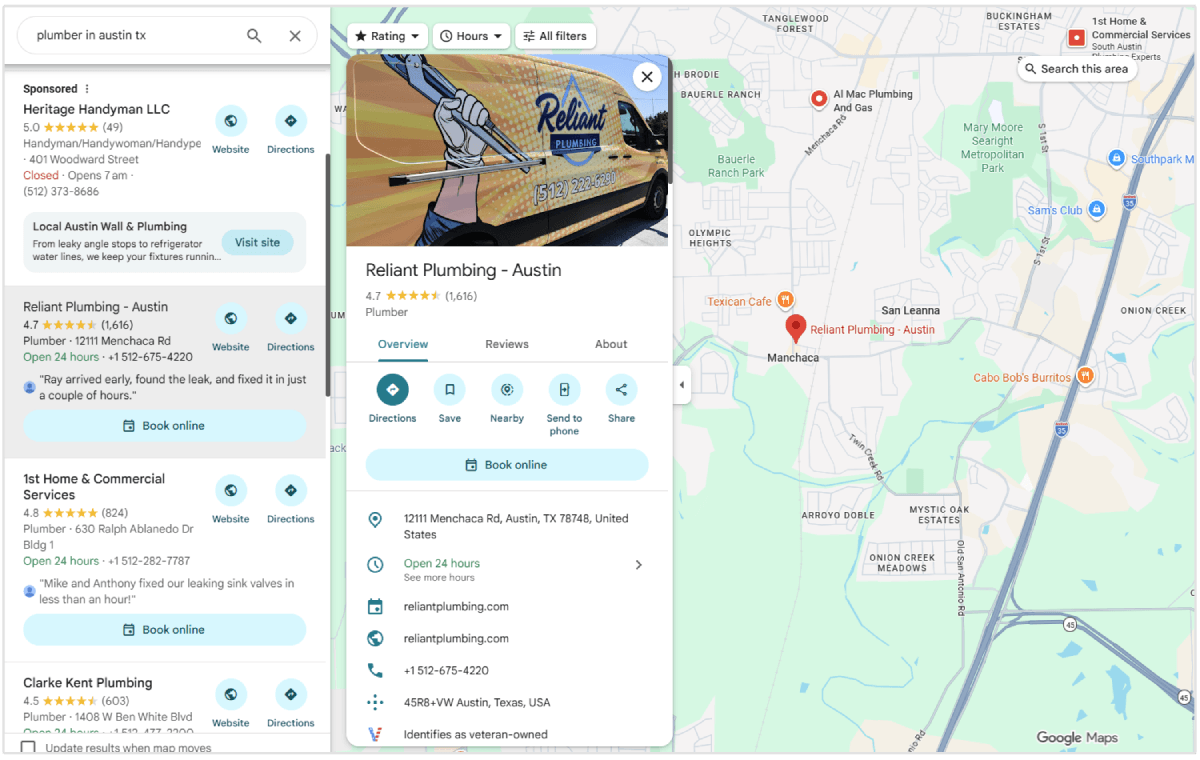
Official social media and your GBP help connect your digital presence to a business in the real world.
You should link to active profiles on platforms that are relevant to your business, such as LinkedIn, Google Business Profile, YouTube, Facebook, or an industry-specific directory.
Author pages can also link to appropriate professional social media profiles or the author's own website if they have one.
Important: Keep your business name, logo, description, services, and other important details consistent across these platforms. Conflicting or outdated information can make it more difficult to determine which profiles are official.
Organization Schema and “sameAs” Links
Organization schema and sameAs links help AI and search systems interpret and connect the entity signals you have already established across your website and external profiles.
Organization schema provides machine-readable information about your business, such as its official name, website, logo, address, and contact details.
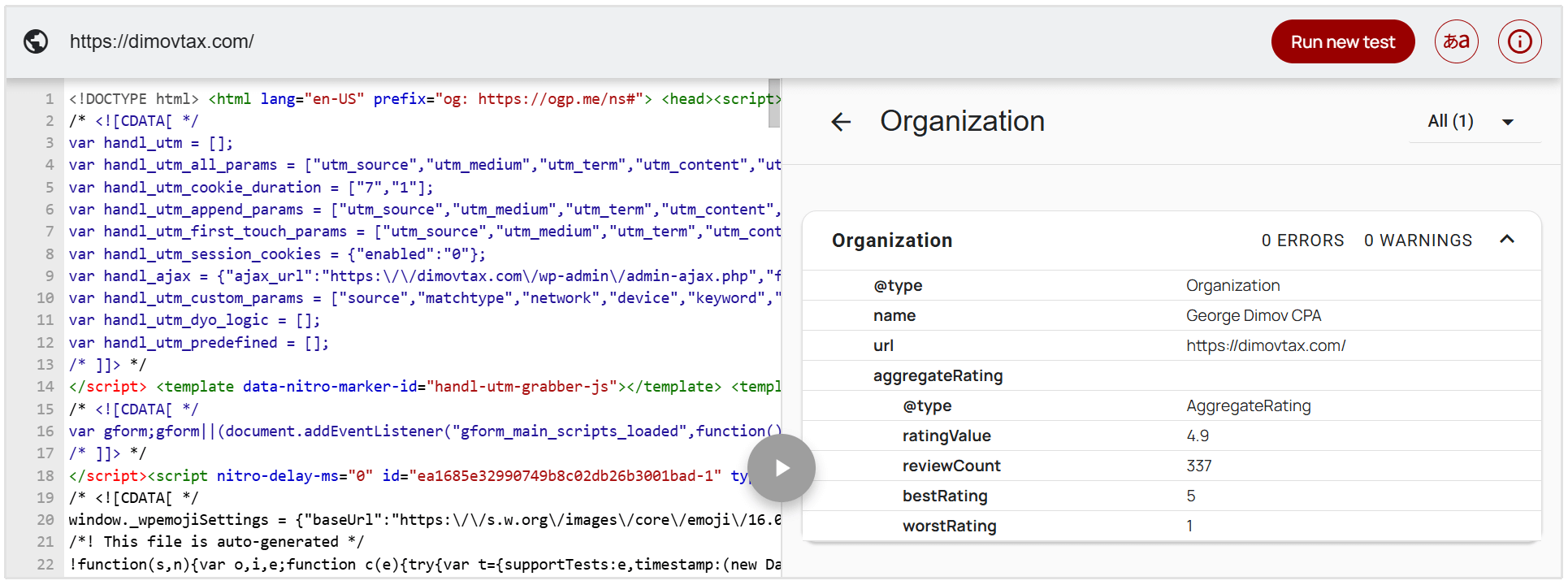
The sameAs property can then connect your website to profiles on platforms such as LinkedIn, Crunchbase, Wikidata, and relevant industry directories. This helps clarify that the different profiles all refer to the same organization, reducing ambiguity around your brand’s identity.
Add Organization schema to your homepage, usually using JSON-LD, and ensure the information matches what visitors can see on your website.
These elements don’t prove that your business is credible or guarantee AI citations, but they make your existing entity signals easier for machines to understand and verify.
Author Bios and Credentials
Named authors demonstrate that real people are accountable for the content published on your website.
Include a byline on articles where readers would reasonably want to know who created the content.
The byline should link to an author bio containing the person’s role, relevant experience, qualifications, and areas of expertise.
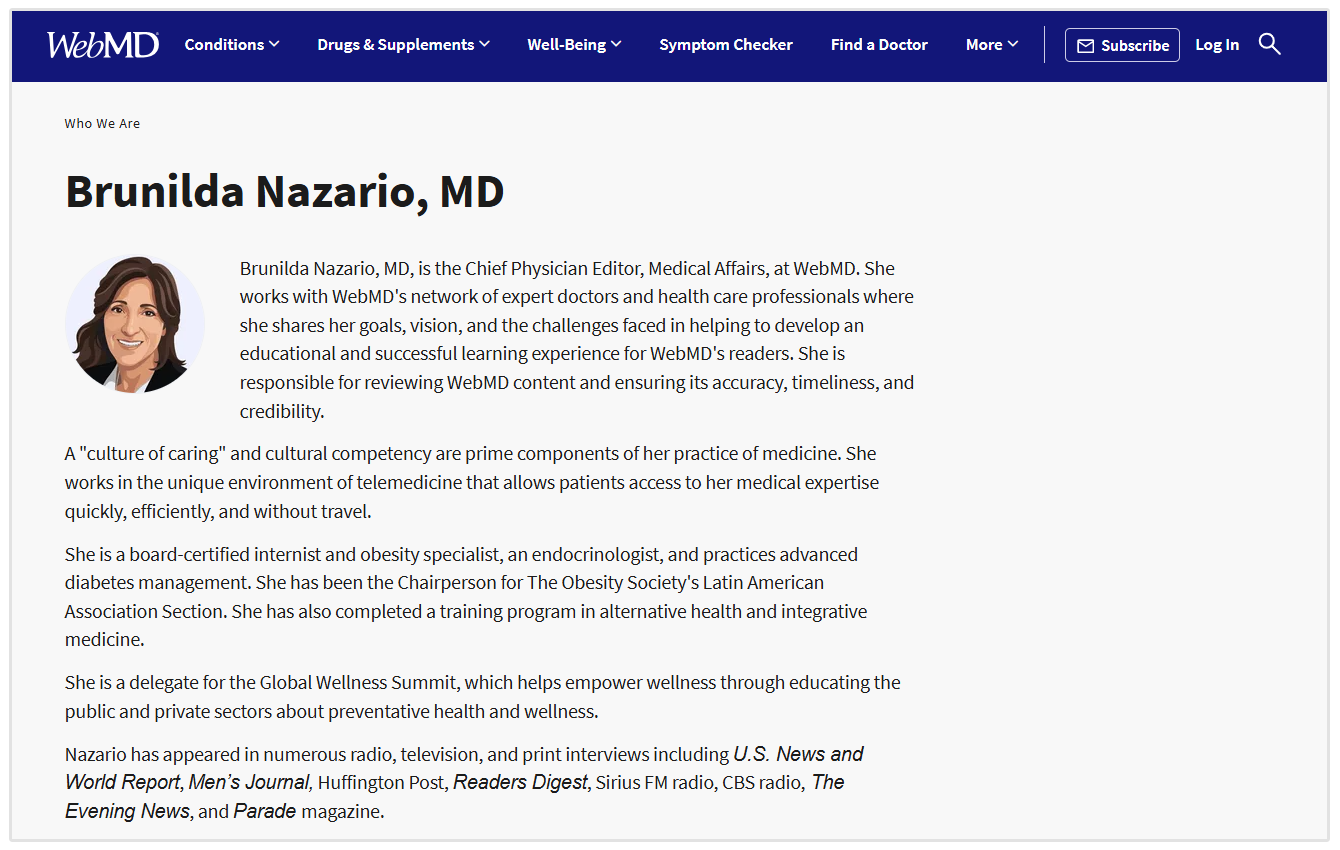
For example, see the below screenshot of a bio for an author at WebMD. It explains who the author is, qualifications, her area of speciality, as well as other places she's been mentioned or interviewd on the web.
Their credentials should be relevant to the subject.
For instance, if you’re publishing a post on managing type 2 diabetes, an author who is a registered dietitian or medical professional offers more relevant expertise than someone whose qualifications are unrelated to healthcare or nutrition.
A long list of unrelated qualifications may look impressive, but it does little to establish expertise in the topic being discussed.
Credible Sources
Reliable sources help demonstrate that your claims are based on evidence rather than opinion.
When referencing statistics, studies, or industry data, link directly to the original source whenever possible.
Publications, academic research, official documentation, and recognized industry organizations are generally stronger sources than articles that simply repeat information published elsewhere.
If new research has replaced an older statistic, update the content instead of continuing to cite outdated information.
Detailed Case Studies and Research
Case studies provide evidence that your business has applied its expertise in real situations.
A useful case study should explain the client’s original problem, the work completed, and the resulting outcome. It’s important that you include specific data, screenshots, examples, or customer comments where appropriate.
Avoid vague statements such as “we helped the client achieve excellent results.” Explain what changed and how the result was measured.
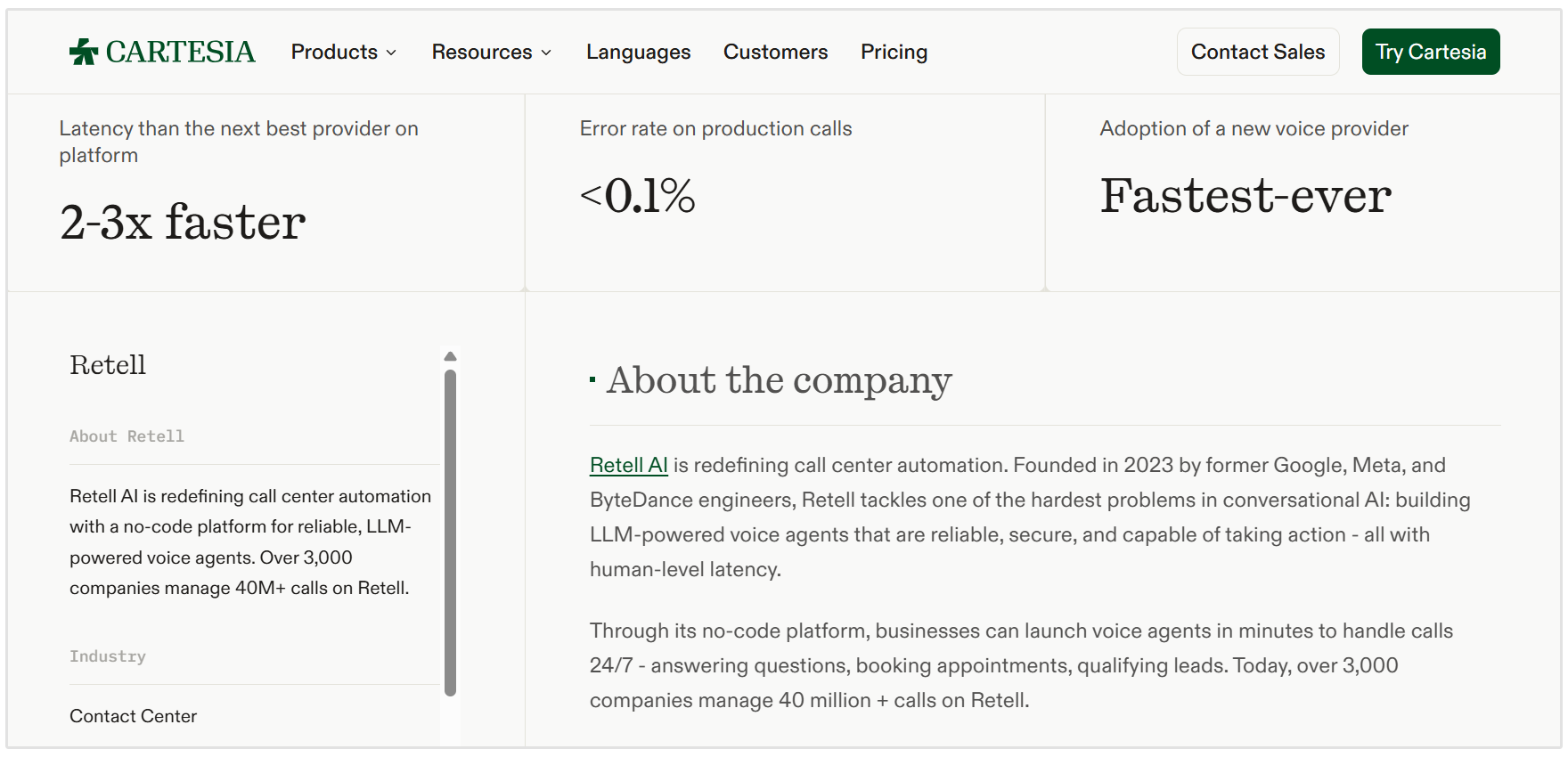
Cartesia’s case study with Retell AI is a good example. It clearly explains Retell’s challenges with voice quality, latency, and reliability before describing how Cartesia addressed them.
The results are supported by specific figures, including 2–3 times faster latency, an error rate below 0.1%, and 99.9% uptime. It also includes a named testimonial from Retell’s CTO, making the results easier to verify than a generic customer endorsement.
Original research can provide another strong evidence signal. This could include surveys, experiments, industry benchmarks, or analysis of anonymized customer data. Publishing new information gives other websites and AI systems a primary source to reference.
Clearly explain how the research was conducted, including the sample size, methodology, data collection period, and any relevant limitations. Charts, tables, and downloadable data can make the findings easier to understand and verify.
Patrick Gibbs is the founder of Epiphany Dynamics, an AI automation agency for small businesses, and he says that the most practical thing a business can do is show original data or firsthand experience instead of restating what search results already say.
"AI search engines are optimized to summarize consensus. A page that only repeats what's already out there gives them nothing new to cite. A page built on something you actually measured, tested, or lived through gives them a reason to pull from you specifically."
- Patrick Gibbs, Founder at Epiphany Dynamics
If a case study or dataset must be anonymized for privacy or contractual reasons, state this clearly. You can still provide meaningful information without revealing sensitive details.
Customer Reviews and Testimonials
Reviews and testimonials show that other people have used your products or services and are willing to share their experiences.
Detailed testimonials are usually more credible than generic comments such as “Great company!”
And according to Alex Tkacovs, the CEO at 94n Digital, verifiable social proof is going to be more and more important in the age of AI.
"People are increasingly concerned with the trustworthiness of information online because of AI’s capacity to imitate consumer sentiment.
Having genuine social proof–verifiable reviews, testimonials, certifications, and awards–will go a long way to showing that your business has real-world traction and credibility that they can rely on."
- Alex Tkacovs, CEO at 94n Digital
Where permission is available, include the customer’s name, role, company, photograph, or another detail that provides context.
At SEOptimer, we place relevant customer testimonials directly on the product pages they support. For example, our White Label Reports page includes a testimonial from Eric St-Cyr, Founder of ProStar SEO, alongside information about report customization.
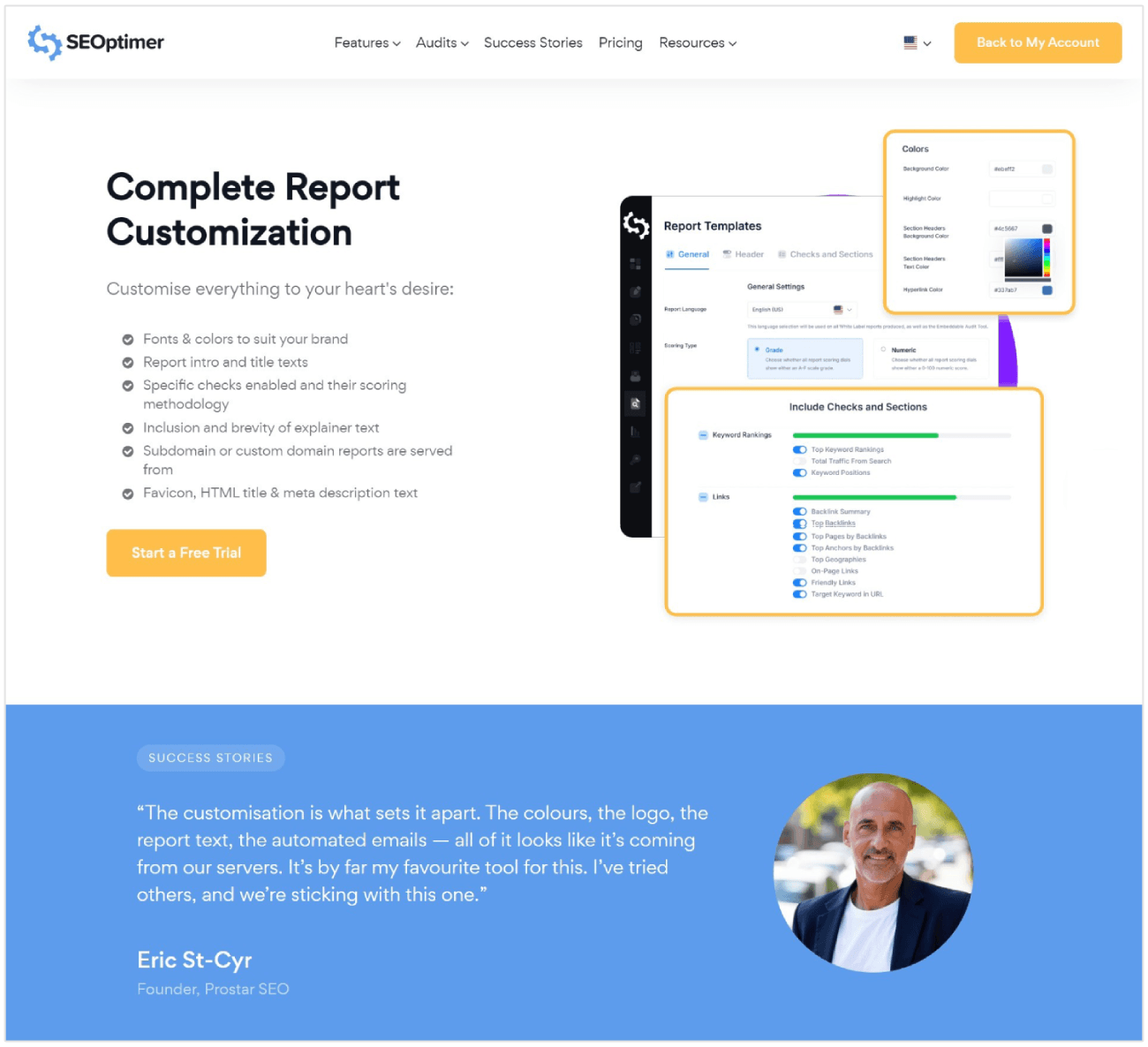
Instead of offering generic praise, Eric identifies the specific features he values, including the colors, logo, report text, and automated emails. We also include his name, role, company, and photograph, making the testimonial more detailed, relevant, and credible.
You can also link to independent review platforms such as Google, Trustpilot, G2, or an industry-specific platform. This allows visitors to verify the reviews and see a broader range of customer feedback.
Never create fake testimonials or edit a customer’s comments in a way that changes their original meaning.
Media Mentions and High Quality Backlinks
Media mentions and backlinks from reputable websites provide independent evidence that other sources recognize your business or expertise.
These signals could include being quoted in a news article, featured in an industry publication, interviewed on a podcast, or referenced as a source in another company’s content.
The mention doesn’t always need to contain a link to be valuable. However, an editorial backlink makes it easier for search engines and readers to discover the connection and verify the original source.
Earning high-quality backlinks and media mentions is a topic in its own right. For practical tips and tactics, check out our detailed guides on building backlinks and securing brand mentions:
- What are Backlinks and How do you Get Them?
- What are Unlinked Mentions in SEO? & How to Turn Them into Real Backlinks
- 15 Best Sites for Backlinks
Client or Partner Logos
Recognizable client and partner logos can provide immediate visual evidence that established organizations have worked with or trusted your business.
However, a collection of logos without any explanation can be difficult to interpret. Where possible, add context about the relationship or link the logo to a relevant testimonial or case study.
Always obtain permission before displaying another company’s logo. You should also avoid using language that implies an official partnership when the company was only a customer or used your service once.
Awards, Certifications and Accreditations
Awards, certifications, and accreditations can demonstrate that an independent organization has evaluated or recognized your business.
Include the name of the issuing organization, the date received, and a short explanation of what the recognition means. If possible, link to an external page where visitors can verify it.
Relevant recognition from a credible organization is more valuable than a wall of unfamiliar or pay-to-play badges.
Ultimately, these trust signals are most effective when they support one another across your entire digital footprint.
Robin Dimond, marketing strategist and Founder and CEO of Fifth & Cor, believes businesses must substantiate the claims they make online:
“If you claim to deliver results, show the results. If you claim expertise, prove who is behind that. The goal is to give customers a reason to believe what you’re telling them.”
- Robin Dimond, CEO at Fifth & Cor
This proof can include identifiable experts, original research, measurable results, customer reviews, earned media, interviews, awards, and partnerships.
As Robin explains, credibility isn’t something businesses can simply optimize into existence. It comes from consistently aligning their website content with PR, thought leadership, reviews, social profiles, partnerships, and the rest of their digital presence.
Core Web Vitals, HTTPs, and Other Technical Signals
Technical website signals influence whether visitors perceive your website as safe, reliable, and professional.
Core Web Vitals measure loading performance, responsiveness, and visual stability. You can use our free Core Web Vitals Test to check how your website performs against these metrics using Google’s own data.
A slow page, unresponsive button, or constantly shifting layout can quickly undermine confidence in your website.
Google also uses Core Web Vitals within its ranking systems, although strong scores alone won’t guarantee better rankings.
HTTPS is equally important. It encrypts information exchanged between the visitor and your website and prevents browsers from displaying a “Not secure” warning.
This is particularly important for websites that collect contact details, login information, or payments.
Other supporting technical signals include:
- Mobile-friendly pages
- Clear navigation
- Working links and forms
- Minimal server errors
- AI crawlability and indexable content
- No intrusive pop-ups that obscure the main content
These elements won’t replace AI search trust signals. However, they create a trustworthy technical foundation and ensure that search engines and AI systems can access and process your content.
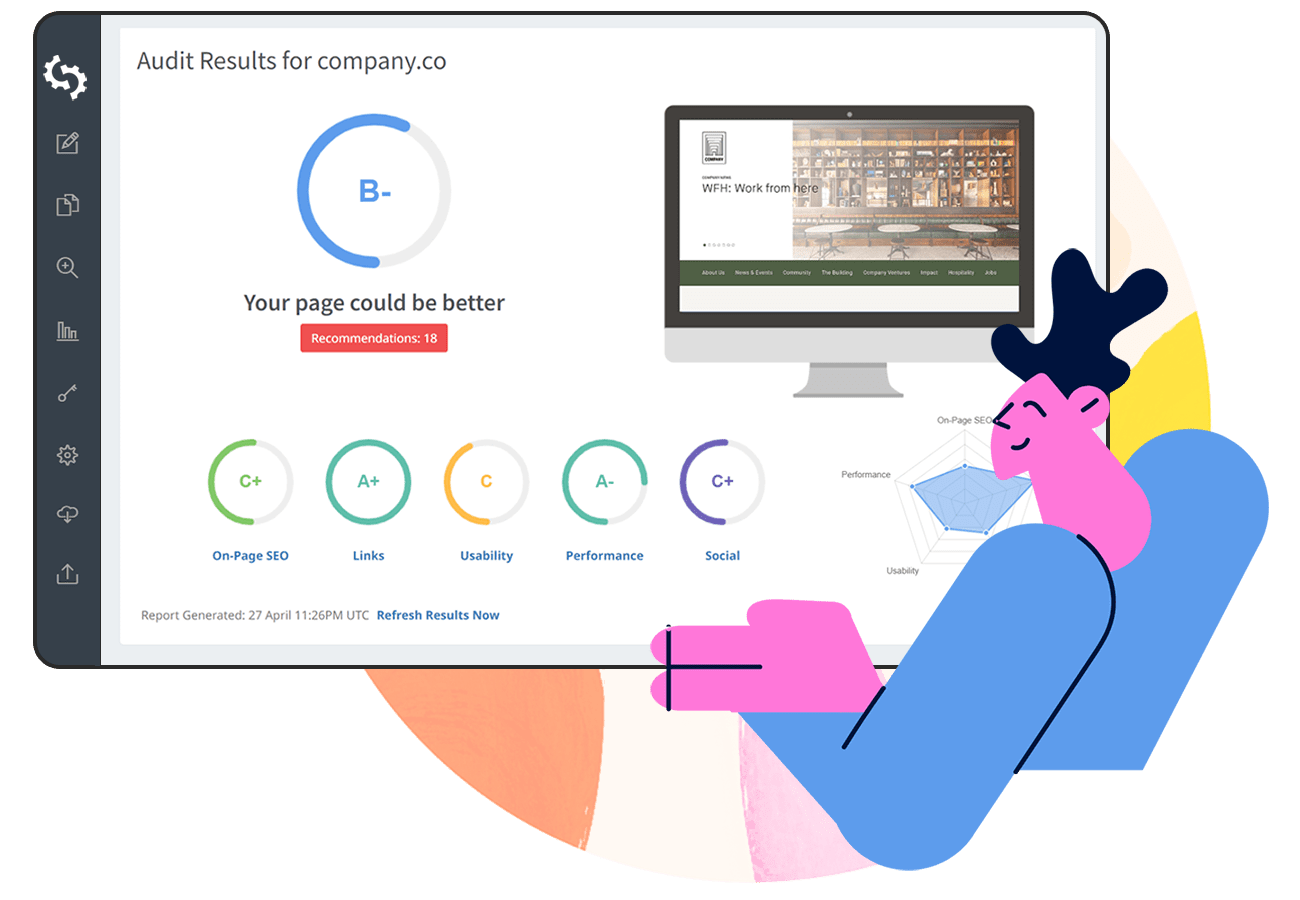
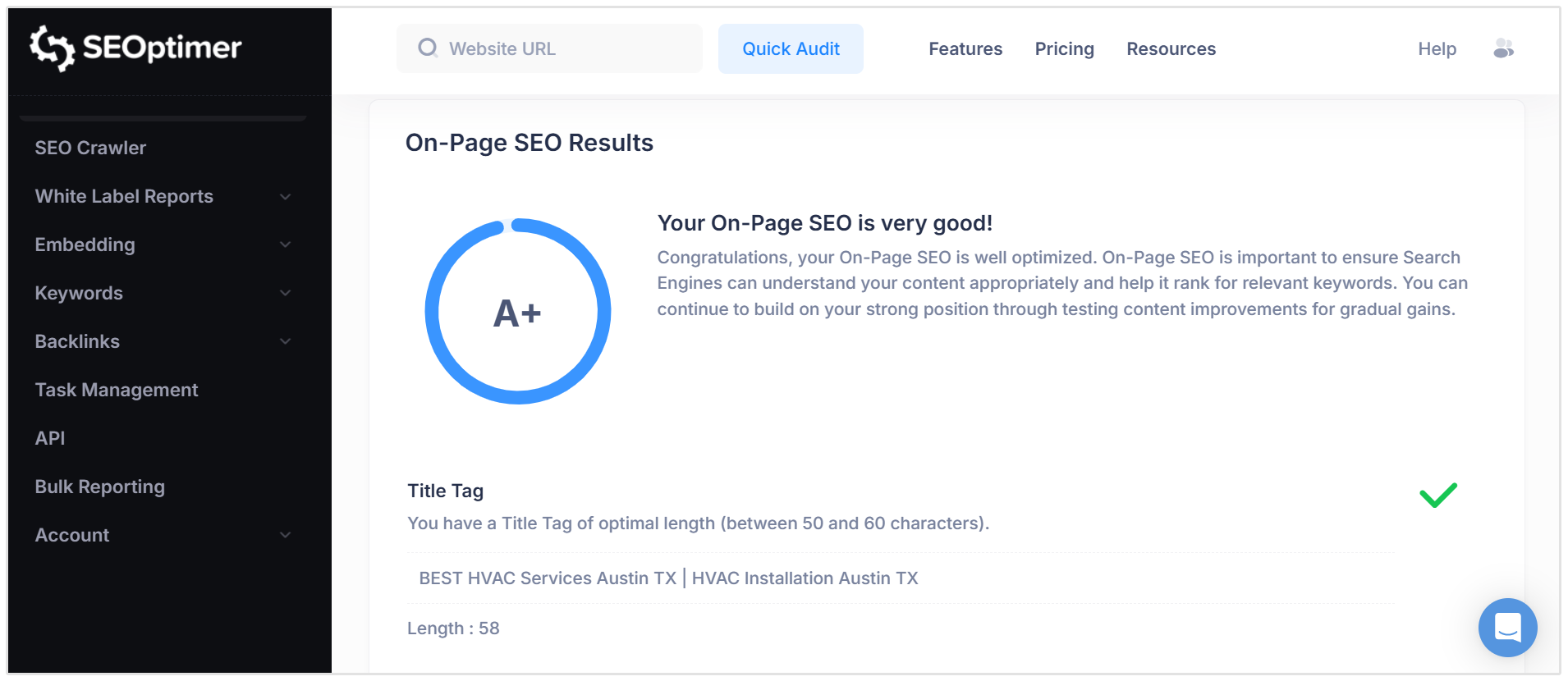
For a deeper look at your website’s technical health, run a free SEO Audit with SEOptimer. It analyzes more than 100 website factors, including performance, usability, security, crawlability, and on-page SEO, before providing clear recommendations for what to fix.
How to Improve AI Search Visibility
AI search visibility can be difficult to measure because platforms may produce different answers depending on the prompt, user, location, and available sources.
Manually searching for your business can provide a quick snapshot, but it doesn’t show whether your website is properly prepared for AI search.
Our comprehensive GEO Audit analyzes your website’s AI visibility and highlights the issues that could make it harder for AI systems to understand, trust, or cite your content.
The report includes a dedicated Authority & Trust Signals check.
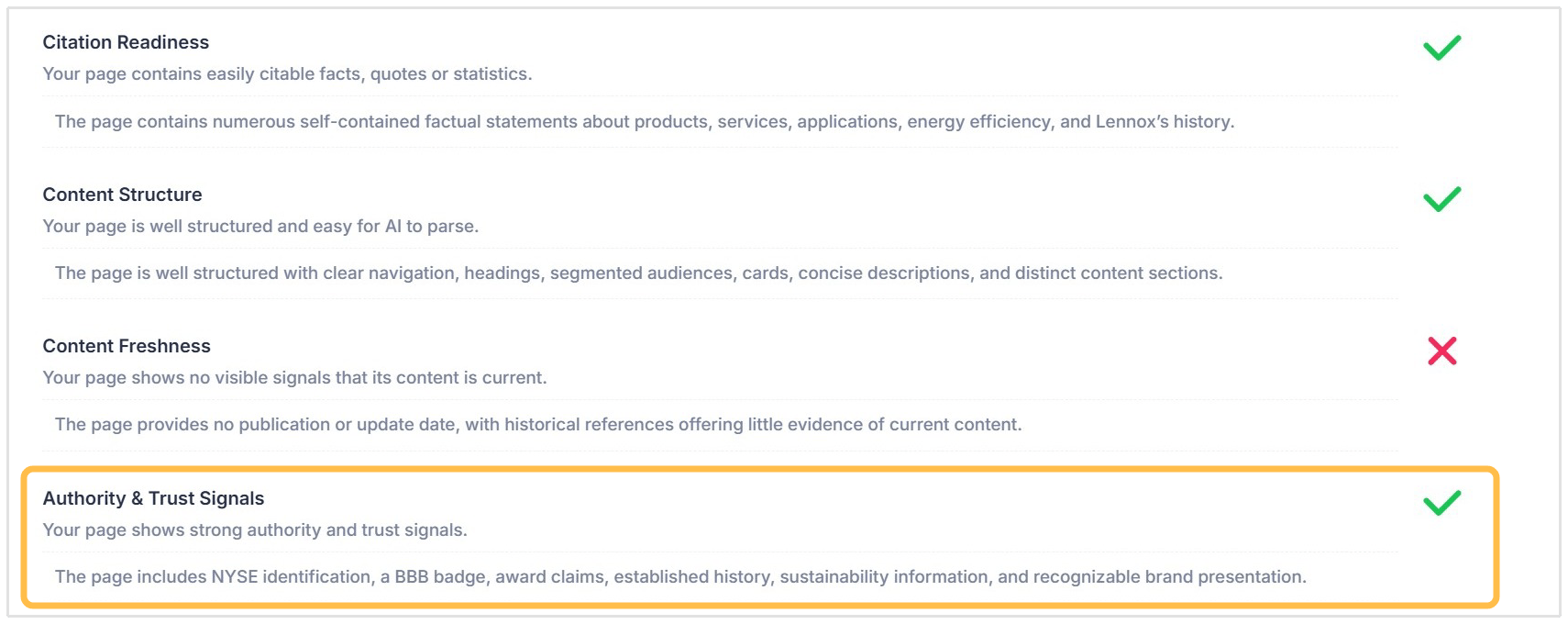
Our advanced AI evaluates the trust signals present across your website, including evidence of business identity, expertise, supporting sources, customer proof, and reputation.
It then provides tailored recommendations showing where these signals are missing or could be strengthened.
The GEO Audit also reviews other important elements of AI search readiness, including:
- AI Overview citations and traffic: See which search queries generate AI Overviews that cite your website and estimate the traffic they produce.
- LLM readability: Check whether important content is available in your page’s HTML or hidden behind JavaScript rendering.
- Identity schema: Confirm whether your website uses Organization, LocalBusiness, or Person schema to communicate who is behind the site.
- LLMs.txt: Check whether an LLMs.txt file is present and correctly placed on your website.
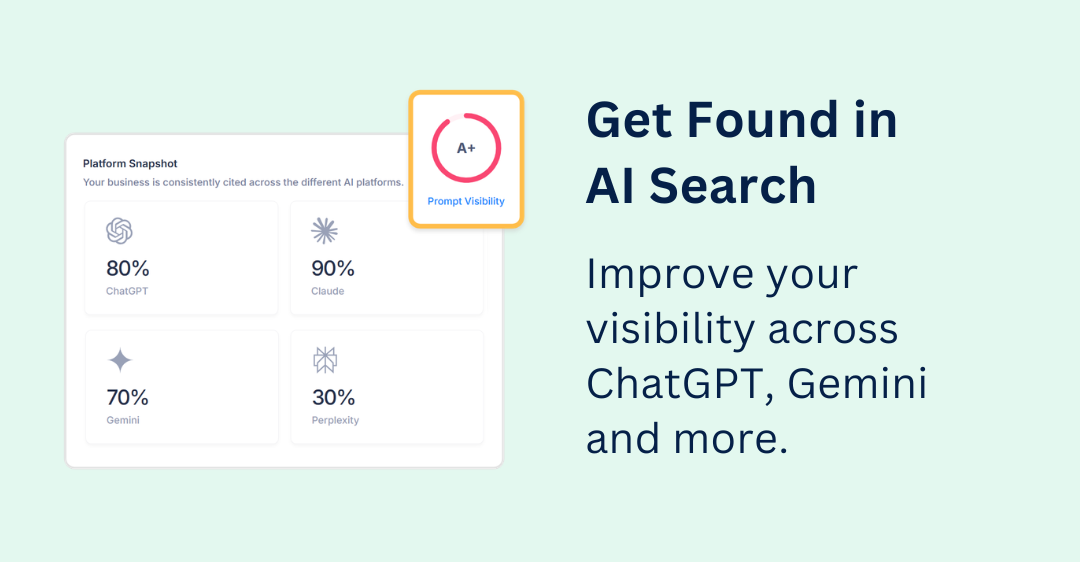
- Prompt visibility: Test your brand against realistic prompts across ChatGPT, Claude, Gemini, and Perplexity to see how often it is mentioned or recommended.
- AI search competitor visibility: Compare your share of voice and average ranking position against competing brands. You can also see which competitors appear more frequently for individual prompts and across different AI platforms.
Together, these checks provide a clearer picture of your current AI visibility and the steps you can take to improve it.
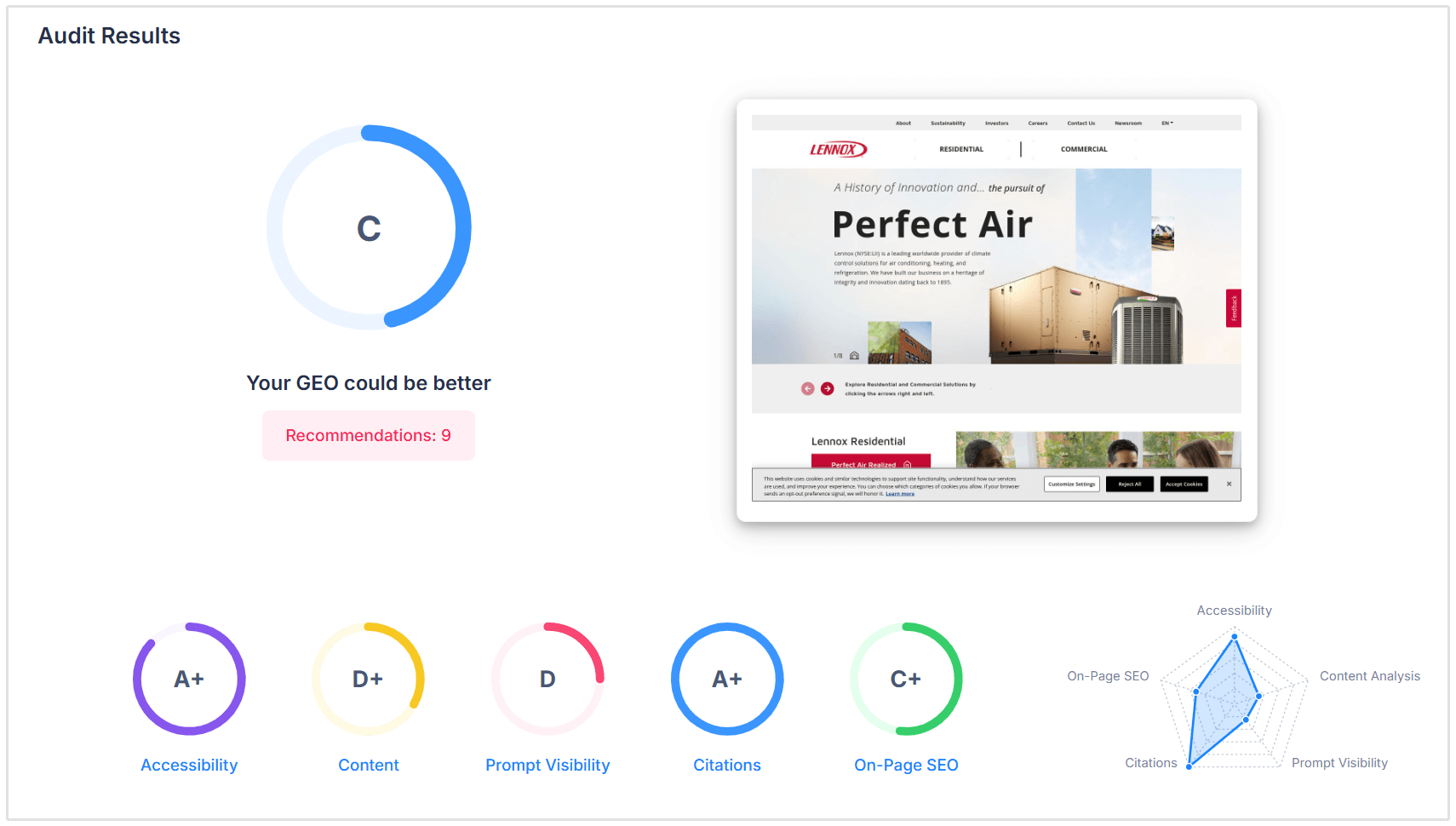
Run the audit again after implementing the recommendations to monitor your progress and identify any remaining gaps.
Conclusion
AI search trust signals help visitors and AI systems understand who you are, why you’re credible, and whether your claims can be verified.
Focus on building a consistent combination of identity, expertise, evidence, and reputation signals across your website and external profiles.