


Digital agencies are using AI across the services they offer and the work it takes to deliver them.
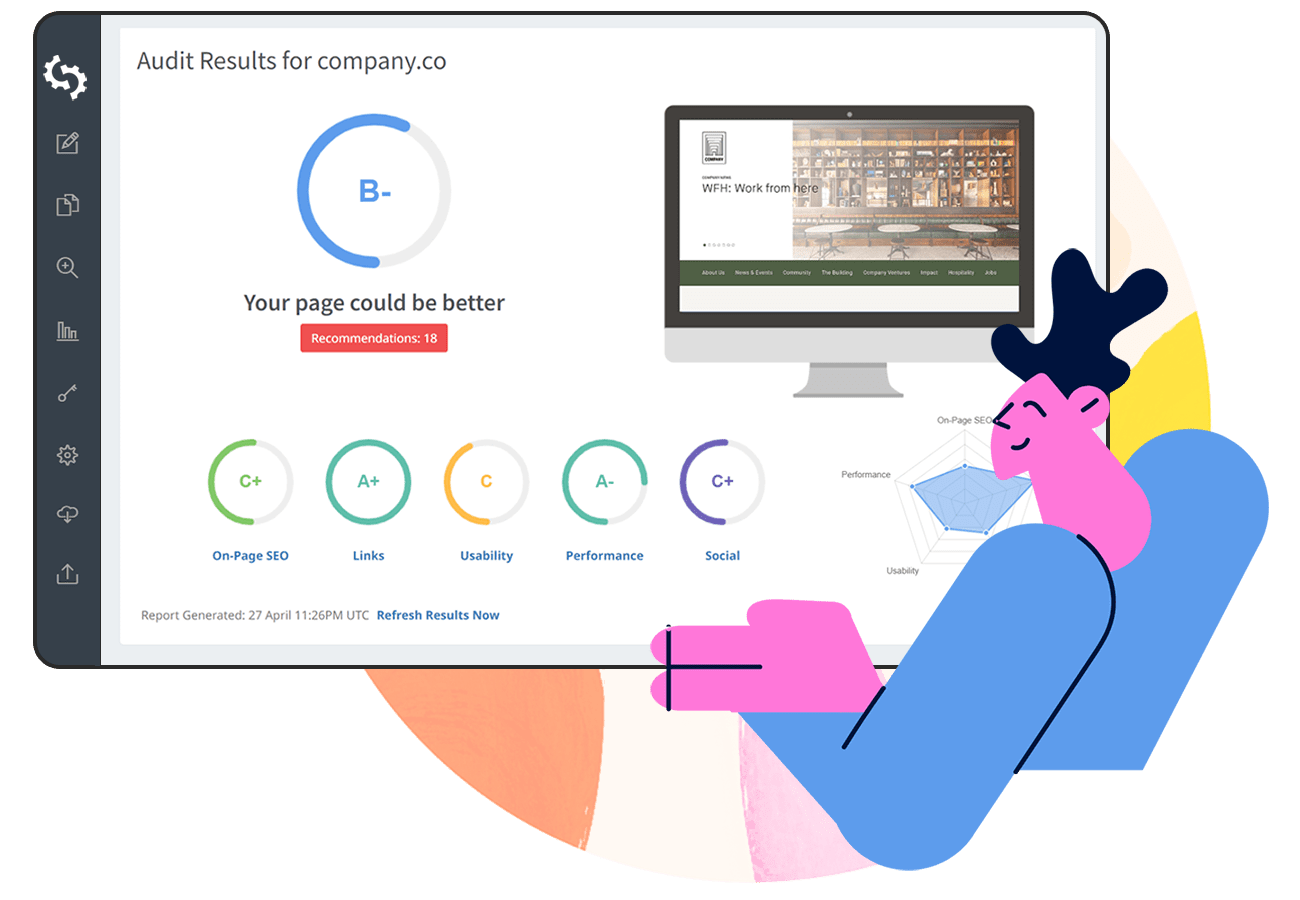
As a software company that sells to digital agencies, we are uniquely placed to understand their workflows and help make their lives easier. SEOptimer is used by over 2,000 digital agencies around the world and we are actively building out additional software tools to help agencies even more.
We reviewed recent industry reports and agency surveys to find out what agencies are using AI for, then looked for real examples of those uses in practice.
Thanks to the agencies listed below who took part in this article and generously shared their time and expertise to help the whole industry learn from each other and help define best practice in the age of AI.
We asked each contributor how they're implementing AI in their agencies and what benefits they are seeing from AI tech.
- Manuel García Sánchez @ Sell with Marketing, Mexico
- Andrew Shotland @ Local SEO Guide, United States
- Alex Donovan @ (a)squaredstudio, United States
- Garrett McClure @ Born & Bred Creative, United States
- Nick Stamoulis @ Brick Marketing, United States
- Edu Rigonato @ Taurist Technologies, United States
- Uday Rajaram @ Medical Marketing Firm, United States
- Bram Vermolen @ Space’M Online, Netherlands
- Mitchell Kwan @ MK Aesthetics, Australia
- Kriszta Grenyo @ Suff Digital, United States
1. Developing New AI Search Services
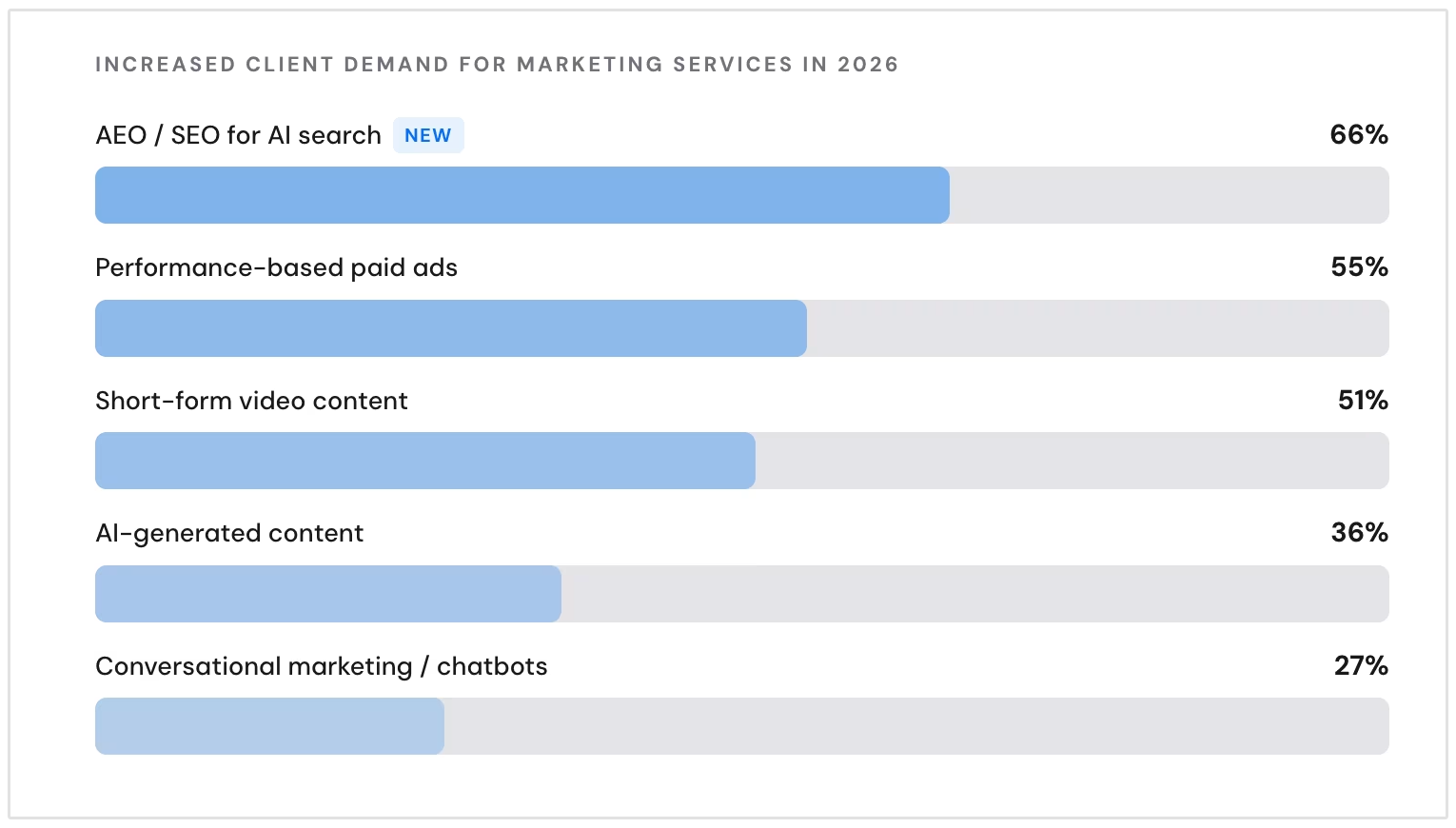
More and more clients want to know whether their businesses appear in answers from ChatGPT, Google AI Overviews, and other AI search tools.
In AgencyAnalytics’ 2026 survey of 494 agency professionals, 66% said clients were asking for AEO or AI search optimization services, making it the most requested new service in the survey.
KCD CEO, Rachna Shah, told Vogue Business that more large fashion brands have approached the agency expecting GEO to be part of their PR plans. They want to understand how their brands are represented in AI search and how the agency would measure that visibility.
Sell with Marketing tracks clients’ share of voice in AI-generated answers over time. Its founder and CEO, Manuel García Sánchez, told us the service has opened up a new source of revenue:
“The AI-visibility work is money we didn't have two years ago. It isn't a discount on old services—it's a service clients are buying that nobody was selling before. For an agency our size, that's the single most important thing AI has produced.”
- Manuel García Sánchez, Founder and CEO, Sell with Marketing
Agencies are responding by adding generative engine optimization (GEO) to their services.
In an SE Ranking survey, 61% of agencies planned to offer optimization for AI Overviews and other AI search engines. Some planned to include it in their existing SEO packages, while others intended to sell it as an additional service.
SEO and AI visiblity reporting is becoming part of the service, too.
In Sitechecker’s survey of 73 SEO agencies, 63% said they had already changed their SEO KPIs in response to AI search.
For clients, that means an agency can report on relevant AI mentions and citations alongside traditional measures such as rankings, traffic, and leads.
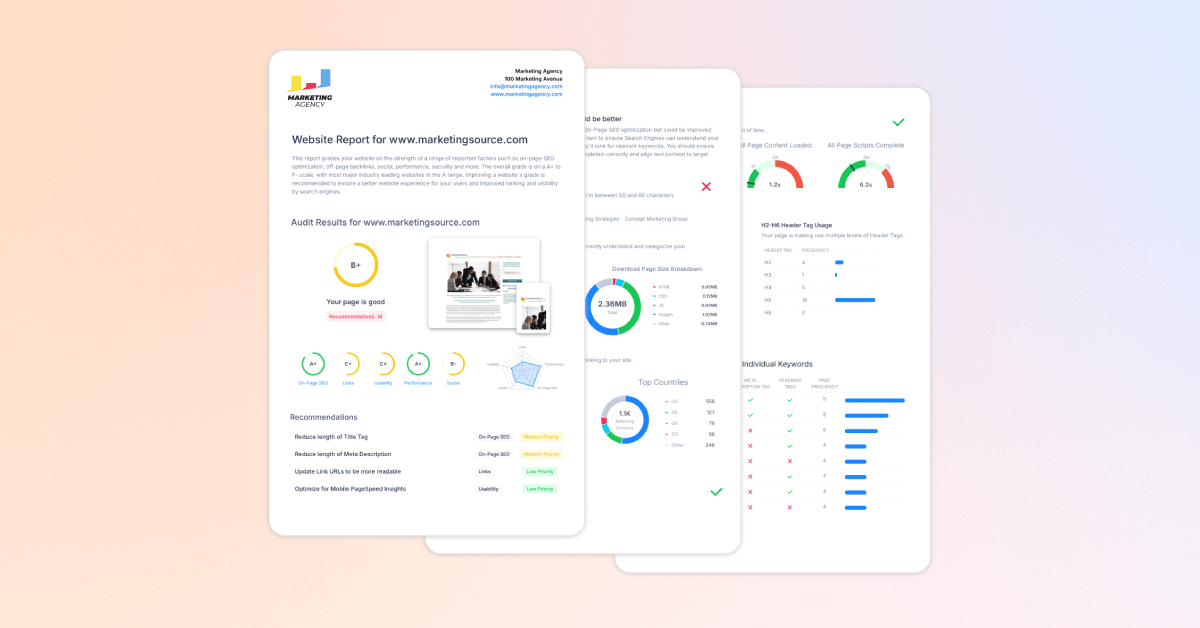
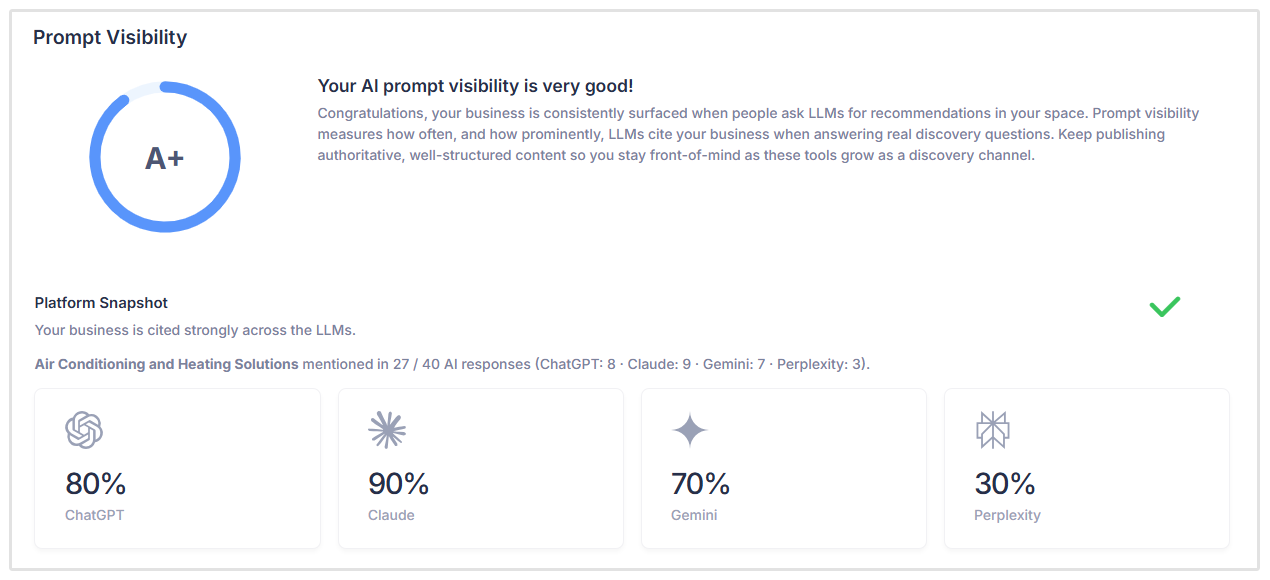
Agencies can use our GEO and AI Visibility Audit to run client reports on AI readiness and visibility in ChatGPT, Claude, Perplexity, and Gemini.
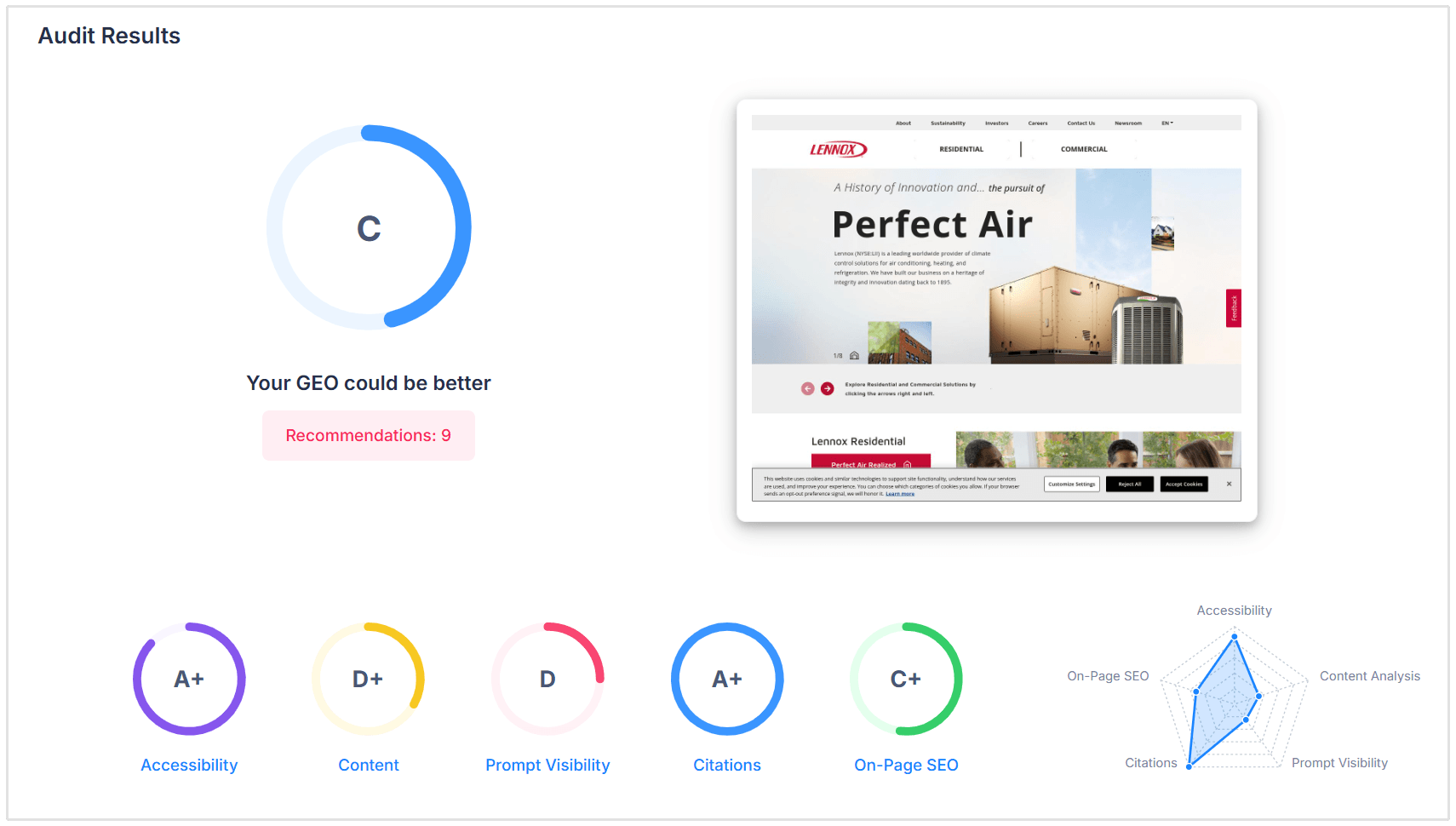
It covers key measures such as visibility for relevant prompts, brand mentions, citation rates, AI Overview citations, and performance against competitors.
Each GEO audit also identifies site issues that may affect AI visibility, giving agencies both the results to report and specific recommendations to discuss with clients. Follow-up audits can show how those results change over time.
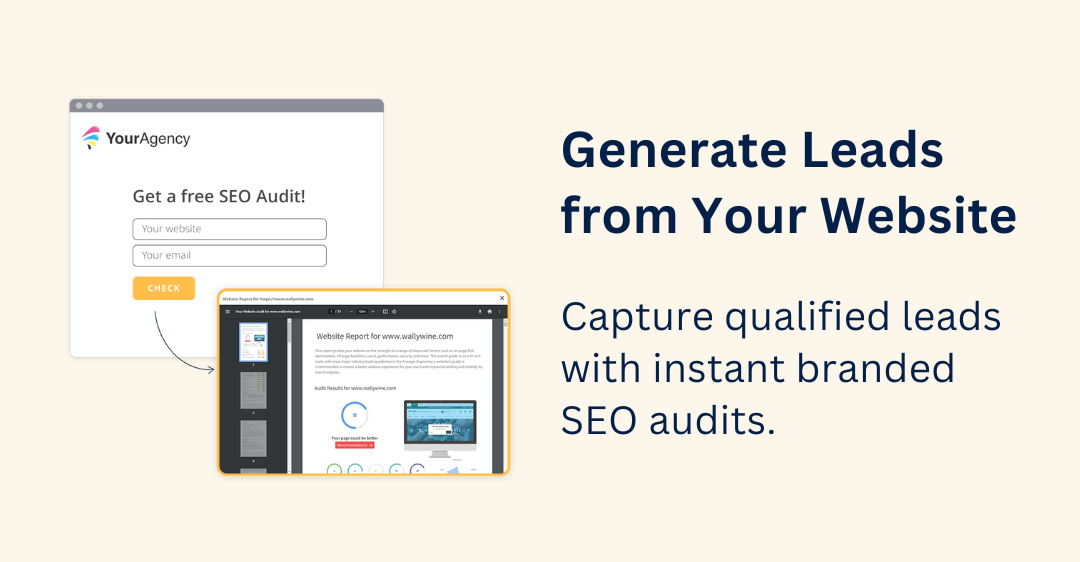
To find potential clients for these services, agencies can add our SEO Lead Generation Tool to their websites.
Visitors receive a branded SEO audit, and the agency gets their contact details. That gives the team a starting point for a conversation about search visibility and, where relevant, a more detailed GEO assessment.
2. Researching Customers and Competitors
Agencies can use AI to find patterns across customer reviews, survey responses, sales notes, and publicly available competitor information.
In Foxwell Founders and Motion’s 2026 agency survey, 64.6% of respondents said they used AI to analyse customer reviews for insights, while 49.6% used it for competitor analysis and benchmarking.
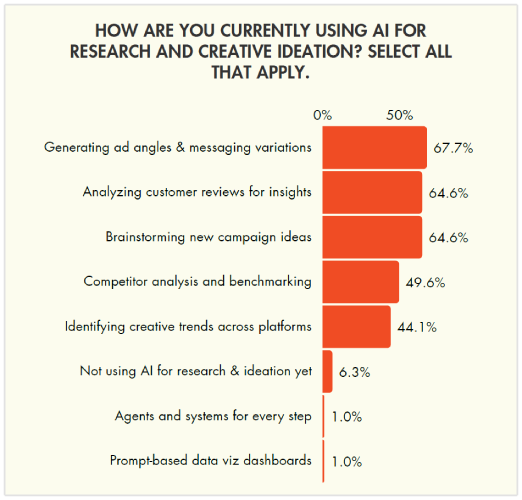
This kind of research is becoming a routine agency use of AI. Forrester and 4As found that 70% of surveyed US marketing agencies use generative AI for research and competitive intelligence.
Andrew Shotland, founder and CEO of Local SEO Guide, says one AI-assisted review of a client’s content strategy:
“AI found a competitor we were not tracking, explained why it was a growing threat and even suggested how we might counter it.”
- Andrew Shotland, Founder and CEO of Local SEO Guide
The useful output is a shortlist of patterns and questions the team can check against the original sources and discuss with the client.
3. Brainstorming Campaign Ideas and Messaging
Agencies are using AI to explore more campaign directions before choosing the final one.
In Basis Technologies’ 2025 agency survey, 86% of respondents said they used AI for ideation or brainstorming.
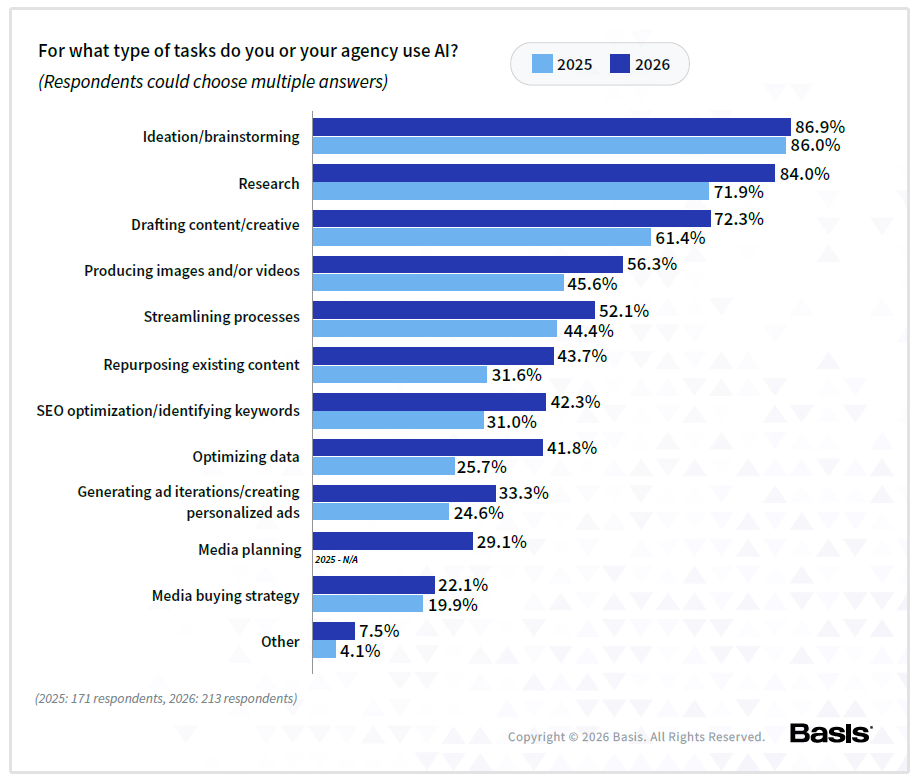
The Foxwell Founders and Motion survey found that 67.7% used it to generate ad angles and messaging variations, while 64.6% used it to brainstorm campaign ideas.
A real example is Within’s launch campaign for Touchland’s fragrance mists.
The agency gave Gemini the product’s scent notes and existing audience research, then used its suggestions to explore audience personas and a travel theme.
Within developed that into the “Move Your Mood” sweepstakes, pairing eight fragrances with eight travel destinations. The team referred back to the personas when deciding on the campaign’s messaging, tone, and visuals.

Alex Donovan, founder of (a)squaredstudio, also uses AI to explore ideas before presenting a creative direction to clients:
“I also lean on AI to help with early concepts and moodboards to show clients before building out any new designs with Midjourney.”
- Alex Donovan, Founder of (a)squaredstudio
In both examples, AI helps the agency explore directions early, and then the team decides which ideas fit the client and develops the final work.
4. Winning New Business and Preparing Proposals
Winning new clients is a pressing challenge for agencies.
In Foxwell Founders and Motion’s 2026 survey, 50.4% of respondents named their lead pipeline as their biggest challenge.
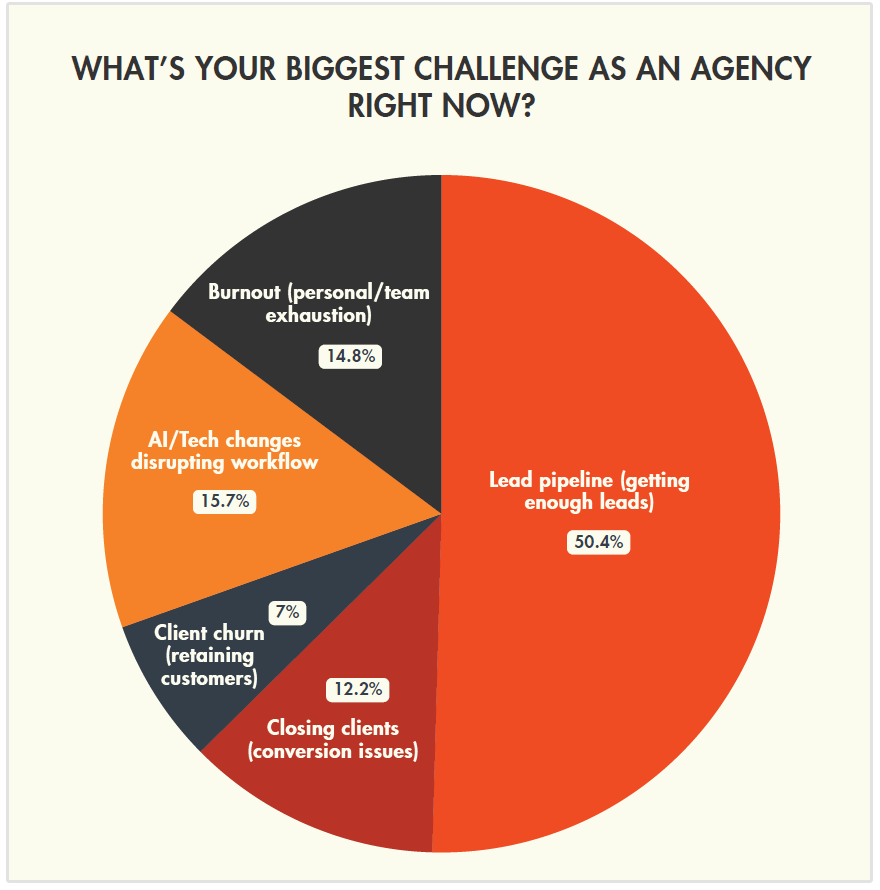
AI helps agencies keep track of prospects and prepare for the next conversation.
At Born & Bred Creative, president Garrett McClure uses an agent that reads his inbox and sent mail, keeps the agency’s ClickUp CRM current, and drafts follow-ups for his review.
It runs twice a day on weekdays, so open commitments are less likely to be forgotten. He also uses AI to prepare client proposals:
“Our second big use is proposal and brief prep. A discovery call recording goes in, and a structured sales brief comes out, mapped to our standard scope phases. That used to be half a day of my time per deal. Now it's a review pass.”
- Garrett McClure, President at Born & Bred Creative
The brief gives McClure a starting point grounded in what the prospect said on the call. He still reviews the scope and every follow-up before sending it.
5. Creating Briefs, Drafting and Updating Content
Agencies use AI at each stage of content production, from preparing a blog outline to refreshing an existing article that’s already live.
In a 2026 Keyword.com survey, 77% of 96 SEO professionals said they use AI for content briefs and outlines. The respondents included agency teams, in-house teams and consultants, so this is not an agency-only figure.
SEO agency House of Growth says its writers give Juma a topic, title, target keywords and an example brief to generate an outline. They then remove unnecessary sections and add client information or data before handing it to a writer. The agency’s CEO says the process takes minutes instead of hours.
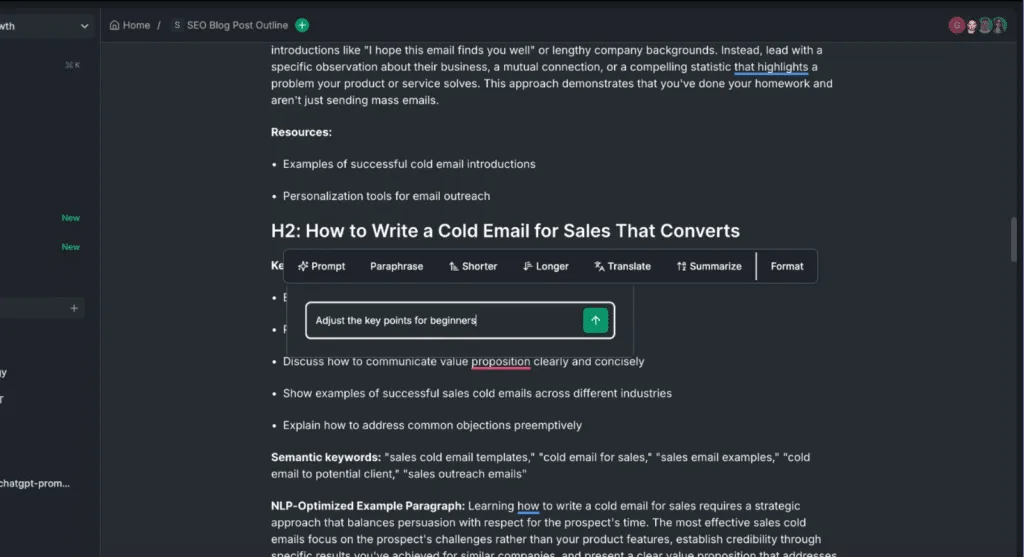
AI is also used to help produce a first draft
In Moore Kingston Smith’s 2026 survey of marketing services agencies, 72% of respondents said they use AI to create content.
Basis Technologies’ 2025 agency survey found that 61.4% use it to draft content or creative assets.
Nick Stamoulis, founder and president of Brick Marketing, describes how his agency uses AI during the early stages of writing:
“The impactful way we are using AI within our agency is in the content research and first-draft production phase of our content writing. Essentially we just use AI to accelerate the learning process about things we need to write about.”
- Nick Stamoulis, Founder and President at Brick Marketing
For existing articles, AI can help identify what needs updating. Siege Media describes using AI-enabled workflows to find pages where new research or data would add value. Its editors review the recommendations and refine the copy before publishing.
6. Repurposing Content Across Channels
AI can pull useful points from an approved article, report, podcast, or webinar and help adapt them for different channels.
In Basis Technologies’ 2025 agency survey, 31.6% of agency professionals said they use AI to repurpose existing content.
Choco Media describes its own workflow for turning one long-form blog post into assets such as a LinkedIn carousel, short video scripts, an email snippet, and social captions.
The agency gives AI the original post and a brief covering the brand voice, audience, and channels. Its team then checks that each asset uses claims from the source and works in its intended format before scheduling it.
Taurist Technologies starts with questions from customer calls. Its team reviews the article developed by an AI Worker, and co-founder Edu Rigonato says the workflow continues from there:
“Then it [AI] turns the note into LinkedIn and X drafts for us to review and post.”
7. Creating and Testing Ad Variations
AI lets agencies produce more ad variations from an approved concept, then test which ones earn a response.
They might vary the image, opening line, offer, or call to action while keeping the campaign’s core message consistent.
In Basis Technologies’ 2025 agency survey, 24.6% of respondents said they used AI to generate ad iterations or personalized ads.
A concrete example comes from EPA’s work with Hisense Mexico. The agency used AI image generation to create lifestyle backgrounds for its product ads, allowing the team to test up to seven creative variations per product, compared with one or two previously.
According to Amazon Ads’ case study, the campaign achieved a 50% higher click-through rate and 48% higher return on ad spend against its performance benchmarks.
Uday Rajaram, founder of Medical Marketing Firm, uses AI to write ad variations but keeps a close eye on changes to live campaigns:
“I’m comfortable letting AI collect data, organize it, flag problems and recommend actions. I’m much less interested in giving an agent unlimited authority to change bids or budgets without a human looking at it first.”
For agencies, the value is in the testing cycle: use AI to produce viable options, measure how audiences respond, and use those results to guide the next round of creative.
8. Supporting Keyword Research and SEO Work
Agencies also use AI for the analysis behind an SEO strategy.
It can group related search queries, help identify which pages may be competing for the same terms, and sort through site audit findings. In Keyword.com’s 2026 survey, 68% of 96 SEO respondents said they use AI for keyword research and clustering, while 38% use it for technical SEO audits. The sample included agencies, in-house teams, and consultants.
At Space’M Online, founder and SEO strategist Bram Vermolen uses custom Claude workflows for tasks such as finding competitor keyword gaps and checking hreflang across international ecommerce sites:
“Since we audit eCommerce stores across multiple markets every week, which include the same steps and checklist every time, we turned the entire process into Claude skills.”
- Bram Vermolen, Founder and SEO Strategist at Space’M Online
Another example is digital agency Filter who connects an AI assistant to WordPress to audit SEO fields across a site.
On its own site, the agency checked 280 posts and found 63 missing meta descriptions and 41 without a focus keyword set. That gave its team a specific list of issues to review and address.
Here, AI helps agencies work through search and website data. SEO specialists still need to decide which keywords matter to the client and which fixes deserve priority.
9. Analyzing Results and Preparing Client Reports
Agencies use AI to turn performance data into explanations clients can act on. In a Forrester and 4As study, 49% of US agency decision-makers said their agencies used generative AI to summarize marketing performance results. A 2026 follow-up also identifies performance reporting as an agency use case.
Mitchell Kwan, founder of patient-acquisition agency MK Aesthetics, uses Claude to prepare weekly reviews of his clients’ ad accounts:
“Each week Claude goes through every client's Meta ad account, compares it with the week before and the change log, flags what moved and drafts the review. I read it, decide, and make the change myself.”
- Mitchell Kwan, Founder of MK Aesthetics
This is where SEOptimer’s MCP connection can help.
An agency can connect SEOptimer to its AI assistant and ask questions about its data, such as “Which issues did this client’s audit uncover?” or “How would you explain these results in a monthly update?”
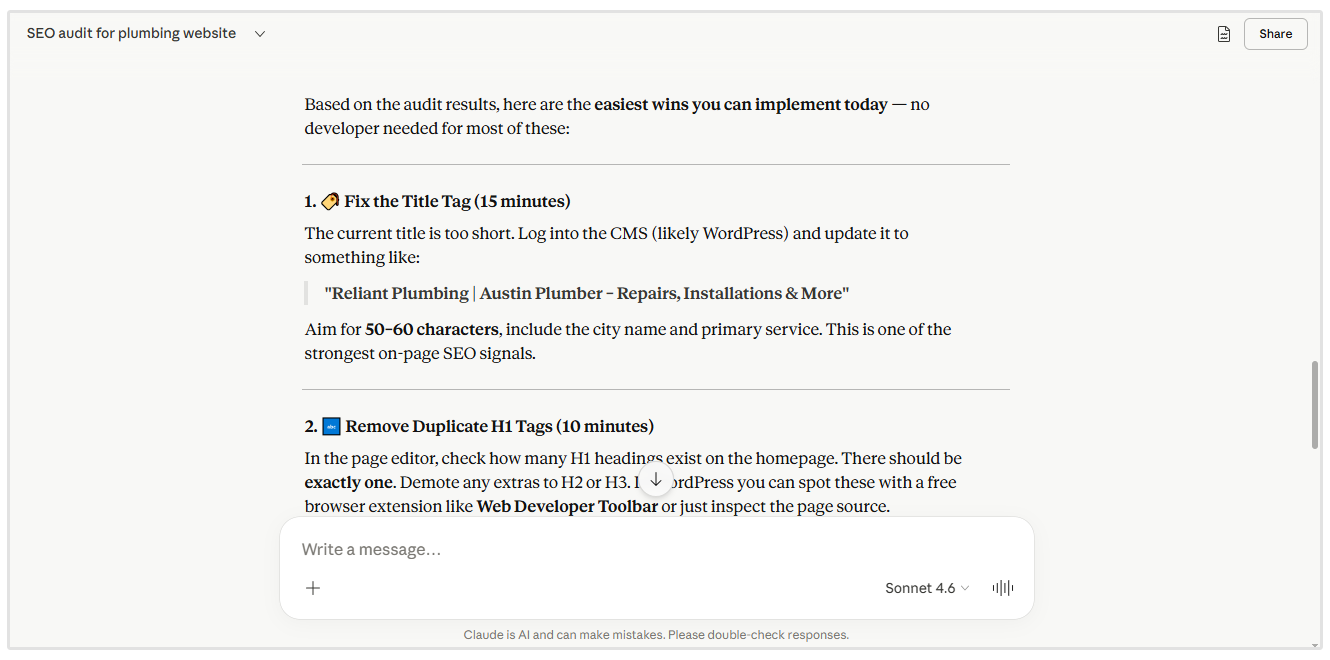
The assistant can help turn the findings into a draft summary or a list of points to discuss with the client.
Before sending a report, the account manager can check the figures and add context the data alone may miss: work completed that month, changes on the client’s site, and what the agency recommends doing next.
10. Automating Internal Agency Processes
AI is also helping agencies manage the work around client delivery: handling new inquiries, preparing project handoffs, checking deadlines, and keeping track of decisions.
In Moore Kingston Smith’s 2026 survey of marketing services agencies, 79% of respondents said they use AI to automate internal processes.
Digital agency AXI describes how it uses AI internally. When an inquiry arrives, an agent gathers the form details and background information into a pre-call brief in its project management system.
For active projects, another workflow checks open tickets for blockers and overdue tasks. It also flags decisions made in Slack so they can become tracked work items.
At Suff Digital, AI helps the team document standard operating procedures (SOPs). COO Kriszta Grenyo says using Scribe has shortened the process:
“On average, a generic SOP took our team roughly 90 minutes to complete from start to finish, including a QA. After we implemented scribe, it went down to around 30 minutes. That's a 67% reduction in documentation time.”
- Kriszta Grenyo, COO at Suff Digital
Agencies repeat tasks like these across clients and projects. Automating the handoffs and documentation can save time while making it easier to keep track of work that needs attention.
Research Sources
The statistics in this article come from the following reports and surveys. Their samples and respondent groups differ; each source provides more detail on its methodology.
- AgencyAnalytics - 2026 Marketing Agency Benchmarks: AI search findings
- Foxwell Founders and Motion - State of Digital Marketing Agencies 2026
- Basis Technologies - 2025 Advertising Agency Report
- Keyword.com - The State of AI and Automation in SEO 2026
- Moore Kingston Smith - Marketing Services Outlook Survey, May 2026
- SE Ranking and Duda - SEO pricing survey
- Sitechecker - 2026 SEO Agency Growth Report
- Forrester and 4As - The State of Generative AI Inside US Agencies, 2024
- Forrester and 4As - The State of AI Inside US Marketing Agencies, 2026
Conclusion
Agencies are finding uses for AI across the business.
Part of the task for any agency owner is identifying gaps in capabilities and increasing workflow efficiency.
The examples above prove that AI tools can achieve both of these aspects across several different work functions and tasks. Historically, agencies that embrace new technologies can leverage first-mover advantage and stand out in an otherwise cluttered market.
Has your agency implemented any AI in your business processes? If so, we'd love to hear from you. Tweet to us @seoptimer.