


Profitable keywords are the search terms most likely to bring in visitors who actually convert into leads, customers, or sales.
That matters because getting more organic traffic doesn’t automatically mean making more money from SEO. Many websites publish content consistently, rank for competitive search terms, and attract thousands of visitors, yet still struggle to generate meaningful conversions or revenue.
In many cases, the problem isn’t a lack of rankings. It’s targeting keywords that attract the wrong audience, have weak commercial intent, or don’t connect closely enough to what the business actually sells.
That’s why profitable keyword research goes beyond looking at only search volume. It focuses on finding keywords that attract the right searchers, align with your products or services, and have a realistic chance of contributing to business growth.
In this guide, we’ll show you how to find profitable keywords, what makes a keyword commercially valuable, and how to identify search terms with the best potential to turn organic traffic into revenue.
What are Profitable Keywords?
Profitable keywords are search terms that have the potential to generate revenue or other valuable business outcomes, such as leads, bookings, subscriptions, or sales.
Unlike keywords chosen just for high search volume, profitable keywords are closely connected to what a business offers and the intent behind the search.
For example, a keyword such as “best social media software for local businesses” may have fewer searches than a broad term like “social media marketing tips,” but the searcher is much closer to making a purchasing decision.
This means the most profitable keywords are not necessarily the ones with the most traffic.
They are the ones most likely to attract visitors who can become customers.

What Makes a Keyword Profitable?
A profitable keyword usually combines several factors.
Let's just start off by saying that high search volume alone does not make a keyword valuable, and neither does a high CPC.
The best opportunities are the terms that attract the right audience and have a realistic chance of contributing to revenue.
Business Relevance
The keyword should be closely related to the products, services, or solutions your business offers.
A keyword can generate plenty of traffic, but if those visitors are unlikely to become customers, that traffic has limited commercial value.
For example, a project management software company would likely get more value from a keyword like “best project management software for agencies” than from a broad informational term such as “how to be more productive at work.”
Search Volume
Search volume shows how often people search for a particular keyword over a given period.
Higher search volume can mean more traffic potential, but it should not be viewed in isolation. A lower-volume keyword with strong buying intent can often be more valuable than a broad keyword that attracts thousands of visitors with little interest in purchasing.
With finding profitable keywords, you want to find the terms with enough search demand to justify targeting while still being relevant to your business.
Cost Per Click
Cost Per Click, or CPC, shows how much advertisers are typically willing to pay for a click on a keyword in paid search.
A higher CPC can be a useful sign that a keyword has commercial value, since businesses are willing to spend money to attract those searchers.
However, CPC should be treated as a signal rather than proof of profitability. A high-CPC keyword will only be valuable to your business if the search intent and audience are a good fit for what you offer.
Conversion Potential
Conversion potential refers to how likely a visitor searching for a keyword is to take a valuable action on your website.
That action could be making a purchase, requesting a quote, booking an appointment, starting a free trial, or submitting a lead form.
Keywords with strong conversion potential are usually closely aligned with a specific need or buying decision.
You should ask yourself the following question when detemining if a term is a profitable keyword:
If someone lands on your website after searching this keyword, is there a clear and realistic path for them to become a customer?
If the answer is yes, the keyword is much more likely to be profitable.
How to Find Profitable Keywords
1. Start with How Your Website Makes Money
Before looking at search volume or CPC, start by identifying how your website actually makes money.
A profitable keyword for an ecommerce store will look very different from one for a SaaS company, local business, or affiliate website.
- Ecommerce websites should focus on keywords connected to products and purchase intent.
- SaaS businesses may prioritize keywords that can lead to free trials, feature information, or subscriptions.
- Local businesses should look for terms that can generate calls, bookings, or enquiries.
- Agencies and service businesses should target searches likely to produce qualified leads.
- Affiliate websites may focus on product comparisons, reviews, and “best” queries that can generate commission revenue.
Once you know what a valuable conversion looks like, you can work backwards and identify the keywords most likely to bring those users to your site.
2. Find Keyword Ideas with a Keyword Research Tool
Once you know what types of searches are valuable to your business, use a keyword research tool to find relevant opportunities.
With SEOptimer’s Keyword Research Tool, you can enter a seed keyword and uncover related search terms along with useful metrics such as monthly search volume, CPC, and competition.
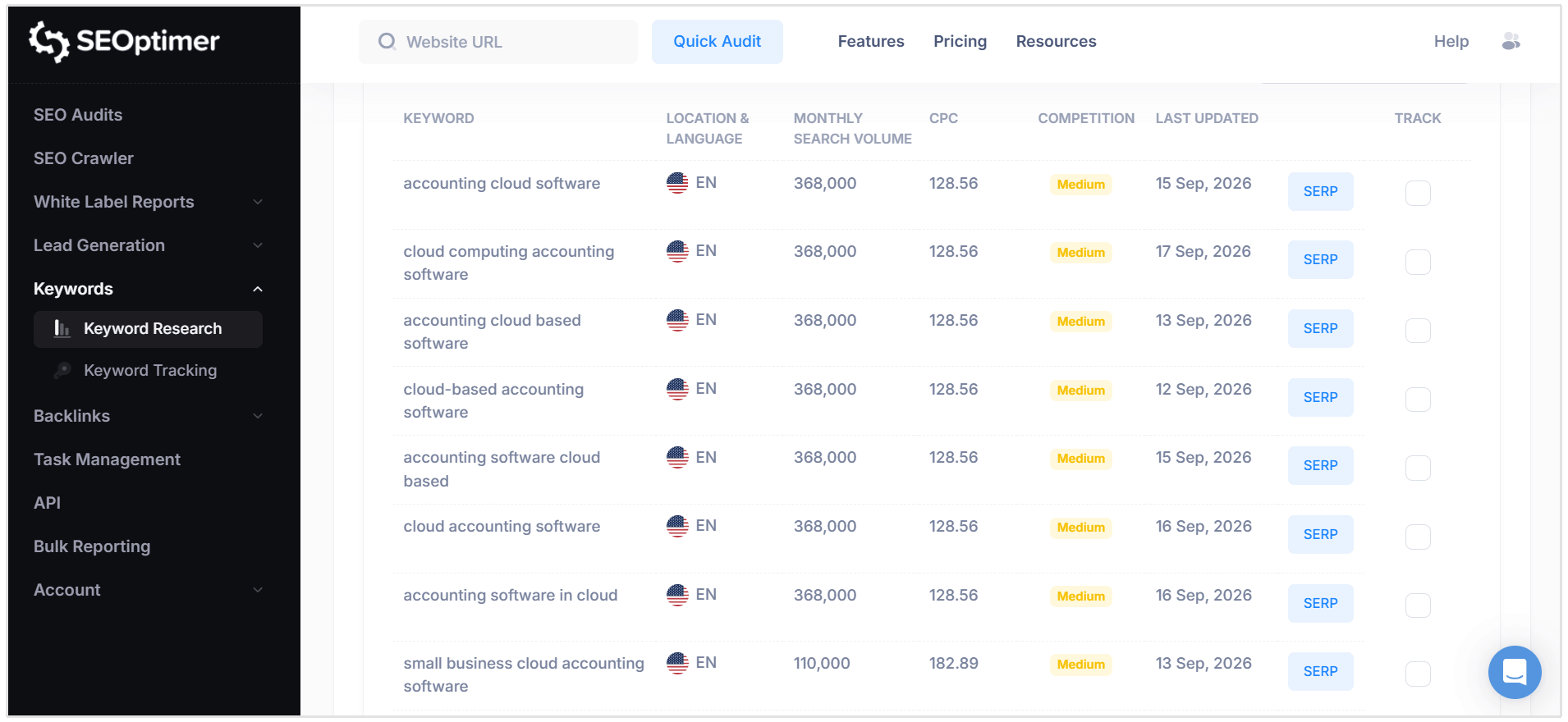
For example, if you sell accounting software, you might start with a broad keyword like “accounting software” and use the tool to uncover more specific keywords like:
- accounting software for small businesses
- cloud accounting software
- best accounting software for freelancers
- software for accounting
- accounting software for contractors
- affordable accounting software
From there, you can start narrowing your list based on which keywords are most relevant to your business and show the strongest potential to generate conversions.
So at this stage you shouldn’t be choosing your final keyword yet. We’re just at the research phase, we’re building a list of commercially relevant opportunities that we can evaluate in more detail in the next steps.
3. Look for Keywords with Commercial Intent
Next, look for keywords that suggest the searcher is comparing options, evaluating a purchase, or looking for a specific solution.
These commercial intent keywords are often more profitable because the user is further along in the buying journey.
Some commercial modifiers include:
- best: best CRM for small businesses
- top: top SEO tools for agencies
- vs: HubSpot vs Salesforce
- alternative: Mailchimp alternatives
- reviews: QuickBooks reviews
- pricing: SEO software pricing
- cost: website design cost
- buy: buy running shoes online
- for [audience]: accounting software for freelancers
These types of keywords are sometimes referred to as money keywords because they tend to have a clearer connection to a purchasing decision.
That doesn’t mean you should ignore informational keywords altogether, but if your goal is to find profitable keywords, commercial and transactional searches are usually a good place to focus.
4. Find the Keywords Your Competitors Already Rank For
Your competitors can be one of the best sources of profitable keyword ideas.
If a competing website is already ranking for commercially relevant searches, there’s a good chance those keywords are worth investigating for your own SEO strategy.
Using the Search by Domain feature in SEOptimer’s Keyword Research Tool, you can enter any website's URL and see the keywords your competitors are using on their own sites.
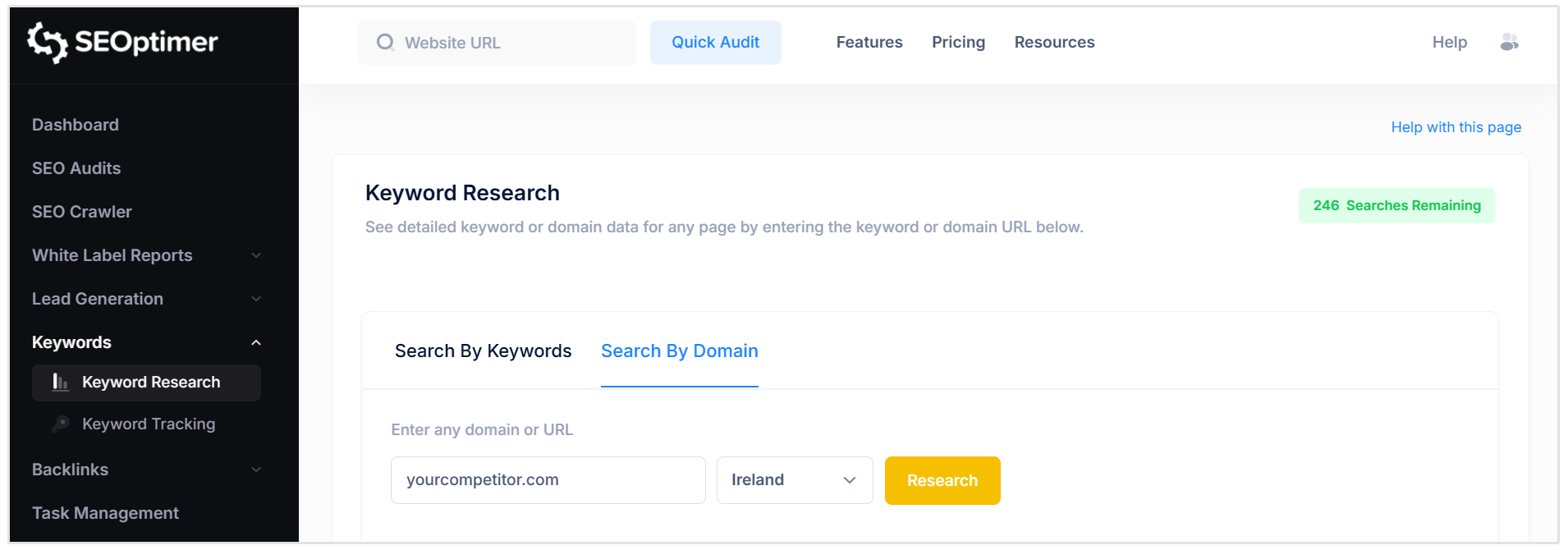
You want to be looking for terms related to:
- Products or services
- Comparisons and alternatives
- “Best” and “top” searches
- Industry-specific long-tail keywords
- High-intent searches you are not currently targeting
Important: Don’t try to copy every keyword your competitors rank for. Instead, use their rankings to find opportunities that are relevant to your own business, especially where you can create a stronger page or offer a better match for the searcher’s intent.
5. Find Long-Tail Keywords with High Buying Intent
Long-tail keywords are longer, more specific search terms that usually have lower search volume but much clearer intent.
If you compare:
“CRM software”
with:
“best CRM software for accounting firms”
The second keyword is likely searched less often, but it tells you much more about what the user wants and suggests they are closer to making a buying decision.
These specific searches can be profitable keywords because they often attract more qualified visitors and tend to face less competition than broader keywords.
Rather than dismissing a keyword because its search volume is low, consider whether the people searching for it are a strong match for what your business sells.
6. Compare Search Volume, CPC, and Competition
Once you have a list of potential keywords, compare their search volume, CPC, and competition to identify the best opportunities.
Ideally, you’re looking for keywords that have:
- Enough search volume to generate meaningful traffic.
- A healthy CPC, which can indicate commercial value.
- A level of competition that your website can realistically compete with. For instance, if you have a newer website you want to avoid going after keywords that have a High keyword difficulty score in SEOptimer
However, there is no universal benchmark for what makes a keyword profitable. A $2 CPC might be valuable in one industry and relatively low in another, while a keyword with only 100 monthly searches could still generate meaningful revenue for a high-value service like an HVAC system installation or roofing services.
Instead of looking at each metric in isolation, compare keywords within your niche and prioritize those that offer the best balance of demand, commercial value, and ranking opportunity.
7. Check the Search Results before Targeting a Profitable Keyword
Before creating a page around a keyword, you need to look at what Google is already ranking.
This helps you understand the search intent behind the keyword and the type of content Google considers most relevant.
The easiest way to do this is by just opening Google and searching for the keyword you have in mind.
Pay attention to whether the results are mainly product pages or service pages, blog posts, local results, or forums.
For example, if you're marketing your roofing contractor business based in Austin, Tx, you might want to target the keyword "how much does roofing cost in austin tx," by looking at the search results you can clearly see that the SERPs consist of mostly just blog posts:
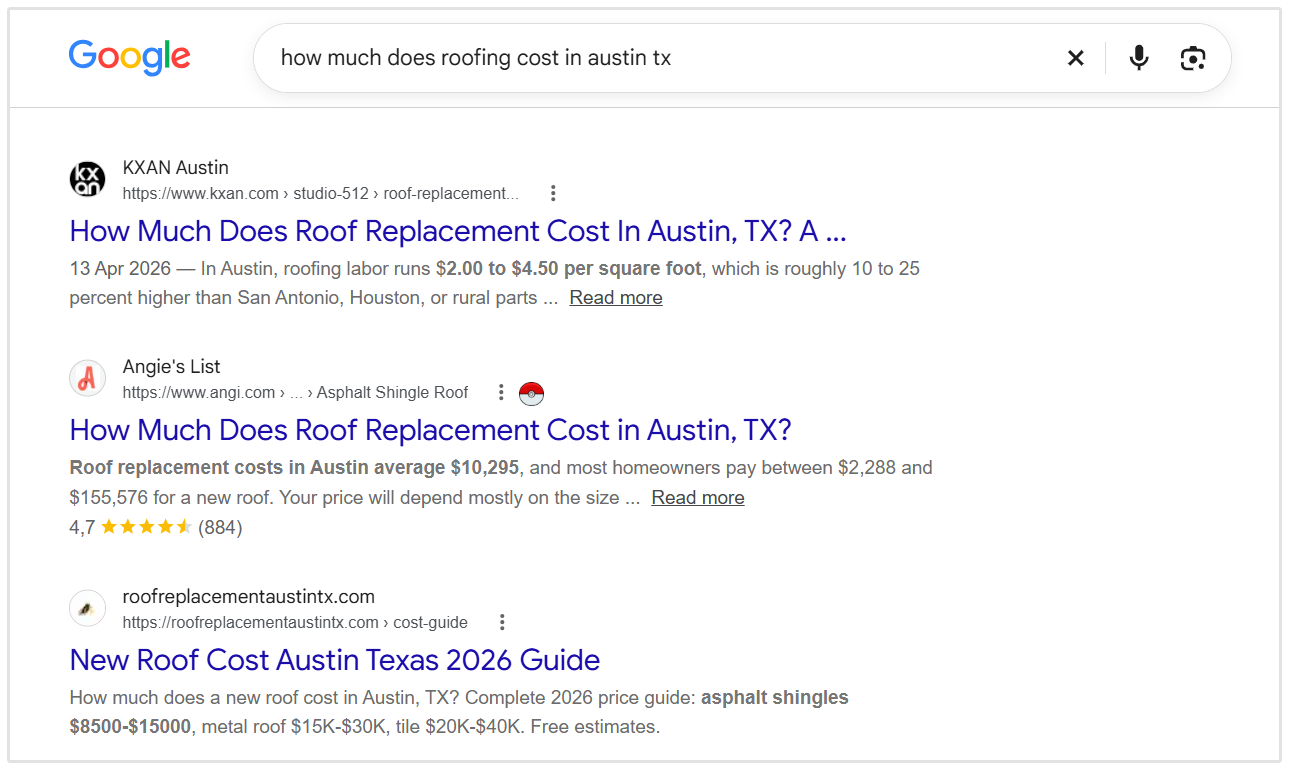
Examining the SERPs can reveal a lot about the competitive landscape and who you’re trying to outrank.
You should also look at the strength and relevance of the websites already ranking. If the results are dominated by authoritative sites or big publishers with pages that closely match the search intent, the keyword may be more difficult to compete for.
A keyword might look profitable based on the data, but the SERP will often tell you whether it is actually a realistic opportunity for your website.
You can also examine the SERPs directly inside our Keyword Research Tool. Simply click the light blue SERP button next to a keyword to view the search results for that term.
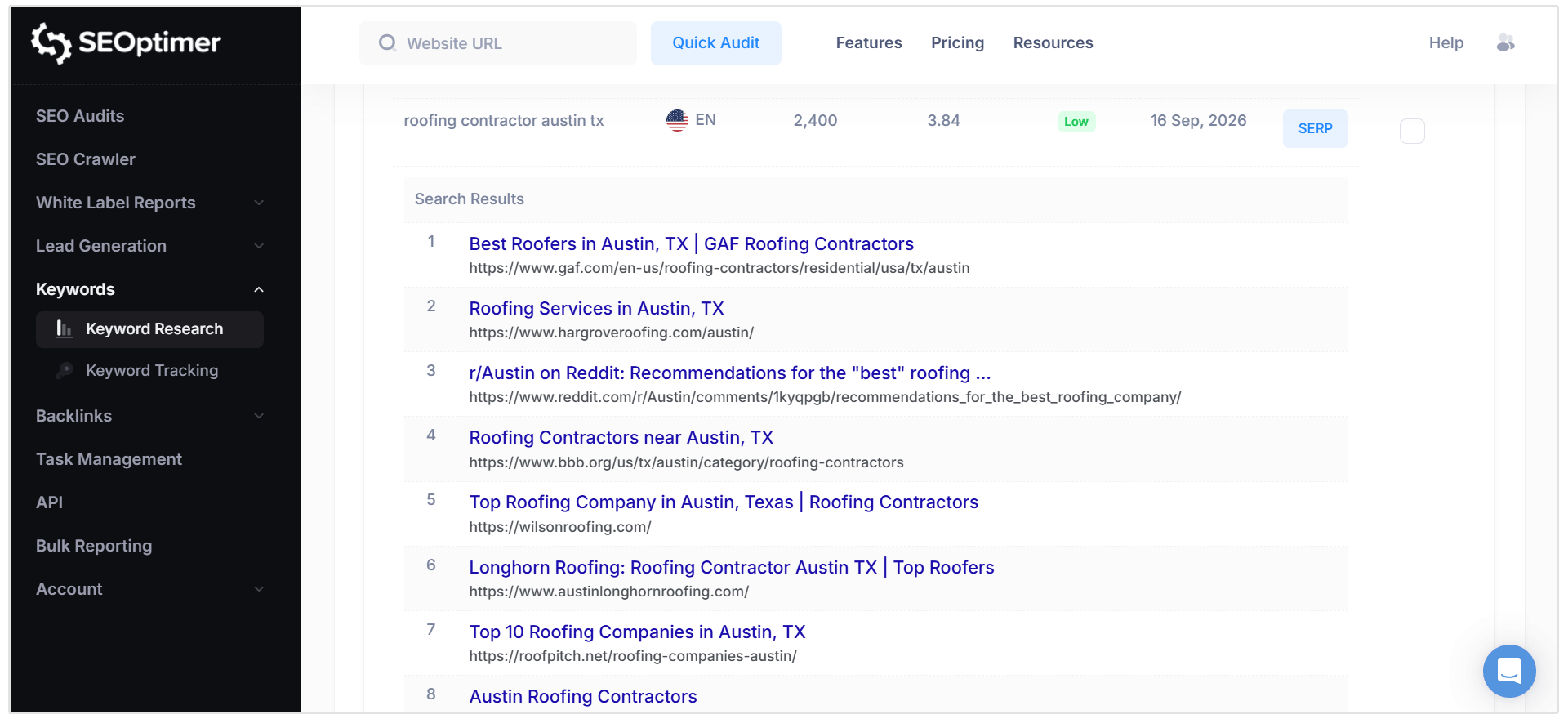
This is useful if you’re targeting audiences in different countries or regions, since search results can vary significantly by location.
Checking the SERP for your target region gives you a much more accurate picture of what you’ll actually be competing against.
8. Prioritize Keywords Based on Profit Potential
Once you’ve built and evaluated your keyword list, prioritize the terms with the strongest overall profit potential.
Rather than choosing keywords based on one metric alone, consider how well each keyword performs across these four areas:
- Business relevance: How closely does the keyword relate to what you sell?
- Search intent: How likely is the searcher to be considering a purchase or conversion?
- Ranking potential: Can your website realistically compete for the keyword?
- Search demand: Is there enough search volume to make targeting the keyword worthwhile?
You can keep this simple by rating each keyword as Low, Medium, or High across these factors.
The best profitable keywords are usually the ones that strike the strongest balance between commercial value and realistic ranking potential, rather than those only having the highest search volume or CPC.
Where Should You Use Profitable Keywords?
Once you’ve identified profitable keywords, the next step is matching each keyword to the right page on your website.
For example:
- Transactional keywords are usually best suited to product, service, or landing pages.
- Commercial keywords such as “best,” “vs,” or “alternatives” often work well for comparison pages and blog content.
- Informational keywords can be targeted through guides, tutorials, and other educational content.
- Local keywords should generally be targeted through location pages, service pages, and your Google Business Profile.
Then, once you’ve chosen the right page, use your primary keyword naturally in important areas such as the page title, H1, introductory content, headings, and body copy. You can also use closely related terms throughout the page where they make sense.
The main thing to keep in mind here is you don't need to repeat an exact-match keyword everywhere just because people are searching for it.
For example, if you want to rank for “plumber near me,” you shouldn't add awkward sentences like “Looking for a plumber near me?” throughout your website.
Google already takes the searcher’s location into account when displaying local results.
According to Google, local rankings are primarily determined by relevance, distance, and prominence, so your focus should be on clearly communicating what your business offers, where you operate, and establishing a strong local presence.
A good example of this is Abacus Plumbing, which serves the Austin area.
Their website naturally uses location-specific terms such as “Austin Plumbers,” “Plumbing Services in Austin, Tx,” and “Plumbing Services in Downtown Austin TX.”
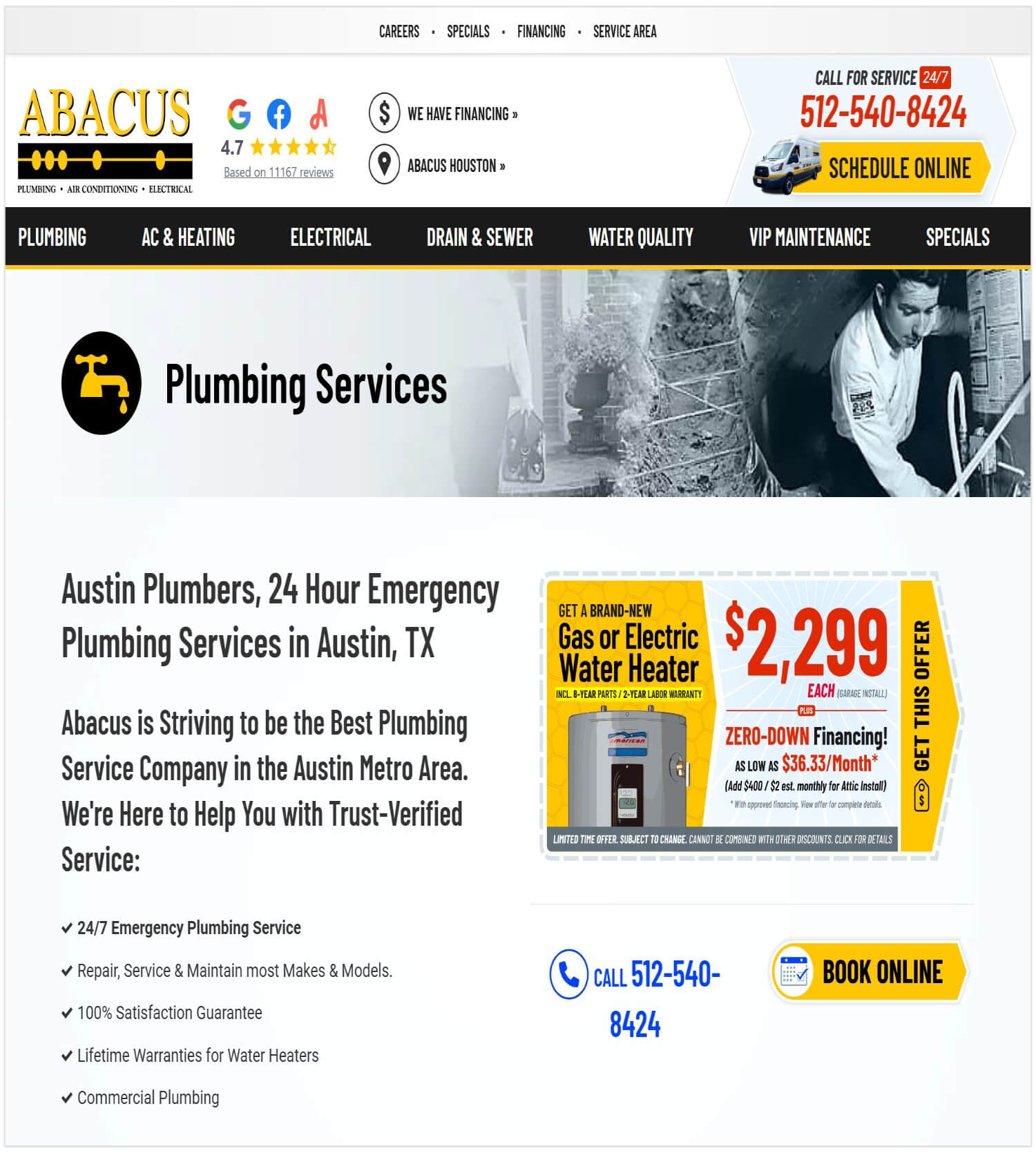
This gives Google clear information about both the services the business provides and the geographic area it serves, while still keeping the copy natural for visitors
If local searches are an important source of customers for your business, check out our complete guide to local SEO for more information on optimizing your website and Google Business Profile for local keywords.
How to Know if a Keyword is Actually Making Money
Finding a keyword with strong commercial potential is only the first step. To know whether your SEO strategy is actually generating value, you need to connect keyword performance with what happens after visitors land on your website.
For organic search, you usually can’t attribute every conversion directly to one exact keyword. Instead, use a combination of Google Search Console and Google Analytics.
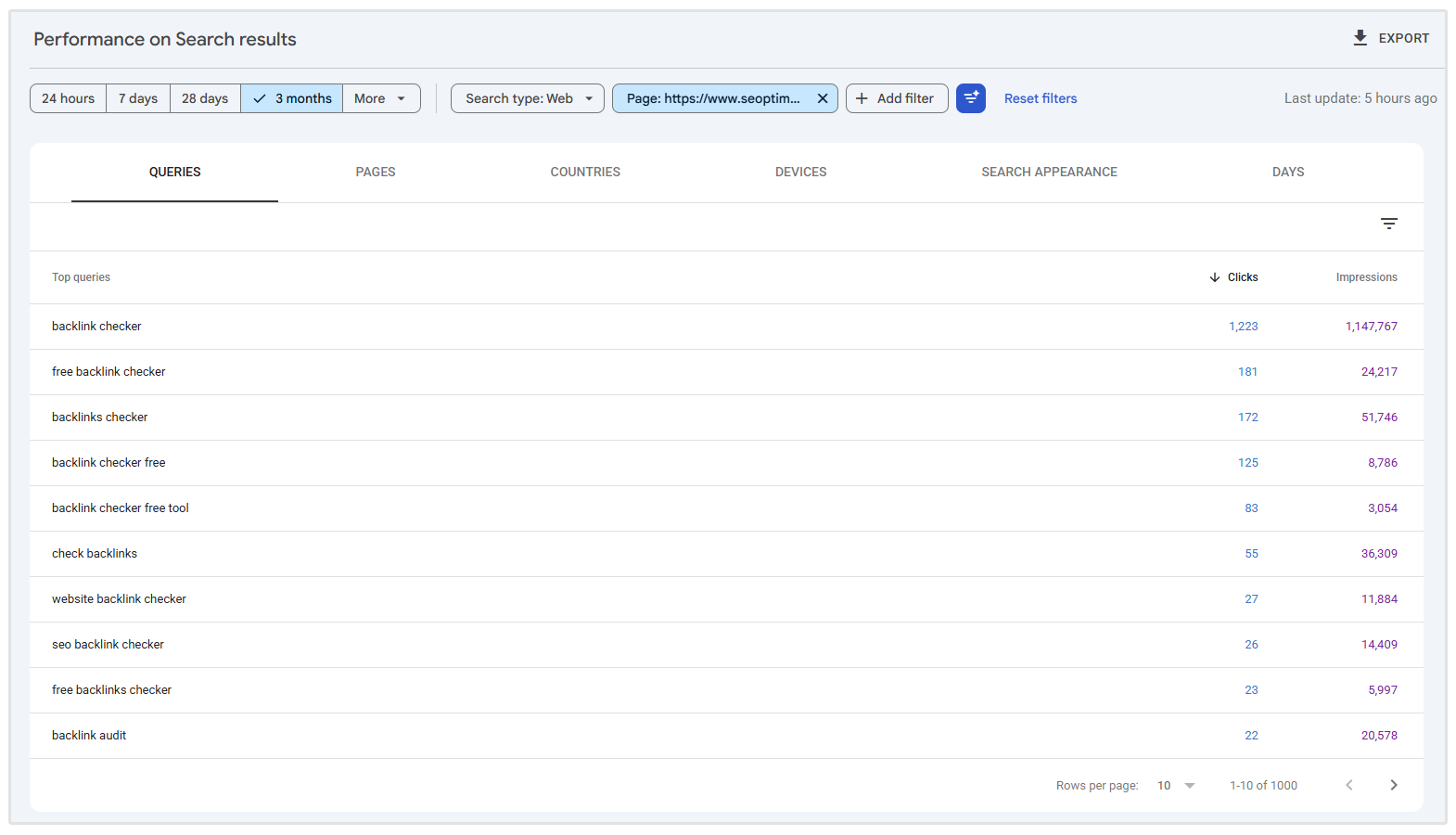
In Google Search Console, you can see which search queries are driving impressions and clicks to a specific page.
For instance, in the case of SEOptimer, our GSC shows that the top queries driving clicks to our homepage are "seo audit," "seo optimizer," and "seo checker," but you can also filter for a specific page.
So if I add a filter to view the data for our Backlink Checker, I can see that some of the top queries generating traffic and clicks are "backlink checker," "free backlink checker," and "check backlinks."
Then, in GA4, you can measure what organic visitors do after landing on that page, including actions such as:
- Purchases
- Form submissions
- Bookings
- Free trial sign-ups
- Demo requests
- Other important conversions
For example, if a page is receiving more clicks for a commercially valuable keyword and that same page is also generating more organic conversions, that’s a strong indication that the keyword is contributing to business results.
You should also track the keyword’s rankings over time. Marketers use SEOptimer’s Keyword Tracking Tool to monitor whether their target keywords are gaining or losing visibility and compare those changes with traffic and conversions on the pages they're optimizing.
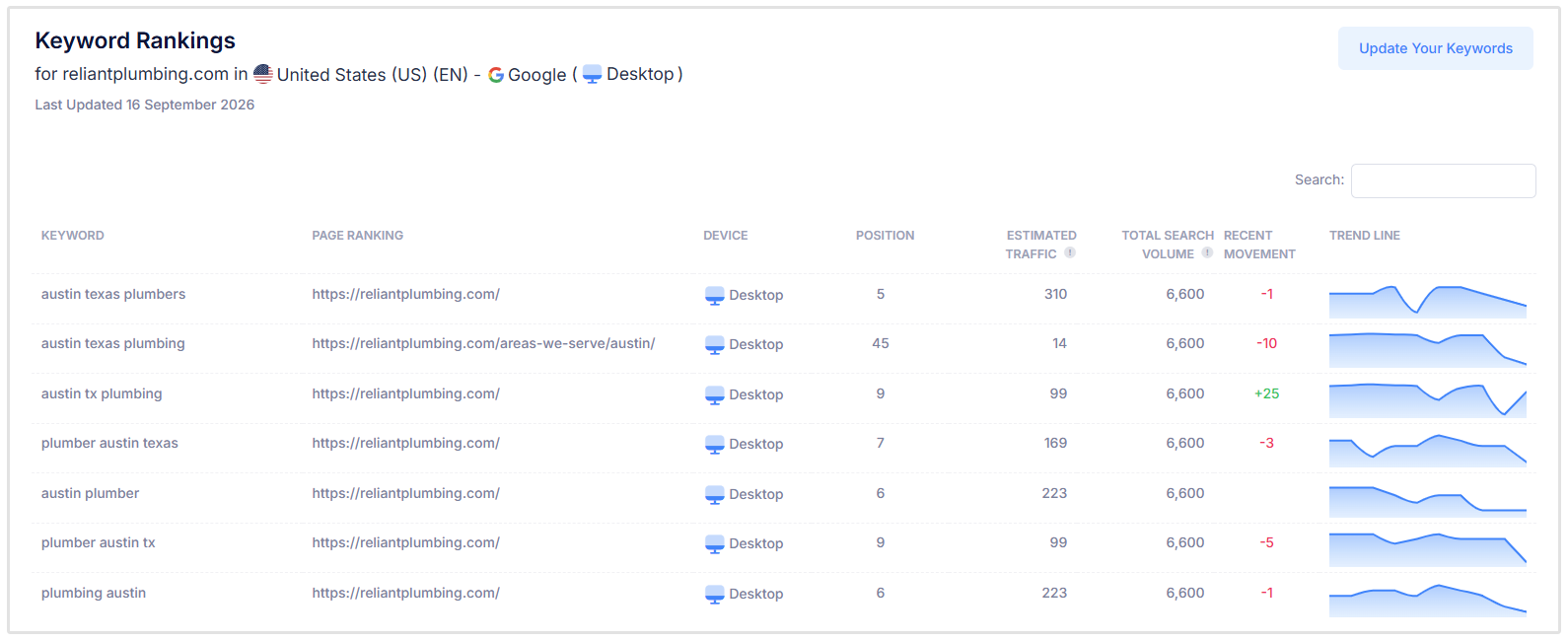
So you want to blend these signals together: rankings, Search Console clicks, landing-page conversions, and revenue where available.
This gives you a much more realistic view of whether the keywords you’re targeting are helping your SEO generate actual business value, rather than simply more traffic.
FAQs about Profitable Keywords
What are profitable keywords?
Profitable keywords are search terms that have a strong chance of generating valuable actions such as leads, sales, bookings, or subscriptions.
How do you find profitable keywords?
Look for keywords that combine strong business relevance, clear commercial intent, sufficient search volume, realistic competition, and good conversion potential.
What keywords make the most money?
There is no universal list of high-earning keywords. The most valuable terms depend on your industry, business model, customer value, competition, and how well the keyword matches what you sell.
Are high-CPC keywords more profitable?
Not necessarily, a high CPC can signal commercial value, but the keyword still needs to be relevant to your business and capable of generating conversions.
Are long-tail keywords more profitable?
They can be. Long-tail keywords are often more specific and may attract users with stronger buying intent, even if they have lower search volume.
How many keywords should I target?
Focus on a manageable group of closely related keywords for each page, with one clear primary keyword and supporting secondary terms.
Conclusion
Finding profitable keywords is about more than chasing high search volumes. The main objective is to identify search terms that attract the right audience, match what your business offers, and have a realistic chance of contributing to leads, sales, or other valuable conversions.
And with SEOptimer’s set of keyword tools (Keyword Research and Keyword Tracking), you can find promising keyword opportunities, analyze the SERPs, research competitors, and track whether your target terms are gaining visibility.