

What are Stop Words in SEO?
Stop words are common words that search engines may treat as less important when processing text because they often add little meaning on their own.
Examples of stop words include words like “a,” “an,” “the,” “and,” “of,” “in,” “to,” and “for.”
In SEO, stop words can appear in search queries, URLs, title tags, headings, and body content.
For example, in the phrase:
“best SEO tools for small businesses”
Words like “for” may be considered stop words, while terms such as “SEO tools” and “small businesses” carry more of the topic's meaning.
Stop words are usually articles, prepositions, conjunctions, pronouns, and other frequently used words.
They were historically filtered by search and information retrieval systems to reduce the amount of text that needed to be processed.
However, modern search engines like Google are much better at understanding language and context. This means stop words aren't automatically ignored, and removing them isn't always necessary or beneficial for SEO.
Why are they Called Stop Words?
They are called stop words because early search and information retrieval systems would often stop or filter these very common words before processing text.
These stop words appear so frequently that they often provide little value when identifying the main topic of a document. By excluding them, older systems could reduce the amount of text they needed to store and process while focusing on more meaningful terms.
For example, instead of processing every word in:
“the best pizza restaurant in downtown Chicago”
a system might focus mainly on:
“best pizza restaurant downtown Chicago”
The term has stuck, even though modern search engines are far more sophisticated and don't simply ignore every word classified as a stop word.
Does Google Ignore Stop Words?
No, Google does not just ignore all stop words.
Today's modern Google Search uses language-understanding systems to interpret words in context, including common words such as “to” and “for” when they affect the meaning of a search.
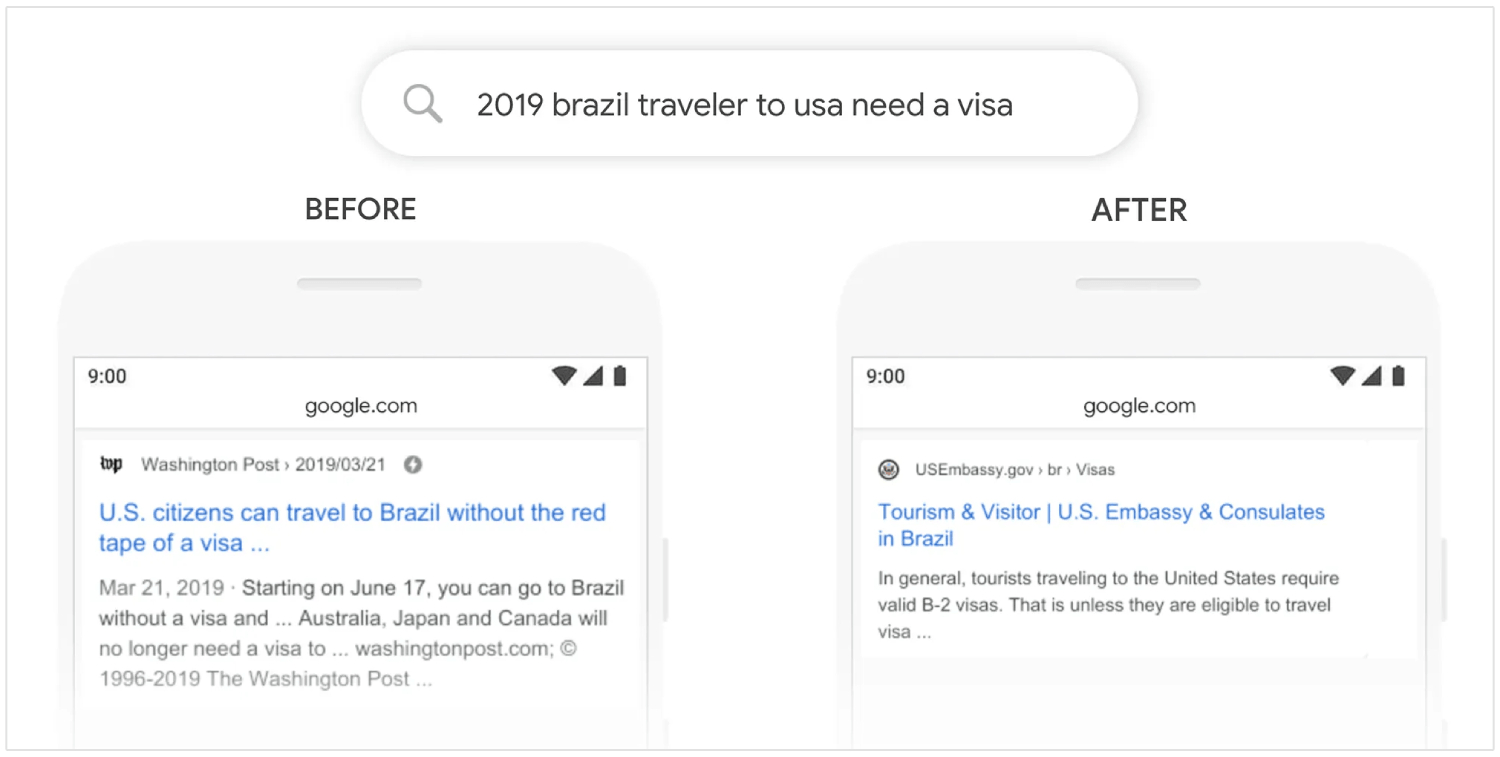
Google demonstrated this when explaining its BERT language-processing system. It used the famous search query, “2019 brazil traveler to usa need a visa.”
In this example, the word “to” is essential because it tells Google that the searcher is asking about a Brazilian travelling to the United States, rather than an American travelling to Brazil.
Google explained that its older systems didn't always understand this relationship correctly, whereas BERT allowed Search to recognise that even a very common word like “to” could significantly change the meaning of the query.
So, while some stop words may carry less importance when they don't add meaningful context, there isn't a blanket rule that Google ignores them.
If a stop word changes the meaning or search intent of a phrase, Google can take it into account.
Do Stop Words Affect SEO?
Stop words don't appear to be a direct Google ranking factor. Simply including or removing words like “the,” “for,” or “to” won't inherently improve rankings.
However, stop words can have an indirect effect when they influence the meaning, readability, or clarity of your content.
As Google has demonstrated with queries such as “Brazil traveler to USA,” small words can sometimes be essential for understanding search intent.
So the SEO question isn't really whether stop words are good or bad. It's whether removing a particular word makes the content clearer without changing its meaning.
This becomes especially important when deciding whether to use stop words in URLs, title tags, meta descriptions, keywords, and page copy.
Should You Remove Stop Words for SEO?
There is no general rule that says you should remove stop words for SEO.
In most cases, you should keep stop words when they make a phrase clearer or more natural, and remove them only when doing so makes the wording shorter without changing its meaning.
The best approach depends on where the stop word appears.
Stop Words in URLs
Stop words are often removed from URLs to make them shorter and easier to read.
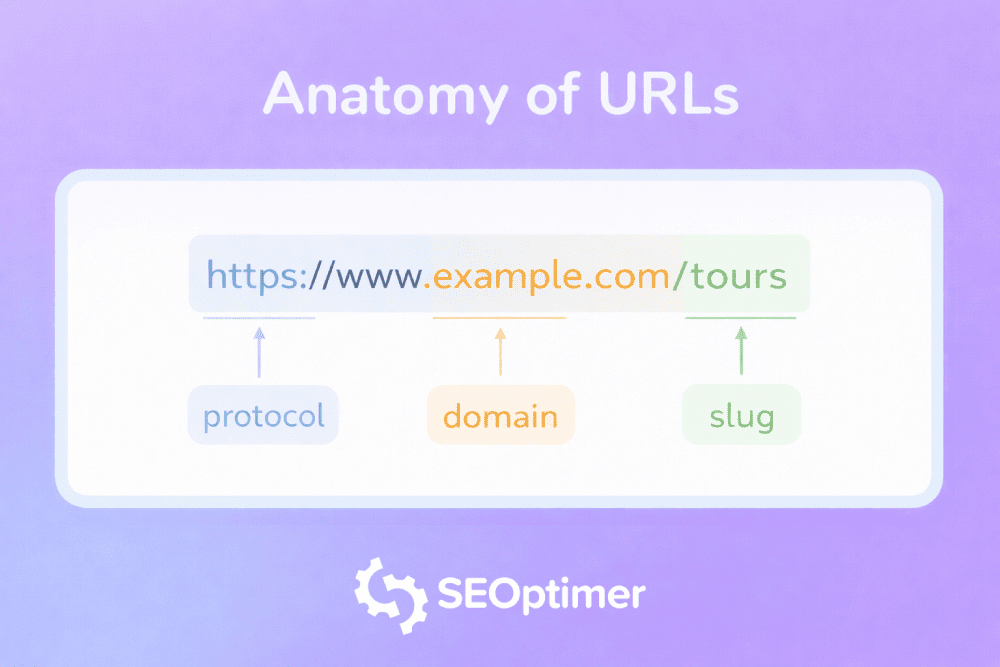
For example, the URL slug:
/best-accounting-software-for-small-businesses/
could be shortened to:
/accounting-software-small-businesses/
However, removing a stop word isn't necessary if it helps make the URL clearer.
Google recommends using simple, descriptive URLs that are easy for people to understand, rather than following a specific rule about removing stop words.
You also shouldn't change an existing URL purely to remove stop words.
Changing URLs can require redirects and updates to internal links, and the potential SEO benefit of removing a word like “the” or “for” is unlikely to justify it.
Stop Words in Title Tags
You generally shouldn't remove stop words from title tags if doing so makes the title sound unnatural.
For example:
Best CRM Software Real Estate Agents
is less readable than:
Best CRM Software for Real Estate Agents
Your title should clearly communicate what the page is about and encourage people to click. If a stop word helps achieve that, keep it.
Stop Words in Meta Descriptions
There is little reason to deliberately remove stop words from meta descriptions.
Meta descriptions are written primarily to explain the page and encourage searchers to click, so natural, persuasive language should take priority.
You can remove unnecessary words when trying to make a description more concise, but there is no need to target stop words specifically.

Stop Words in Body Content
Stop words should generally be left alone in body content.
Removing these words simply because they are classified as stop words can make your writing very difficult to read and unnatural.
Imagine having to read a paragraph containing any stop words!
Instead, write for your audience and use the words needed to explain the topic clearly.
Stop Words in Keywords
Keyword research tools sometimes show search terms without stop words or with awkward grammar.
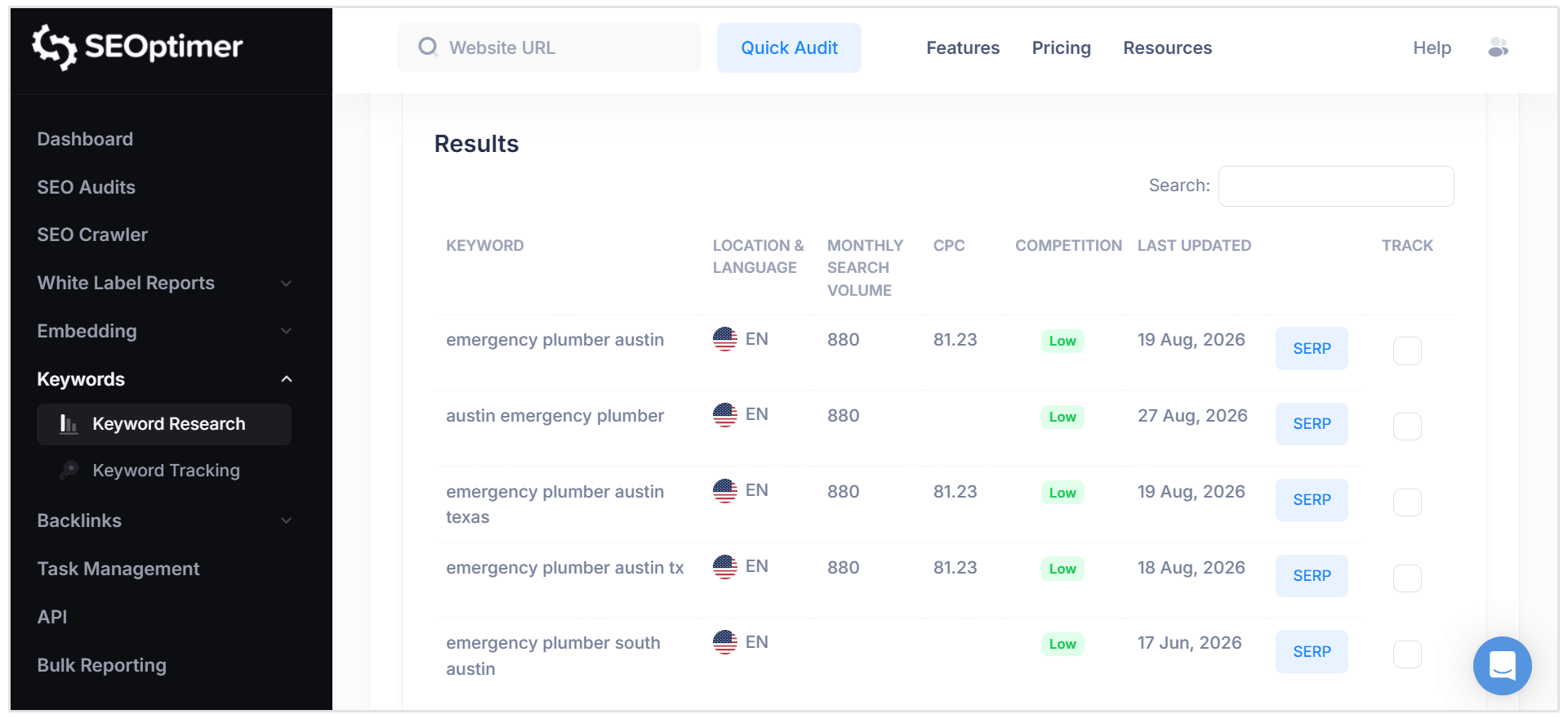
For example, the above screenshot shows how SEOptimer's keyword tool suggests using the keyword:
“emergency plumber Austin”
That doesn't mean you need to use the exact phrase in your content.
You can naturally write:
“emergency plumber in Austin”
without worrying that adding “in” will hurt your ability to rank for the keyword.
The same principle applies throughout your content: preserve the meaning and write naturally rather than forcing an exact keyword phrase simply to avoid stop words.
Common SEO Stop Words List
There is no single universal list of SEO stop words, but the following are 100 common English words that frequently appear in stop-word lists used by search engines, text-processing systems, and NLP tools.
Articles
- a
- an
- the
Prepositions
- about
- above
- after
- against
- at
- before
- below
- between
- by
- down
- during
- for
- from
- in
- into
- of
- off
- on
- out
- over
Conjunctions and Connecting Words
- and
- as
- because
- but
- if
- nor
- or
- so
- than
- that
Pronouns and Determiners
- all
- any
- both
- each
- few
- he
- her
- hers
- herself
- him
- himself
- his
- I
- it
- its
- itself
- me
- my
- myself
- our
- ours
- ourselves
- she
- some
- such
- their
- theirs
- them
- themselves
- they
- these
- this
- those
Verbs and Auxiliary Words
- am
- are
- be
- been
- being
- can
- could
- did
- do
- does
- doing
- had
- has
- have
- having
- is
- should
Other Common Stop Words
- again
- further
- here
- how
- just
- more
- most
- no
- not
- now
- once
- only
- other
- own
- same
- then
- there
Should You Remove Stop Words From Existing URLs?
In most cases, no. You shouldn't change an existing URL just to remove stop words.
If a page is already indexed and performing well, changing the URL can create unnecessary SEO work.
You'll need to set up a 301 redirect, update internal links, and make sure canonical tags and sitemaps point to the new URL.
For example, changing /best-seo-tools-for-small-businesses/ to /best-seo-tools-small-businesses/ is unlikely to provide a meaningful SEO benefit simply because “for” was removed.
It can make sense to simplify a URL if you're already restructuring a page, fixing a poor URL, or cleaning up a larger site architecture issue. But removing stop words alone usually isn't a good enough reason to change an established URL.
If the URL is clear, relevant, and already working, leave it alone.
Conclusion: Stop Words aren't Something SEOs Need to Obsess Over
Stop words aren't something you need to aggressively remove from your website.
Modern search engines are much better at understanding language, context, and search intent, which means common words like “the,” “for,” “to,” and “of” can still matter when they help clarify meaning.
Instead of focusing on whether a word appears on a stop words list, you should ask yourself a simpler question: does removing it make the content clearer without changing its meaning?
If the answer is yes, removing it may help make a URL or phrase more concise. If the answer is no, keep it.
In practice, your SEO efforts are better spent on higher-impact areas like creating linkable assets, improving title tags, fixing technical issues, strengthening on-page SEO, and making sure your pages are easy for both users and search engines to understand.