


How do you optimize your website for Google’s generative AI search results? Well, the internet has seen its fair share of hacks and tips on how to optimize for generative AI, but how do we know if any of this is actually helpful?
The good news is that Google has given us a clearer answer on how to optimize for AI Search.
In its official guide to optimizing for generative AI features on Google Search, Google explains that visibility in these AI-powered experiences still depends heavily on the same foundations that have always mattered in SEO.
This includes helpful content, technical accessibility, strong page experience, and a clear understanding of what users actually want (and providing that for them).
So, no, you do not need to throw out your entire SEO strategy and start chasing every new trick that appears on LinkedIn.
In this guide, we will break down Google’s own recommendations for optimizing your website for generative AI features in Search.
We will look at what matters, what does not, and how you can improve your chances of being discovered in AI Overviews, AI Mode, and other AI-powered search experiences.
What are Generative AI Features on Google Search?
Generative AI features on Google Search are AI-powered experiences that provide summarized, conversational answers directly in the results, often alongside links to relevant sources.
The two main features are AI Overviews and AI Mode.
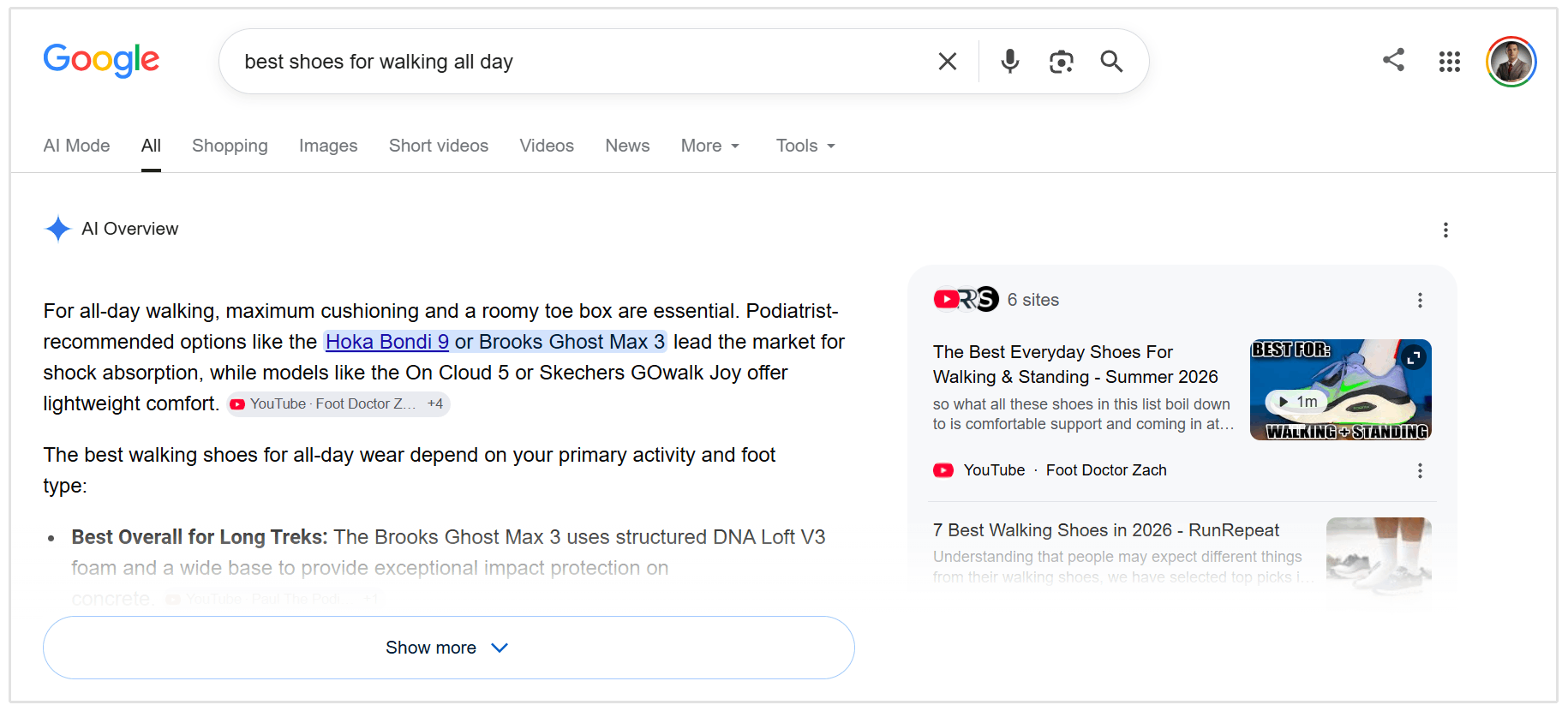
AI Overviews
AI Overviews are summaries that appear at the top of search results for certain queries, especially more complex ones.
They highlight key information and include links to supporting pages.
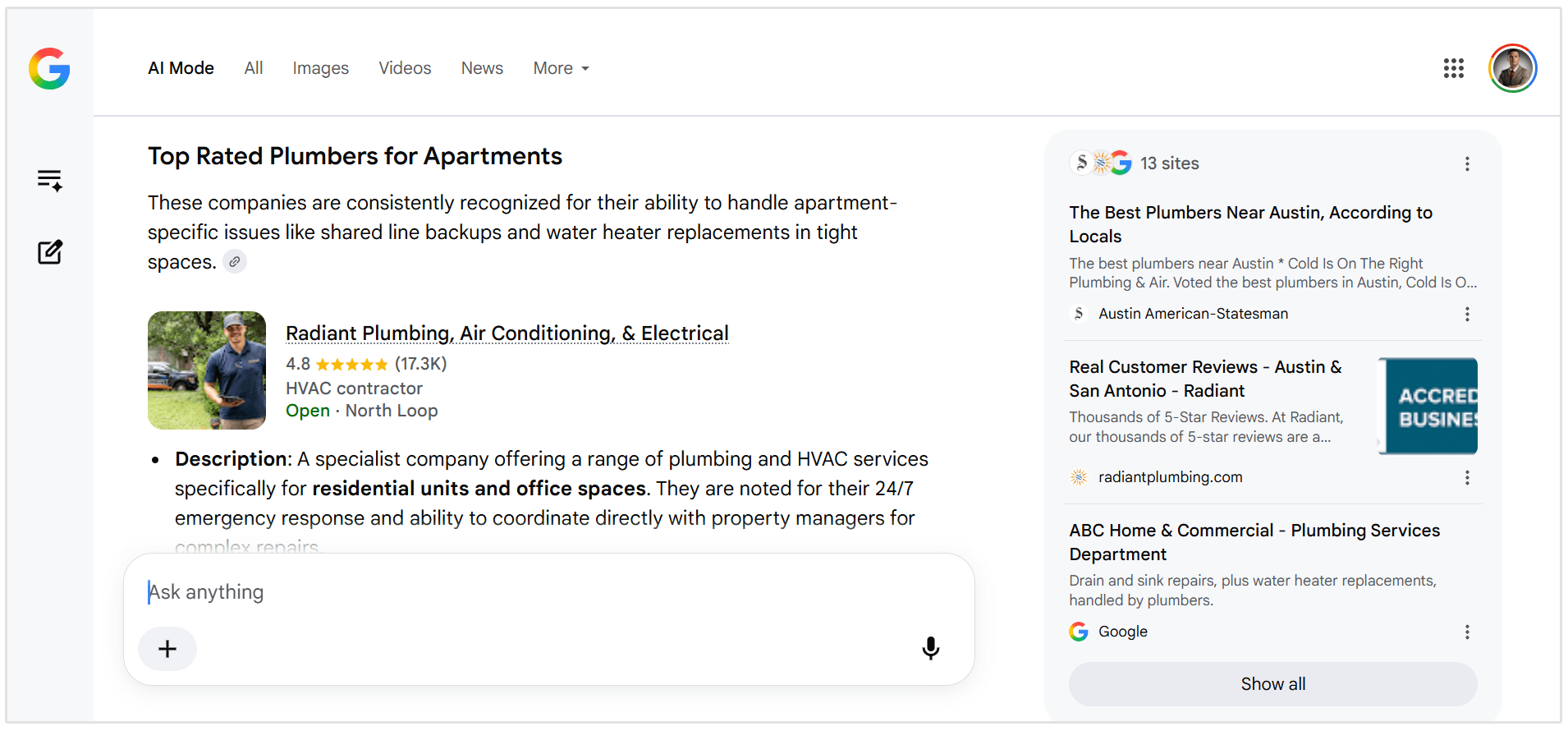
AI Mode
AI Mode is a more conversational search experience where users can ask detailed questions and follow up for deeper insights.
It’s designed for more complex queries that involve comparison, planning, or decision-making.
How Google Uses Web Content in AI Search
According to the document, Google's generative AI features are still rooted in its core Search ranking and quality systems.
This means Google uses content from its Search index to help generate AI-powered answers.
Through a process called retrieval-augmented generation (RAG), Google retrieves relevant and up-to-date pages, reviews the information on those pages, and then uses that information to create a more helpful response.
Google also uses something called query fan-out. This means its systems may generate several related searches in the background to better understand and answer a more complex query.
So, if someone searches for a broad question, Google may look at related subtopics too, not just the exact words in the original search.
Is SEO Still Relevant for Generative AI Search?
Yes, SEO is still relevant for generative AI search.
Google’s own guidance makes it clear that AI Overviews and AI Mode are not separate from Search. They still rely on Google’s ranking, quality, crawling, and indexing systems.
As Brendon Kraham, VP of Search & Commerce Global Ads Solutions at Google, said in a recent article on how to capture demand in the AI search era:
Your existing investment in solid, foundational SEO is your launchpad for AI success. That’s why good SEO is good GEO (or AEO, or AI SEO, or whatever).
- Brendon Kraham
So, you don't need to abandon SEO and replace it with a completely new strategy. Instead, you should double down and try to make your SEO stronger, especially in areas like helpful content, technical accessibility, page experience, and clear topical coverage.
How to Optimize for AI Search
1. Create Valuable, Non-Commodity Content
One of Google’s biggest recommendations is to create content that is genuinely useful, original, and valuable to your audience.
That might sound obvious, but it matters even more in AI search.
Why? Because generative AI systems can already summarize basic information very well. If your content only repeats what dozens of other websites have already said, there is very little reason for Google to see it as a useful source.
This is what Google refers to as commodity content.
Commodity content is generic content that could have been written by almost anyone.
In the case of SEOptimer, commodity content would be something like “7 SEO Tips for Small Businesses” that only includes basic advice such as using keywords, writing good content, and building backlinks.
There is nothing wrong with simple content, but if it does not add anything new, it becomes easy to ignore.
Non-commodity content is where you will differentiate your brand from others.
It gives readers something they cannot get from every other search result. This could include your own experience, original research, expert commentary, real examples, case studies, screenshots, product comparisons, or lessons learned from actual client work.
For example, instead of writing a generic post on “how to improve website SEO,” an agency could create a detailed breakdown of the most common SEO issues they found after auditing 100 local business websites. Or put together a detailed case study on how they've been able to help client, sharings statistics and insights.
The great thing about creating non-commodity content is that not only does it help you with getting AI citations, but it can also be seen as a linkable asset that other sites will likely reference.
A good example of non-commodity content is this case study from Smash Digital on how they've been able to achieve a 332% increase in revenue for one of their clients.
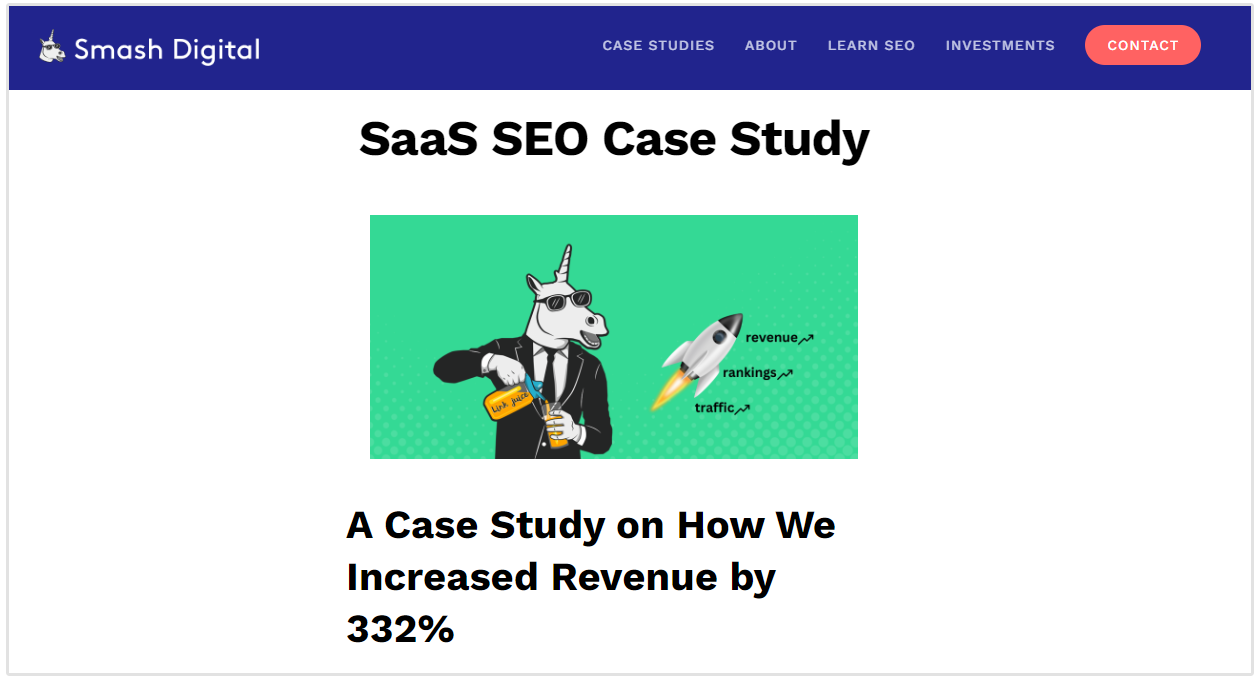
This type of content is much more useful.
It gives readers real insight, not just recycled advice. It also gives Google more reason to understand your content as unique, helpful, and worth surfacing in search experiences, including AI Overviews and AI Mode.
So when creating content for AI search, ask yourself:
Would this page still be useful if the reader had already read three other articles on the same topic?
If the answer is no, the page probably needs more depth, originality, or first-hand value.
You can do this by:
- Adding examples from your own insights
- Sharing what you have seen
- Explaining what actually works
- Including visuals where they help
- Giving readers a clear takeaway they can use
That is the kind of content that has a much better chance of standing out, both for people and for Google’s AI-powered search experiences.
2. Organize Content Clearly for Readers
Google recommends organizing your content in a way that makes it easy for people to read, understand, and navigate.
This is not only good for users. It also helps Google better understand the structure and purpose of your page.
Use clear headings, short paragraphs, descriptive subheadings, and logical sections. If a reader has to work too hard to find the answer, the page probably needs to be simplified.
This does not mean you need to break your content into tiny pieces just for AI systems. Google has said there is no special AI-friendly format you need to follow.
So just write for people first, and make the page easy to follow.
3. Support Your Content with High-Quality Images and Video
Google says its generative AI search features can also bring in relevant images and videos, not just text-based web pages.
This means your visuals can create more opportunities for your website to appear in AI-powered search experiences.
Where it makes sense, support your written content with helpful visuals such as screenshots, product demos, explainer images, charts, comparison tables, or short videos.
But, do not add images just to decorate the page. Add visuals that help the reader understand something faster or better.
For example, in SEOptimer’s case, if we are explaining how to run an SEO audit, a screenshot of the audit report is more useful than a generic stock photo of someone looking at a laptop.
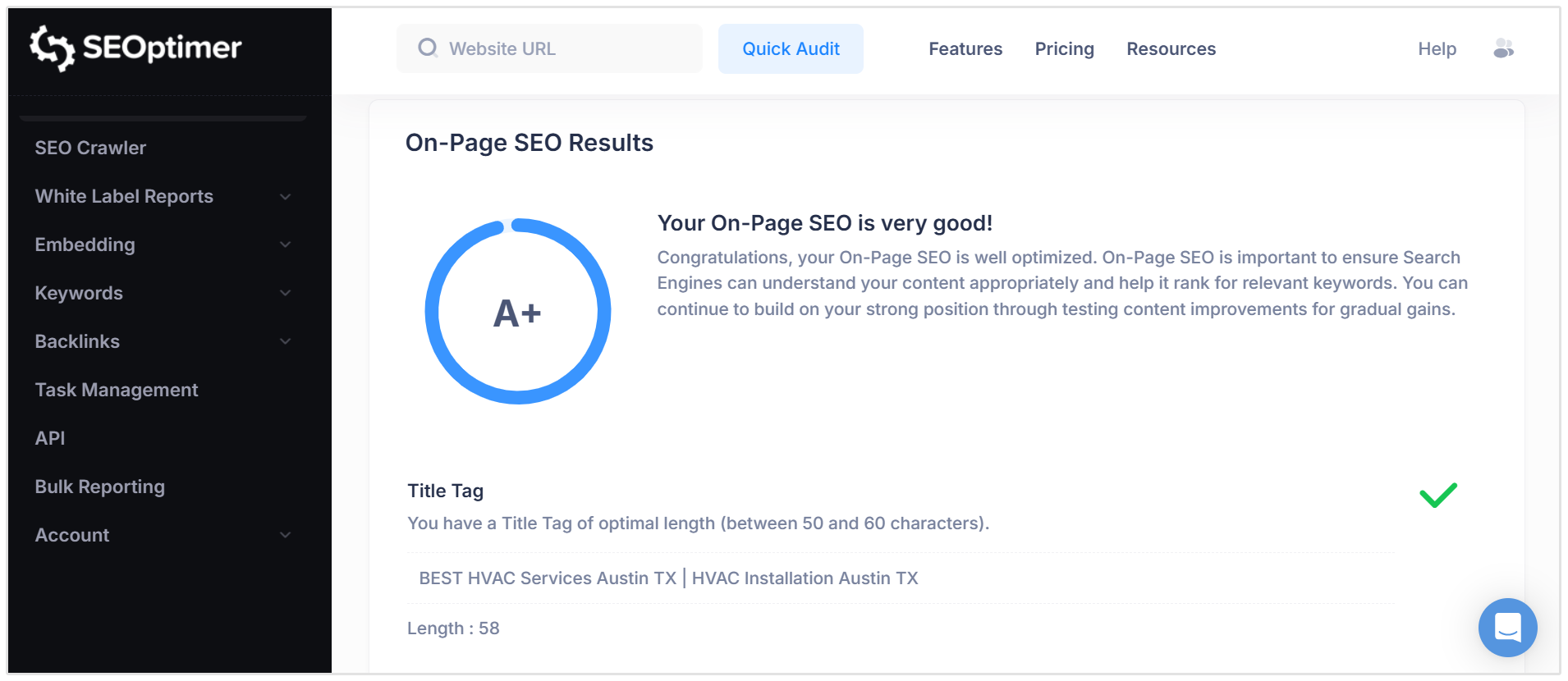
You should also follow image and video SEO best practices, such as using descriptive file names, adding helpful alt text, compressing large files, and making sure videos are properly embedded and accessible.
You need to make your content more useful, more engaging, and easier to understand, whether someone finds it through traditional search results or Google’s AI features.
4. Avoid Creating Pages for Every Possible Query Variation
Google’s AI features can use query fan-out, which means its systems may look at related searches and subtopics to answer a more complex question.
But this does not mean you should create a separate page for every tiny keyword variation.
For example, if you have an online store selling running shoes, you do not need separate pages for “best running shoes for beginners,” “top beginner running shoes,” “best shoes for new runners,” and “good running shoes for beginners” if they all cover the same intent.
That usually leads to thin, repetitive content.
Instead, create stronger pages that cover the topic properly. A well-structured, genuinely useful page is better than five nearly identical pages trying to target every possible wording of the same query.
5. Make Sure Your Content Can Be Crawled and Indexed
Before your content can appear in Google’s generative AI features, Google needs to be able to find, crawl, and index it.
This is one of the most important technical foundations of AI search optimization. If a page is blocked by robots.txt, marked as noindex, hidden behind technical issues, or not eligible to appear in Google Search, it is unlikely to be used in AI Overviews or AI Mode.
Google also says that, to be eligible for generative AI features, a page must be indexed and eligible to appear in Search with a snippet.
That means your content should be technically accessible, properly linked, and easy for Google to process.
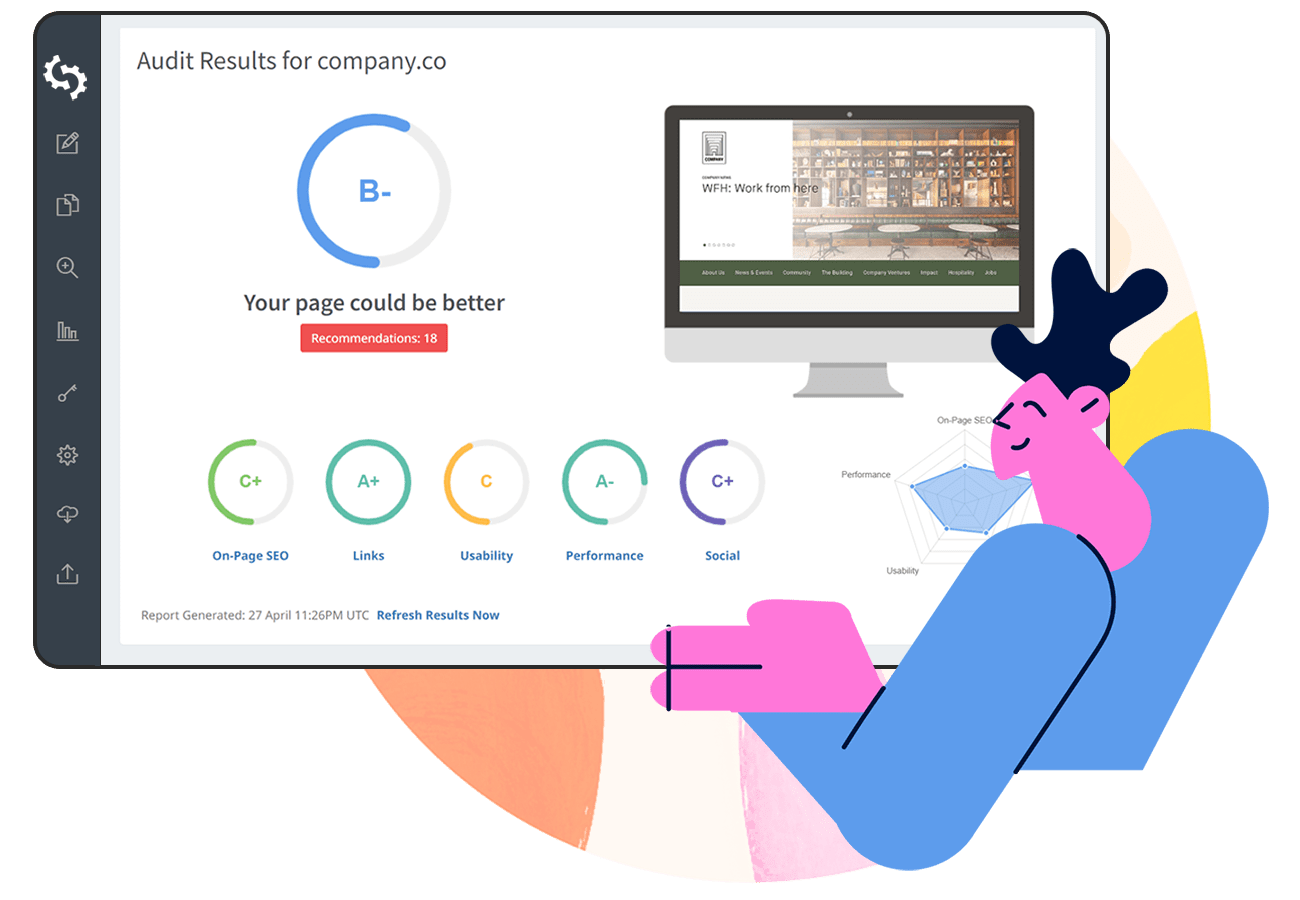
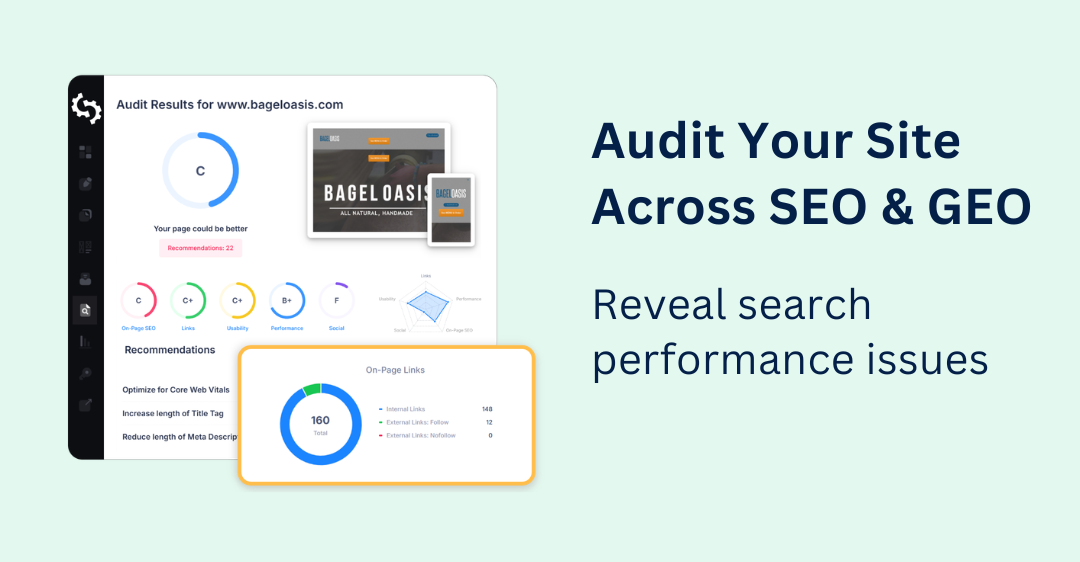
A quick way to check this is by running your website through SEOptimer’s SEO Audit tool. It can help identify technical SEO issues that may prevent your pages from being crawled, indexed, or properly understood by search engines.
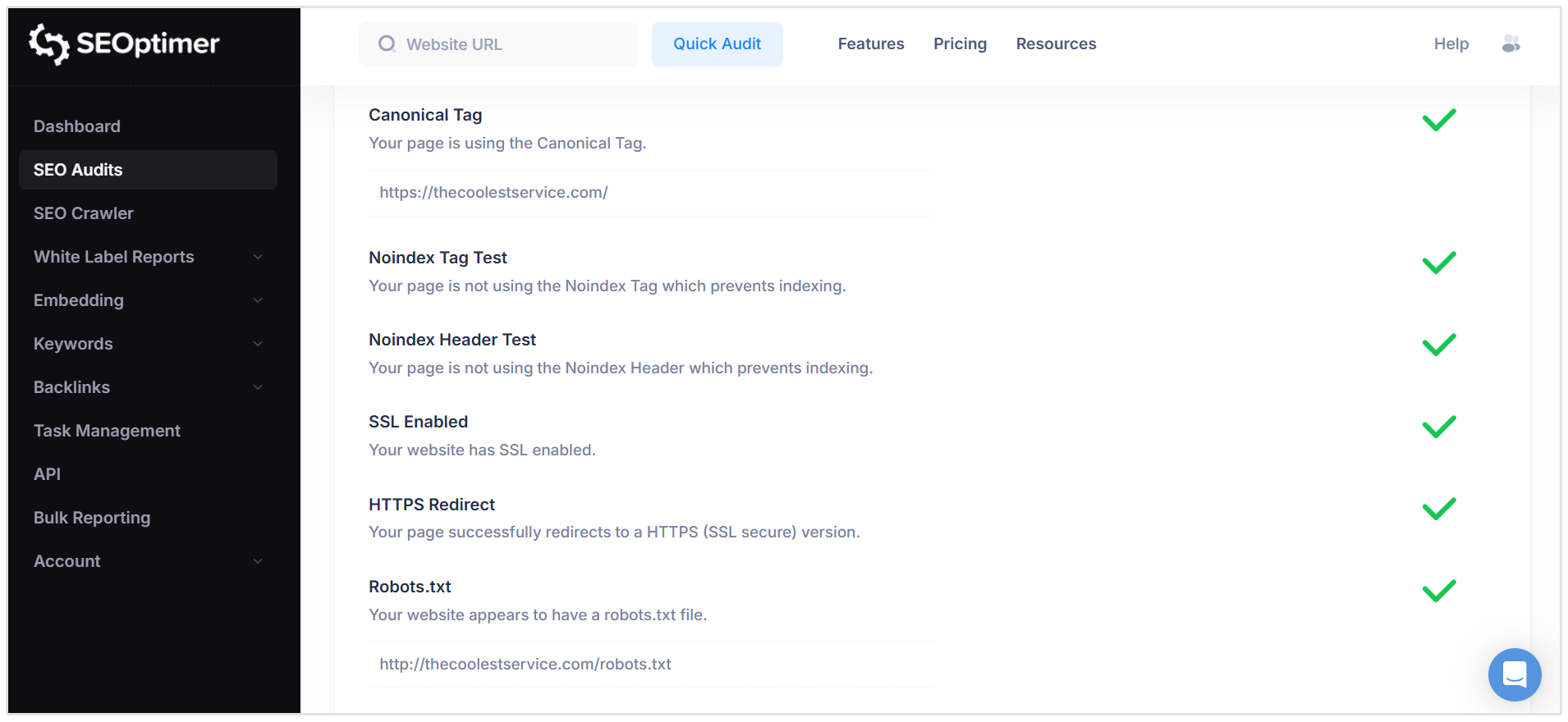
This includes issues like missing title tags, broken links, blocked pages, poor mobile usability, slow load times, and other problems that could affect your visibility.
6. Follow JavaScript SEO Best Practices
JavaScript SEO is about making sure search engines can still access and understand your important content, even if your site uses JavaScript to load or display parts of the page.
Google can process JavaScript content as long as it is not blocked, but JavaScript-heavy websites are often more complex from an SEO perspective.
Important content, links, headings, product details, and page copy should not be difficult for search engines to find or render.
This is especially important for AI search because your content needs to be accessible before it can be considered useful.
As a best practice, make sure key content is available in your page’s HTML where possible, avoid hiding important information behind complex scripts, and check that lazy-loaded content can still be discovered.
SEOptimer’s SEO and website audit reports also include a GEO section that checks your site’s rendered content level.
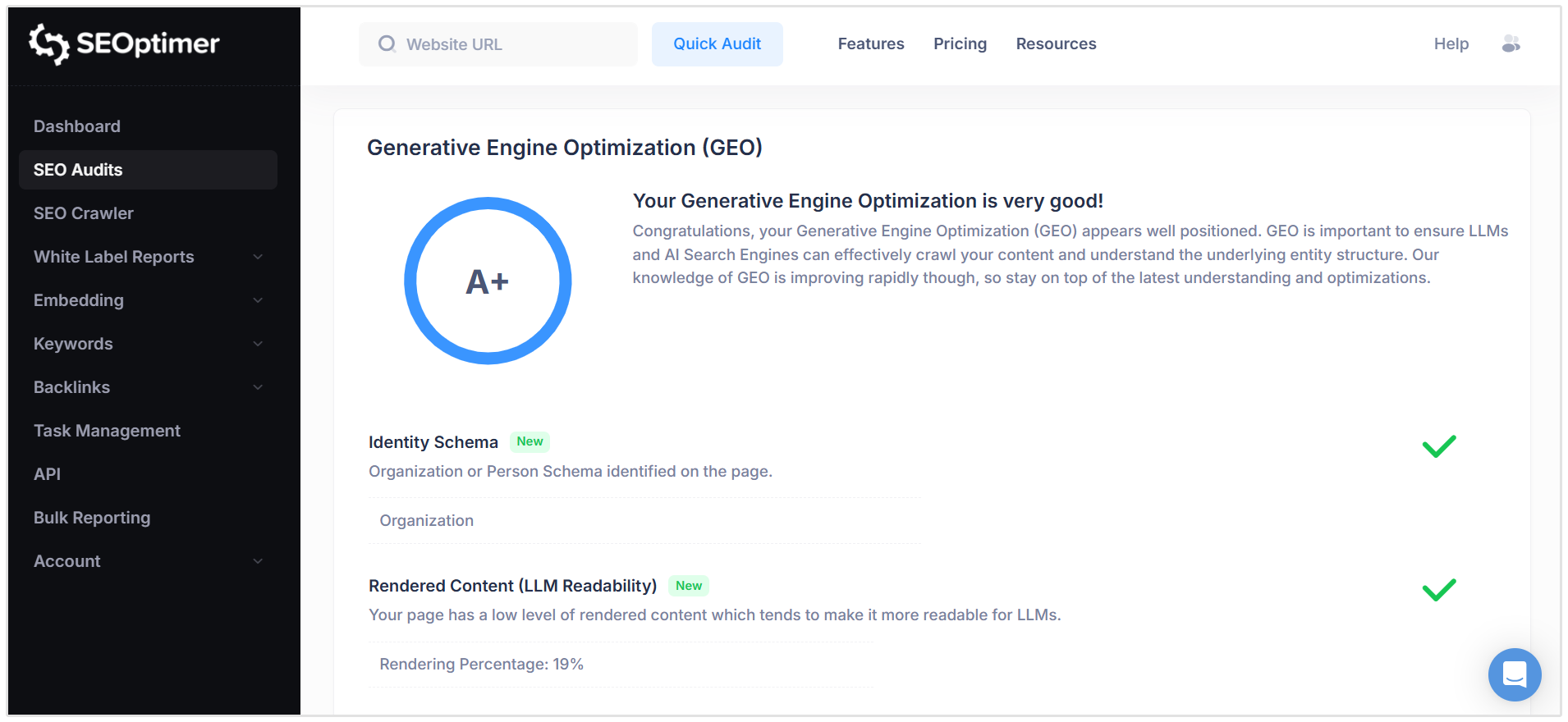
This helps you see whether too much of your content relies on JavaScript rendering, which can make it harder for some AI systems and crawlers to read the page clearly.
Do not make Google or AI crawlers work harder than they need to. Put the important stuff where they can actually find it.
7. Improve Page Experience
Google also recommends providing a good page experience for visitors who arrive from Search.
This means your website should load quickly, work well on mobile devices, and make it easy for people to find and read the main content without fighting through popups, clutter, or confusing layouts.
For AI search, this is still part of the foundation. If someone clicks through from an AI Overview or AI Mode result, the page should give them a smooth, helpful experience.
This does not mean page experience alone will get you featured in generative AI Search results. But a slow, messy, or frustrating page can make your content less useful to visitors, even if the information itself is good.
So keep the page clean, fast, mobile-friendly, and easy to navigate.
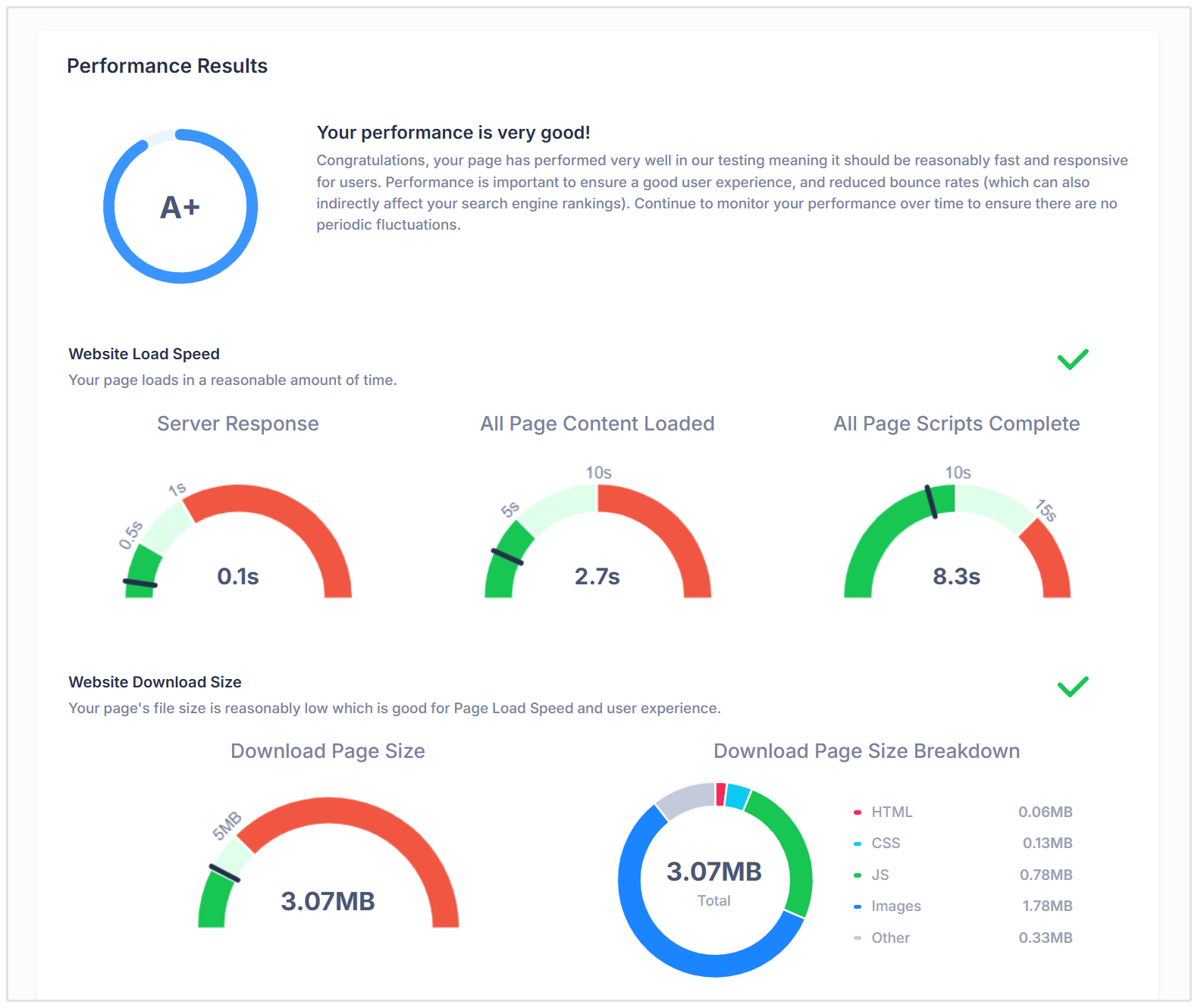
If you want to check how your site performs, you can run a free SEO audit with SEOptimer.
Each audit includes a Performance check that reviews your site’s mobile speed, mobile responsiveness, and other technical SEO elements that can affect the user experience.
8. Reduce Duplicate Content
Duplicate content can make it harder for search engines to understand which page is the most important version.
It can also waste crawling resources on URLs that do not really need to be discovered, indexed, or shown in search results.
For AI search, this comes back to clarity. If you have multiple pages saying almost the same thing, Google may struggle to identify the best page to use or rank.
A better approach is to clean up overlapping content where possible.
Merge similar blog posts, update old pages instead of creating unnecessary new ones, and use canonical tags when you need to point Google to the preferred version of a page.
This makes your website easier to crawl, easier to understand, and more useful for visitors.
9. Optimize Local Business and Ecommerce Details (if applicable)
If you run a local business or ecommerce website, Google recommends keeping your business and product information accurate across its systems.
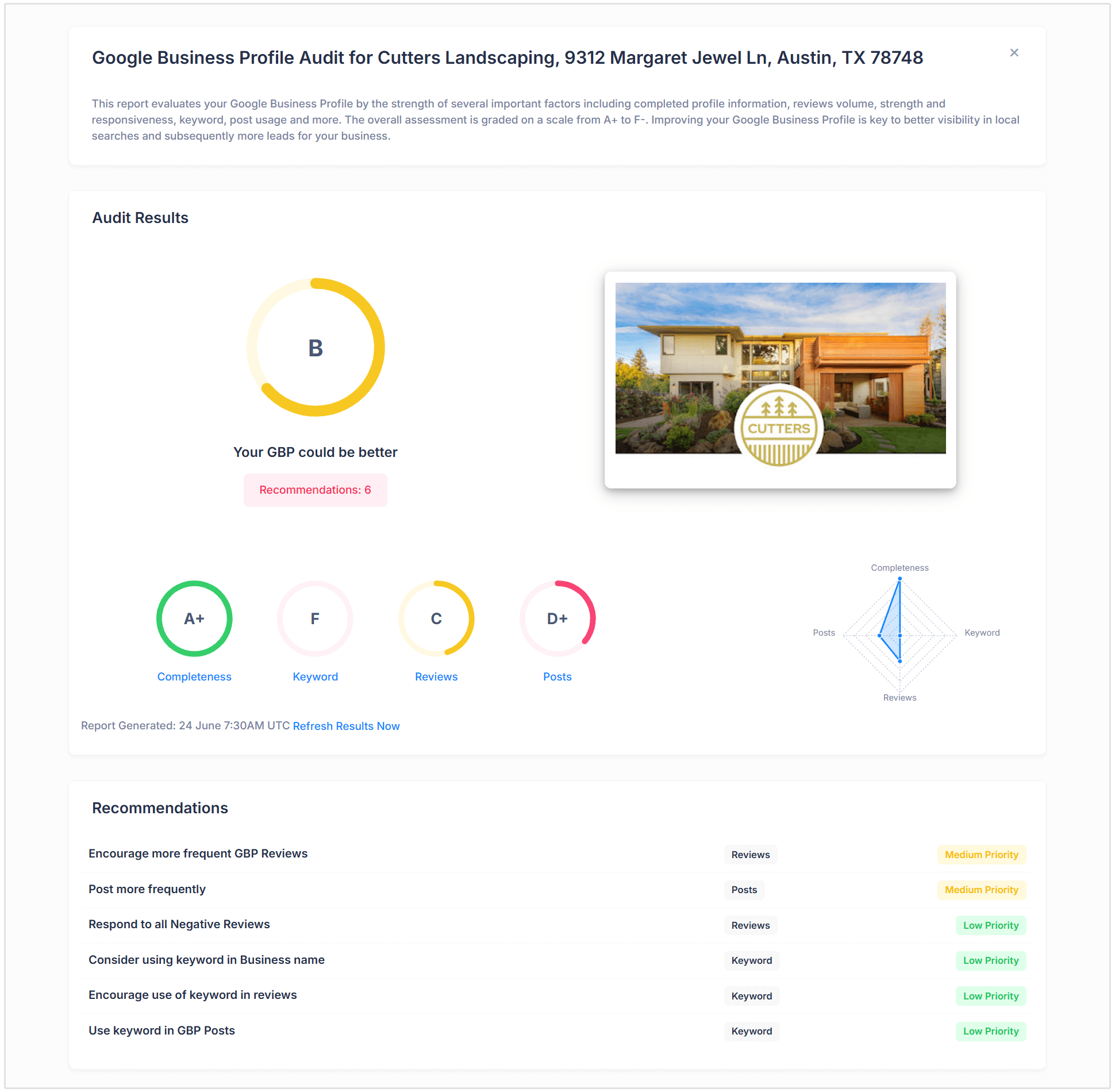
For local businesses, this means making sure your Google Business Profile is complete and up to date. Your business name, address, phone number, opening hours, services, photos, and other key details should be accurate.
Our Google Business Profile Audit can help you quickly identify gaps or inconsistencies so you can keep your listing fully optimized.
For ecommerce websites, Google recommends using tools like Google Merchant Center and Merchant Center feeds to share product information. This can help Google understand details like product names, pricing, availability, and other important shopping information.
This matters because Google says generative AI responses can include product listings, product details, and local business information where appropriate.
So, if these features apply to your business, do not only optimize your website. Make sure your Google Business Profile, Merchant Center data, and on-site product or service details are also clear, complete, and consistent.
The easier it is for Google to understand what you offer, where you operate, and whether your information is accurate, the better foundation you have for visibility across both traditional Search and AI-powered search experiences.
Myths About Optimizing for Google’s Generative AI Features
As with anything new in SEO, generative AI search has already attracted a lot of bold claims, quick fixes, and “must-do” tactics.
Some of them sound convincing. Some of them are useful in the right context.
Google’s guidance helps separate what actually matters from what does not.
Here are the most common myths that Google says we should avoid:
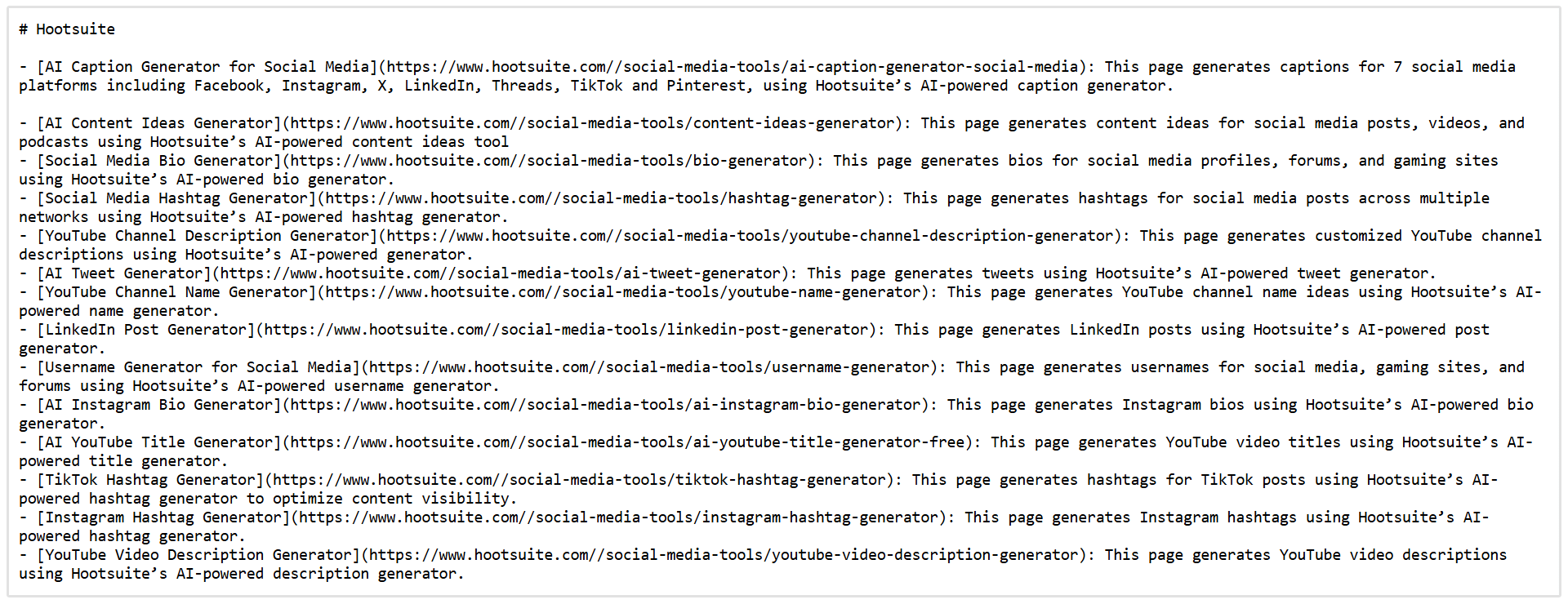
Myth 1: You Need an llms.txt File for Google Search
One of the biggest myths around AI search is that you need to create an llms.txt file to appear in Google’s generative AI features.
According to Google, you do not.
Google says you do not need to create special AI text files, machine-readable files, markup, or Markdown files to appear in Google Search, including AI Overviews and AI Mode.
This does not mean llms.txt is completely useless everywhere. Some other AI systems or services may use it, so it might still have a place in a broader AI visibility strategy.
But for Google Search specifically, llms.txt does not help or hurt your visibility.
So, if your goal is to improve your presence in Google’s AI search features, your time is better spent on the fundamentals like useful content, crawlability, indexing, technical SEO, and a better user experience.
Myth 2: You Need to “Chunk” All Your Content
Another common idea is that you need to break every page into tiny AI-friendly sections so Google can understand it better.
Google says this is not required.
Its systems are able to understand multiple topics on a page and show the most relevant part to users when needed.
That does not mean structure is unimportant. Clear headings, focused sections, and easy-to-read paragraphs still help both users and search engines.
But you do not need to chop your content into awkward little pieces just to please AI systems.
Some topics work better as short pages. While Others need more depth. The best format depends on the audience, the topic, and what the reader actually needs.
Myth 3: More Brand Mentions Automatically Improve AI Visibility
There is a growing idea that brands need to chase as many online mentions as possible to appear in AI search results.
But not all mentions are of the same standard (quality).
Google says its generative AI features can show what people are saying about products and services across blogs, videos, and forum discussions.
However, chasing inauthentic mentions across the web is not as helpful as it might seem.
In other words, do not try to manufacture brand visibility through low-quality placements, spammy mentions, or artificial discussions.
Real visibility comes from being genuinely worth talking about.
That could mean earning mentions through helpful resources, customer reviews, expert content, product comparisons, digital PR, partnerships, or useful contributions in relevant communities.
You should aim to build a stronger, more trustworthy presence across the places your audience already pays attention to.
Myth 4: Structured Data is a Magic AI Visibility Lever
Structured data is still useful for SEO, but it is not a magic shortcut to appearing in Google’s generative AI features.
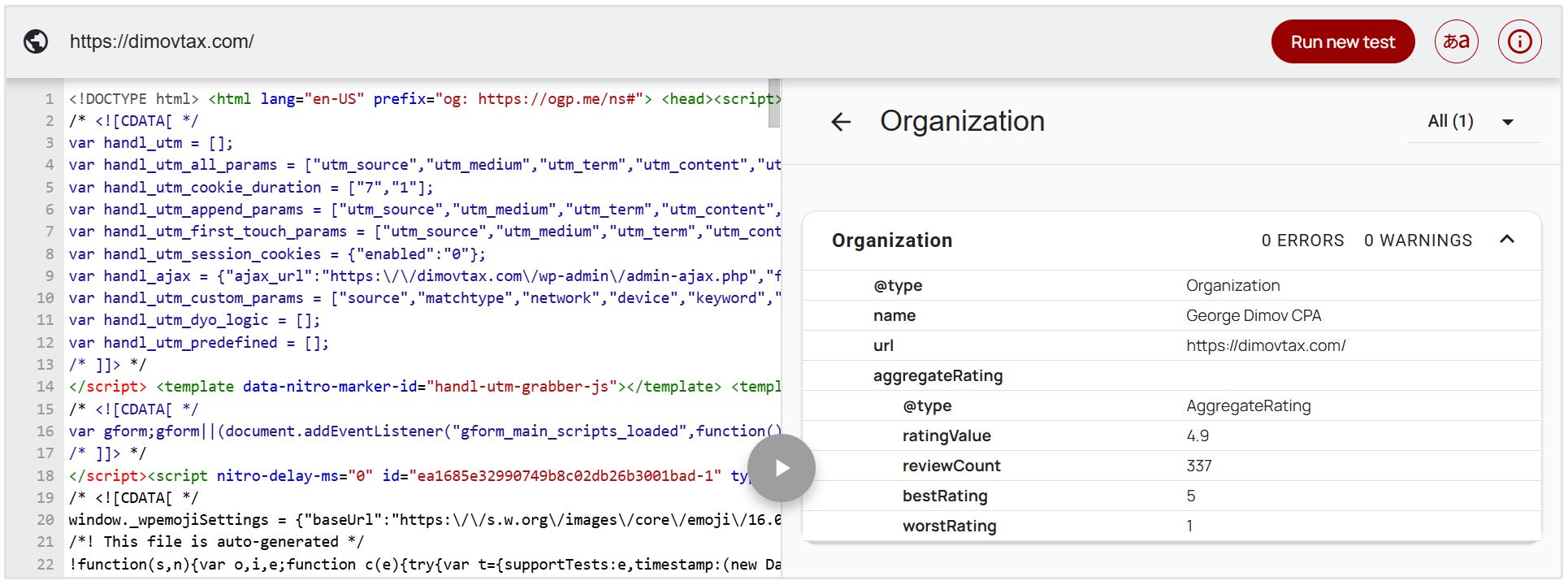
Google says you do not need special schema markup to be eligible for AI Overviews or AI Mode.
That does not mean structured data is useless. It can still help Google better understand certain types of content, such as products, reviews, recipes, events, FAQs, local business details, and other structured information.
It can also help your pages qualify for rich results in traditional Search.
But adding schema to a weak page will not suddenly make it valuable.
Structured data just helps clarify what is already there, but it does not replace useful content, technical accessibility, originality, or a good user experience.
How to Measure Visibility in Google’s Generative AI Features
Marketers need a way to measure whether their content is actually appearing in Google’s AI Search, and other generative AI platforms.
The challenge is that AI visibility is not always measured in the same way as traditional SEO.
Rankings, clicks, and impressions still matter, but you may also want to track brand mentions, prompt visibility, competitor visibility, and the sources AI tools use in their answers.
Luckily, there are several great options to track visibility in Google’s AI Search.
Use AI Visibility Trackers
AI visibility tracking software helps you monitor how your brand appears across AI search and answer engines.
These tools usually track specific prompts and show whether your brand is mentioned, which competitors appear, and which sources are cited or referenced in the response.
Check Google Search Console
Google has also started introducing generative AI performance reporting in Google Search Console.
These reports give website owners a dedicated view of impressions from Google’s generative AI features, including AI Overviews and AI Mode. This can help you understand how often your website appears in Google’s AI-powered search experiences.
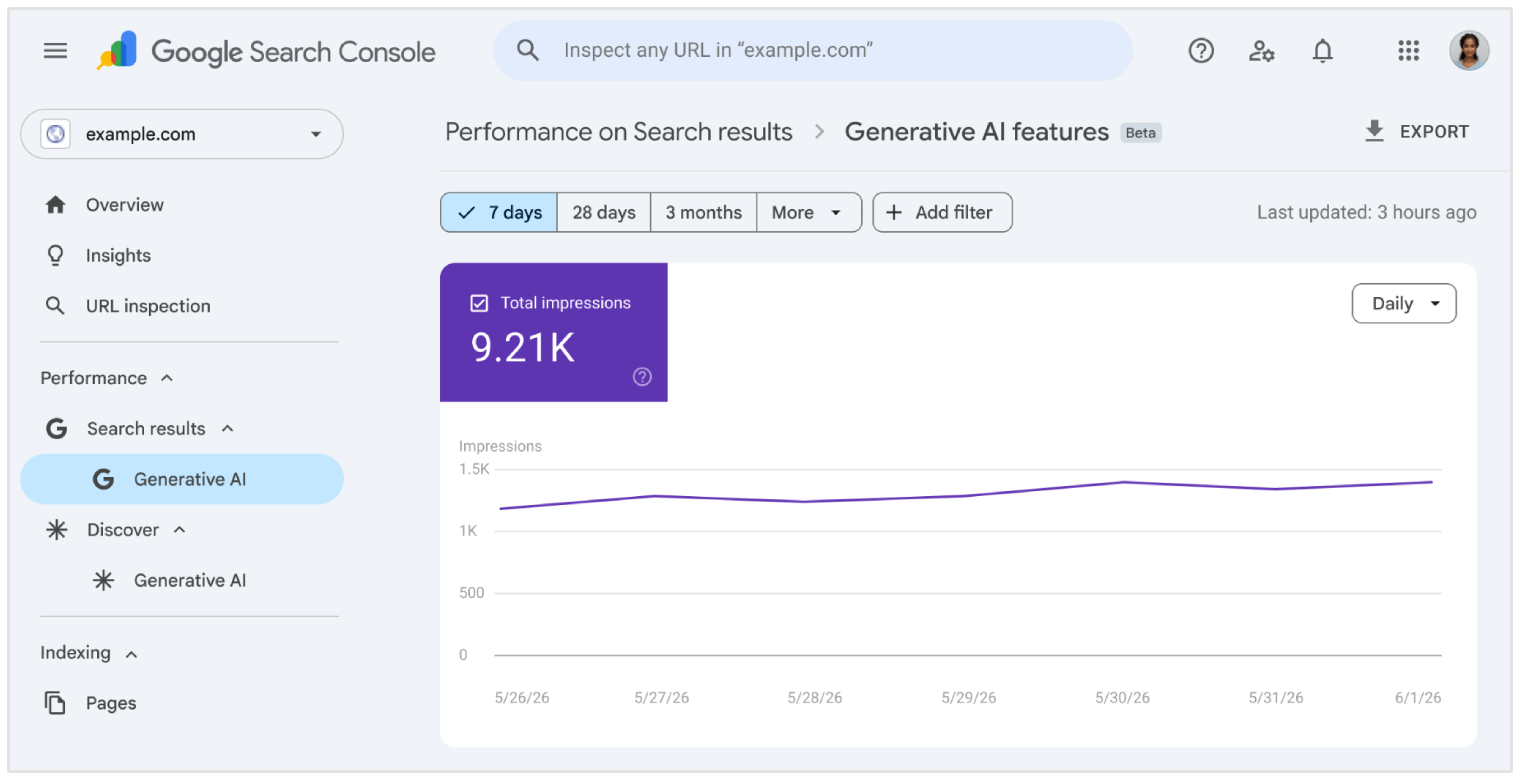
However, Google Search Console only shows visibility within Google’s own ecosystem. It does not tell you whether your brand appears in ChatGPT, Claude, Perplexity, or other AI platforms.
Use SEOptimer’s GEO Audit Tool
To get a broader view of your AI visibility, you can use SEOptimer’s GEO Audit tool.
SEOptimer shows which prompts your website ranks for across Google and leading AI platforms like ChatGPT, Claude, and Perplexity.
This gives you a clearer picture of where your brand is showing up, which prompts you are visible for, and where competitors may be appearing instead.
Related Reading:
- LLM SEO: How to Get Cited by ChatGPT, Gemini, and Claude
- Top SEO MCP Servers in 2026: Tools and Use Cases
- Search Everywhere Optimization: How to Build Visibility on All Search Platforms
Conclusion
There is a lot of noise around AI search right now.
Some of it is useful. Some of it is guesswork.
Google’s guidance brings things back down to earth.
You do not need to rebuild your entire strategy for AI Overviews or AI Mode. You need to make sure your website genuinely helpful, technically sound, easy to understand, and worth citing.