Core Web Vitals Test
SEOptimer's Core Web Vitals Test shows how your site performs against Google's Core Web Vitals metrics, using Google's own data.

SEO Audit Any Site in Seconds
+ Comprehensive SEO / GEO Tools for Every Function
Run over 100 checks on your website across On-Page SEO, Usability, Performance, Social and Links. Now with GEO in every report. SEOptimer also offers keyword research, rank tracking, backlinks and a full site crawler.

About Core Web Vitals
What are Core Web Vitals?
Core Web Vitals are three measurements Google uses to describe how a page feels to use, rather than how fast it technically loads. They ask three questions a visitor would recognise: how long before the main content appears, how quickly does the page respond when I touch it, and does anything move under my finger while it loads.
The distinction from older speed metrics is deliberate. Total load time says almost nothing about whether a page felt usable, because a page can finish loading long after someone has read what they came for, or feel broken while technically complete.
They also change over time. Google has replaced individual metrics before, most recently swapping the responsiveness measure for one that captures every interaction rather than only the first, so the set is best understood as an evolving definition of a usable page.
The three measurements
Largest Contentful Paint measures how long the biggest visible element takes to render, usually a hero image or headline. It is the closest thing to "when did the page appear", and the target is 2.5 seconds.
Interaction to Next Paint measures how quickly the page responds when someone taps or clicks, across the whole visit rather than just the first interaction. It is dominated by JavaScript occupying the main thread, and the target is 200 milliseconds.
Cumulative Layout Shift measures how much content jumps around while loading. It is the reason you tap the wrong thing when an ad or image loads late, and the target is a score below 0.1.
Field data versus lab data
This distinction causes more confusion than anything else here. Lab data comes from a single simulated test run and is repeatable and useful for debugging. Field data comes from real visitors on real devices and connections, and is what Google actually uses.
They frequently disagree, and when they do the field data wins. A page that scores well in a lab test on a fast connection can fail in the field because most of its visitors are on mid-range phones.
Field data is also why new or low-traffic pages report nothing at all. There are not enough real visits to summarise, which is a gap in the reporting rather than a fault with the page.
Do Core Web Vitals still matter in 2026?
They are a genuine ranking signal, though a modest one, and are best understood as a tie-breaker rather than a lever. No amount of speed rescues a page that does not answer the question, and a slow page with the best answer will still often win.
The stronger argument has always been commercial. Layout shift causes mis-taps, slow response causes repeat taps and rage clicks, and both cause abandonment. The measurements exist because they correlate with people leaving.
They also serve as a useful proxy for engineering discipline. A site that passes all three is usually a site where somebody owns performance, and that tends to correlate with other things being done properly.
How Core Web Vitals relate to AI search
They have little direct bearing on whether a page is cited. A crawler is not frustrated by layout shift, and does not abandon a page because a button responded slowly.
The indirect effect is what counts, and it has grown. When an AI answer sends someone to your page, that single visit is the entire payoff of being cited, and a page that stutters on arrival wastes it.
Referral traffic from AI answers tends to be lower volume and higher intent than search traffic, which raises the cost of losing a visitor in the first few seconds rather than lowering it.
Core Web Vitals best practices
- Reserve space for images, ads and embeds by setting dimensions, so nothing shifts as they load.
- Prioritise the largest element visible on arrival and avoid lazy-loading it.
- Cut or defer third-party scripts, which are the usual cause of poor responsiveness.
- Serve modern image formats at the size actually displayed.
- Avoid injecting banners or notices above existing content after load.
- Judge results on field data from real visitors, not a single lab score.
What this tool checks
The Core Web Vitals test retrieves the assessment for the page and reports whether it is valid, invalid or unavailable.
Unavailable is not a failure. It means there is not enough real-world data to report on, which is common for new or low-traffic pages, and the honest answer in that case is to fix the obvious causes rather than wait for a score.
Where to go next
Core Web Vitals describe symptoms; the causes are usually weight and waiting. Check how long the server takes to respond with the website load speed test, how much the page weighs with the webpage file size check, and how many separate files it pulls in with the page request tool.

Comprehensive SEO Toolbox with over 55 Tools
Check Titles, Meta Descriptions, Headings, Schema, Core Web Vitals, SSL and Robots.txt. Generate Meta Tags, Sitemaps and .htaccess Rules, minify CSS, JS and HTML, and draft copy with our AI Writing Tools - instantly and for free.
Further Reading
See More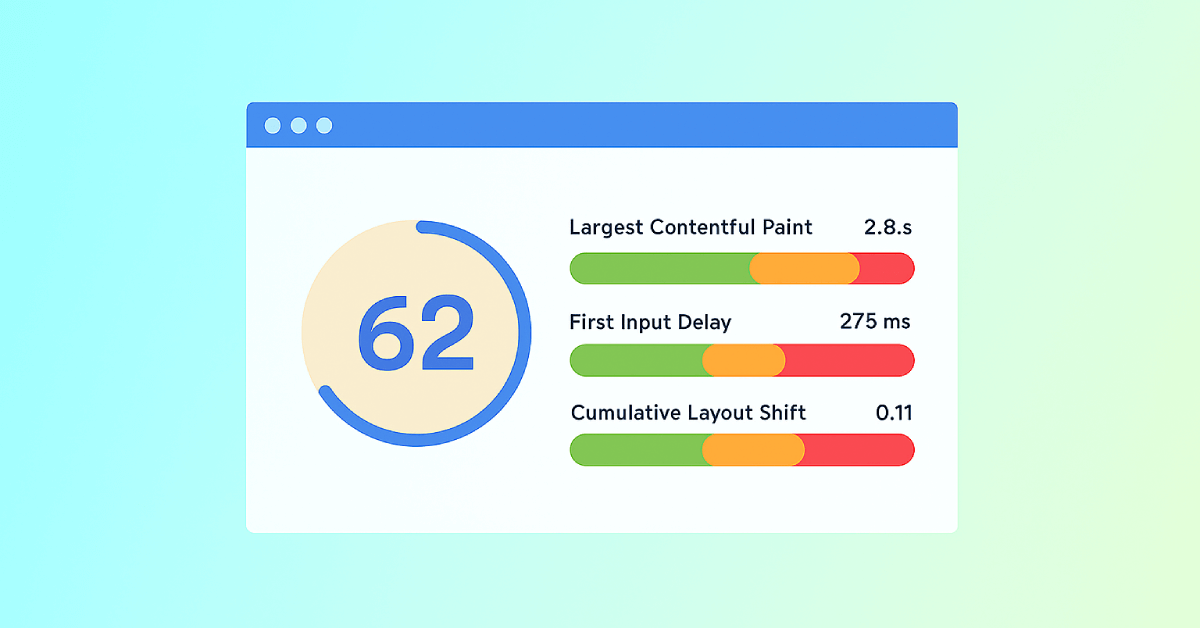
Core Web Vitals: What are They? How are They Crucial to SEO?
You should optimize your web pages for a seamless user experience. But how can you measure the quality of user experience on a site? That’...

SEOptimer's Core Web Vitals Checks
What are Core Web Vitals?
Google launched the Core Web Vitals (CWV) initiative in 2020 - "essential metrics for a healthy site". T...

Page Speed: What It Is, and How It Impacts SEO
What is Page Speed?
The term page speed refers to the amount of time your media content or web page will take to download from the...

Webpage Size - Why is it important? And how do you optimize it?
What is Webpage Size?
The term webpage size in the SEO world refers to the downloaded file size of a given web page.
The...