

What is Dental SEO?
Dental SEO is the process of optimizing a dental practice’s website and online presence to rank higher in traditional search results and AI generated answers. It helps potential patients find the practice when searching for a local dentist, specific dental treatments, or answers to oral health questions.
For example, dental SEO can help a practice appear for searches such as “dentist near me,” “emergency dentist in Chicago,” or “how much do dental implants cost?”
The main objective behind SEO for dentists is to generate more relevant website traffic, phone calls, and appointment bookings without paying for a single click like with Google Ads.
Why is SEO Important for Dentists?
SEO is important for dentists because most patients search online when they need a new dentist or look for a specific treatment.
If your practice does not appear at the top or very near the top in those search results, potential patients are more likely to choose a competitor that does.
Likewise, if your dentist practice isn’t cited or mentioned in AI responses, you will miss out on referral traffic from AI sources.
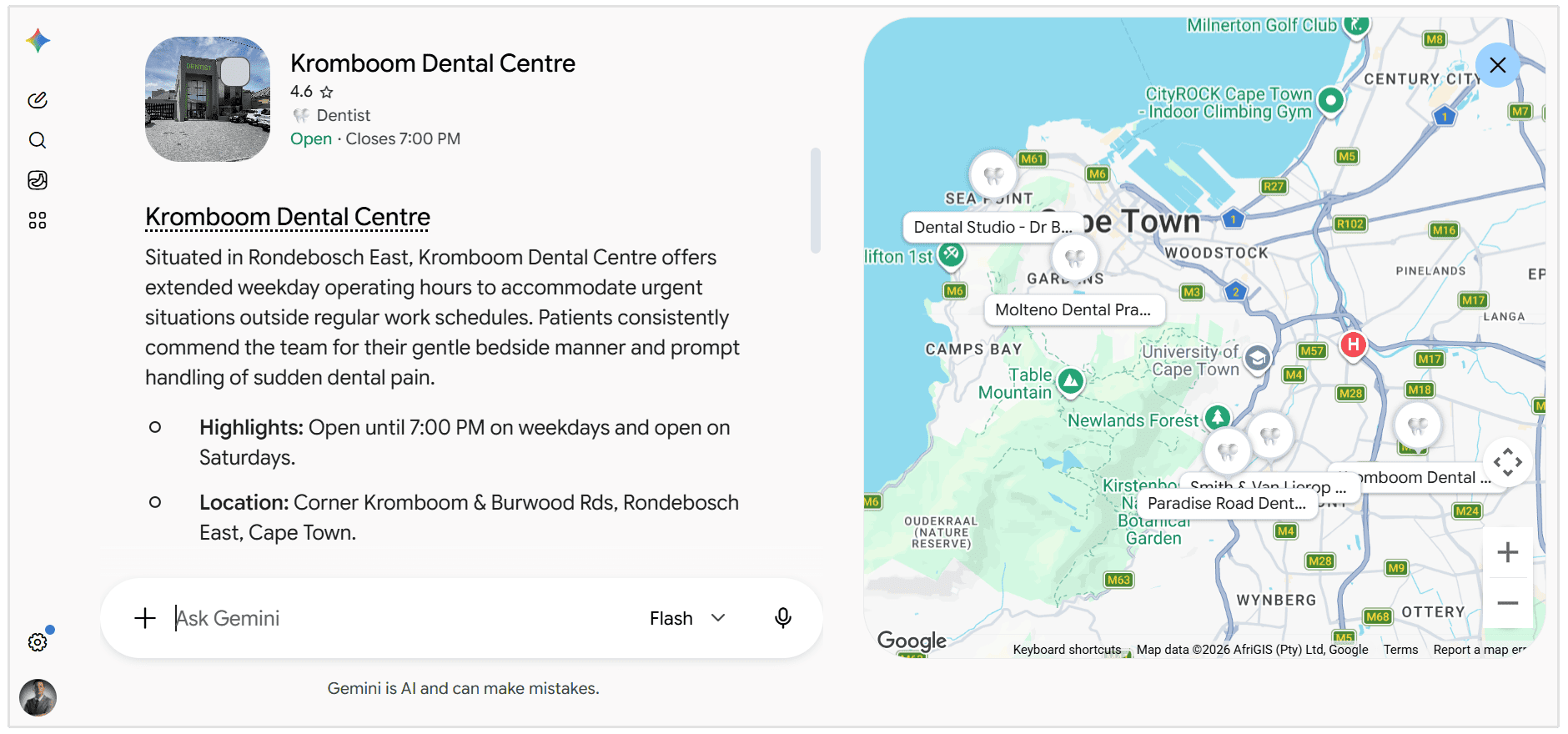
A strong dental SEO strategy can help your practice appear for relevant local and treatment-related searches, attract more people to your website, and turn that visibility into calls and appointment bookings.
Unlike paid advertising, SEO can also continue generating traffic without requiring you to pay for every click.
So now let’s look at the specific strategies you can use to improve your dental SEO.
10 Dental SEO Strategies
Audit Your Dental Website’s Local SEO
Before making changes to your dental SEO strategy, it’s important to understand how well your website is currently optimized for local search.
A local SEO audit gives you a clear overview of your practice’s existing performance and highlights areas that may be limiting its visibility.
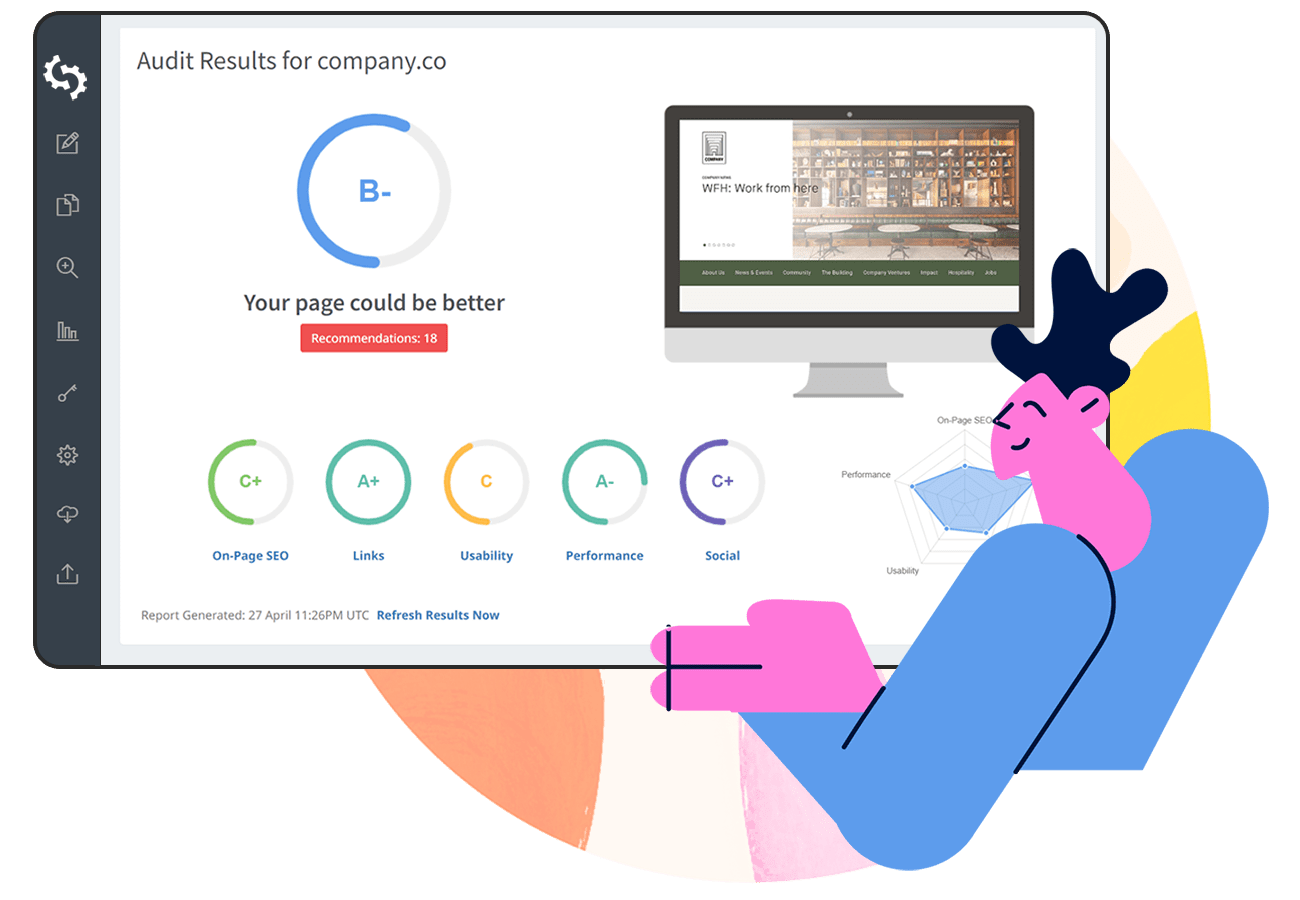
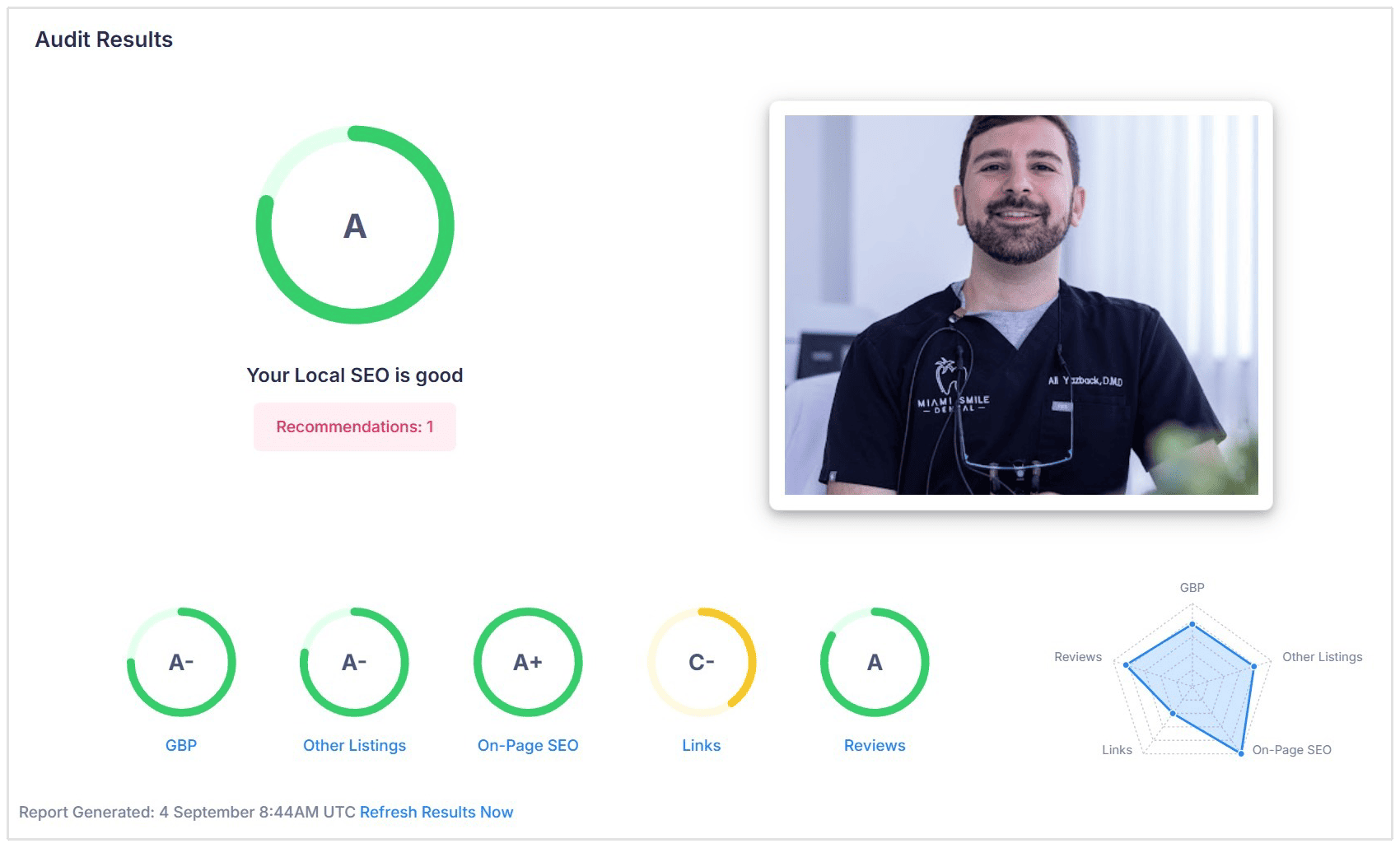
Our Local SEO Audit Tool analyzes your dental website and local search presence to identify issues and opportunities for improvement.
It provides an easy-to-understand report with actionable recommendations, giving you a useful starting point for improving your practice’s local rankings and attracting more patients in your area.
Optimize Your Google Business Profile
An optimized and well-maintained Google Business Profile is one of the best things you can do for your dental SEO.
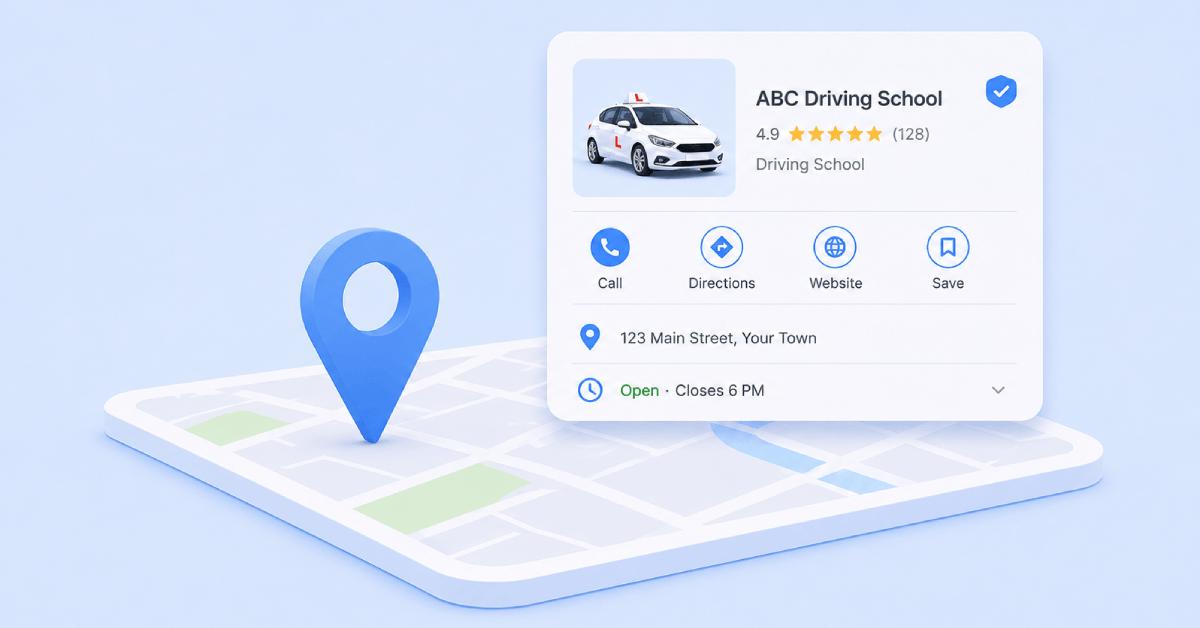
It helps your practice appear in Google Maps and the local search results when potential patients search for a dentist near them.
Start by ensuring that your practice name, address, phone number, opening hours, website, and appointment link are accurate.
You should also select the most relevant business categories and add the treatments your practice offers, such as dental implants, teeth whitening, or emergency dentistry.
Complete the profile with recent photos of your practice, team, treatment rooms, and exterior.
"Google places enormous emphasis on local results. For dentists, a growing share of potential patient interactions can happen directly through the business profile before someone ever visits the website.
Patients can view reviews, hours, photos, services, directions, phone numbers and other information directly from the search results."
- John Colascione, Founder & CEO at SEARCHEN NETWORKS
Important: Keep all this information updated so that Google and potential patients always have an accurate picture of your practice.
You can use the Google Business Profile Audit Tool to get a clearer picture of how well your profile is optimized.
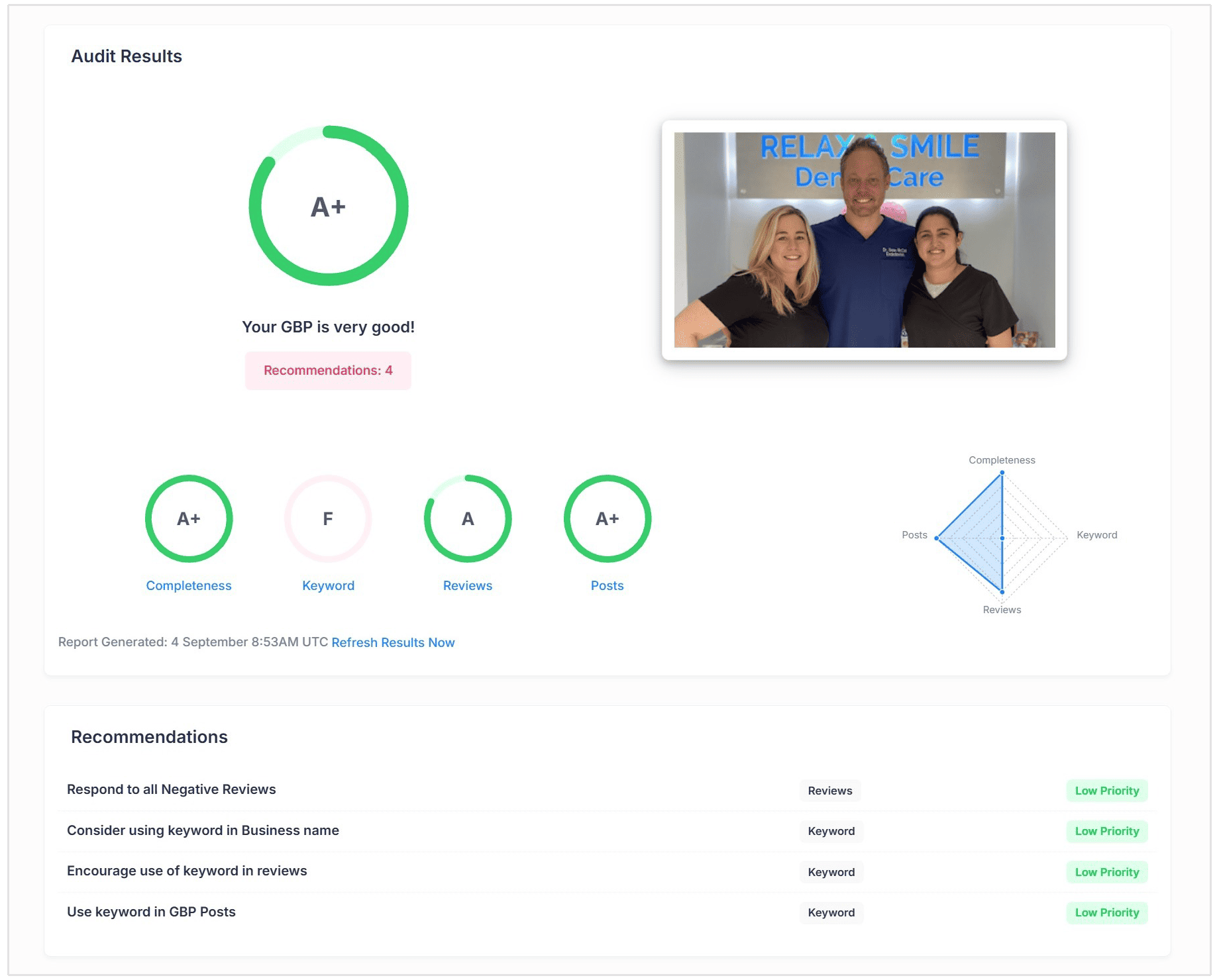
The audit checks important elements of your listing, including your business information, categories, services, photos, reviews, and other profile details that can affect your local search presence.
It then highlights missing or incomplete information and provides practical recommendations for improving your profile.
This makes it easier to improve your dental practice’s visibility in the local map pack.
Target the Right Dental Keywords
The right keywords connect your dental practice with people who are actively searching for the treatments and information you provide. However, not every dental keyword reflects the same search intent.
| Keyword type | Example | What the searcher wants |
|---|---|---|
| Informational | “How long do dental implants last?” | To learn about a dental topic or treatment |
| Local | “Dentist near me” or “dentist in Austin” | To find a dental practice in a specific area |
| Treatment-focused | “Dental implants in Austin” | To find a dentist offering a particular treatment |
| Urgent | “Emergency dentist open now” | To receive dental care as soon as possible |
| Commercial | “Best cosmetic dentist in Austin” | To compare practices before choosing one |
| Branded | “Oak Street Dental reviews” | To learn more about a specific dental practice |
To find the best keywords, start with the services your practice offers and combine them with the locations you serve. Then compare search volume, competition, and intent to identify terms that are relevant to your practice and realistic to target.
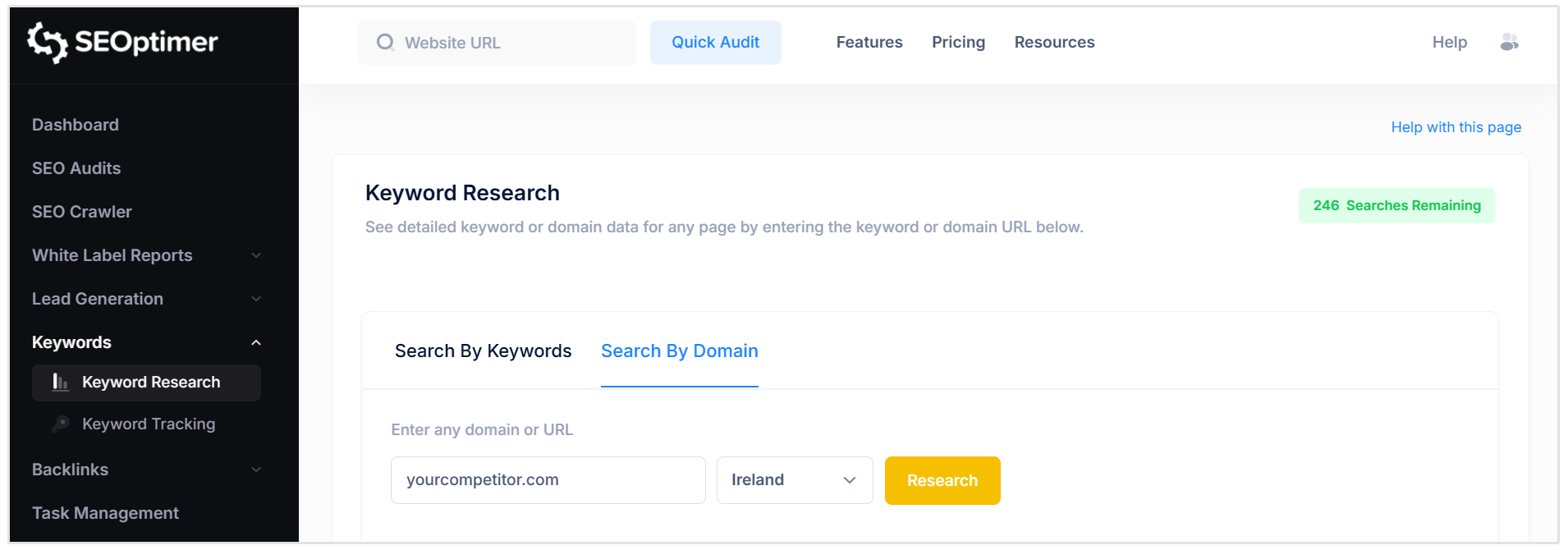
SEOptimer’s Keyword Research Tool can help you find these opportunities.
You can also use the Search by Domain option to discover which keywords competing dental websites rank for, making it easier to spot valuable terms and content ideas you may have overlooked.
Create and Optimize Location Pages
A location page is a dedicated page for a specific dental practice or clinic location.
It helps search engines connect your practice with searches in that area while giving potential patients the practical information they need before booking.
For example, Night & Day Dentist has a dedicated Glasgow location page featuring its address, services, appointment form, practice photos, directions, nearby landmarks, patient reviews, and location-specific FAQs.
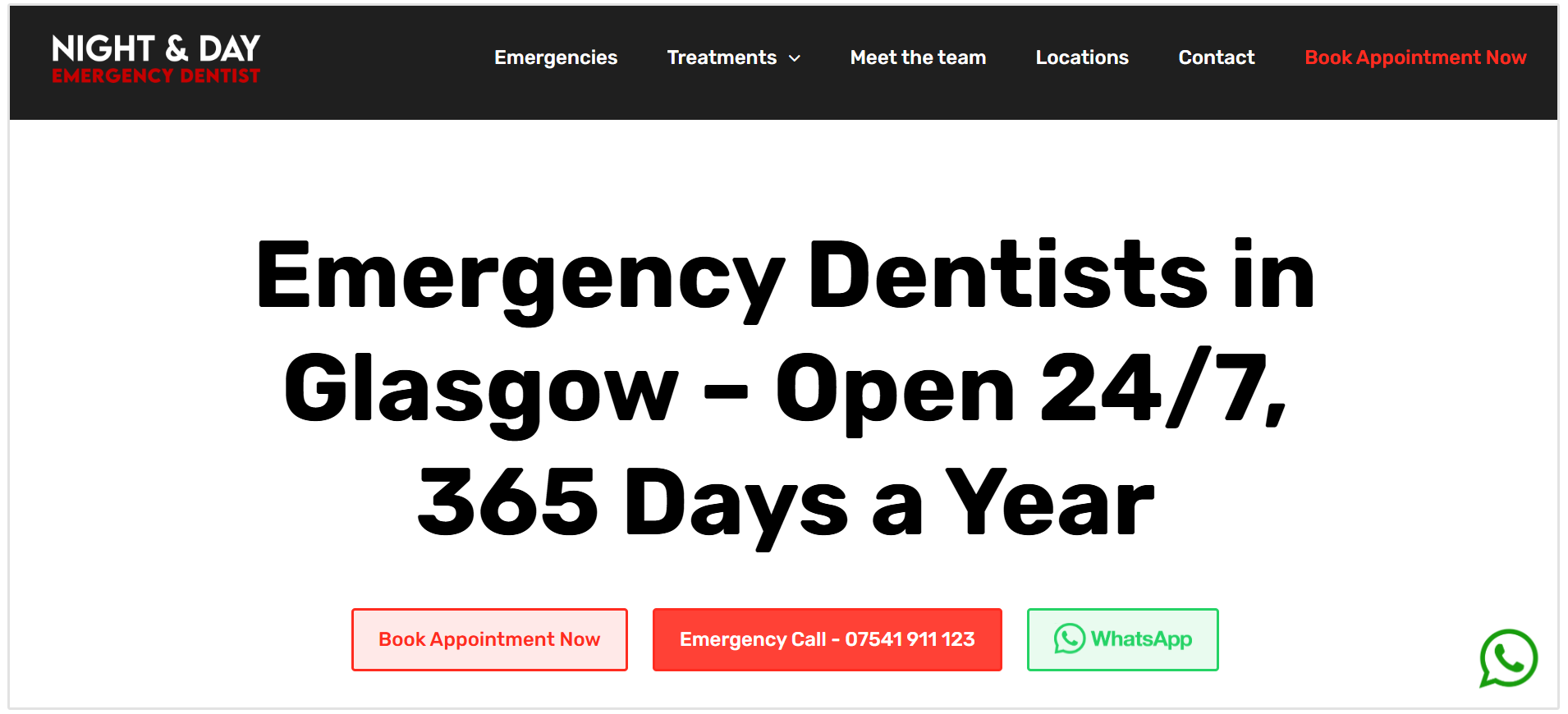
The group operates clinics in several UK cities, so each location has its own relevant page rather than relying on one general locations page.
To optimize your dental location pages:
- Create a separate page for each physical practice.
- Include the location naturally in the page title, H1, URL, and copy.
- Add the correct address, phone number, opening hours, map, and appointment link.
- Describe the treatments, dentists, and facilities available at that location.
- Provide useful local details such as directions, parking, public transport, and nearby landmarks.
- Add original practice photos, patient reviews, and locally relevant FAQs.
- Link the page to the corresponding Google Business Profile.
Each page should contain genuinely useful and unique information. Avoid creating near-identical pages for multiple suburbs or cities simply by swapping out the location name.
For a complete walkthrough, read our guide on how to create and optimize location pages for SEO.
Build Consistent Local Citations
In local SEO, a citation is any online mention of your dental practice’s business information. Particularly its name, address, and phone number, commonly known as NAP information.
Citations usually appear on business directories, dental association websites, healthcare platforms, social media profiles, and local listings.
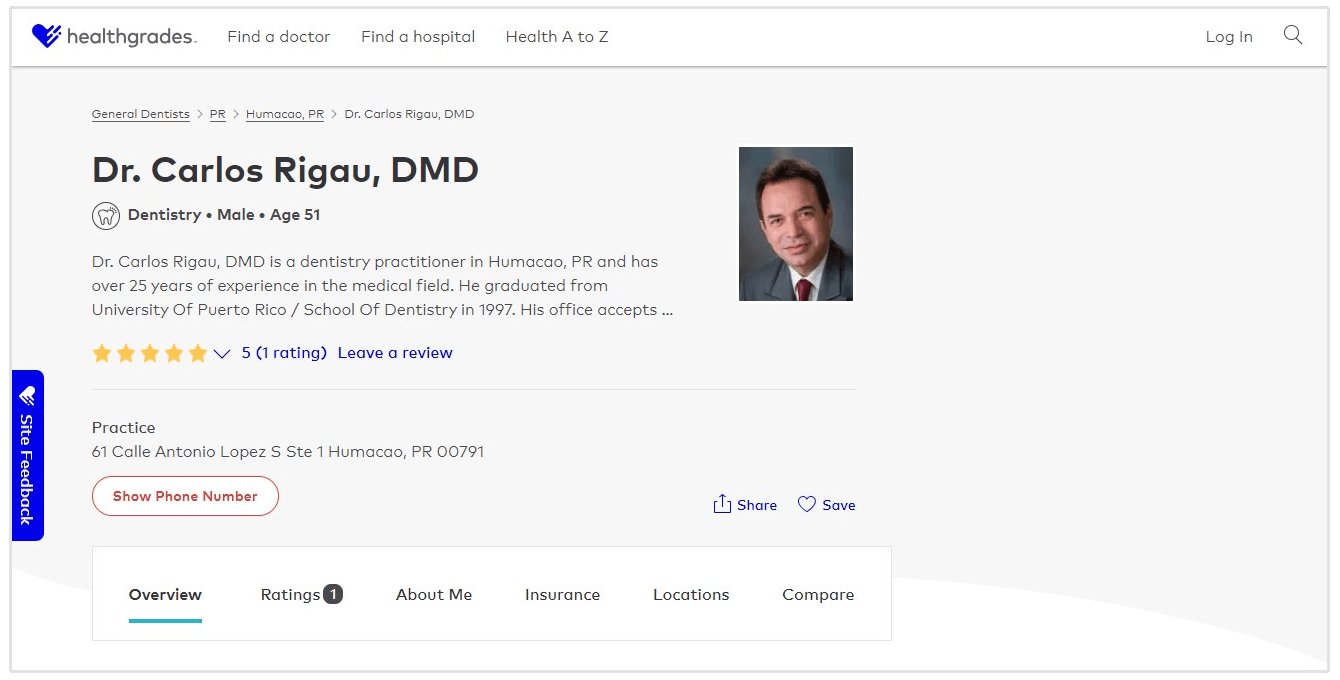
Consistent citations help search engines confirm that your dental practice is legitimate and located where you claim it is. They also give potential patients more ways to discover and contact your practice.
Make sure your practice name, address, phone number, website, and opening hours are accurate and consistent across platforms such as Google Business Profile, Yelp, Healthgrades, Zocdoc, and relevant dental directories.
Even small differences, outdated details, or duplicate listings can create confusion, so regularly review and correct your citations.
Generate and Manage Patient Reviews
Patient reviews can influence both your dental practice’s local visibility and a potential patient’s decision to book.
Google states that more reviews and positive ratings can help a business rank more prominently in local search results. Reviews also give prospective patients an indication of the quality of care and experience they can expect from your practice.
According to BrightLocal’s 2026 research, 97% of consumers read reviews for local businesses, 71% use Google to read them, and 54% visit a business’s website after seeing positive reviews.
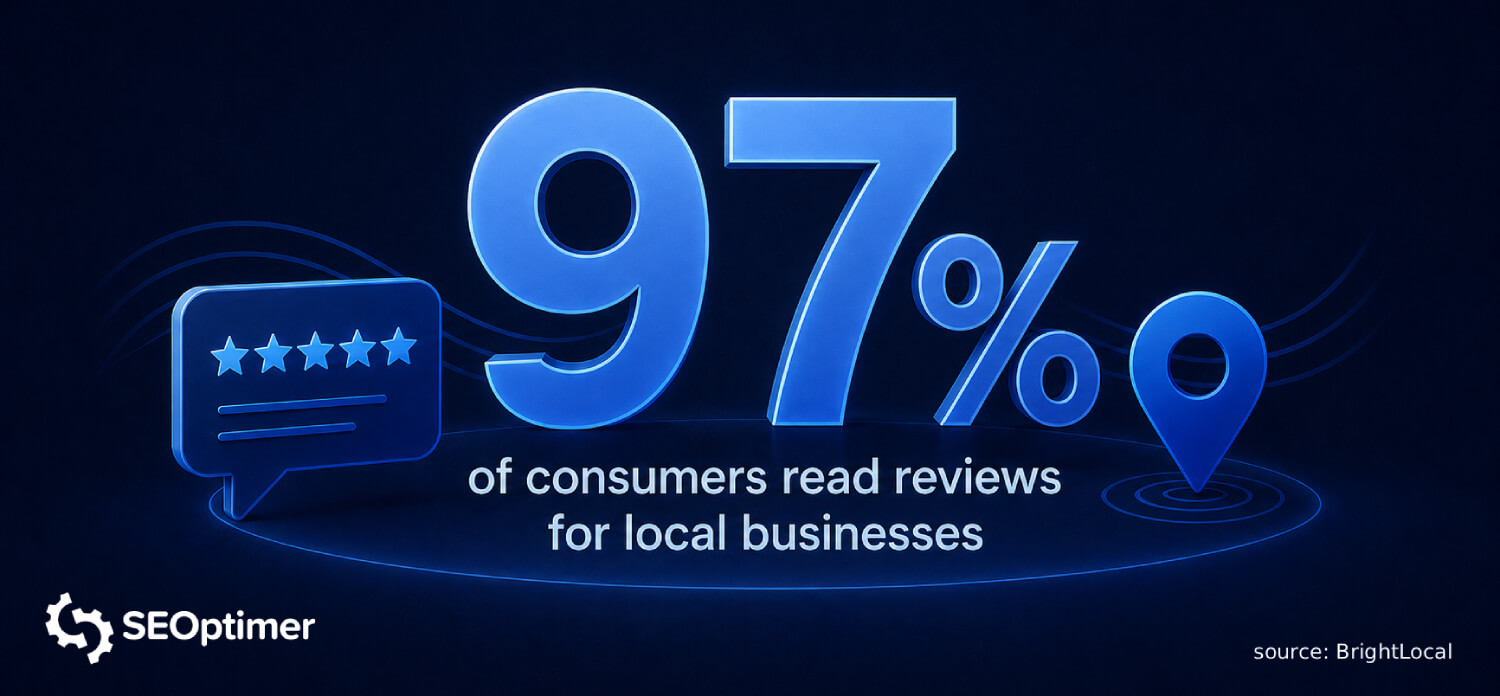
For dental practices, a strong review profile can therefore improve trust while encouraging more website visits, calls, and appointments.
"Businesses and practices with positive reviews are more likely to show up on maps and local searches, making it essential for practices to establish convenient and efficient ways for patients to provide them with reviews."
- Alex Tkacovs, CEO at 94n Digital
Ask patients for honest feedback after their appointment and make the process simple by sending them a direct link to your Google review form.
Respond to both positive and negative reviews regularly to show that your practice values patient feedback.
However, take care not to reveal treatment details or confirm publicly that a reviewer is a patient. Your responses should always comply with the applicable healthcare privacy requirements in your region.
Publish Helpful Dental Content
Helpful dental content answers the questions that patients commonly ask before choosing a practice or undergoing treatment.
This could include explanations of symptoms, comparisons between treatment options, guidance for dental emergencies, or information about what to expect before and after a procedure.
A great example of "helpful" content can be found on Advanced Periodontics and Dental Implants that published a practical comparison of dental implants and dentures.
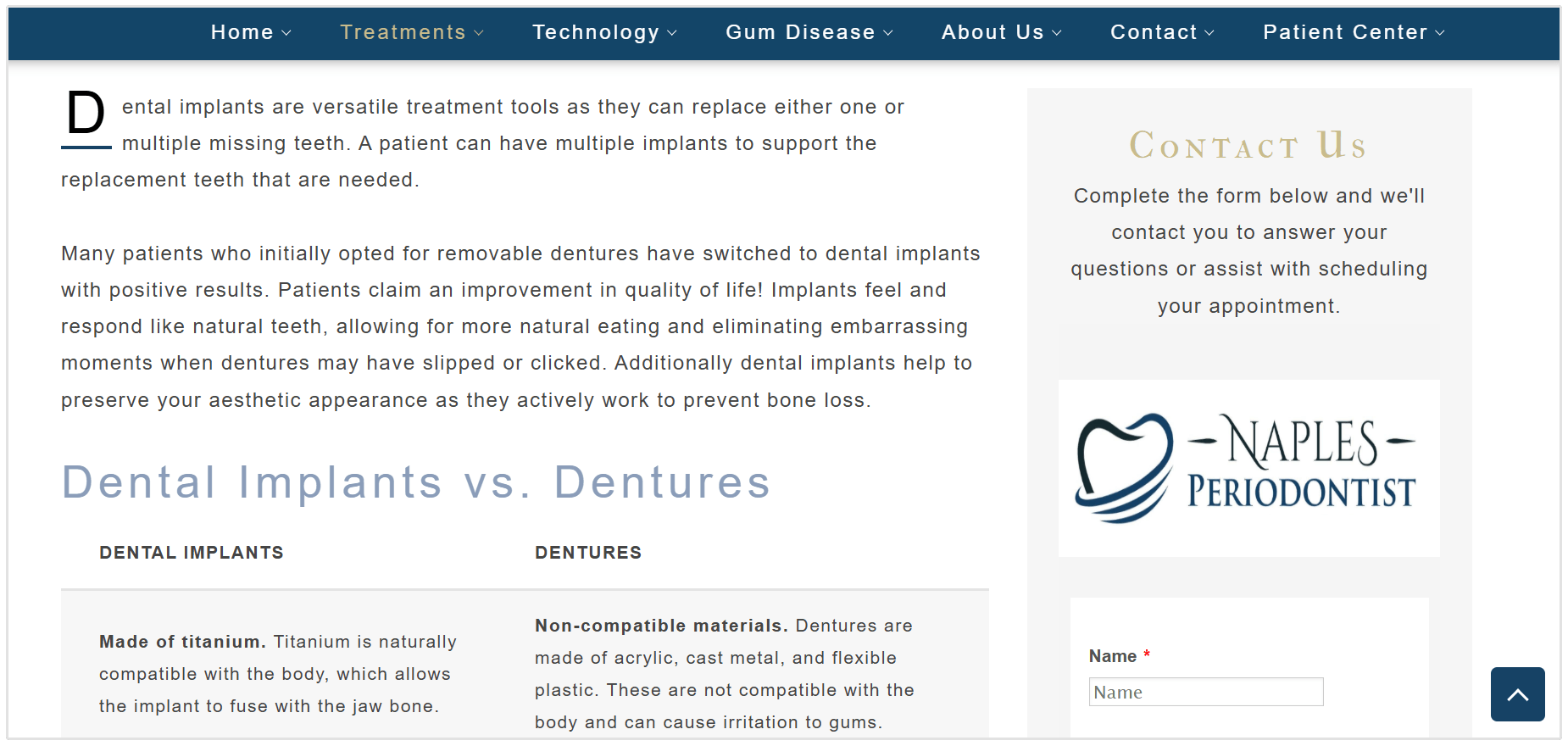
The most useful topics usually come from questions patients already ask during consultations.
Each article should provide a clear, accurate answer, be reviewed by a qualified dental professional, and link naturally to the relevant service page.
For example, the article from Advanced Periodontics and Dental Implants comparing implants and dentures could direct interested readers to the practice’s dental implant treatment page.
Publishing this type of content helps your website rank for a wider range of dental searches while building trust with potential patients before they book an appointment.
Demonstrate Dental Expertise and Trust on your Site
Dental content can influence decisions about a person’s health, so both patients and search engines need clear reasons to trust the information on your website.
Google recommends demonstrating trust through clear sourcing, evidence of expertise, and background information about the author or website.
Show this expertise by creating detailed profile pages for your dentists that include their qualifications, licenses, professional memberships, areas of expertise, and clinical experience.
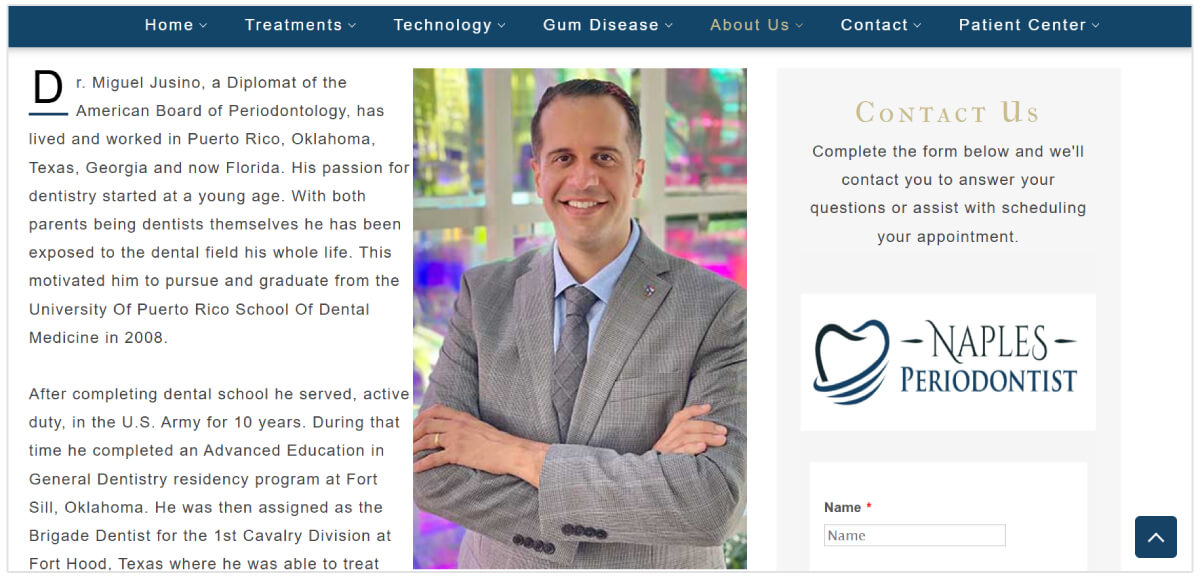
Dental articles should name the author or medical reviewer, link to credible sources where necessary, and display the date on which the information was published or last reviewed.
"Give every dentist and hygienist a real bio page with name, credentials, and the procedures they actually perform. Patients search a provider's name plus the city before they book, and those pages give your Dentist and LocalBusiness schema something true to describe."
- Ryan Mayiras, Founder at Savage Digital Solutions
Your site should also include authentic practice photographs, contact information, patient policies, and details about professional accreditations.
These trust signals can also support your practice’s visibility in AI-generated answers.
Clear authorship, supporting evidence, accurate claims, and consistent information help AI systems understand who created the content and whether it is a credible source.
Microsoft specifically recommends strengthening expertise, supporting claims with evidence, and keeping information current to improve content’s suitability for inclusion in its AI answers.
While this does not guarantee a citation, it can improve the likelihood that your dental content is understood and selected as a supporting source.
Add Relevant Schema Markup
Schema markup is a piece of code added to your website that gives search engines clearer information about your dental practice.
Visitors do not see this code on the page, but search engines can use it to understand details such as who you are, where you are located, which services you provide, and which dentists work at your practice.
For a dental website, the most relevant option is usually Dentist schema, a specific type of local business markup. It can include your practice name, address, phone number, opening hours, website, logo, accepted payment methods, and geographic location.
You can also use Person schema for dentist profiles, Service schema for treatments, and Breadcrumb schema to explain the structure of your pages.
Adding schema does not guarantee higher rankings or enhanced search results, but it makes your information easier for search engines and AI systems to interpret accurately.
Make sure the details in your markup match the visible content on your website, and test the code before publishing it using a schema validation tool.
Earn Great Dental Backlinks
Backlinks are links from other websites to your dental website. They can help improve your search visibility by showing search engines that other sites recognize your practice or content as a trustworthy resource.
However, relevance and quality matter far more than simply collecting as many links as possible.
Dental practices can earn valuable backlinks by joining reputable dental associations, being listed by insurance providers, supporting local organizations, contributing expert advice to publications, sponsoring community events, or publishing useful resources that other websites want to reference.
Links from respected healthcare websites, local news outlets, professional organizations, and community websites are generally more valuable than links from unrelated directories or low-quality blogs.
SEOptimer’s Backlink Checker can show you which websites link to your practice and help you examine the backlinks earned by competing dentists.
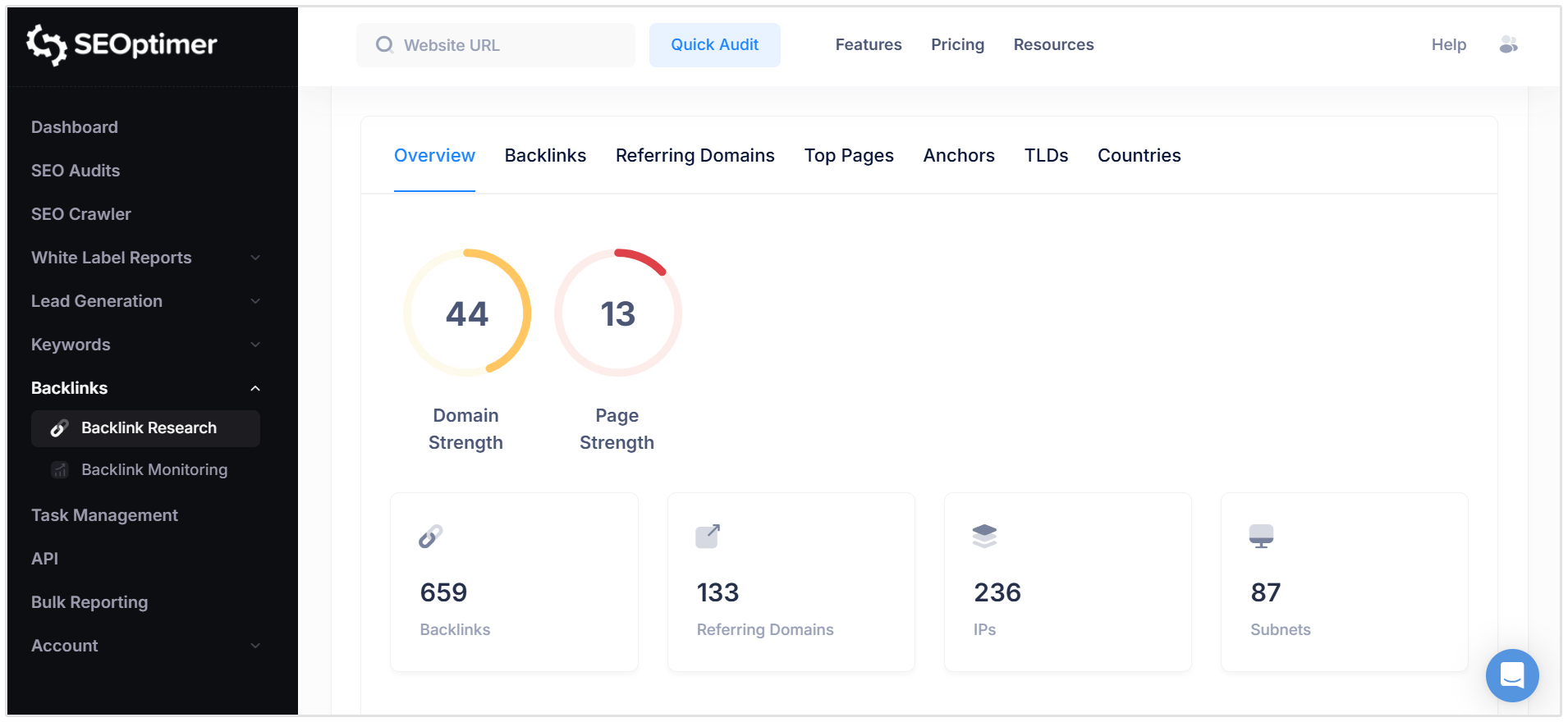
This can reveal directories, publications, and local organizations that may also be relevant to your practice.
You can then use SEOptimer’s Backlink Monitoring Tool to track new and lost links over time.
This makes it easier to measure your progress, identify valuable links that disappear, and keep an eye on the overall strength of your dental website’s backlink profile.
How to Measure and Track Dental SEO Success
Measuring dental SEO success involves tracking whether your practice is becoming more visible for relevant searches and whether that visibility leads to more calls, appointment requests, and new patients.
Important metrics include organic traffic, treatment keyword rankings, Google Business Profile interactions, phone calls, appointment form submissions, and online bookings.
Google Analytics and Google Search Console can help you monitor website performance, while your Google Business Profile shows actions such as calls, website visits, and direction requests.
For a more precise view of your local visibility, you can use SEOptimer’s Local Rank Tracker.
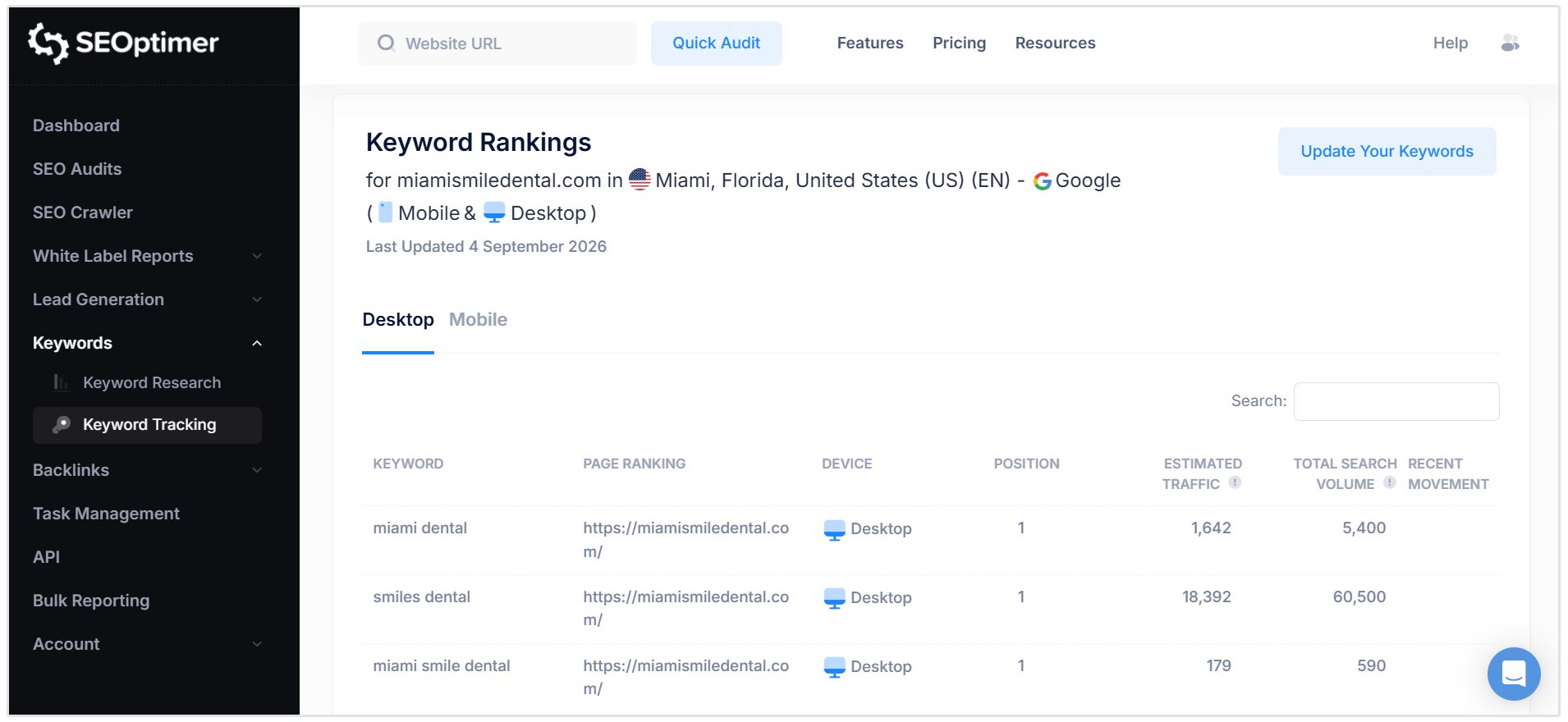
Unlike a traditional Rank Tracker that reports a broader ranking position, it tracks how your practice ranks across different points within your local area.
This is very useful for dentists because someone searching near your practice may see very different Maps results from someone searching a few miles away.
You can also monitor your overall progress by running a local SEO audit each month.
Comparing your reports over time will help you see which issues have been resolved, where your website has improved, and which parts of your local SEO strategy still need attention.
How to Choose a Dental SEO Company
Choose a dental SEO company with proven experience working with dental or healthcare practices.
Ask for relevant case studies and find out how it handles local SEO, content, technical optimization, reviews, and backlinks.
The company should explain its strategy clearly and measure success through calls, appointment bookings, and new patients, not just rankings alone.
Avoid providers that guarantee first-place rankings, use vague methods, or build large numbers of low-quality backlinks. You should also retain ownership of your website, content, analytics accounts, and Google Business Profile.
FAQs
How long does dental SEO take?
Most dental practices can expect to see early improvements within three to six months, while stronger results may take six to twelve months.
The timeframe depends on your location, competition, website condition, and how consistently you implement your dental SEO strategy.
How much does dental SEO cost?
Dental SEO typically costs between $500 and $5,000 per month, with many practices spending around $1,000 to $3,000, according to pricing estimates from Titan Web Agency and Wowbix.
Should you do dental SEO yourself or hire an agency?
You can manage dental SEO yourself if you have the time to learn and maintain it. An agency may be better if you operate in a competitive market, manage multiple locations, or need specialist support.
If you choose the DIY route, SEOptimer gives you the auditing, keyword research, rank tracking, and backlink tools needed to manage your dental SEO strategy in one place.
It is trusted by thousands of marketers worldwide, so you can be confident that you are working with an established SEO platform.
How can a dentist rank higher on Google Maps?
The best thing you can do to rank higher on Google Maps is to optimize your Google Business Profile with accurate information, suitable categories, complete service details, updated photos, and consistent opening hours.
What are the best keywords for dentists?
The best dental keywords combine a treatment with the location and intent of the patient.
Examples include “dentist in Austin,” “emergency dentist,” “dental implants in Austin,” and “cosmetic dentist in Austin.”
Conclusion
Dental SEO is a long-term investment that can help your practice become more visible to people actively looking for dental care.
With a consistent approach and the right tools, that visibility can translate into more enquiries, appointments, and patients.
Try SEOptimer for free for 14 days to help you with your dental SEO strategy.