


Key Takeaway: A local SEO competitor analysis means studying the businesses that outrank you in local search. You can find them by searching your main keywords, then compare their Google Business Profiles, reviews, and other important pieces of data.
Are your local competitors appearing in the Google local pack while your business is stuck on page two?
Frustrating, right?
The good news is that the businesses outranking you often leave clues behind. Their Google Business Profiles, reviews, website pages, local listings, keywords, and backlinks can all reveal why they are more visible in local search.
A local SEO competitor analysis is how you find those clues.
It's the process of studying the businesses ranking for your focus keywords, then using what you learn to improve your own visibility.
This guide shows you how to find your true local competitors and how to do a competitor analysis.
Let's get into it.
What is Local SEO Competitor Analysis?
Local SEO competitor analysis is the practice of studying businesses that rank well for your local keywords, so you can understand why they rank and how to beat them.
These are the businesses showing up in three important spots:
- Google Maps
- The Local Pack
- Organic results
You want to figure out what your competitors are doing right, then do it better than them.
There's just one thing to keep in mind though.
Your true local competitors might not be the businesses you think.
The shop down the street may not even show up online, while a business you didn’t think of might be your true competitor.
That's why you need to do the research instead of guessing who your local competitors are.
How to Find Local Competitors
Before you can study your competitors, you have to find them. Here are four easy ways to build your list.
Search Your Core Local Keywords
Start with Google.
Type in your main services along with your city name, like "emergency electrician Denver" or "best coffee shop Brooklyn."
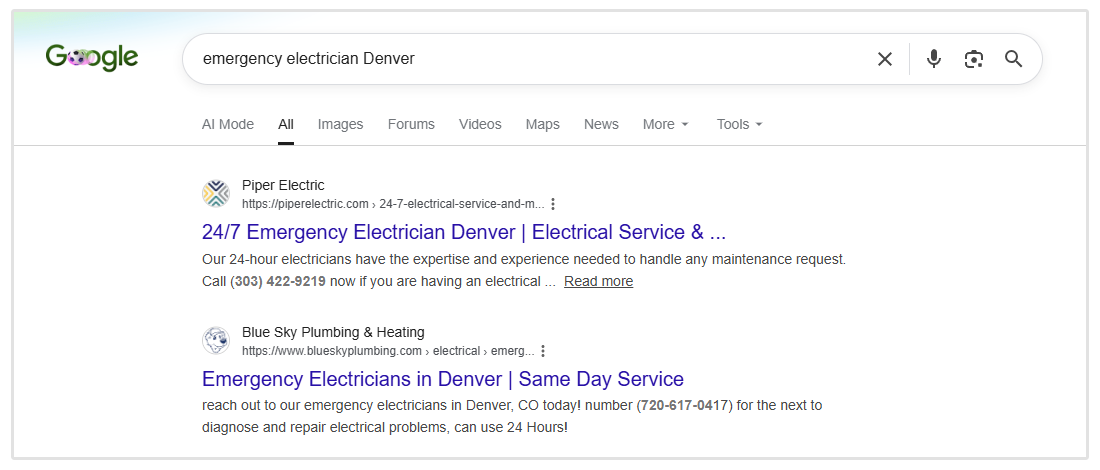
Write down the businesses that appear again and again.
Aim to search 5 to 10 of your most important keywords. As you go, keep notes on:
- The keyword you searched for
- Where each business ranks (Maps, Local Pack, or organic)
- How many times the same business shows up across different searches
That last point matters most.
A business that appears for many of your keywords is a strong competitor and deserves a closer look.
Tip: Google personalizes results based on your location. If you're researching from outside the business area, your results may look different from what local customers see.
Check Google Maps Results
Next, open Google Maps and search your keywords there.
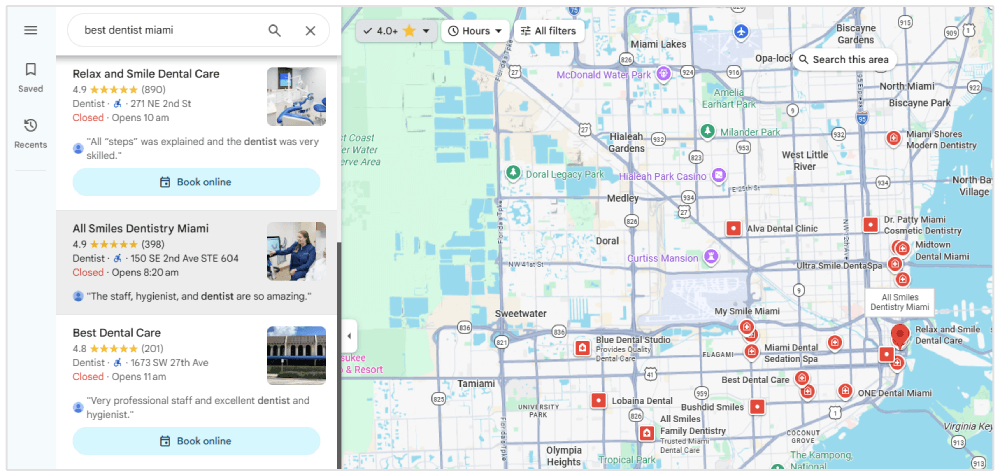
Maps results can differ from regular search results, so this gives you a different picture.
Proximity plays a huge role here.
Google heavily favors businesses close to the searcher, which means rankings can shift even a few blocks away.
For the most accurate view, search from your business's actual location. This shows you what your customers see.
Again, you want to note down which of your local competitors are showing up in Google Maps.
Review the Local Pack
The Local Pack is the group of three businesses Google shows at the top of local searches, often with a map.
These three spots get the most clicks, so the businesses in them are your top priority.
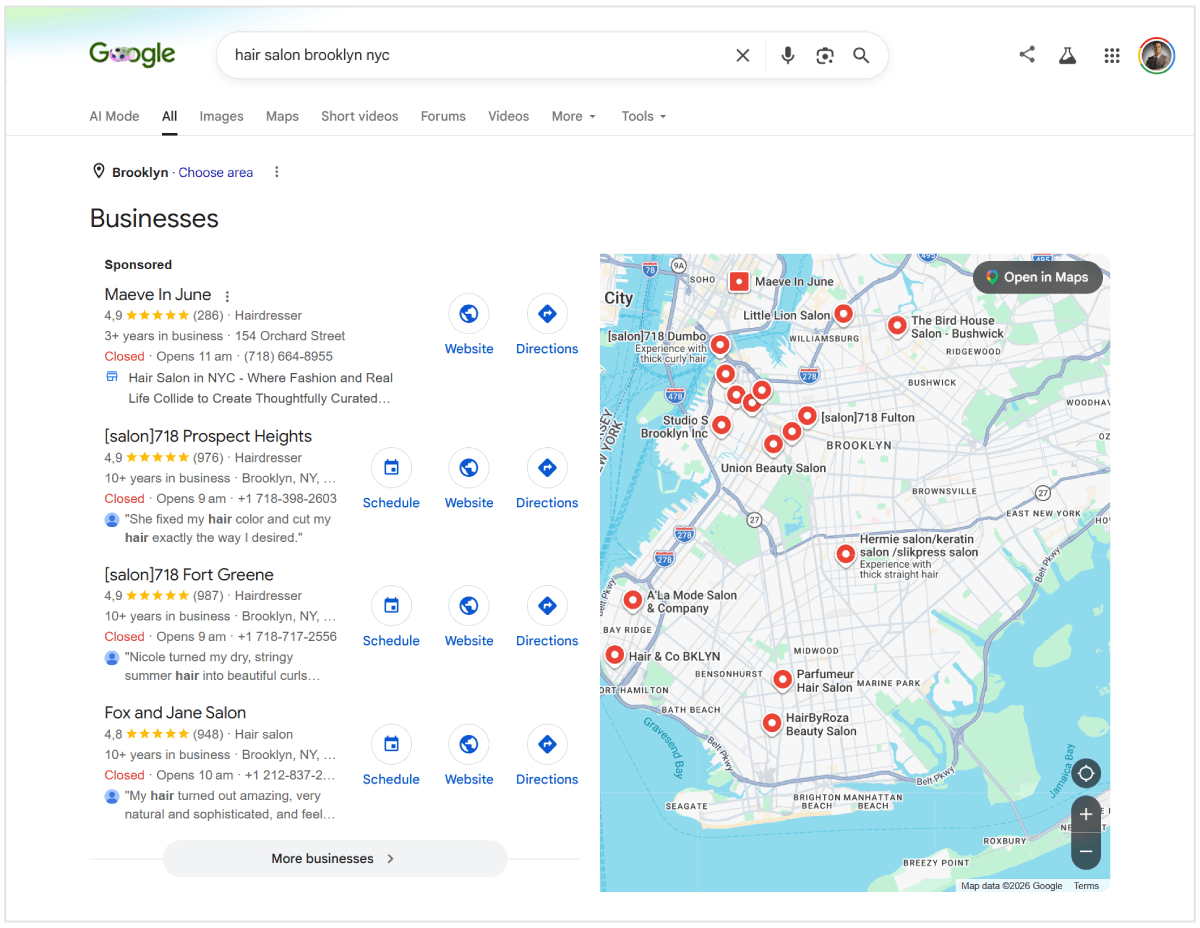
Pay attention to how far Google reaches to fill the pack.
For a common search like "pizza near me," Google may only pull from businesses a mile or two away.
For a rare service, it might stretch 15 miles or more. This tells you how competitive your market is and how wide your reach needs to be.
Use Local Rank Tracking Tools
Manual searching works well, but it has limits.
Doing it by hand every week isn't practical, especially if you target many keywords or several locations. Results can also change from minute to minute.
That's where local rank tracking tools like SEOptimer can help.
They monitor your positions (and your competitors') across different keywords and locations automatically. This saves time and gives you reliable data to track trends over weeks and months, not just one search on one day.
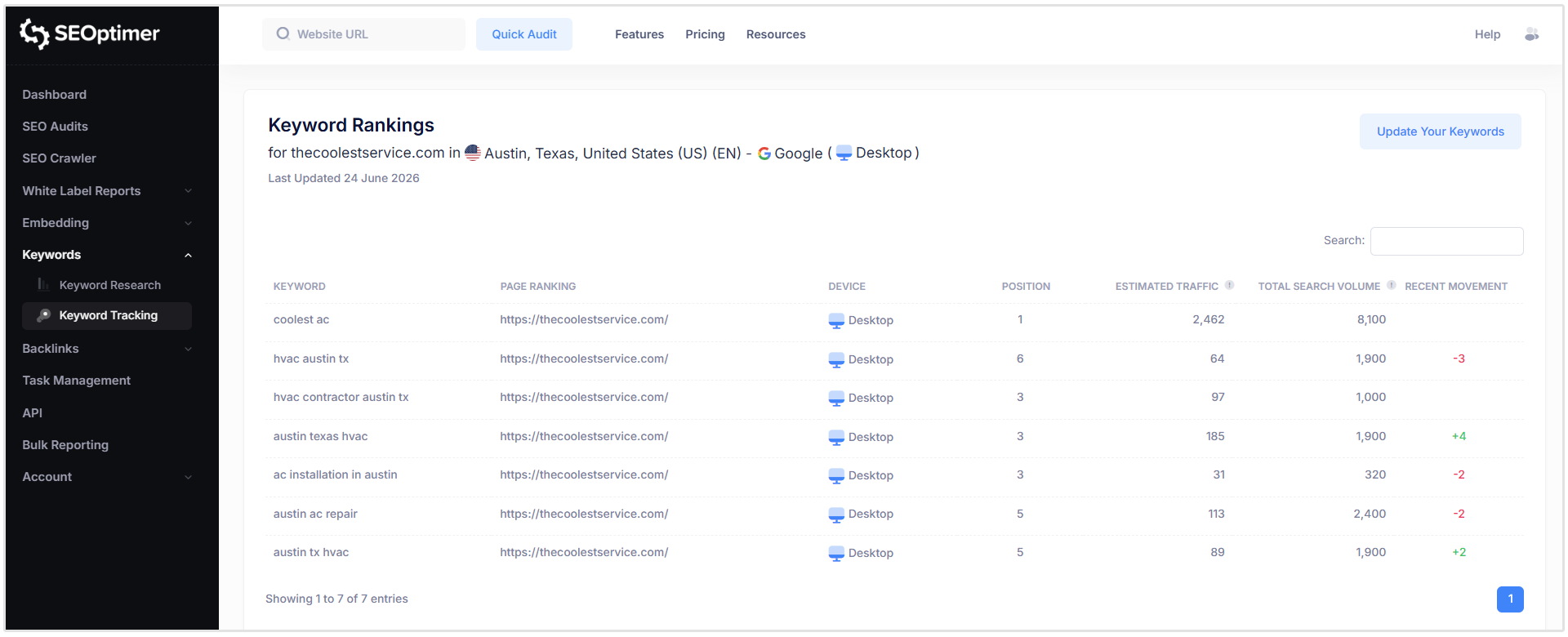
With SEOptimer you can track your competitors’ local rankings on Google and Bing, as well as their performance on Desktop and Mobile devices.
For instance, the below screenshot shows you The Coolest Service's ranking changes and keyword positions for Google and on Desktop devices specific to searches in Austin.
How to Analyze Your Local SEO Competitors
Once you have your list of local competitors, it's time to dig in.
Focus on the top 3 to 5 businesses that keep appearing for your most valuable keywords. Trying to study everyone wastes time.
Google Business Profile
For many local searches, a well-optimised Google Business Profile plays a major role in visibility, especially in Google Maps and the local pack.
Don't get me wrong, your website still matters, particularly for organic rankings, relevance, and conversion.
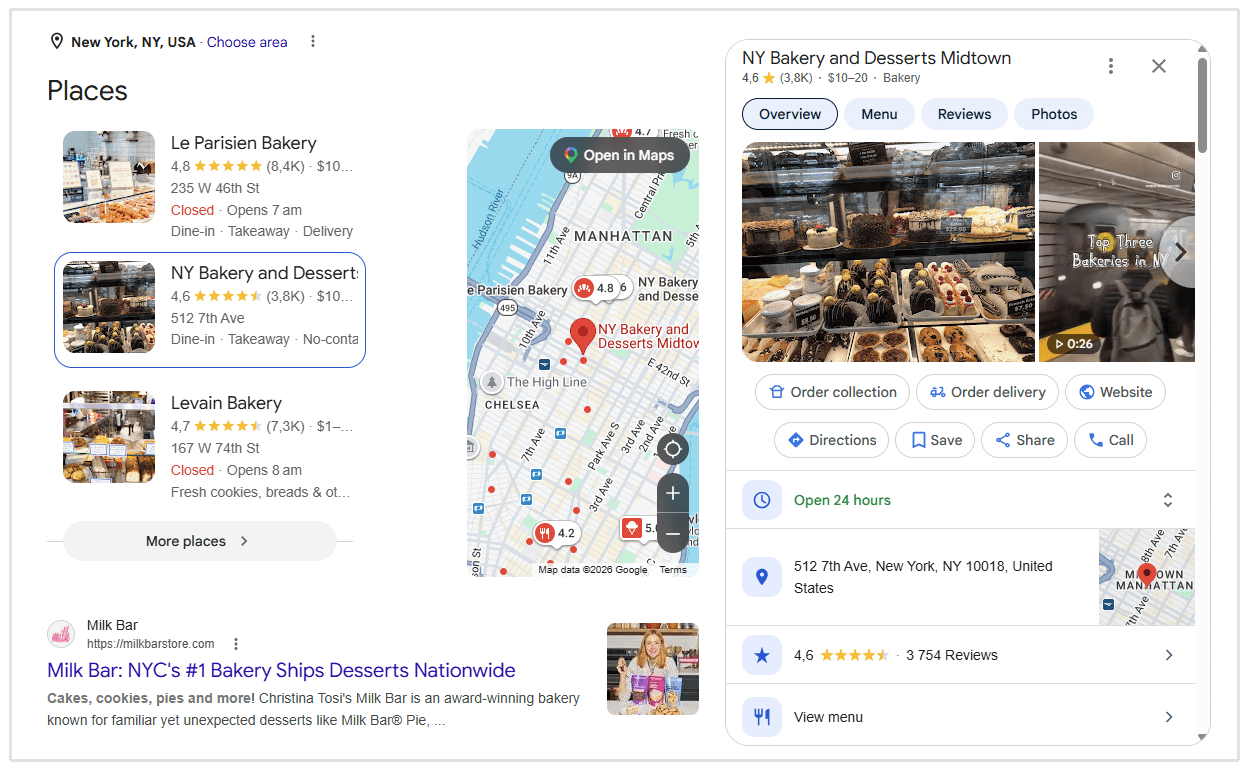
As such, an essential part of any local competitor analysis is studying the GBP of your competitors.
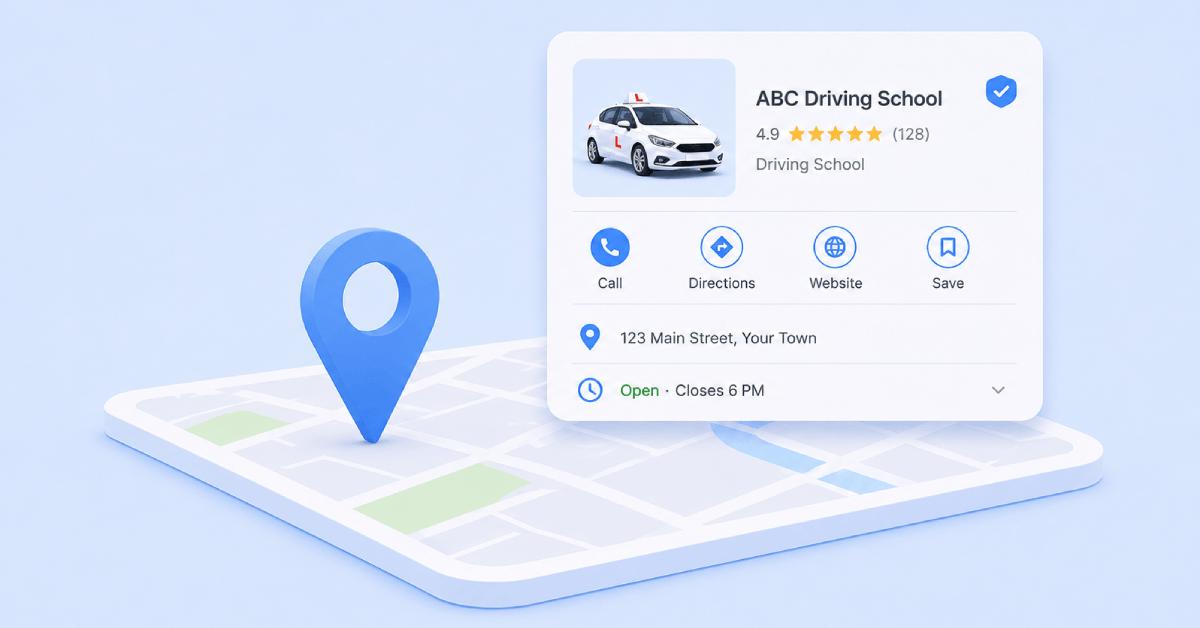
Open each local competitor's profile and look closely at:
- Categories: What primary and secondary categories have they chosen?
- Completeness: Is their name, address, phone, hours, and website all filled in?
- Description: How do they describe their business and services?
- Photos and posts: Do they upload new images often? Do they publish Google Posts with deals or updates?
- Attributes: Are they using tags like "women-owned" or "free estimates"?
- Engagement: Do they reply to reviews and questions?
Note anything they do better than you. These are your quick wins.
Reviews and Ratings
Reviews shape both your rankings and whether customers choose you.
Count each competitor's total reviews and average rating.
A business with 200 reviews at 4.7 stars sends stronger signals than one with 30 reviews at 5 stars.
Then read their 20 to 30 most recent reviews and look for patterns:
- Which services get mentioned most?
- What do customers praise—speed, price, quality?
- What complaints come up in negative reviews?
Also check how they respond.
Businesses that reply to every review, not just the bad ones, build more trust with prospective customers.
On-Page Local SEO
Now visit your competitors' websites.
Look at how they set up their pages, including:
- Title tags and meta descriptions: Do they include city names and service terms?
- Headers and content: How do they weave in local keywords?
- Location pages: Do they have a separate local page for each service area? Businesses with individual city pages often outrank those with one general service areas page.
- Schema markup: Are they using local business schema to help Google understand their info?
These details affect how search engines read and rank a website.
Keywords and Rankings
Find out which keywords are driving your competitors' traffic.
You can just use SEOptimer's Keyword Research tool to pull a list of the terms they rank for.
Simply paste your competitor's website URL in the Search by Domain field, and our tool will show you all of their top keywords.
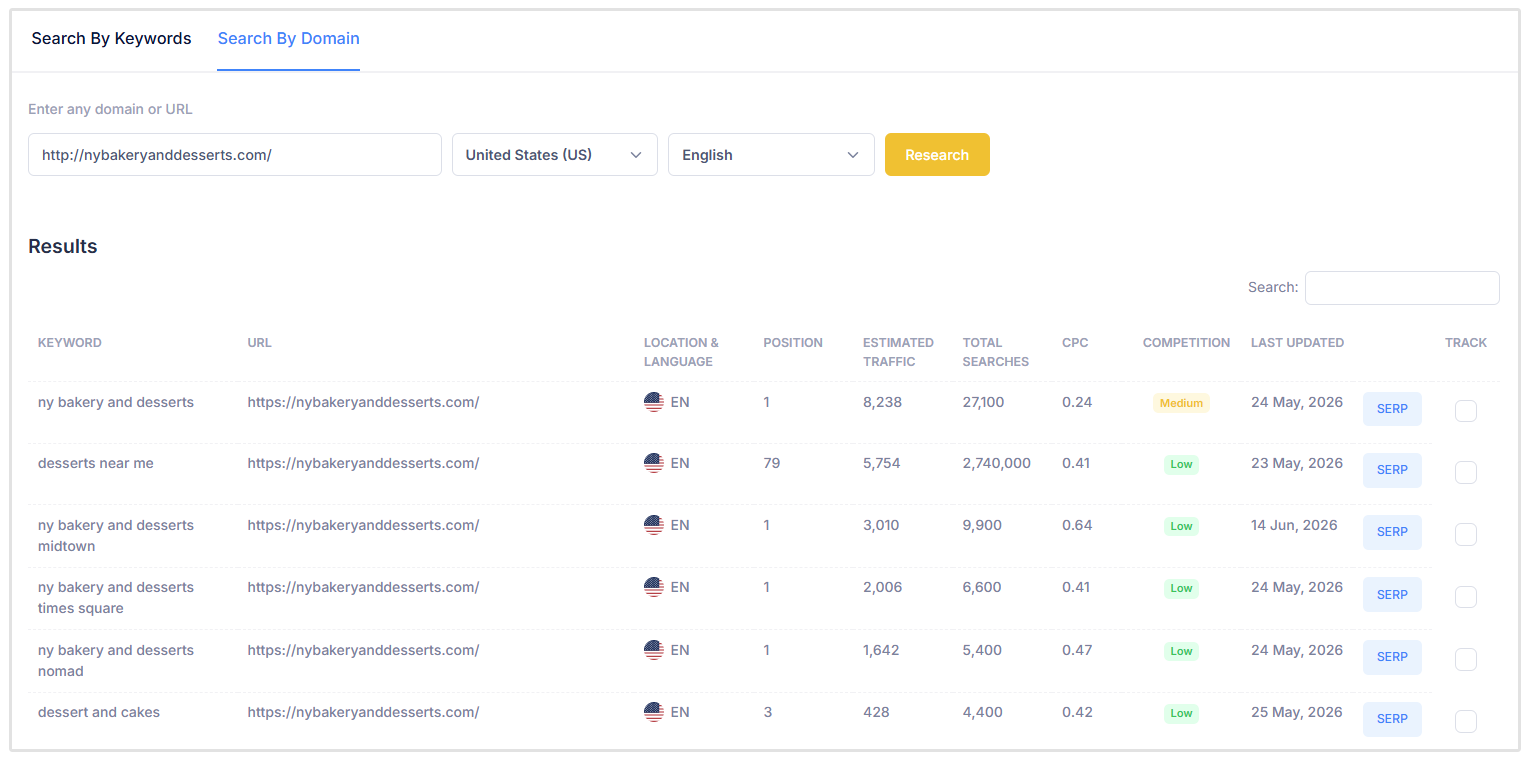
Filter for local intent and note which ones you haven't targeted yet.
Don't ignore long-tail keywords either.
A competitor might rank for "plumber Austin" and also "emergency pipe repair downtown Austin."
These longer phrases often face less competition and bring in customers ready to buy.
Backlink Profile
Backlinks are a powerful ranking factor.
You can use our Free Backlink Checker to review where your local competitors get their links.
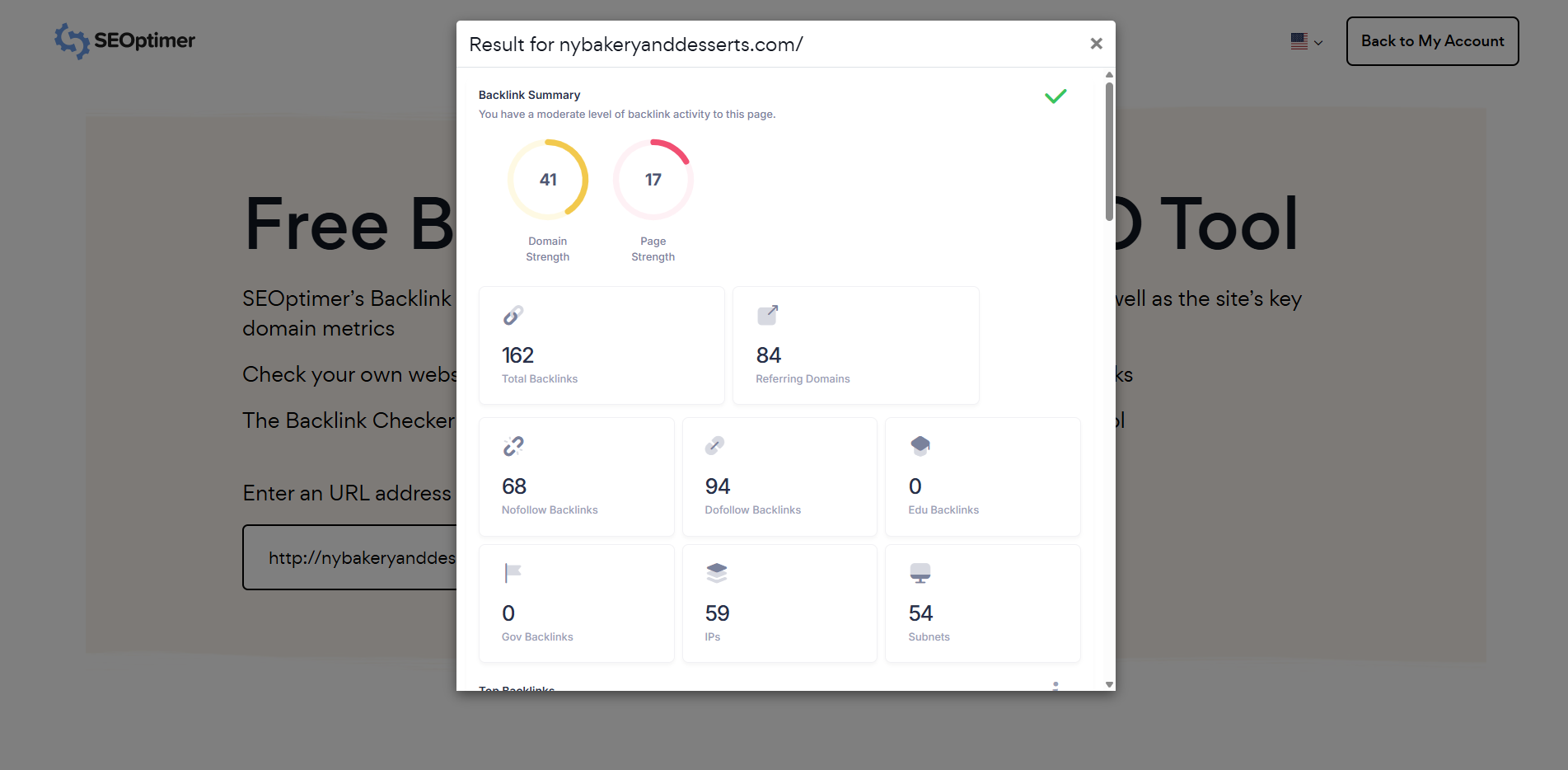
Focus on local sources like:
- News sites
- Chambers of commerce
- Business associations
- Community organizations and event sponsors
If a local competitor has a link from your local chamber of commerce, that's a link you can pursue too. Compare their referring domains and overall backlink profile with yours to see how much ground you need to make up.
How to Use a Local SEO Audit for Competitor Research
Doing all of this by hand takes hours.
A local SEO audit tool speeds things up by checking many of these factors at once and laying out clear improvements.
Our Local SEO Audit runs all of the most important checks across the areas that matter most for local rankings.
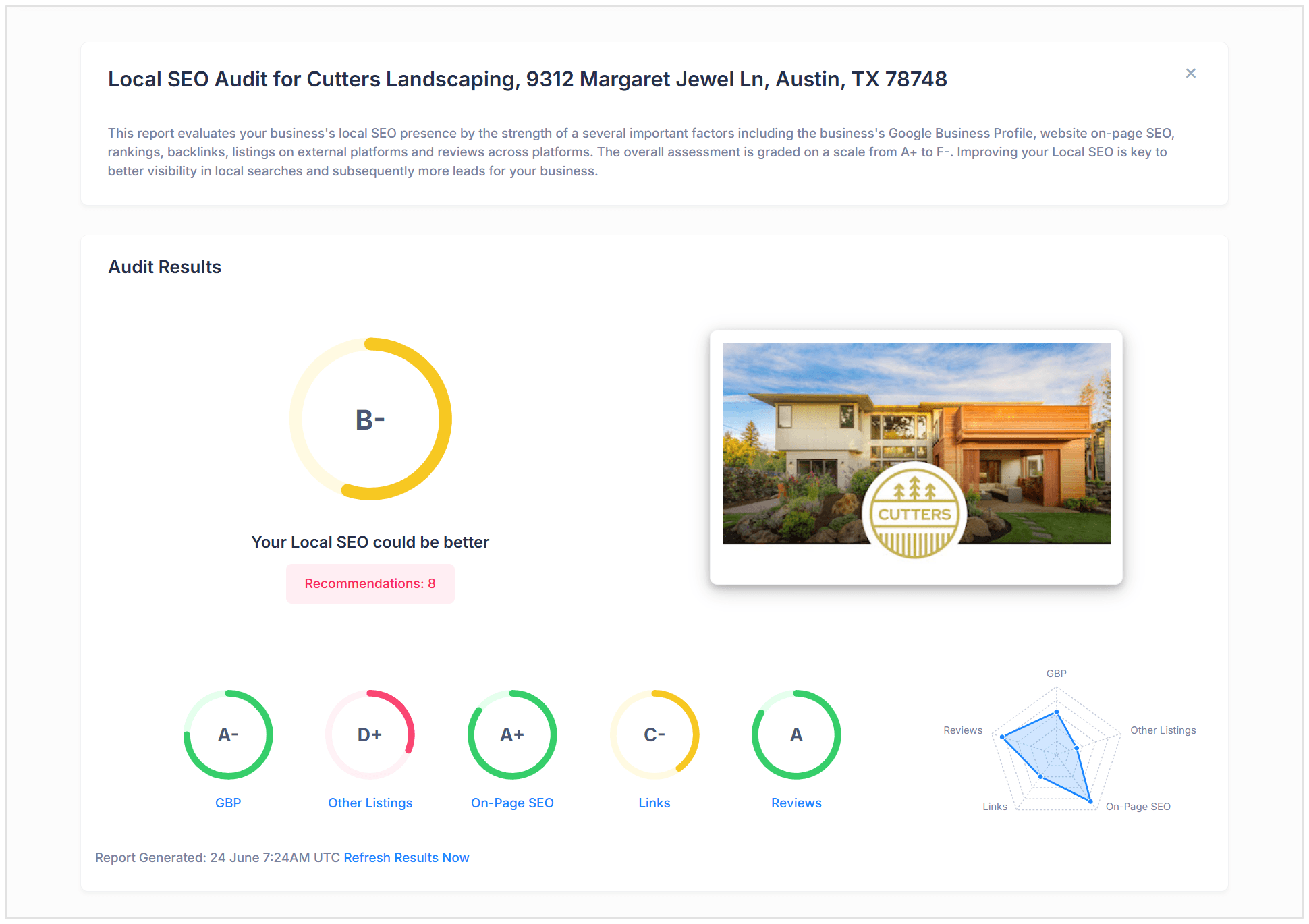
In one report, you get a full view of:
- Google Business Profile: Checks whether a profile exists and how complete it is, including name, address, phone, hours, and categories.
- Other listings: Reviews business directories like Apple, Bing, and Yellow Pages to confirm the name, address, and phone number are correct and consistent.
- Live GeoGrid: Runs searches from several points around a location and shows the results as a visual heatmap. This solves the proximity problem by showing how a business ranks from different nearby spots.
- Recent reviews: Gathers a summary of reviews from major sites, including the score, date, and text.
- Website SEO: Checks header tags, keyword use, meta descriptions, image alt text, and local schema.
- Rankings and backlinks: Shows local keyword rankings with search volumes, plus a backlink profile with metrics like Domain Strength.
Run the audit on your own business first, then on each local competitor.
Compare the reports side by side.
The gaps will jump out at you. Maybe a competitor has more complete listings, or you're missing local schema they have.
If you want to zoom in on a single competitor's profile, our Google Business Profile Audit digs into completeness, reviews, and keyword usage.
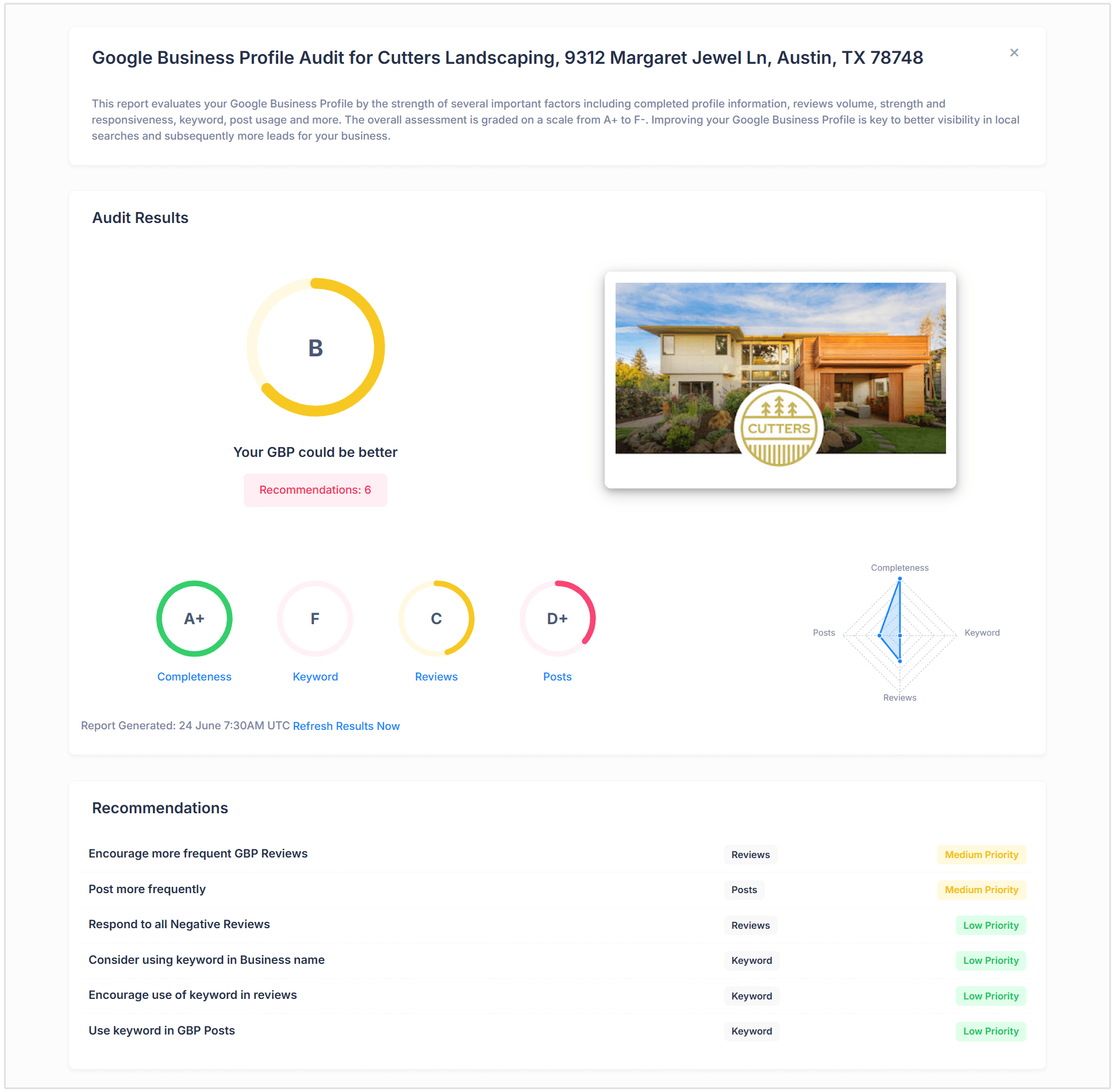
And if you run an agency, you can deliver these as white label PDF reports branded with your own logo and colors. This is perfect for winning new clients.
How Often Should You Run Local SEO Competitor Analysis?
Local SEO never sits still.
Your local competitors update their profiles, Google changes its algorithm, and new businesses enter your market all the time. A one-time analysis won't keep you ahead.
Here's a simple schedule to follow:
- Monthly: Check your rankings and watch for any sudden moves from local competitors. With a tracking tool, this takes 30 to 45 minutes.
- Quarterly: Do a deeper review every few months. Re-run your audits, study new competitors, and adjust your strategy.
The businesses that win at local SEO treat it as an ongoing habit, not a one-and-done task.
Conclusion: Start Outranking Your Local Competitors
A local SEO competitor analysis turns guesswork into a clear plan.
By finding your true competitors and studying their profiles, reviews, websites, keywords, and backlinks, you learn exactly what it takes to win in your market.
Here's how to get started today:
- Search your top 5 to 10 local keywords and list who keeps appearing.
- Narrow it down to your 3 to 5 strongest competitors.
- Run a Local SEO Audit on yourself and each competitor.
- Compare the reports, spot the gaps, and fix the quick wins first.
- Set a monthly reminder to track progress.
Don't let your local competitors keep the top spots without a fight. Run your first audit, find your gaps, and start climbing the local rankings.
Frequently Asked Questions
What are local competitors?
Local competitors are businesses that rank for the same local keywords as you in Google Maps, the Local Pack, or organic search results.
How do I find my local SEO competitors?
Search your main service keywords plus your city name on Google and Google Maps. Note which businesses show up over and over in the Local Pack and organic results. The ones that appear most often are your top competitors.
How long does a local SEO competitor analysis take?
If you’re doing this manually, your first full analysis can take hours. However, with a local SEO audit tool you can get the data in seconds.
What's the most important factor in local rankings?
Proximity to the searcher is one of the biggest factors, which is why results change based on location.
Beyond that, a complete and active Google Business Profile, strong reviews, consistent listings, and quality local backlinks all play major roles.
Can I do a local SEO competitor analysis for free?
Yes. You can do a lot manually by searching Google and reviewing competitor profiles by hand.
To save time and get deeper data, a tool like SEOptimer's Local SEO Audit checks all of the most important ranking signals at once and gives clear recommendations on how to improve your local SEO and visibility.