

Local SEO for HVAC is what helps your business appear when homeowners in your area search for heating and cooling services.
And those searches are rarely just casual.
When someone types “AC repair near me,” “furnace repair in NYC,” or “emergency HVAC service,” they are usually looking for help immediately.
Their HVAC system is broken, their home is uncomfortable, and they need a company they can trust quickly.
That makes local SEO one of the most important marketing channels for HVAC companies.
Good local visibility can help your business appear in Google Maps, the Local Pack, and organic search results when potential customers are looking for HVAC services.
But ranking locally takes more than a basic website and a Google Business Profile. Your business needs to send the right signals to Google across your service pages, reviews, citations, location pages, and overall online presence.
This guide explains how HVAC companies can improve local rankings, get found by nearby customers, and turn local search traffic into more booked service calls.
We also spoke to some leading marketers and digital agency founders who have experience helping HVAC businesses to get their top tips and suggestions. I'd like to thank the following people for their insights:
- Kevin Noyola, Digital Marketing Specialist at JET Advertising (Bloomingdale, United States)
- Meghan VanZyl, Marketing Director at Awesome Home Services (Colorado Springs, United States)
- Kumar Vaibhav Tanwar, Founder & CEO, Clickworthy Digital Marketing (Mississauga, Canada)
- Brad Russell, Director at Digital Hitmen (Perth, Australia)
- Charlotte Sheridan, Director at The Small Biz Expert (London, United Kingdom)
Related Reading: Local SEO for Multiple Locations: Rank in Every City
What is Local SEO for HVAC?
Local SEO for HVAC is the process of making your heating and cooling business easier to find in location-based search results.
Instead of trying to rank for broad terms like “HVAC services” across the whole country, local SEO focuses on helping your business appear for searches tied to the areas you actually serve.
This includes searches that mention a city, suburb, neighborhood, or phrases like “near me.”
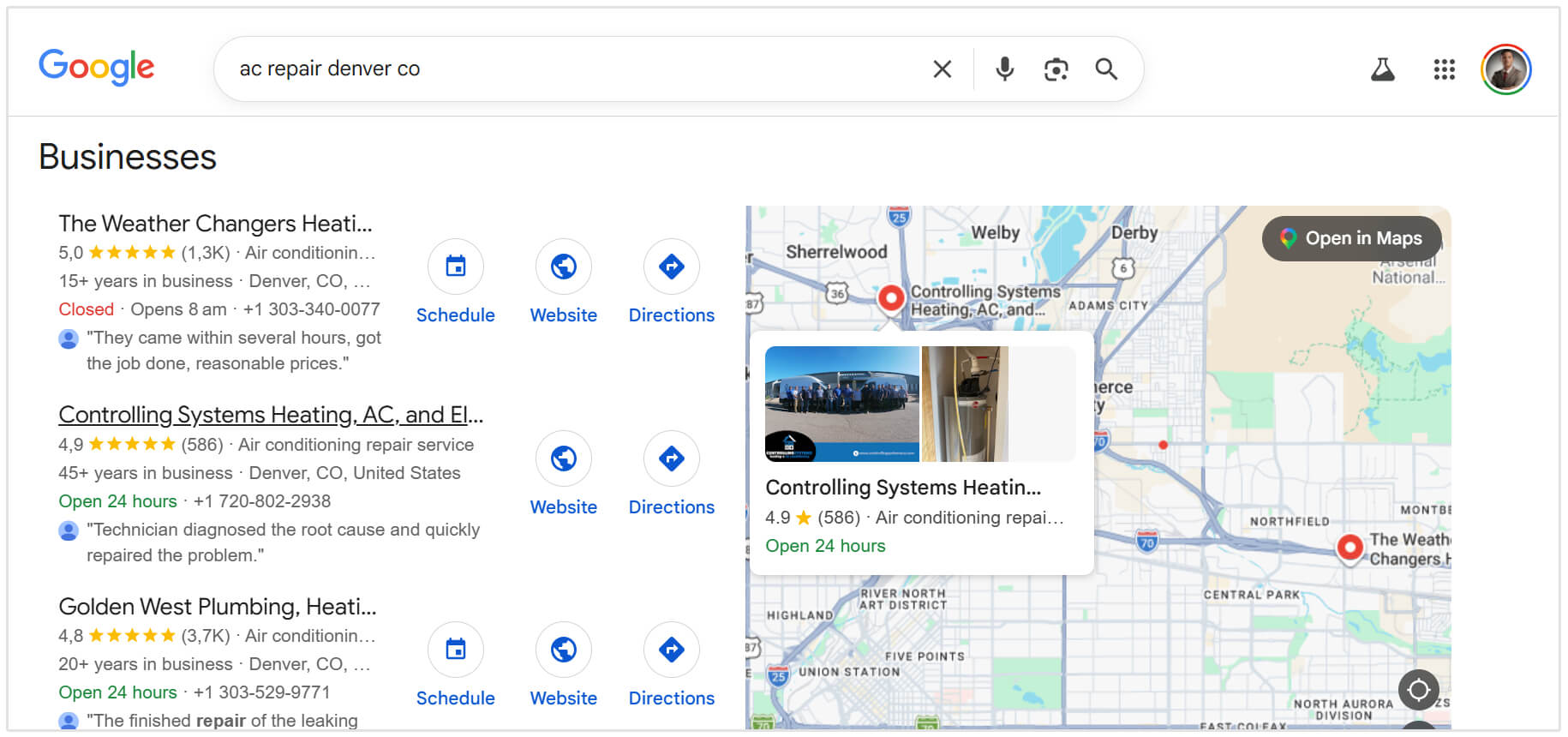
For HVAC companies, local SEO usually involves improving several parts of your online presence, including your website, Google Business Profile, service-area information, online reviews, local directory listings, and location-specific pages.
The goal is to help search engines understand three things clearly:
- What services you offer
- Where you offer them
- Why your business is a trustworthy option for local customers.
When those signals are strong and consistent, your HVAC company has a better chance of appearing in Google Maps, the Local Pack, and organic search results for relevant local searches.
Related Reading: How to Rank for “Near Me” Keywords and Searches
Why Local SEO is Important for HVAC Companies
According to several sources online, 80% of U.S. consumers search online for local businesses every week, and 32% search daily.
And nearly half of consumers also say they always or often add “near me” to local search queries.
If your business is visible in Google Maps, the Local Pack, and organic search results, you have a better chance of turning those local searches into calls, quote requests, and booked jobs.
Local SEO also helps reduce your reliance on paid ads by giving your HVAC business a more sustainable way to earn visibility in the areas you serve.
Now that you know why local SEO matters for HVAC contractors, let's take a look at the actual tactics you can use to improve your rankings and visibility.
1. Start with a Local SEO Audit for HVAC
Before you can improve your local rankings, you need to know where your HVAC business currently stands.
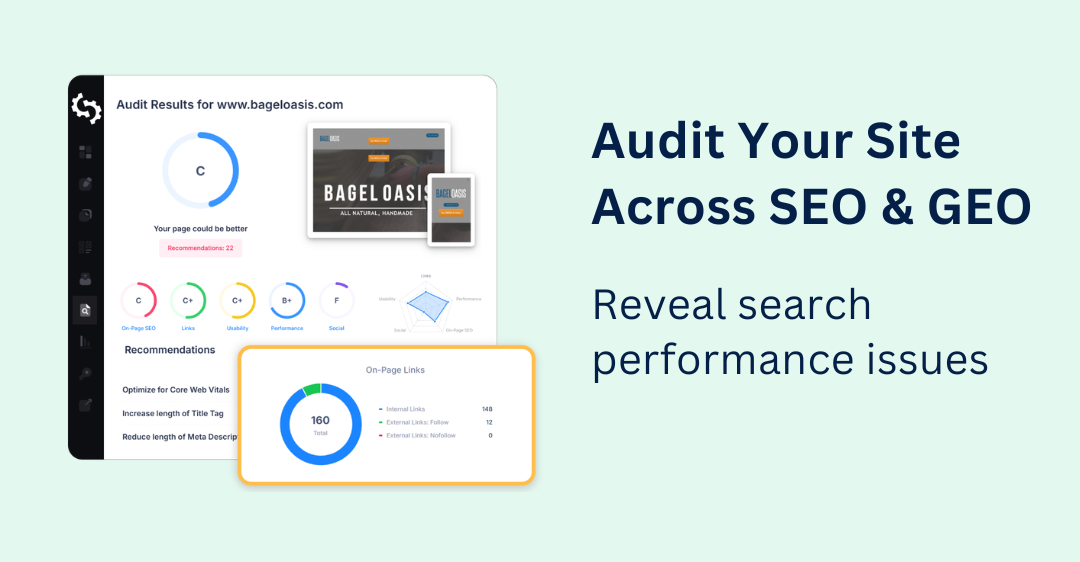
A local SEO audit gives you a clear baseline of your online visibility and shows which issues may be holding your business back in Google Maps, the Local Pack, and organic search results.
With SEOptimer’s Local SEO Audit tool, HVAC companies can check important local ranking factors such as:
- Business information
- Location signals
- On-page SEO
- Mobile usability
- Technical performance
This helps you spot problems like missing local keywords, weak service pages, poor mobile performance, inconsistent business details, or technical errors that make it harder for search engines to understand your website.
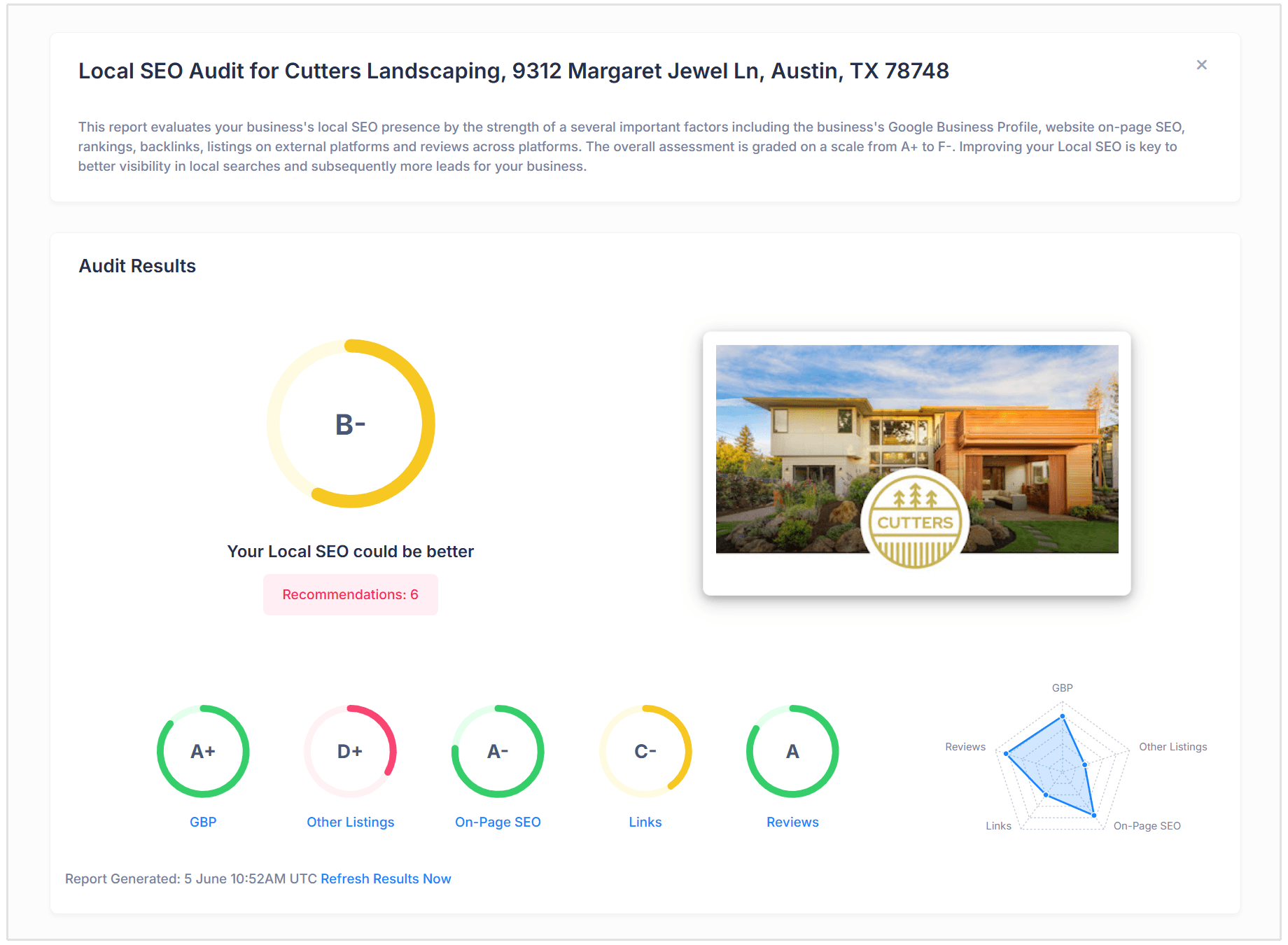
You can also use our Google Business Profile Audit to review how well your GBP is optimized.
This is important for HVAC companies because many customers find local contractors through Google Maps and the Local Pack before ever visiting the website.
By auditing both your website and Google Business Profile, you get a clearer view of what needs to be fixed first. From there, you can prioritize the updates most likely to improve local visibility, generate more calls, and turn nearby searches into booked HVAC jobs.
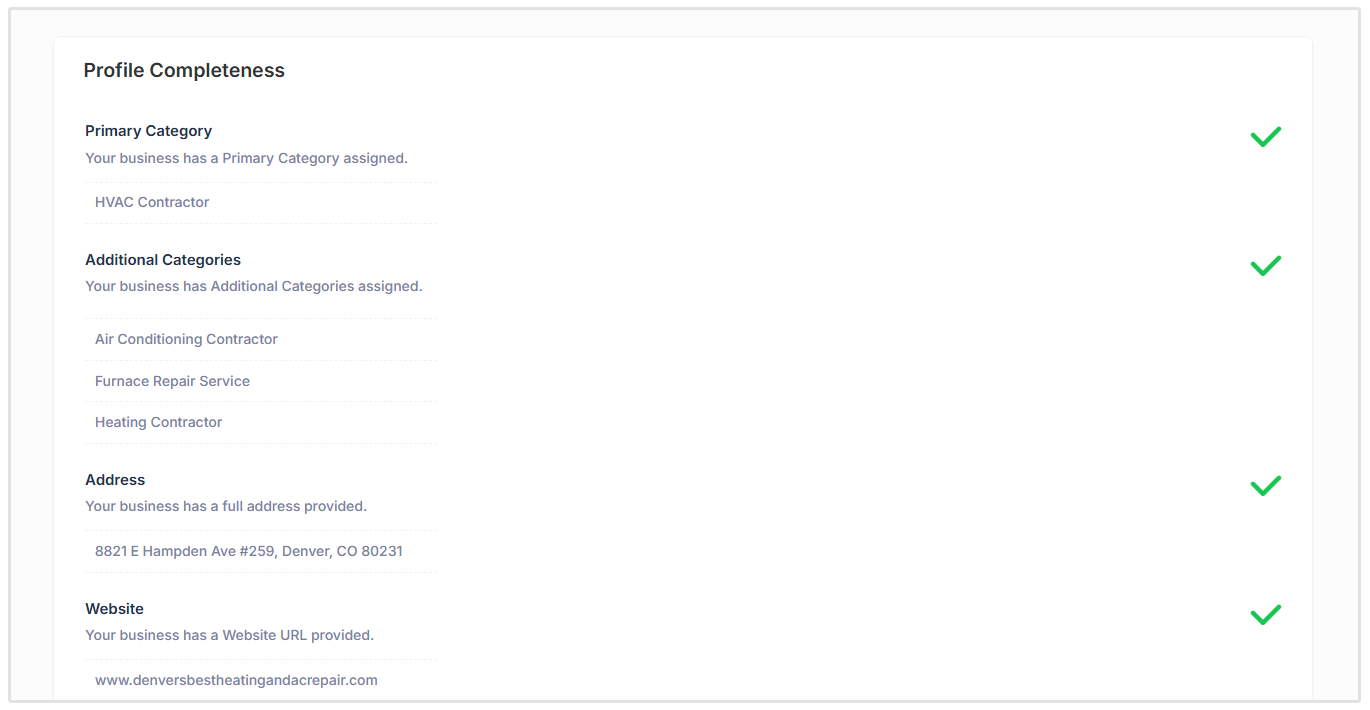
2. Optimize GBP for HVAC Searches
Choose the Right Primary and Secondary Business Categories
Your primary category helps Google understand the main service your business provides.
For most heating and cooling companies, HVAC contractor will usually be the best primary category.
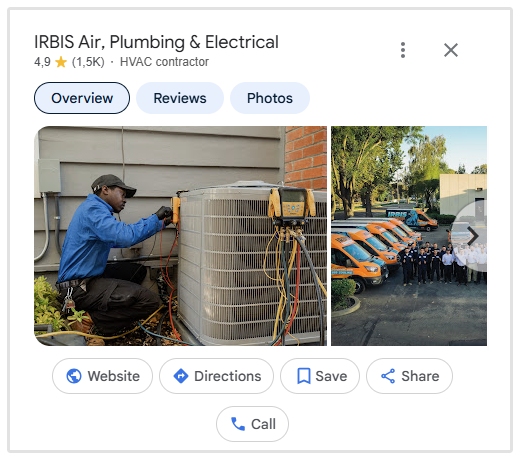
From there, you can add relevant secondary categories that match your actual services, such as:
- Air conditioning contractor
- Heating contractor
- Air duct cleaning service
- Furnace repair service
- Air conditioning repair service
These secondary categories help Google connect your business with more specific HVAC searches.
Just make sure the categories reflect services you genuinely offer. Adding unrelated categories can create confusion and weaken the relevance of your profile.
"Honestly, a surprising number of companies still treat their Google Business Profile as an afterthought, even though it can be one of the biggest drivers of enquiries. Keeping it updated with genuine photos, recent projects, service information, reviews, and regular activity can make a massive difference, especially in map results where trust matters just as much as rankings."
- Charlotte Sheridan, Director at The Small Biz Expert
Add All of Your HVAC Services
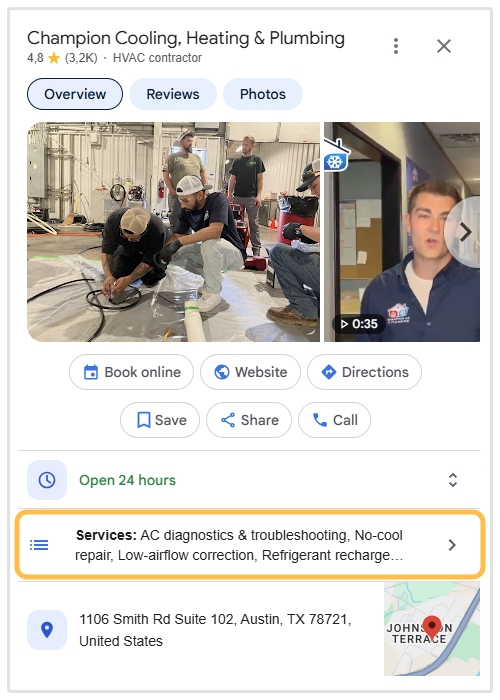
Google allows businesses to add individual services directly on their profile, so use this space properly.
Instead of only listing broad terms like “HVAC services,” add the specific services customers are likely to search for, such as:
- AC repair
- AC installation
- Furnace repair
- Furnace installation
- Heat pump repair
- Ductless mini-split installation
- HVAC maintenance
- Thermostat replacement
- Emergency HVAC repair
- Indoor air quality services
This helps potential customers understand exactly what you offer and gives Google more context about the types of searches your profile should appear for.
Define Your Service Areas Clearly
Most HVAC companies have to travel to customers, so your service areas should be accurate and realistic.
Add the cities, towns, suburbs, or neighborhoods where your technicians actually operate.
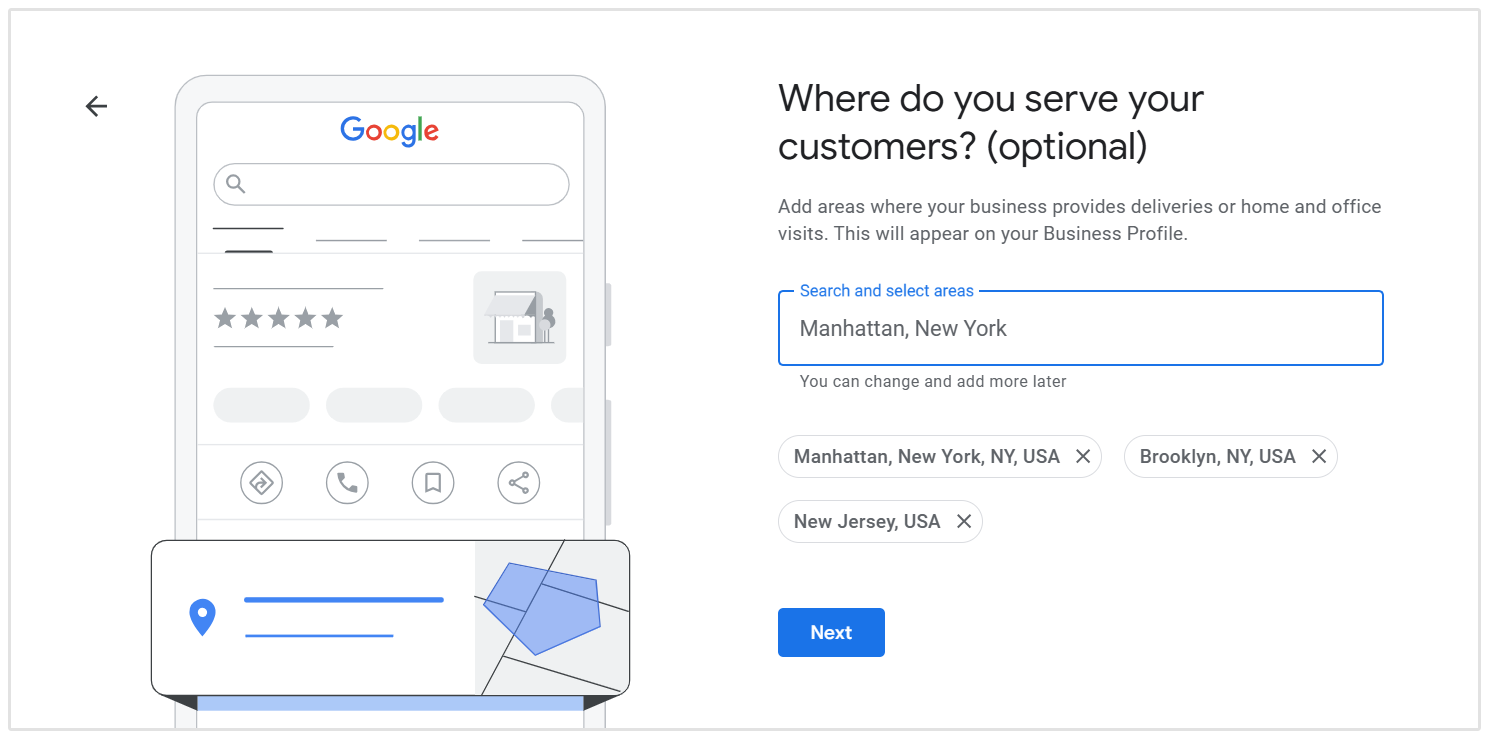
This helps Google understand the geographic area your business serves and can improve your relevance for location-based searches.
However, don’t add every nearby city just because you want to rank there.
If your business does not realistically serve an area, leave it out. A focused, accurate service area is better than an inflated one that creates poor customer expectations.
Related Reading: Local SEO for Service Based Businesses
Upload Real Photos of Your Business
Photos help customers feel more confident before contacting your company.
For HVAC businesses, real photos are much better than generic stock images.
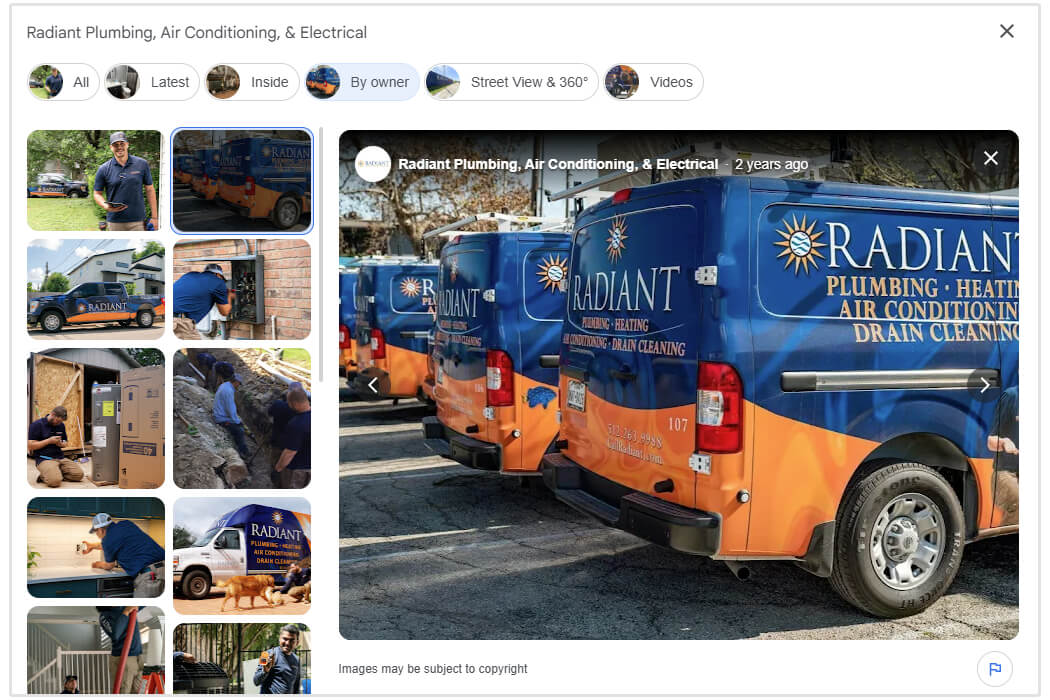
Try to add pictures of:
- Branded service vehicles
- Technicians in uniform
- Completed HVAC installations
- Before-and-after project photos
- Your office or storefront, if applicable
- Team photos
- Equipment or job-site photos
These images help show that your company is active, professional, and trustworthy.
They also give customers a better sense of who they are inviting into their home, which matters a lot in home services.
Use Google Posts for Seasonal Updates
Google Posts are a simple way to keep your profile active and highlight timely offers or services.
For HVAC companies, this works especially well because demand changes throughout the year.
You can publish posts about:
- Spring AC tune-ups
- Summer emergency AC repair
- Fall furnace inspections
- Winter heating repairs
- Maintenance plans
- Financing options
- Limited-time promotions
- Energy-saving tips
For example, a post in early fall reminding homeowners to schedule a furnace safety check can help position your business as proactive and relevant before peak heating season starts.
The goal is not to post for the sake of posting. Use Google Posts to support the services customers are already thinking about at that time of year.
3. Build Dedicated HVAC Service Pages
One common mistake HVAC companies make is listing every service on one short Services page.
This may be convenient, but it makes it harder for Google to understand which specific services you offer and which searches each page should rank for.
Instead, create a dedicated page for each major HVAC service you provide.
Recommended service pages can include:
- AC repair
- AC installation
- Furnace repair
- Furnace installation
- HVAC maintenance
- Indoor air quality services
- Emergency HVAC repair
Each page should be built around one clear service and should include the information a customer needs before contacting you.
For example, TheCoolestService, an Austin-based HVAC company, makes its AC repair page feel local by referencing the area’s climate with the line, “Summers in Texas hit hard.”
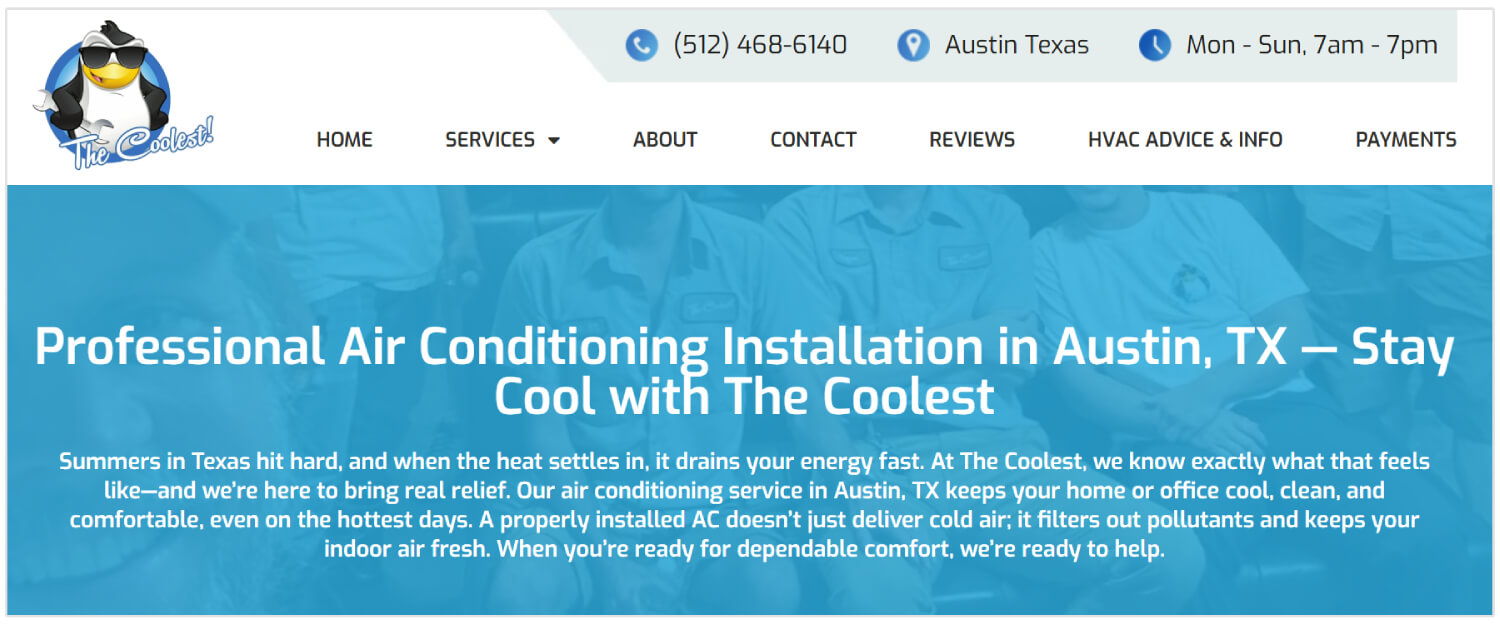
This helps position the page around Austin-specific cooling needs while addressing common AC issues such as warm air from vents, short cycling, weak airflow, refrigerant leaks, and unusual noises.
"Many HVAC companies offer multiple services such as dryer vent cleaning, air conditioner repair, furnace repair, air duct cleaning, each one of these should have a separate page with enough content to illustrate pain points, solutions, the company's expertise, and CTAs to contact for scheduling. Each page should have a single keyword target that contains this type of phrase pattern, which includes their service area. (ex - [air duct cleaning] + "services" + in [geo] )"
- Kevin Noyola, Digital Marketing Specialist at JET Advertising
A good HVAC service page should include the following elements:
- Common problems and solutions: Explain the issues customers may be experiencing and how your technicians can help.
- Your service process: Briefly describe what happens when a customer books the service.
- Service-area relevance: Mention the main cities or areas where you offer that service.
- Service-specific reviews: Add testimonials from customers who used that exact service.
- FAQs: Answer common questions about pricing, timing, warranties, and emergency availability.
- Clear calls to action: Include visible buttons to call, request a quote, or book online.
4. Use HVAC Keyword Research to Match Search Intent
Effective local SEO for HVAC contractors starts with understanding what potential customers are actually searching for.
Different types of keywords reveal different levels of intent, so your strategy should match the search to the right type of page.
Emergency keywords
These are high-urgency searches from customers who need help quickly.
Examples include:
- emergency AC repair near me
- 24-hour HVAC service
- furnace blowing cold air
- AC not cooling
These keywords are best suited for emergency service pages or highly visible sections on your main service pages.
Service keywords
These keywords target customers looking for a specific HVAC service or solution.
Examples of service keywords include:
- AC repair
- ductless mini split installation
- furnace replacement
- HVAC maintenance plans
These should usually be mapped to dedicated service pages.
Location keywords
Local keywords connect your services to the areas you serve.
For instance:
- HVAC repair in Austin
- AC installation LA
- air conditioning contractor Scranton
These can be used on service pages, location pages, and your Google Business Profile.
Informational keywords
Informational searches help you reach customers earlier in the decision-making process. Examples of informational keywords include:
- why is my AC freezing up
- how often to change furnace filter
- what SEER rating do I need
These are best used for blog posts, FAQs, and helpful guides that support your main service pages.
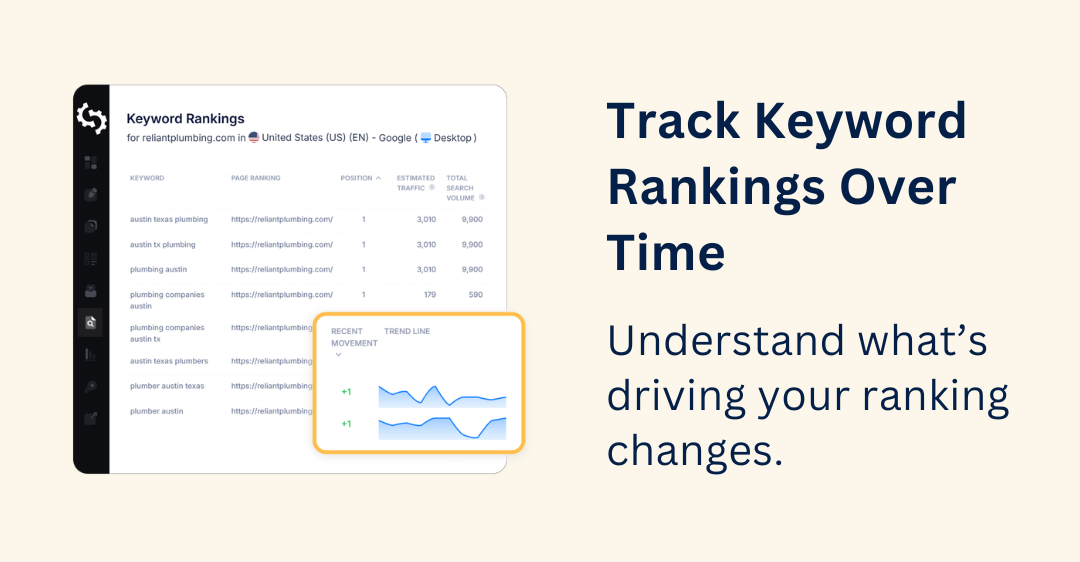
You can use SEOptimer’s Keyword Research Tool to find relevant HVAC keywords, check search demand, and identify keyword opportunities for your service pages, location pages, and blog content.
And if you’re struggling to think of the right seed phrases, you can use our Search by Domain option to see which keywords your competitors are using on their pages.
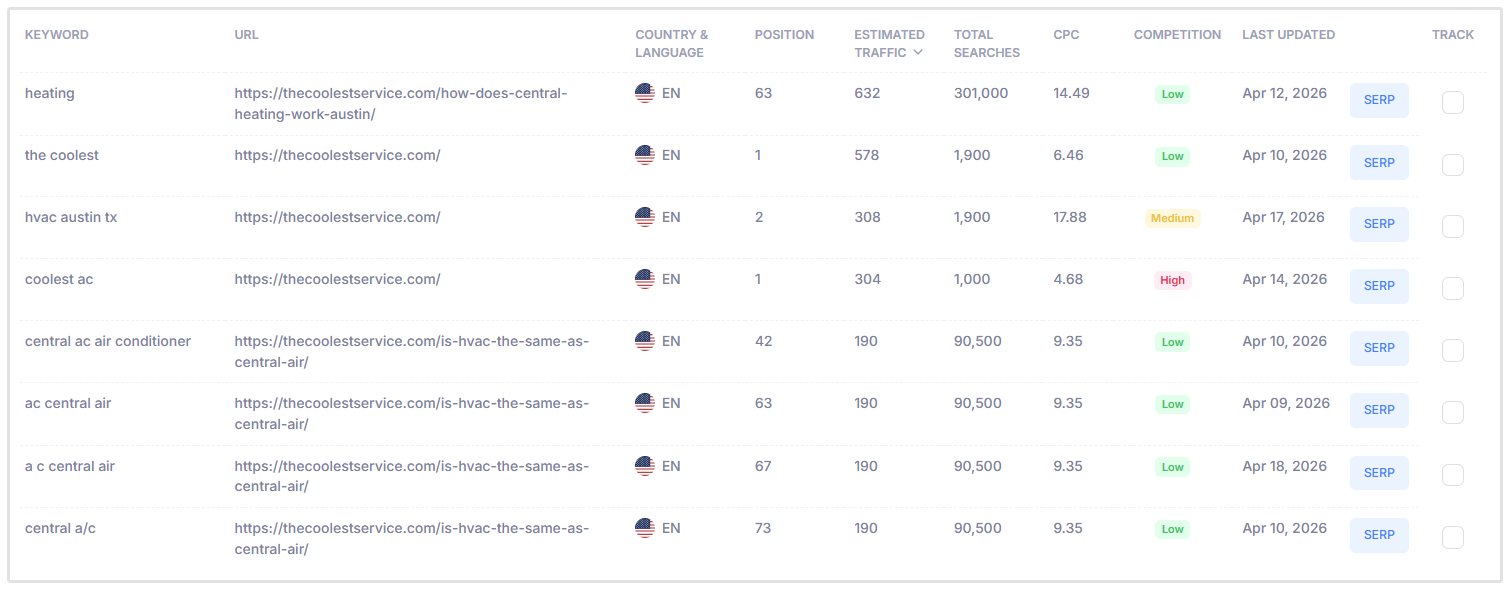
5. Improve On-Page SEO for HVAC
On-page SEO helps search engines understand what each page on your HVAC website is about and which searches it should rank for.
Start with the basics.
Each important page should have a clear title tag, meta description, H1, and URL that reflect the service and location you are targeting.
For example, a page for AC repair in Santa Monica could use a title tag like:
AC Repair in Santa Monica | Same-Day HVAC Service
Your headings should also be structured clearly so users and search engines can quickly understand the page.
Use your H1 tag for the main topic, then use H2s and H3s to organize supporting sections like common problems, service process, pricing, FAQs, and areas served.
You should also make sure each page is easy to use on mobile.
Many HVAC searches happen when someone needs help quickly, so your website should load fast, display properly on smaller screens, and make it easy for visitors to call or request a quote.
Important: Your phone number should be visible, clickable, and placed near the top of key pages.
You can use SEOptimer to audit any HVAC website’s on-page SEO and identify issues such as missing title tags, weak meta descriptions, poor heading structure, broken links, image optimization problems, and mobile usability issues.
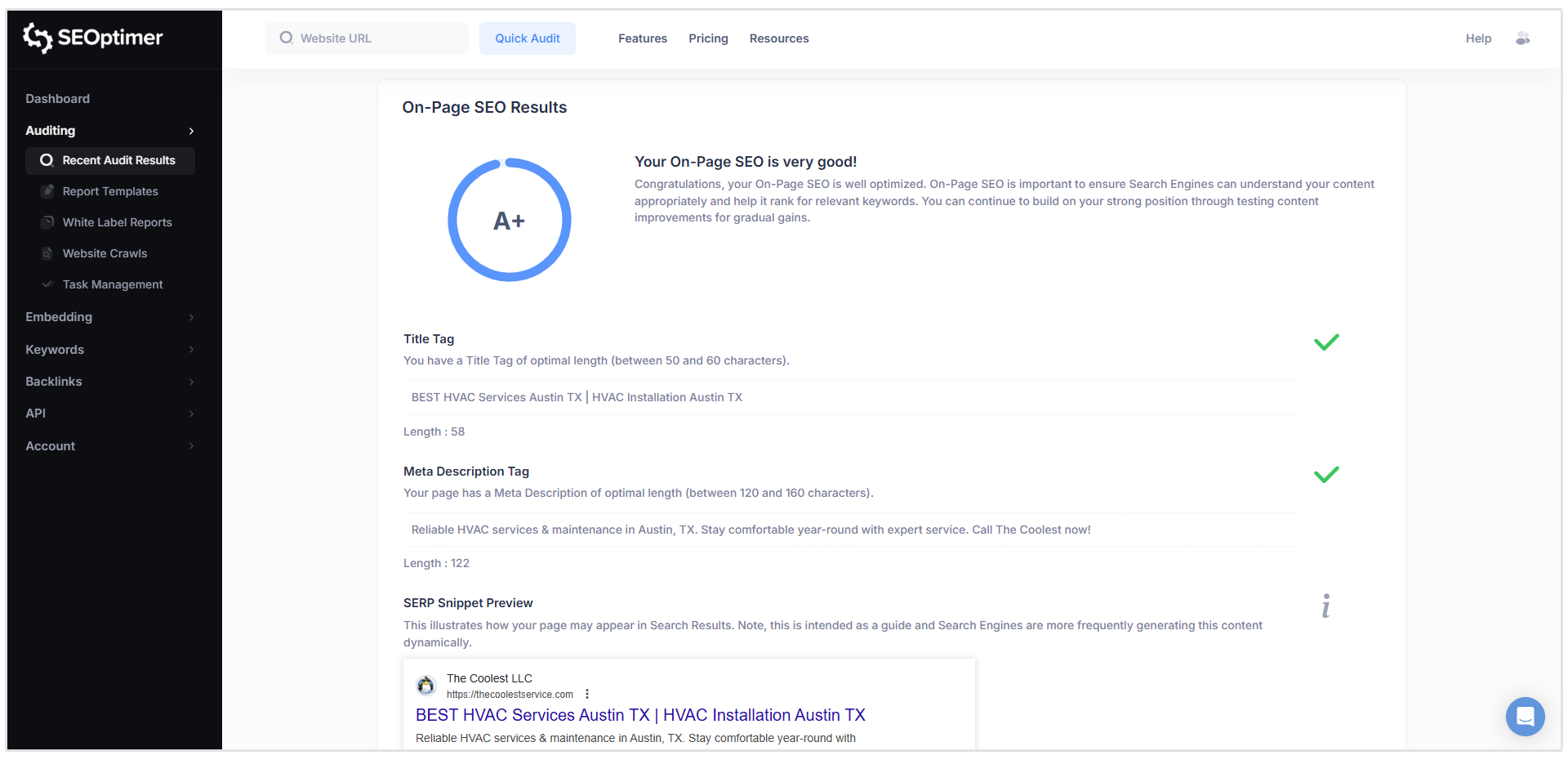
The audit also provides detailed explanations and recommendations, so you know exactly what needs to be fixed and how to improve each page.
6. Add Local Trust Signals that Help Customers Choose You
Trust signals are elements on your website that show potential customers you are a legitimate, reliable local business.
For HVAC companies, this is especially important because customers are inviting technicians into their homes and often making expensive repair or installation decisions.
Prominently display your licenses, insurance details, and industry certifications such as NATE or EPA. You can also include badges from trusted third-party platforms, local associations, or review sites.
For example, 212 HVAC, a heating and cooling company in New York, displays a “Read What People Are Saying About Us” section on its website featuring badges from Angi, Yelp, the Better Business Bureau, Google, and Expertise.com.
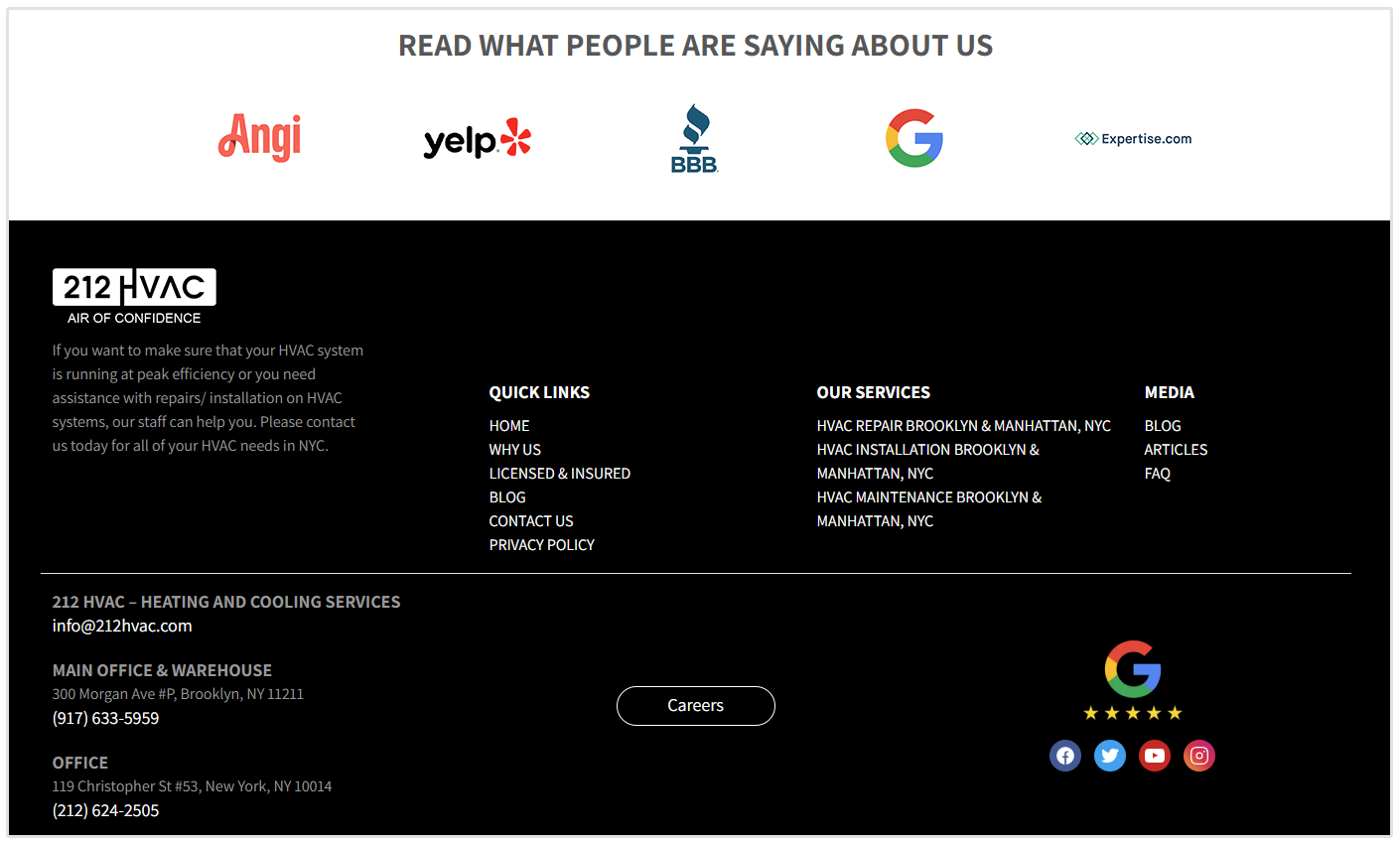
This immediately shows visitors that the company has a presence across multiple trusted platforms, not just on its own website. You can also highlight guarantees such as a 100% Satisfaction Guarantee, upfront pricing, emergency availability, or flexible financing options.
These details help reduce hesitation and make customers feel more comfortable reaching out for HVAC repairs, maintenance, or big-ticket installations.
"HVAC companies should make their trust signals obvious. Show years of experience, and make sure this is reflected on the Google Business Profile.
Display relevant licences and certifications. In Australia, the ARCtick licence number is a key trust signal for air conditioning and refrigeration businesses. If the company is part of a local Chamber of Commerce, link to that profile and use sameAs schema to associate the business with the directory listing."
- Brad Russell, Director at Digital Hitmen
7. Build a Review System for HVAC Local SEO
Online reviews play an important role in HVAC local SEO because they influence both visibility and trust.
Google uses review signals as part of its local ranking system, and potential customers often use reviews to decide which contractor to call.
According to BrightLocal’s 2026 Local Consumer Review Survey, 97% of consumers read reviews for local businesses.
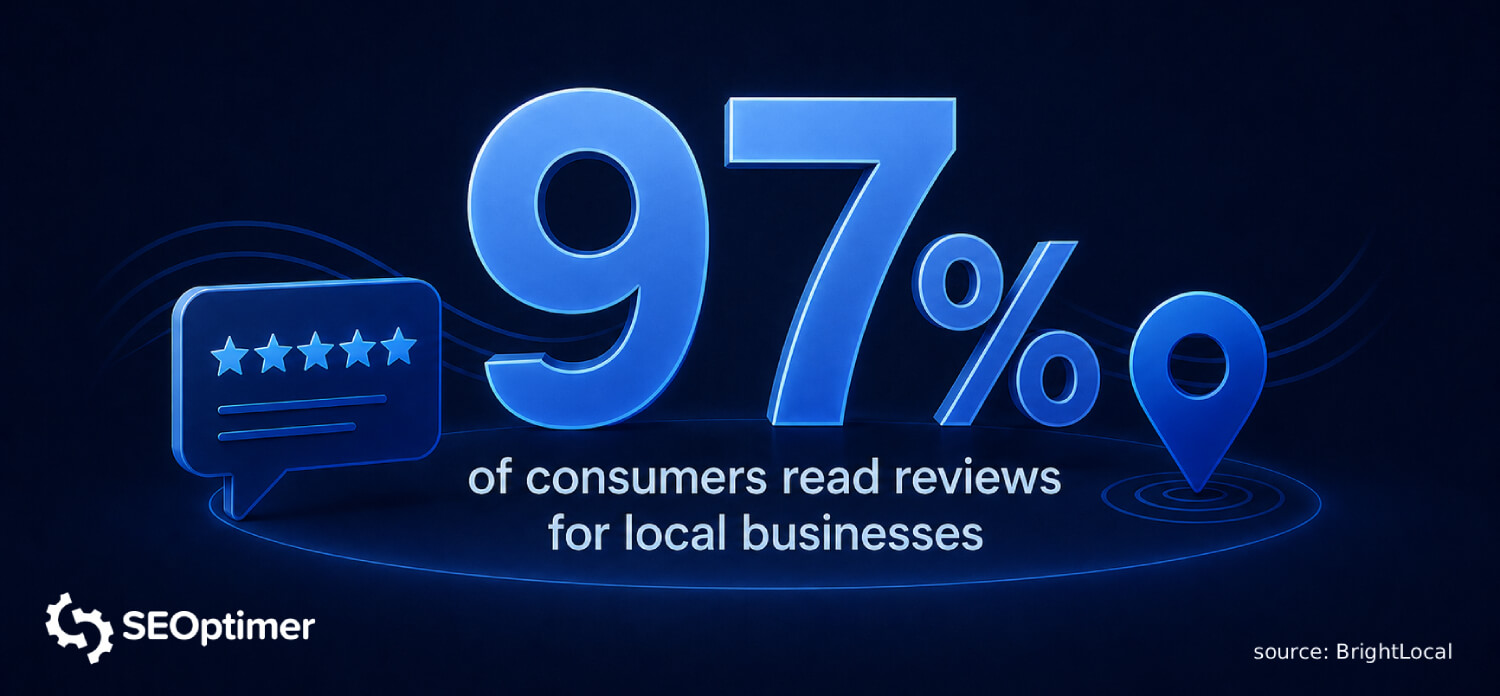
They also found that 54% of consumers visit a business’s website after reading positive reviews, showing how reviews can directly support both trust and website traffic.
For HVAC companies, this matters because customers are often making urgent, high-value decisions and inviting technicians into their homes.
A steady flow of recent, positive reviews can help your business look more credible before a customer even contacts you.
"Reviews are one of the strongest ranking and conversion factors for our company. We consistently ask for reviews after service calls which has helped us outperform competitors both in local search rankings and lead conversion rates."
- Meghan VanZyl, Marketing Director at Awesome Home Services
The best approach is to build reviews into your normal service process.
Train technicians to ask for a review after a successful job, then follow up with an automated text or email that links directly to your Google Business Profile.
You should also respond to every review. Thank happy customers for their feedback, and respond to negative reviews professionally by acknowledging the issue and offering to resolve it.
8. Fix Local Citations and NAP Consistency
A local citation is any online mention of your business's Name, Address, and Phone number (NAP). Search engines use these citations to verify that your business is real and accurately located.
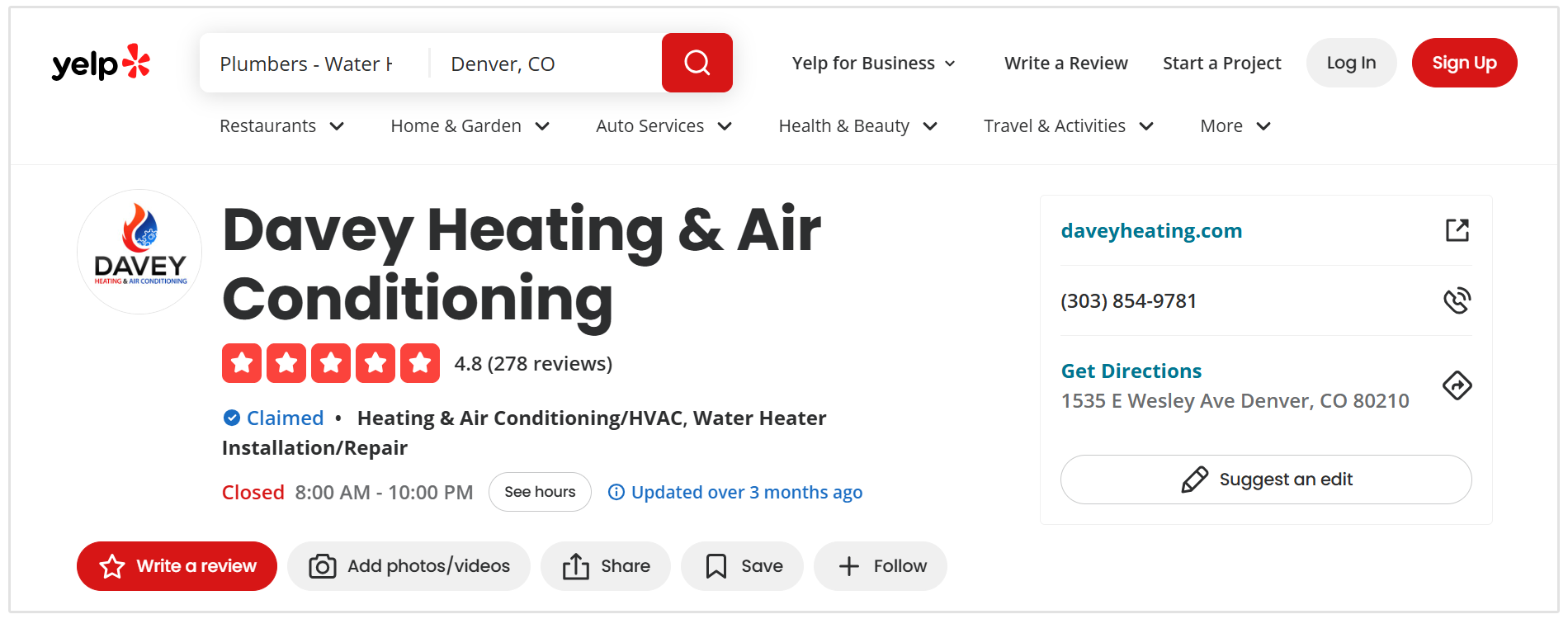
If your phone number is different on Yelp than it is on your website, or if you have an old address listed on Angie's List, Google gets confused.
This confusion damages your local rankings. Claim your profiles on major directories like Yelp, the BBB, HomeAdvisor, and local business associations.
"For both structured and unstructured citations, always mention the same business name, address and phone number. For unstructured citations (a.k.a. those often done by third-parties), you can add a comment or a reply that contains your correct NAP. If you're not allowed to comment such as in blog posts where comments are disabled, you can send a message to the site owner instead."
- Kumar Vaibhav Tanwar, Founder & CEO, Clickworthy Digital Marketing
Important: Ensure your NAP information matches your Google Business Profile exactly, down to the suite number and street abbreviations.
9. Add Schema Markup to Pages
Schema markup is code added to your website that helps search engines better understand your business, services, location, opening hours, reviews, and other important details.
For HVAC companies, schema can help clarify what your business does and where you operate.
The most common schema types include LocalBusiness, HVACBusiness, Service, FAQPage, and Review schema, depending on the page and the information shown on it.
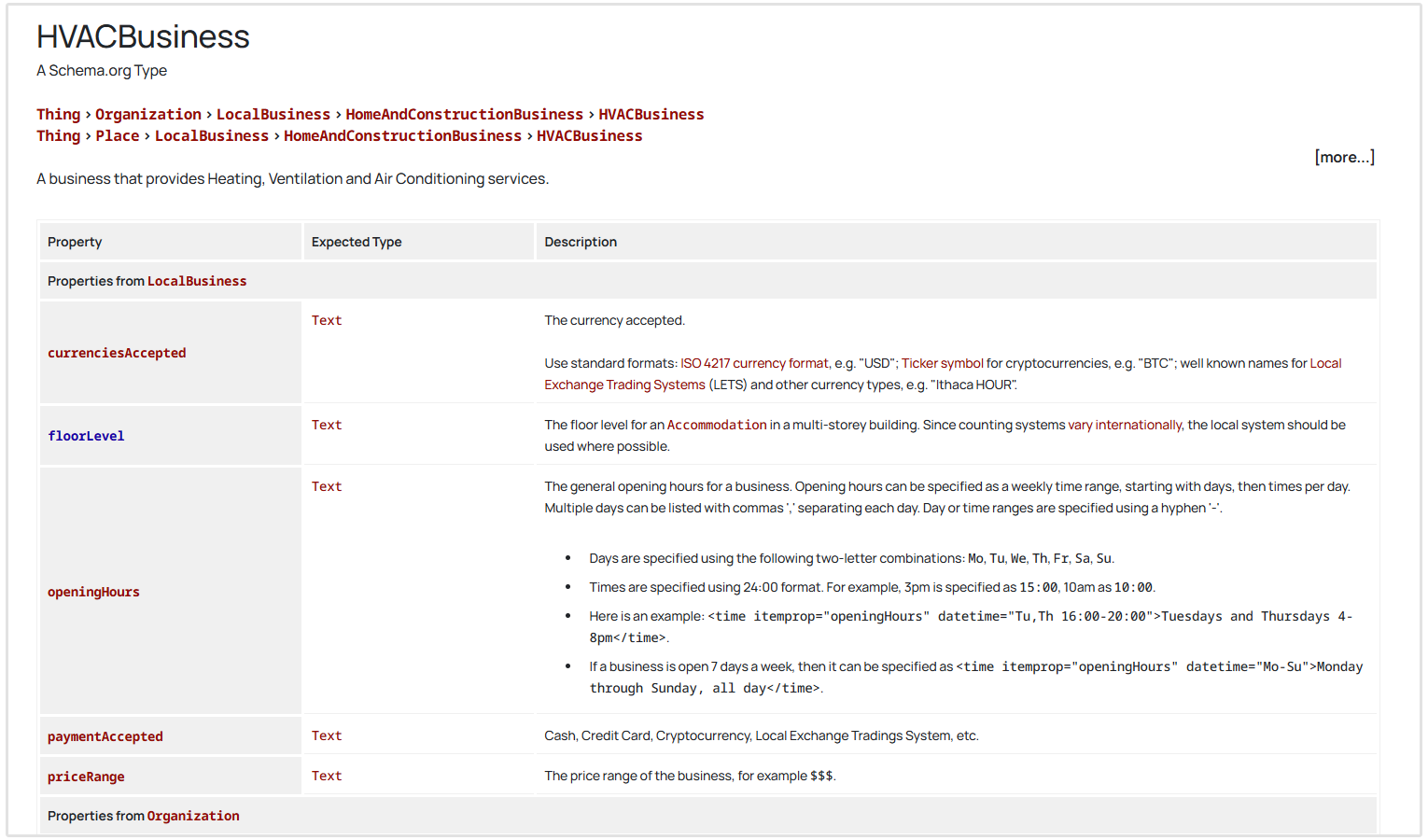
Schema may also support your visibility in AI-powered search experiences, such as Google AI Overviews and AI assistant responses, by giving search engines and language models clearer structured information about your business.
Although schema markup sounds technical, it is much easier to implement than it used to be.
Many website platforms, schema generators, and WordPress SEO plugins (Yoast, RankMath, etc.) can create the markup for you without requiring any coding experience.
You can also use AI tools to help draft schema markup, then test it before adding it to your site.
The important thing is to make sure the schema matches the visible content on the page.
Don’t add review, service, or location details in your schema if they are not actually shown to users.
You can also use SEOptimer’s SEO audits, including our new dedicated GEO Audit, to check whether your site is using appropriate schema markup for AI visibility.
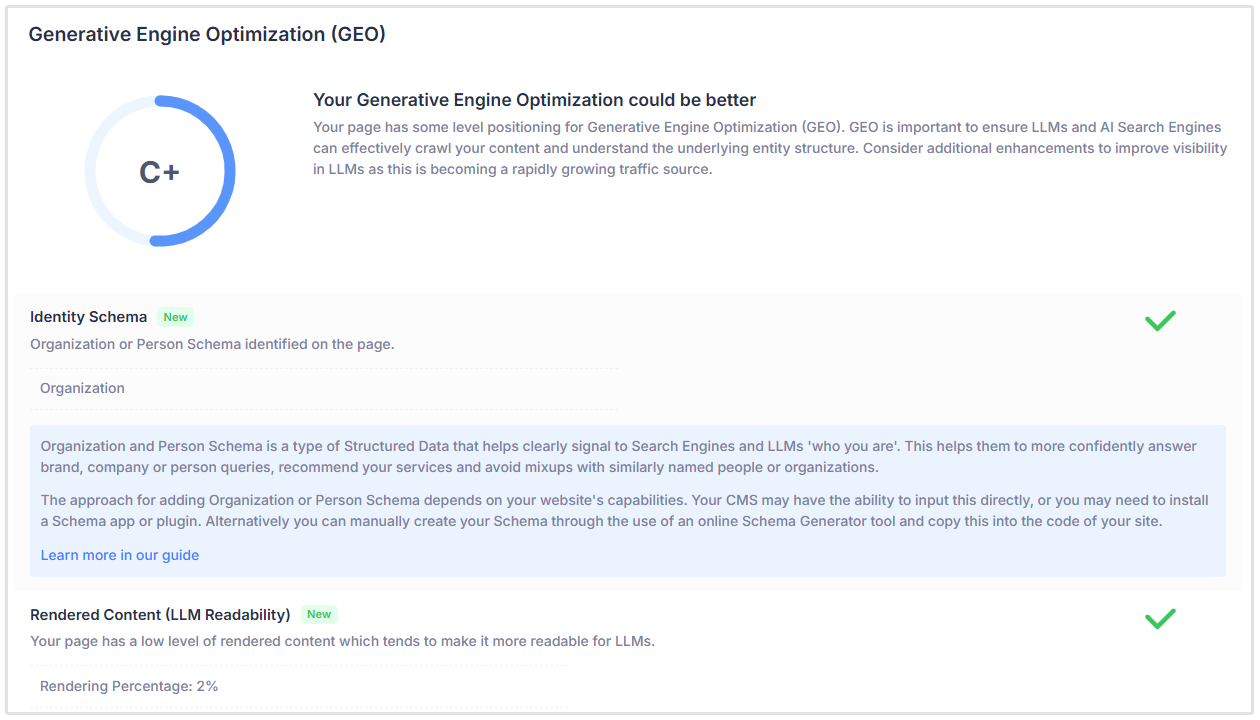
These checks can help identify missing or incomplete structured data, so you can improve how clearly search engines and AI systems understand your HVAC business.
Related Reading: AI in Local SEO: How to Use AI and How It’s Changing Local Search
Common HVAC Local SEO Mistakes to Avoid
Using One Generic Services Page
Lumping air conditioning, heating, indoor air quality, and plumbing onto a single "Our Services" page prevents you from ranking for specific queries.
Do this instead: Build out dedicated pages for every individual service to capture targeted search traffic.
Creating Duplicate City Pages
Copying and pasting the exact same content across five different city pages will trigger duplicate content filters.
Do this instead: Take the time to write unique, localized copy for every location page you publish.
Not Asking for Reviews Consistently
Getting ten reviews in one week and then zero for the next six months looks unnatural to search engines.
Do this instead: You need a consistent, ongoing strategy to generate fresh reviews year-round.
Having Inconsistent NAP Details
Old phone numbers or outdated office addresses floating around on local directories will severely anchor your rankings.
Do this instead: Audit your citations regularly and keep your data clean.
Hiding the Phone Number on Mobile
If a customer has to click three different menus on their phone just to find your contact info, you have lost the lead.
Do this instead: Keep a sticky, click-to-call button visible on mobile devices at all times.
Targeting Only Broad Keywords like “HVAC”
Trying to rank for the standalone word "HVAC" is highly competitive and often brings in national traffic that you cannot service.
Do this instead: Focus your energy on hyper-local, high-intent phrases like "HVAC repair [Your City]."
Wrapping Up
Local SEO for HVAC is not a one-time project; it is an ongoing strategy that compounds over time.
By optimizing your Google Business Profile, building out detailed service and location pages, and consistently gathering authentic reviews, you establish your company as the premier choice in your service area.
Start by conducting a quick audit of your current online presence.
Claim your local directory listings, separate your service pages, and ask your next satisfied customer for a review.
With consistency and the right foundation, you will turn local search visibility into a steady stream of profitable service calls.