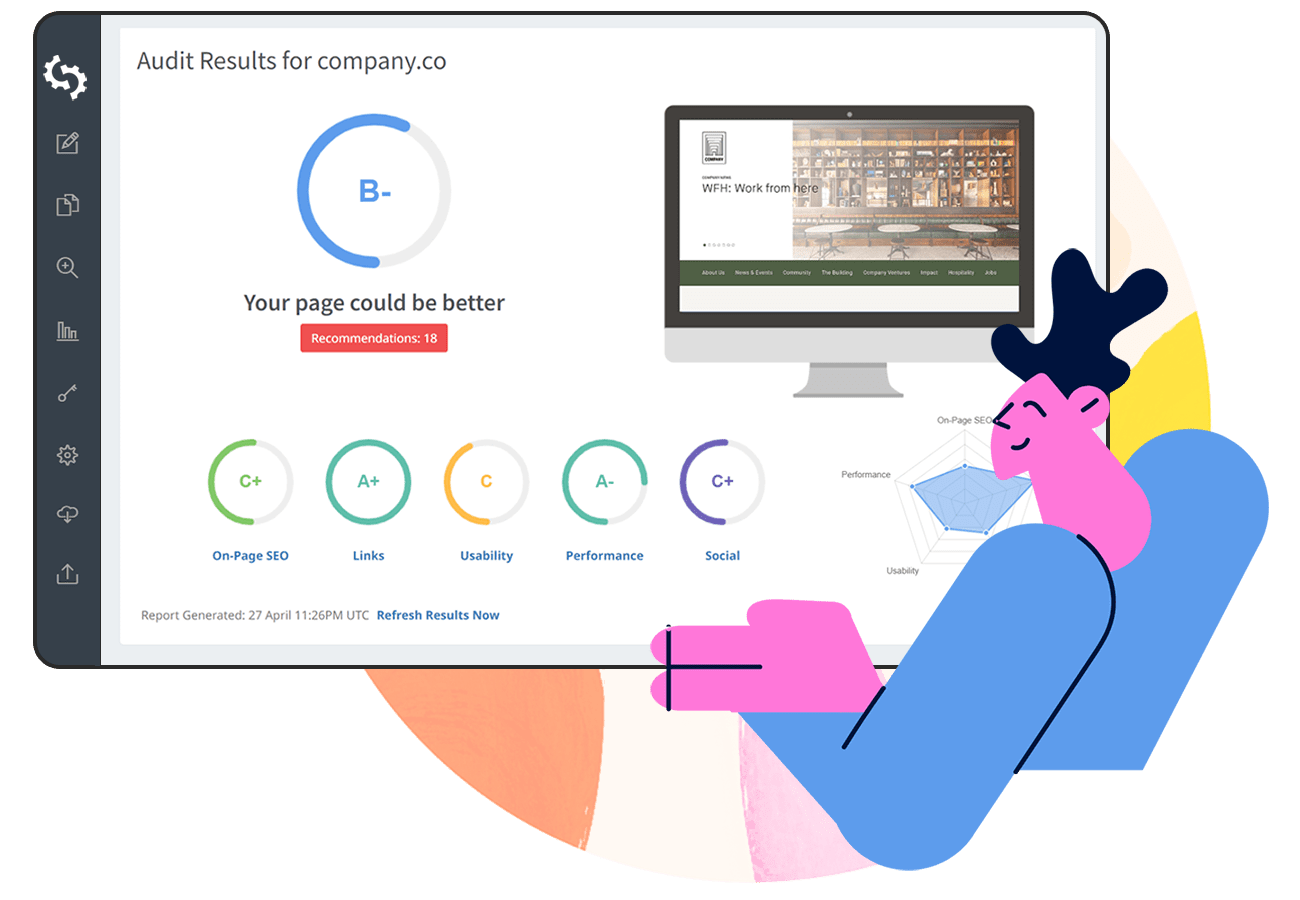


AI content optimization helps marketers create and refine content by highlighting gaps, improving clarity, and aligning content with what users are searching for.
Through the use of platforms like ChatGPT, Claude, and Gemini, marketers can use AI to analyze competitors and optimize your pages.
In the past, content optimization meant spending lots of time on keyword research, manual SERP analysis, and editing.
Now, AI can handle much of that work for you, helping you make better decisions that can improve your visibility in search results.
In this guide, you’ll learn how to use AI for content optimization. We'll be sharing prompts that you can use for different SEO tasks and workflows.
Note: In the examples below, we’ll use ChatGPT to demonstrate prompts, but you can apply the same approach using any modern AI tool like Claude or Gemini.
What is AI Content Optimization?
AI content optimization is the process of using artificial intelligence to improve your content so it ranks higher in search results and better matches what your audience is looking for.
Instead of manually guessing which keywords to target or how to structure your content, AI can analyze top-ranking pages and provide data-driven recommendations on what information to include and how to improve.
It evaluates keyword density, semantic relevance, readability scores, and search intent.
By processing this information, AI content optimization tells you exactly what elements are missing from your web pages and how you can structure your text to satisfy both readers and search engines.
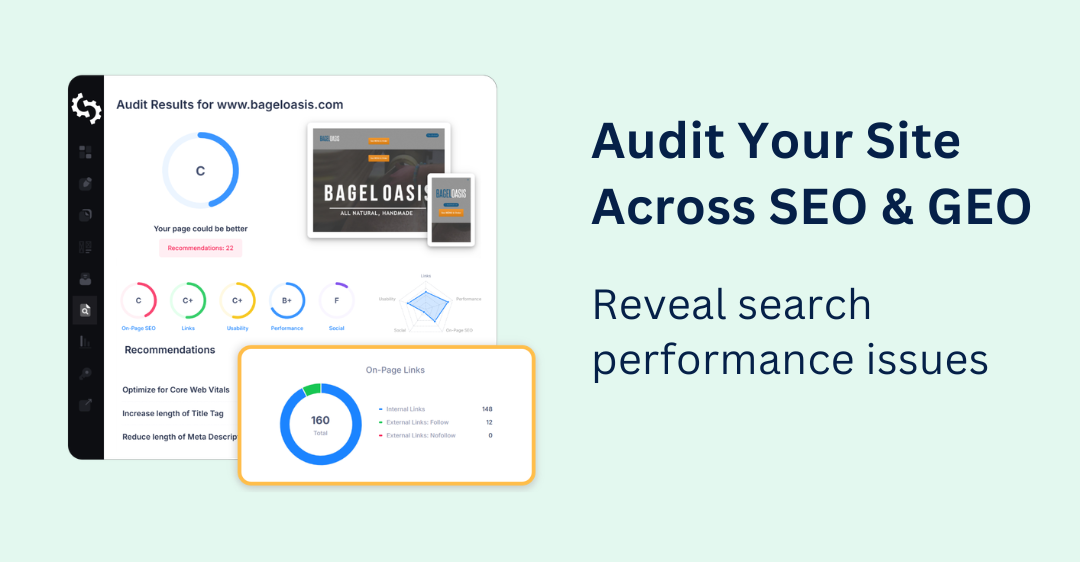
Benefits of Using AI for Content Optimization
Integrating AI into your content workflow offers several major advantages.
Here is why successful marketing teams should use AI for content optimization:
- Faster Research and Analysis: AI tools can analyze the top search results for any given keyword in a matter of seconds. This drastically reduces the time you spend on manual competitor research.
- Data-Driven Recommendations: Instead of relying on intuition, you get mathematical suggestions on how to optimize your content.
- Improved Search Rankings: By aligning your pages with search engine preferences and semantic models, you increase your chances of capturing high-value organic traffic.
- Better Readability: Many AI platforms highlight complex sentences, passive voice, and jargon. This helps you publish clear, engaging copy that keeps visitors on your site longer.
- Cost Efficiency: Automating the research and outlining phases allows your team to produce high-quality articles at scale without needing to hire additional staff.
Related Reading:
- 7 Best Software for AI Visibility in Search (2026)
- Top SEO MCP Servers: Tools and Use Cases
- LLM SEO: How to Get Cited by ChatGPT, Gemini, and Claude
How to Use AI for Content Optimization
You can apply AI to almost all of your SEO workflows. Here are the some ways to optimize your content using artificial intelligence.
Analyze Search Intent
Search intent refers to the underlying goal a user has when typing a query into a search engine or even when using AI to search for a product, sevice, or information.
Are they looking to buy a product, learn a new skill, or find a specific local business?
AI tools are great at analyzing the current search results to determine exactly what users want.
Kristie Forsman, the Marketing Manager at Huemor, a digital agency based in Pittsburgh, Pennsylvania, says that they use AI in nearly every step of the SEO workflow.
Starting with keyword and prompt research, we use AI to get a clearer picture of how people are actually searching and the kinds of questions they are asking.
This insight helps us create content that is more in tune with the real user’s intent, while also strengthening the content for both traditional and AI SEO.
- Kristie Forsman, the Marketing Manager at Huemor
You can use the following AI prompt to evaluate top-ranking pages and summarize the primary intent:
Analyze the search intent for the keyword “[your keyword]”. Identify whether the intent is informational, transactional, or navigational. Then suggest the best type of content to create (e.g., blog post, comparison page, landing page) and explain why.
For instance, if you ask ChatGPT to analyze the search intent for the keyword “best coffee machines under $500”, it may indicate that the audience is looking to compare products, evaluate features, and find the best option within their budget.
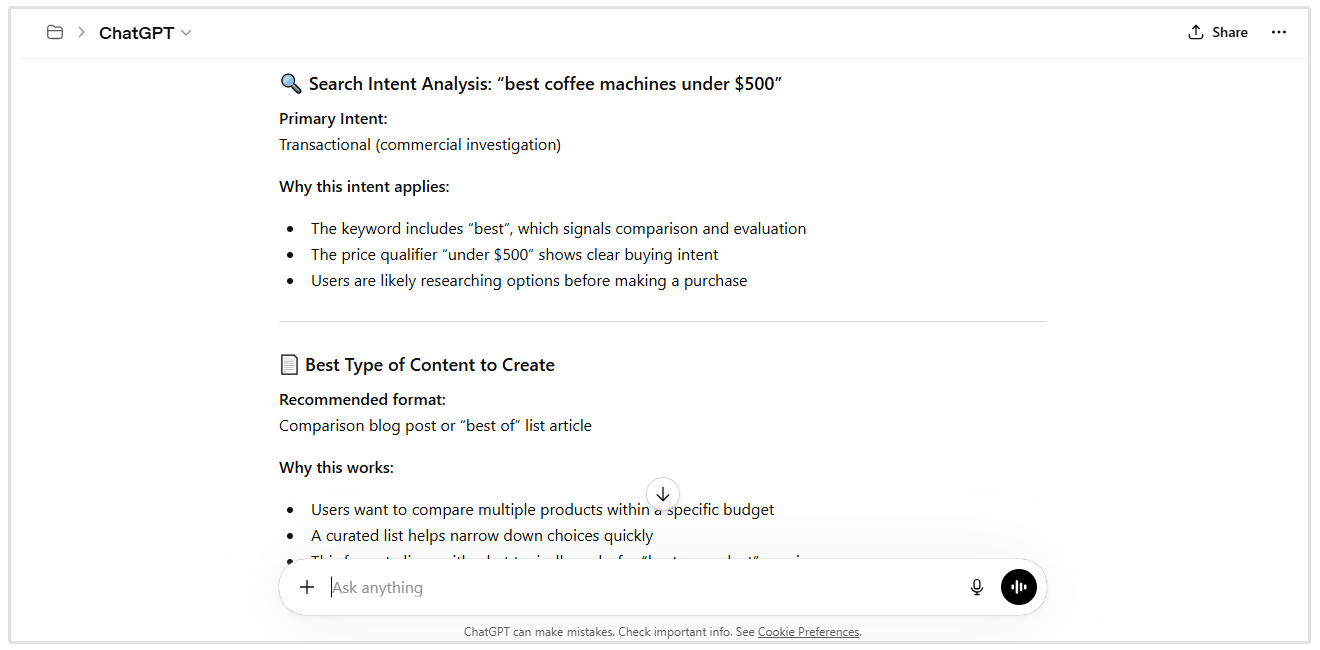
This ensures your page directly addresses the reader's core question.
Optimize Title Tags and Meta Descriptions
Your title tag and meta description are often the first things a user sees on the search results page.
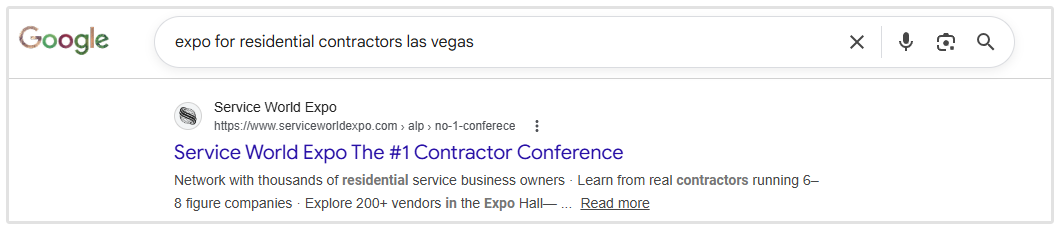
These two HTML tags need to be compelling and include your primary keywords.
Writing these manually can be tricky, especially when trying to stay within strict character limits.
AI tools can instantly produce dozens of click-worthy title tags under 60 characters and meta descriptions under 155 characters.
You simply provide your main topic and ask the tool to create variations that encourage higher click-through rates.
And if you already wrote your title or meta description, you can ask AI to analyze and improve it.
In my opion, I'd recommend you write the title and meta description tags yourself first, and then ask AI to improve on it.
Here’s a prompt that you can use to optimize titles:
Improve the following title tag for SEO and click-through rate: [insert current title]. Optimize the title for the following target keyword: [target keyword]. Be sure that your version includes the target keyword as close to the start of the title and as naturally as possible. The title length must be under 60 characters long. The sure that the title you suggest is clear, compelling, and click-worthy and avoids keyword stuffing.
And here is a prompt to optimize meta descriptions:
Improve the following meta description for SEO and click-through rate: [add current meta description]. Optimize the meta description for the following target keyword: [add your target keyword]. Ensure the keyword is included naturally and the meta description must be between 120–155 characters in length. Make sure your suggetion clearly communicates the value of the page, is compelling and encourages clicks, and uses natural language (no keyword stuffing).
Generate Keyword Clusters
Targeting a single keyword is rarely enough to dominate a topic.
Search engines reward comprehensive pages that cover a subject thoroughly.
Keyword clustering involves grouping closely related terms together so you can naturally weave them into a single, authoritative piece of content.
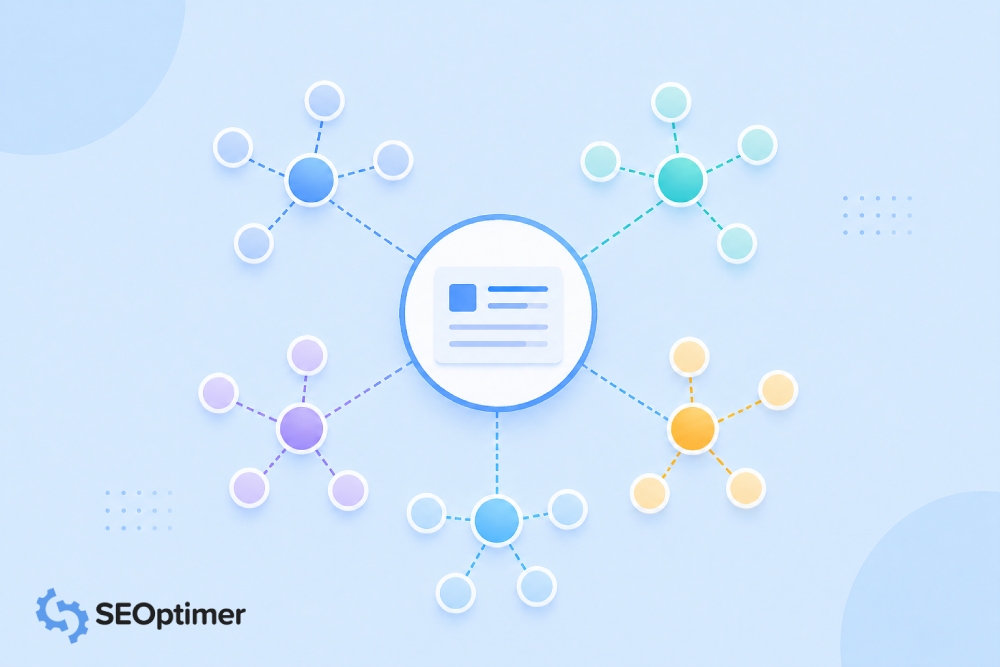
You can input a broad topic into your favorite AI platform and ask it to generate related subtopics and semantic keywords.
The AI will group these terms based on user search patterns, helping you structure your article to capture a wider variety of search queries.
Here's an example prompt you can use to create keyword clusters.
Create keyword clusters for the topic: [add your main topic or focus keyword]. Group related keywords into logical clusters based on search intent and topical relevance.
For each cluster:
- Provide a cluster name (main theme)
- List 5–10 related keywords
- Identify the primary keyword
- Suggest the best type of content to create (e.g., blog post, landing page, guide)
Organize the output clearly using headings and bullet points.
Find Content Gaps
A content gap occurs when your competitors cover a valuable subtopic that your website misses.
Identifying these gaps manually requires you to read through multiple competing articles side-by-step.
AI tools simplify this process by performing a rapid content gap analysis.
By feeding the AI your article URL alongside three competitor URLs, the tool will highlight the exact questions, keywords, and sections your competitors included that you left out.
One tactic we rely on is using really detailed prompts in ChatGPT and Claude to speed up the research and optimisation process, but not to write the content for us.
We feed it things like search intent, competitor insights, People Also Ask questions, and the exact structure we need, then use that as a starting point to spot content gaps or opportunities for AI Overviews.
- Courtney Haddock, Senior SEO Content Executive at Quirky Digital
You can then update your page to make it the most comprehensive resource available.
Here’s the exact prompt you can use to find content gaps.
Compare my article with three competing articles on the same topic and identify any content gaps. My article: [paste your article URL]. And here are the competing articles:
[URL 1]
[URL 2]
[URL 3]
Analyze what topics, subtopics, or key information are missing or underdeveloped in my article compared to the competitors. Also suggest how I can improve the content to make it more comprehensive, useful, and competitive.
Improve Your Writing Readability
If your writing is too dense or difficult to follow, visitors will leave your site.
High bounce rates send negative signals to search engines.
AI tools can evaluate your text and check readability, this is often based on metrics like the Flesch reading-ease test.
These tools highlight overly long sentences, suggest simpler vocabulary, and flag passive voice.
By accepting these AI-driven suggestions, you ensure your writing remains accessible and engaging for your target audience, search engines, and AI crawlers.
AI pre-reads and aids in the readability, clarity, and formatting of your content before it can be published to meet their formatting rules for easy indexing by the search engines/AI systems.
- Audrey Patterson, President at Ark Marketing
Here's a prompt that you can use to improve your writing's readability:
Improve the readability of the following blog content: [paste your content here or the URL to the post]. Rewrite it to make it clearer, more concise, and easier to read. Use shorter sentences, simpler language, and a more natural, conversational tone while keeping the original meaning intact. Also improve the structure by breaking up long paragraphs and making the content easier to scan.
Optimize Old Existing Content
Publishing new blog posts is important, but updating your existing content can often yield faster SEO results.
Content naturally decays over time as search trends shift and competitors publish newer information.
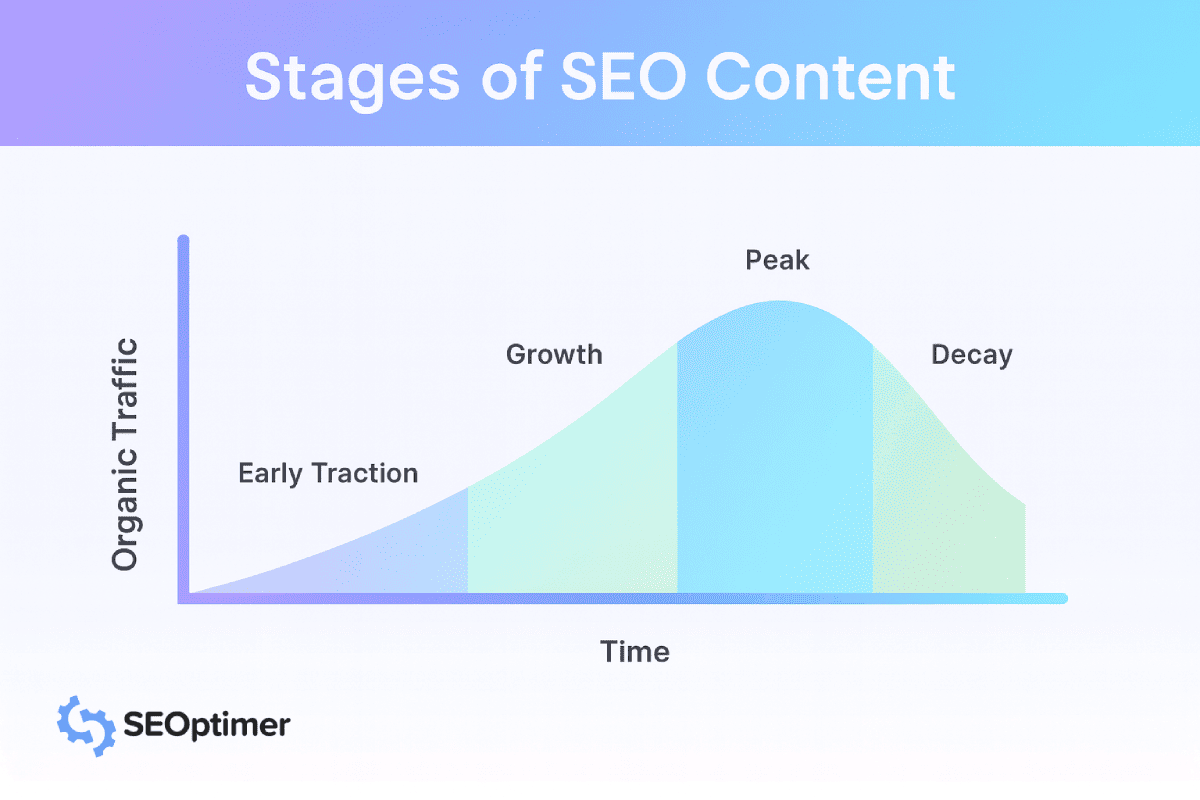
You can run your older articles through ChatGPT to see how they stack up against current search results.
It will suggest new keywords to add, outdated sections to rewrite, and fresh statistics to include, breathing new life into your declining pages.
Here is the prompt you can use to old existing content:
Review the following blog post and suggest ways it can be improved: [paste URL to the blog]. Identify opportunities to update and optimize the content. Consider whether any information or statistics are outdated, where sections could be expanded or made clearer, and whether there are important topics or questions missing. Also suggest ways to improve the overall structure, readability, and alignment with search intent.
Optimize for Semantic SEO
Search engines have evolved beyond exact-match keywords.
They now use natural language processing to understand the context and relationships between different concepts. Semantic SEO involves including conceptually related terms to prove your topical expertise.
AI tools identify these semantic connections effortlessly.
Borja Obeso from Distribb told us how he uses AI and keyword clusters for entity SEO:
Before writing anything, I run the target keyword cluster through an AI tool to map semantic gaps against the top-ranking pages — what topics they all cover, what none of them do, and what entities Google's AI Overviews are pulling from when the query triggers one.
That pre-brief work takes 20 minutes and consistently produces content that ranks faster and earns more AI Overview citations than anything I used to ship cold.
- Borja Obeso, Founder at Distribb
If you are writing about "The Best Coffee Machines under $500," the AI might suggest including terms like "water temperature," "extraction time," and "burr grinder."
Adding these contextually relevant phrases helps search algorithms fully understand your page and connect it to the right entities.
Here's an example prompt you can follow to optimize for semantic SEO.
Review the following content and suggest ways to improve its semantic SEO: [add your content here]. Identify related terms, entities, and concepts that should be included to strengthen the content’s topical relevance. Consider what important subtopics, attributes, or supporting ideas are commonly associated with this topic and may be missing.
Also suggest how these can be naturally incorporated into the content to make it more comprehensive and contextually relevant, without forcing keywords.
Generate Content Briefs and Outlines
A detailed content brief acts as a roadmap for your writers.
Creating a comprehensive brief manually can take up lots of time. ChatGPT, Claude, and Gemini can be used to automate this entirely.
By giving it your target keyword, the AI can extract the most common headings from top-ranking competitor pages.
It then builds a structured, logical outline that includes target word counts, suggested subheadings, and specific questions to answer in each section.
We use AI tools like LLMs to help organize content ideas and produce initial outlines before we fill in the content with our clients' unique POVs and data.
This means we spend less time on basics and more time on the most valuable, differentiated parts of our clients' content, which helps them go beyond visibility and establishes competitive positioning as well.
- Tyler Jordan, Founder & CEO at Jordan Digital Marketing
Here's a prompt that you can use to create content briefs and outlines with AI:
Create an SEO-focused content brief and outline for the keyword [add target keyword]. The brief should reflect what is likely to rank well based on search intent and common patterns in top-performing content.
Include a clear structure with suggested headings (H1, H2, H3), key topics to cover, and any important questions that should be answered. Also suggest the ideal content format (e.g., guide, list, comparison post) and any key points that should be included to make the content comprehensive and useful.
Optimize for AI Visibility / GEO
Generative Engine Optimization (GEO) is an emerging strategy focused on making your content visible to AI search engines like ChatGPT and Google's AI Overviews.
These AI systems favor clear, authoritative, and easily parsable information.
To optimize for GEO, use AI to restructure your articles.
Ask the tool to format your answers clearly with bullet points, numbered lists, and direct responses right below your headings.
Ensuring your content is highly structured increases the likelihood that AI search engines will cite your website as a source.
I use AI at two distinct points in my content process: before I write, to map what AI engines are already saying about a topic (which tells me exactly what gaps exist and where I can own the answer), and after a first draft, to stress-test whether the content is structured for citation, short, direct answers under each heading & clear definitions.
- Ayse Durmush, Founder at The GEO Agency
Here is the prompt that you can use to optimize your content for GEO:
Review the following content and suggest how it can be improved to perform better in AI-driven search results (such as AI Overviews and other AI-powered platforms): [add your content].
Focus on how the content can be made clearer, more structured, and easier for AI systems to understand and extract. Consider whether key information is presented directly, whether important questions are clearly answered, and how headings, formatting, and structure could be improved. Also suggest ways to improve clarity, conciseness, and overall usefulness so the content is more likely to be selected and summarized by AI systems.
Common AI Content Optimization Mistakes
While artificial intelligence offers incredible advantages, misusing the technology can actually harm your rankings.
Avoid these common mistakes to ensure your AI content optimization efforts are a success.
Over-Relying on AI (no human editing)
Publishing raw AI output without human review is a massive risk.
AI models lack true creativity, personal experience, and emotional nuance.
Content generated entirely by machines often reads as robotic and soulless.
Always get a human to add some personality, refine the tone, and ensure the article genuinely connects with your readers.
Cecelia Feor, Content Writer and Editor at seoplus+ says that because humans are still the ones making buying decicions, it's important that you review what was written by AI:
I’ll use AI tools (like ChatGPT) for content refinement, outlining variations, and identifying gaps. But I don't rest on the information it gives me.
When leveraging AI for content optimization, it's essential to remember that humans are still making buying decisions. Human editing is the best complement, or tactic, to AI content optimization.
- Cecelia Feor, Content Writer and Editor at seoplus+
Keyword Stuffing
Some AI tools suggest an extensive list of keywords, and it can be tempting to force every single one into your article.
This leads to keyword stuffing, a practice that ruins readability and violates search engine guidelines.
Only include keyword suggestions where they fit naturally within the context of your sentences.
Ignoring Search Intent
You can have the perfect word count and ideal keyword density, but if you fail to answer the user's core question, your page will not rank.
Sometimes, AI tools might suggest optimizing for an informational guide when the user actually wants a transactional product page.
Always manually verify the search intent before following recommendations.
Producing Generic, Low-Value Content
Because AI pulls information from existing websites, it can create content that just repeats what is already out there.
Search engines reward unique insights, original research, and fresh perspectives.
Use AI to build the foundation of your article, but add your own expert commentary, case studies, and unique data to make the content valuable.
Not Fact-Checking AI Outputs
AI systems are notorious for "hallucinating" facts. They will confidently present fabricated statistics, fake citations, and incorrect historical dates.
If you publish inaccurate information, you damage your brand's credibility and lose the trust of your audience.
Always verify any claims, numbers, or external links generated by artificial intelligence.
AI Content Optimization FAQs
How to optimize content for AI search?
Optimizing for AI search engines (often called GEO) requires that you structure your content logically using clear H2 and H3 headings.
Answer questions directly and concisely immediately following the heading. Use bullet points and numbered lists to make the information easy for AI bots to extract and cite.
Are there risks to using AI for content optimization?
Yes, the main risks include publishing inaccurate information due to AI hallucinations and producing generic content that lacks a unique brand voice.
There is also a risk of over-optimizing, where the text becomes stuffed with keywords and loses its natural readability.
Human oversight is essential to mitigate these risks.
Can AI-generated content rank?
Yes, AI-generated content can rank well on search engines, as long as it meets quality guidelines.
Google has explicitly stated that it focuses on the quality of the content, not how it was produced.
As long as the AI-assisted text is accurate, original, helpful, and demonstrates expertise, it has the potential to perform well in the SERPs.
Conclusion
By embracing AI content optimization, marketers can empower themselves to make fast, data-driven decisions that can impact rankings.
With AI, you can easily uncover semantic keywords, identify your content gaps, and structure pages to satisfy both human readers and search engine bots.
Remember that artificial intelligence is a powerful assistant, not a complete replacement for human creativity.
The most successful marketing campaigns blend the speed and analytical power of AI with the unique insights and emotional intelligence of human writers. Start integrating these intelligent tools into your workflow today, and watch your organic visibility grow.