


What is SEO Localization?
SEO localization is the process of adapting your website so it can rank, read, and convert well in a specific country, language, or region.
It goes beyond basic translation. Instead of only changing the words on the page,
SEO localization looks at how people in each market actually search, what terms they use, what content they expect, and what signals search engines need to show the right version of your website.
For example, a direct translation of a keyword may be technically correct, but it may not match local search behavior.
In the United States, people may search for “cell phone,” while in Germany, many users search for “Handy.” If your page targets the wrong term, it may be translated correctly but still fail to rank.
A strong SEO localization strategy adapts your keywords, metadata, URLs, headings, internal links, images, currency, examples, and technical SEO signals for each target market.
The goal is to make each version of your website feel local, useful, and easy to find in search.
In this guide, we’ll explain how SEO localization differs from translation, why it matters, and how to build a strategy for reaching customers in new markets.
Why SEO Localization Matters for Your Business
SEO localization takes time, but it can make a big difference if your business wants to reach customers in new countries, languages, or regions.
A translated website may help users understand your content. But a localized website helps them find it, trust it, and take action.
Here’s why SEO localization matters.
It Helps You Rank in Local Search Results
Search engines want to show users the most relevant result for their language, location, and search intent.
That means your translated content still needs to match how people search in that specific market.
Local keywords, region-specific content, localized metadata, and the right technical SEO signals all help search engines understand which audience each page is meant for.
For example, Google recommends using separate URLs for different language or regional versions of a page. It also recommends using hreflang tags to help Google understand the relationship between those localized versions.
Without these signals, search engines may struggle to show the right version of your page to the right users.
It Builds Trust with Local Customers
People are more likely to trust a website that feels familiar.
That includes the language you use, but it also includes details like local currency, date formats, measurements, examples, product information, and imagery.
If someone has to mentally convert prices, decode awkward phrasing, or figure out whether your product applies to their region, they are more likely to leave.
This is especially important for e-commerce.
In other words, localization reduces friction. And less friction usually means a better chance of converting visitors into customers.
It Supports International Growth
If your business only focuses on your home market, you may be leaving international demand untapped.
Cross-border ecommerce continues to grow quickly.
Facts & Factors estimates that the global cross-border B2C ecommerce market could grow from about $785 billion in 2021 to around $7.9 trillion by 2030. The Asian Development Bank also references this same forecast in its report on ecommerce growth in Asia and the Pacific.
SEO localization gives your business a more scalable way to enter these markets. Instead of relying only on paid ads, you can build localized pages that attract organic traffic over time.
It Helps You Reach People Who Prefer their Own Language
Language has a major impact on buying decisions.
CSA Research found that 75% of buyers in non-English-speaking countries prefer to buy products in their own language.
That does not mean every business needs to translate its entire website into every possible language. But it does show why language should be part of your growth strategy.
If people prefer to research, compare, and buy in their own language, then localized content can help your brand appear more relevant, trustworthy, and accessible in those markets.
It Can Increase Your Organic Traffic Potential
Every new market gives you access to a new set of search terms, competitors, and customer needs.
When you localize your SEO strategy, you are not just creating another version of the same page. You are creating new opportunities to rank for keywords your original website may never have targeted.
For example, a product page in English may target one set of keywords in the United States. But the same product may need a different keyword strategy in France, Germany, Brazil, or Japan. The search intent may be similar, but the wording, competition, and expectations can be completely different.
That is why SEO localization is not just a simple translation task. It is a way of reaching more people through organic search.
SEO Localization vs. Site Translation: What is the Difference?
Site translation is the simple conversion of text from one language to another. It focuses entirely on linguistic accuracy.
Tools like Google Translate perform basic translation. While translation makes a page readable, it ignores how search algorithms and native users actually behave.
SEO localization adapts the entire user experience and technical foundation. It includes translating the text, but it also adapts the search terms, cultural references, technical HTML tags, metadata, and user interface elements.
"One of the biggest mistakes companies make with SEO localization is assuming localization is primarily a language problem.
In reality, it's usually a buyer psychology problem.
A page can be perfectly translated and still perform badly because the emotional framing doesn’t match how that market evaluates trust, urgency, authority, or risk. I’ve seen companies localize keywords while completely missing the fact that buyers in different regions ask different questions before they convert."
- Tabitha Naylor, Marketing Strategist at TabithaNaylor.com
When Should You Invest in an SEO Localization Strategy?
You should invest in an SEO localization strategy when your data shows clear opportunities in other countries, languages, or regions.
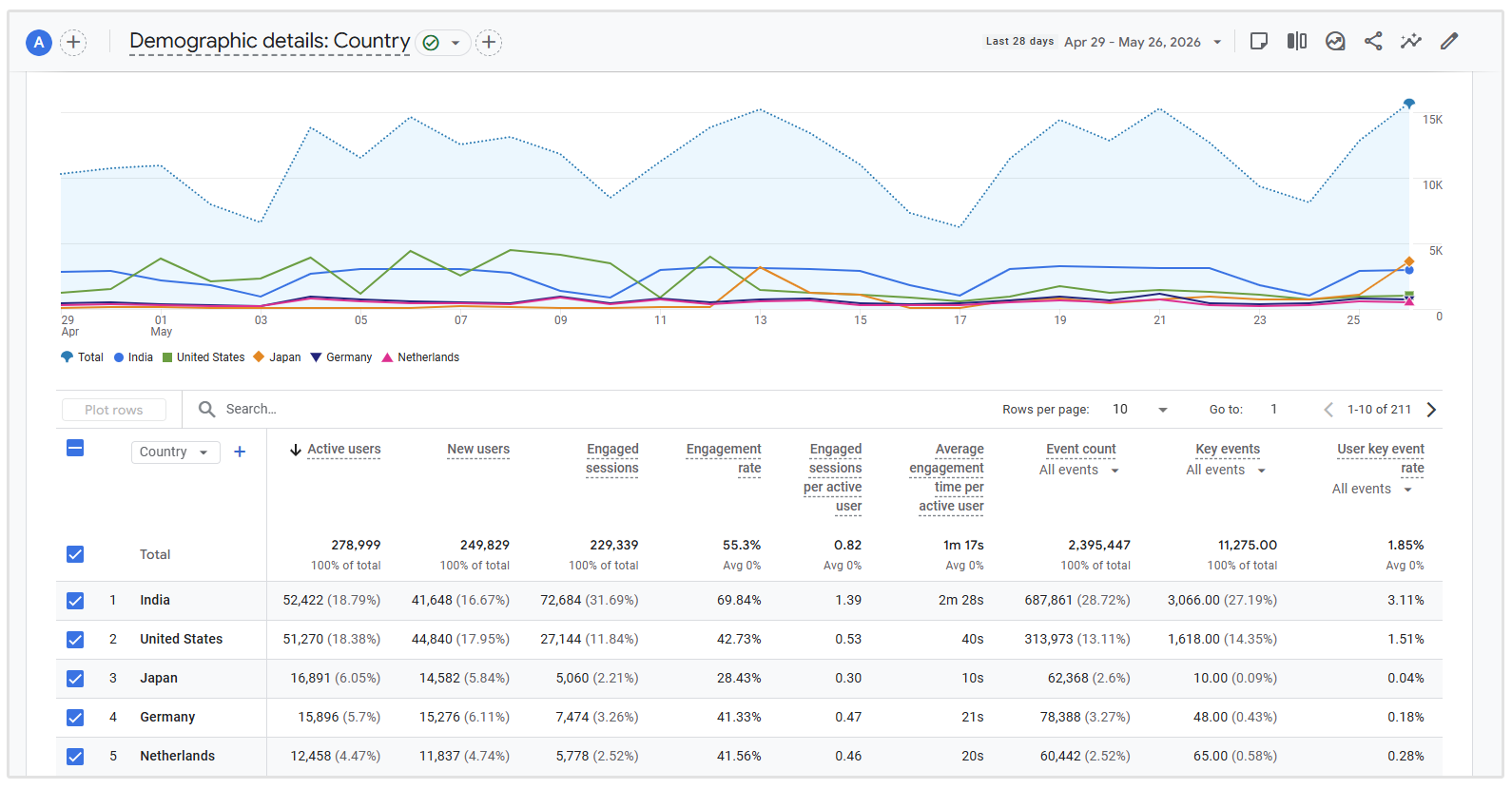
Start by reviewing your GA4 and Google Search Console data.
Look at where your organic traffic comes from, which countries are already visiting your site, and whether those visitors are engaging or converting.
For example, if you receive a steady amount of traffic from France but French users have low engagement, poor conversion rates, or quickly leave your site, it may be a sign that your content is not properly localized for that market.
You should also consider SEO localization when competitors are already ranking in the markets you want to enter, or when your business is preparing to launch products or services in a new country or region.
In short, localization SEO makes sense when there is proven demand, but your current website is not doing enough to turn that demand into traffic, trust, or conversions.
How to Create an SEO Localization Strategy
A good SEO localization strategy is not just about translating your existing pages into another language.
It starts with understanding which markets are worth targeting, how people search in those markets, and what changes your website needs before those localized pages can rank.
Here’s how to build a practical SEO localization strategy.
1. Choose the Right Markets to Target
Start by looking for markets where there is already some demand for your product, service, or content.
You can use GA4 to see which countries are already sending traffic to your website. To view your traffic by country in Google Analytics simply click on Reports > User attributes > Demographic details.
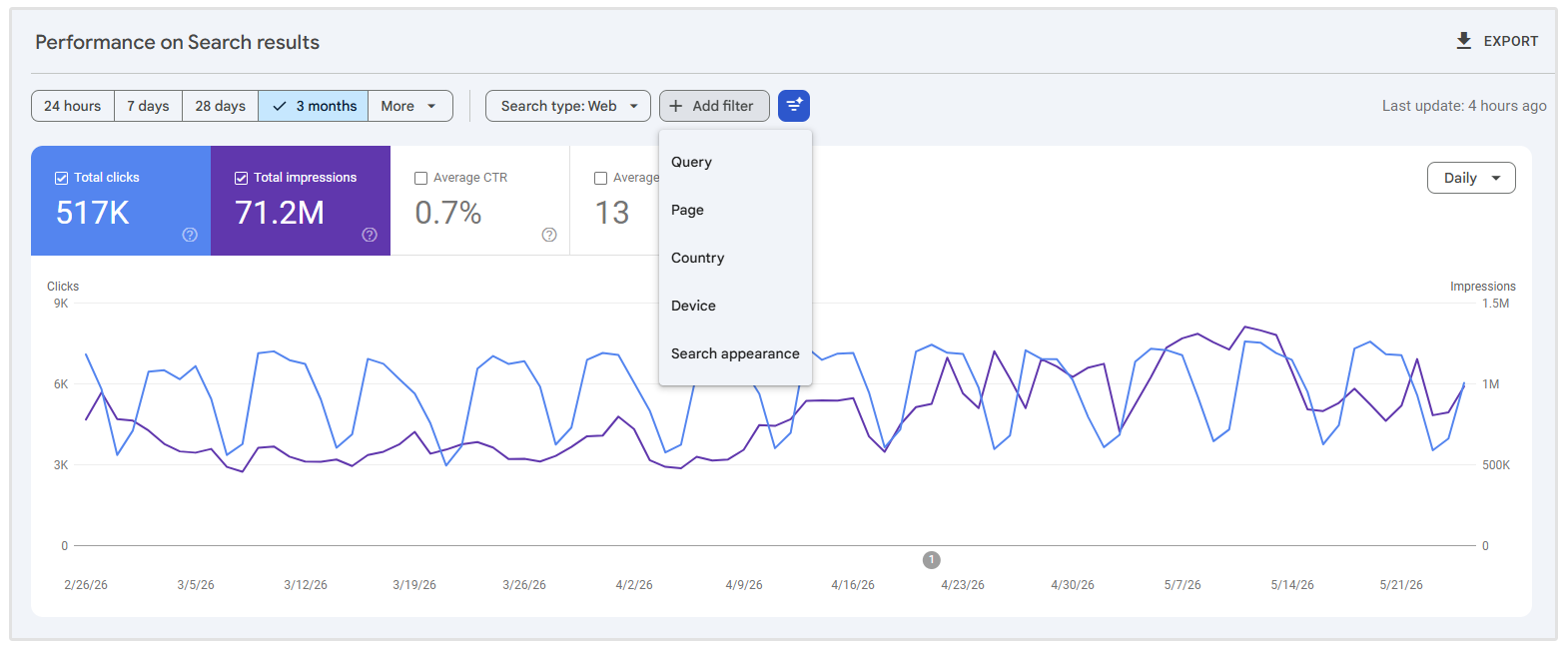
You can also use Google Search Console to review search performance by country, including clicks, impressions, queries, and pages. Google notes that Search Console can help you understand where your search traffic comes from and which queries bring users to your site.
To do this in GSC click on Performance > Search results. Then you'll see a chart on the right, this is where you are going to add a Country filter.
Look for patterns on GA4 and GSC such as:
- Countries already sending organic traffic
- Countries with strong engagement or conversions
- Countries with impressions but low clicks
- Markets where competitors already rank
- Regions where your product or service is available
- Countries where paid campaigns have already performed well
This helps you avoid localizing pages just because a market sounds attractive. Instead, you can prioritize countries where there is already evidence of demand.
For example, if your English website already gets traffic from Germany, and those visitors are viewing product pages or signing up for trials, Germany may be a better first localization target than a market with no existing demand.
2. Research Local Keywords
Once you know which markets you want to target, research how people in those markets actually search.
Do not simply translate your English keyword list. A direct translation can be technically correct but still miss the phrase people use in real searches.
This is why local keyword research should start with search intent, not language. The goal is to understand what users are trying to find in that market, then build the page around that demand.
"Translate the search intent, not the words. When Lions Clubs runs a service campaign in Kenya, we don't translate "volunteer opportunities near me" to Swahili.
We start from the Kenyan SERP: people there search "how to start a Lions club in my village" — completely different keyword, completely different page, completely different CTA. Translation is table stakes. Re-ranking the query is the work."
- Atdhe Trepça, Founder of Happy Productions
Another example of this is in the US where people may search for “sales tax software,” while users in the UK may search for “VAT software.”
The search intent is similar, but the terminology changes based on the market. If you simply translate or reuse your original keyword list, you may miss the keywords local buyers actually use.
This is where our Keyword Research Tool can help.
You can use it to check search volume, keyword difficulty, estimated traffic, CPC, and SERP results for keywords in different markets.
SEOptimer also supports keyword opportunities in more than 90 countries, which makes it useful when comparing search demand across international regions.
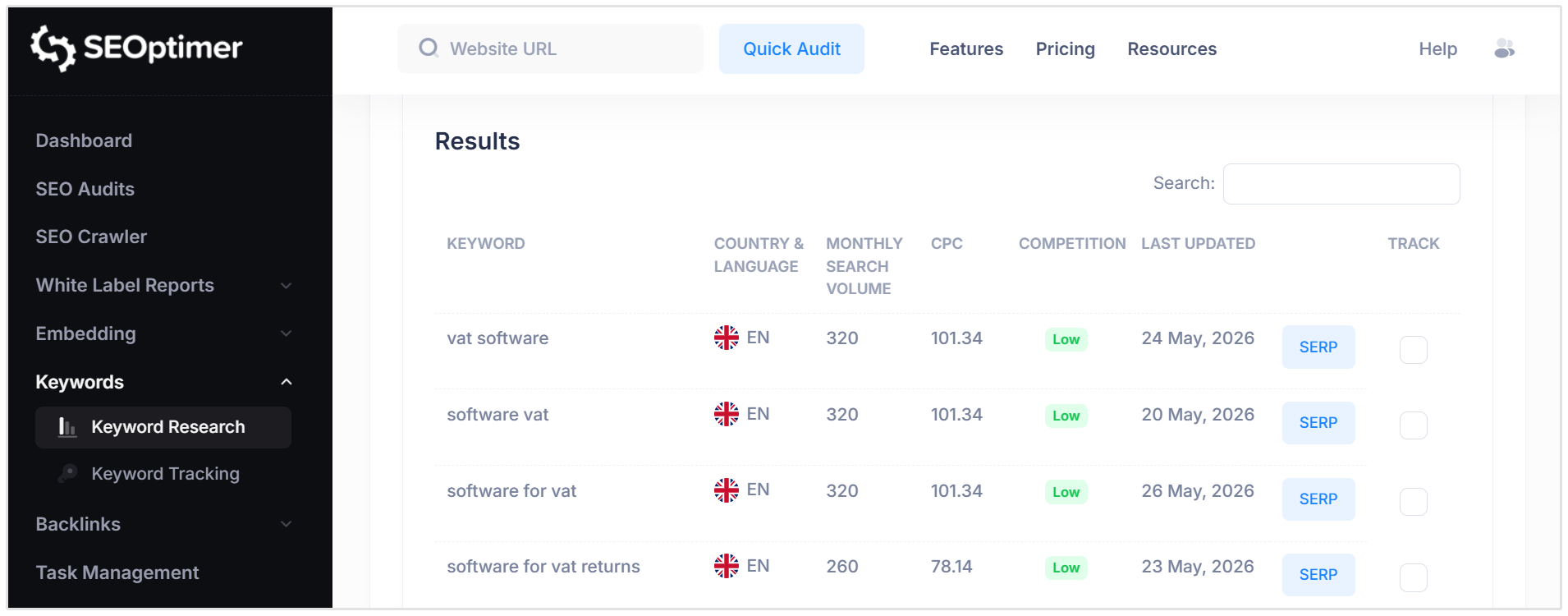
Start by entering your main keyword idea for the target market. Then review related keyword opportunities, search volume, competition, and the live SERP to see which pages already rank for that term.
You can also use SEOptimer’s Search by Domain option to research local competitors. Instead of starting with a keyword, enter a competitor’s domain or URL, and SEOptimer will show the keywords that site ranks for.
This can help you understand which search terms are already driving traffic in that market and where there may be gaps you can target.
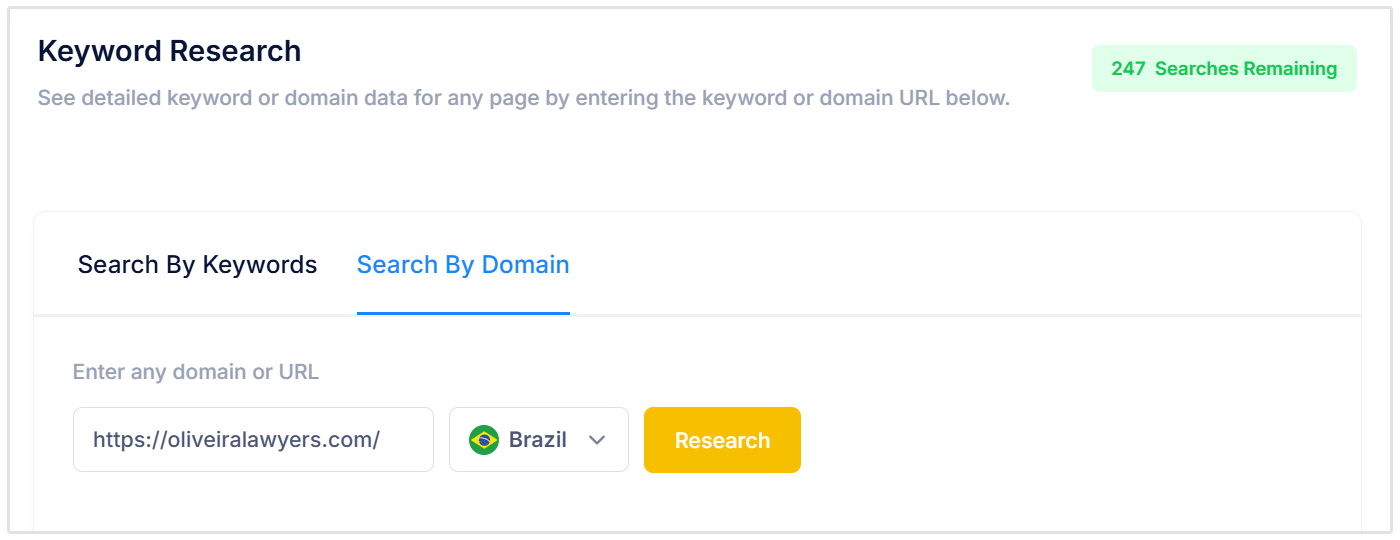
For each target market, review:
- Local search volume
- Keyword difficulty
- Search intent
- SERP competitors
- Related questions
- Spelling variations
- Regional phrases or slang
This is also where native speakers or local SEO specialists can add real value.
SEO tools can show search data, but local experts can help you avoid awkward phrasing, wrong intent, or keywords that technically translate but sound unnatural.
3. Map Keywords to the Right Localized Pages
After keyword research, map each target keyword to the most relevant page.
This keeps your localized SEO strategy organized and prevents multiple pages from competing for the same keyword.
For each page, decide whether it should be:
- Translated and lightly localized: best for simple pages where the search intent is almost identical across markets.
- Fully localized: best for product, service, landing, or pricing pages that need local examples, currencies, CTAs, and trust signals.
- Recreated from scratch: best when the local search intent is different from your original page.
This step is important because not every page needs the same level of work.
A help article may only need accurate translation and localized screenshots, while a landing page may need new copy, new keyword targeting, local testimonials, different CTAs, and market-specific proof points.
4. Localize Your On-Page SEO Elements
Your on-page SEO elements need to be rewritten for each target market, not copied over from the original page.
This includes:
- Title tags
- Meta descriptions
- H1s and subheadings
- URL slugs
- Image alt text
- Internal anchor text
- Product descriptions
- Calls to action
- Schema markup, where relevant
The goal is to make sure each localized page clearly targets the right keyword and search intent.
Also remember that some languages take up more space than English.
A title tag or meta description that works in English may become too long in German, Spanish, French, or Portuguese. So instead of directly translating your metadata, rewrite it to fit the local keyword, character limits, and search intent.
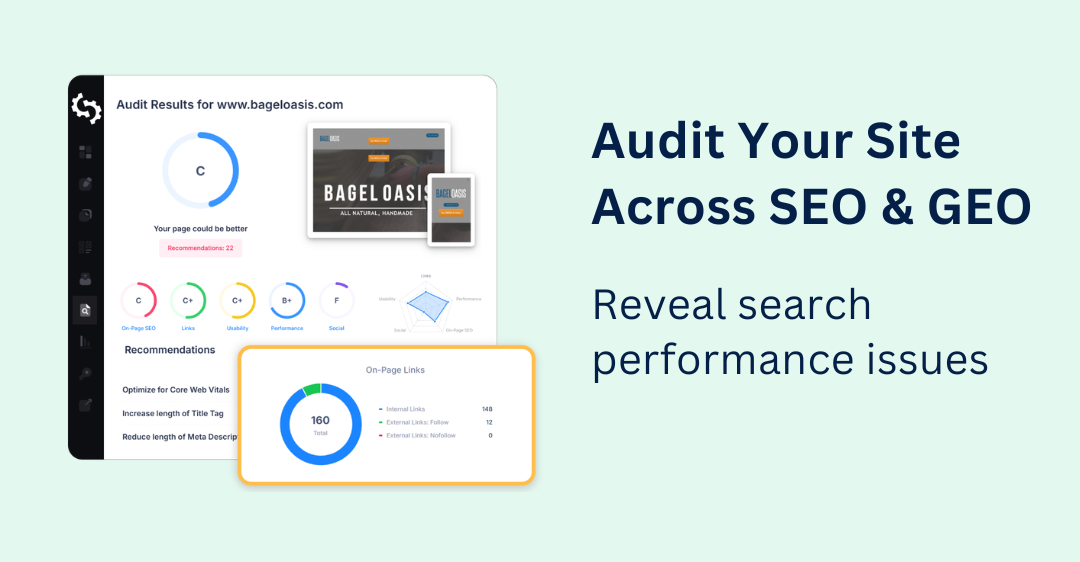
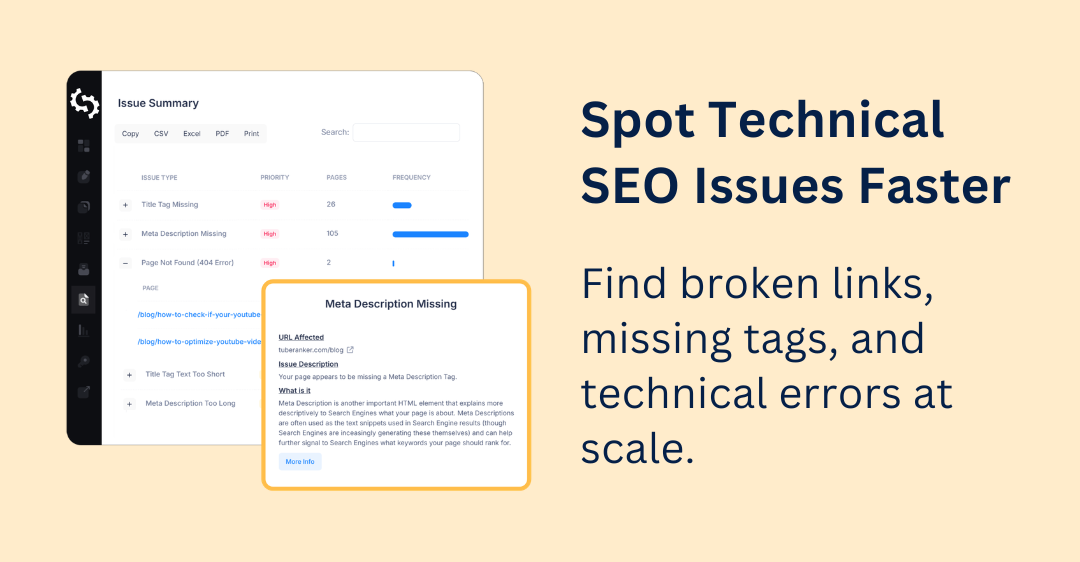
Before publishing, run the localized page through SEOptimer’s Free SEO Audit Tool.
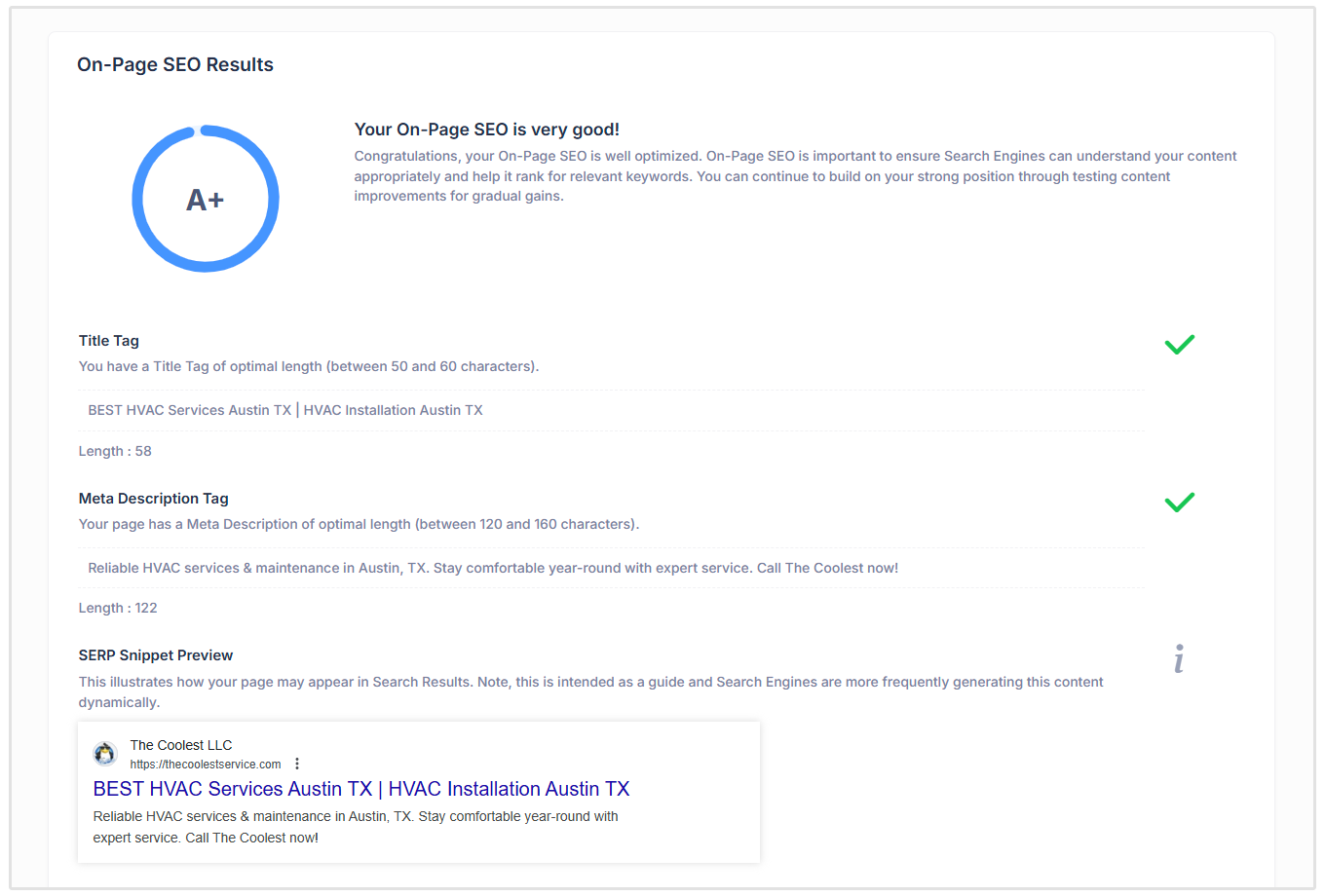
SEOptimer checks more than 100 website elements, including key on-page SEO factors such as title tags, meta descriptions, headings, keyword usage, image alt text, links, and page performance.
This helps you catch missing, duplicated, or poorly optimized elements before they affect your rankings.
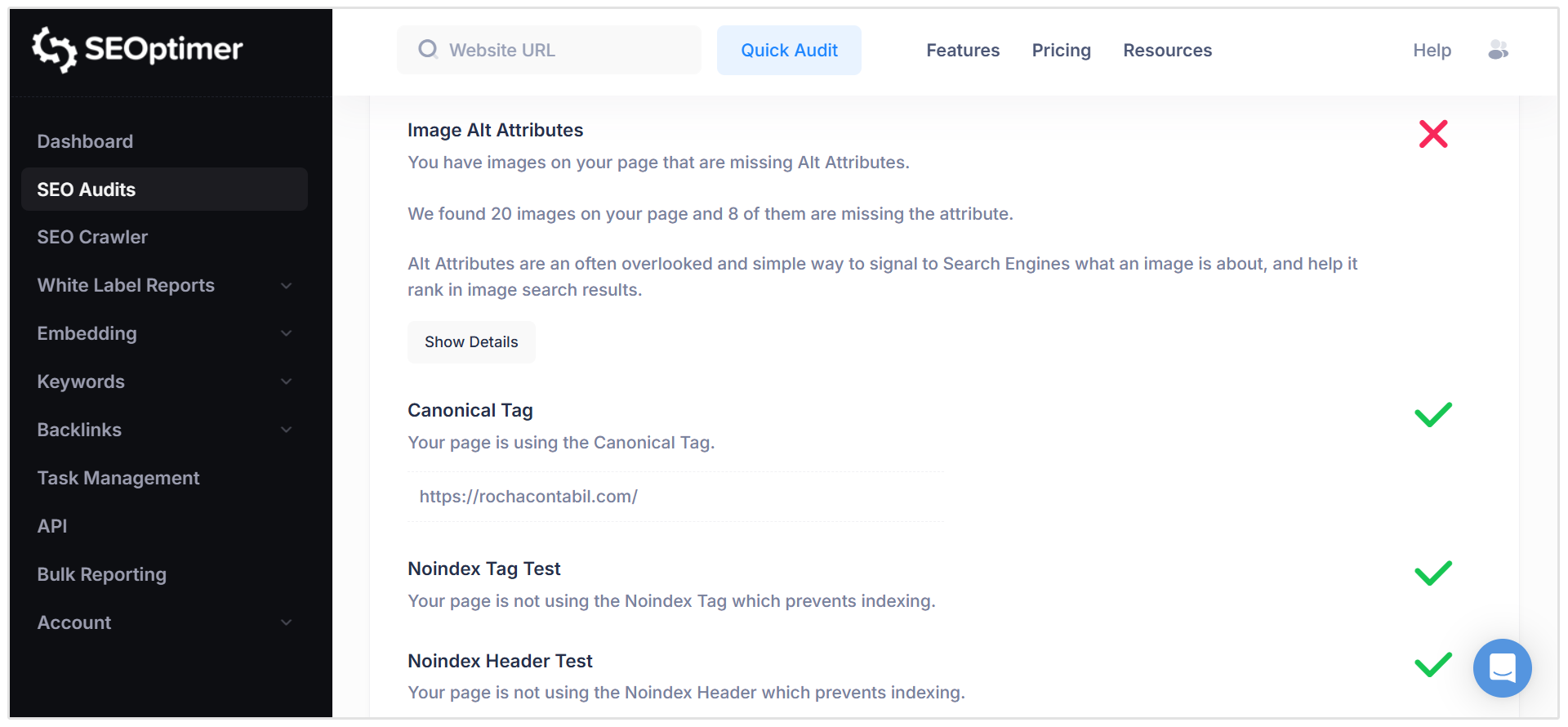
For localized pages, this is especially useful because it gives you a quick way to check whether each version of the page is properly optimized for its target market, instead of assuming the translated version is ready to rank.
5. Adapt the Page Content for Local Culture
Localization also means making the page feel natural to the people reading it.
That may include changing:
- Currency
- Date formats
- Measurement units
- Spelling
- Examples
- Screenshots
- Product use cases
- Customer stories
- Legal or compliance references
- Images and visuals
- Seasonal references
- Tone of voice
For example, a page written for a US audience may mention dollars, miles, Thanksgiving campaigns, or US-based customer examples. Those details may not feel relevant to a reader in Germany, Brazil, Japan, or South Africa.
"Localize the signals, not just the words. Currency, payment methods, units, date formats, contact info, regulatory disclaimers - these are how Google and users tell a real local site from a translated one. In regulated verticals like gambling, finance, or health, getting these wrong is also a compliance issue, not just an SEO one."
- Nikolay Krastev, SEO Consultant and Growth Leads
The goal is not to make every page completely different. It is to remove anything that makes the content feel foreign, confusing, or disconnected from the local user’s needs.
6. Choose the Right URL Structure
Before creating localized pages, decide how they will be organized on your website.
There are three common options:
| URL structure | Example | Best for |
|---|---|---|
| Subdirectories | example.com/de/ | Most businesses that want to keep authority under one domain |
| Subdomains | de.example.com | Businesses that need more separation between regional sites |
| ccTLDs | example.de | Brands that want strong local trust and have resources to manage separate domains |
For most businesses, subdirectories are usually the simplest and most practical option.
They keep your localized content under one main domain and are easier to manage from an SEO and reporting perspective.
In the case of SEOptimer, we chose to go the subdirectory route for our localized pages:
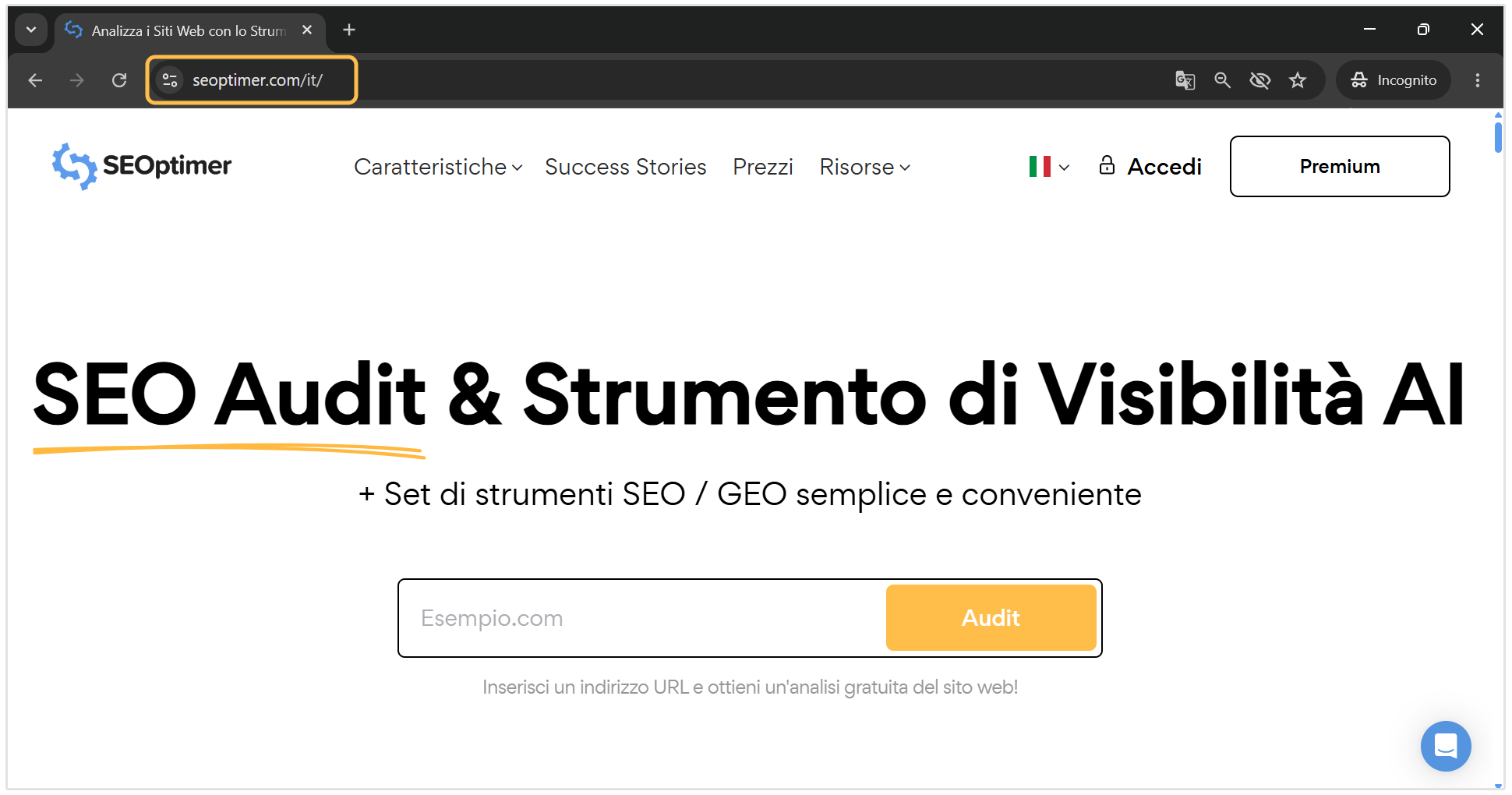
ccTLDs can send a strong local signal, but they also require more work. Each domain needs its own SEO authority, technical setup, content management, and backlink strategy.
I would avoid saying that subdomains are generally the least effective choice for SEO. That is a bit too absolute.
They can work, but they are often more complex to manage and may not be the best choice unless there is a specific reason to separate regional content.
7. Implement Hreflang Correctly
Hreflang helps search engines understand which language or regional version of a page should be shown to users.
For example, if you have separate English pages for the US and UK, hreflang can help Google understand which version is meant for each audience.
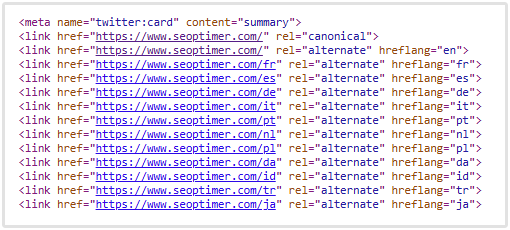
Google recommends using hreflang to tell it about localized versions of your pages, and says each language version should list itself as well as all other language versions.
Google also supports x-default for pages that do not target a specific language or region.
When implementing hreflang, make sure you:
- Use the correct language and country codes.
- Add self-referencing hreflang tags.
- Reference all alternate versions of the page.
- Use x-default where appropriate.
- Make sure hreflang URLs are indexable.
- Avoid pointing hreflang tags to redirected or broken URLs.
- Keep canonical tags aligned with the localized version of the page.
Hreflang does not guarantee rankings, but it helps search engines serve the correct version of your content to the correct audience.
8. Build Local Internal and External Links
Links are also part of SEO localization.
First, check your internal links. A German page should link to other German pages where possible, not constantly send users back to the English version of your website.
For example, your German blog post should link to the German product page, German pricing page, and German contact page if those pages exist.
Then look at external links. Backlinks from relevant local websites can help build authority in your target market.
These may include:
- Local blogs
- Industry publications
- Local directories
- Partner websites
- Local events
- Associations
- Regional news sites
- Customer case studies
You can use our Backlink Research Tool to analyze your own backlink profile and compare it with local competitors.
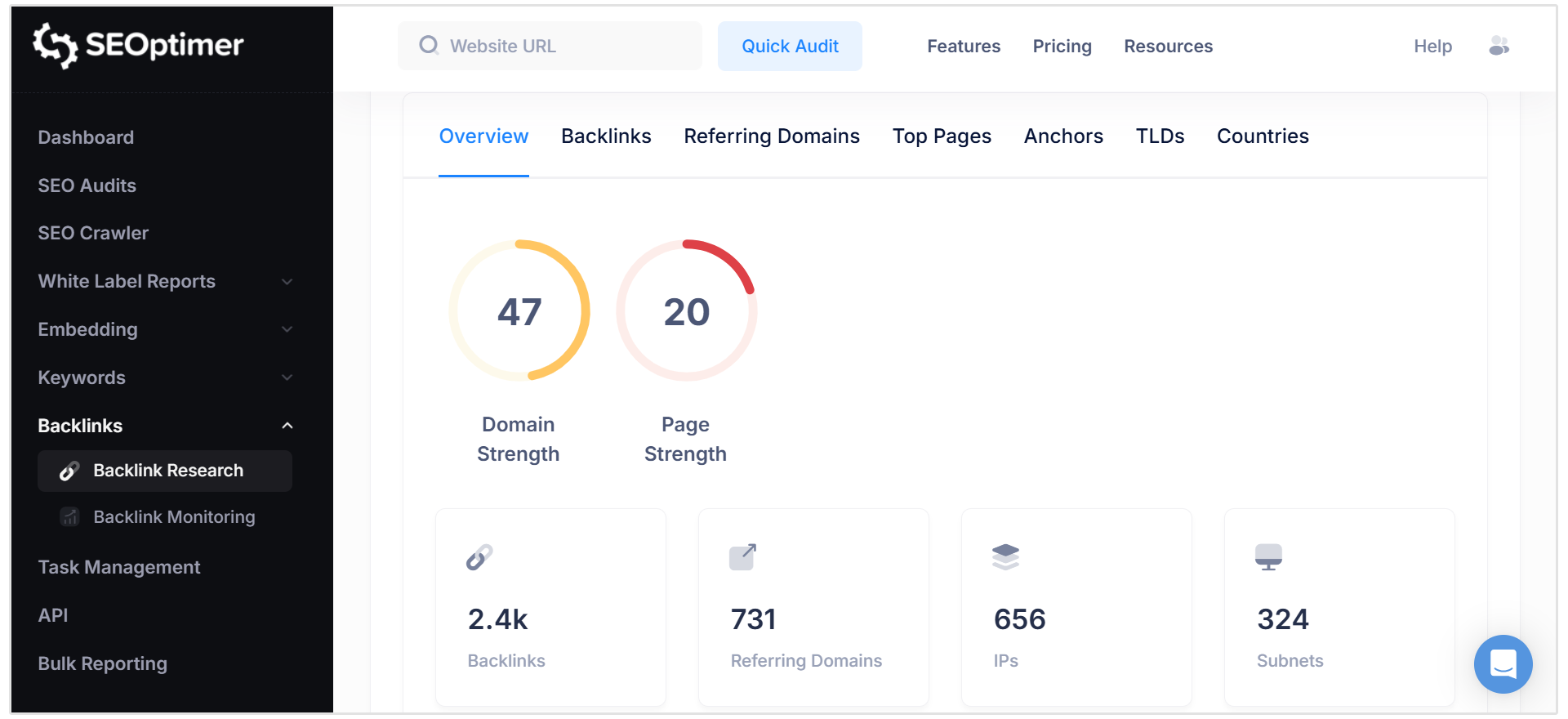
The tool shows key backlink metrics such as referring domains, anchor text, follow vs nofollow links, top linked pages, top anchors, linking TLDs, and the countries your backlinks are coming from.
This can help you find gaps in your local link profile and identify websites that may be worth targeting for outreach.
For example, if your competitors in Germany have links from local industry blogs, business directories, or regional publications, those sites may also be relevant opportunities for your own localized link-building campaign.
A local backlink can be more relevant for a specific market, but quality still matters. Focus on links from trustworthy, relevant websites rather than chasing links based only on the domain extension.
"Having a DA 70 in English means absolutely nothing when you launch in Brazil or South Korea. You are starting from scratch on local signals.
You need links from local media, citations in regional directories, and mentions from sites that Google considers relevant in that geography."
- Sonni Vasquez, SEO Consultant at ATTACH
9. Track Performance by Country and Language
SEO localization is not something you publish once and forget.
After your localized pages go live, monitor how each market performs. Google recommends using Search Console and Google Analytics together to get a more complete view of how users discover and experience your website.
You should also track your keyword rankings in each target market.
SEOptimer’s Keyword Tracking Tool lets you monitor rankings across Google, Bing, desktop, and mobile, with tracking available in 70+ countries. This is useful for SEO localization because rankings can vary significantly from one country to another, even for the same keyword.
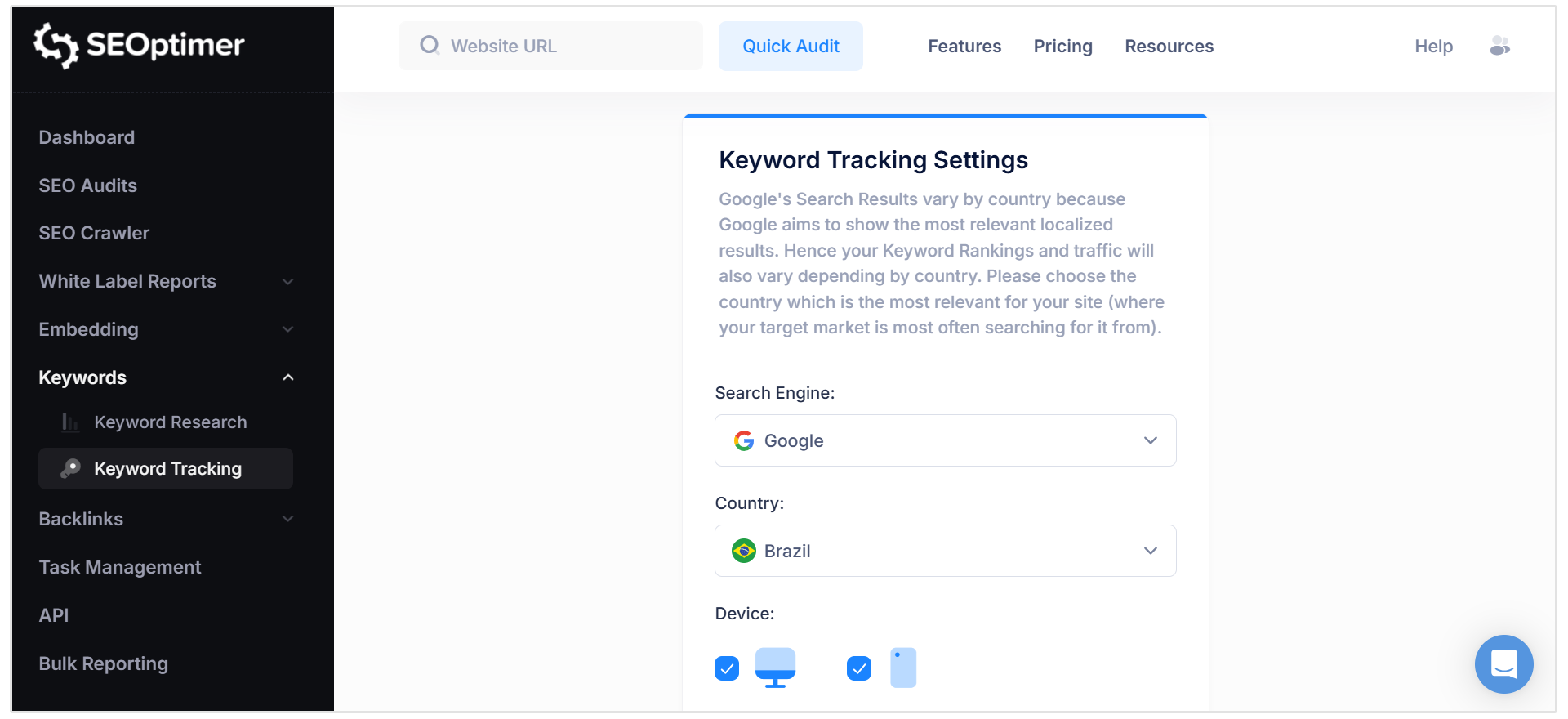
Track valuable SEO KPIs and metrics such as:
- Organic clicks by country
- Impressions by country
- Keyword rankings in each market
- Click-through rate
- Indexed localized pages
- Engagement rate
- Conversions by country or language
- Revenue or leads by market
- Hreflang errors
- Local backlinks
This helps you see which localized pages are working and which ones need further optimization.
For example, if a page gets impressions in Spain but very few clicks, your title tag or meta description may need to be rewritten for that market. If users click through but do not convert, the page may need stronger local trust signals, clearer pricing, or more relevant examples.
Common SEO Localization Mistakes to Avoid
Even if your content is translated well, small SEO mistakes can stop your localized pages from ranking. Here are the main ones to avoid.
Directly Translating Keywords
Do not translate your keyword list word for word.
A keyword can be technically correct but still not match how people search in that market.
Instead, do keyword research with a keyword research tool like SEOptimer or Google's Keyword Planner for each country or language. Look at local search volume, search intent, and the pages already ranking in that market.
Ignoring Technical SEO
Localized pages still need to be easy for search engines to crawl and understand.
Check that your hreflang tags, canonical tags, internal links, and XML sitemaps are set up correctly. If these elements are wrong, search engines may show the wrong page, ignore localized pages, or treat them as duplicates.
As Ahlem Mahroua from Nova Growth Studio puts it:
"If these are poorly implemented, Google may show the wrong country version, split ranking signals across duplicate pages, or fail to understand which audience each page is meant to serve. Technical SEO should support the localisation strategy, from the start, not after the content has been created."
- Ahlem Mahroua, Founder at Nova* growth studio
Using the Same Examples Everywhere
Localization is not only about language. Your examples, images, testimonials, and references should also feel relevant to the local audience.
A US-based case study or seasonal example may not connect with users in Germany, Japan, or Brazil. Update these details where needed so the content feels natural.
Forgetting to Localize Metadata
Your title tag and meta description are often the first things users see in search results.
If they are still in the original language, poorly translated, or missing the local keyword, users may be less likely to click. Rewrite your metadata for each market, including title tags, meta descriptions, URL slugs, image alt text, and Open Graph tags.
Auto-Redirecting Users Based on Location
Do not force users to a localized page based only on their IP address.
This can frustrate users and make it harder for search engines to crawl all versions of your site. Google recommends giving users links to switch between language versions instead of automatically redirecting them.
A simple language selector or small banner is usually a better option.
Frequently Asked Questions about SEO Localization
What exactly is SEO localization?
SEO localization is the strategy of adapting your website's content, technical structure, and keywords to rank highly in regional search engines while aligning perfectly with local cultural expectations and search behaviors.
Is SEO localization the same as translation?
No, translation only changes the words from one language to another. SEO localization adapts the keywords, metadata, technical tags, cultural references, and user experience to ensure the page ranks well and converts local visitors.
Why is local keyword research important for SEO localization?
Local keyword research uncovers the actual phrases native speakers type into search engines. Direct translations rarely match real search behavior, meaning you will target keywords with zero search volume if you skip this research step.
What is the best URL structure for SEO localization?
Use subdirectories (e.g., website.com/fr/) if you want to share domain authority across all your localized pages, which is the most cost-effective and efficient method.
Choose ccTLDs (e.g., website.fr) only if you have a massive budget and need maximum local brand trust.
Do I need hreflang tags for localized pages?
Yes. Hreflang tags are essential HTML elements that tell search engines exactly which language and region a specific page targets, preventing duplicate content penalties and ensuring the right user sees the right page.
Should I translate all my existing content?
No. You should strategically localize your top-performing pages and highest-converting product pages first. Use analytics to identify which pieces of content will deliver the highest return on investment in the new target market.
Conclusion
Implementing an SEO localization strategy requires research, technical precision, and cultural awareness.
By moving beyond basic translation and deeply optimizing your website for target markets, you can gain a massive competitive advantage.
Localization helps to capture high-intent international traffic, build trust with global consumers, and significantly increase your conversion rates worldwide.