


Marketing agencies are everywhere, but how do they actually make money?
If you’re starting an agency (or thinking about it), this is one of the most important things to understand.
Agencies can combine different income sources, pricing approaches, and strategies to create consistent cash flow and protect their margins over time.
In this guide, we’ll break down exactly how marketing agencies generate revenue, from core services and pricing models to more unique strategies used to increase profitability.
By the end, you’ll have a clear picture of how marketing agencies make money and how to apply these insights to your own agency.
How do Digital Marketing Agencies Make Money?
Many marketing agencies don’t rely on a single income source. Instead, they build revenue through a combination of services and delivery models.
Let us look closely at the primary ways all types of agencies bring in cash.
Selling Marketing Services
The most direct way agencies make money is by offering core marketing services.
These can include:
- Search engine optimization (SEO)
- Pay-per-click (PPC) advertising
- Social media management
- Content marketing and email campaigns
Each service is designed to solve a specific business problem like increasing website traffic, generating leads, or improving customer retention.
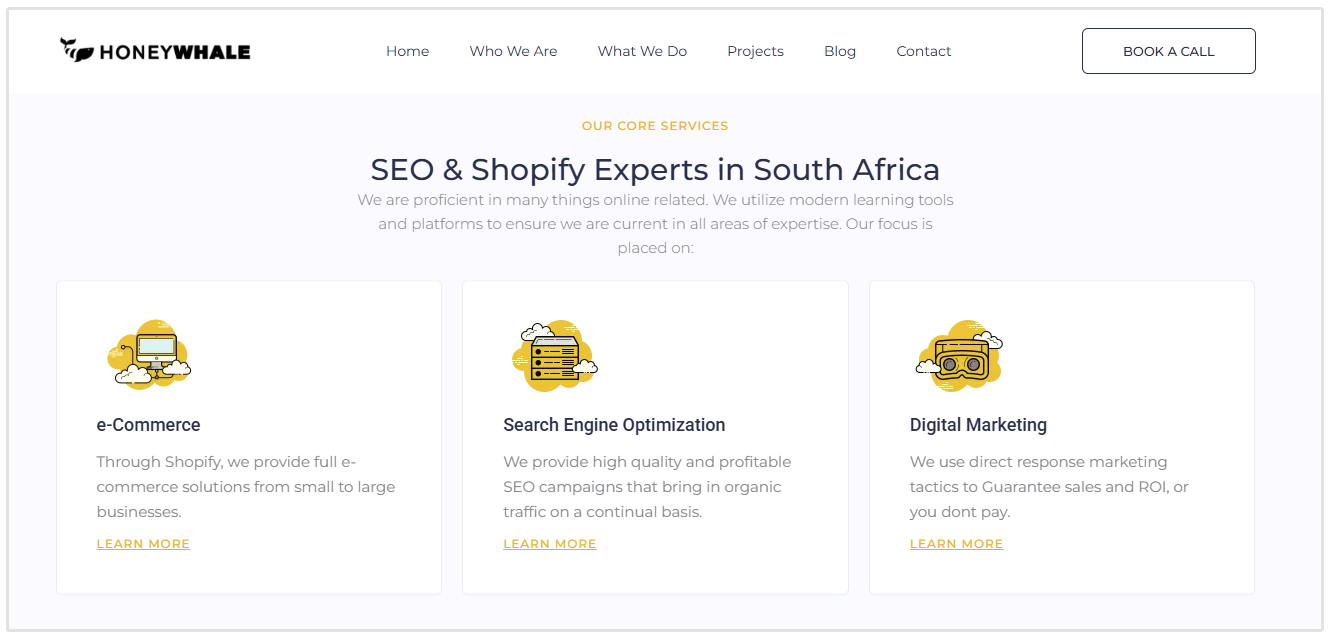
Interestingly, not all agencies offer every service. Many agencies, like HoneyWhale, which focuses mainly on e-commerce SEO and performance marketing, choose to do one thing exceptionally well rather than trying to be a full-service provider from day one.
From a business perspective, agencies price these services to cover delivery costs (such as team time, tools, and overhead) while maintaining a healthy margin.
Services like SEO and content marketing are often more profitable because they rely heavily on expertise and strategy rather than ongoing ad spend.
However, the real advantage lies in how agencies package and pitch their services.
High-performing agencies position their services as outcomes (like lead generation or revenue growth), rather than just marketing services.
This allows them to justify higher fees and build more valuable client relationships over time.
Partnerships with Other Agencies
Another effective way agencies make money is through strategic partnerships with complementary service providers.
Instead of trying to offer every service in-house, many agencies collaborate with specialists.
For example, a social media agency might partner with a web development firm, or an SEO agency might work closely with a paid ads specialist. These partnerships allow both parties to expand their service offering without increasing overhead.
A lot of web design companies either do not offer SEO or do it poorly. Building relationships here has been invaluable. When a new website launches without a strategy behind it, it is an easy conversation to step in and help.
- Phil Gregory, Managing Director at Peak District SEO
In most cases, agencies refer clients to one another and earn a referral fee or revenue share on closed deals. This creates an additional income stream without requiring extra delivery work.
Client Referrals
Client referrals are one of the most reliable and cost-effective ways agencies generate new revenue.
Instead of relying solely on cold outreach or paid acquisition, successful agencies turn their existing client base into a consistent source of high-quality leads.
When a client refers your agency, there’s already a level of trust established making those prospects far more likely to convert.
And according to James Nathan from MarketJar, these are the best type of clients.
The best clients we've brought on came through referrals. Not cold email, not ads, not clever funnels. Someone we worked with told someone they knew that were a solid option. We still do outreach and it does work very well, but nothing closes as cleanly as a warm intro from a happy client.
- James Nathan, Founder at Market Jar
Many agencies offer incentives such as discounts, commissions, or service credits in exchange for introductions. Others take a more organic approach, simply focusing on delivering strong results and client experiences that naturally lead to word-of-mouth recommendations.
Warm leads (like referrals) typically move through the sales process faster, require less convincing, and often come in with higher intent.
This reduces customer acquisition costs while increasing close rates and overall profitability.
Commission from Ad Placements
Another way agencies make money is through commissions on ad placements across third-party channels.
So the way this tactic works is agencies source placements directly across channels such as niche websites, industry newsletters, online publications, or even offline media like billboards and print.
In these cases, the agency is effectively acting as a broker between the client and the media owner.
Revenue comes from the gap between what the placement costs and what the client is charged.
The agency may negotiate a discounted rate with a publisher and resell that placement at a higher price.
What makes this model interesting is that it’s less about ongoing management and more about access and deal-making.
Agencies that specialize here often build strong relationships with publishers, gain early access to inventory, or bundle placements into packages that clients wouldn’t be able to secure on their own.
While this approach is rooted in traditional advertising, it still plays a role today—especially in sponsorships, direct media buys, and brand-focused campaigns where placement quality matters more than algorithmic optimization.
This approach comes from the old days of traditional advertising and isn’t as widely used today. Most agencies now separate media spend from their fees.
Affiliate Marketing
Affiliate marketing allows agencies to make more money by recommending tools they already use in their day-to-day work.
Most agencies rely on software for things like SEO tracking, email marketing, analytics, and CRM.
Many of these platforms offer affiliate programs, meaning the agency earns a commission when a client signs up through their referral link.
For example, an agency managing email marketing for their clients might recommend a tool like Active Campaign to help clients send out regular email newsletters.
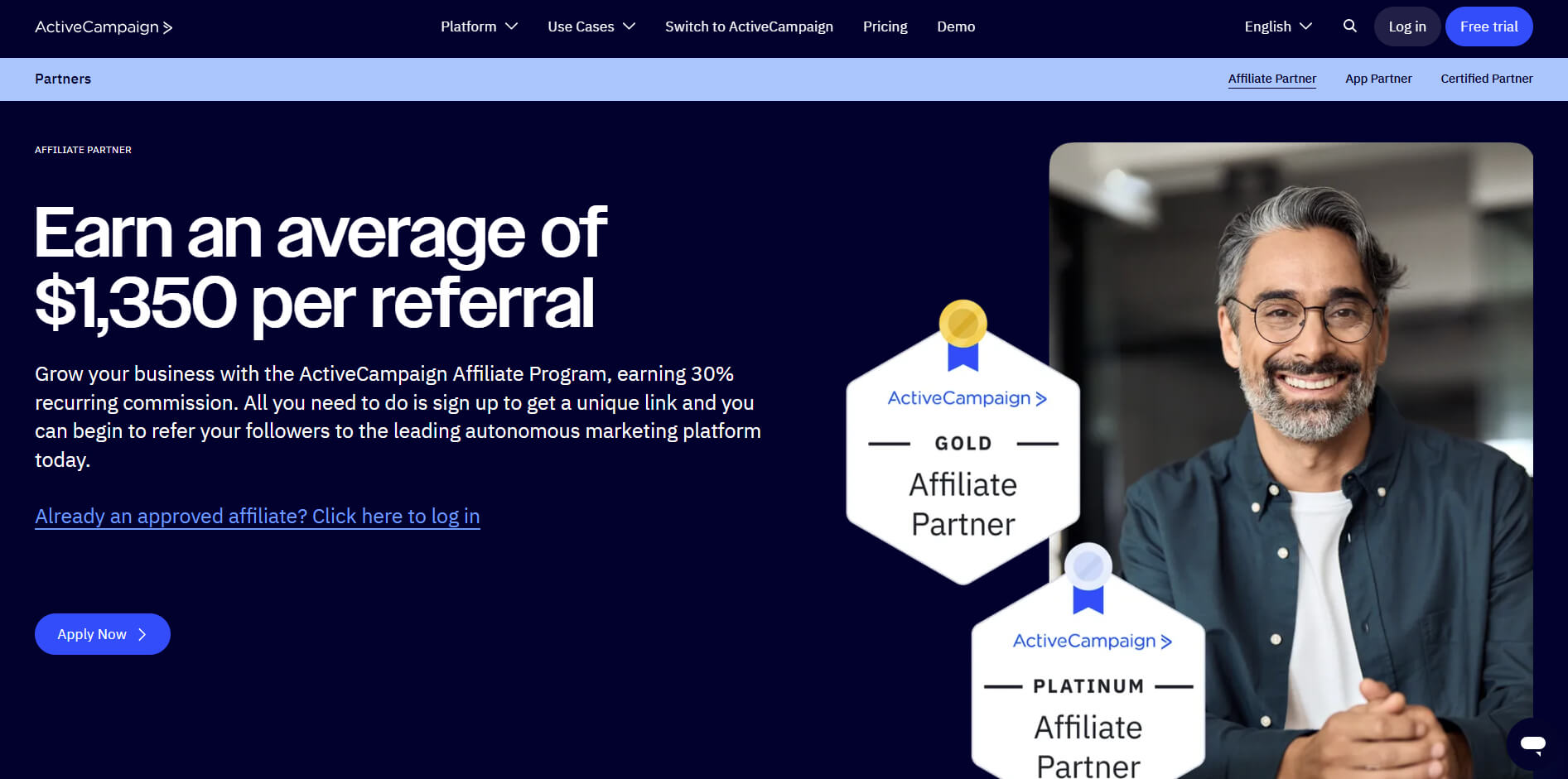
If the client signs up through the agency’s link, the agency earns a recurring commission without any extra delivery work.
The key is that these recommendations are naturally embedded into the agency’s workflow. Instead of selling something extra, the agency is simply extending value while creating a small but scalable revenue stream on the backend.
Selling Digital Products and Courses
Some agencies increase revenue by turning their processes into products.
Instead of only selling services, they package what they already do into things like:
- Online courses
- Workshops
- Webinars
- Templates
- E-books
For example, an SEO agency might sell the exact audit template they use for clients. Or a PPC agency can create a course on how to properly set up a Google Ads campaign.
A real-world example of this is Exposure Ninja, which sells a marketing book alongside its core services. The book has received more than 960 reviews, showing real demand and proving that these types of products can generate meaningful additional revenue.

These templates and downloadables are usually sold as low- to mid-ticket products ($20–$500), while courses or training programs can go much higher.
Creating and Selling a SaaS Product
Some agencies expand beyond services by building their own SaaS (software-as-a-service) products.
These products are sold on a monthly subscription, creating predictable recurring revenue.
But, building a SaaS product isn’t as simple as it sounds. The cost associated with building a software product can be high, especially if you don’t have any development experience.
However, the ROI can be significant if you manage to pull it off by building a product that people and businesses need.
The most successful tools come from real problems an agency is already solving. Instead of guessing what the market needs, agencies look inward and ask:
- What tasks are we repeating manually every week?
- Where are the biggest bottlenecks in our workflow?
- What do clients keep asking for that we can’t easily scale?
A strong example of this is Distilled, which developed its own SEO A/B testing platform, SearchPilot.

You can also get insight directly from clients by asking:
- What processes are you struggling to automate?
- What tools are you currently using (and what’s missing)?
Hosting Events
Some agencies generate revenue by hosting events, workshops, and webinars.
These can range from small paid training sessions to large-scale conferences where agencies bring together industry professionals, clients, and sponsors.
Revenue comes from ticket sales, sponsorships, or a combination of both.
Attendees paid for tickets to learn from industry experts, while sponsors paid for exposure to a highly targeted audience.
Beyond direct revenue, events also serve as a positioning tool.
They help agencies build authority, strengthen relationships, and generate high-quality leads.
Consulting and Strategy Fees
Not every client needs full-service execution, many just want expert guidance.
Agencies tap into this by offering consulting as a standalone service. Instead of managing campaigns, they help clients make better decisions through strategy sessions, audits, and advisory calls.
This can include:
- Reviewing a marketing strategy
- Identifying gaps in a sales funnel
- Refining positioning and messaging
- Advising on campaign structure before launch
For example, a client might book a one-hour session to troubleshoot poor ad performance, or pay a flat fee for a full marketing roadmap.
Consulting is typically priced at a premium (either hourly or as a fixed engagement) because clients are paying for experience and insight, not execution.
From an agency perspective, it’s a high-margin service. It requires minimal delivery time, doesn’t rely on a large team, and can often be layered on top of existing services as an additional revenue stream.
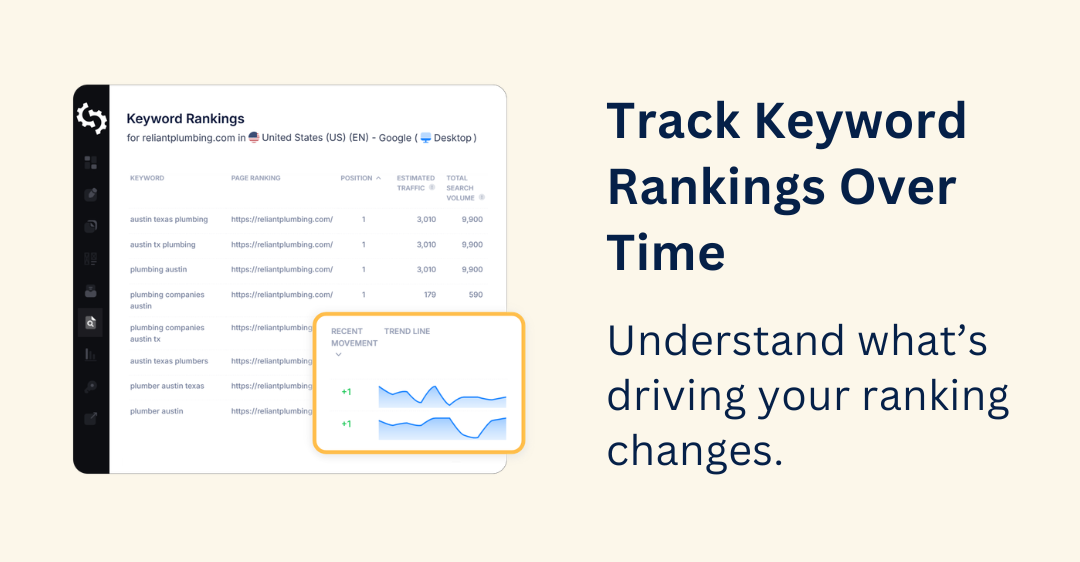
White Label Services
White labeling is when an agency delivers work on behalf of another agency, but under that agency’s brand.
Instead of selling directly to end clients, the agency acts as a behind-the-scenes fulfillment partner.
This is common when a full-service agency wants to offer additional services like SEO or PPC without building an in-house team.
A well-known example is TheHoth, which provides SEO services that agencies can resell under their own branding.
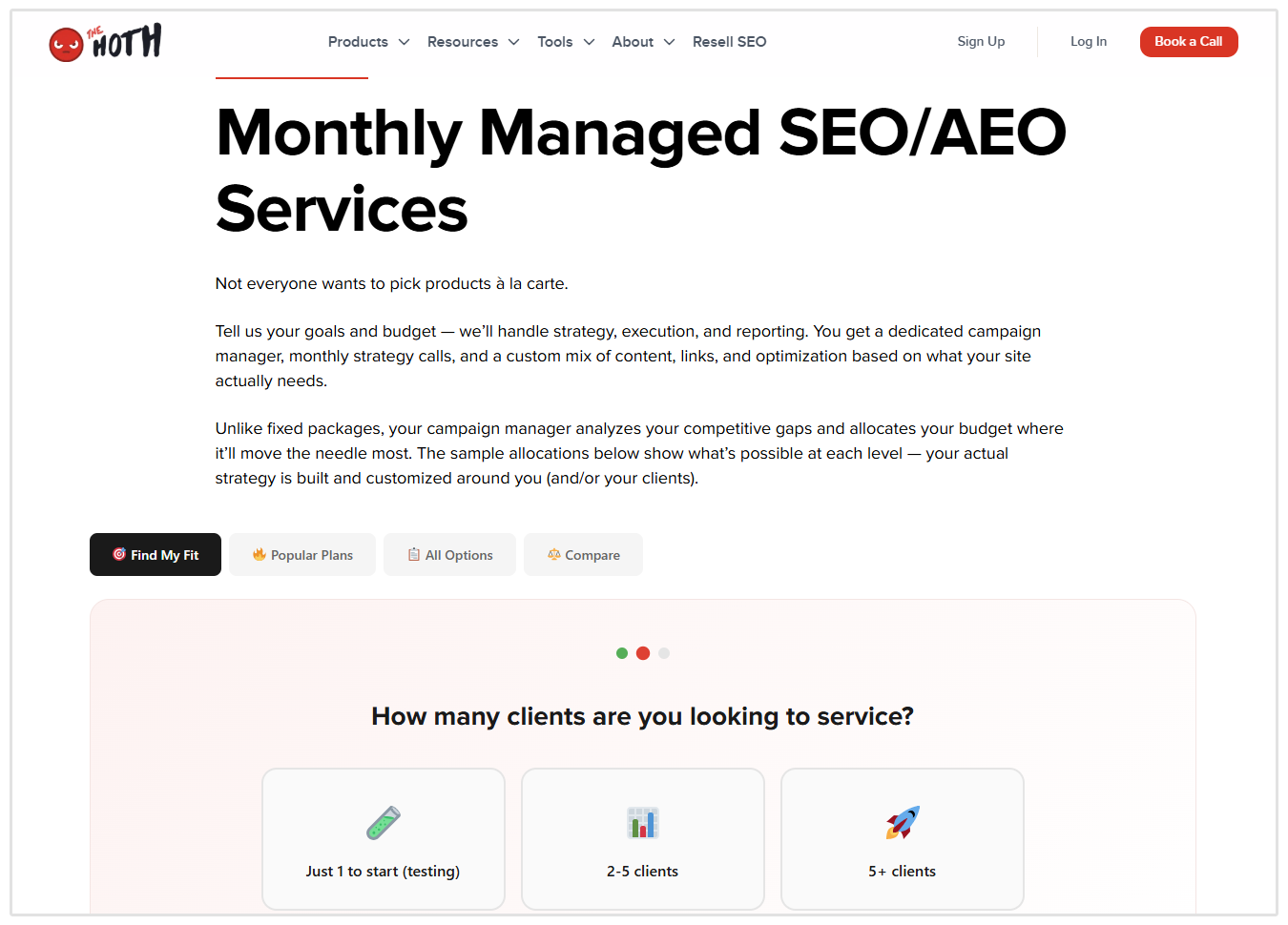
The client never sees TheHoth. The partner agency owns the relationship, while TheHoth handles the delivery.
This model benefits both sides. The selling agency can expand its service offering without increasing overhead, while the fulfillment partner gains access to a steady stream of work without needing to acquire clients.
For smaller or specialized agencies, white labeling can be a reliable way to generate consistent revenue, even if it means giving up direct brand visibility.
Core Agency Pricing Models
How an agency charges is just as important as how it generates revenue. The right pricing model directly impacts profitability, cash flow, and scalability.
Here are the most common models used across the industry:
- Retainers: A fixed monthly fee for ongoing services. The marketing retainer is the most popular model because it creates predictable, recurring revenue.
- Project-Based Pricing: A flat fee for a defined deliverable, such as a website build.
- Hourly Billing: Charging based on time spent, often used for consulting or ad hoc work.
- Value-Based Pricing: Pricing based on the results or impact delivered, rather than time or deliverables.
If you want a deeper breakdown of each model (with examples, pros and cons, and when to use them), check out our full guide on agency pricing models.
Ways to Improve Agency Profitability
Generating revenue is only half the battle. Successful agencies actively optimize their operations and processes to keep more of the money they earn.
Raise Your Prices
The most immediate way to improve your profit margin is to raise your prices.
Many agencies undercharge for their services, especially in their early years.
By carefully reviewing your value proposition and researching industry benchmarks, you can confidently increase your rates to reflect the true value you provide to your clients.
Productize Services
Productizing your services means packaging them with a set price, fixed scope, and clear deliverables.
For example, offering a "Detailed Website SEO Audit" for a flat $1,500 fee is a productized service.
This approach eliminates endless scope creep, makes the sales process faster, and allows your team to execute the work with greater efficiency.
This is especially true for agencies that rely on repeatable services like SEO, where clearly defined offerings make both delivery and pricing more predictable.
James Taylor is an SEO consultant and runs his own consulting service. He told us that as a white label agency, he's been able to generate revenue by productizing SEO offerings:
Having SEO products not only makes it easier for us to understand margins, but it's also incredibly efficient for agencies to purchase exactly what they need for each SEO campaign through our website, as they can see exactly what they're getting and how that then relates to their overall outsource spend on a per-project basis.
- James Taylor, SEO Consultant
Automate Backend Processes
Manual tasks drain agency resources.
Forward-thinking companies automate their backend operations, such as client onboarding, monthly reporting, and invoicing.
By using software to handle these repetitive tasks, you free up your team to focus on high-impact, strategic work that drives real results for your clients.
Build SOPs (Standard Operating Procedures)
Documenting your processes through Standard Operating Procedures ensures consistent service delivery.
When every team member follows a proven checklist, errors decrease and efficiency skyrockets.
Clear SOPs also make it much easier to train new employees, allowing your agency to scale operations smoothly without sacrificing the quality of your work.
Just Generate More Leads
Increasing your lead volume naturally leads to more revenue opportunities.
Agencies should treat their own business like their best client.
Implement strong SEO practices on your agency website, run targeted outbound campaigns, and leverage platforms like LinkedIn to keep your sales pipeline full of qualified prospects.
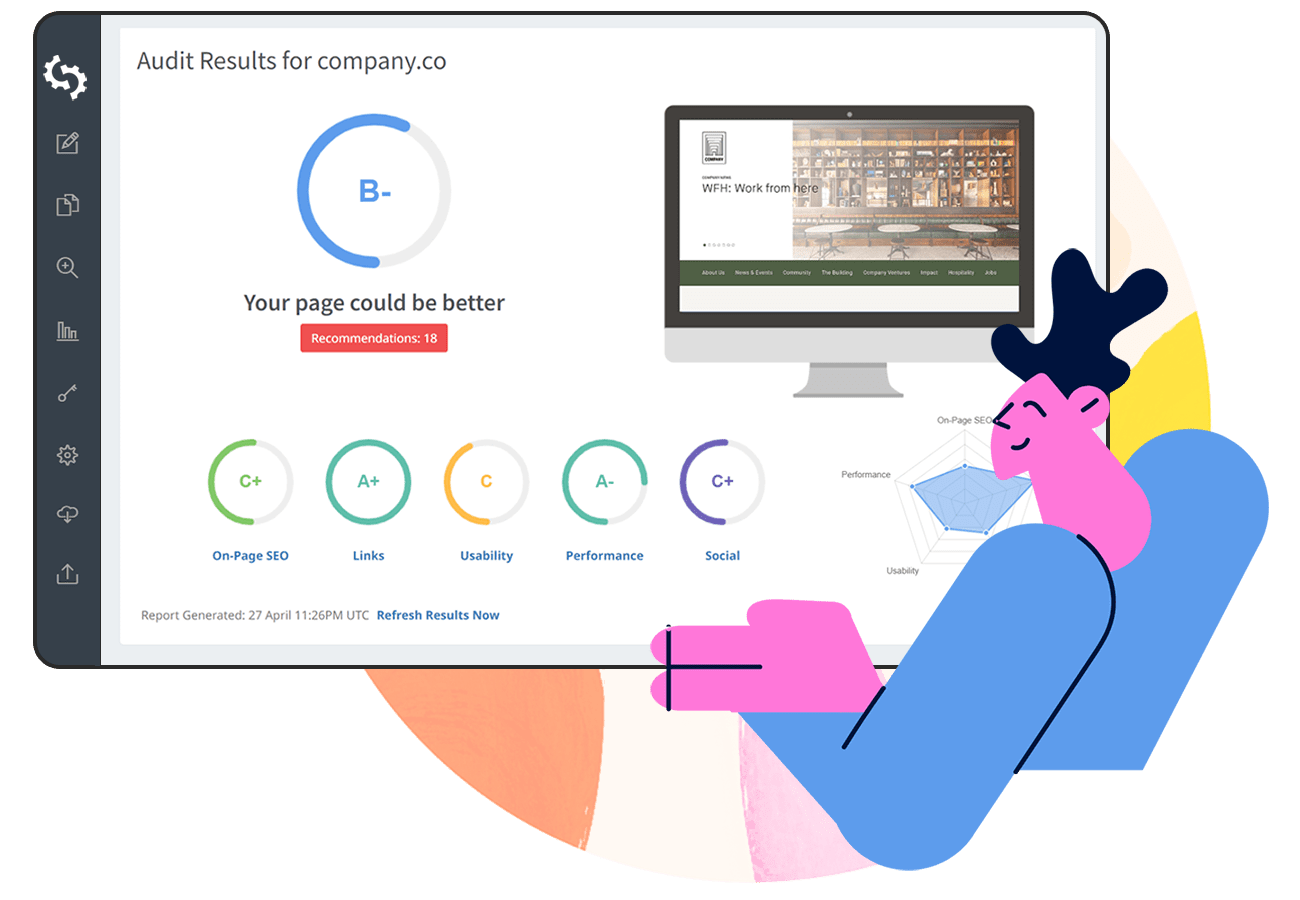
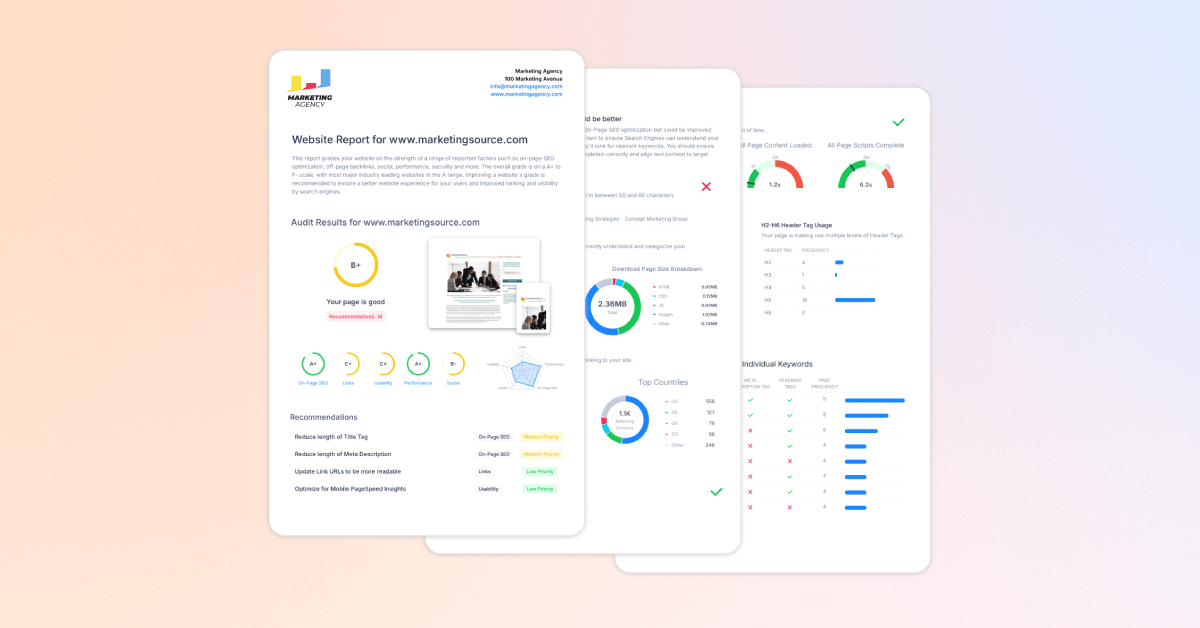
You can also build lead generation directly into your website. For example, many agencies use our Embeddable Audit Tool to offer instant website audits to visitors. In exchange for their results, users submit their contact details.
Embed forms can be completely customized according to your agency's colors, branding, etc.
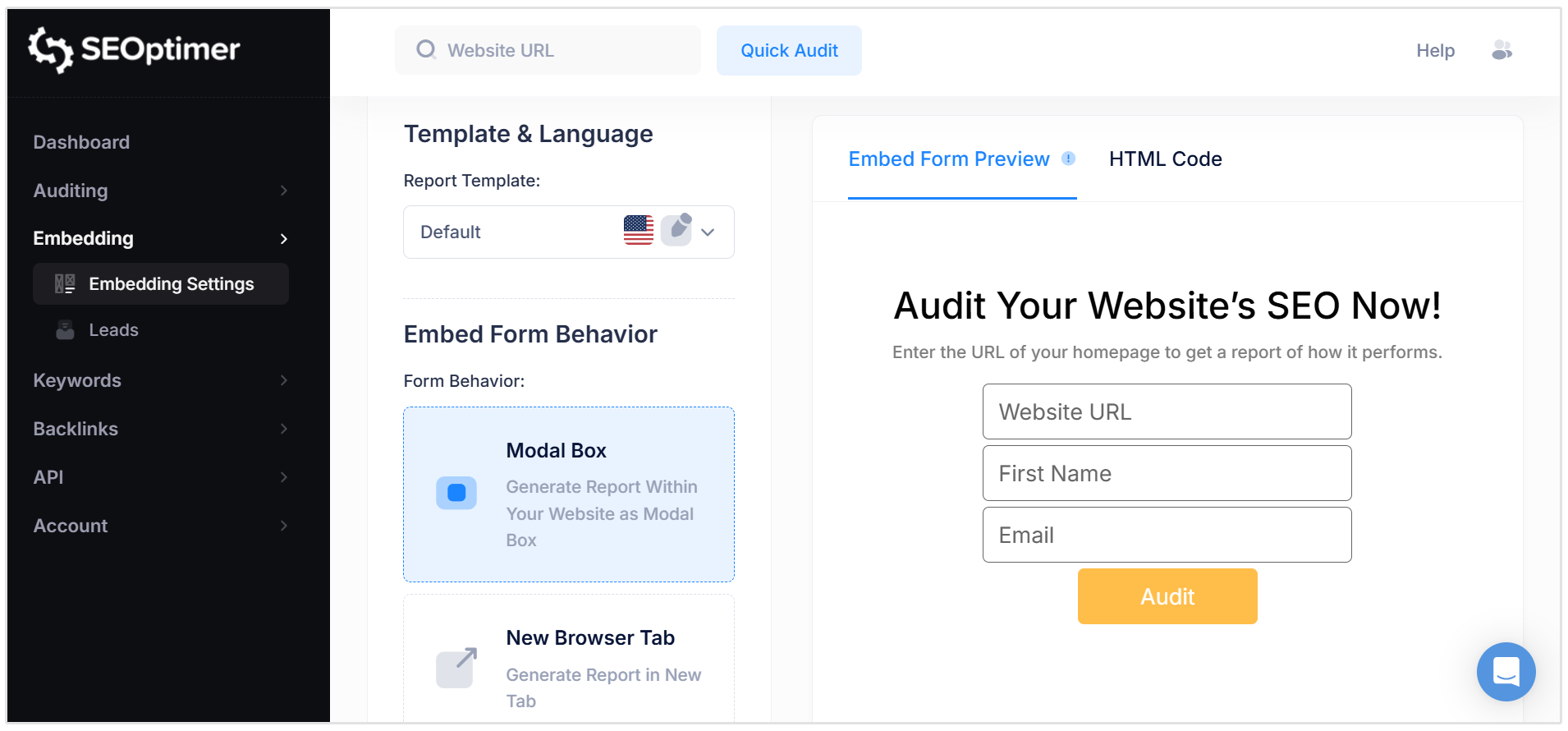
For instance, check this example of our embed form being used on the WebMarketers website.
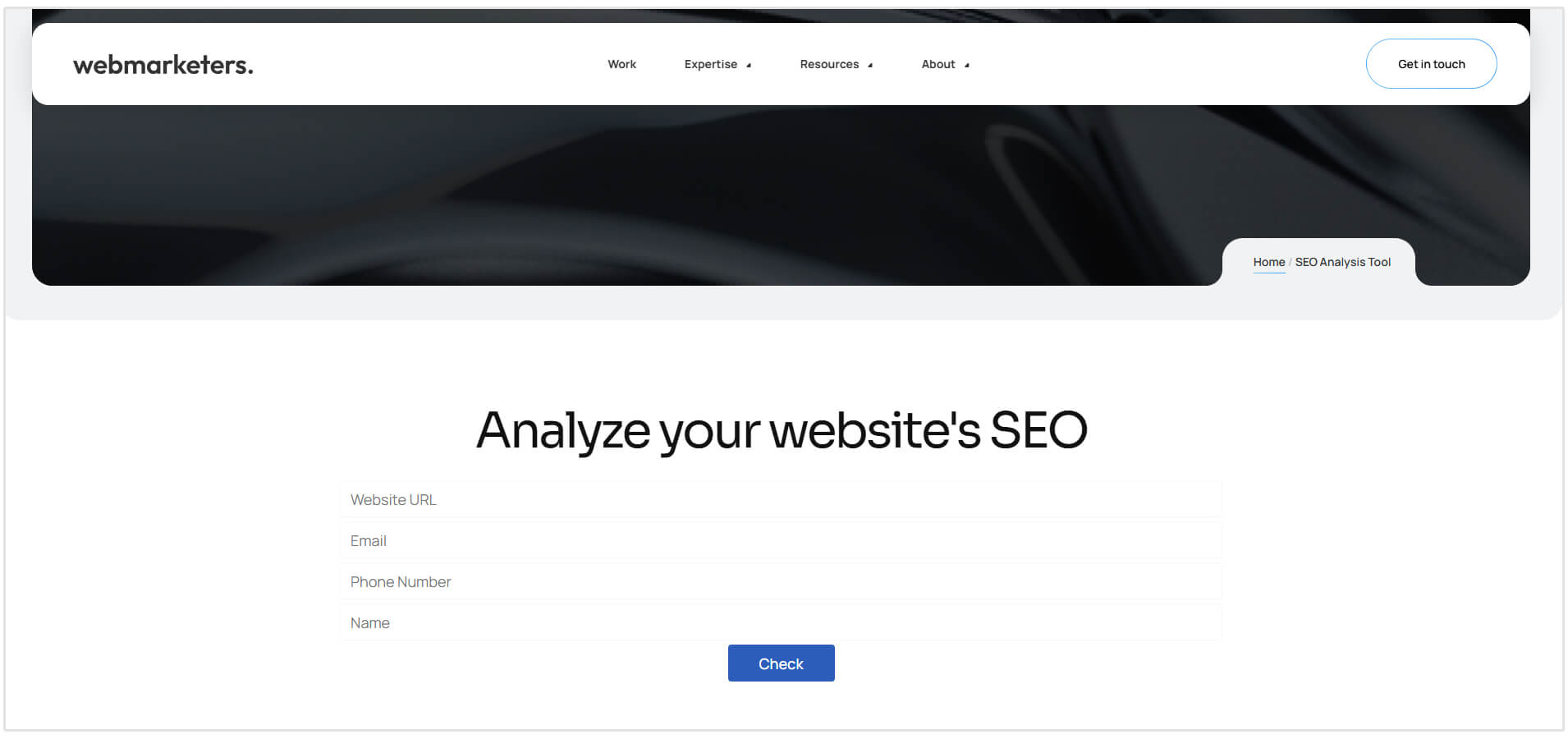
This solution works well because it provides immediate value upfront, while positioning your agency as the expert that can help fix the issues uncovered in the audit.
Focus on High-Margin Services
Not all services are equally profitable.
Analyze your current offerings to determine which ones consume the most time versus which ones generate the most profit.
Focus your sales efforts on high-margin services like strategic consulting or specialized SEO packages, rather than low-margin, high-friction tasks.
Move to a Value-Based Pricing Model
Transitioning away from hourly billing toward a value-based model allows you to decouple your time from your earnings.
When you charge based on the tangible business results you deliver, you can significantly increase your profit margins.
This requires clear communication with your clients and airtight tracking to prove your impact.
Use the Right Tools
Investing in the right marketing and management software directly impacts your bottom line.
Tools for SEO project management, automated email follow-ups, and precise time tracking can help you identify where your agency is losing money.
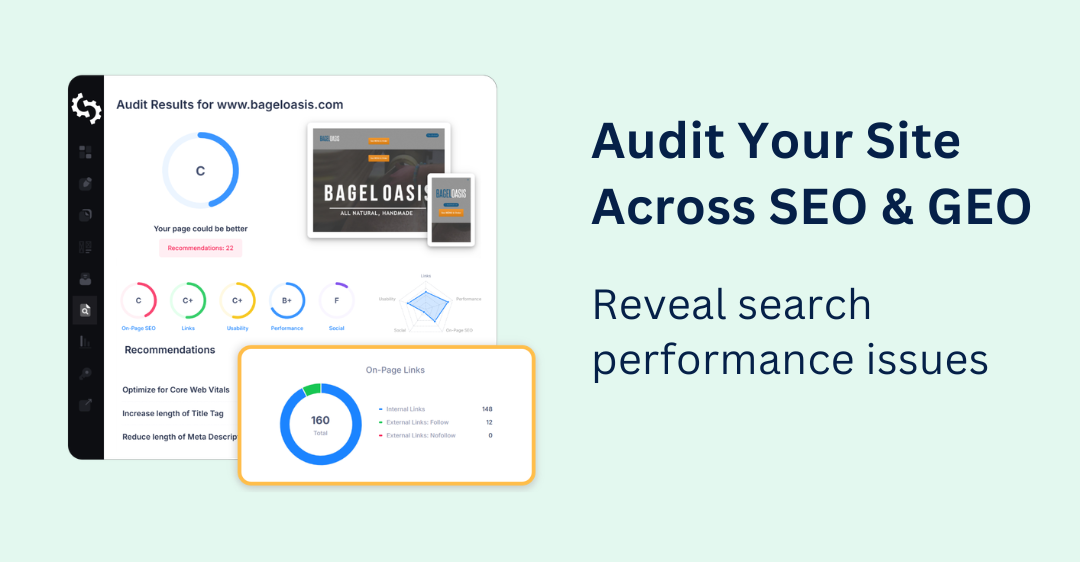
SEOptimer was built specifically for agencies looking for an affordable, all-in-one solution. Our toolkit combines SEO audits and AI visibility insights with a broader suite of tools, including keyword tracking, backlink research, website crawling, and more.
Run a free SEO audit of your agency's website to see where you can improve performance and uncover new SEO and GEO opportunities.
Conclusion
Marketing agencies don’t rely on a single way to make money.
The most successful ones combine multiple revenue streams, use the right pricing models, and focus on improving efficiency over time.
If you want to grow a more profitable agency, start by looking at your current setup. Where can you increase margins, simplify delivery, or add new revenue streams?
Small changes like productizing a service, improving lead generation, or refining your pricing can have a significant impact over time.