Flesch-Kincaid Readability Test
Run the Flesch-Kincaid readability test on any text. See the grade level and reading ease scores, how they are calculated, and how your writing compares with what most readers find comfortable.
Input
The formulas are calibrated for English; other languages get an approximate score.
Results
Flesch Reading Ease
–
Flesch-Kincaid Grade Level
–
| Words | |
| Sentences | |
| Syllables | |
| Average words per sentence | |
| Average syllables per word |
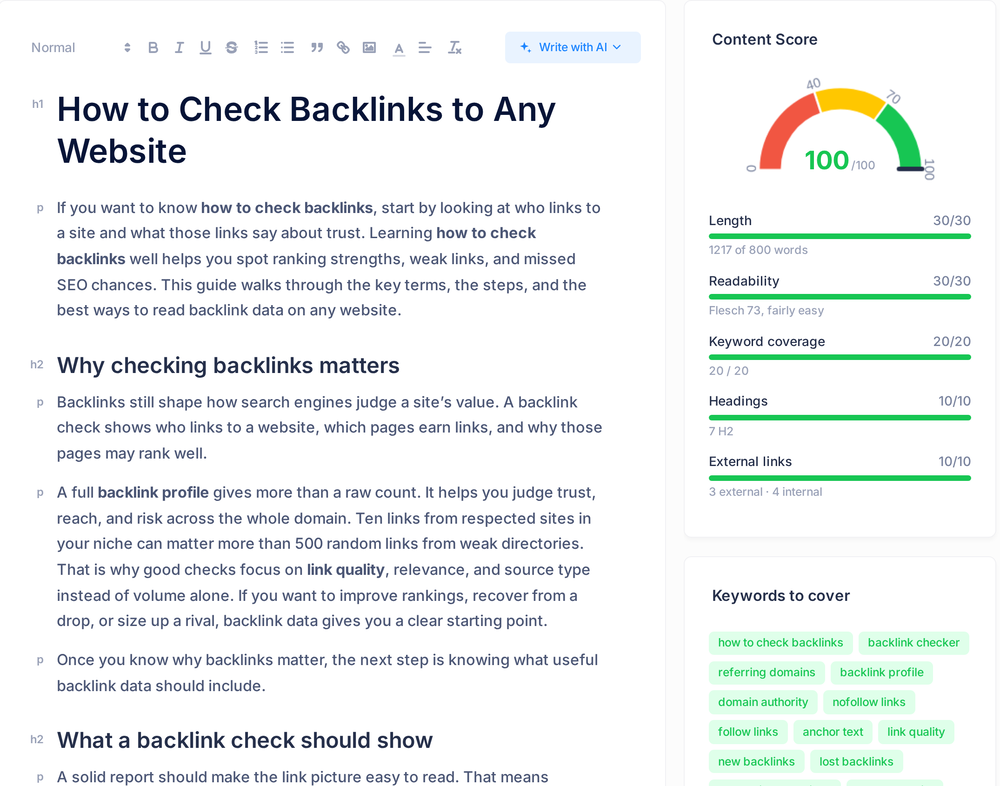
Write SEO Optimized Articles Instantly with AI Writer
AI Writer researches the pages ranking for your target keyword, instantly writes a full article and scores it for keywords, readability, links and length. Create the best content possible with the highest ranking potential with our proprietary algorithms.

About the Flesch-Kincaid Test
Where the test comes from
Rudolf Flesch published the Reading Ease formula in 1948 as a way for editors to judge how demanding a text was. In 1975 the US Navy commissioned J. Peter Kincaid to recalibrate it so the result read as a school grade level, which is the form most people meet today. Both formulas use the same two inputs: words per sentence and syllables per word.
The two formulas
- Reading Ease = 206.835 − 1.015 × (words ÷ sentences) − 84.6 × (syllables ÷ words). Higher is easier; 60 to 70 is plain English.
- Grade Level = 0.39 × (words ÷ sentences) + 11.8 × (syllables ÷ words) − 15.59. The result is the US school grade a reader needs; 7 to 9 suits most web writing.
How this tool counts
Sentences end at a full stop, question mark or exclamation mark, or at a line break after a heading or list item. Syllables are counted with the standard English vowel-group method with corrections for silent endings, which is accurate to within a few percent on running prose. The formulas are calibrated for English; other languages get an approximate result.
What a grade level means in practice
A grade level is not the education of your readers but the effort they must spend. A university graduate still prefers grade 8 text when reading on a phone, and a grade 12 score on a product page is usually a sign that the sentences have grown too long, not that the audience is sophisticated.
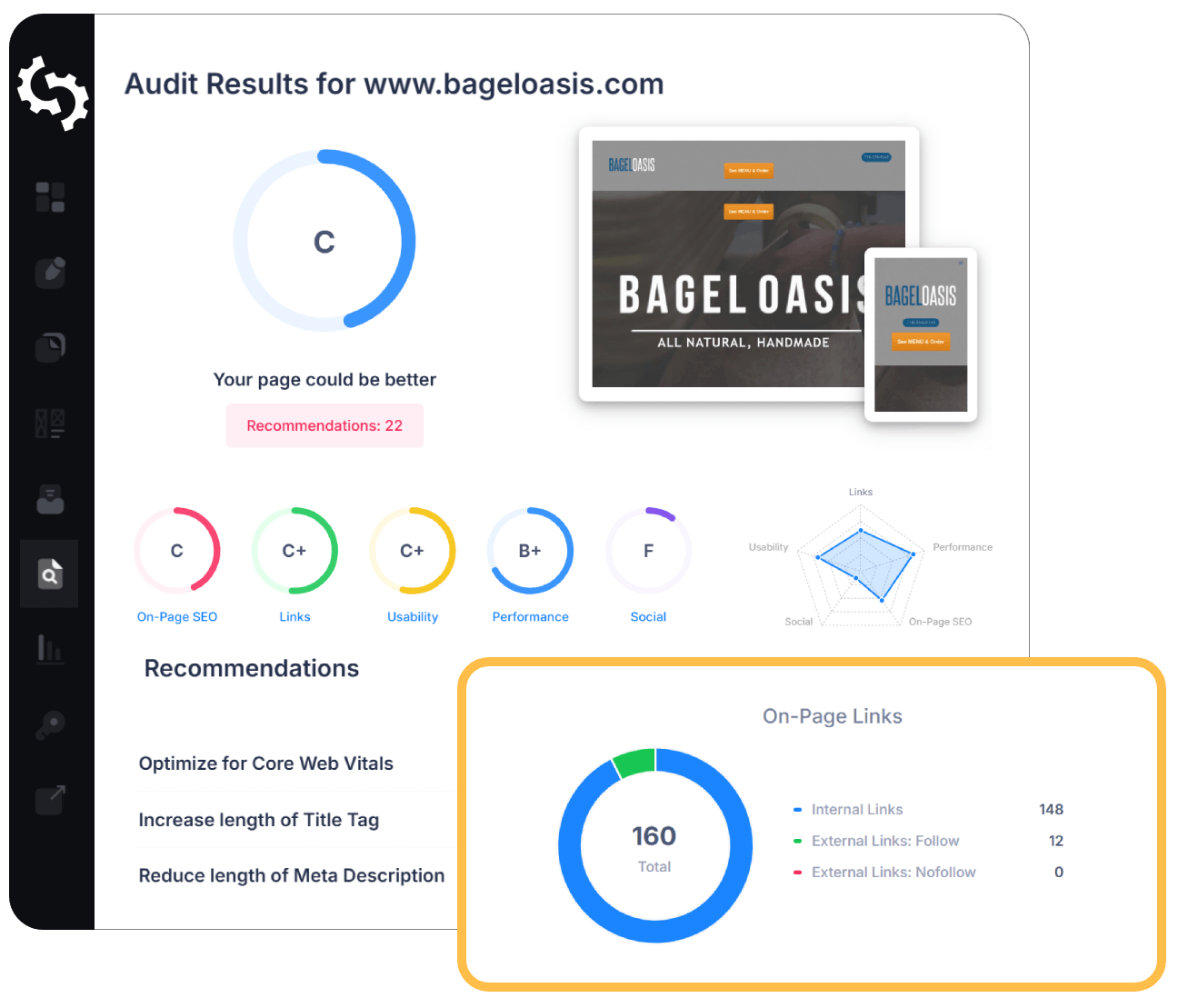
SEO Audit Any Site in Seconds
+ Comprehensive SEO / GEO Tools for Every Function
Run over 100 checks on your website across On-Page SEO, Usability, Performance, Social and Links. Now with GEO in every report. SEOptimer also offers keyword research, rank tracking, backlinks and a full site crawler.
Further Reading
See More
SEO Copywriting Checklist for Higher Ranking Content
Following an SEO copywriting checklist is quite important if you want to improve your website’s search engine visibility and outrank your co...