FAQ Generator
Generate relevant FAQ questions with our AI FAQ Generator. Just enter your topic, choose a language and tone, and get a custom list of frequently asked questions.
Input
Output
Generated content:
Write SEO Optimized Articles Instantly with AI Writer
AI Writer researches the pages ranking for your target keyword, instantly writes a full article and scores it for keywords, readability, links and length. Create the best content possible with the highest ranking potential with our proprietary algorithms.

About FAQ Sections
What makes a good FAQ?
A good FAQ answers questions people genuinely ask, in the words they use to ask them. The name is meant literally: these should be frequent questions, taken from support tickets, sales calls and search queries rather than invented to fill a section.
Each answer should stand alone. Someone arriving at one question has not read the others, so an answer that depends on the previous one is an answer that fails for most of the people who reach it.
Length is where most FAQs go wrong in one direction or the other. A single sentence that dodges the question is useless; four paragraphs is no longer an FAQ. Two or three sentences that actually answer it is usually right.
Where the questions should come from
- Support tickets and chat logs, which record real confusion rather than imagined confusion.
- Sales calls, where objections repeat until they are obviously patterns.
- Search queries reaching your site, especially the long conversational ones.
- The questions competitors answer, which reveal what the market asks.
- Anything you have explained twice in person; the third explanation belongs on the page.
Common mistakes
- Inventing questions nobody asks, usually to work in a phrase you want to rank for.
- Answering with marketing copy instead of an answer.
- Questions phrased in company language rather than customer language.
- Burying genuinely important information in an FAQ because it was awkward to place elsewhere.
- Adding FAQ schema to a section that is not really a FAQ, which risks a manual penalty.
How this relates to AI search
FAQ sections are unusually well suited to being quoted, because the format matches how questions are asked. A clearly worded question followed by a self-contained answer is close to the ideal unit for extraction.
That makes it worth phrasing questions as people actually type them, including the longer conversational forms that assistants receive rather than the clipped keyword forms typed into a search box.
The caveat is honesty. A section built to be extracted rather than to help is detectable, and FAQ schema on content that is not genuinely a FAQ carries real risk.
Where an FAQ generator helps, and where it does not
It is good at coverage. Given a topic, an FAQ generator will surface obvious questions you had not thought to write down, which is a reasonable starting checklist.
It cannot know which questions your customers actually ask, and that is the entire difference between a useful FAQ and filler. Your support inbox knows; the generator is guessing from the topic.
The reliable method is to use it for structure and phrasing, then replace its questions with your real ones and its answers with what you actually tell people.
Using the FAQ generator
Add your topic and the tool proposes questions and answers. A narrow topic produces far more usable questions than a broad one.
Then check each question against evidence that somebody asks it, and rewrite each answer in the words you would use if asked directly. Delete anything that survives only because it sounded plausible.
Where to go next
An FAQ works hardest when the page around it is structured too. Mark it up correctly with schema markup, check the header tags that give the page its shape, and draft supporting content with the AI blog post generator tool.
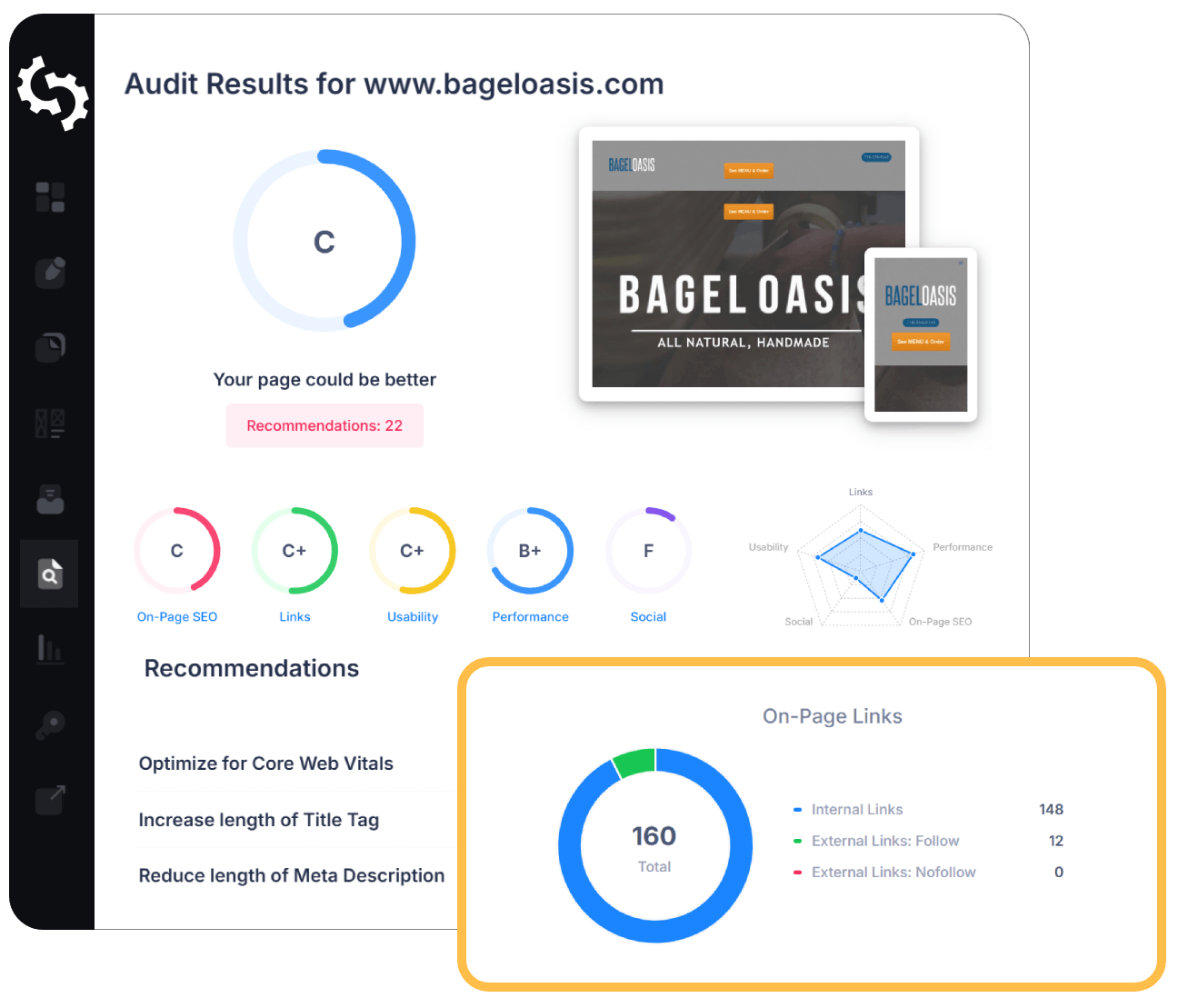
SEO Audit Any Site in Seconds
+ Comprehensive SEO / GEO Tools for Every Function
Run over 100 checks on your website across On-Page SEO, Usability, Performance, Social and Links. Now with GEO in every report. SEOptimer also offers keyword research, rank tracking, backlinks and a full site crawler.
Further Reading
See More
How to Structure Content to Get Cited in AI Answers
How to Structure Content for AI Citations
Put the main point at the top of each section.
Make headings describe the exact quest...

Google AI Overviews: A Deep Dive into How Search is Changing
Google AI Overviews is one of the latest announcements and product updates from the search engine giant this year.
Google held its a...

SEO Copywriting Checklist for Higher Ranking Content
Following an SEO copywriting checklist is quite important if you want to improve your website’s search engine visibility and outrank your co...

LLM Optimization: How to Get Cited in AI Answers
LLM optimization can help increase the chances of your website being mentioned or cited in answers generated by ChatGPT, Gemini, Claude, and...