AI Blog Post Generator
Generate an SEO-optimized blog post with SEOptimer's AI Blog Post Generator. Our tool will generate a blog post based on your topic and target keywords in any language of your choice.
Input
Output
Generated content:
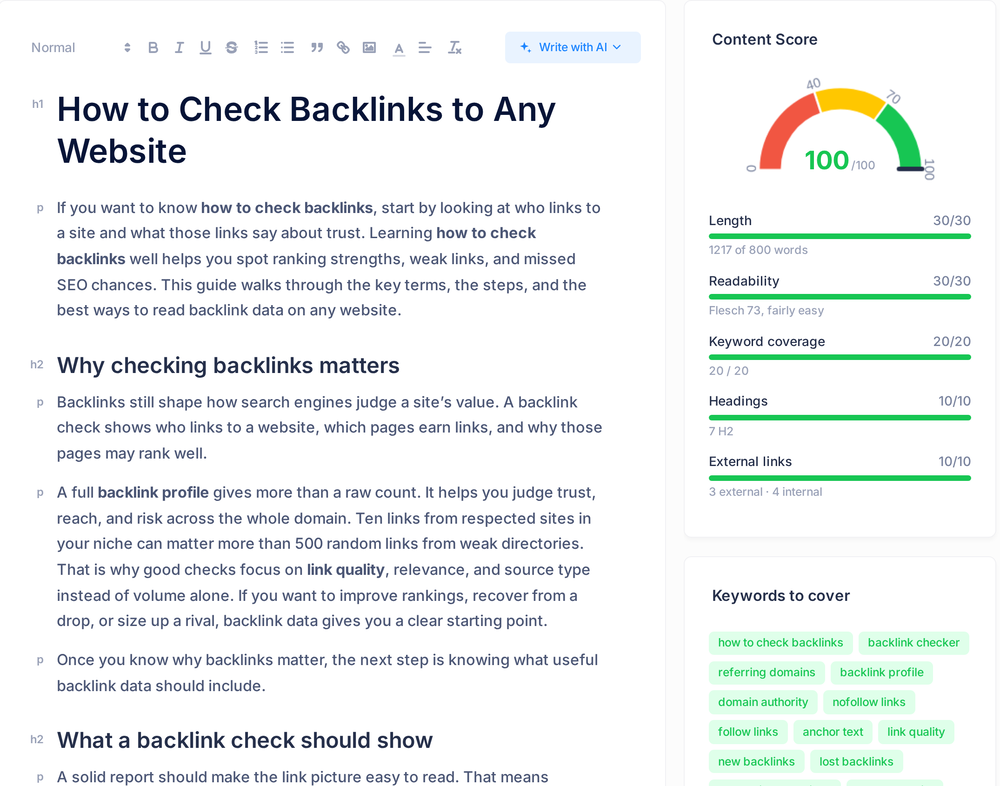
Write SEO Optimized Articles Instantly with AI Writer
AI Writer researches the pages ranking for your target keyword, instantly writes a full article and scores it for keywords, readability, links and length. Create the best content possible with the highest ranking potential with our proprietary algorithms.

About Writing Good Blog Posts
What makes a good blog post?
A good blog post has one job. It answers a question, argues a position, or explains a process, and everything in it serves that. Posts that try to be comprehensive about a whole subject usually end up being useful about none of it.
It also has a reason to exist beyond needing something published. The honest test is whether it contains anything a reader could not get from the first three results already ranking, and if the answer is no, the problem is the brief rather than the writing.
Structure is the other half. A post is read by scanning, so headings, short paragraphs and a visible shape are not decoration; they are what makes the content reachable.
What to include in a blog post
- A title that states the subject rather than teasing it.
- An opening that gets to the point within two or three sentences.
- Headings phrased as the questions each section answers.
- Something first-hand: your data, your examples, your experience of the thing going wrong.
- Specifics rather than generalities, since numbers and named cases are what people remember and quote.
- Internal links to related pages, so the post sits inside your site rather than beside it.
- A conclusion that adds something, rather than restating the introduction.
How long should a blog post be?
Long enough to answer the question and its obvious follow-ups, and no longer. Word count targets produce padding, and padding is now easy to detect and increasingly penalised by readers who leave.
Length correlates with depth without causing it. A subject that genuinely needs 2,000 words to explain is a subject worth 2,000 words; the same subject stretched from 600 is worse than the original 600.
The practical measure is whether a knowledgeable reader would find anything missing. That question is more useful than any figure.
How this relates to AI search
Posts are quoted in passages rather than whole, so a clearly structured piece is more likely to be cited accurately. Sections that stand alone survive extraction; arguments that depend on three earlier paragraphs generally do not.
Originality has also become the differentiator rather than the bonus. Generated text is abundant and largely interchangeable, so a post containing something only you could write is what gets referenced.
That is an argument for fewer, better posts rather than more of them.
Where an AI blog post generator helps, and where it does not
It is genuinely good at structure and at getting past the blank page. An AI blog post generator will give you a coherent outline and a serviceable first draft in seconds, which is the slowest part of writing for most people.
It cannot contribute what makes a post worth reading. It has no data, no clients, no experience of the problem, so what it produces is by definition the average of what has already been written about the subject.
Publishing that unedited is how sites end up with archives nobody reads and nothing links to. Treat the output as scaffolding you replace as you go.
Using the AI blog post generator
Enter your topic and the tool produces a draft post. A specific topic produces a far better result than a broad one, so describe the angle rather than the category.
Then do the part it cannot: add your examples, cut the paragraphs that say nothing, check the facts, and make sure the piece ends up saying something you would defend.
Where to go next
A post is built from parts. Open it with an introduction paragraph generator, hold attention with a hook generator, close with a conclusion generator, and check the finished piece with the word count and keyword consistency tools before publishing.
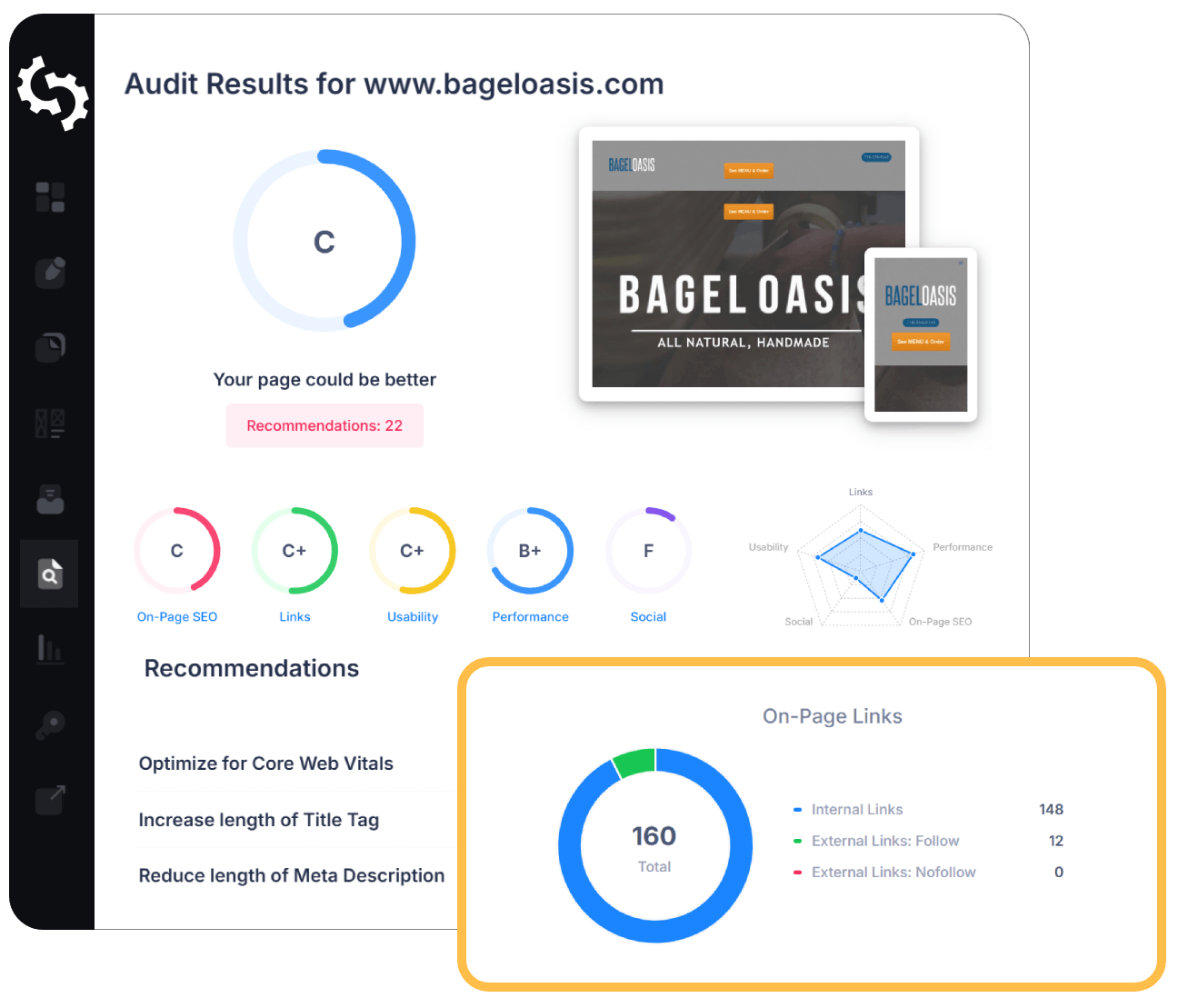
SEO Audit Any Site in Seconds
+ Comprehensive SEO / GEO Tools for Every Function
Run over 100 checks on your website across On-Page SEO, Usability, Performance, Social and Links. Now with GEO in every report. SEOptimer also offers keyword research, rank tracking, backlinks and a full site crawler.
Further Reading
See More
SEO Copywriting Checklist for Higher Ranking Content
Following an SEO copywriting checklist is quite important if you want to improve your website’s search engine visibility and outrank your co...

6 Elements of an Effective Content Production Process
Content production is the cornerstone of a solid online marketing strategy.
As the saying goes, “content is king,” and without en...

How to Write a Blog Outline with Tips from Pro Bloggers & Marketers
A well-structured blog outline not only guides your writing process but also enhances the reading experience of your posts.
A blog o...

How to Create Great Content Briefs [with Example & Template]
Key Takeaways
Content briefs guide writers with clear instructions on objectives, keywords, and structure.
Standardized brief...
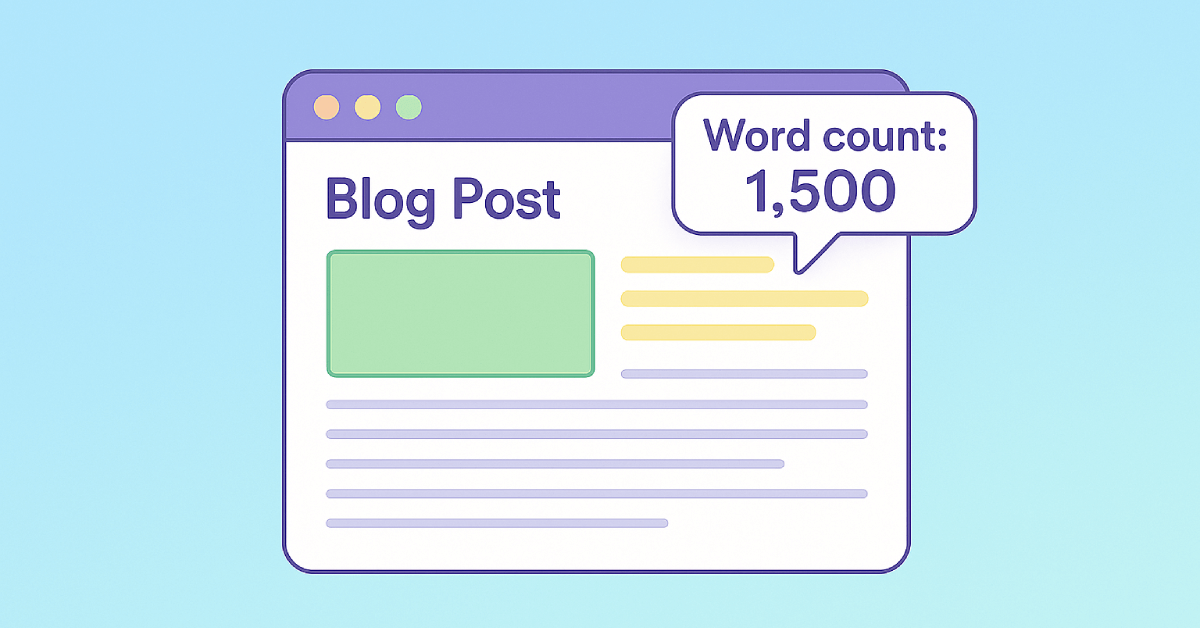
How Long Should a Blog Post Be?
Though there’s no magic word count or length for a blog post, us bloggers, SEO-ers, and content marketers of the world still want to know: h...

How to Do Content Research for SEO (with Tips from Marketers)
In a world where information is abundant and attention spans are short, it's crucial to master the art of effective content research. Whethe...

Long Form vs Short Form Content: Which Should You Create?
One of the questions that many business owners, marketers and SEOs often wonder about is whether they should focus on long form content vs s...