Call to Action Generator
Create powerful CTAs in seconds with our AI Call to Action Generator. Enter your business or product details, language, and tone to generate compelling calls to action that drive results.
Input
Output
Generated content:
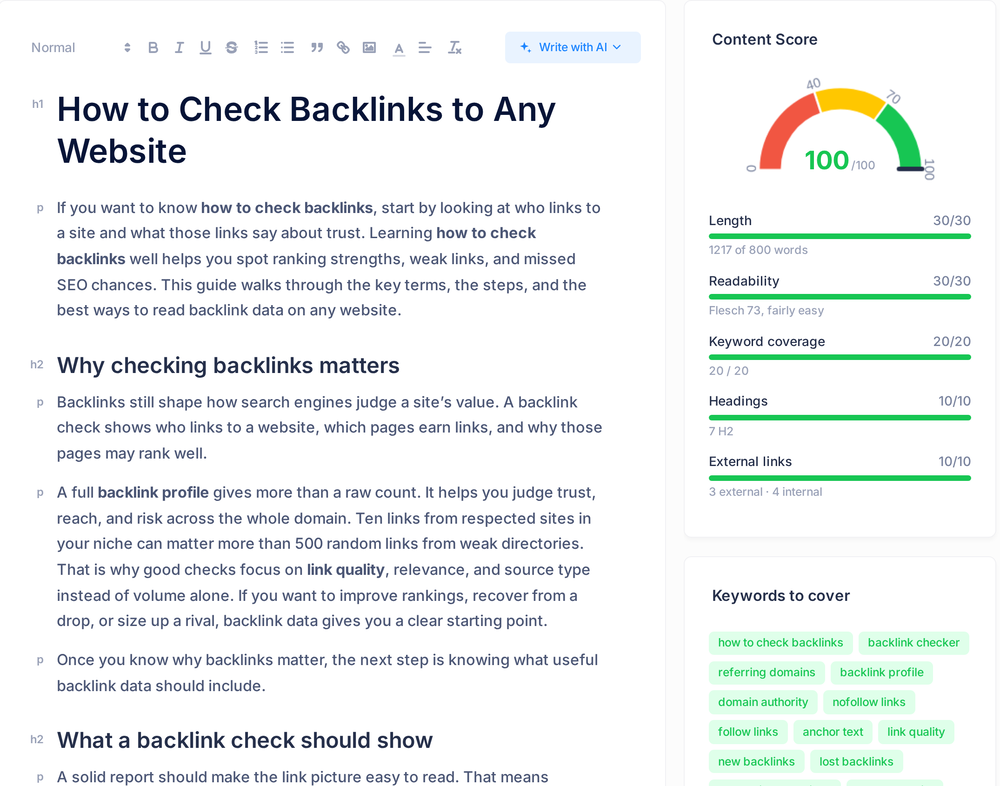
Write SEO Optimized Articles Instantly with AI Writer
AI Writer researches the pages ranking for your target keyword, instantly writes a full article and scores it for keywords, readability, links and length. Create the best content possible with the highest ranking potential with our proprietary algorithms.

About Calls to Action
What is a call to action really asking?
A call to action is not a button label. It is the moment a reader decides whether the next step is worth the risk, and the words are only the visible part of that calculation.
This is why "Submit" performs so poorly and why "Get my free audit" performs better. One describes what the form does; the other describes what the reader gets, which is the only thing they are weighing.
Write from the reader side of the exchange and most call to action problems solve themselves.
What a strong call to action does
- States the outcome rather than the mechanism.
- Uses the first person where it fits, since "my" outperforms "your" surprisingly often.
- Removes the unspoken worry: no card required, takes a minute, cancel any time.
- Matches the commitment to the stage, asking for a demo only when the reader is ready.
- Stands alone, so it makes sense to someone who skipped straight to it.
Placement follows from the same thinking. Plenty of visitors arrive already knowing roughly what you do and are further along than the equivalent visitor was a few years ago, so state the offer plainly near the top rather than building to it. The build-up may never be read.
Common mistakes
- Several competing actions on one screen, which reduces all of them.
- Asking for a big commitment from a first-time visitor.
- Generic verbs: submit, click here, learn more.
- Manufactured urgency, which readers now discount and sometimes resent.
- A call to action appearing once, at the very bottom, after everyone has left.
Where the generator helps, and where it does not
Most teams write two calls to action and pick one. Twenty options surface framings you would not have reached, and the differences between them are small enough to test cheaply.
It cannot tell you whether the offer behind the call to action is compelling, and no phrasing rescues a weak one. If nothing tests well, the problem is usually the offer rather than the words.
Using the call to action generator
Describe what you are promoting and what action you want, choose a tone, and the tool returns several options. Mentioning the audience and the stage they are at improves the results noticeably.
Pick two that differ in approach rather than in wording, and run them against each other.
Where to go next
A call to action works only if the page around it has done its job. Rewrite the page with the AI website copy generator, close the argument properly with the conclusion generator, and match your ads with the AI ad copy generator.
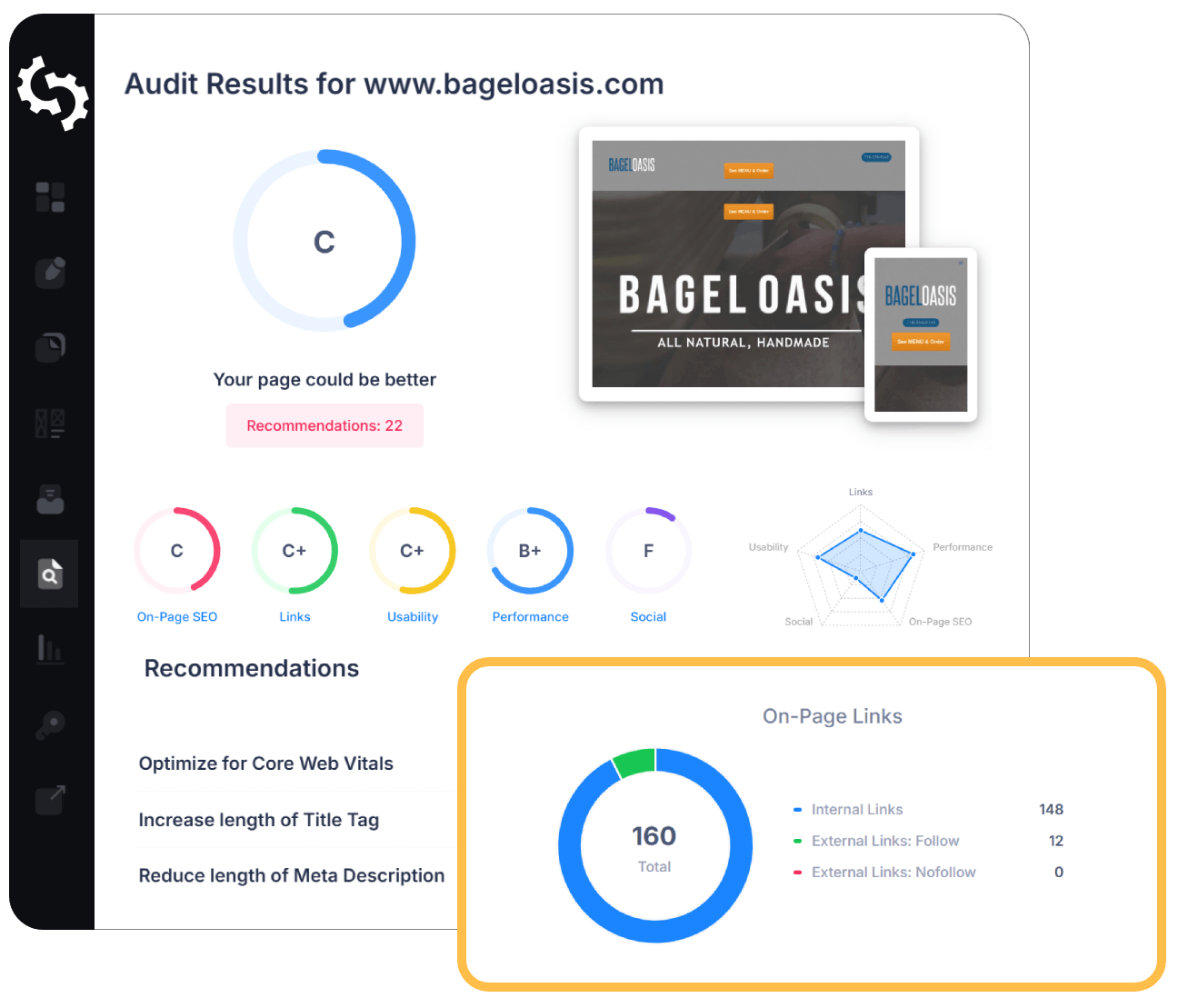
SEO Audit Any Site in Seconds
+ Comprehensive SEO / GEO Tools for Every Function
Run over 100 checks on your website across On-Page SEO, Usability, Performance, Social and Links. Now with GEO in every report. SEOptimer also offers keyword research, rank tracking, backlinks and a full site crawler.
Further Reading
See More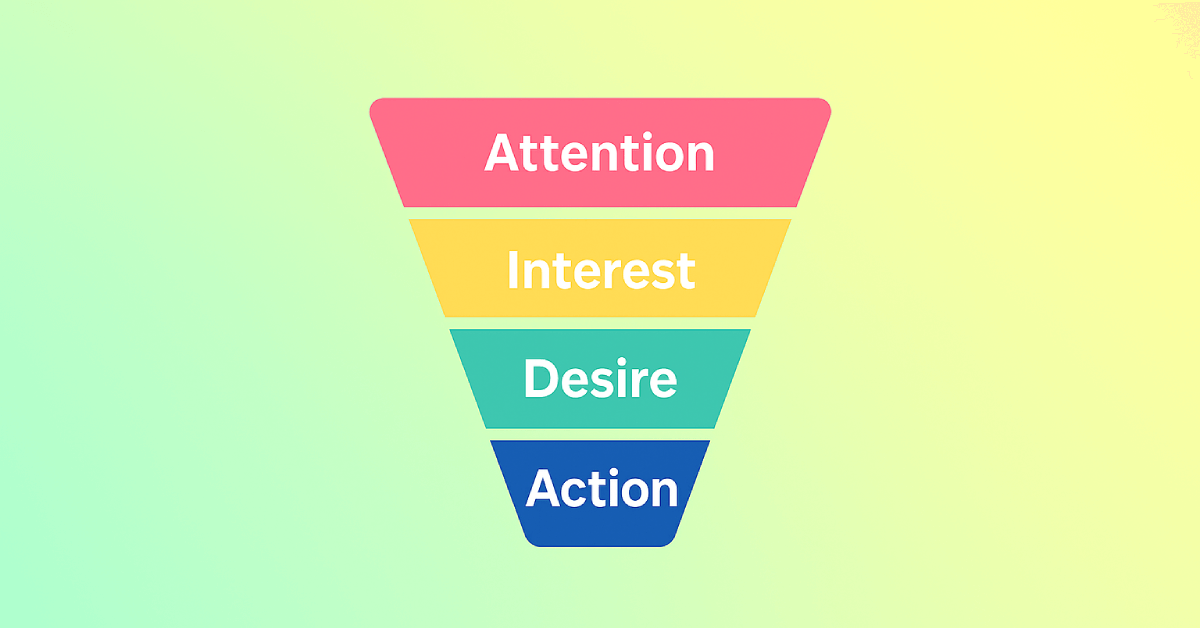
What is AIDA Copywriting?
Copywriting is an essential skill for writing marketing messaging.
Regardless of the medium (digital or physical), copywriting is ho...

How to Drive Up Your CTR and SEO
What Is CTR?
CTR stands for Click Through Rate, and is defined as the percentage of people who click a search result after seeing it.
To see...

What is a Conversion Funnel and How Do You Optimize It?
Any business offering products or goods for sale is attempting to shepherd potential customers from general awareness of the business and...

How to Optimize Landing Pages for Each Stage of the Marketing Funnel
Whether you sell DTC products or dabble in the real estate market, a marketing funnel helps you track how your customers buy—from the begi...

SEO Copywriting Checklist for Higher Ranking Content
Following an SEO copywriting checklist is quite important if you want to improve your website’s search engine visibility and outrank your co...