Conclusion Generator
Create the perfect conclusion paragraph using our AI Conclusion Generator. Simply input a description of your content, select your language and tone, and get a polished conclusion paragraph in seconds.
Input
Output
Generated content:
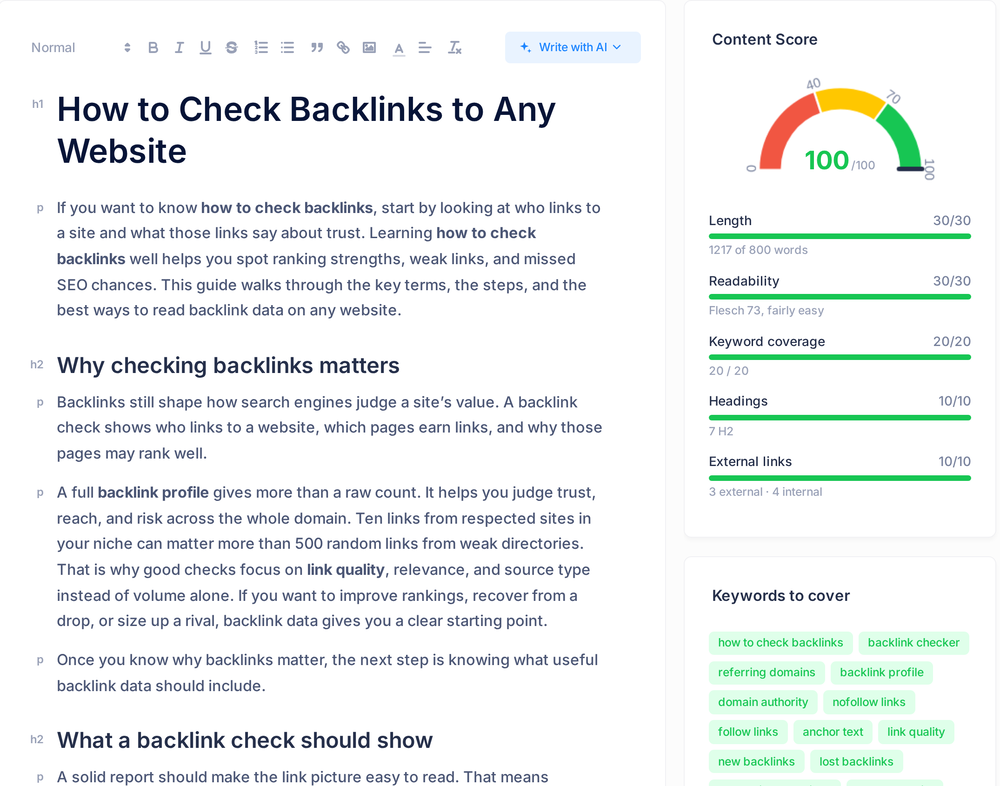
Write SEO Optimized Articles Instantly with AI Writer
AI Writer researches the pages ranking for your target keyword, instantly writes a full article and scores it for keywords, readability, links and length. Create the best content possible with the highest ranking potential with our proprietary algorithms.

About Writing Good Conclusions
What makes a good conclusion?
A good conclusion adds something. That is the whole test, and most conclusions fail it: they summarise what the reader has just read, which is information they demonstrably already have.
What can be added is judgement. Having laid out the detail, you are in a position to say what matters most, what you would do first, or what the whole thing means for someone in a particular situation. None of that fits earlier in the piece.
A conclusion also has a practical job: telling the reader what to do next. Someone who has read to the end is more engaged than anyone else on the page, and leaving them with nothing to do wastes that.
It is also the passage most often quoted back at you, precisely because it is the one part written to stand for the whole piece. Writing it so it makes sense read alone is a small discipline with a disproportionate payoff.
What to include in a conclusion
- The single most important point, stated once rather than restated in full.
- Judgement the body could not carry: what you would prioritise, and why.
- A next step, whether that is an action, a tool, or further reading.
- An honest note on limits, where the advice does not apply.
- Nothing new that needed explaining, since there is no room left to explain it.
Common mistakes
- Summarising the article back to the person who just read it.
- Announcing itself with "in conclusion", which adds a sentence and no meaning.
- Introducing a substantial new idea with no space to develop it.
- A generic call to action bolted on regardless of what the piece was about.
- Trailing off, so the piece stops rather than ends.
Where a conclusion generator helps, and where it does not
It reliably produces a competent closing paragraph, which is more than many published conclusions manage, and it solves the specific problem of finishing a piece when you are tired of it.
What it will produce, by default, is a summary, because summarising is what a conclusion generator can do from a short description. The judgement part requires knowing what you actually think.
The productive pattern is to take the generated structure and replace the summary with your own view. That is usually one or two sentences of work and it is the difference between a conclusion and an ending.
Using the conclusion generator
Describe the piece you are closing and the tool drafts a conclusion. Describing the argument rather than the topic produces a considerably better result.
Then edit it into something worth reading: cut the restatement, add what you would tell someone who asked what to do about it, and end on the sentence you want remembered.
Where to go next
A conclusion closes a piece the rest of these tools help build. Draft the body with the AI blog post generator tool, open it with an introduction paragraph, and make sure the finished page has the internal links the next step depends on.
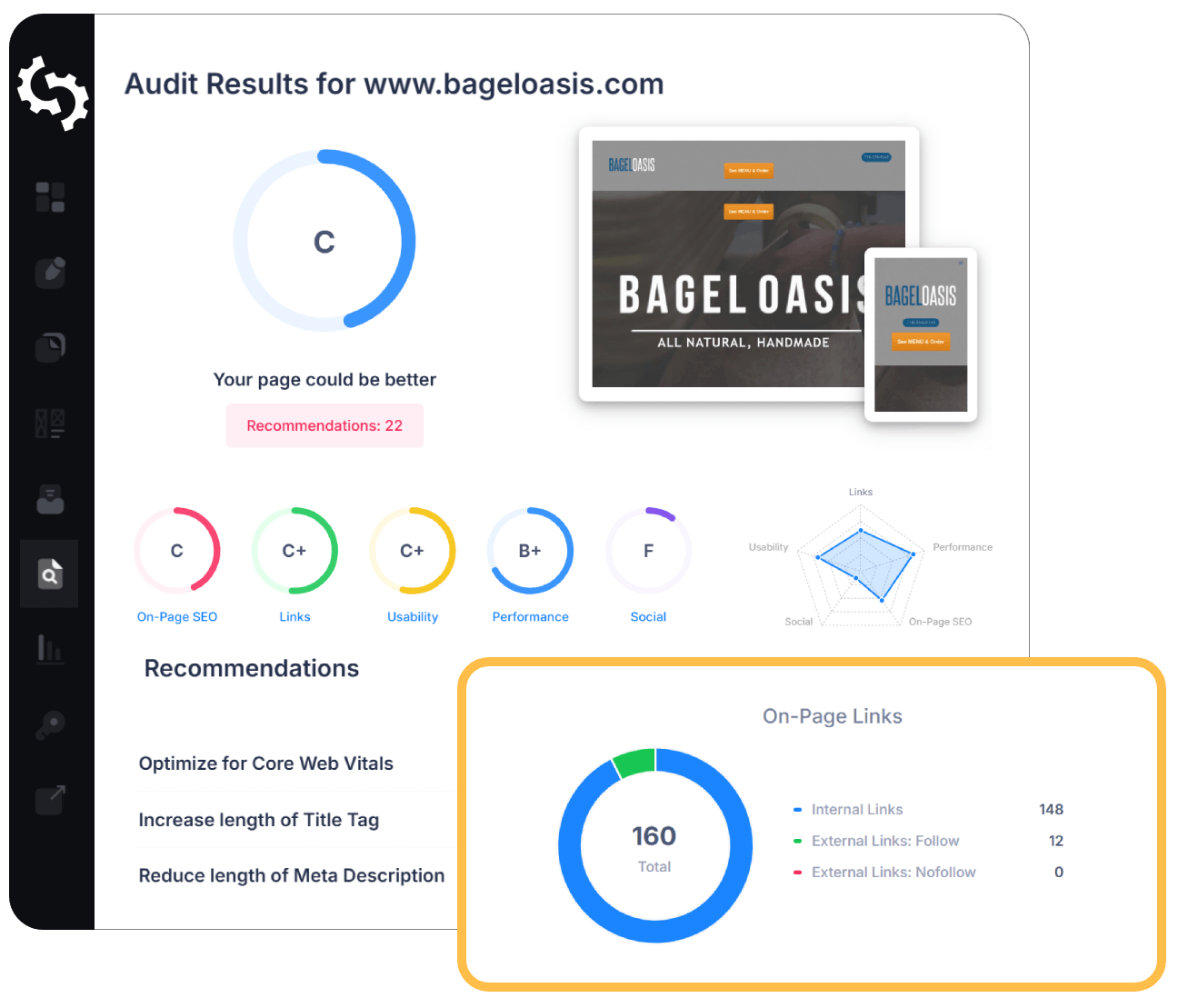
SEO Audit Any Site in Seconds
+ Comprehensive SEO / GEO Tools for Every Function
Run over 100 checks on your website across On-Page SEO, Usability, Performance, Social and Links. Now with GEO in every report. SEOptimer also offers keyword research, rank tracking, backlinks and a full site crawler.
Further Reading
See More
SEO Copywriting Checklist for Higher Ranking Content
Following an SEO copywriting checklist is quite important if you want to improve your website’s search engine visibility and outrank your co...