AI Website Copy Generator
Generate compelling website copy in seconds with our AI Website Copy Generator. Just input your product details, brand voice, target audience, and unique value to get persuasive, ready-to-use content.
Input
Output
Generated content:
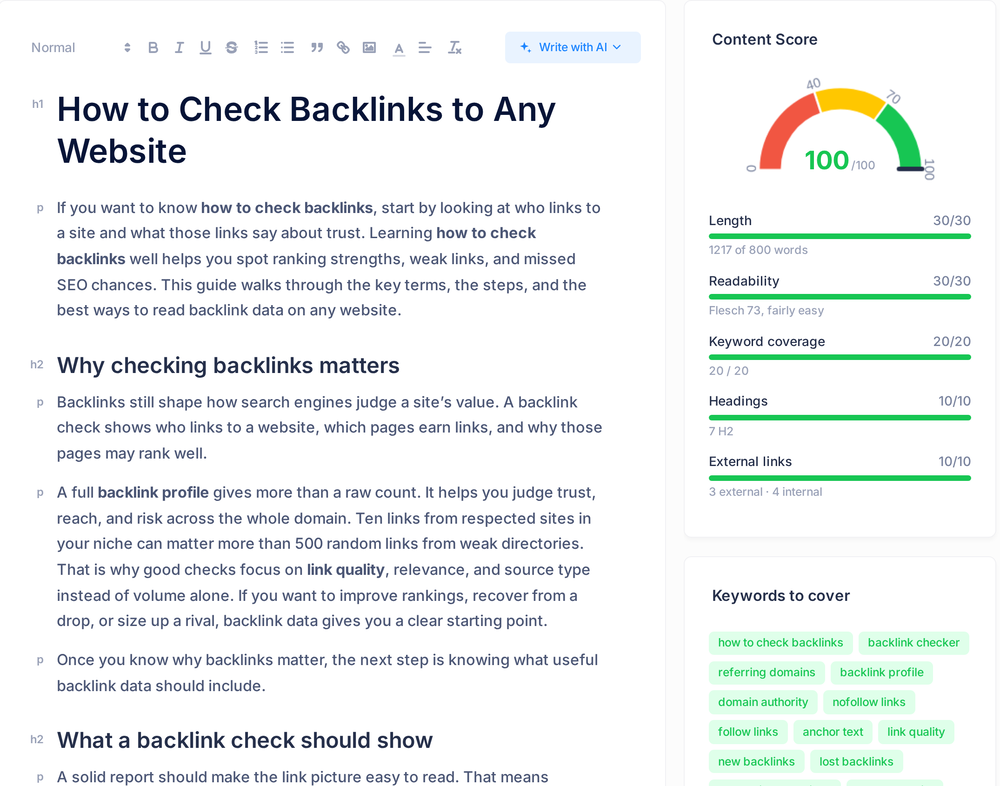
Write SEO Optimized Articles Instantly with AI Writer
AI Writer researches the pages ranking for your target keyword, instantly writes a full article and scores it for keywords, readability, links and length. Create the best content possible with the highest ranking potential with our proprietary algorithms.

About Website Copy
How website copy is actually read
It mostly is not. Visitors scan headings, the first line of each block and anything that looks like a price, then decide whether to keep going. Website copy that assumes linear reading loses people in the first screen.
The practical consequence is that meaning has to live in the headings and the opening lines, not in the third sentence of a paragraph. If someone read only your headings, they should still understand the offer.
This is why good web copy looks sparse next to good long-form writing. It is doing a different job.
What the top of a page has to answer
- What is this? The category, in words the visitor already uses.
- Who is it for? Naming the audience filters far better than it excludes.
- What problem does it solve, stated as the visitor would describe it.
- Why this one rather than the alternative they were also considering.
- What happens next, made obvious rather than implied.
A page failing any of these usually fails at the first, which is more common than it sounds on sites written by the people who built the product.
Common mistakes
- Writing about the company when the visitor came about their own problem.
- Feature lists with no statement of what the features let someone do.
- Abstract hero headings that could belong to any product in the category.
- Message mismatch, where the ad promised one thing and the page opens with another.
- Burying the price, which readers interpret as a warning rather than an omission.
What AI search changes about website copy in 2026
Answer engines now read commercial pages and summarise them in response to questions like "what is the best tool for X". What they can extract is limited to what is stated plainly in text.
Copy that hides the offer behind imagery, video or slogans gives them nothing to work with, while a page stating clearly what it does, who it serves and what it costs is straightforward to represent accurately.
The practical advice has not changed much, then, but the cost of vagueness has gone up: an unclear page is now misrepresented as well as ignored.
Where the generator helps, and where it does not
Starting a blank page is the expensive part, and a generated draft gets you to editing quickly. It is particularly good at producing the plain version of something you have been describing too cleverly.
It does not know your customers, your pricing or your real differentiator, so the draft will be structurally reasonable and factually empty. Replace every generic claim with something specific before publishing.
Using the AI website copy generator
Describe your audience, the problem you solve and what is different about your solution, then pick a brand voice. The tool returns website copy suitable for a homepage, landing page or service page.
Generate per page rather than for the site as a whole. A homepage and a service page have different jobs and combining them produces a draft that does neither.
Where to go next
Copy is only finished once the page performs. Sharpen the closing ask with the call to action generator, write the matching ads with the AI ad copy generator, and check how the page presents in results with the SERP preview preview.
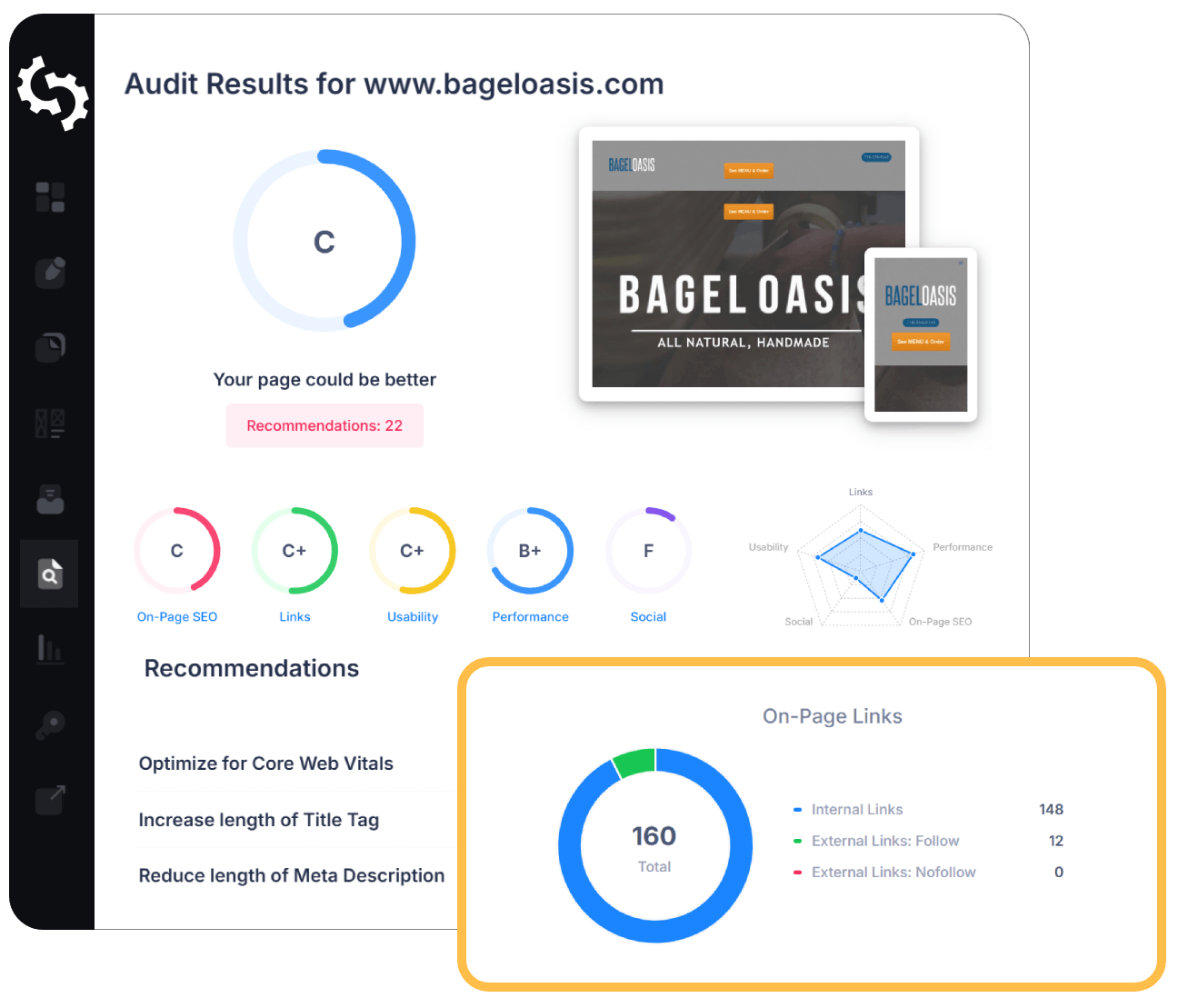
SEO Audit Any Site in Seconds
+ Comprehensive SEO / GEO Tools for Every Function
Run over 100 checks on your website across On-Page SEO, Usability, Performance, Social and Links. Now with GEO in every report. SEOptimer also offers keyword research, rank tracking, backlinks and a full site crawler.
Further Reading
See More
SEO Copywriting Checklist for Higher Ranking Content
Following an SEO copywriting checklist is quite important if you want to improve your website’s search engine visibility and outrank your co...

Our Pick of the 24 Best Agency Websites
If you're starting an agency, already running an agency and refreshing your website, or just curious about agency world, then you'll know...

Homepage SEO Guide: How to Optimize Your Website’s Home
Homepage SEO makes your site authoritative in the eyes of Google.
Your homepage is the most important page of your website. It is li...

6 Ways to Create SEO-friendly Landing Pages That Rank and Convert
Making a landing page that ranks and converts highly is just like trying to craft a perfect joke.
You're probably spending all of your...

20 of the Best Landing Page Examples for Inspiration
Studying great landing page examples is one of the best ways to learn effective strategy. We’ve rounded up some of our favorites and will...