


Travel SEO is what determines whether your website shows up when someone searches “best safari tour in Kruger”, “things to do in Cape Town”, or “family-friendly hotels in Amsterdam.”
The problem is that travel is one of the most competitive search categories on the internet.
You’re not only competing with other tour operators or hotels in your area, but also with giants like Booking.com, Expedia, TripAdvisor, and Google’s own travel features.
But here’s the good news, Google doesn’t only reward big budgets, it also rewards websites that provide the most useful answers, the best destination information, and the strongest signals of trust.
That’s where SEO for travel websites becomes a useful growth channel.
When your pages are structured correctly, load fast, target the right travel search intent, and earn authority over time, you can attract high-intent travelers consistently without relying entirely on paid ads or sacrificing margins to platforms.
In this guide, we’ll break down the most effective travel SEO strategies, including keyword research, technical SEO, content planning, local SEO, and link building tactics designed specifically for the travel industry.
What is Travel SEO?
Travel SEO is the process of optimizing a travel-related website to rank higher in search engine results pages (SERPs).
The goal is to increase organic (non-paid) traffic from people searching for destinations, tours, hotels, or travel advice.
Unlike paid advertising, where traffic stops the moment you stop paying, SEO builds long-term value.
When you implement proper SEO for travel websites, you are building digital real estate.
You are creating a funnel that attracts potential customers, builds trust through valuable content, and eventually guides them to book a trip or service.
Who is Travel SEO For?
Travel SEO isn't just for massive booking platforms. It is a critical channel for a wide variety of businesses in the tourism sector, including:
- Tour Operators: Companies offering day trips, multi-day excursions, or niche experiences like food tours or hiking adventures.
- Destination Marketing Organizations (DMOs): Tourism boards looking to attract visitors to a specific city, region, or country.
- Accommodations: Boutique hotels, hostels, bed and breakfasts, and vacation rental owners.
- Travel Bloggers: Creators who monetize their traffic through affiliate marketing and ads.
- Travel Agencies: Specialists who curate bespoke itineraries for corporate or leisure travelers.
Regardless of your niche, if you rely on customers finding you online, you need a strategy for travel SEO.
Types of Travel SEO Search Queries
To rank your website, you first need to understand how travelers search.
People rarely book a trip the moment they have the idea.
They go through a journey. Understanding search intent allows you to create content that meets them at every stage.
Informational
Informational keywords are top-of-funnel searches. The user is dreaming or researching.
They haven't decided where to go or who to book with yet. They are looking for inspiration or answers to specific questions.
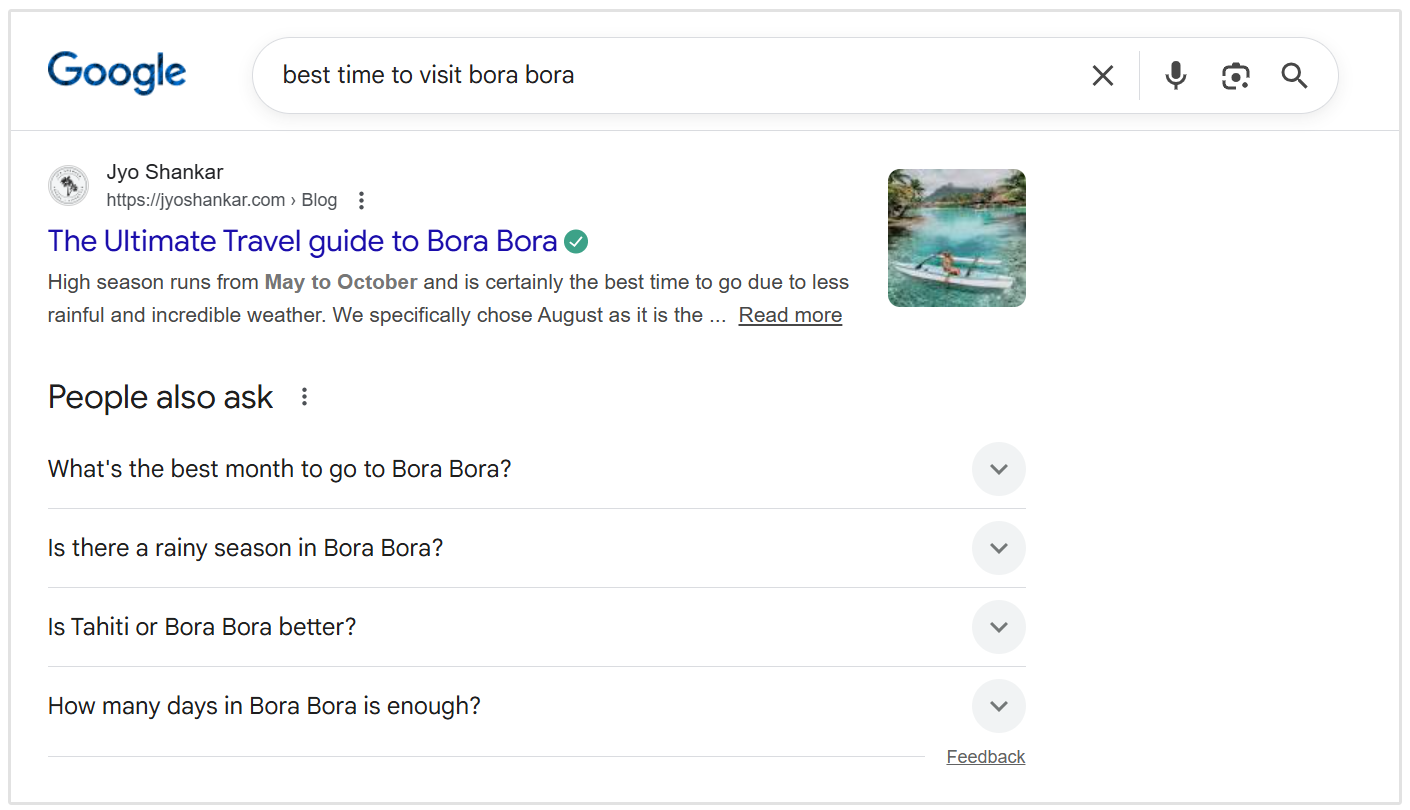
Examples:
- Best time to visit Japan
- Safe places to travel alone
- What to pack for a safari
Navigational
The user knows exactly what they are looking for when using navigational keywords.
They are trying to navigate to a specific website or page. If you are a well-known brand, you want to ensure you dominate these searches.
Examples:
- Marriott login
- Delta flight status
- Contiki tours reviews
Transactional
Transactional keywords are bottom-of-funnel searches. The user has their credit card ready. They know what they want and are looking for a place to buy it.
Ranking for these keywords usually leads directly to revenue.
Examples:
- Book hotel in downtown Chicago
- Cheap flights to London
- Buy Paris museum pass
Right, now let's move on how you can actually improve SEO for travel websites, starting with keyword research.
Keyword Research for Travel Websites
Keyword research is the foundation of any successful campaign regarding SEO for travel websites.
If you target the wrong keywords, you might get traffic, but you won't get bookings.
Types of Travel SEO Keywords
In the travel industry, keywords generally fall into two categories:
1. Head Terms: These are short, high-volume keywords. They are extremely competitive and often dominated by global giants.
Example: Hotels in New York
2. Long-Tail Keywords: These are longer, more specific phrases. They have lower search volume but much higher conversion rates because the user intent is very specific.
This is where most travel businesses find their sweet spot.
Example: Boutique pet-friendly hotel in Brooklyn with parking
How to Find Great Travel SEO Keywords
Start by putting yourself in your customer's shoes.
What specific problems does your tour or hotel solve?
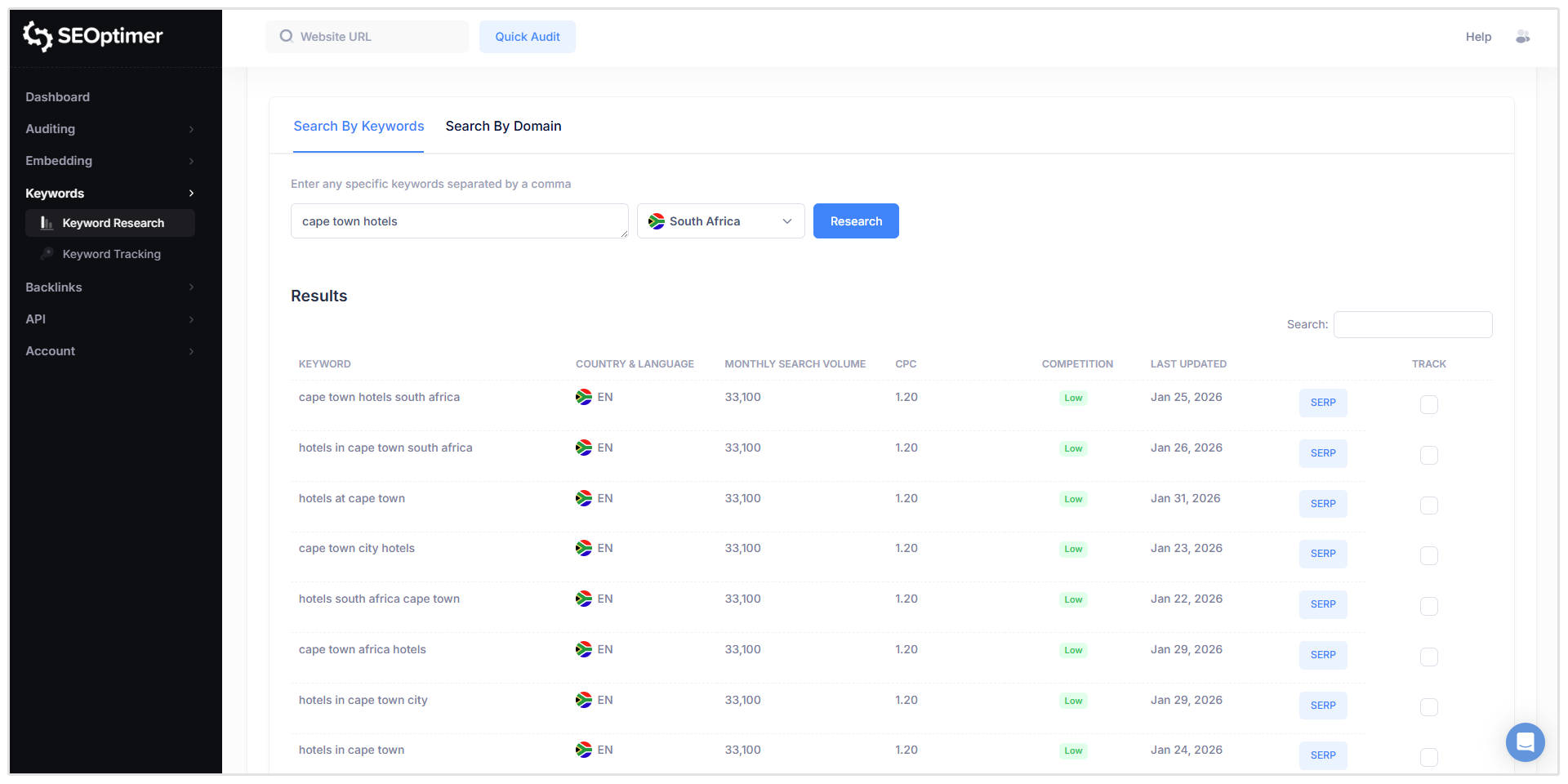
To get data-backed ideas, you can use SEOptimer’s Keyword Research tool.
It allows you to enter a broad term (like "cape town hotels") and generates a list of related keywords, showing you how many people search for them and how difficult they are to rank for.
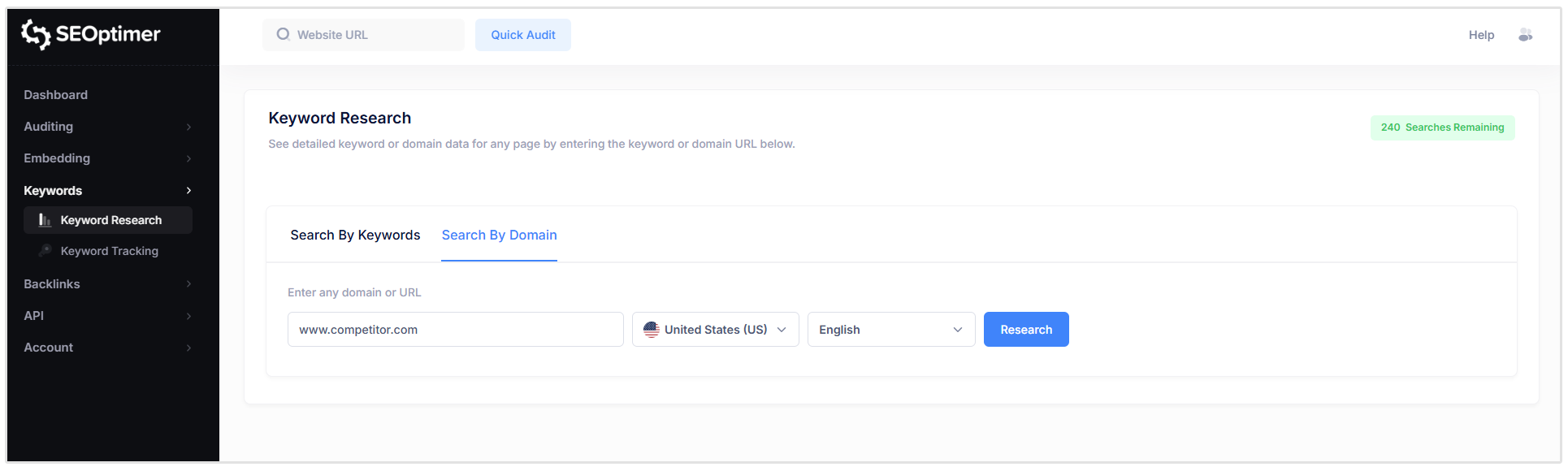
And you can paste in your competitor's domain to see which keywords they rank for. This is great if you want to spy on your competitors and see what's currently working in your niche.
Look for keywords that follow these structures:
- Best [activity] in [location]
- [Location] itinerary [number] days
- Things to do in [location] with kids
On-Page SEO for Travel Websites
Once you have your keywords, you need to place them where Google can find them.
This is called on-page SEO.
Title Tags and Meta Descriptions
Your title tag is the most important on-page SEO factor.
It’s the blue clickable headline users see in search results.
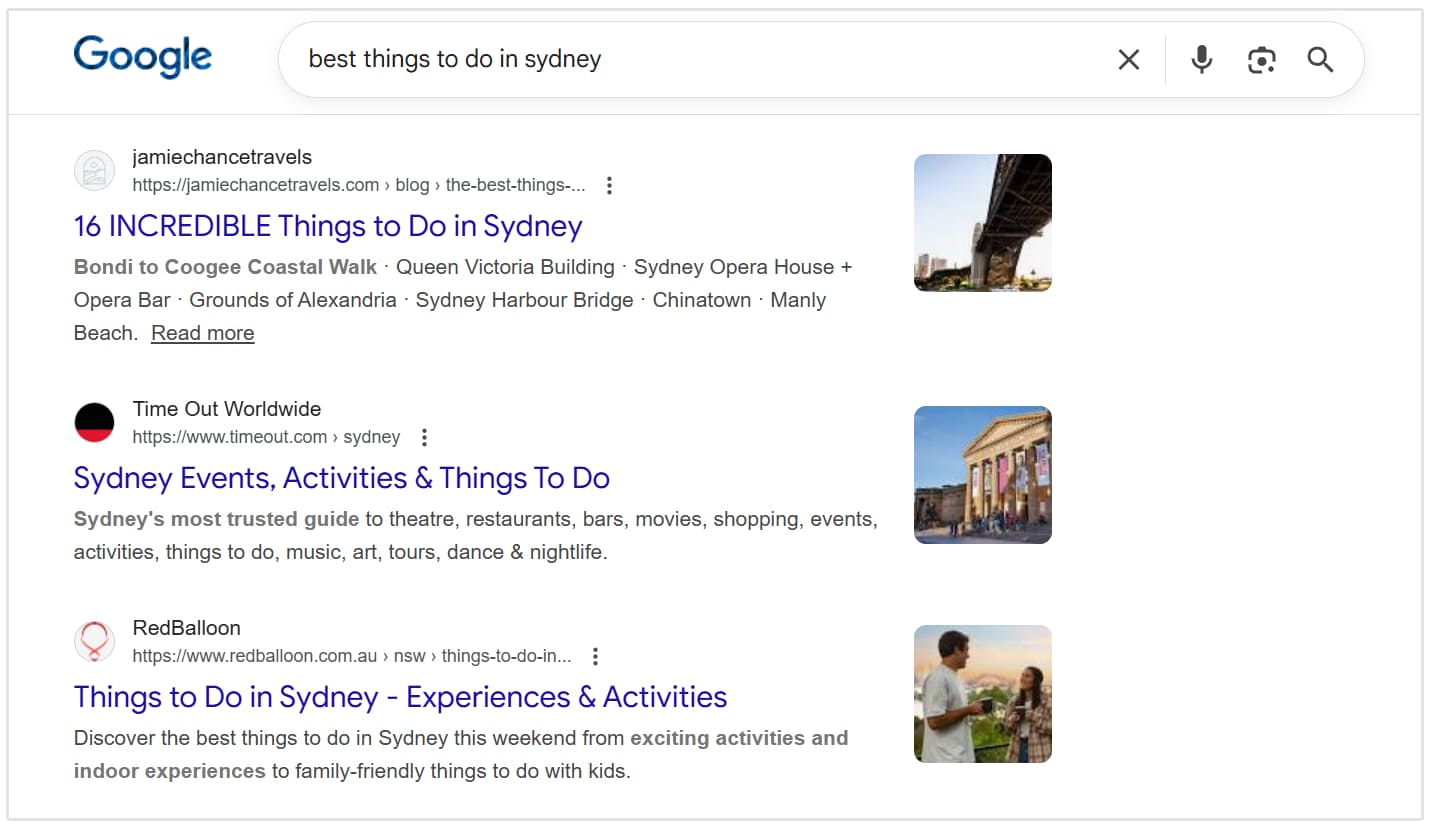
It should include your main keyword and a compelling hook.
- Bad: Home - Sarah’s Tours
- Good: Best Food Tours in Rome | 5-Star Tasting Experience - Sarah’s Tours
Your meta description is the short paragraph under the title.
It doesn't directly affect rankings, but it heavily influences your Click-Through Rate (CTR) so you should treat it like ad copy.
Headers and Page Structure
Google reads your content like an outline. Use header tags (H1, H2, H3) to organize your information.
- H1: The main title of the page (only use one).
- H2: Main sections or chapters of your article.
- H3: Sub-points within those sections.
This structure helps Google understand the hierarchy of your content and makes it much easier for travelers to skim your page on their phones.
URL Structure
Keep your URLs short, descriptive, and clean.
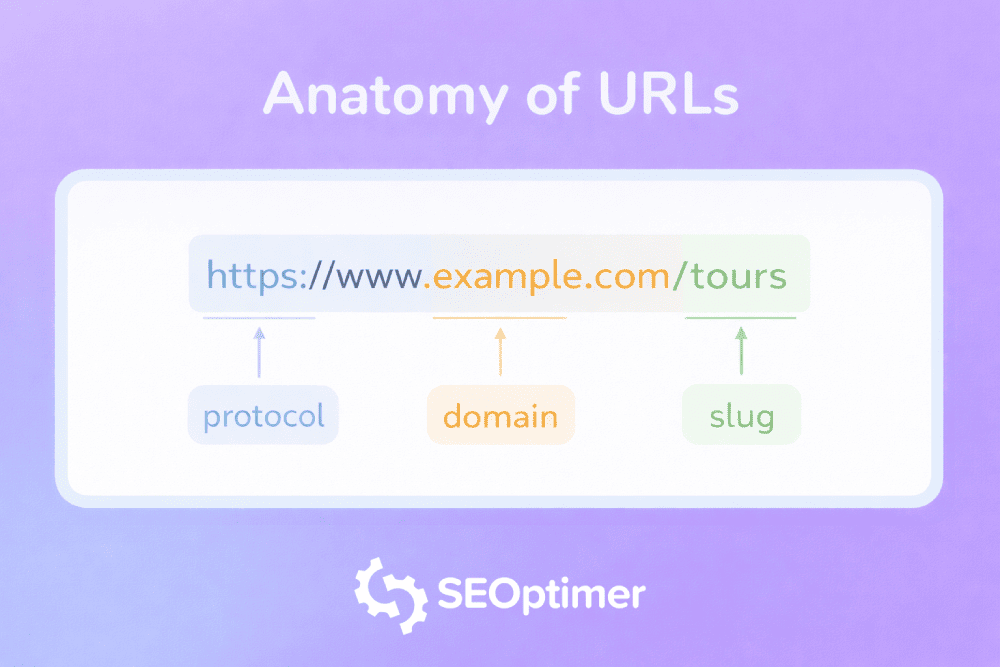
Avoid using dates or random strings of numbers.
- Bad: travelusatoday.com/p=123
- Bad: travelusatoday.com/2024/10/05/top-10-things-to-do
- Good: travelusatoday.com/things-to-do-nyc
Are you an SEO beginner who isn’t sure where to start with optimizing your site’s on-page SEO? Or are you an experienced marketer looking for deeper insights and quick wins?
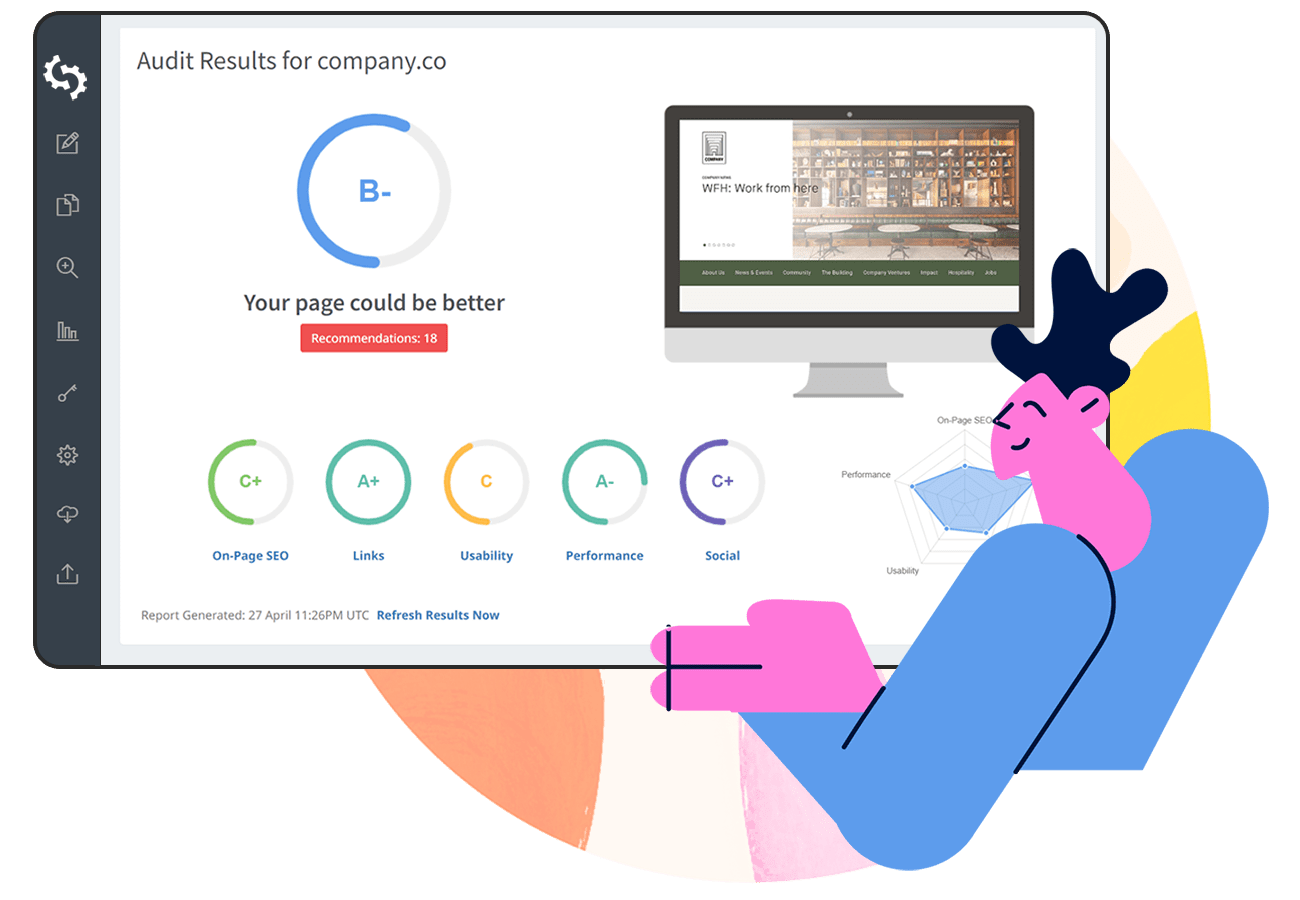
SEOptimer’s SEO Audit tool makes it easy to identify exactly what’s holding your travel website back in Google.
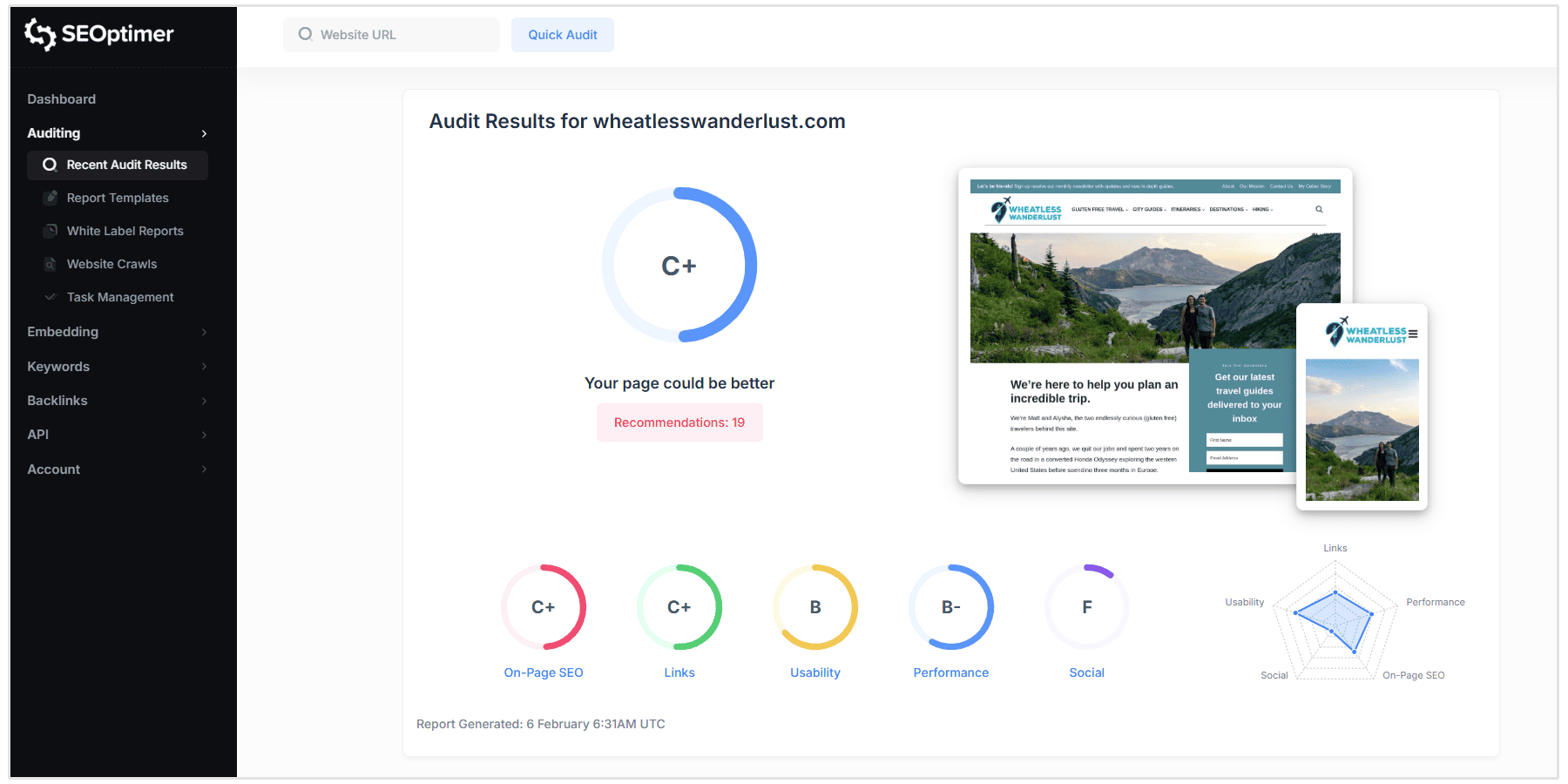
In just a few minutes, it scans your site and highlights key on-page issues such as:
- Missing or poorly optimized title tags and meta descriptions
- Weak header structure (H1/H2/H3 usage)
- Thin content and keyword relevance gaps
- Image SEO issues like missing alt text or oversized image files
Instead of guessing what to fix, you get a clear set of recommendations on what you should fix.
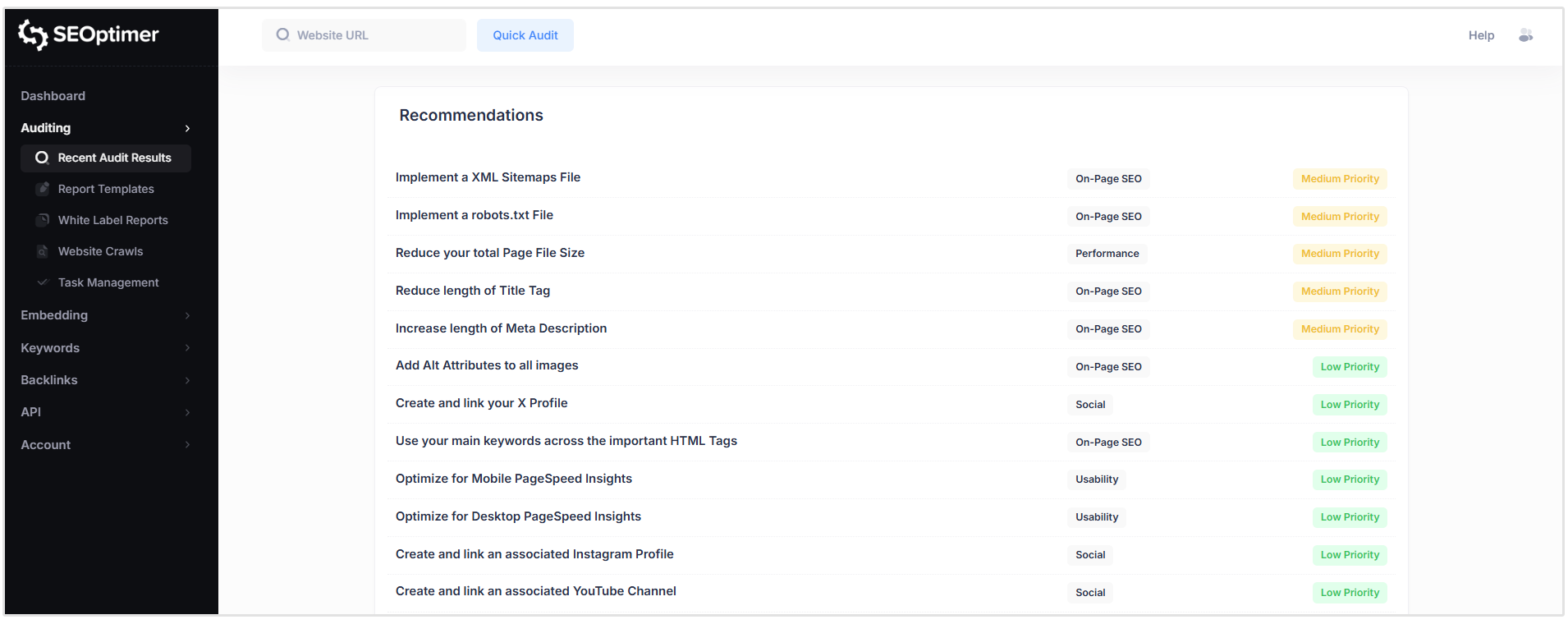
Run a free SEO audit with SEOptimer to uncover your biggest on-page SEO opportunities.
Technical SEO for Travel Websites
Technical SEO ensures that search engines can crawl and index your site without issues.
If your technical foundation is cracked, your content won't rank, no matter how good it is.
You can identify these issues quickly by running a scan with the SEOptimer SEO Audit tool or a crawl of your entire site with the SEO Crawler.
Mobile Optimization
Optimizing for mobile devices is non-negotiable.
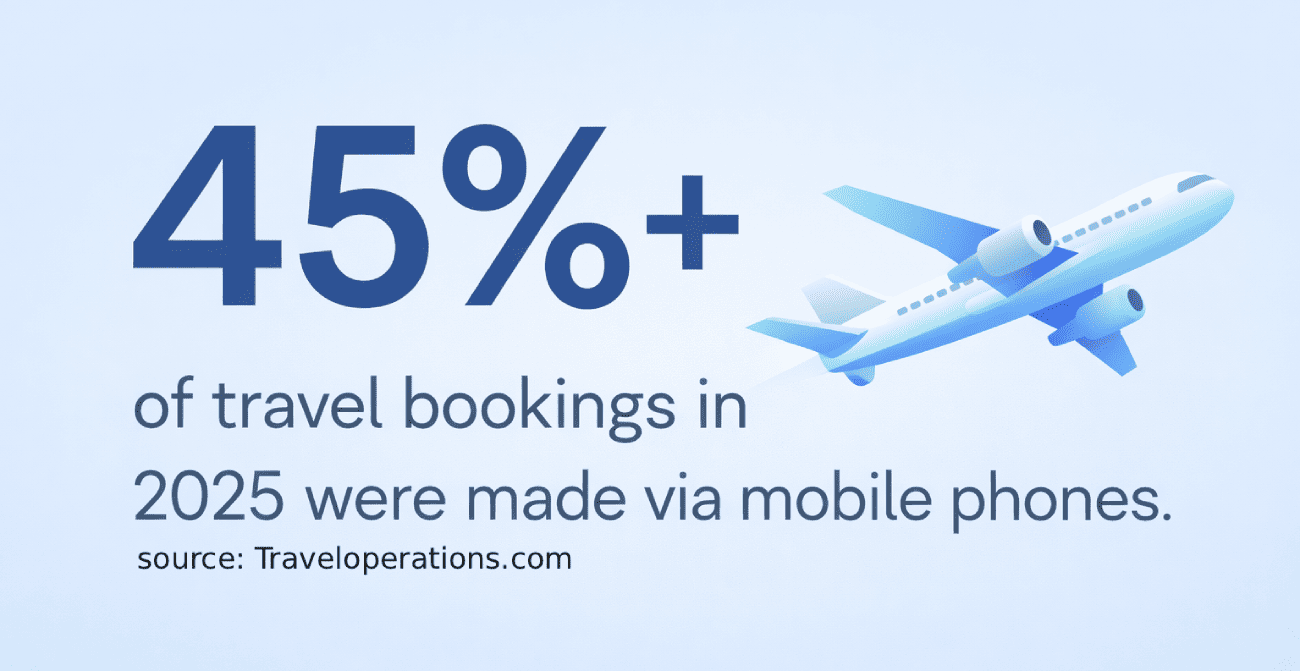
According to Think with Google, about 48% of U.S. mobile users say they are comfortable researching, planning, and booking their entire trip using only their smartphone. (note: this stastic is from 2018, so I imagine it being much higher today as more people are using their phones to search for information)
And according to Traveloperations.com, 45%+ of travel bookings in 2025 were made via mobile phones.
If your website requires users to pinch-and-zoom, or if buttons are too small to tap, they will leave immediately.
Google uses mobile-first indexing, meaning it looks at the mobile version of your site to determine your ranking.
Site Speed and Core Web Vitals
Travel websites are often image-heavy, which can slow down load times.
However, speed is a ranking factor. You need to ensure your stunning high-resolution photos don't kill your site speed.
Pay attention to Core Web Vitals, specifically the new metric INP (Interaction to Next Paint), which measures responsiveness.
Google wants to see that when a user clicks a "Book Now" button or opens a menu, the site responds instantly. Compressing images and using a fast hosting provider are the best ways to improve these scores.
XML Sitemap
An XML sitemap is a file that lists all the important pages on your website.
It acts as a roadmap for Google bots. You should submit your sitemap to Google Search Console to ensure all your destination pages and tour listings are indexed.
Google recommends breaking up large sitemaps if they exceed 50MB or 50,000 URLs, though most travel businesses won't hit this limit.
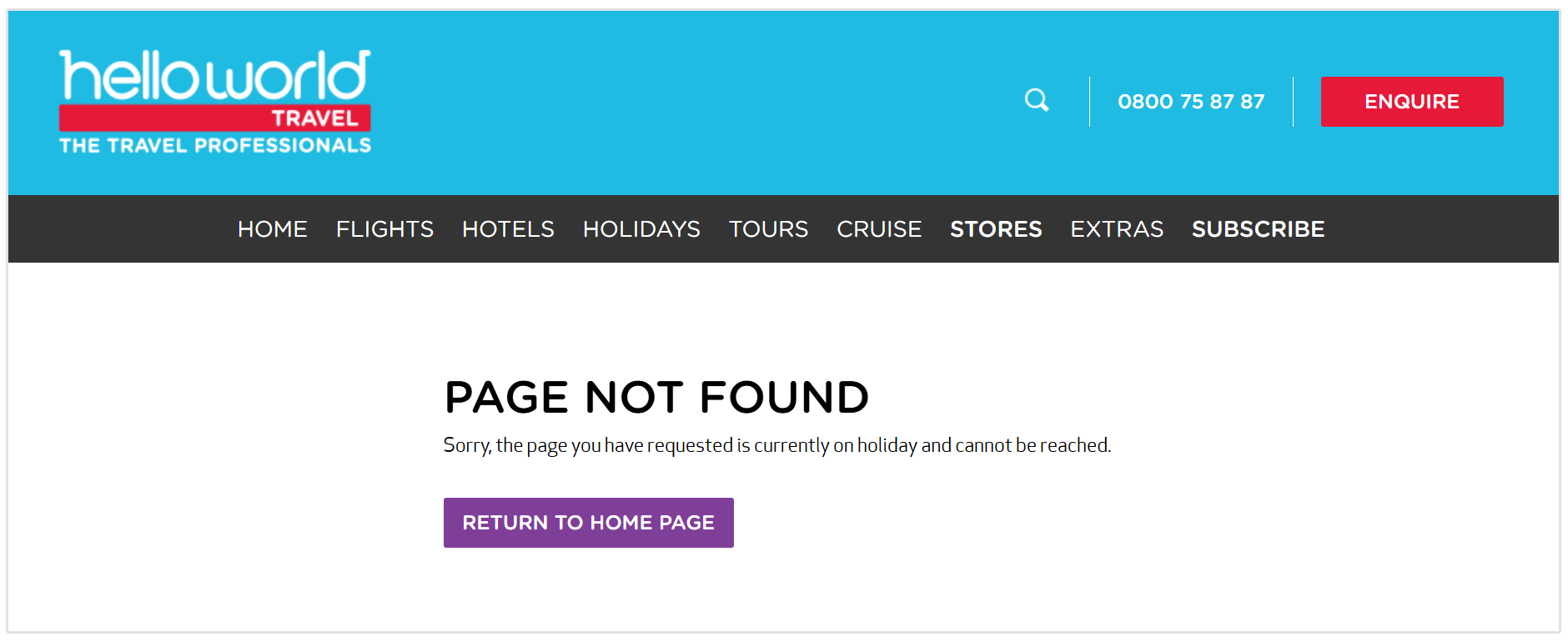
Just ensure your sitemap is clean and doesn't contain broken pages (404s).
Local SEO for Travel Websites
For most tourism businesses, travel SEO is actually local SEO because you are trying to attract people to a specific physical location.
Why Local Search is Important for Travel Sites
When a traveler is in your city and searches "bike rentals near me" or "museums open now," Google looks at local signals.
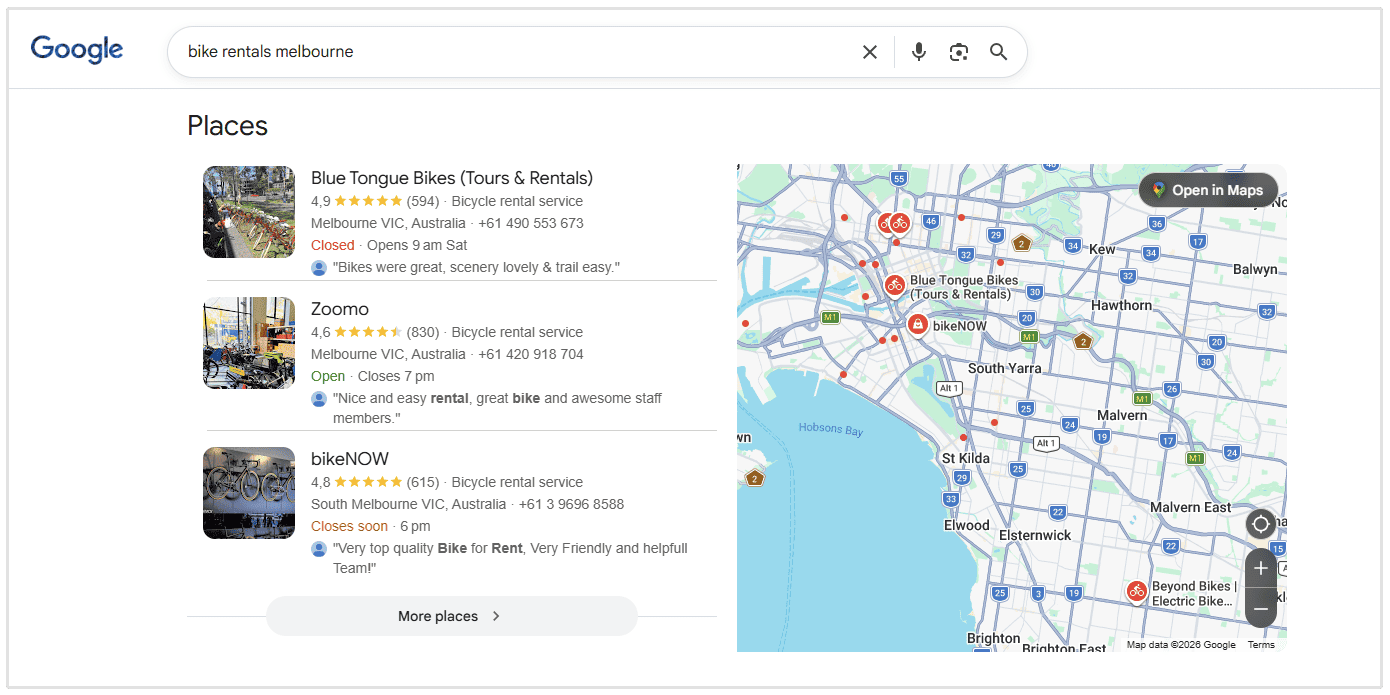
If you have strong local SEO, you show up in the Map Pack which is the three business listings displayed at the top of the results with a map.
Optimizing Your GBP for Local Queries
Your Google Business Profile (GBP) is your most valuable local SEO asset.
To optimize it follow these steps:
- NAP Consistency: Ensure your Name, Address, and Phone number are identical across your website and GBP.
- Categories: Choose the most specific category possible (e.g., "Sightseeing Tour Agency" rather than just "Travel Agency").
- Reviews: actively ask happy guests for 5-star reviews. Reply to every review, good or bad.
Create Local Landing Pages
If you operate in multiple cities or neighborhoods, don't just lump them all on your homepage.
Create specific landing pages for each location.
For example, if you offer tours in London and Paris, create separate pages optimized for "London Walking Tours" and "Paris Walking Tours."
This helps you rank for location-specific queries.
Content Strategy for Travel Websites
Content is the fuel for your SEO engine.
Great content builds authority and answers the questions your potential guests are asking.
Evergreen Guides
Create comprehensive guides that stay relevant for years. These are called pillar pages.
Examples:
- The Ultimate Guide to Backpacking Thailand
- Safety Tips for Solo Female Travelers in Peru
This content attracts consistent traffic and establishes you as an expert in your destination.
Chris Atkins is the owner of Central America Fishing, a boutique luxury travel agency located in Costa Rica, and he gave us some useful insights on how they structure their website with pillar pages:
We structured our website with the "pillar-cluster". This has helped us build a keyword heavy landing page, and then countless pages and blog posts can internally link to that page.
For example, we have a main landing page about Costa Rica Fishing, and then several cluster pages related to the different kind of fishing we do in Costa Rica and the most popular vacations where we do it. Not only does this help with UI as they can easily navigate to related topics, it helps with SEO as every cluster page points back to the main landing page.
- Chris Atkins, Owner of Central America Fishing
Seasonal Guides and Trends
Travel is highly seasonal. Capitalize on this by creating content for specific times of the year.
Examples:
- Best Christmas Markets in Germany
- Where to see Cherry Blossoms in Tokyo (2025 Guide)
Update these articles annually to keep the information fresh and the rankings high.
Visual Content
Travel is visual. You cannot sell a destination with text alone.
Use high-quality, original photography and video content.
SEO Tip: Google cannot "see" images. You must use alt text to describe your images.
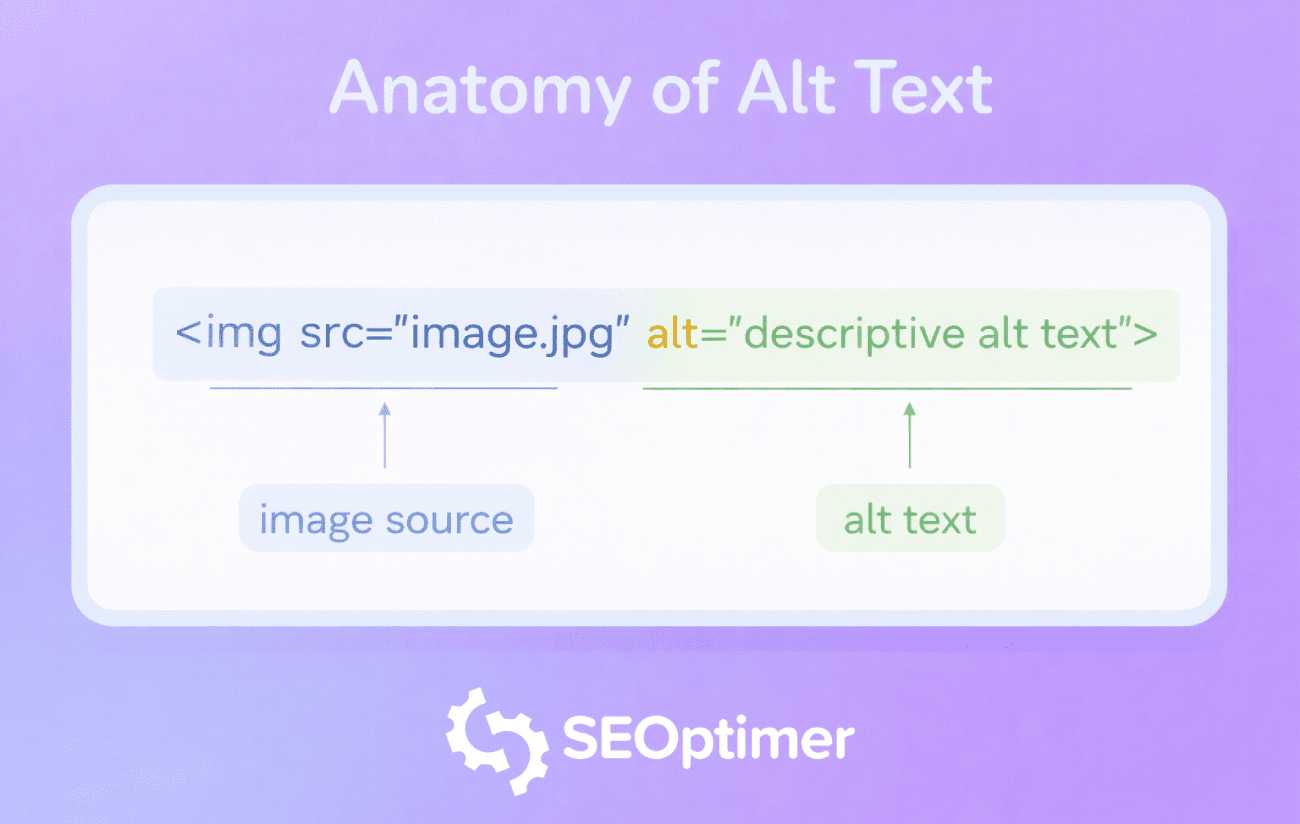
Instead of something like "DSC001.jpg," name your file "sunset-over-santorini-caldera.jpg" and set the alt text to "Sunset view over the caldera in Santorini, Greece."
User Generated Content
Encourage your guests to tag you on social media and leave reviews on your site.
You can embed this content on your pages.
Not only does this provide social proof that builds trust, but fresh reviews also add unique text to your pages, which helps Google see your site as active and relevant.
Link Building Strategies for Travel Websites
Link building is the process of getting other websites to link to yours. In the eyes of Google, a link is a vote of confidence.
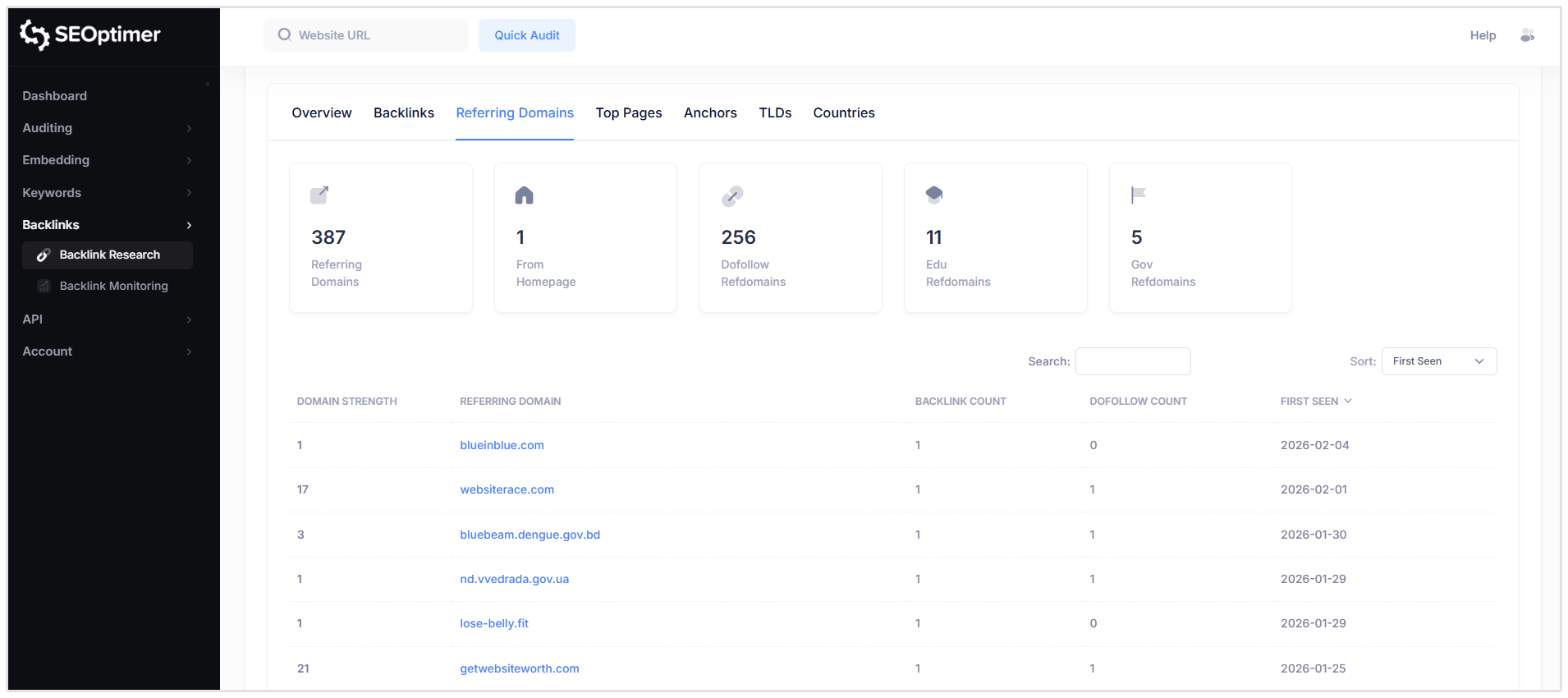
The more votes you have from high-authority sites, the higher you rank. You can track your link profile using SEOptimer’s Backlink Research tool.
It will show you the strength of your domain profile, how many links are pointing to your site, top pages by backlinks, and more.
Travel Bloggers Outreach
Find travel bloggers who cover your destination. Reach out and offer them a free tour or stay in exchange for an honest review on their blog.
Ensure they link back to your website in the article. This gives you a high-quality link and exposes your brand to their audience.
Resource/Link Roundups
Many websites publish weekly or monthly roundups of the best travel content.
Search for "travel link roundup" or "best travel articles of the week" and pitch your best evergreen guide to the editors.
Partnerships with Tourism Boards
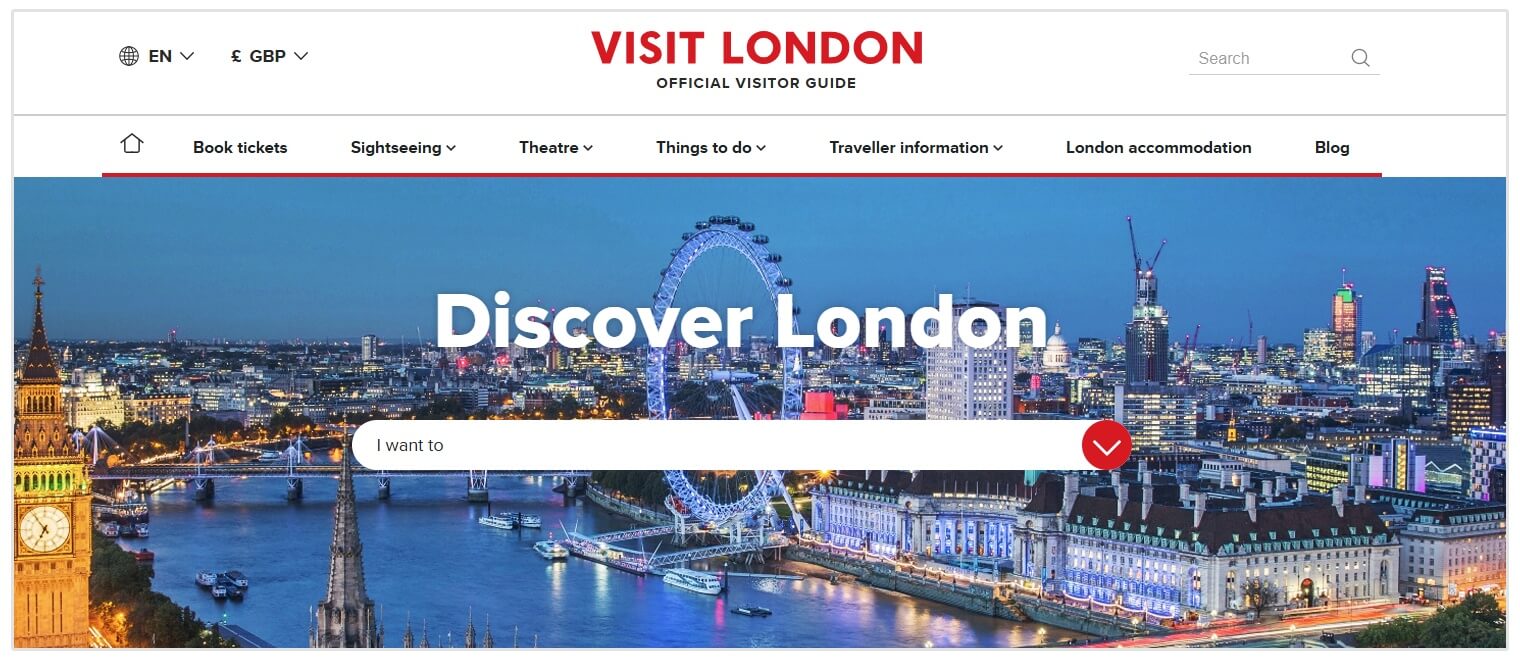
If you are a legitimate business, get listed on your local DMO (Destination Marketing Organization) website.
These are government or official tourism board sites (like VisitLondon.com). They have incredibly high "Domain Authority," and a link from them is very powerful for SEO for travel websites.
Press & Digital PR
Do you have a unique story? Are you launching an eco-friendly initiative?
Pitch your story to local news outlets and travel magazines. A link from a news site is one of the strongest trust signals you can get.
Measuring Travel SEO KPIs
SEO is a long-term game, but you need to track your progress to know what's working.
Here are the Key Performance Indicators (KPIs) to watch:
- Organic Traffic: The number of visitors coming from search engines.
- Rankings for Core Keywords: Are you moving from page 5 to page 1 for your main service keywords?
- CTR & Impressions: Use Google Search Console to see how many people see your listing and how many click it.
- Bookings/Conversions: Ultimately, traffic doesn't matter if it doesn't convert. Track how many organic visitors are booking trips.
- Engagement Metrics: Look at "Time on Page" and "Bounce Rate." If people are staying on your blog posts for 4+ minutes, you know your content is engaging.
Conclusion
Implementing a robust strategy for travel SEO is the best investment you can make for your tourism business.
It allows you to reduce your reliance on expensive ads and commission-hungry OTAs, putting you in control of your own bookings.
Remember, SEO is not a sprint; it’s a marathon.
It requires consistent effort in creating great content, optimizing your technical foundation, and building relationships for backlinks.
But the reward—a steady stream of travelers finding you organically—is well worth the effort.
Ready to see how your website stacks up?
Start by identifying your current strengths and weaknesses with the SEOptimer SEO Audit tool, and begin your journey to the top of the search results today.