

SEO for gyms is what determines whether your fitness business shows up when potential members search “gyms near me” or “gym in LA.”
Most people don’t scroll past the first few Google results and if your gym isn’t there, it might as well not exist.
The good news? With the right SEO strategy, you can improve your local visibility, outrank nearby competitors, and attract members who are already ready to join.
This guide covers everything you need to know about SEO for gyms. We will break down how to find the right keywords, optimize your local listings, fix technical issues that might be hurting your rankings, and much more.
What is SEO for Gyms?
SEO for gyms focuses on improving the online visibility of fitness centers, yoga studios, CrossFit studios, and personal training businesses in search results.
Unlike general SEO, which might target global audiences, gym SEO tends to be hyper-local.
Your goal isn't to rank for "best gym" worldwide.
Your goal is to rank for "best gym in Austin" or "boxing classes in Miami."
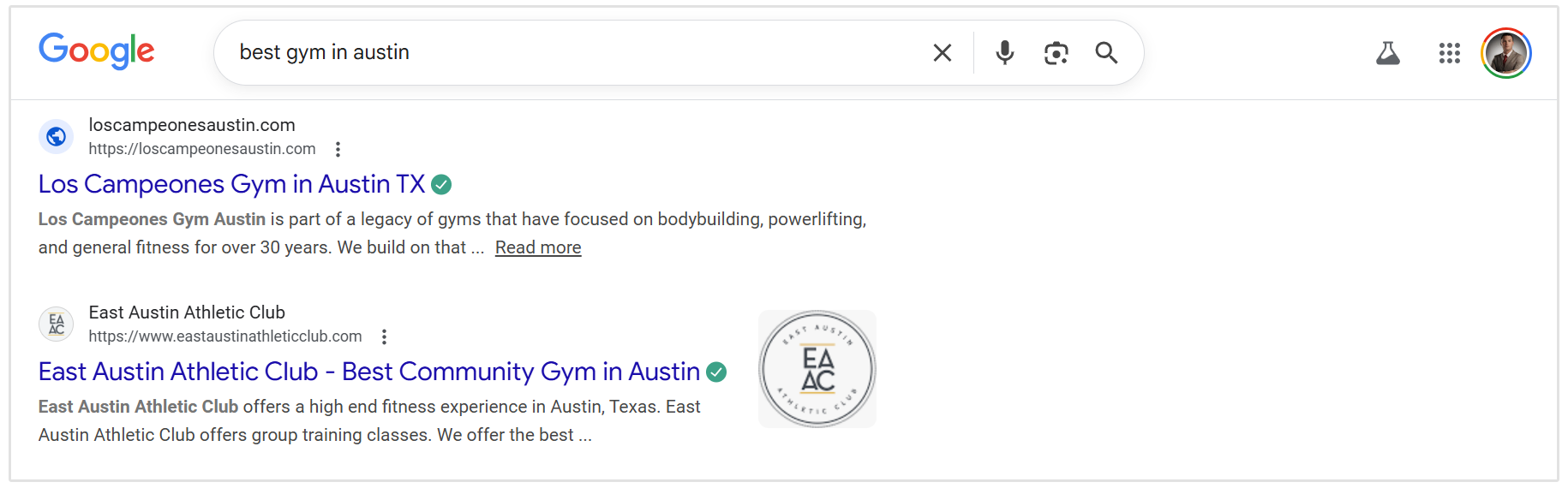
Gym SEO involves a mix of optimizing your website content, managing your online reputation, and handling technical details so search engines can read your site easily.
Do Gyms Need SEO?
Yes, SEO gives gyms consistent visibility at the exact moment people are actively looking for a gym.
Instead of hoping someone mentions your business to a friend, SEO puts your gym in front of searchers who are already motivated to join.
And while word-of-mouth is a great growth channel, it is unpredictable and impossible to control. You can’t scale it, you can’t switch it on when memberships dip, and you can’t rely on it as your only growth channel.
Data shows that 46% of all Google searches have local intent. This means nearly half of the people searching on Google are looking for a business or service nearby.

Furthermore, 76% of people who search for something nearby on their smartphone visit a related business within a day.
If your gym isn’t showing up in the "Local Pack" (the map section at the top of search results) or the organic results below it, you are invisible to a massive chunk of your market.
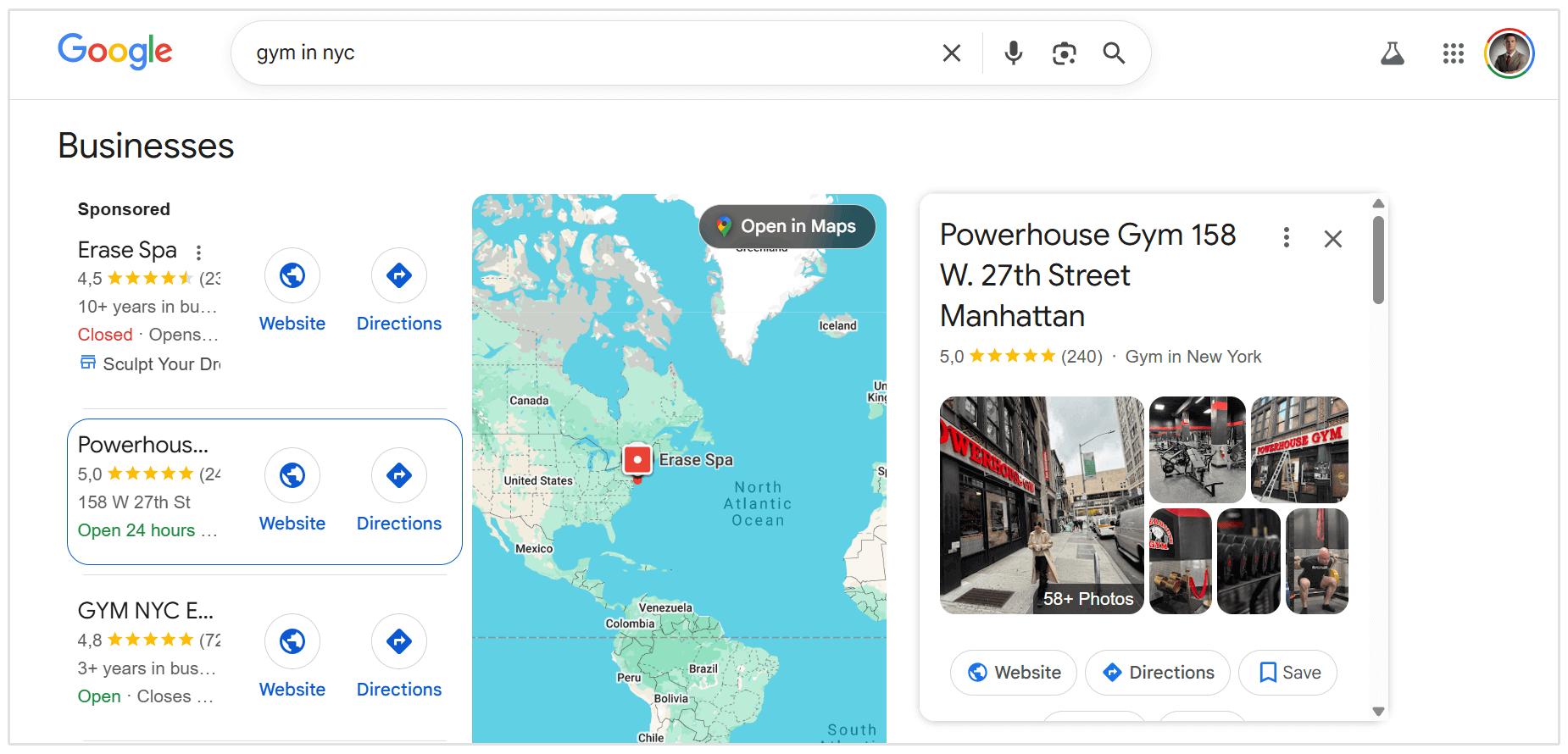
SEO provides a sustainable, long-term source of leads that doesn't turn off the moment you stop paying for ads.
Audit Your Site First
Before you start rewriting content or building links, you need to know where you stand.
A website audit is like a fitness assessment for your digital presence. It tells you what is healthy and what needs immediate attention.
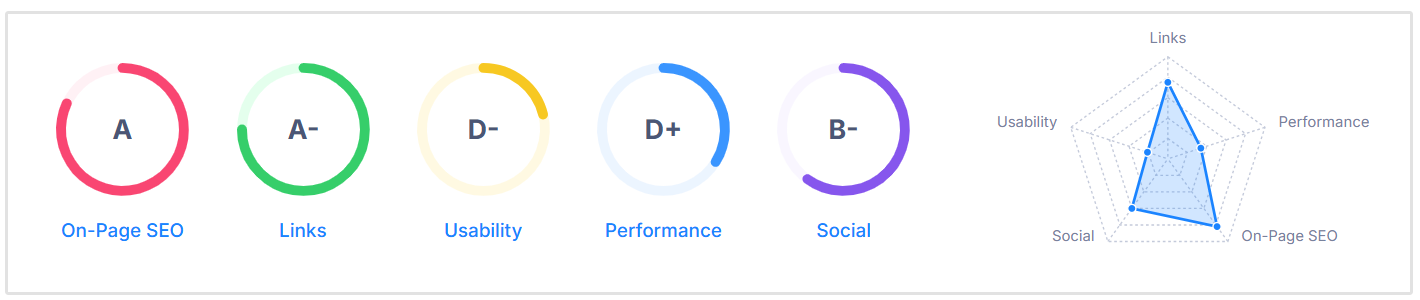
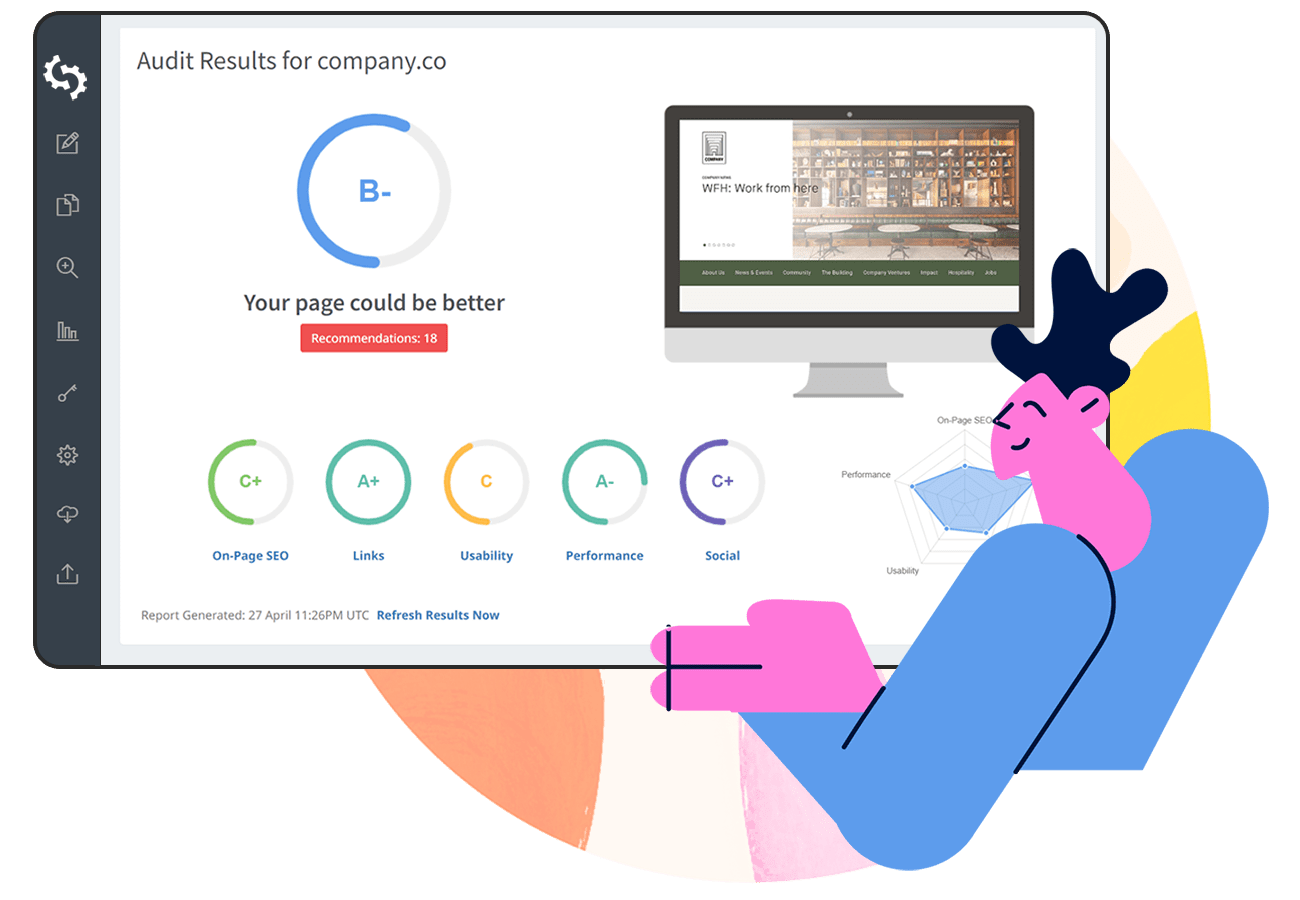
You can use SEOptimer to run a comprehensive website audit.
Our tool scans your site and gives you a clear, prioritized list of issues, such as broken links, slow page load speeds, or missing meta tags, as well as a set of recommendations on how to improve your site.
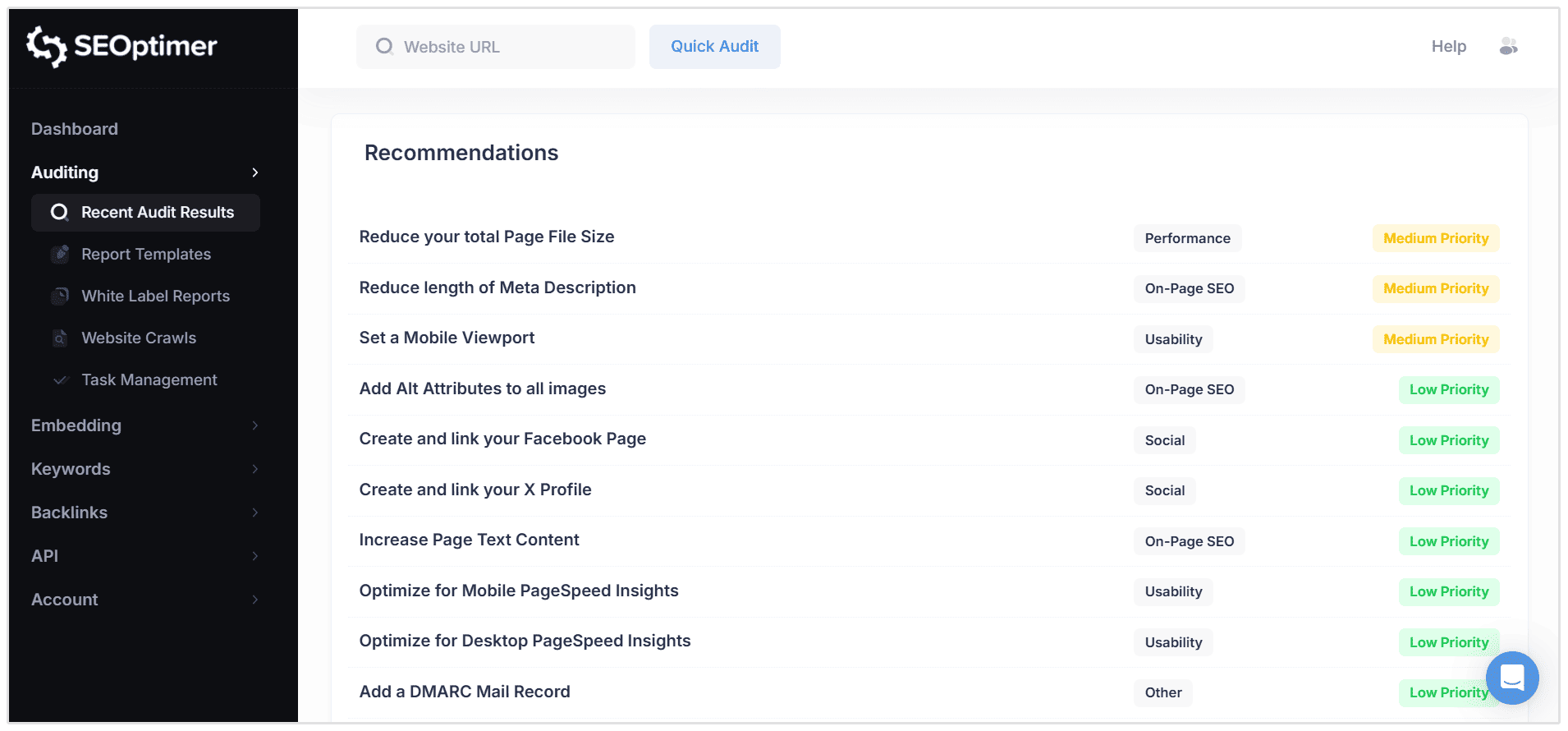
Fixing these foundational issues first ensures that your future SEO efforts aren't wasted on a broken site.
Keyword Research for Gyms
Keyword research is the process of discovering the specific phrases your potential members type into search engines.
It eliminates guesswork and ensures you are targeting terms that actually drive traffic.
Why Keyword Research is Important
If you optimize your website for "fitness center" but everyone in your town searches for "gym," you are missing out.
Proper keyword research helps you understand the language of your customers.
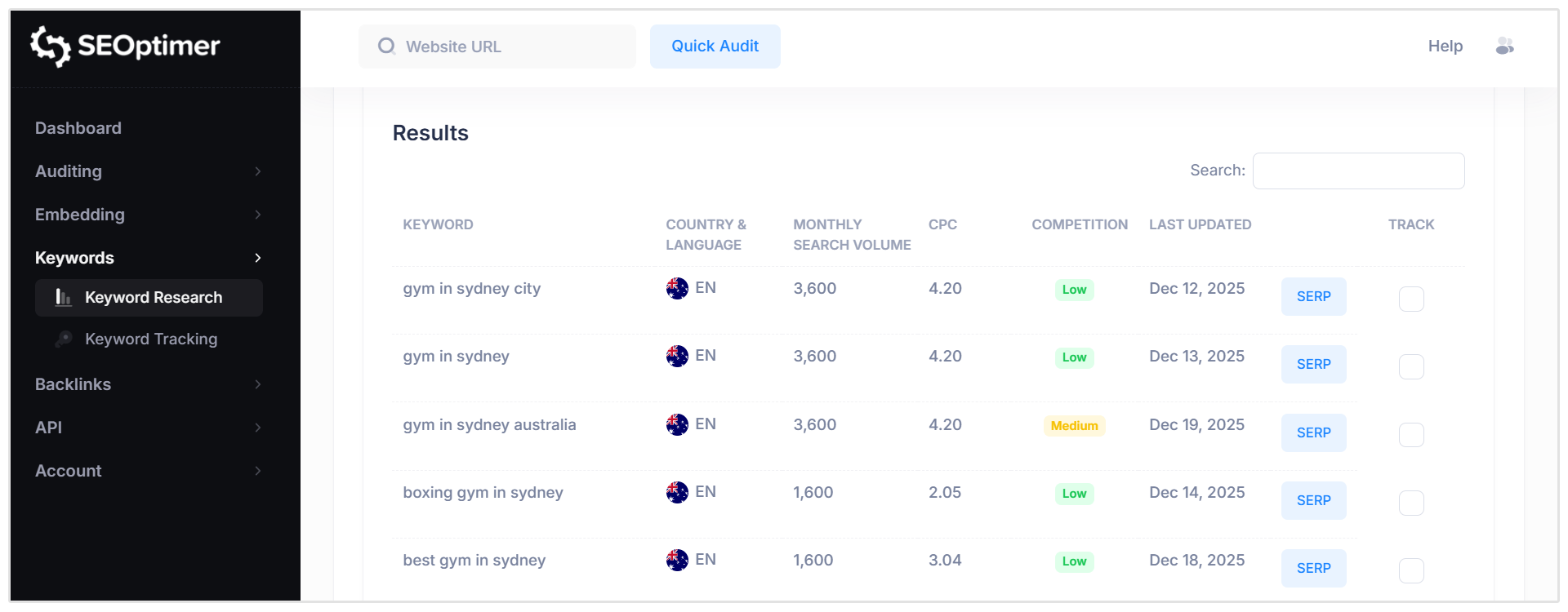
It reveals the intent behind the search like whether someone is just looking for tips (informational) or is ready to sign up (transactional).
Types of Keywords Gyms Should Target
You generally want to focus on two types of keywords:
Local and Transactional Keywords: These have high intent. Users searching these terms are ready to buy or visit.
Examples of these include:
- Gym in Phoenix
- CrossFit gym in NYC
- Personal training prices
Informational Keywords: These build trust and authority. Users are looking for answers.
Examples of these include:
- How to lose weight fast
- Benefits of hot yoga
- Strength training for beginners
You can use SEOptimer’s keyword research tool to find these terms.
It provides data on search volume and competition, helping you pick keywords that you have a realistic chance of ranking for.
On-Page SEO for Gyms
On-page SEO involves optimizing individual web pages to rank higher and earn more relevant traffic. This is where you put your keyword research into action.
Title Tags, Meta Descriptions and Schema Basics
Your title tag is the clickable headline in search results. Having the right title tag is a very important element of successful SEO.
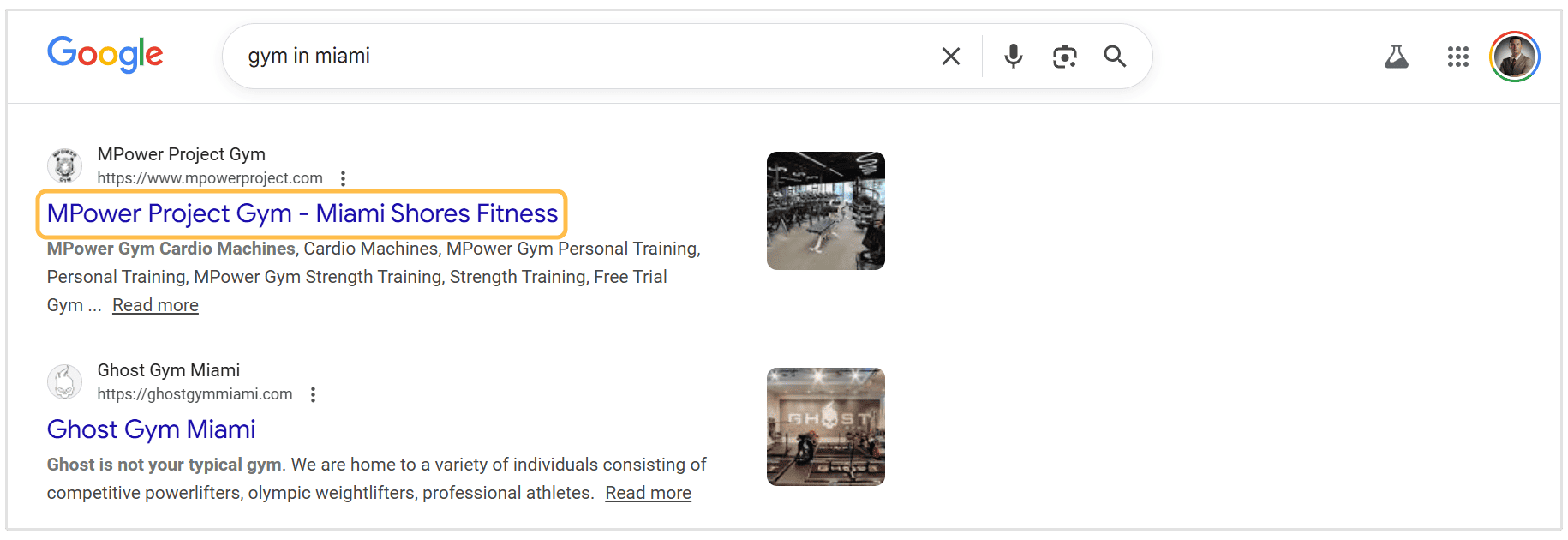
Ensure every page has a unique title that includes your target keyword and location.
For example: Best 24-Hour Gym in Chicago | Mode Gym.
The meta description is the short summary below the title.

While it doesn't directly impact rankings, it impacts clicks. Write persuasive copy that encourages users to click through.
Schema markup (structured data) is code that helps search engines understand your content.
For gyms, using LocalBusiness schema is crucial. It tells Google your operating hours, address, and price range, increasing the chances of this info appearing directly in search results.
Optimizing Homepage and Service/Location Pages
Your homepage should clearly state who you are, where you are, and what you do.
However, don't try to rank for everything on one page.
Create dedicated pages for each service you offer (e.g., Yoga, HIIT, Personal Training) and each location if you have multiple branches.
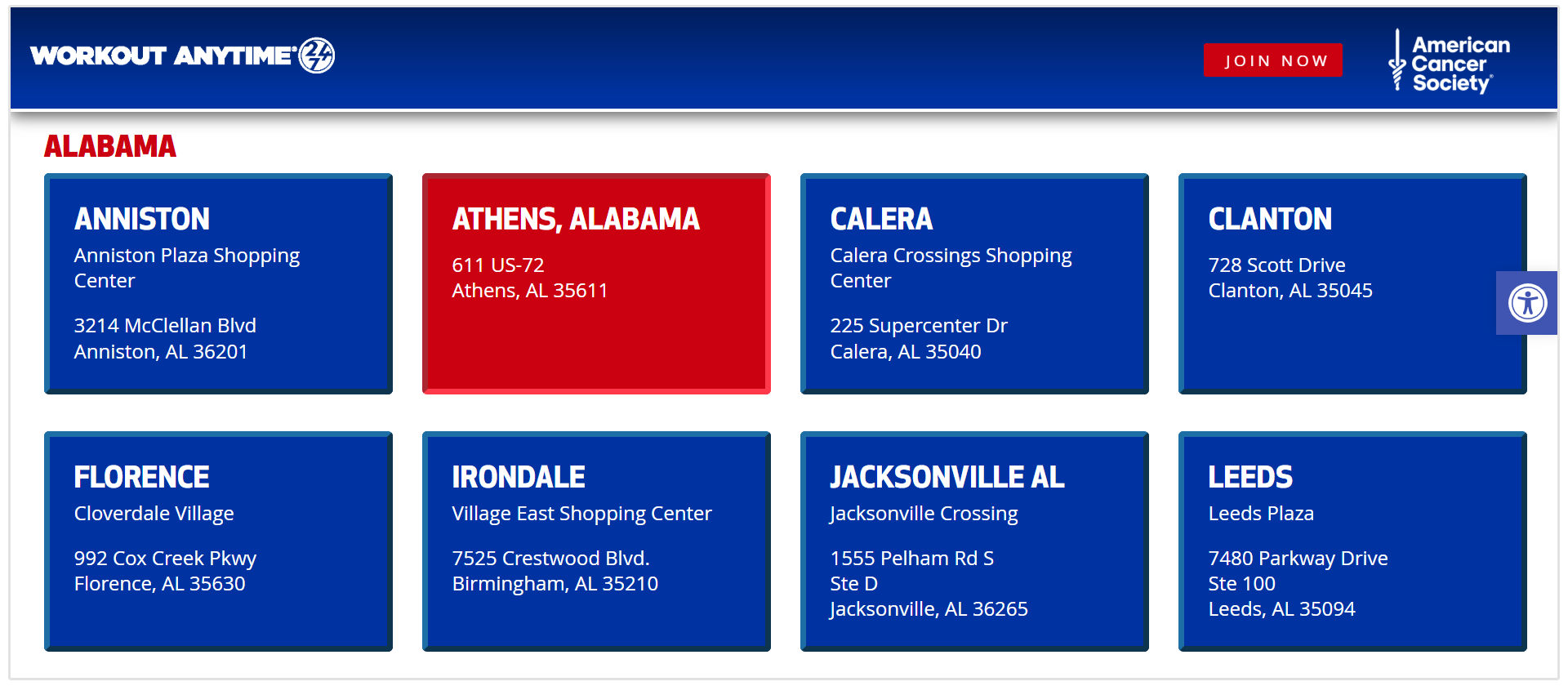
This allows you to target specific keywords like "Yoga classes in Denver" specifically on the Yoga page, rather than cluttering your homepage.
Image Alt Tags
Search engines cannot see images; they read the text attached to them.
Alt tags describe the image content. Instead of leaving an image file named "IMG_1234.jpg," rename it to "gym-members-lifting-weights-denver.jpg" and add a descriptive alt tag.
This improves accessibility and helps you rank in Google Images.
Internal Linking
Internal links connect your pages to one another. They help Google crawl your site and understand its structure.
For example, in a blog post about the benefits of pilates, you should link to your Pilates Classes service page.
Like this example from the Chicago Athletic Clubs, their blog post on the health benefits of pilates links to relevant blog posts, and more importantly, their Pilates Classes page.

This guides readers toward becoming members and passes "authority" between pages.
Keyword Usage
Avoid keyword stuffing which is the process of jamming your target phrase into the text as many times as possible.
It reads poorly and Google penalizes it.
Instead, use your keywords naturally in the first 100 words, in headings (H1, H2, H3), and throughout the content where it makes sense.
Local SEO Tips for Gyms
Local SEO is the bread and butter of gym marketing.
When it comes to gym SEO, keeping it local is key. Even if you run a chain of gyms or fitness centres, most potential members are likely searching for a gym in a convenient location, so if you have more than one location, make sure that you have dedicated pages and Google Business Profiles for each building.
- Charlotte Sheridan, Founder of The Small Biz Expert
It focuses specifically on ranking in the Local Pack and Maps results.
GBP Optimization
Your Google Business Profile (GBP) is critical real estate in the local search results.

Ivan Vislavskiy from Comrade Digital Agency notes that gyms should be obsessing over their GBP.
Look, if I were running a gym today, the first thing I’d do is stop obsessing over the website and go all in on optimizing the Google Business Profile.
That’s where Google’s AI Overviews are pulling info from now; they’re putting GBPs above organic sites. So if yours isn’t dialed in, you’re basically invisible.
- Ivan Vislavskiy, CEO and Co-founder of Comrade Digital Marketing Agency
Here are some tips for optimizing it:
- Claim and Verify: Ensure you own the listing.
- Complete Every Field: Fill in your address, phone number, website, and hours.
- Choose Categories: Select primary (e.g., "Gym") and secondary categories (e.g., "Personal Trainer," "Yoga Studio") accurately.
- Add Photos: Upload high-quality photos of your equipment, exterior, and classes.
Local Citations and Consistent NAP
Citations are mentions of your business name, address, and phone number (NAP) on other websites like Yelp, Yellow Pages, and Facebook. Google uses these to verify your business is legitimate.
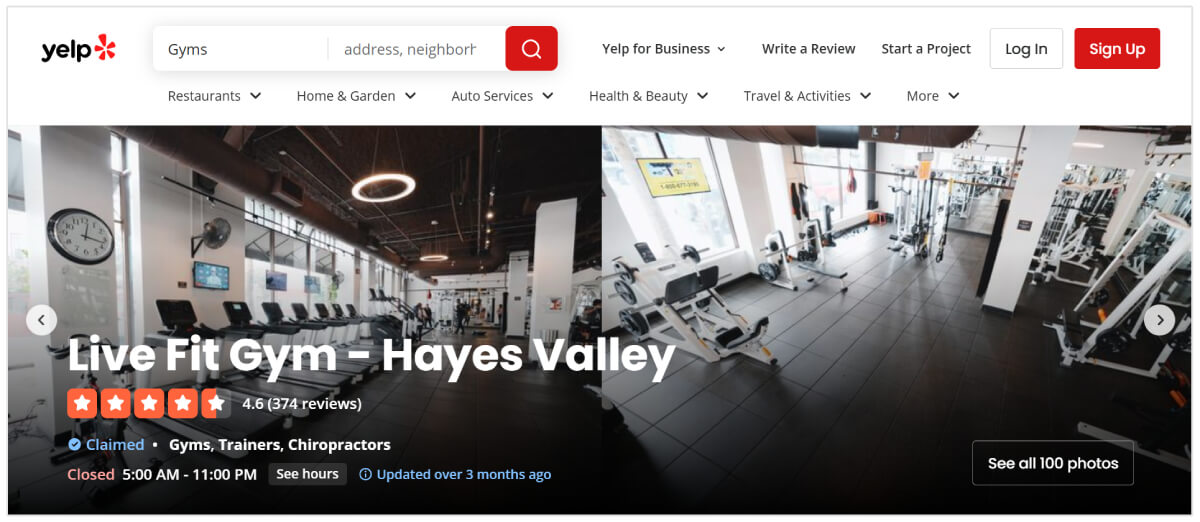
Consistency is key. If your address is "123 Main St." on Google but "123 Main Street Suite A" on Facebook, it can confuse search engines.
So ensure your NAP data is identical across the web.
Local Keyword Usage in Content
Incorporate your city and neighborhood names naturally into your website copy.
Don't just say "We offer the best spin classes."
Say, "We offer the best spin classes in downtown Seattle, convenient for residents of Belltown and South Lake Union."
This signals relevance to local searchers.
SEO Content Strategy for Gyms
A blog is a powerful tool for capturing traffic that isn't ready to join yet but is interested in fitness. By answering common questions, you can build trust with potential members.
Most users aren’t just typing “gym near me”, they’re looking for something specific, like beginner-friendly classes, personal training, or a gym that fits their routine and confidence level.
Building content that speaks directly to those needs makes a noticeable difference in visibility and engagement.
- Courtney Haddock, Senior SEO Content Executive at Quirky Digital
Create a content calendar that addresses the pain points of your local audience.
- Local Guides: "Best places to run in Houston" or "Healthy restaurants in Denver."
- Fitness Tips: "How to prepare for your first CrossFit class."
- Member Spotlights: Interviews with members who achieved great results.
This content keeps your site fresh and gives you material to share on social media.
Technical Essentials for Gym SEO
Technical SEO ensures your site creates a solid foundation for your content. If your technical SEO is poor, your great content may never rank.
Mobile Responsiveness
Google uses mobile-first indexing, meaning it looks at the mobile version of your site to decide rankings.
Since most people search for gyms on their phones while on the go, your site must look and function perfectly on mobile devices.
Buttons should be clickable, and text should be readable without zooming.
HTTPS
Your site should use HTTPS (look for the padlock icon in the browser bar).
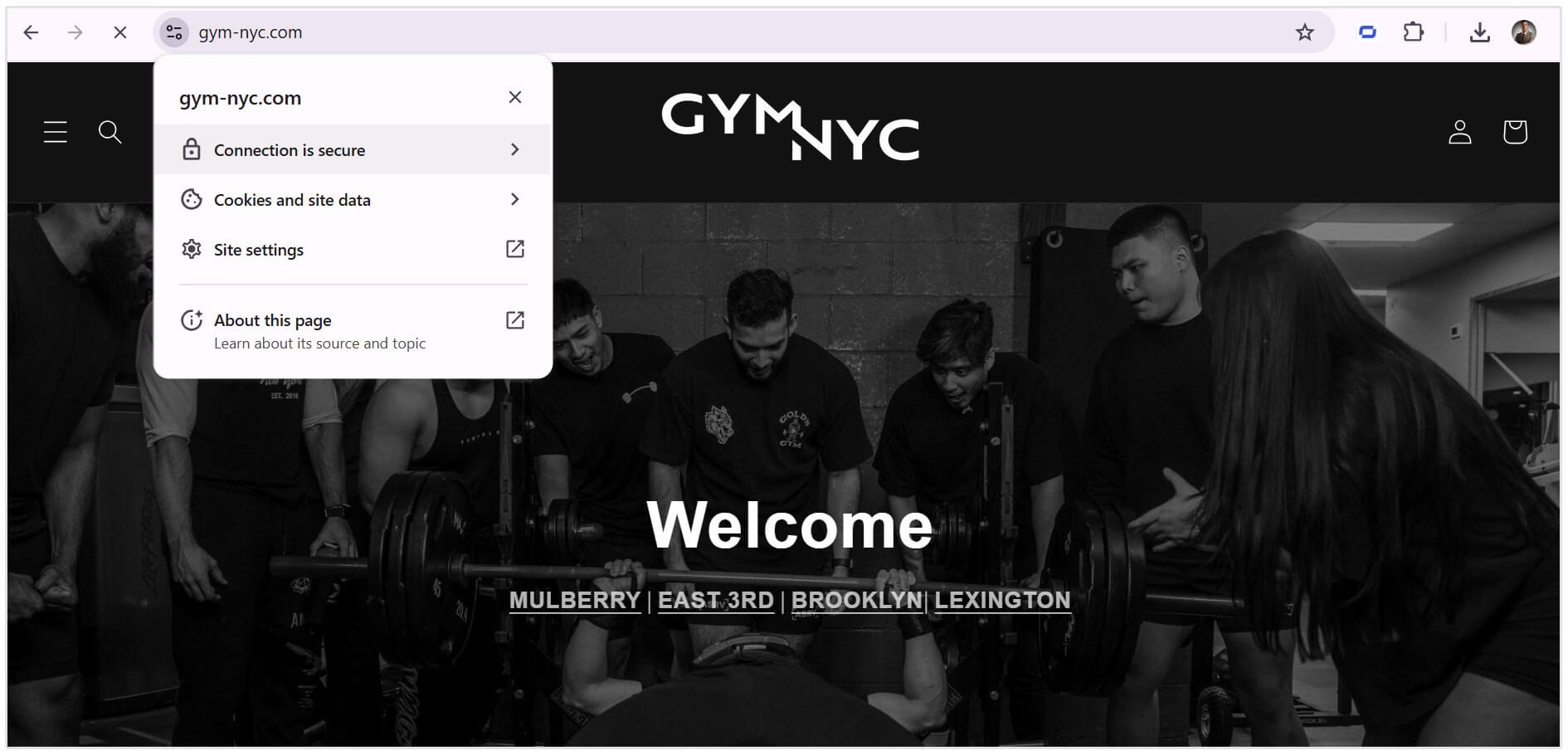
This encrypts data between your site and the user.
If your site is still HTTP, browsers may flag it as "Not Secure," which scares away potential leads.
Sitemap
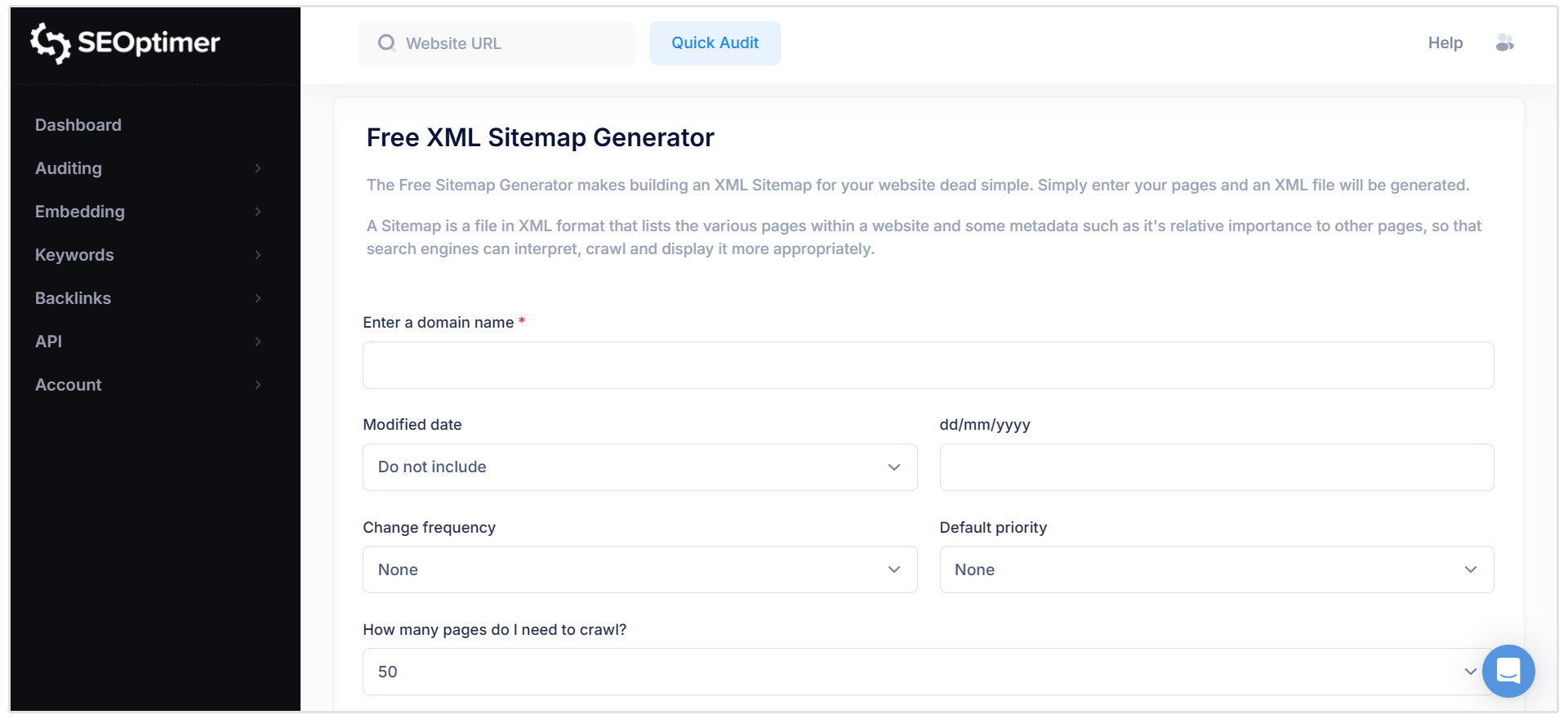
A comprehensive XML sitemap acts as a roadmap for search engines, helping them find and index all your important pages.
You can usually generate this through your CMS (like WordPress) or with a sitemap generator tool, and submit it via Google Search Console.
Off-Page SEO for Gyms
Off-page SEO refers to actions taken outside of your own website to impact your rankings. The biggest factor here is backlinks (links from other sites to yours).
Think of a backlink as a vote of confidence.
If a local newspaper or a popular fitness blog links to you, it tells Google your site is authoritative.
- Partner with local businesses: Ask health food stores or chiropractors to link to you as a recommended partner.
- Sponsor local events: Sponsoring a 5K run often gets you a link on the event website.
- Digital PR: Get featured in local news for charity drives or new class launches.
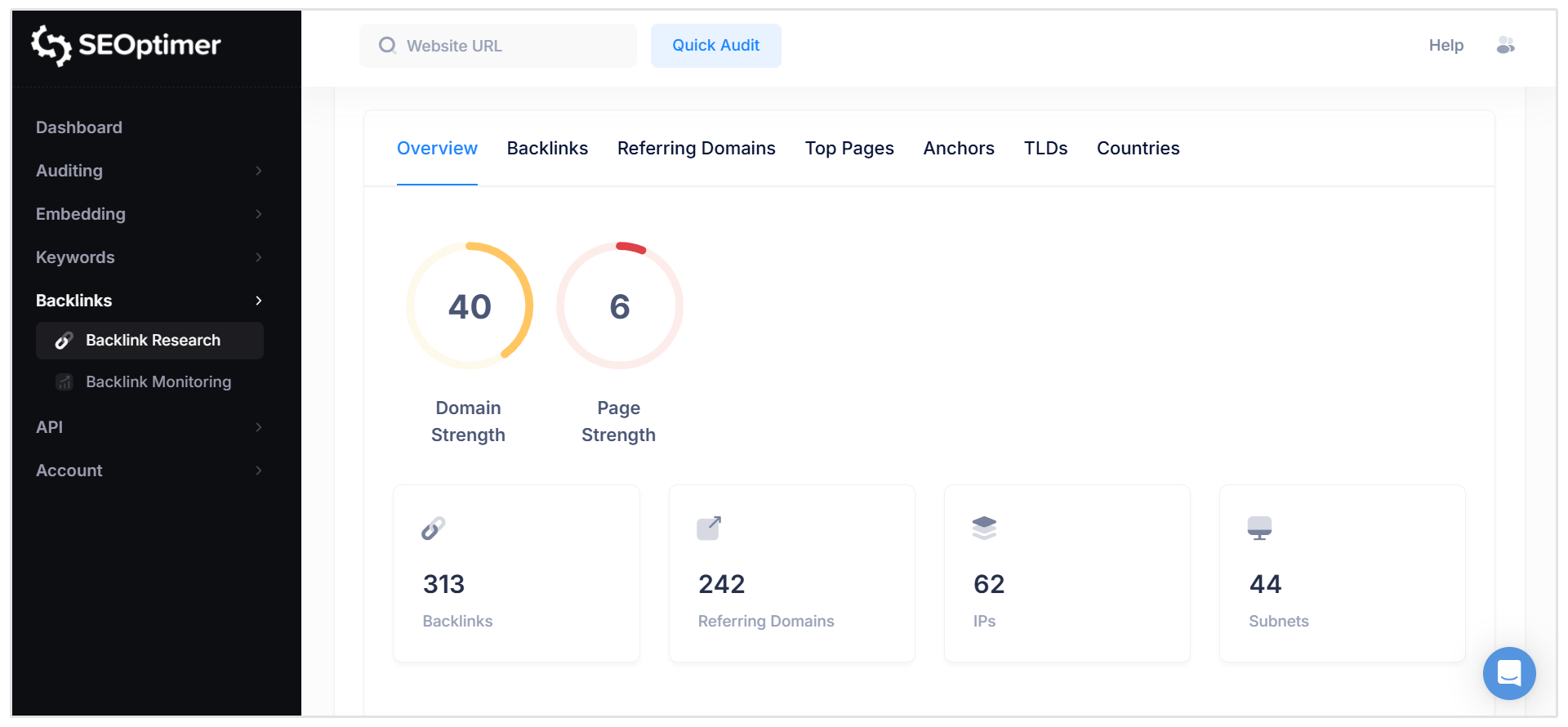
You can use SEOptimer’s Backlink Research Tool to see who is linking to your competitors and try to get those same links for yourself.
How to Track Gym SEO Success
You cannot improve what you do not measure. SEO is a long-term game, and you need to track specific metrics to see if your strategy is working.
Google Analytics
Google Analytics is essential for understanding who is visiting your site and what they do there.
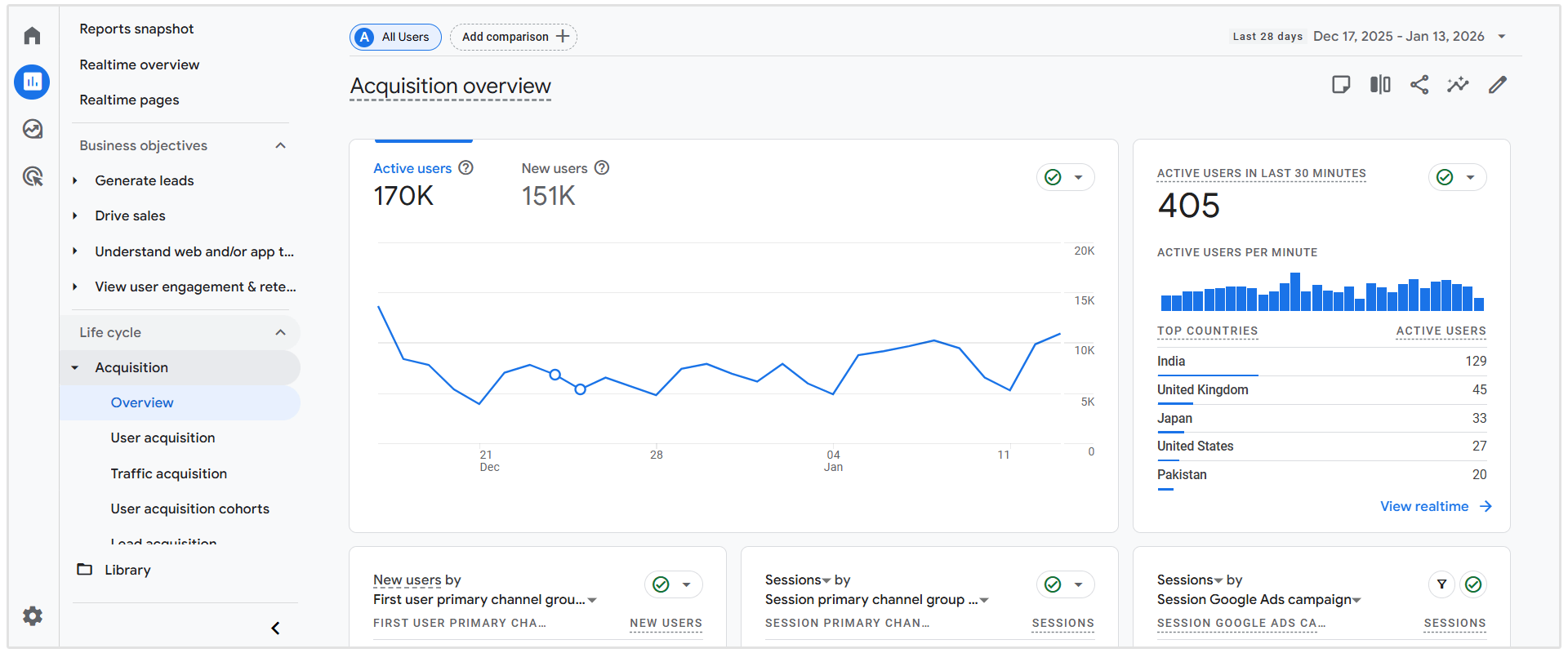
It tells you:
- How many people visit your site.
- Which pages they visit most.
- How long they stay on the site.
- Whether they convert (fill out a form or call you).
Google Search Console
Google Search Console (GSC) gives you data directly from the search engine.
It shows you:
- Which keywords your site ranks for.
- The number of impressions (times you appeared in search) and clicks you get.
- Technical errors that prevent Google from crawling your site.
SEOptimer
For a more streamlined and comprehensive view, SEOptimer offers a suite of tools designed for marketers to track SEO performance easily.
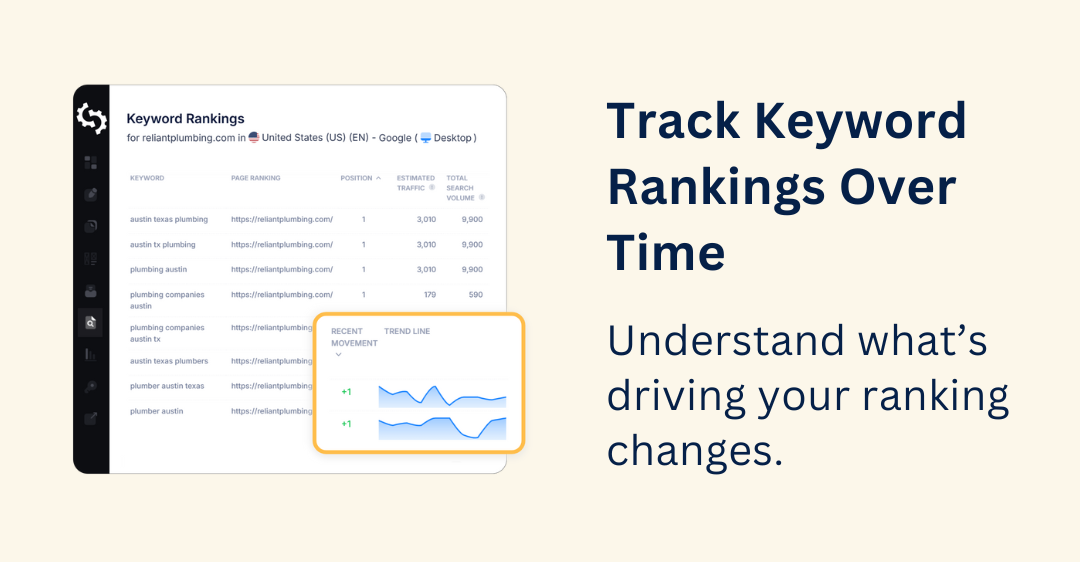
- Keyword Tracking: Instead of manually Googling your business, SEOptimer tracks your keyword rankings over time, showing you exactly where you stand for "gyms in [City]" and other key terms.
- Backlink Monitoring: Keep an eye on your link profile. You can see when you gain new links or if you lose valuable ones, allowing you to react quickly.
- Scheduled SEO Reports: You can set up automated reports to be emailed to you or your team. This keeps you updated on your progress without needing to log in and dig through data every day.
Common SEO Mistakes Gym Owners Make
Avoid these pitfalls to ensure your SEO strategy runs smoothly.
Ignoring Local SEO
Some gym owners focus too much on broad terms like "fitness tips" and neglect their Google Business Profile.
For a physical gym, local visibility is the priority. If you don't show up on the map, you don't exist to local searchers.
Keyword Stuffing and Poor Content
Writing "Best Gym Miami Best Gym Miami" repeatedly at the bottom of your page doesn't work. It looks spammy and hurts your rankings.
Focus on writing helpful, natural content for humans, not just search engine bots.
Slow Loading Sites
High-resolution images of your gym are great, but if they aren't compressed, they can slow your site down.
If your site takes more than 3 seconds to load, users will bounce back to Google and choose a competitor. Compress your images and use a fast hosting provider.
Conclusion
SEO for gyms is one of the most effective ways to build a steady stream of new members.
By auditing your site, targeting the right local keywords, and maintaining an active Google Business Profile, you can dominate your local market.
It takes time and consistency, but the results—more calls, more tours, and more memberships—are worth the effort. Start with a site audit today and take the first step toward a busier gym.