Free XML Sitemap Generator
The Free Sitemap Generator makes building an XML Sitemap for your website dead simple. Simply enter your pages and an XML file will be generated.
A Sitemap is a file in XML format that lists the various pages within a website and some metadata such as it's relative importance to other pages, so that search engines can interpret, crawl and display it more appropriately.
Output
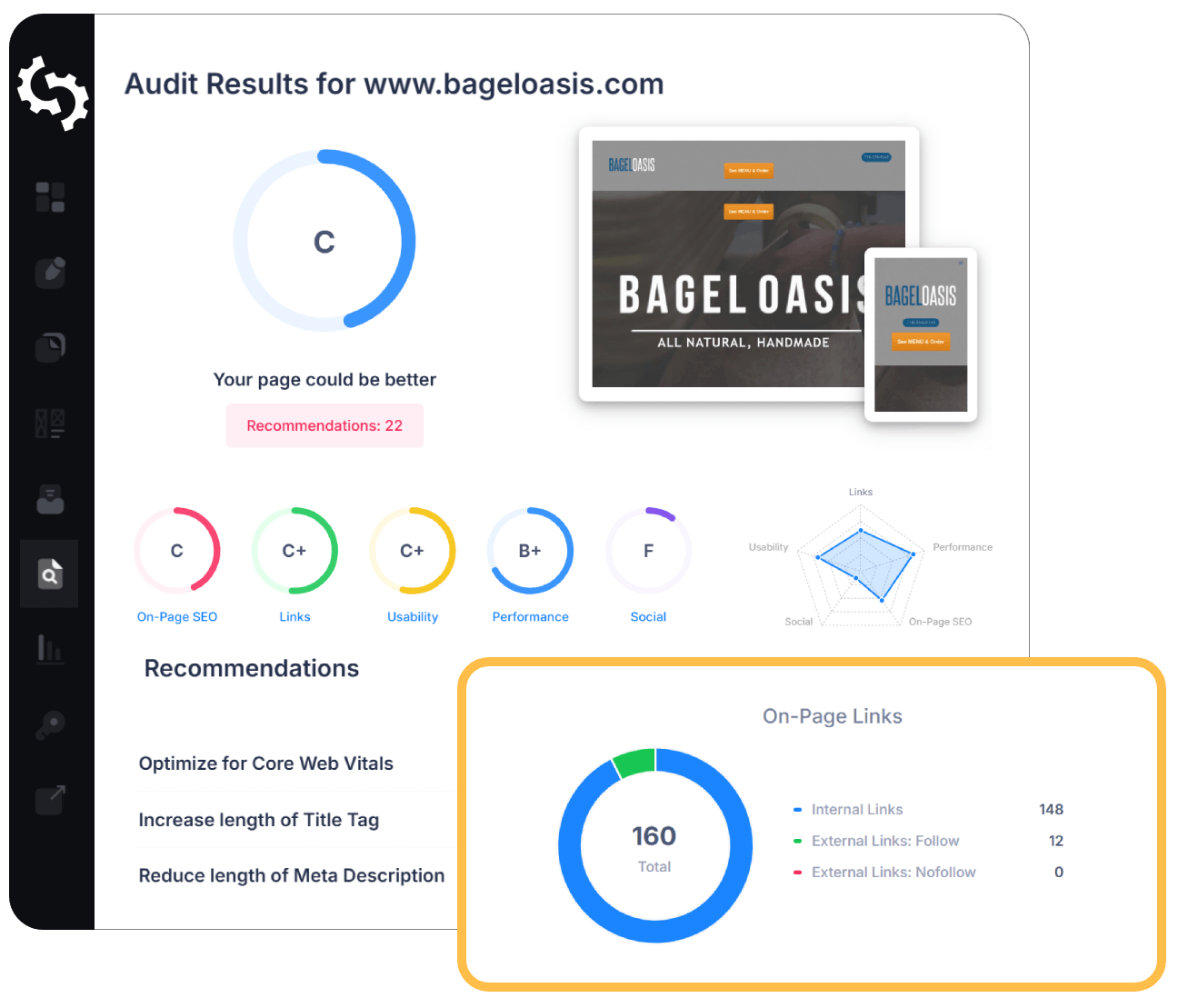
SEO Audit Any Site in Seconds
+ Comprehensive SEO / GEO Tools for Every Function
Run over 100 checks on your website across On-Page SEO, Usability, Performance, Social and Links. Now with GEO in every report. SEOptimer also offers keyword research, rank tracking, backlinks and a full site crawler.

About XML Sitemaps
What is an XML sitemap?
Do XML sitemaps still matter in 2026?
How sitemaps relate to AI search
Sitemap best practices
- Include only canonical, indexable URLs that return a 200 status.
- Leave out redirects, blocked pages and anything marked noindex; contradictory signals get disregarded.
- Keep last-modified dates accurate rather than resetting them on every deployment.
- Split into multiple files with an index once you pass 50,000 URLs or 50MB uncompressed.
- Reference the sitemap from robots.txt and submit it in Search Console.
- Regenerate it when the site changes structurally, not once at launch and never again.
Common mistakes
- Listing URLs that redirect, which wastes crawl effort and muddies the canonical picture.
- Including noindexed pages, telling a crawler to fetch something you have told it to ignore.
- Mixing protocols or hostnames, so the sitemap disagrees with your canonical URLs.
- Letting it go stale until it describes a site structure that no longer exists.
- Treating submission as the goal. A submitted sitemap that is never checked against index coverage tells you nothing.
Using the XML sitemap generator
Where to go next
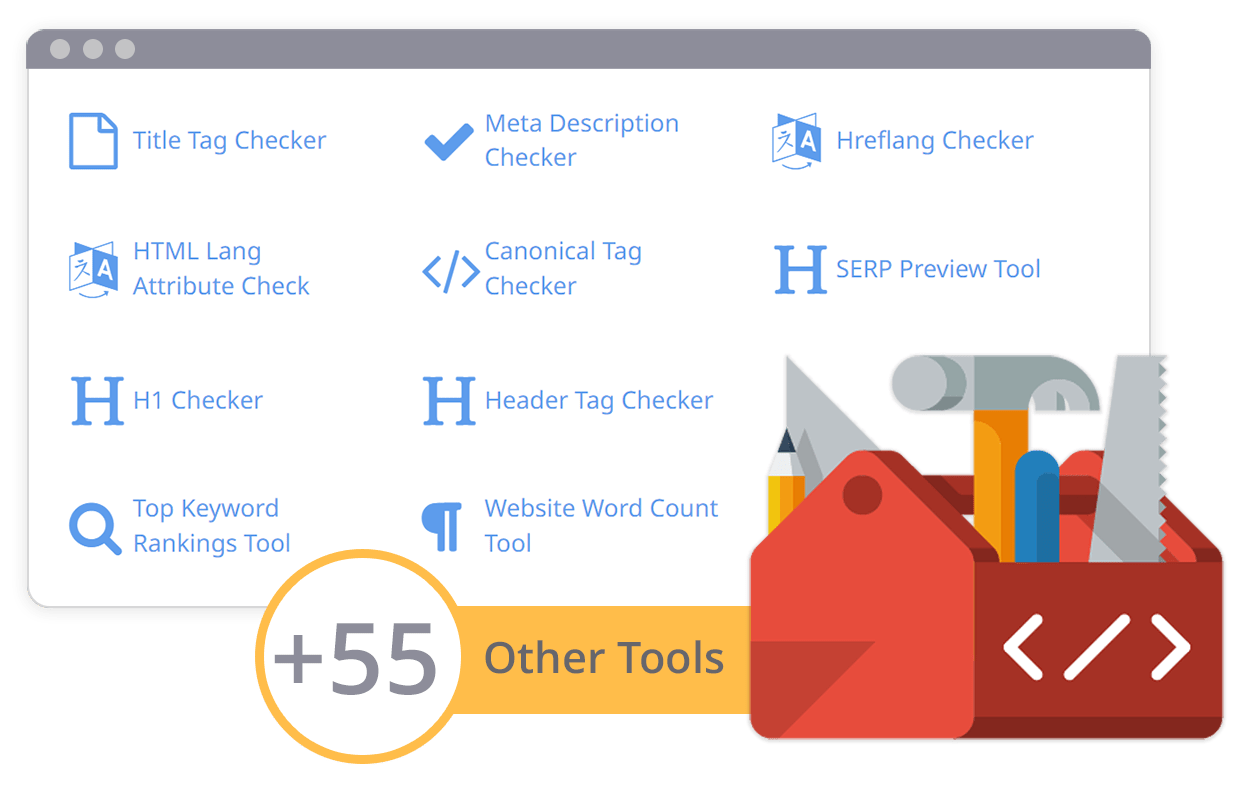
Comprehensive SEO Toolbox with over 55 Tools
Check Titles, Meta Descriptions, Headings, Schema, Core Web Vitals, SSL and Robots.txt. Generate Meta Tags, Sitemaps and .htaccess Rules, minify CSS, JS and HTML, and draft copy with our AI Writing Tools - instantly and for free.
Further Reading
See More