Top Google Searches
SEOptimer’s Top Google Searches Tool provides insights into the most popular search queries on Google, helping you understand current trends and optimize your content accordingly.
- Albania
- Algeria
- Angola
- Argentina
- Armenia
- Australia
- Austria
- Azerbaijan
- Bahrain
- Bangladesh
- Belgium
- Bolivia
- Bosnia and Herzegovina
- Brazil
- Bulgaria
- Burkina Faso
- Cambodia
- Cameroon
- Canada
- Chile
- Colombia
- Costa Rica
- Croatia
- Cyprus
- Czech Republic
- Denmark
- Ecuador
- Egypt
- El Salvador
- Estonia
- Finland
- France
- Germany
- Ghana
- Greece
- Guatemala
- Hong Kong
- Hungary
- India
- Indonesia
- Ireland
- Israel
- Italy
- Ivory Coast
- Japan
- Jordan
- Kazakhstan
- Kenya
- Latvia
- Lithuania
- Malaysia
- Malta
- Mexico
- Moldova
- Monaco
- Morocco
- Myanmar
- Netherlands
- New Zealand
- Nicaragua
- Nigeria
- North Macedonia
- Norway
- Pakistan
- Panama
- Paraguay
- Peru
- Philippines
- Poland
- Portugal
- Romania
- Saudi Arabia
- Senegal
- Serbia
- Singapore
- Slovakia
- Slovenia
- South Africa
- South Korea
- Spain
- Sri Lanka
- Sweden
- Switzerland
- Taiwan
- Thailand
- Tunisia
- Turkey
- Ukraine
- United Arab Emirates
- United Kingdom (UK)
- United States (US)
- Uruguay
- Venezuela
- Vietnam
SEO Audit Any Site in Seconds
+ Comprehensive SEO / GEO Tools for Every Function
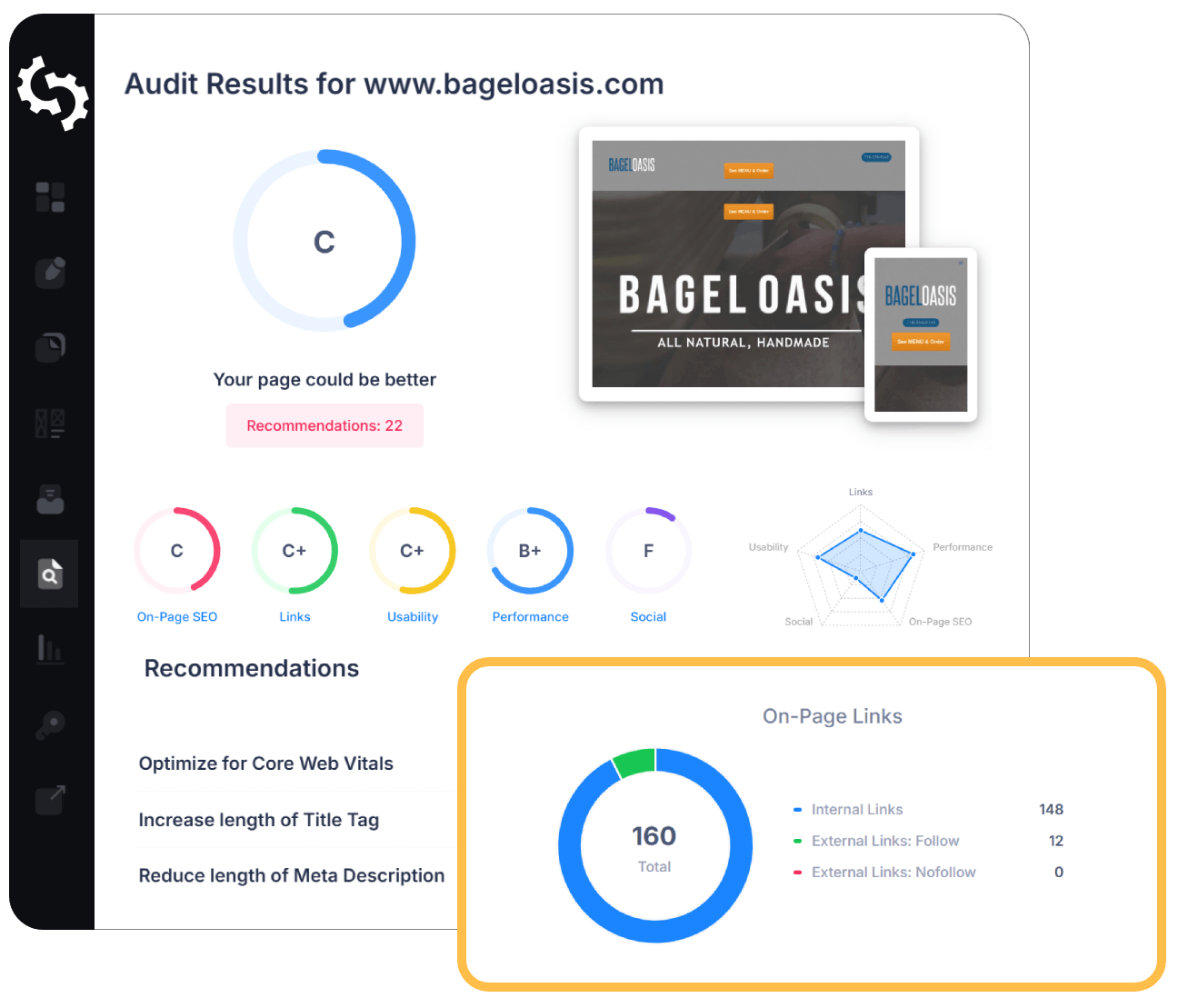
Run over 100 checks on your website across On-Page SEO, Usability, Performance, Social and Links. Now with GEO in every report. SEOptimer also offers keyword research, rank tracking, backlinks and a full site crawler.

About Top Google Searches
What are the top Google searches?
The top Google searches are the queries typed most often in a given country over a given period. They are dominated by navigational terms, the names of large platforms, and whatever happens to be in the news, which is why the list looks less like a keyword report and more like a snapshot of public attention.
That makes them a poor target and a good education. Almost nobody can realistically compete for the highest-volume terms, and few would want to, because a search for a brand name is not a search for a solution to a problem.
What the list is genuinely useful for is calibration. Seeing the actual scale of search volume at the top, and how quickly it falls away below, gives you a much better sense of what a realistic target looks like than any estimate in isolation.
Why look at top searches at all?
The most practical reason is understanding intent at scale. Reading the highest-volume queries in a market shows you how people phrase things when they are not thinking about it, which is usually simpler and blunter than the language businesses use about themselves.
The second is spotting movement. A term climbing quickly is a subject gathering attention, and attention tends to arrive on adjacent long-tail queries shortly afterward. Being early to a topic is worth more than being thorough about one that has peaked.
The third is regional difference. The same product is searched for in different words in different countries, and not only because of language. Comparing lists across markets is one of the cheapest ways to notice that an assumption does not travel.
Do search trends still matter in 2026?
They matter differently than they used to. Chasing a trending term to publish something quickly rarely works now, because the results for genuinely popular queries are dominated by large publishers and the window closes fast.
What has grown more valuable is the pattern beneath the peaks: which subjects recur seasonally, which are structurally growing, and which spiked once and never returned. That reading is far more useful for planning than a snapshot of today.
Volume has also become a less complete measure of opportunity. A high-volume query answered directly on the results page can send less traffic than a smaller one that still requires a click, so raw popularity is only half the picture.
How search trends relate to AI search
The way people phrase things is shifting. Queries typed into a search box are short and keyword-like; questions asked of an assistant are longer, more conversational and far more likely to be complete sentences.
That widens the gap between the head of the curve and the tail. Short, high-volume terms increasingly get answered without a click, while specific, well-phrased questions are exactly what AI answers cite sources for.
The practical implication is to read a top searches list for subject matter rather than for phrases to target. The topics people care about are the useful signal; the exact words they used to reach them are becoming less transferable.
How to use this data
- Read it for intent and vocabulary, not for terms to chase.
- Compare countries to find where your assumptions about language do not hold.
- Look for the recurring and the structurally growing rather than the momentarily spiking.
- Move from a broad topic to the specific questions around it, which is where a smaller site can compete.
- Treat volume as one input alongside difficulty and commercial intent, never on its own.
- Check whether a query is answered on the results page before assuming its volume is reachable.
What this tool shows
The tool lists the most searched terms on Google for each country it covers, so you can browse a market and see what sits at the top. Pick a country to see its list.
It is a reference rather than a research tool. It reports what is searched most, not how difficult those terms are to rank for, what they are worth commercially, or whether a page of yours could realistically compete. Those questions come next.
Where to go next
Popularity is the starting point rather than the plan. Extract the terms your existing pages already signal with the keyword generator, check whether your content and its tags agree on the subject with the keyword density and consistency tool, and see which organic terms your site currently ranks for with the top organic keyword rankings check.
Comprehensive SEO Toolbox with over 55 Tools
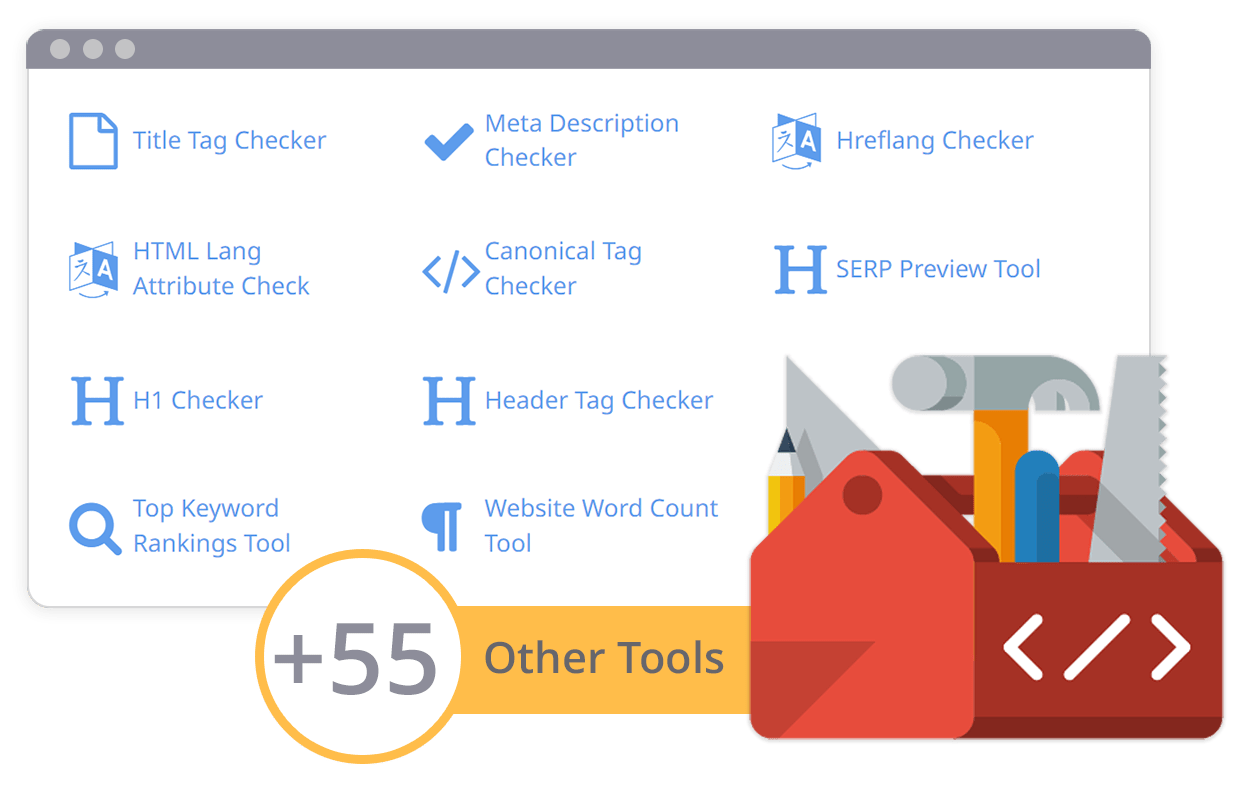
Check Titles, Meta Descriptions, Headings, Schema, Core Web Vitals, SSL and Robots.txt. Generate Meta Tags, Sitemaps and .htaccess Rules, minify CSS, JS and HTML, and draft copy with our AI Writing Tools - instantly and for free.
Further Reading
See More
How to Find Trending Keywords for SEO (8 Top Ways)
So you want to learn how to find trending keywords? These types of SEO keywords not only help you stay relevant but also allow you to captur...

What are Seasonal Keywords and How to Find the Top Ones in Your Niche
Seasonal keywords offer a unique opportunity to tap into moments when consumer intent is at its highest.
By targeting event-driven k...

How To Use Google Related Searches in Your SEO
What are Google Related Searches?
Google Related Searches are dynamic suggestions that appear at the bottom of a search results pa...

5 Key Reasons Why Keyword Research is Important for SEO
Is keyword research still important for SEO? The answer to that question is a resounding yes!
Keyword research is the foundation o...
How to Use SEOptimer's Keyword Research Tool
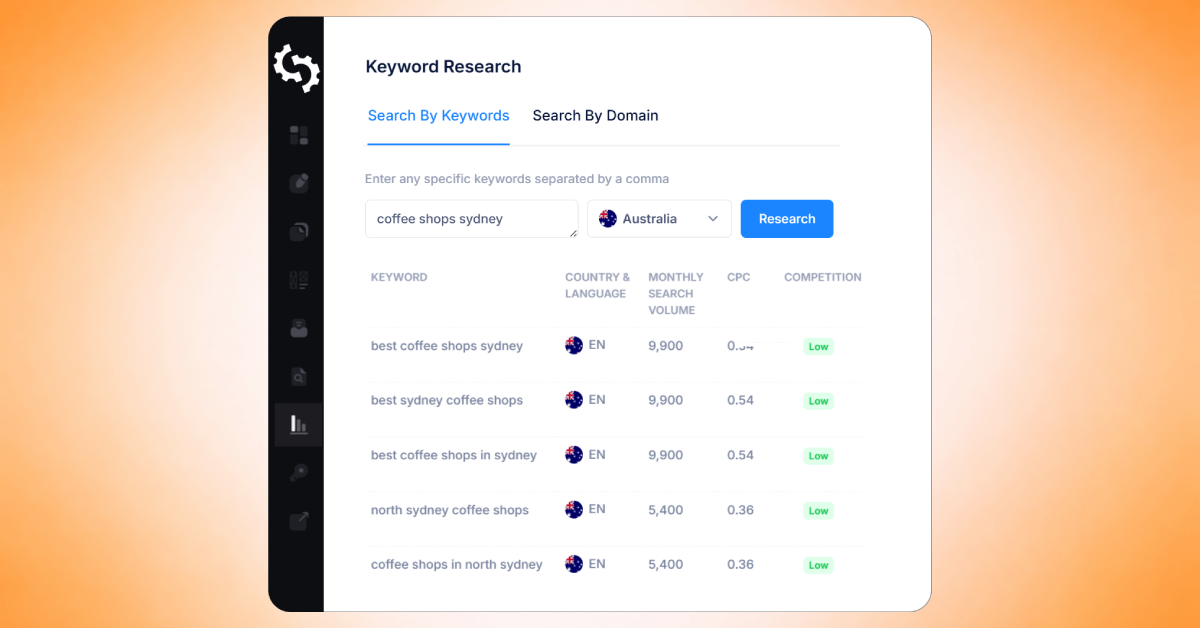
What is SEOptimer's Keyword Research Tool?
SEOptimer’s Keyword Research Tool is a feature inside the SEOptimer platform that lets yo...