Free Keyword Generator
The Free Keyword Generator will take a blurb of your text content and show the most frequent keywords.
You can use these keywords in your keywords meta tag or search engine competition planning.
Description
Output
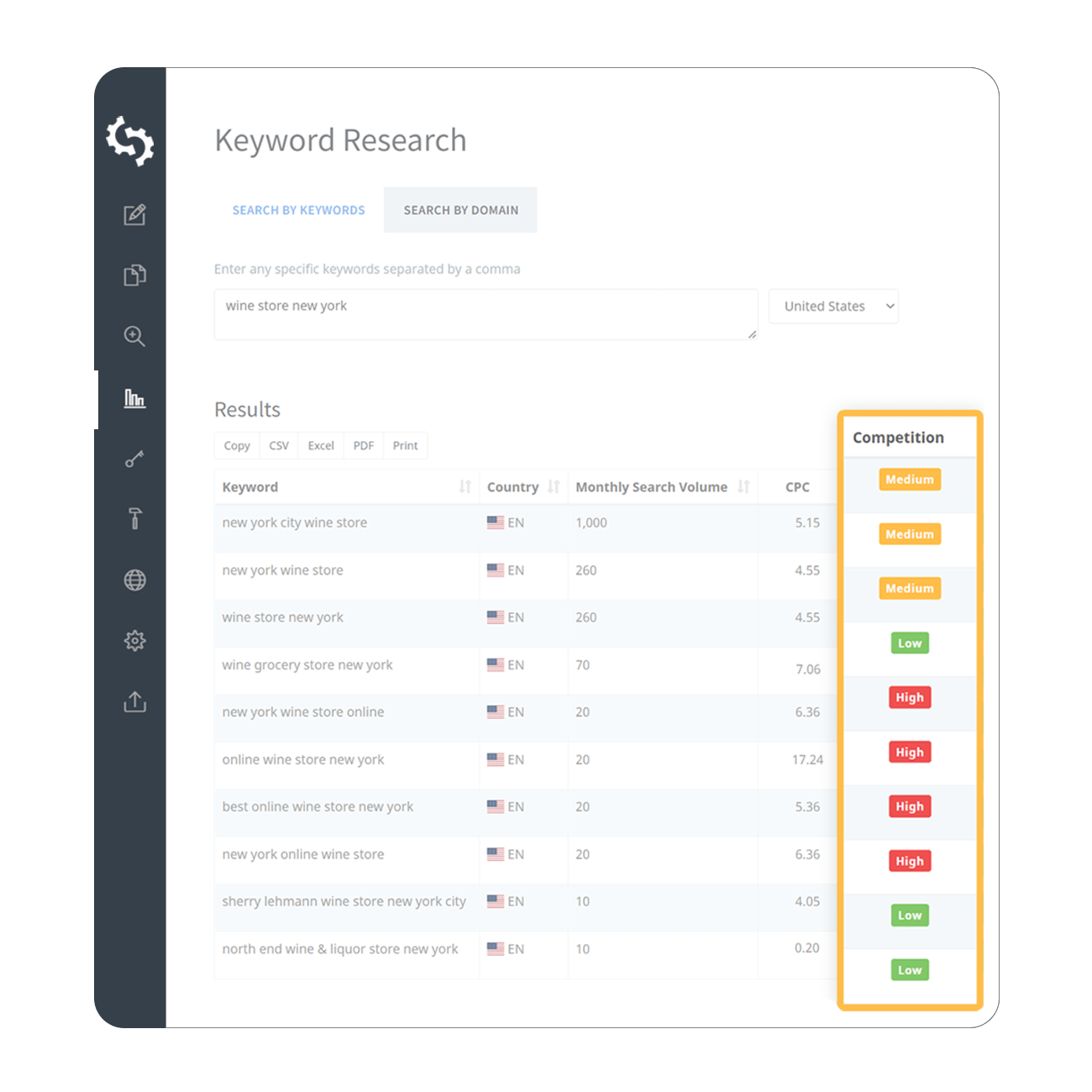
Find the Keywords Worth Ranking For, Then Watch Them Move
Real search volume, CPC and competition data for any market, so you know which phrases are worth the work before you start. Then track your positions daily on Google and Bing, on desktop and mobile, and down to the city for local search - with scheduled reports that show clients exactly what changed.

About the Keyword Generator
What does the keyword generator do?
The keyword generator reads a block of text you give it and returns the terms that text most strongly signals. Paste in a page, a draft, or a plain description of what you sell, and it tells you what the writing is actually about rather than what you meant it to be about.
That is the opposite of how keyword tools usually work. Most start from a seed phrase and expand outward into suggestions, volumes and variations. This one starts from your own content and works backwards, which answers a narrower but more immediate question: if a search engine read this page today, what would it conclude the page covers?
The output is a list of terms and phrases ranked by prominence, ready to paste into a keywords field, a content brief, or a comparison against the terms you were hoping to rank for.
Why generate keywords from your own content?
The most common reason is diagnostic. A page that will not rank for its target phrase very often turns out not to be about that phrase at all: the topic is stated in the heading and then never developed, or it is buried under so much preamble that the dominant terms are generic. Extracting the keywords makes that gap visible in a way that rereading your own writing rarely does.
It is also useful before publishing. Running a draft through the keyword generator is a quick check that the page signals what you intended, while it is still cheap to change.
A third use is competitive. Paste in a page that outranks you and the extracted terms describe the ground it covers, which is usually a more honest picture of why it wins than any ranking report.
Do keywords still matter in 2026?
Keywords as a target to hit are long gone. Writing to a density figure has been counterproductive for years, and the meta keywords tag has been ignored by every major search engine for well over a decade.
Keywords as a description of subject matter still matter a great deal. Search engines match meaning rather than strings, but meaning is inferred from the words on the page, and a page that never uses the vocabulary of its topic is a page that has not really covered it.
This is why extraction is more useful now than generation. Nobody needs a longer list of phrases to sprinkle in. What is worth knowing is whether the text you already have reads as being about the thing you sell.
How this relates to AI search
Systems answering questions from web content assess whether a page covers a subject thoroughly, not whether a phrase appears a set number of times. Coverage has replaced targeting as the thing that decides whether a page is used.
Extracted keywords are a reasonable proxy for coverage. If the terms coming out of a page are specific and belong to a recognisable subject, the page is likely to be understood as being about that subject. If they are generic, the page probably reads as generic too.
Query phrasing has shifted as well. People asking an assistant write longer, more conversational questions than they type into a search box, which favours pages that address a topic in full sentences over pages built around a short phrase.
From generated keywords to keyword research
Extraction tells you what a page says. Keyword research tells you what people are looking for, and the two are only useful together: a page can be perfectly coherent about a topic nobody searches for.
The gap that usually matters is vocabulary. Businesses describe what they built; customers describe the problem they have. When extracted terms and customer language diverge, the page is optimised for an internal way of talking that nothing outside the company shares.
Intent is the other half. The same phrase gets typed by someone researching, someone comparing and someone ready to buy, and a page answering the wrong one of those will rank without converting. Extraction cannot tell you which intent a page serves, so it is a starting point for research rather than a replacement for it.
Keyword best practices
- Give each page one clear topic rather than several competing ones.
- Start from the problem your customer has, not the name of your product.
- Use natural variations and related terms; exact repetition buys nothing.
- Match the intent behind a phrase, not just the phrase itself.
- Favour specific phrases with clear intent over broad ones with high volume.
- Never write to a density target. It is visible to readers and useless to search engines.
Using the keyword generator
Paste your text into the field and the keyword generator returns the terms it most strongly signals. There is no setup and nothing to configure.
Read the result as a mirror rather than a recommendation. The question to ask is whether the terms match what you wanted the page to be found for. If they do not, the fix is in the writing rather than in the list, and it is usually a matter of saying the thing plainly and early rather than adding phrases at the end.
Where to go next
Extraction tells you what a page signals; the next question is whether its tags agree. Check the keyword density and consistency of the page against its title and headings, see what the site already ranks for with the top organic keyword rankings check, and browse the top Google searches to compare against real demand.
SEO Audit Any Site in Seconds
+ Comprehensive SEO / GEO Tools for Every Function
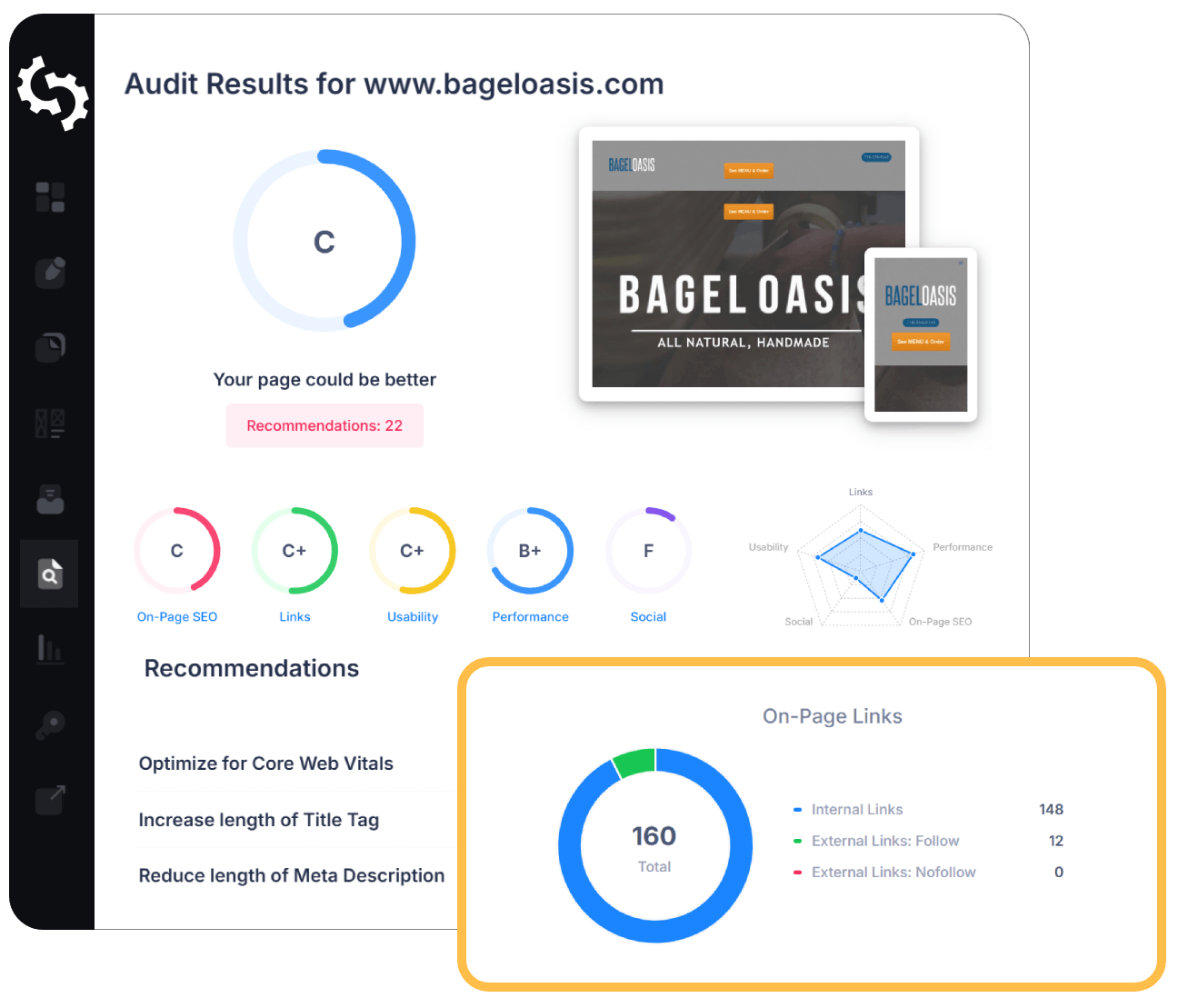
Run over 100 checks on your website across On-Page SEO, Usability, Performance, Social and Links. Now with GEO in every report. SEOptimer also offers keyword research, rank tracking, backlinks and a full site crawler.
Further Reading
See More
5 Key Reasons Why Keyword Research is Important for SEO
Is keyword research still important for SEO? The answer to that question is a resounding yes!
Keyword research is the foundation o...
How to Use SEOptimer's Keyword Research Tool
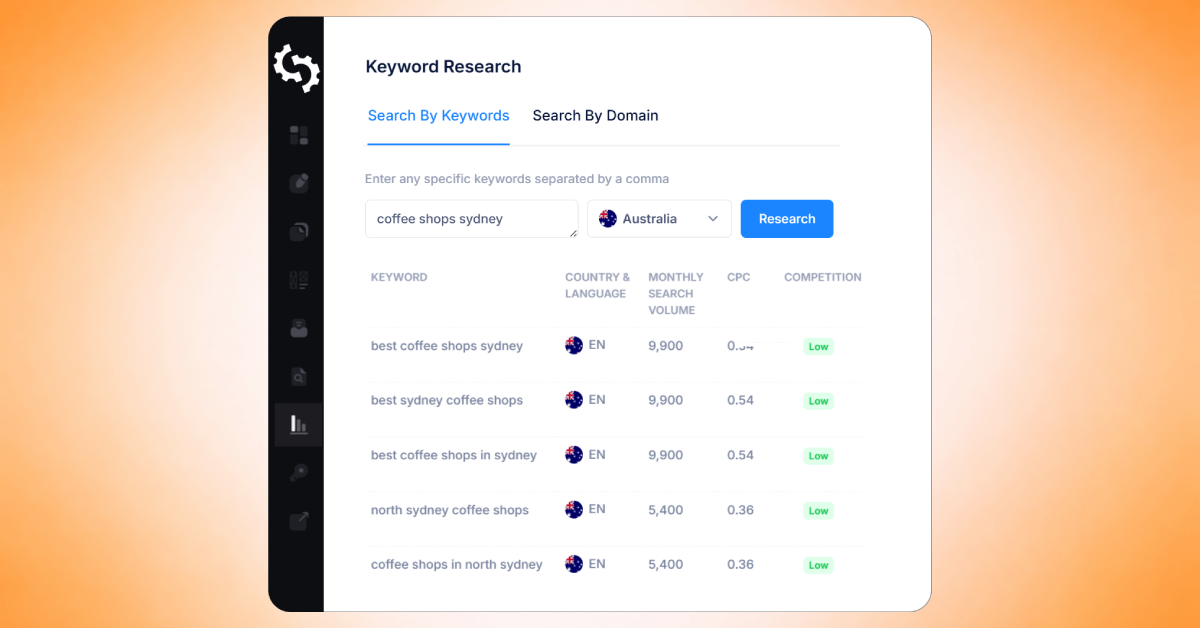
What is SEOptimer's Keyword Research Tool?
SEOptimer’s Keyword Research Tool is a feature inside the SEOptimer platform that lets yo...

Keyword Ranking Analysis: How to Track and Improve Your SEO Rankings
Without analyzing your results, you won’t know if you’ve taken the right path to achieve your SEO goals.
That’s why, if you optimize...

On-Page SEO: Complete Guide + Checklist for 2026
What is On-Page SEO?
On-page SEO is the process of optimizing the content and elements on a webpage so that search engines can bette...