Top Keyword Rankings Tool
The Top Keyword Rankings Tool shows you the keywords that your site is currently ranking for, ordered by those that are likely driving the most traffic to your site.
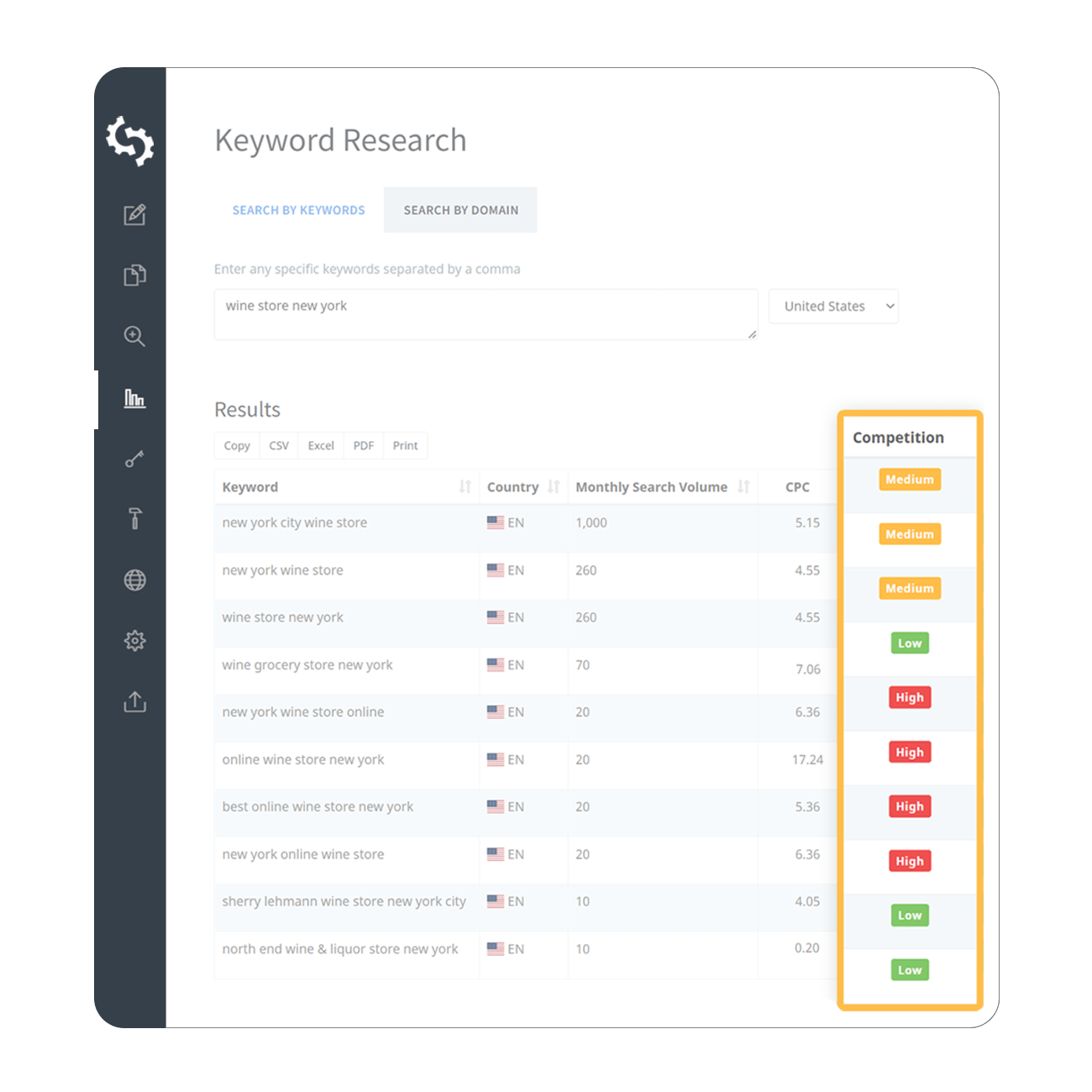
Find the Keywords Worth Ranking For, Then Watch Them Move
Real search volume, CPC and competition data for any market, so you know which phrases are worth the work before you start. Then track your positions daily on Google and Bing, on desktop and mobile, and down to the city for local search - with scheduled reports that show clients exactly what changed.

About Top Organic Keyword Rankings
What are organic keyword rankings?
Organic keyword rankings are the positions a site holds in the unpaid search results for particular queries. Knowing which terms a site already ranks for tells you what search engines currently believe it is about.
That is frequently more useful than a list of terms you would like to rank for, because it describes what is actually happening rather than what was intended. The gap between the two is where most opportunities hide.
A top keyword rankings check is most valuable on a site you did not build. It gives you, in a few seconds, the honest picture of what a domain is known for, which no amount of reading the site itself will tell you.
Do rankings still matter in 2026?
They matter, though as one measure among several rather than the scoreboard they were once treated as. Results are personalised and localised, so a single national position is an average of many different experiences rather than a fact.
Position one also means less than it did when ads, shopping units, video carousels, discussion threads and AI summaries can occupy the entire first screen above it. Ranking first below all of that is a different outcome from ranking first in 2015.
What has not changed is the diagnostic value. Watching which terms a site gains and loses over time remains one of the clearest indicators that something has shifted, either on the site or in how it is being assessed.
How rankings relate to AI search
AI answers frequently draw on pages that already rank well, so organic visibility remains the strongest available predictor of being cited. The two are related rather than separate games, which is reassuring: the work overlaps.
The gap is measurement. A page can be quoted regularly in AI answers while its ranking and click-through look flat, because the citation produced an answer rather than a click. Rankings increasingly understate a page influence rather than overstating it.
A practical consequence is to watch traffic patterns alongside positions. Unexplained growth in direct traffic to deep, specific pages is currently one of the few signals that a page is being cited.
How to read a rankings list
The terms at the top are rarely the interesting ones. They are usually brand queries the site would win regardless, and they inflate any summary figure built from them.
What repays attention is the middle. Terms ranking on page two are the cheapest gains available on most sites, because the page already qualifies and usually needs strengthening rather than replacing.
Terms you did not expect are the other signal worth chasing. A page ranking for something you never targeted is telling you what the market actually wants from it.
Ranking best practices
- Track a manageable set of terms that genuinely matter commercially.
- Watch trends over time rather than reacting to daily movement.
- Segment by device and location, since a single number hides both.
- Pair rankings with traffic and conversions; position without either is vanity.
- Look for terms sitting on page two, which are usually the cheapest wins available.
- Treat unexpected rankings as information about demand rather than noise.
What this tool checks
The tool looks up the organic keywords we hold for the domain in our index, ordered by likely traffic, giving you a quick read of what the site is currently found for.
Results come from our index rather than a live search, so treat them as a broad picture rather than a real-time position check. It is well suited to understanding a domain and poorly suited to monitoring a change you made yesterday.
Where to go next
Rankings describe the outcome; the causes are on the page. Extract the terms your content actually signals with the keyword generator, check whether the body and its tags agree using the keyword density and consistency tool, and see how your listing looks to a searcher with the SERP preview tool.
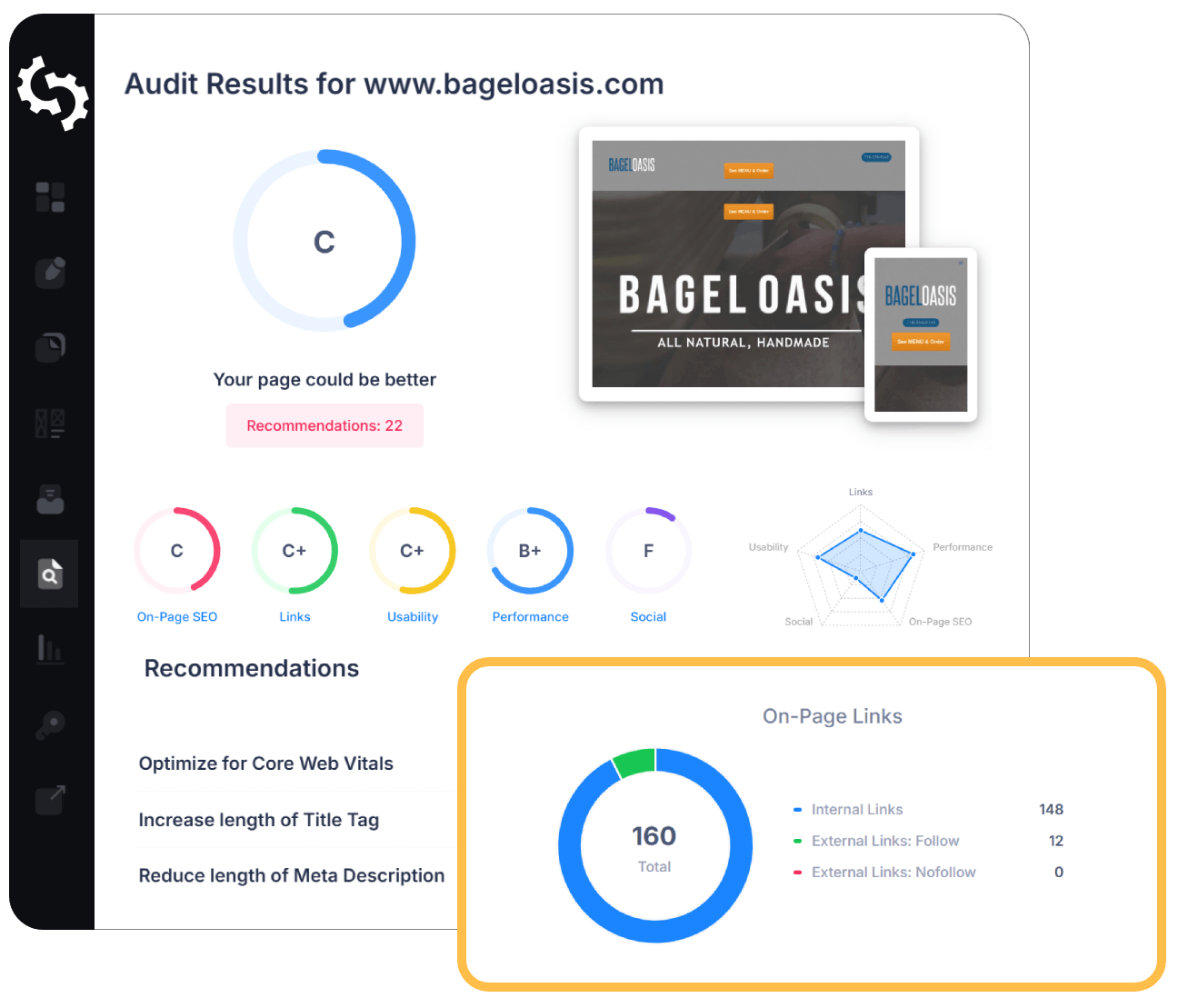
SEO Audit Any Site in Seconds
+ Comprehensive SEO / GEO Tools for Every Function
Run over 100 checks on your website across On-Page SEO, Usability, Performance, Social and Links. Now with GEO in every report. SEOptimer also offers keyword research, rank tracking, backlinks and a full site crawler.
Further Reading
See More
Keyword Ranking Analysis: How to Track and Improve Your SEO Rankings
Without analyzing your results, you won’t know if you’ve taken the right path to achieve your SEO goals.
That’s why, if you optimize...
What is a Rank Tracker Tool and Do I Need One?
Whether or not you have extensive experience with SEO, or have only just began your search engine optimization journey, you’ve most likely c...

Importance of Tracking SERPs: 4 Reasons to Track Search Performance
The search engine results page (SERP) is shown to users when they conduct a search on search engines like Google.
The user types i...

8 Best Rank Tracking Tools for SEO in 2026
Best Rank Tracking Tools
SEOptimer
AccuRanker
Nightwatch
Keyword.com
Ahrefs
Semrush
Rank Tracker (SEO PowerSuite)
M...

5 Key Reasons Why Keyword Research is Important for SEO
Is keyword research still important for SEO? The answer to that question is a resounding yes!
Keyword research is the foundation o...

How to Find Trending Keywords for SEO (8 Top Ways)
So you want to learn how to find trending keywords? These types of SEO keywords not only help you stay relevant but also allow you to captur...