


Key Takeaways
- A content refresh is the process of updating existing blog posts with new information, visuals, and structure to improve accuracy, relevance, and search visibility.
- Updated content signals freshness to both Google and AI systems, improving rankings and AI Overview mentions.
- Outdated content loses relevance fast. Replacing old stats, improving structure, and fixing broken links helps prevent “content decay.”
- A structured content refresh improves SEO and E-E-A-T.
Have you noticed your blog traffic slowing down lately? A content refresh can be a powerful strategy to breathe new life into your existing blog posts.
Even well-optimized content that used to bring in steady clicks might not be performing like it once did.
One of the reasons for this is because the search landscape has changed.
AI-powered platforms and tools like Google’s AI Overviews, Bing Copilot, and ChatGPT now answer questions instantly, resulting in fewer clicks to websites and blogs.
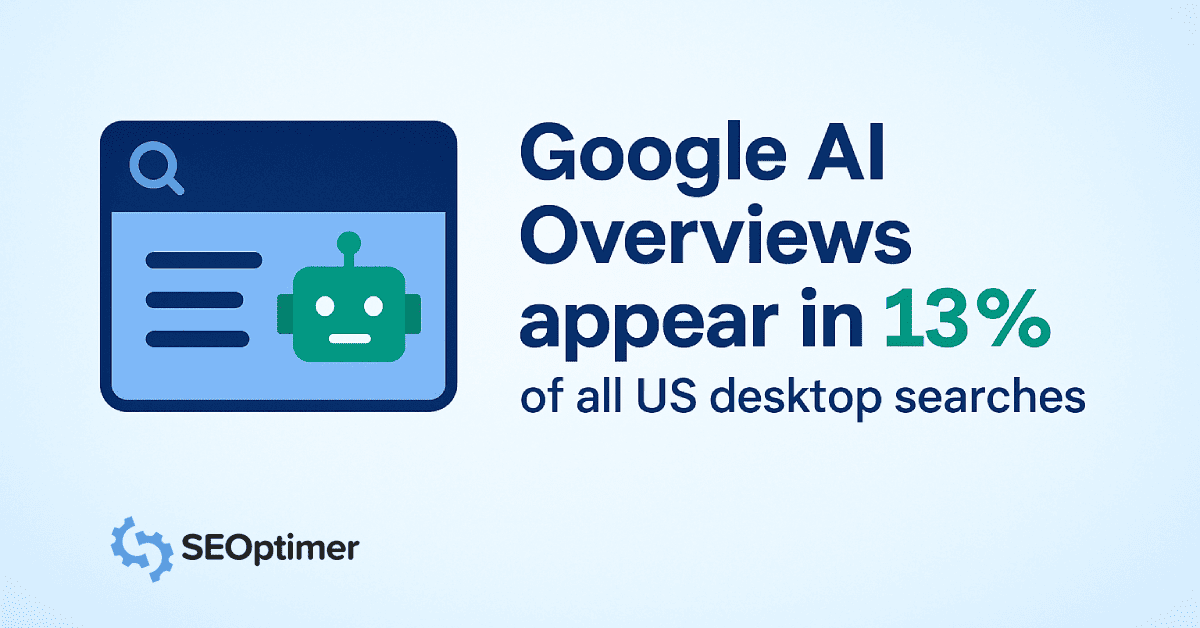
According to Search Engine Land, Google AI Overviews appear in 13% of all US desktop searches.
Meanwhile, from January 2024 to May 2025, ChatGPT-based prompts for news shot up by 212% while equivalent Google searches dropped 5%. (source)
In short, people are getting their answers before they even land on a website.
The good news is that you can optimize existing blog content for these AI-generated answers.
A content refresh can help you reclaim rankings, restore traffic, and even improve your chances of being mentioned in AI-powered search results.
In this guide, I will discuss the art of reviving your blog content and explore how to update and optimize older blogs for both Google SEO and AI generated answers.
How to Update Old Blog Content for SEO and AI
- Find Underperforming Blog Posts
- Set Your Objectives for Refreshing the Old Content
- Update the Title
- Update the Meta Description
- Add New Images and Visuals
- Update Old Statistics
- Add New Information
- Optimize for LLMs and AI Crawlers
- Publish the Blog
- Track Changes in Performance
Why Refresh Content for the Age of AI?
Republishing older content with fresh insights, data, and structure keeps it relevant for both search engines and AI systems scanning the web for authoritative information.
Here are a few compelling reasons to update old blog content:
Improve Relevance and Accuracy
Over time, the information and statistics in your existing content may become outdated.
Updating allows you to refresh the content, ensuring it remains accurate and relevant to your audience.
Recency has become a key factor for ranking and visibility in both organic search and AI-generated results. Large language models have a recency bias, meaning they prioritize newer, frequently updated content because it signals relevance and authority.
- Ragheed Akeel, SEO Specialist at seoplus+
Optimize for SEO and AI-Generated Answers
Fresh content helps you rank higher, but it also improves your visibility in AI Overviews and chat-based search.
AI tools prioritize pages that are current and clearly structured. This includes breaking down content into easy-to-digest sections.
Itai Sadan, CEO and Co-Founder of Duda, says that marketers should avoid long chunks of content when refreshing content.
LLMs have something called “token limits” that restrict the amount of content they can intake at once, so segmenting your article makes the content more digestible, while clear, fluidly written transitions between these topics have been shown in research to improve the likelihood AI search tools reference your content.
A proper refresh lets you:
- Add new keywords based on how people phrase questions in AI tools.
- Refine your headings, lists, and summaries so AI engines can easily quote your content.
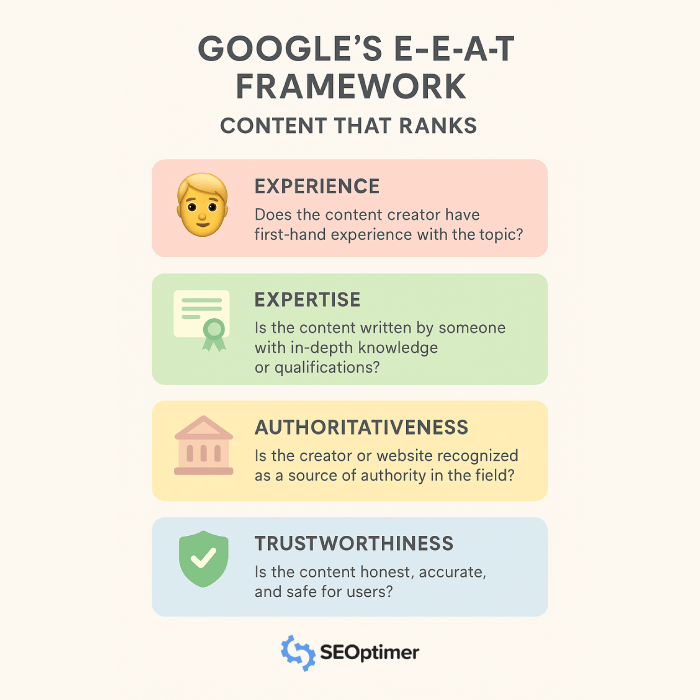
- Strengthen E-E-A-T signals (Experience, Expertise, Authoritativeness, Trustworthiness).
Enhance User Experience
Readers can spot old content instantly.
When you refresh a post, you can improve readability, fix broken links, update visuals, and provide clearer value.
This not only boosts user engagement and dwell time but also makes your content more “AI-readable.”
AI models favor content that’s well-organized and factual. (more on this later)
Enhanced Crawl Frequency
Search engine crawlers crawl the web to discover and index new content.
When you republish a blog post or update an existing one, search engines will likely revisit your website to assess the changes.
This increased crawl frequency can lead to faster indexing of your refreshed content, making it available to searchers sooner.
Related Reading: Crawl Depth in SEO: What is It & How to Improve It?
Maximizing ROI
Creating high-quality content is time-consuming and resource-intensive.
Repurposing and refreshing existing content allows you to maximize the return on your investment by extending the lifespan and value of your content assets.
Reinforcing Authority
Regularly updating and refreshing content in your niche or industry can build brand authority and topical relevance.
It shows that your business stays current and provides valuable insights to your audience.
Content Pruning
As your content library grows, some older pieces may no longer align with your current brand or goals.
Refreshing them provides an opportunity to update, improve, or consolidate content, ensuring a consistent message and brand image.
Avoiding Content Decay
As information becomes outdated, it can experience "content decay."
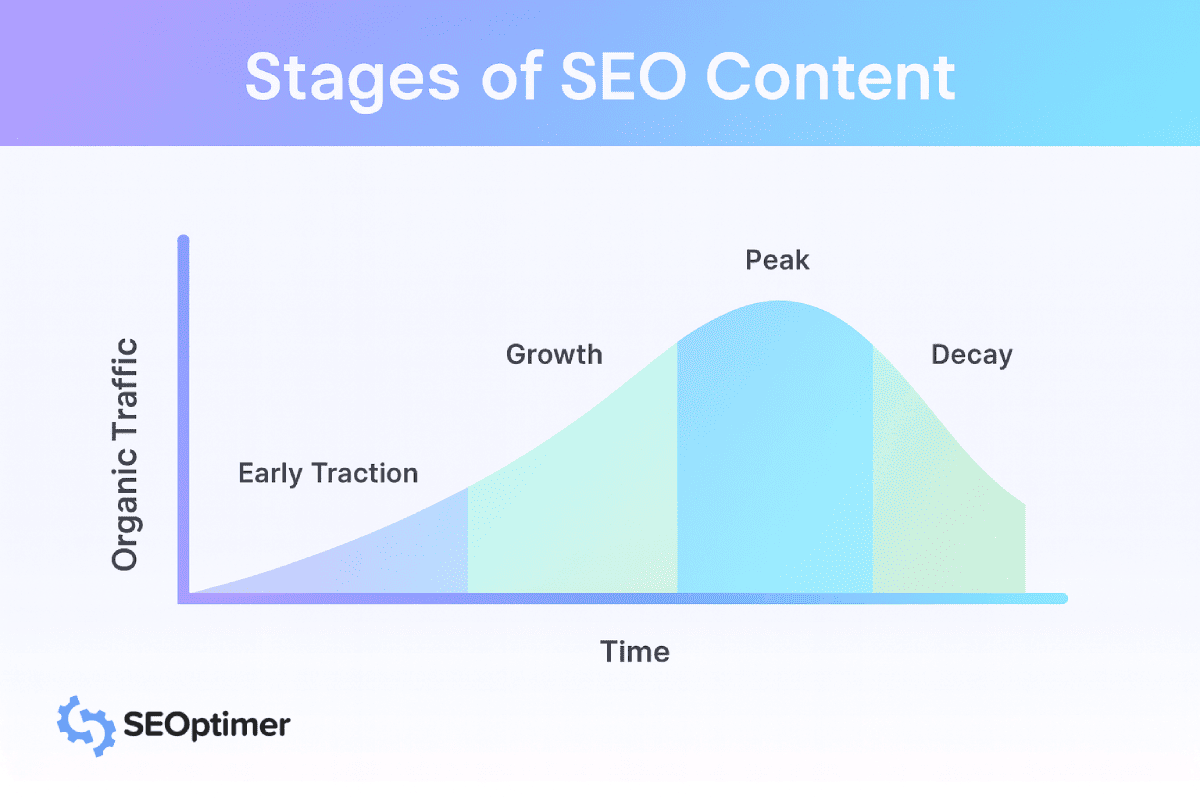
This happens when the accuracy and relevance of content diminish, leading to decreased search visibility and user engagement.
Republishing helps prevent content decay by keeping your material accurate and up-to-date.
How to Update Old Content for SEO and AI
Here are the steps to refresh content for SEO and AI platforms:
1. Find Underperforming Blog Posts
Finding underperforming blog posts is the first step in refreshing old blog posts.
The process involves identifying blog articles on your website that are not meeting their performance potential regarding traffic, rankings, conversions or even AI mentions.
Analyze your website's analytics and performance metrics to identify the blog posts that fall short of these criteria.
Tools like Google Search Console can help you identify underperforming content on your website.
Login to Search Console and click on the Search Results section.
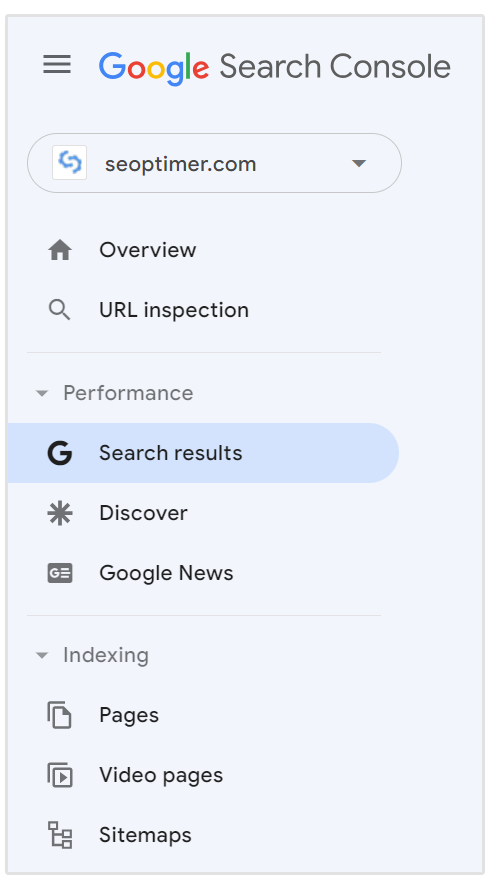
Now, click on the Date button and compare the last 6 months to the previous period.
Make a note of pages that have declined in terms of clicks and impressions. These are the pages on your website that require a content refresh.
You can also use a keyword tracking tool to monitor organic rankings and to find underperforming pages that aren't ranking according to their true potential.
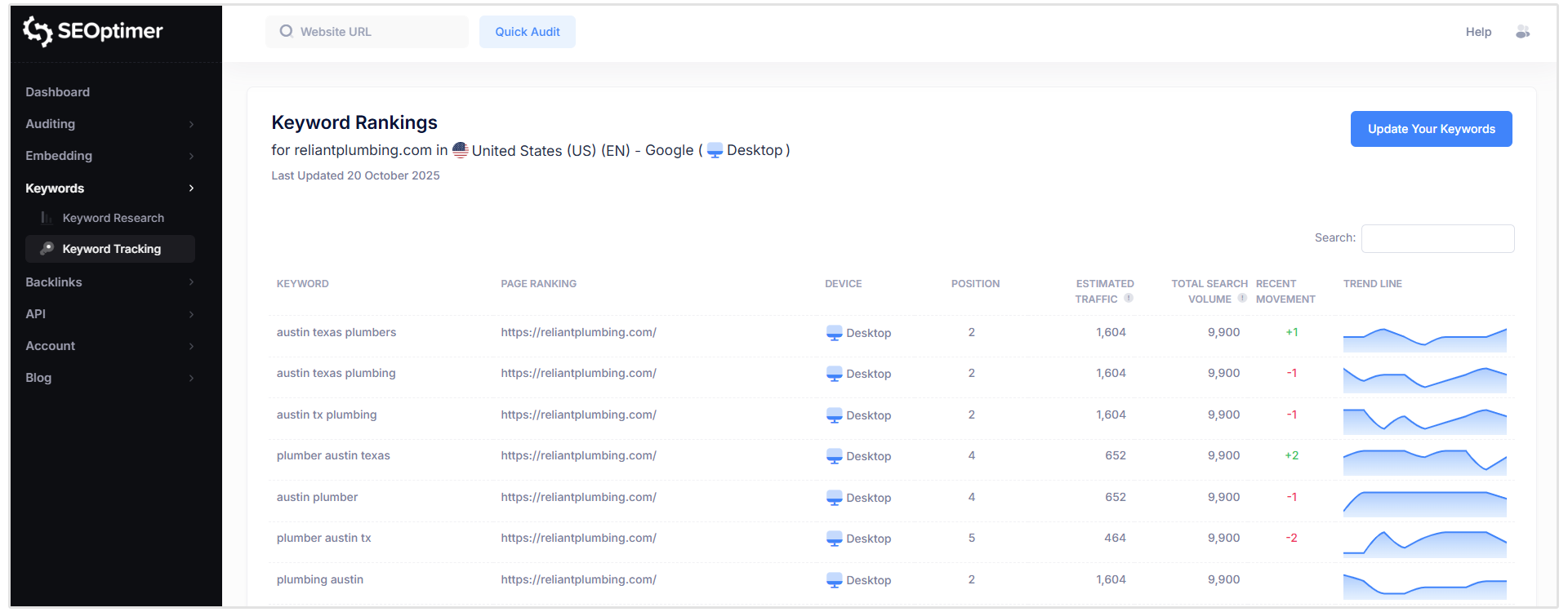
You can begin by manually reviewing the content of the identified underperforming posts.
Factors such as relevance, accuracy, readability, and overall quality affect content performance in AI tools like ChatGPT and Google AI Overviews.
Find out if the content meets the needs of your target buyers by identifying the topics or areas that your blog has not covered adequately.
Addressing content gaps can attract more readers interested in those topics.
Also, examine if there are technical issues affecting these posts. Slow page load times, broken links, or mobile responsiveness problems can impact performance.
Tip: Try to update content ranking on the second page of Google (position 11 to 20) first. These are low-hanging opportunities since Google has already ranked them on the second page, so these posts might only need minor updates to get bumped up to the first page.
2. Set Your Objectives for Refreshing the Old Content
After you have prepared a list of pages that need updating, the next step is to take a moment to determine what the objectives are for refreshing each piece of content.
Are you updating it to include the latest information, improve SEO, address user feedback, or improve general quality?
Then review the existing content thoroughly. Take note of outdated statistics, broken links, inaccuracies, and opportunities for improvement.
So before you just begin updating the content, you need to create an action plan with the list of things you need to edit or add before making a single change.
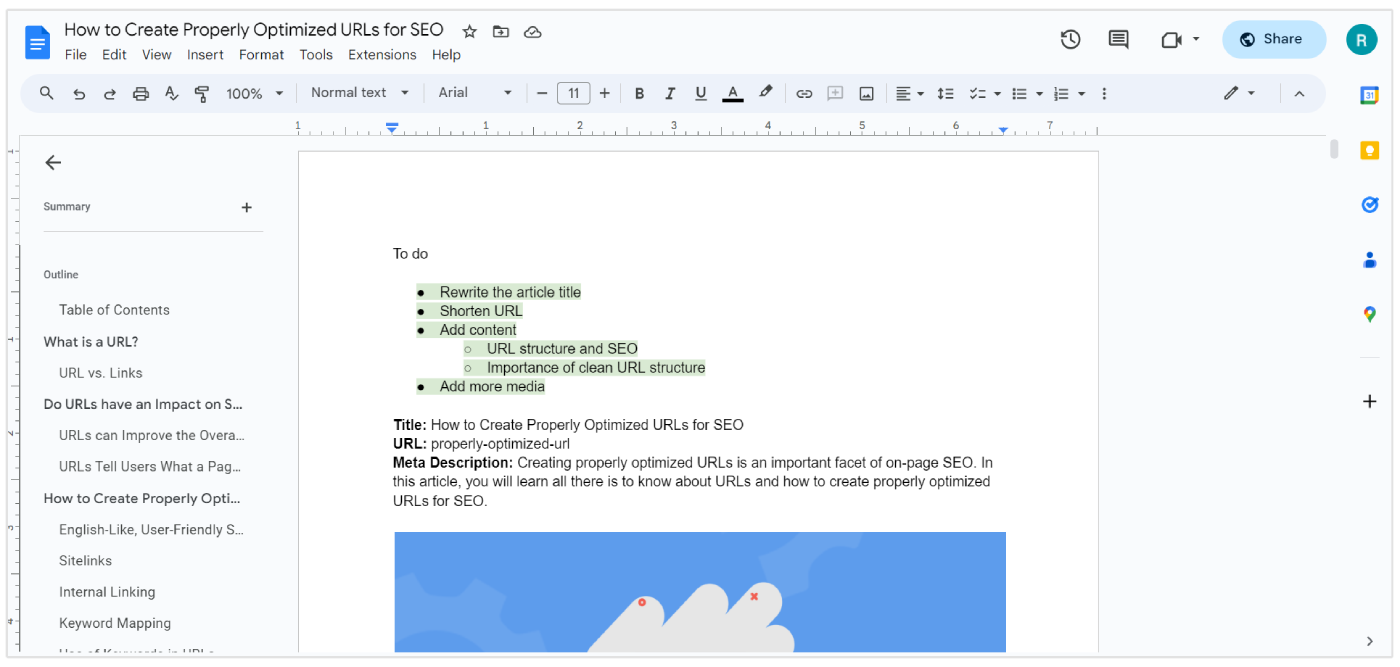
When we update and republish old content at SEOptimer, I like to create a "To Do List" of all the changes that I want to make when refreshing the post.
For example, here's the list of things we had in our "action plan" when we updated our article on "How to Create Properly Optimized URLs for SEO":
3. Update the Title
Updating the title of your content is a crucial part of content refresh.
Ensure that the new title accurately reflects the refreshed content. It should align with the key points and information presented in the article.
Optimize the title for SEO by placing the focus keywords near the beginning and using natural language.
For instance, for our article on broken links, we added the target keyword "What are Broken Links" to the beginning of the title.
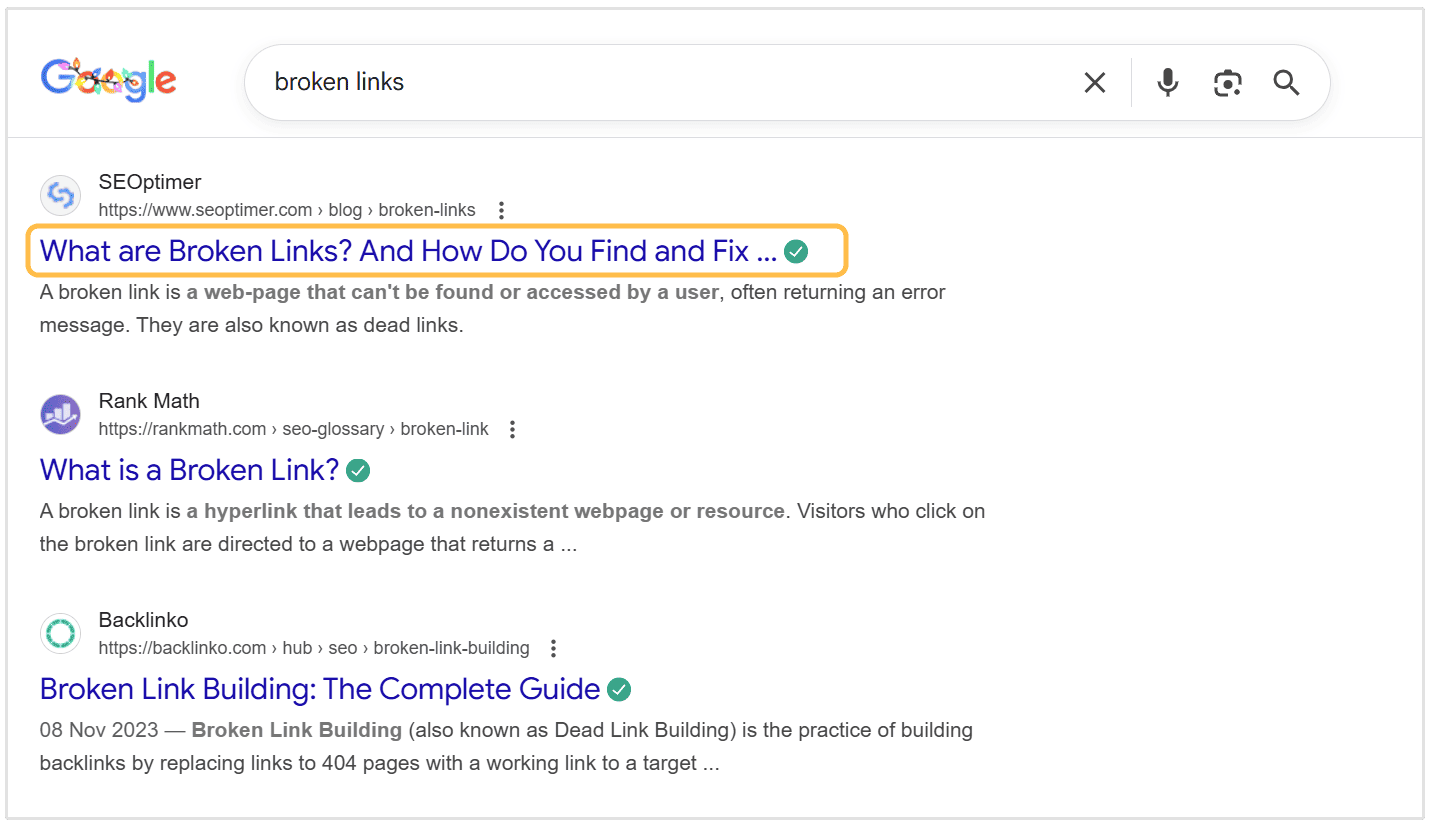
Now I'm not saying that this magically gave that specific page the ranking boost it needed.
But, adding the target keyword as close to the beginning of a page's title tag is another one of those SEO tips that you should keep in mind when updating page titles.
If the content discusses time-sensitive information, consider including the publication date or month in the title to signal freshness to users and search engines.
For example, PC Mag regularly has blog posts listing the best tools and gadgets for a specific year. Like the below post on the best drones for 2025.

I'm pretty confident they'll update the title to "The Best Drones We've Tested for 2026" at the start of January 2026.
4. Update the Meta Description
Updating the meta description boosts your content's visibility in search results.
Moreover, it can entice users to click on your website.
This isn't just a small tweak; it's a crucial part of keeping your content fresh and can make a big difference in the success of your SEO.
Aim for a brief, clear meta description that communicates the content's essence in a few sentences.
You want to avoid overly long descriptions that may get truncated in search results.
At SEOptimer, we have a rule of thumb of keeping meta descriptions between 120 and 160 characters.
Like the below meta description for our blog on "SEO for Carpet Cleaners." Its meta description has a length of 134 characters.

Another tip is to encourage action by using action-oriented language in the meta description. Phrases like "Learn how to," "Discover," or "Find out" can be effective.
After updating the meta description, monitor its performance regarding click-through rates (CTR) and engagement. Make adjustments as needed based on data and user behavior.
5. Add New Images and Visuals
Adding new imagery to your content can enhance its visual appeal, engagement, and overall quality.
Opt for high-resolution images that are clear, sharp, and visually appealing.
Avoid using low-quality or pixelated images that can detract from the content's quality.
Adding visuals, comparison tables, and clear CTAs increases dwell time and interaction.
- Dominik Poppe, Founder of The New View
Use various image types, including photographs, illustrations, infographics, charts, and diagrams, as appropriate for the content. Variety keeps readers engaged.
And with all of the available AI image generation tools, there's really no reason why you can't create visually appealing images for your blog content.
Don’t forget to add descriptive alt text to each image for accessibility and SEO. Alt text should accurately describe the image's content and purpose.

6. Update Old Statistics
A big reason to update and refresesh existing content is to replace outdated statistics, facts, and figures with the most current and accurate data.
Ensure all information is up-to-date and relevant, so that readers and AI crawlers can have access to the latest findings.
This ensures that your content stays relevant and shows your dedication to offering accurate information to your audience.
We add real, specific data wherever possible. Pricing, case studies, client outcomes, even comparisons. Anything that makes the content more useful and quotable. The more vague or generic a blog post is, the more likely it is to get ignored by both users and AI systems.
- Ivan Vislavskiy, CEO and Co-founder of Comrade Digital Marketing Agency
You need to verify the freshness of the data though. So ensure that the statistics are the most recent available.
A quick way to verify this is by looking for publication dates on the sources.
Remember to cross-reference statistics from multiple sources to validate their accuracy and reliability whenever possible. This helps prevent the use of outdated or incorrect data.
7. Add New Information
By thoughtfully incorporating additional information into your refreshed content, you can enhance its educational value, authority, and appeal to your audience.
Select key points or subtopics within your content and expand on them with more in-depth information, examples, or case studies.
Consider any questions or concerns readers might have about the topic of the post or through feedback via your customer support tickets, product reviews, etc. Use this feedback to address specific information gaps.
You can also use Google's "People Also Ask" feature to find frequently asked questions that you haven't addressed in your blog post yet.
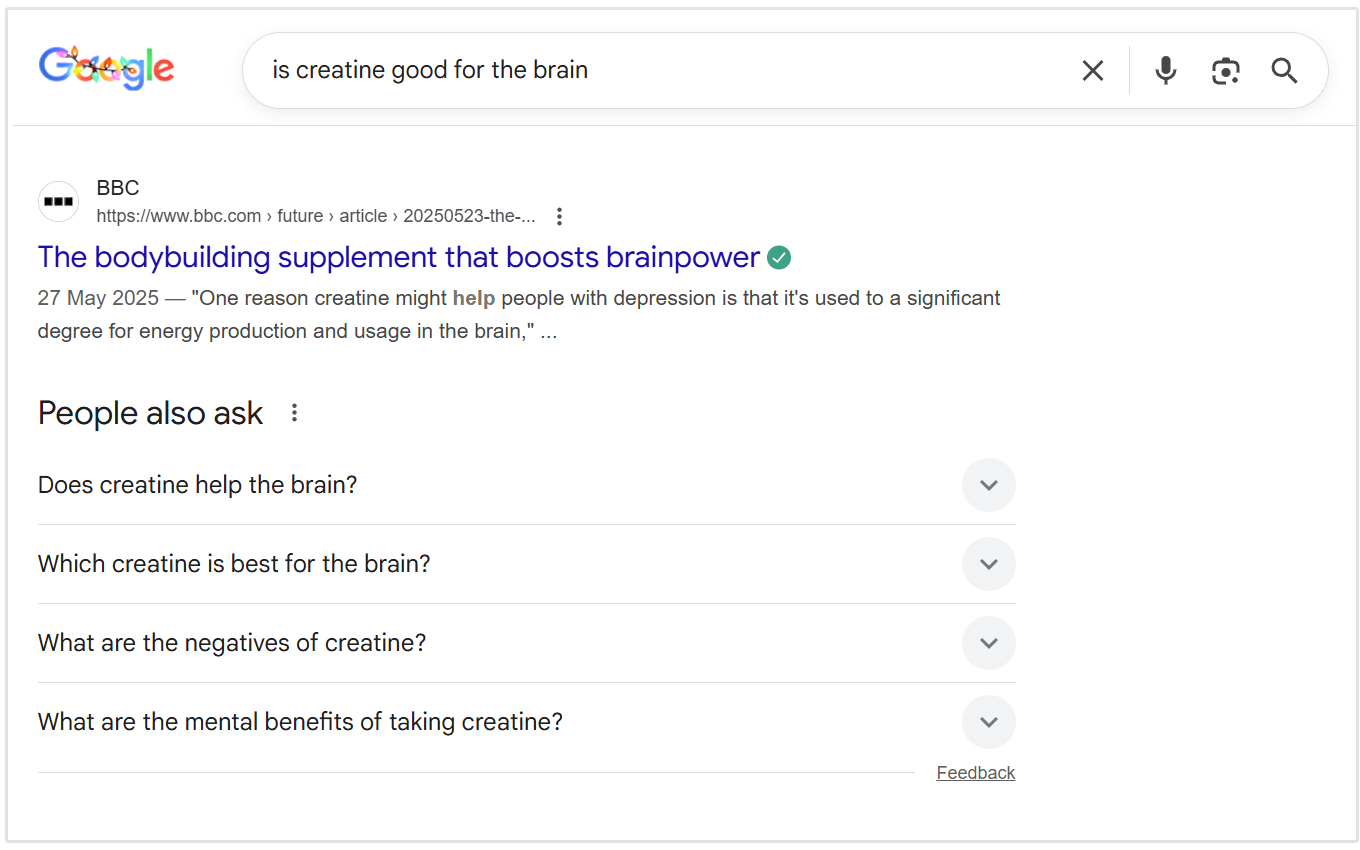
If possible, quote experts or thought leaders in your industry to provide additional insights and credibility to your content.
Ivan from Comrade Digital Agency notes that author credibility is extremely important in the new age of AI and search.
Here's how they implement it in their agency:
We now attach a real person to each piece, ideally the business owner or subject-matter expert. On top of that, we’ve begun using short, AI-narrated audio clips summarizing the article in the expert’s voice.
That not only boosts trust but improves recognition in voice search and AI models.
You can also present alternative viewpoints or perspectives on the topic if it adds depth and a balanced approach to the content.
8. Optimize for LLMs and AI Crawlers
A key point of updating content for AI is to answer the user's question as early as possible.
Every refreshed article must clearly answer the user’s question in the first 100 words. Focus on question and answer, conversation style language that LLMs pick up on.
- Johnny Hughes, Co-Founder & Chief Marketing Officer at Avenue Z
Once the core answer is in place, focus on making your content easy for AI engines to understand, extract, and quote.
Here are some actionable tips you can use when refreshing old blog posts:
- Use clear structure: Break content into short sections with descriptive headings.
- Write simply and directly: Avoid filler words, vague statements, and long introductions.
- Add question-based subheadings: Use common queries like “What is…”, “How does…”, and “Why does…” to help AI connect your content to user intent.
- Include summaries and bullet points: These are easier for AI tools to quote and reference.
- Reference recognizable entities: Mention real tools, brands, concepts, or people where relevant to help AI understand context.
- Optimize for snippets: Lists, definitions, and step-by-step instructions increase your chances of being cited in AI Overviews.
The main takeaway is: Content that is structured, factual, and easy to scan is far more likely to be used by AI systems as an authoritative source.
The goal isn’t to write for robots, but to write so clearly that both humans and machines instantly understand your message.
9. Publish the Blog
Once you have updated your content, it’s time to republish the blog containing the new information.
At the beginning or end of the blog, include a brief note to inform readers that the content has been updated and republished for their benefit.
Most content management systems have this feature by default, but if not, you could just find a plugin that can assist with this.
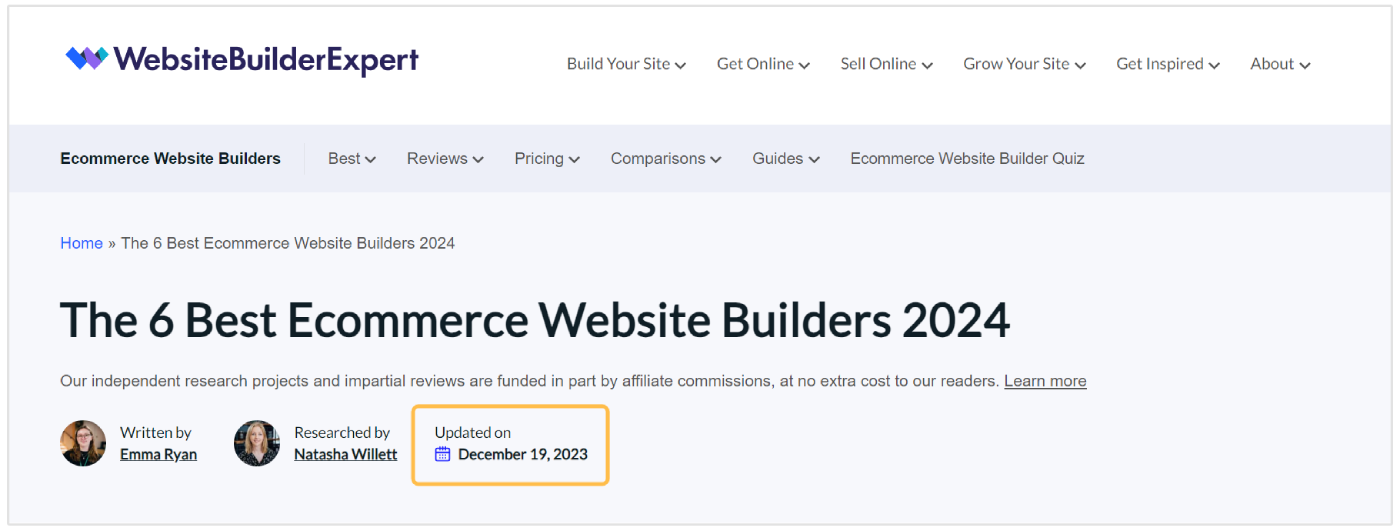
Promote the republished blog through your website, social media, email newsletters, and other marketing channels as if it were a new piece of content.
10. Track Changes in Performance
It's essential to keep an eye on how your content performs after you refresh it. This allows you to gauge the effectiveness of your content promotion strategies and make informed decisions based on the data.
Before you refresh the content, record baseline metrics for each chosen KPI. This provides a point of comparison for measuring improvements.
Track changes in website traffic related to the refreshed content.
Pay attention to the number of page views, unique visitors, and overall site traffic in Google Analytics as this gives you a very accurate picture of how your changes have impacted key metrics.
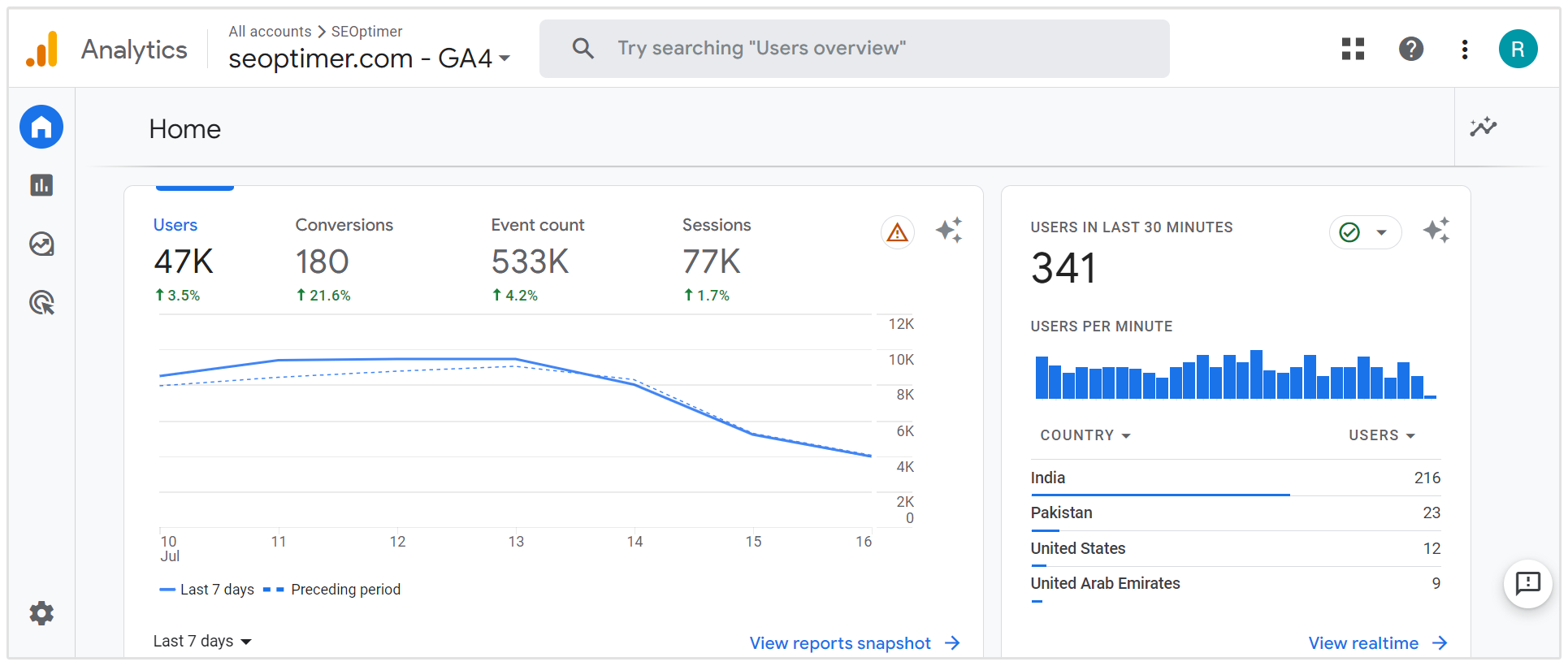
Take a close look at user engagement metrics like how long visitors stay on a page, the bounce rate, how far they scroll, and the number of social shares or comments.
After the refresh, compare the post-refresh metrics to the baseline metrics you recorded earlier.
This is where you should also document which aspects you updated so that you can "rinse and repeat" the process for all SEO content updates in the future.
Lastly, you also want to use a keyword tracker to help you keep track of keyword posititions. SEOptimer can be used to track keywords in more than 70 countries.
Users also have the option to track rankings on Bing, as well as, Desktop and/or Mobile devices.
We also recently launched a series of GEO checks in our SEO Audits, including AI Overview Citation tracking.
This shows you which search queries have triggered an AI Overview where your brand is mentioned.
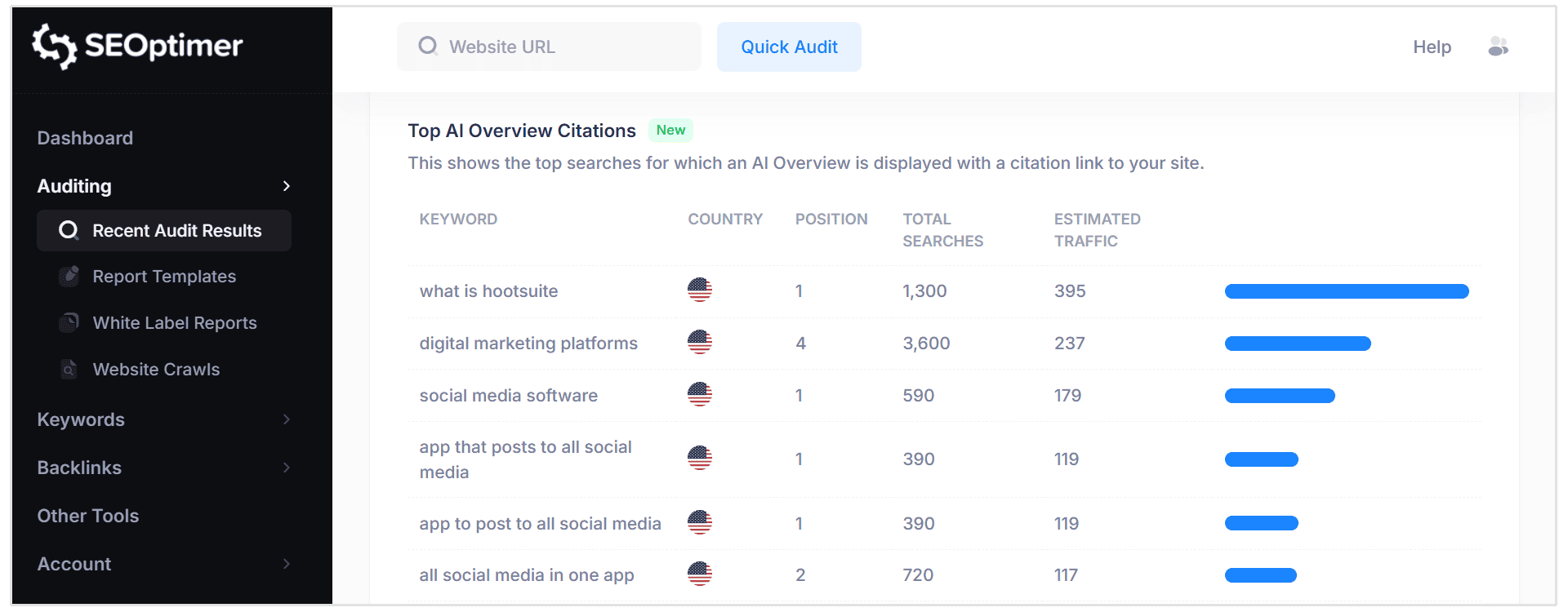
You can easily check this and out other Generative Engine Optimization checks by running a free SEO audit with SEOptimer.
By diligently tracking changes in content performance, you can make informed decisions, refine your content strategy, and ensure that your refreshed content meets its objectives and serves your audience effectively.
Should You Change the URL when Republishing Content?
In most cases, it's not advisable to change the URL when republishing content, especially if search engines have already indexed the content and have established backlinks.
Here are some considerations for whether to change the URL when republishing content:
When to Keep the Same URL:
- Content Updates: If you make minor updates, revisions, or improvements to the existing content but the core topic and focus remain the same, it's generally best to keep the same URL. This allows you to maintain the authority and ranking potential the original URL has accumulated over time.
- Backlinks: If the content has acquired backlinks from other websites, changing the URL can result in broken backlinks. Broken backlinks can harm your SEO efforts and disrupt the user experience for visitors who click those links.
When to Change the URL:
- Significant Content Overhaul: If you make substantial changes to the content to the extent that it becomes a new piece, you might consider using a new URL. However, in such cases, you should also set up proper redirects (e.g., 301 redirects) from the old URL to the new one to preserve link equity.
- URL Structure Improvement: If the existing URL has an outdated or poorly structured format, and you are revamping your website's URL structure for SEO purposes, you may change the URL. Again, use proper redirects to maintain SEO value.
- Avoiding Duplicate Content: If you plan to have multiple versions of similar content and avoid duplicate content issues, you may use canonical tags or consider changing the URL to differentiate the content.
- Rebranding or Restructuring: If your website is undergoing a significant rebranding or restructuring, changing URLs may be necessary to align with the new brand or structure. In such cases, ensure proper redirects are in place.
Conclusion
Republishing content is one of the best ways to maintain content relevance, optimize for SEO, attract new audiences, and maximize the value of your existing content assets.
It's a cost-effective way to ensure your content continues to serve your audience effectively and supports your overall content marketing and SEO goals.
It's important to regularly perform audits to spot new posts that need to perform better and ensure your content stays up-to-date and effective. By consistently finding and enhancing these underperforming blog posts, you fine-tune your content strategy, improve the overall user experience, and ultimately achieve better outcomes for your website.