

Using the right buyer intent keywords is the difference between traffic that looks good on paper and traffic that actually drives revenue.
If your site is attracting visitors but not converting them into leads or customers, there’s a good chance you’re targeting the wrong type of search queries.
Some keywords bring in people who are just browsing, researching, or killing time.
Others, like buyer intent keywords, attract users who are looking to make a purchase, compare options, or take the next step.
In SEO, aligning your content with search intent is critical. And by adding buyer intent keywords to your strategy, you can increase conversions and revenue for your business.
In this guide, you’ll learn what buyer intent keywords are, why they matter for SEO, and how to find the keywords that bring in visitors who are more likely to convert.
What are Buyer Intent Keywords?
Buyer intent keywords are specific search terms that indicate a user is preparing to purchase a product or service. These phrases show that a person has moved past the initial research phase of their journey.
They already know they have a problem, they understand the potential solutions that are available, and they are now looking for the right place to spend their money.
If you want to build a profitable buyer keywords list, you first need to understand how these terms are categorized.
SEOs and marketers generally split them into two main groups based on how close the user is to the final checkout screen.
These are high intent and low intent buyer keywords.
High Intent Buyer Keywords
High intent buyer keywords show that a user is strongly inclined to buy a product or service immediately.
These searches are highly specific, very direct, and very valuable for your business.
People using these phrases and keywords have their wallets ready.
They just need a final destination (page) to complete the transaction.
A strong buyer intent keywords list in this category will often include transactional modifiers.
Some common examples include:
- Buy [product name]
- [Brand name] pricing
- Discount code for [product]
- Order [service] online
- [Software name] free trial
- Best deal for [product]
Because these terms convert at such a high rate, they are highly competitive in PPC campaigns.
However, ranking organically is free (you just need to spend the time and have the skill to get there).
And by ranking for these terms, you can boost your return on investment (ROI) and bottom line.
Low Intent Buyer Keywords
Low intent buyer keywords indicate that a user is in the middle of the marketing funnel.
So they’re not totally there yet. But, they are definitely going to buy soon.
Users at this stage are currently exploring their options and evaluating different products. They need a little more convincing before they make a final decision.
A buyer keywords list for this category will feature commercial modifiers.
Examples of these buyer intent keywords include:
- Best [product category]
- [Brand A] vs [Brand B]
- Top-rated [service type]
- [Product name] review
- Alternatives to [Software name]
Creating content around low intent buyer keywords is still a brilliant SEO strategy.
These terms often have less competition than high intent keywords.
A well-written comparison page or buyer's guide can capture this traffic and smoothly guide the user toward a purchase.
Related Reading: 9 Popular Types of Keywords in SEO
Why are Buyer Intent Keywords Important
Adding buyer intent keywords to your SEO strategy can transform how your website generates revenue.
For instance, instead of writing generic blog posts that bring in passive readers, you can start creating targeted pages that try to sell your product or service.
Here is why focusing on these keywords is essential for your business, online store, or SaaS company.
Target Buyers
The most obvious benefit of targeting buyer intent keywords is that you connect directly with people already interested in your product or service.
By understanding the search intent behind a query, you can confidently build a page or series of pages that speak directly to buyers.
Increase Visibility in Search
Targeting buyer keywords helps you secure higher rankings in search engines.
Many of these terms are considered long-tail keywords, meaning they consist of three or more words.
Long-tail phrases generally have lower search volumes, but they also have less competition.
As you can imagine, it is incredibly difficult to rank on the first page of Google for a broad term like "shoes."
It is much easier to rank for a specific buyer intent phrase like "men's waterproof running shoes online."
By optimizing your pages for these longer, detailed queries, you build topical authority and increase your overall search visibility.
Push Conversions
Traffic means nothing if it does not convert.
Buyer intent keywords directly push conversions because they allow you to match your landing page perfectly with the user's expectations.
Let’s say you work at ActiveCampaign, an email marketing platform.
If someone searches for “SendGrid vs ActiveCampaign,” they are comparing tools and getting closer to making a decision.
At this stage, the goal is not just to educate, but to position your product clearly within that decision-making process.
A well-structured comparison page that outlines key differences, use cases, pricing, and features helps users evaluate their options quickly.
Instead of trying to “sell” too early, you’re helping users make an informed choice.
By meeting their expectations and reducing friction in the decision process, you increase the likelihood that they choose your product when they’re ready to take the next step like signing up for a trial or booking a demo.
Now that you know what buyer keywords are and why they’re important, let’s look at some of the ways you can find these keywords.
Where do I Find Buyer Intent Keywords
Use SEOptimer’s Keyword Research Tool
One of the most effective ways to build your list is by using a dedicated SEO keyword research tool.
SEOptimer’s Keyword Research Tool provides incredibly accurate data for Google searches across over 90 different countries and languages.
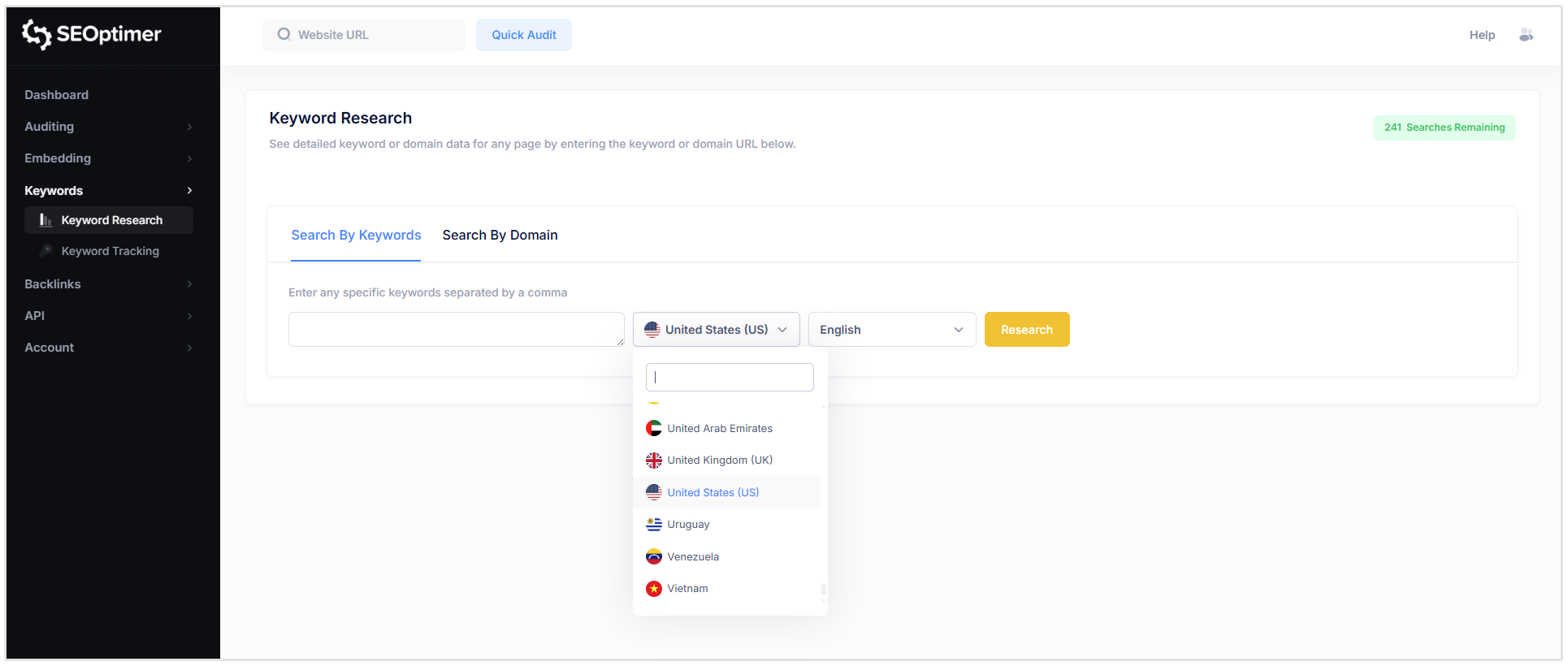
You can easily use this tool to discover new keyword opportunities and analyze their monthly search volume, competition levels, and average cost-per-click (CPC).
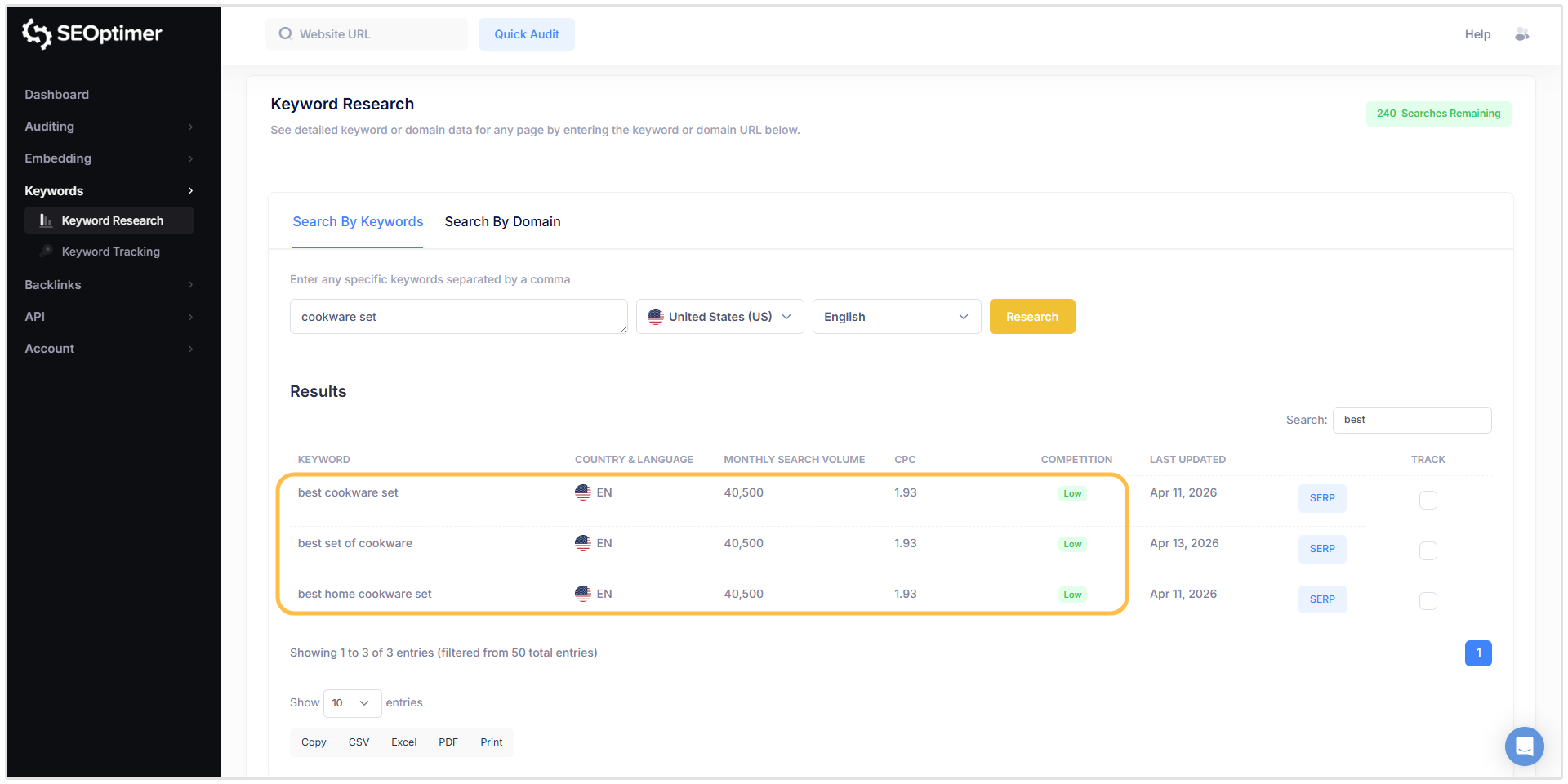
Simply type in a broad seed keyword related to your business, product, or service. For instance, let's say you sell cookware online, so your broad keyword will be "cookware sets," so add that to our keyword research tool.
The tool will generate a comprehensive list of related terms.
You can then search this list for commercial and transactional modifiers like "buy," "best," and "pricing" to quickly identify the best buyer intent keywords.
So in our example, I can see that our tool picked up "best cookware set" and "best home cookware set" as variants to the seed keyword I entered. You can also view the SERP results for each keyword to check the competitive landscape and to see who's ranking.
People Also Ask Box
Google actually gives you a massive list of buyer keywords for free right on the search engine results page (SERP).
The People Also Ask (PAA) box gives you an inside look on what your audience wants to know.
Type a keyword related to your product into Google and look at the questions that populate in the PAA box.
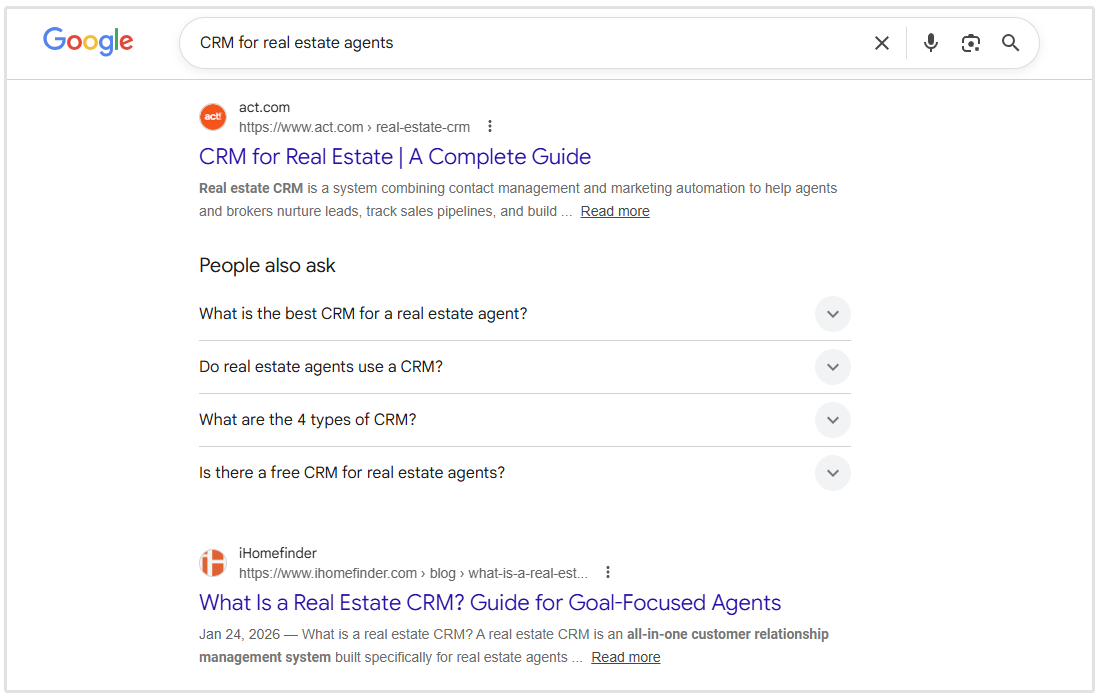
For example, let's say you want to promote your CRM for real estate agents. So for this, we'll add "CRM for real estate agents" into Google and see what questions the PAA box has.
As you can see from the below screenshot, there are a few queries. But the one that matters most for buying intent is "What is the best CRM for a real estate agent?" You can also use "Do real estate agents use a CRM?" as the primary focus for a blog post.
Clicking on these questions will generate even more related queries, giving you an endless supply of long-tail buyer keywords.
People Also Search For
Scroll to the very bottom of any Google search results page, and you will find the People also search for section.
Google uses complex algorithms to determine which phrases are closely tied to your original query.
So let's see how even local service area businesses can use these phrases to find buyer intent keywords.
And for this example, we'll pretend that we're a plumber in Austin. So the primary keyword for my business will be "plumber in Austin."
By typing this into Google and scrolling down, we find the searches related to our initial keyword.
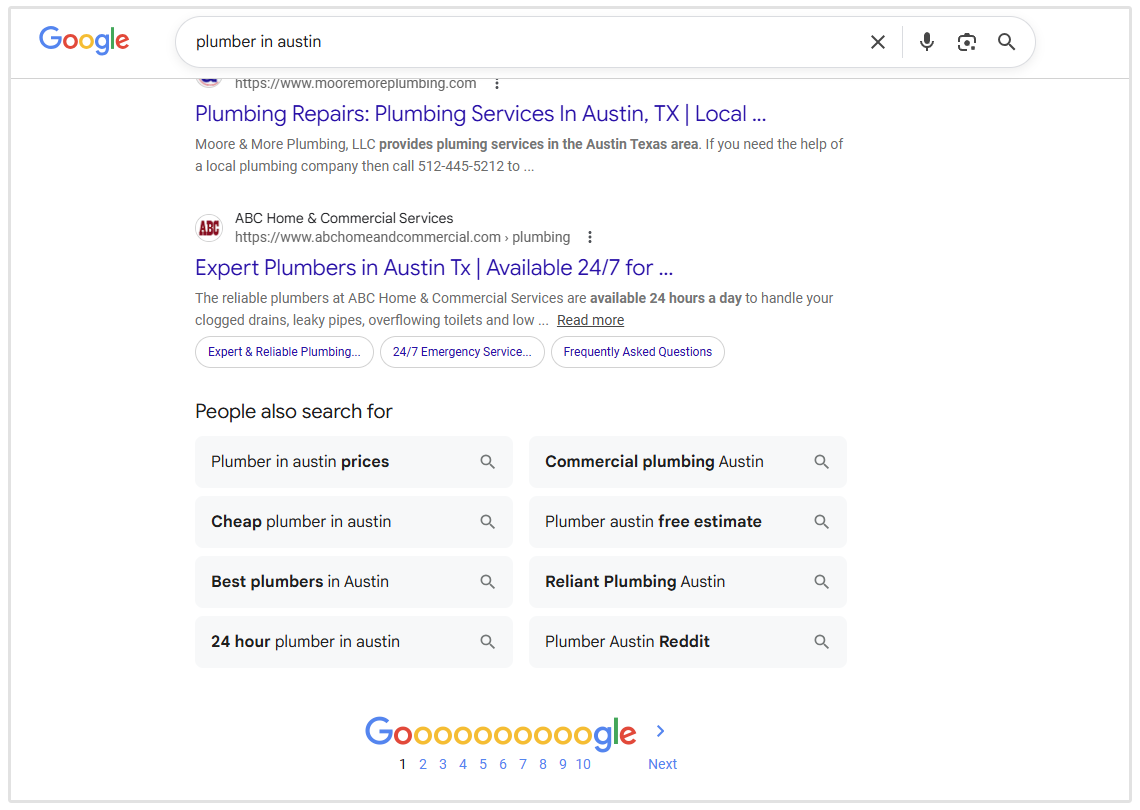
I can see some great buyer intent keywords and searches that we can create pages for, including:
- Plumber in Austin prices
- Cheap plumber in Austin
- Best plumbers in Austin
- Plumber Austin free estimate
These suggestions are based on real user behavior, making them excellent additions to your buyer keywords list.
Google Autocomplete
You can find high-converting keywords before you even land on the SERPs
Google Autocomplete attempts to predict what you are searching for based on popular trends.
Start typing your product name followed by a letter, or start your search with a modifier like "best" or "buy."
For example, if you type "best running shoes," Google might auto-fill the rest with "for flat feet" or "for wide feet."
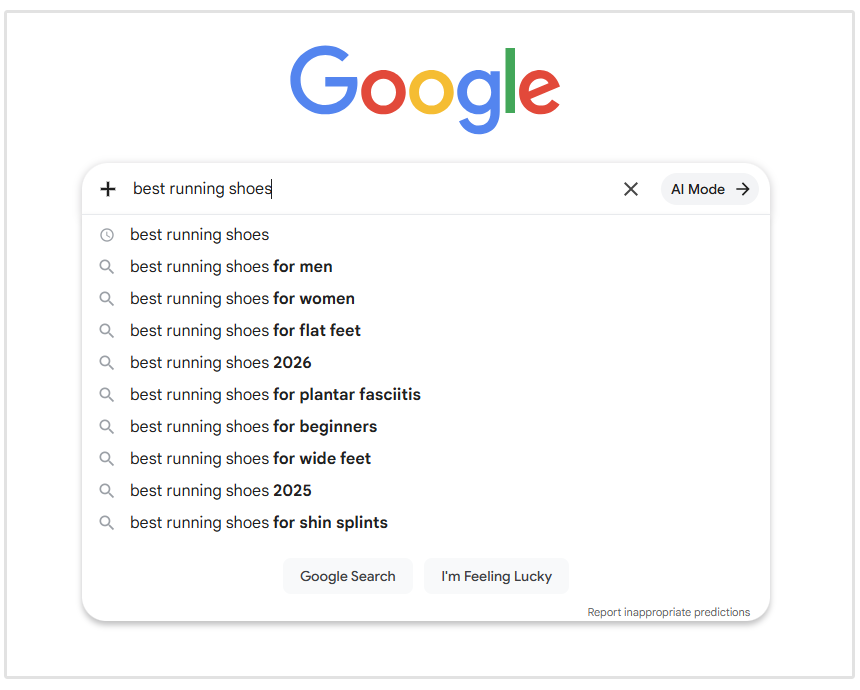
This method gives you instant insight into the exact phrases buyers are actively using.
Google Keyword Planner
Google Keyword Planner is a free tool available to anyone with a Google Ads account.
While it is primarily designed for paid search campaigns, it is a useful resource for organic keyword research tool.
You can enter a broad topic into the Discover new keywords feature which is located under Tools and then Keyword Planner.
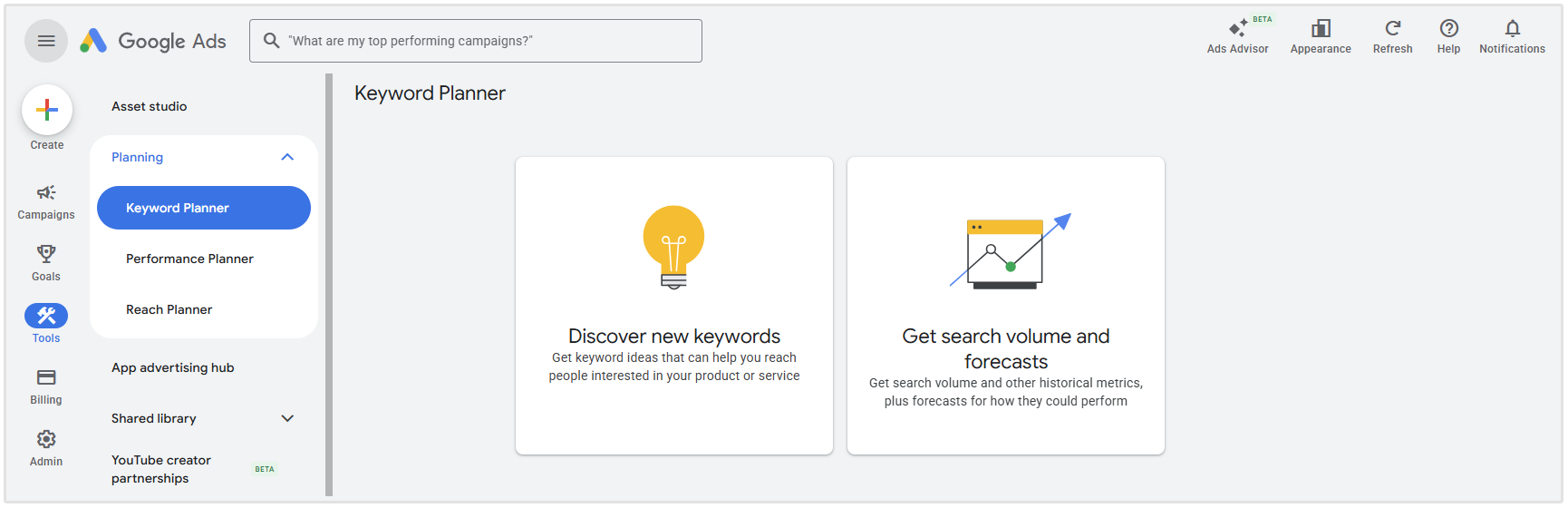
The planner will return hundreds of suggestions along with their search volume and competition data.
To find buyer intent phrases, simply use the filter function to include words like "discount," "deal," "order," or "reviews."
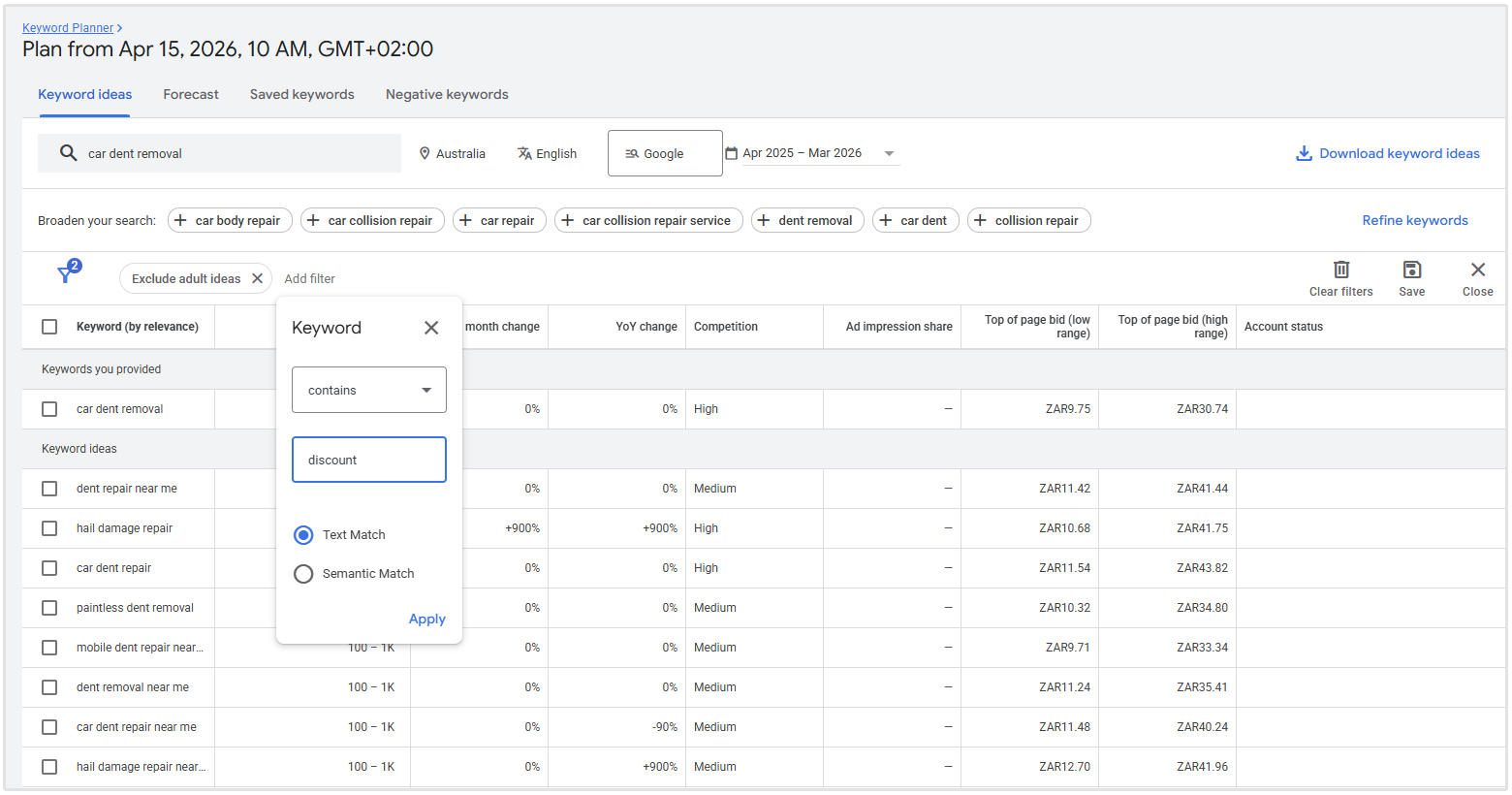
High CPC bids in Keyword Planner usually indicate strong buyer intent, as advertisers are willing to pay more for clicks that generate sales.
How to Use Buyer Intent Keywords on Your Site
Knowing what buyer intent keywords are is one thing. But, using them effectively and without sounding spammy is where the real skill comes in.
The key is to match the keyword to the page’s purpose, not the other way around.
1. Use Buyer Keywords on the Right Pages
Not every page on your site should target high-intent keywords like “buy product X online” or “best price for [tool].”
These keywords belong on:
- Product pages
- Pricing pages
- Comparison pages
- Landing pages designed for conversions
For example, if someone searches for “email marketing software trial,” they expect to land on a page where they can explore features, see pricing, and take action, not read a 2,000-word blog post.

2. Write for Humans First, Keywords Second
You don’t need to repeat buyer intent keywords ten times to rank for it.
Instead, use natural variations and supportive language like:
- Get started with [product] today
- Start your free trial
- Compare plans and pricing
Search engines are smart enough to understand intent without exact-match overuse. Focus on clarity and readability, and the keywords will fit in naturally.
Related Reading: How Many SEO Keywords Should You Target Per Page?
3. Align Your Content With the User’s Stage
Buyer intent keywords signal that the user is close to making a decision. Your content should reflect that.
Instead of explaining what the product is, focus on talking about:
- Why it’s the right choice
- How it compares to alternatives
- What results users can expect
4. Place Keywords Strategically (Not Everywhere)
You don’t need to force your keyword into every sentence. Focus on all the important areas like:
- Page title and meta description
- H1 or H2 headings
- Opening paragraphs
- Product descriptions or key sections
5. Support Buyer Pages With Internal Links
Your informational content (blogs, guides) should guide users toward your buyer-focused pages.
For example:
- A blog post can link to a product or pricing page
- A comparison article can link to a signup page
This helps move users from the research phase to the decision phase without being too pushy.
FAQs About Buyer Keywords
What is the difference between commercial and transactional keywords?
Commercial keywords are used when a person is comparing options and reading reviews (e.g., "best laptop 2026").
Transactional keywords are used when the person has made a decision and is looking for a place to purchase the item immediately (e.g., "buy MacBook Air M2").
Can I rank for buyer intent keywords with a new website?
Yes, but you should focus on long-tail keywords if you have a newly launched website.
Broad terms like "buy shoes" are dominated by massive retailers. Instead, you need to find keywords that are an easier entry point for new websites.
These include niche keywords and long-tail phrases that are more unique to your products. In the shoe example, you can optimize for keywords like "slip-resistant shoes for standing workers."
Should I stop writing informational content entirely?
No, informational content builds trust, earns backlinks, and captures users early in their journey.
A healthy SEO strategy uses informational blog posts to answer questions, and then naturally funnels those readers toward your high-intent commercial and transactional pages.
Conclusion
Understanding search intent is one of the most important factors in creating a successful SEO strategy.
By distinguishing between informational researchers and transactional buyers, you can build landing pages that speak directly to the people who are ready to pull out their credit cards.
Take the time to brainstorm your core topics, use the right tools to find modifiers, and start building content that answers the specific questions your buyers are asking.
The traffic will follow, and more importantly, the sales will too.