


Some SEO keywords attract casual browsers, while others bring in customers who are ready to buy. Transactional keywords fall into that second, more profitable category.
These are the search terms people type into Google when they have their credit cards out and are ready to take action.
Understanding and targeting these high-intent queries can be the difference between a website that gets traffic and one that generates revenue.
While informational content helps in building awareness, transactional content is useful for generating sales. It's the final step in the customer's journey, making it one of the most valuable aspects of any SEO strategy.
This guide will walk you through everything you need to know about transactional keywords.
You'll learn how to find them, use them to optimize your content, and drive more sales and conversions for your business.
What are Transactional Keywords?
Transactional keywords are search queries that signal a user's strong intent to complete an action. This action is typically a purchase, but it can also be a sign-up, a download, or a request for a quote.
In short, when someone uses a transactional keyword, they are at the bottom of the marketing funnel and ready to convert.
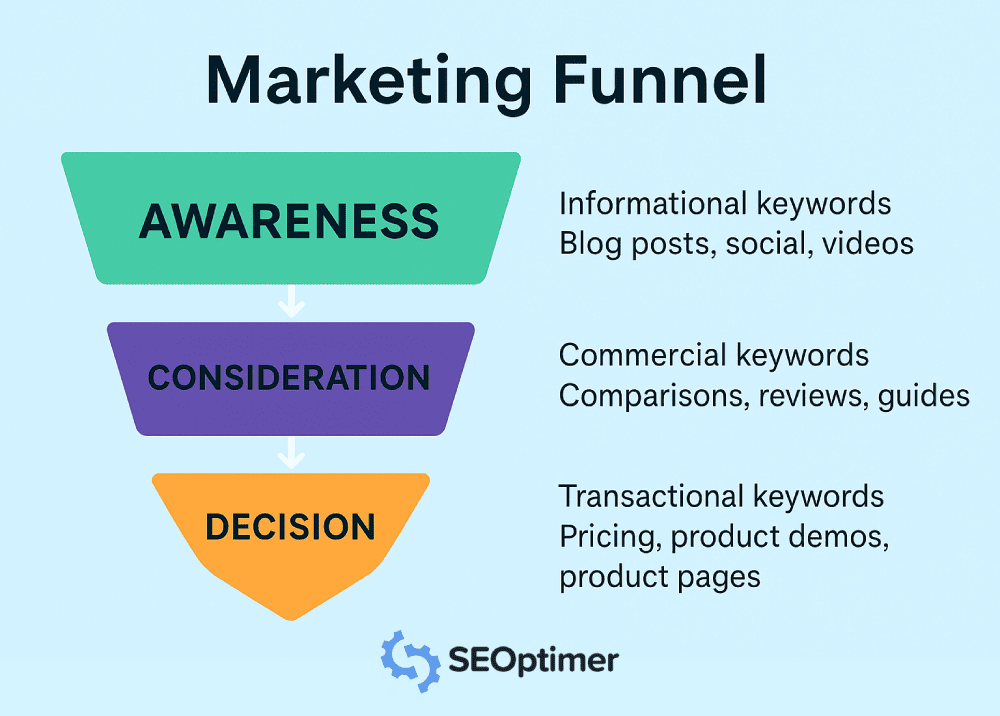
Transactional keywords are also known as buyer keywords or high-intent keywords in SEO.
These keywords often include specific action words that make the user's intent clear.
Think about the difference in mindset between someone searching for "how to fix a leaky faucet" versus someone searching for "emergency plumber near me."
The first search is informational; the user wants to learn. The second is a transactional search; the user needs to hire someone immediately.
By targeting these keywords, you connect with users at the exact moment they're ready to make a decision.
This makes them incredibly valuable for any business looking to boost its bottom line.
In fact, while transactional searches make up a small fraction of all Google queries, they represent the most valuable, revenue-driving traffic.
Examples of Transactional Keywords
Here are a few examples of transactional keywords:
- Buy noise-canceling headphones
- iPhone 15 Pro discount
- Sign up for Netflix
- Order gluten-free meal delivery
- Car insurance quote online
- Emergency plumber in Brooklyn
- Buy standing desk
- Buy air fryer online
- Student discount for Grammarly
- Get VPN subscription
These examples highlight how specific language can reveal a user's position in the buyer's journey.
What are the Benefits of Transactional Keywords?
Focusing your SEO and pay-per-click (PPC) efforts on a transactional keyword strategy is one of the smartest moves you can make.
Here’s why they are so valuable for your business:
Higher Conversion Rates
Users searching with transactional intent have already decided what they want.
In my opinion, a person typing a transactional keyword is already committed. They’re past the research phase and just looking for the provider who feels like the easiest and safest choice.
That is why the copy needs to be tight, confident, and built entirely around the service they want right now.
- Ivan Vislavskiy, CEO and Co-founder of Comrade Digital Marketing Agency
They are past the research phase and are actively looking to complete a transaction.
As a result, traffic from these keywords converts at a much higher rate than traffic from informational queries.
Direct Impact on Revenue
Since these keywords attract users who are ready to buy, they have a direct and measurable impact on your sales and ROI.
Optimizing for "buy ergonomic office chair" is more likely to lead to a sale than ranking for "what is an ergonomic chair."
Improved Ad Campaign Performance
In paid advertising, targeting transactional keywords ensures your budget is spent on users most likely to convert.
This leads to a lower cost per acquisition (CPA) and a higher return on ad spend (ROAS).
Companies are often willing to pay a premium for these keywords because the return is so significant.
Clearer Measurement of SEO Success
It can sometimes be difficult to prove the ROI of content marketing.
However, when you optimize a page for "free trial project management software" and see a direct increase in sign-ups, the business impact is undeniable.
It connects your SEO efforts directly to tangible business outcomes.
How to Find Transactional Keywords
Finding the right transactional keywords requires a blend of creativity, competitor analysis, and the right tools.
Here’s a step-by-step approach to uncovering these valuable search terms.
1. Brainstorm with Buyer-Intent Modifiers
Start by thinking like your customer.
What words would they use when they are ready to buy?
Combine these modifiers with your core product or service terms.
Common transactional modifiers include:
- Purchase words: buy, order, purchase, get, shop
- Cost-related terms: discount, deal, sale, coupon, cheap, price, cost
- Action-oriented phrases: sign up, download, subscribe, apply for, request a quote
- Brand and product specifics: [brand name], [product model], review, vs, for sale
- Location-based terms: near me, in [city], find a store
For example, if you sell running shoes, you might brainstorm keywords like "buy Nike running shoes," "running shoe deals," or "best price for Asics Gel-Kayano."
2. Analyze Your Competitors
Your competitors can be a goldmine of keyword ideas.
Look at the pages on their websites that are clearly designed to drive conversions, such as product pages, service pages, and pricing pages.
Use SEO tools like SEOptimer’s Keyword Research tool to see which transactional keywords they are ranking for.
Simply navigate to the Keyword Research module in your SEOptimer account. Then paste their domain in the "Search by Domain" option and select your country.

Our tool will now show you all the keywords they are ranking for.
Let's take a look at a real-life example of this.
Imagine you are a plumber in Texas and you want to know which transactional keywords you need to use for your "Emergency Plumber" page.
Add one of your competitor's pages into our Keyword Research tool (remember the "Search by Domain" option), you can see the following keywords:
- plumbing near me 24 hour
- 24 hour plumbers near me
- austin emergency plumbers
- austin emergency plumbing
- emergency plumbers austin tx
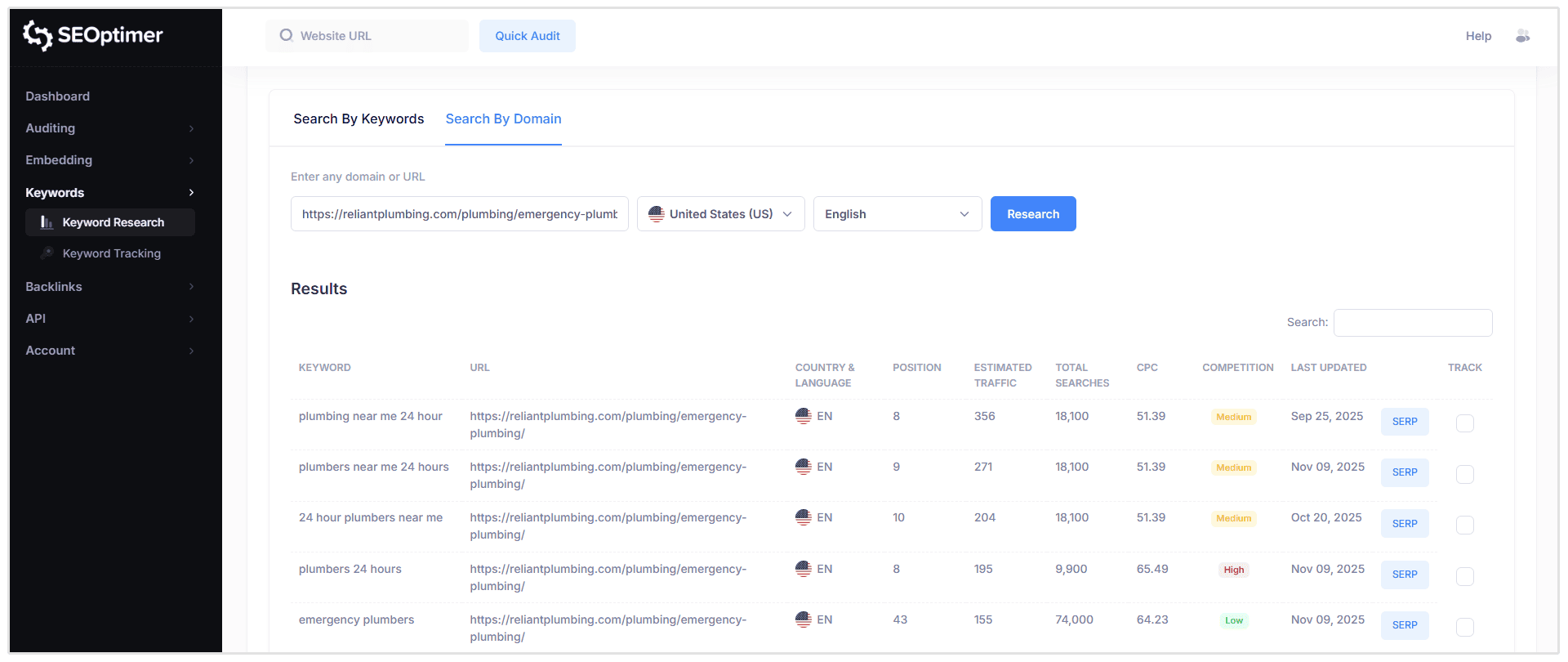
Pay attention to the keywords that drive the most traffic to their highest-value pages.
This analysis can reveal opportunities you might have overlooked.
3. Use Keyword Research Tools
Modern SEO tools make it easy to find transactional keywords.
Start by entering a broad topic related to your product or service.
Most keyword tools will then generate a list of related searches people are actively typing into Google.
Your job is to filter for buying intent. Look for keywords that include terms like buy, pricing, deals, book, order, subscribe, or near me.
Focus on keywords with:
- Solid monthly search volume
- Manageable keyword difficulty
- Clear purchase intent
4. Leverage Google's Suggestions
Google itself provides a tresure trove of keyword information.
Start typing a transactional query into the search bar and see what suggestions appear in the autocomplete dropdown.
For example, let's image you sell running clothes online. We'll type in "affordable running clothes online" into Google search box, and we see the following search terms:
- cheap running gear online
- where to buy cheap runnning clothes
- good cheap running clothes

These are real, popular searches that people are making.
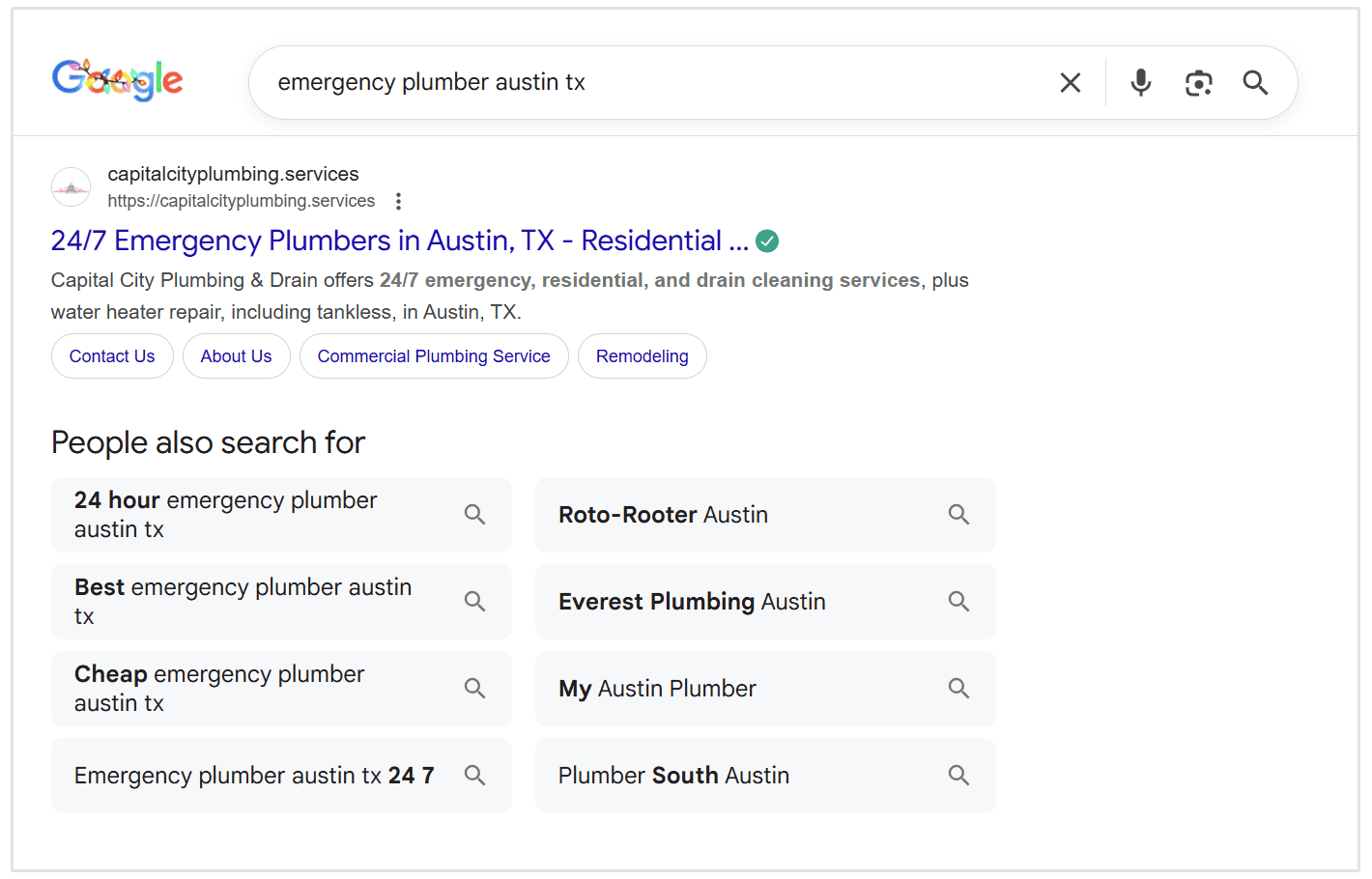
Additionally, scroll to the bottom of the search results page to find the "Related searches" and "People also search for" section. This area often surfaces long-tail transactional keywords that are highly specific and can be easier to rank for.
How to Use Transactional Keywords in SEO
Once you have a list of target keywords, it's time to put them into action.
Here's how to effectively use transactional keywords to improve your SEO and drive conversions.
Optimize Product and Service Pages
Your product and service pages are the most important assets for targeting transactional keywords.
Ensure these pages are fully optimized by including your target keywords in:
- Page Title (Title Tag): This is one of the most important on-page SEO factors. Make it compelling and include your primary keyword.
- Meta Description: Write a description that entices users to click and clearly communicates what the page is about.
- H1 and H2 Headings: Use your keywords in headings to structure your content and signal relevance to search engines.
- Body Content: Weave your keywords and related terms naturally throughout the page copy.
- Image Alt Text: Describe your product images using relevant keywords.
Check this below page targeting the keywords "lawn care services in Chicago."

It uses the target keyword and it's variations in all of the most important places and meta tags for SEO.
Create Dedicated Landing Pages
For highly competitive transactional keywords, consider creating dedicated landing pages for each.
These pages can be hyper-focused on a single offer and designed for one purpose: conversion.
Remove unnecessary navigation and distractions, and include a clear, compelling call to action (CTA) that uses your target keyword, such as "Buy Now" or "Get Your Free Quote."
Rather than letting these transactional queries land on broad blog posts, I match them to the most relevant service or product pages.
A simple change like this made a huge difference for one client. Once we aligned their transactional terms with the correct pages, their organic bookings increased by 46%.
- Rory Gillett, SEO Consultant at Parlez Creative
Build Comparison Pages
Product and service pages are important, but they’re only part of the equation.
Some of the highest-converting transactional keywords don’t live on pricing pages. They live on comparison pages.
Pages that compare your product to competitors capture users who already know what they want. They’re just deciding who to buy it from.
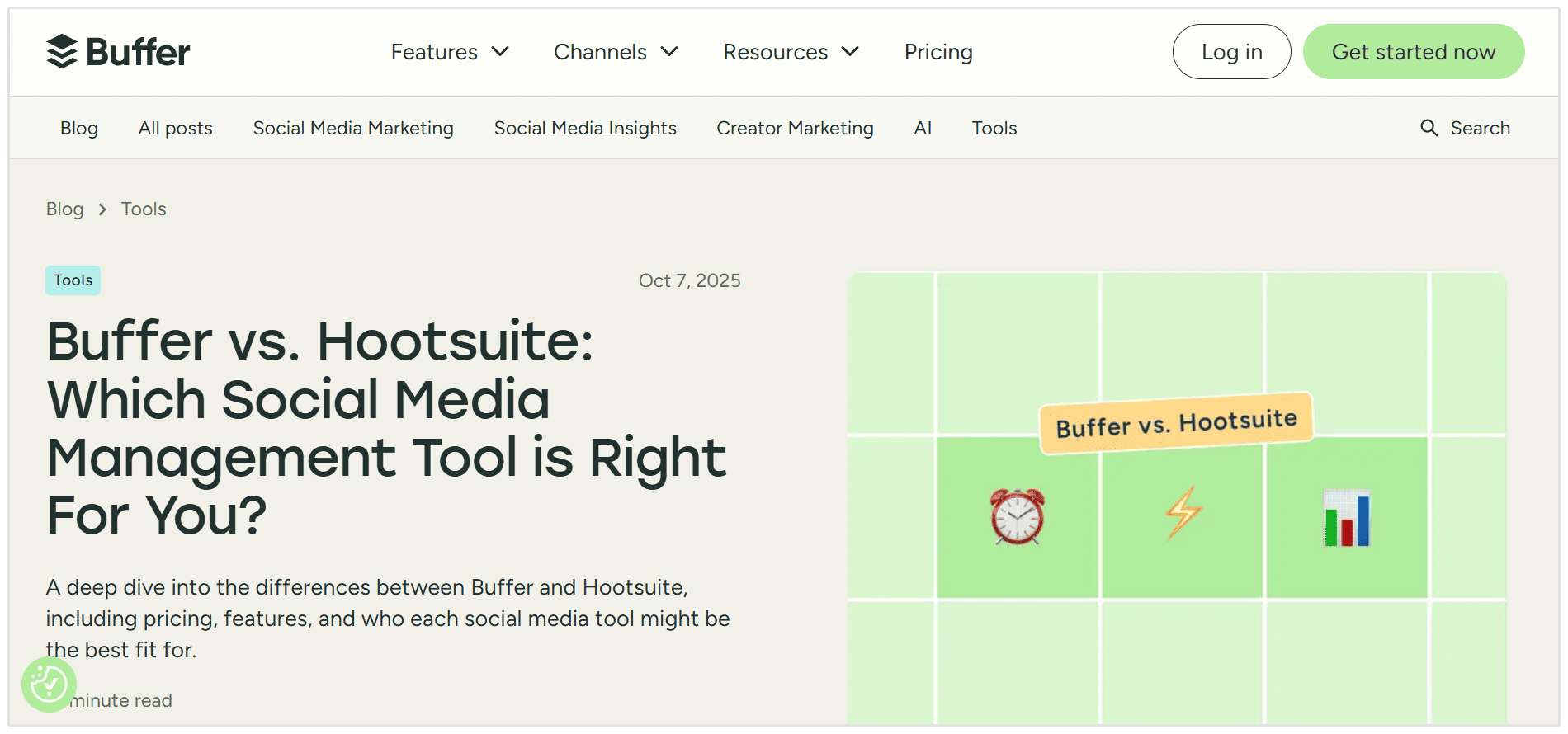
For instance, if you are in the market for social media management tools you could be considering Hootsuite or Buffer.
As such, you would likely like to see a comparison page between Buffer vs Hootsuite:
As Ben Poulton from Intellar explains:
When it comes to transactional keywords, many SEOs focus strictly on the 'Buy X' or 'Best Price for X' type terms, but the highest converting transactional keywords are often comparison terms.
Instead of limiting yourself to basic purchase keywords, build pages around searches like:
- [Competitor] alternatives
- [Your product] vs [Competitor]
- Best alternative to [Brand]
- [Product A] vs [Product B]
The added benefit is comparison content also does well in AI Overviews and other LLM responses.
So you’re not only ranking in organic search, but you’re also positioning your brand inside AI-generated answers across search engines and chat platforms.
Target Them in Paid Ad Campaigns
Transactional keywords are perfect for PPC campaigns on platforms like Google Ads.
Since users have high buying intent, your ads are more likely to result in a click and a conversion.
Create ad groups focused on tight clusters of transactional keywords and write ad copy that speaks directly to the user's intent. Make sure your ads lead to an optimized landing page that provides a seamless path to purchase.
Create Links from Informational Content
Informational pages like blogs often attract the most traffic, but transactional pages usually drive the most revenue.
A blog post shouldn’t be a dead end. It should help users take the next step and this is where internal links come into play.
Every blog post, guide, or explainer you publish should act like a signpost pointing readers toward a product or service that solves their problem.
From an SEO perspective, internal linking helps Google understand:
- Which pages on your site are most important
- How your transactional pages relate to your informational content
- Where search engines should crawl and index next
Well-placed internal links help Google’s crawlers discover, prioritize, and rank your money pages more effectively.
When someone reads an article and then clicks through to a relevant product or service page, you’re delivering value exactly when interest is highest.
For example, an article on "The Benefits of Standind Desks" should link to your standing desk product page.

Build High-Quality Backlinks to Transactional Pages
Backlinks are crucial for ranking transactional pages.
The top suggestions for this is to create valuable resources or promotions that other websites in your industry would want to link to.
For example, let's say you have an online store selling drones. You could offer an exclusive discount for readers of a popular blogs like PC Mag, Digital Camera World, Tech Radar, etc. This can be a great way to earn a relevant backlink to your product page.
What is the Difference between Navigational and Transactional Keywords?
While both can be part of the customer journey, navigational and transactional keywords serve very different purposes.
- Navigational Keywords are used when a searcher wants to find a specific website or webpage. For example, someone typing "YouTube" or "Amazon login" into Google is using a navigational query. They already know where they want to go. The intent is to navigate, not to make a purchase on the spot.
- Transactional Keywords, in contrast, indicate the intent to perform an action. The user is not just trying to find a website; they are trying to buy something, sign up for a service, or download a resource. The focus is on the transaction itself.
A business should naturally rank for its own navigational keywords (e.g., its brand name).
The real challenge and opportunity in SEO lie in ranking for the non-branded transactional keywords that attract new customers.
What is the Difference between Commercial and Transactional Keywords?
Commercial and transactional keywords are often confused because both are related to the buying process. However, they represent slightly different stages of intent.
- Commercial Keywords are used when a person is researching products or services before making a purchase. They are comparing options and looking for the best choice. Examples include "best running shoes," "iPhone vs. Samsung," or "Mailchimp reviews." Users are in the consideration phase, not yet ready to buy.
- Transactional Keywords signify that the research phase is over. The user has made a decision and is now ready to act. The intent is to complete the purchase, not to continue researching.
Both are valuable, but they require different content.
Commercial keywords are best targeted with blog posts, comparison guides, and review articles. Transactional keywords are best targeted with product pages, service pages, and dedicated landing pages.
Conclusion
Transactional keywords are the bridge between a potential customer and a sale.
By understanding what they are, how to find them, and how to use them effectively, you can transform your website from a simple source of information into a powerful conversion engine.
Start by identifying the transactional terms most relevant to your business.
Then, create optimized pages that prioritize a seamless user experience and a clear path to conversion. Remember, while informational keywords build your audience, it's the transactional keywords that drive revenue and fuel your business's growth.