


Key Takeaways
- Holistic SEO improves your entire website, not just keywords or individual pages.
- Holistic SEO is a long-term approach that can lead to more stable rankings, better traffic, and less risk from algorithm updates.
- Traditional SEO often creates siloed efforts, while holistic SEO aligns all tactics under one connected strategy so each improvement strengthens multiple areas.
Search engines have gone through some big changes over the past few years. Google’s results pages are now dominated by AI Overviews, rich snippets, and other SERP features rather than just the traditional blue links.
Ranking well isn’t just about keywords anymore. Instead, it’s about the overall quality, credibility, and experience of your entire website.
That’s where holistic SEO comes in.
Holistic SEO takes a broader look at your site. Instead of fixing isolated SEO issues or focusing only on keywords, it looks at the site as a whole.
This includes your content, user experience, topical authority, and technical performance. The main aim of holistic SEO is to improve all four of these elements together so your website becomes more findable, more useful, and more trustworthy.
In this guide, we’ll break down everything you need to know about holistic SEO and how to implement it on your site.
Feature update
New AI Visibility Checks are Here. Is Your Site Ready?
Run a free audit to see how well your site is optimized for Google AI Overviews and LLMs.
Run Free AuditWhat is Holistic SEO?
Holistic SEO is an approach to search optimization that improves your entire website, not just specific keywords or individual pieces of content.
It focuses on creating a high-quality, trustworthy, and user-friendly site that search engines naturally want to rank.
Instead of treating SEO as a list of isolated tactics, holistic SEO looks at your website as a connected system. When one part is weak, the whole site can struggle to rank.
At its core, holistic SEO focuses on:
- Meeting user intent better than any competing page
- Demonstrating expertise, trust, and topical authority
- Offering a seamless, intuitive user experience
- Ensuring strong technical performance so search engines can access and understand your site
But how is holistic SEO different from traditional SEO?
How Holistic SEO Differs from Traditional SEO
Traditional SEO often focuses on individual components such as:
- On-page optimization
- Keyword placement
- Link building
- Technical issue fixes
- Writing more content
While these are still important, traditional SEO can sometimes create siloed strategies. Holistic SEO brings all of these parts together under one strategy.
Eric Ritter, President and Founder at Digital Neighbor, says that marketers should stop optimizing in silos if they want to approach SEO in a holistic way.
When we audit a client's SEO, we often find their technical team fixed site speed issues, their content team published great blog posts, and their PR team earned backlinks, but nobody ensured these efforts were reinforcing each other.
The blog posts aren't linking to key service pages. The fastest pages aren't the ones driving revenue. The backlinks point to outdated content. Every optimization should strengthen at least two other areas of your strategy.
The Four Elements of Holistic SEO
Holistic SEO is built on four main pillars:
- User Experience (UX): How users interact with your website
- Authority Signals: How trustworthy your site appears to search engines
- Topical Coverage: How well your content supports and covers your topic areas
- Technical SEO: How well search engines and LLMs can crawl, render, and understand your site
Let’s take a closer look at each of these elements of holistic SEO.
User Experience (UX)
User experience is one of the strongest indicators of quality. Search engines want to rank websites that users find helpful, easy to navigate, and enjoyable to use.
Google's mission is to:
Organize the world's information and make it universally accessible and useful.
Google and several other search engines use various signals to understand how users interact with your site:
- Click-Through Rate (CTR): The percentage of users who click on your search result. A high CTR suggests your title and meta description are compelling and relevant to the search query.
- Dwell Time: The amount of time a user spends on your page before returning to the search results. Longer dwell times indicate that users find your content engaging and valuable.
- Bounce Rate: The percentage of visitors who leave your site after viewing only one page. A high bounce rate might mean your content didn't match their expectations or the user experience was poor.
- Pogo-sticking: This happens when a user clicks on your result, quickly returns to the search page, and then clicks on a different result. It's a strong signal that your page didn't satisfy their needs.
- Branded Navigational Queries: When users search for your brand name directly (e.g., "SEOptimer blog"), it shows they trust and recognize your brand, which is a powerful positive signal.
These UX elements also tie in closely with Google's Core Web Vitals, which directly evaluate user experience.
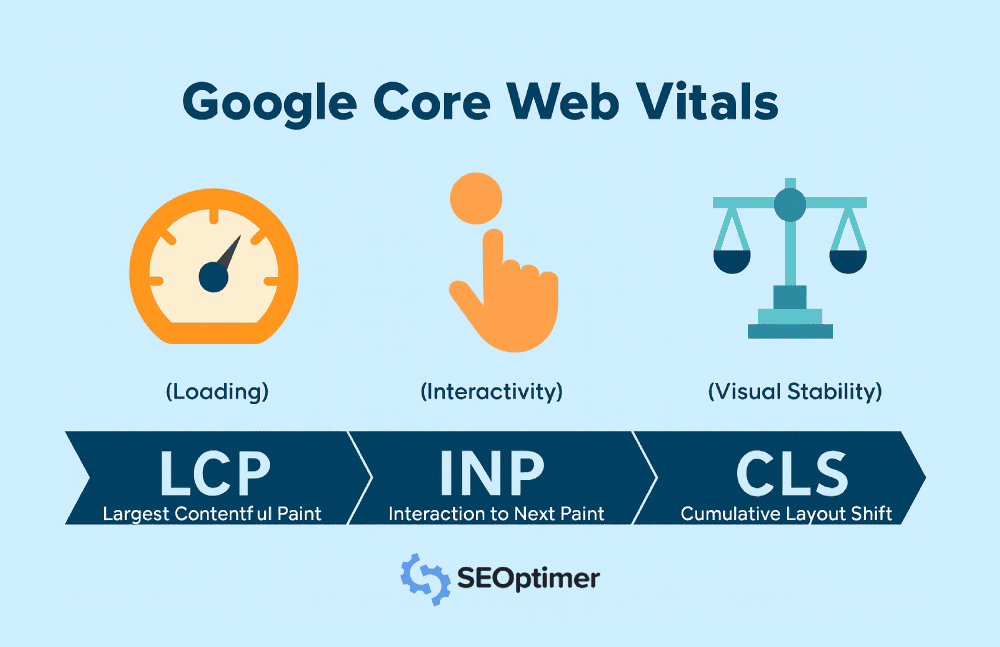
Improving UX doesn’t have to mean a full redesign. Many of these fixes are incremental and don't require a full site overhaul:
- Use clean, predictable navigation so users instantly understand where to go
- Improve page speed by optimizing images, scripts, and caching
- Use a mobile-first layout with touch-friendly spacing
- Break up content with headings, bullets, and visuals
- Reduce intrusive pop-ups or ads
- Strengthen internal linking to guide users to deeper content
- Ensure consistency in fonts, spacing, buttons, and design patterns
Want to check your site's user experience signals?
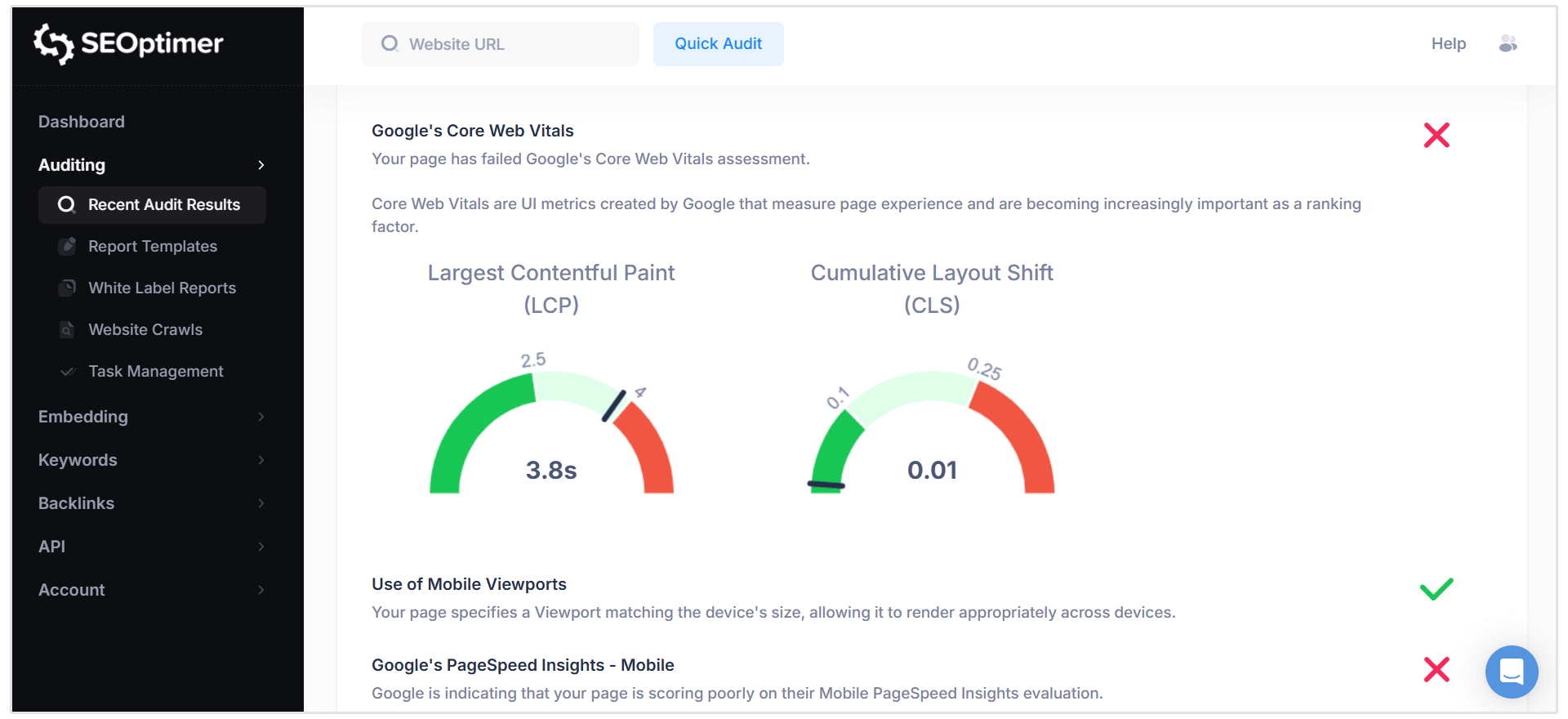
With each SEOptimer website audit, you get a detailed analysis of your site's overall user experience. Our tool runs checks on the following elements of your UX:
- Core Web Vitals
- Website Load Speed
- Device Rendering
- Legible Font Sizes
- Tap Target Sizing
Run a free audit today to see how your site's UX stacks up.
Authority Signals
Authority is a measure of your website's trustworthiness and reputation in the eyes of users and search engines.
A site with high authority is seen as a credible source of information, which leads to better rankings, more organic traffic, and potentially more AI mentions. Conversely, a site with poor authority scores is less likely to get good rankings.
Building authority is a long-term effort that involves demonstrating your expertise and earning trust within your industry.
Elements of Authority in SEO
Here are the factors that contribute to your website's authority:
- Backlinks from reputable sites
- Citations and mentions across the web
- Strong brand recognition
- Demonstrated expertise, especially in YMYL (Your Money, Your Life) niches
- High-quality authorship with verified profiles
- Consistent entity information across directories and schema
- Positive engagement signals, such as high time-on-page and low bounce rates
For instance, NerdWallet is a website that has a lot of authority in the personal finance niche. One of the reasons for this is because of their strong backlink profile.
As you can see below, SEOptimer's Backlink Research tool shows that their domain has an impressive Domain Strength of 91 and a Page Strength score of 51.
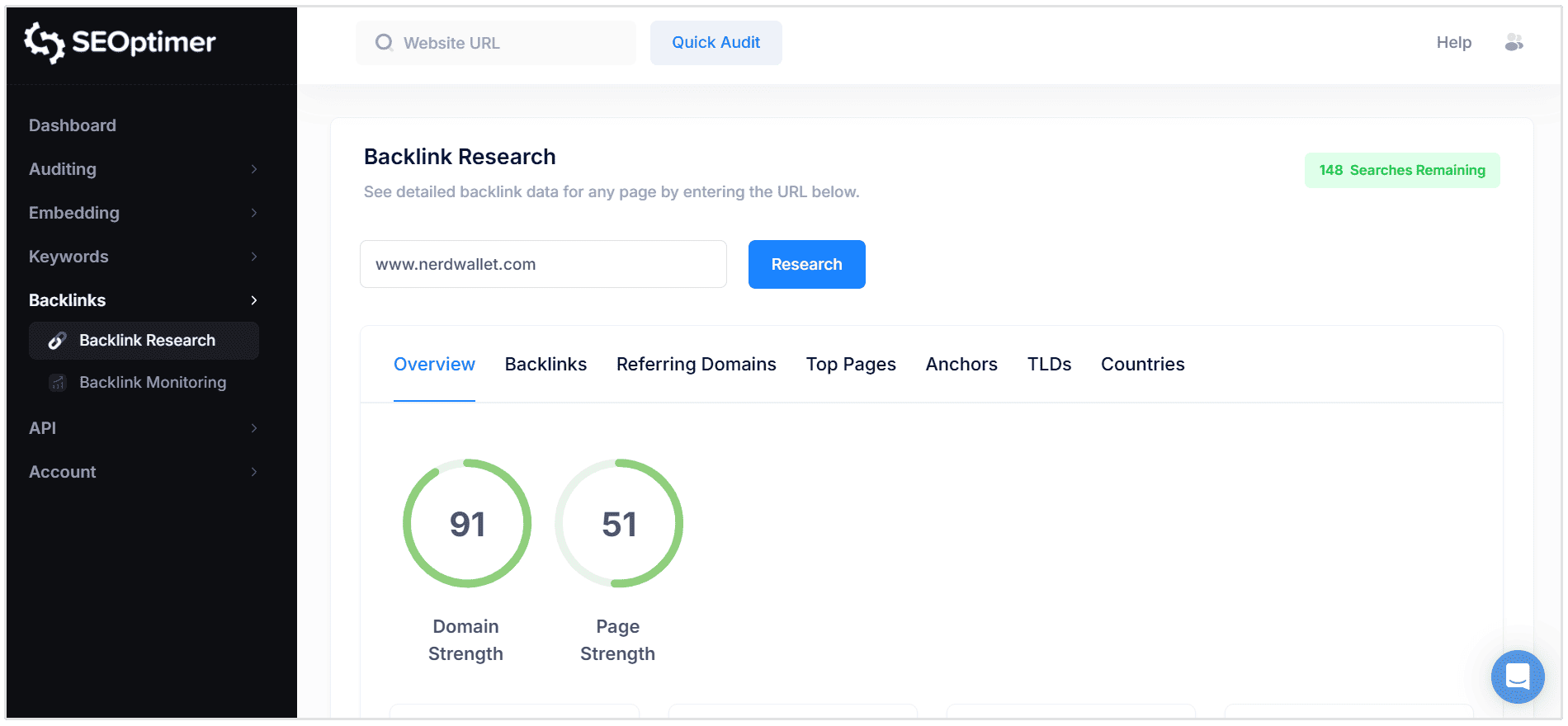
Additionally, they showcase each author's finance expertise in each post and page they publish.

How to Build Strong Authority
Building authority takes time, but these are the steps you can follow to get started:
- Publish well-researched, original content that others naturally want to reference
- Add clear authorship information including expertise and credentials (like we've seen with the NerdWallet example)
- Use organization and person schema to strengthen your entity signals
- Earn links through partnerships, PR, and shareable assets
- Maintain consistent NAP (name, address, phone) details across directories
- Promote content across social channels to increase discoverability
- Participate in industry discussions, webinars, or interviews
Topical Coverage
Topical coverage refers to the depth and breadth of your content on a specific subject.
Instead of creating isolated articles for individual keywords, holistic SEO focuses on building clusters of content that comprehensively cover a topic.
This positions your website as an authority on the subject, satisfies user intent more effectively, and helps you rank for a wider range of related keywords.
My most important tip to greatly improve holistic SEO is to move away from the practice of optimizing individual pages for specific search terms and create topic authority maps. True holistic SEO requires you to satisfy the entire informational journey of a prospective client, not just one transactional query.
- Jason Vaught, Director of Content & Marketing at SmashBrand
Related Reading: How to Create a Topical Map for SEO
Types of content that support strong topical coverage include:
- Long-form guides that explore topics in depth
- Supporting articles that build topical clusters
- How-to content that matches specific user needs
- Comparison and review pages
- FAQs and knowledge-base style content
- Thought leadership pieces that demonstrate expertise
Content Optimization for Holistic SEO
Creating great content is only half the battle. You also need to optimize it to meet user intent and signal your expertise to search engines.
- Address User Intent: Understand what users are looking for when they search for a particular query. Are they seeking information, looking to make a purchase, or comparing options? Then, write the content to meet that specific need.
- Cover Topics in Depth: Aim to create the most comprehensive resource available on a given topic. You can use tools like Answer the Public to find related questions and subtopics that users are searching for and address them in your content.
- Structure Your Content Logically: Use clear headings (H2s, H3s) to organize your content and make it easy for users, search engines, and AI crawlers to scan.
Technical SEO
Technical SEO is another important part of your holistic SEO strategy.
It ensures that search engines can effectively crawl, index, and understand your website.
Without a good technical foundation, even the best content and user experience can go unnoticed.
Ben Kerry from Jak HQ, a digital agency in the UK, has a great way of defining the importance of technical SEO:
No amount of fresh content or link building will compensate for a slow, unstable, or poorly structured website. In our agency, we’ve reduced load times from seven seconds to under two and seen enquiries triple as a direct result. When the technical groundwork is solid, everything else becomes far easier…and far more effective.
A technically sound website is fast, secure, and accessible to all users and search engine bots.
Technical SEO Foundations
Here are the essential elements of technical SEO you need to get right:
- Crawlability and Indexability: Search engines need to be able to find and read your content. Use a robots.txt file to guide crawlers and submit an XML sitemap to Google Search Console to help them discover all your important pages.
- Site Speed: A slow website frustrates users and can hurt your rankings. Optimize images, leverage browser caching, and use a CDN to ensure your pages load quickly.
- Mobile-Responsiveness: Your website must provide a great experience on all devices, from desktops to smartphones. A responsive design automatically adapts to different screen sizes.
- Secure Connection (HTTPS): HTTPS encrypts the data exchanged between a user's browser and your website, protecting their privacy. It's a confirmed ranking signal and essential for building user trust.
- Structured Data (Schema Markup): Schema markup is code that helps search engines and AI search engines better understand the content on your pages.
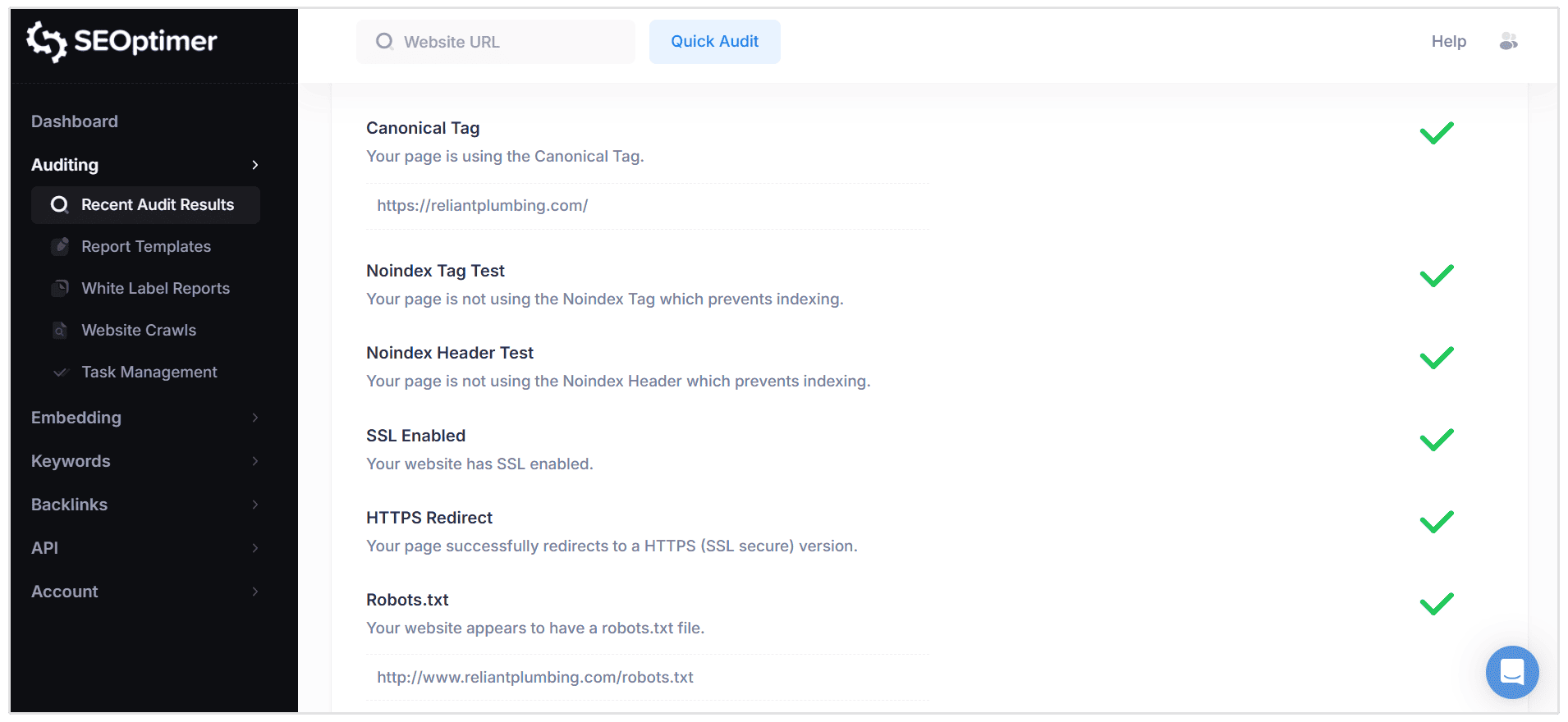
SEOptimer is great for checking your site's overall technical SEO. Our famous site auditing tool checks for all of the essential parts of technical SEO including:
- HTTPS
- SSL
- Robots.txt
- Schema markup
- Canonical tags
- Use of mobile viewports
Check your site's technical SEO performace by running a free audit today.
How to Do Holistic SEO
Implementing a holistic SEO strategy involves a systematic process of auditing, planning, and optimizing.
Here’s a six-step plan to get you started.
1. Begin with an Audit of Your Site
Start by getting a clear picture of your website's current performance across the four pillars.
Use tools like SEOptimer, Google Analytics, and Google Search Console to conduct a comprehensive audit of your entire site.
Look for technical issues like broken links or slow page speeds, assess your existing content's performance, analyze your backlink profile, and evaluate user engagement metrics.
If you have a website with lots of pages, I'd suggest using our SEO Crawler tool to find all of the hidden problems across your entire site.
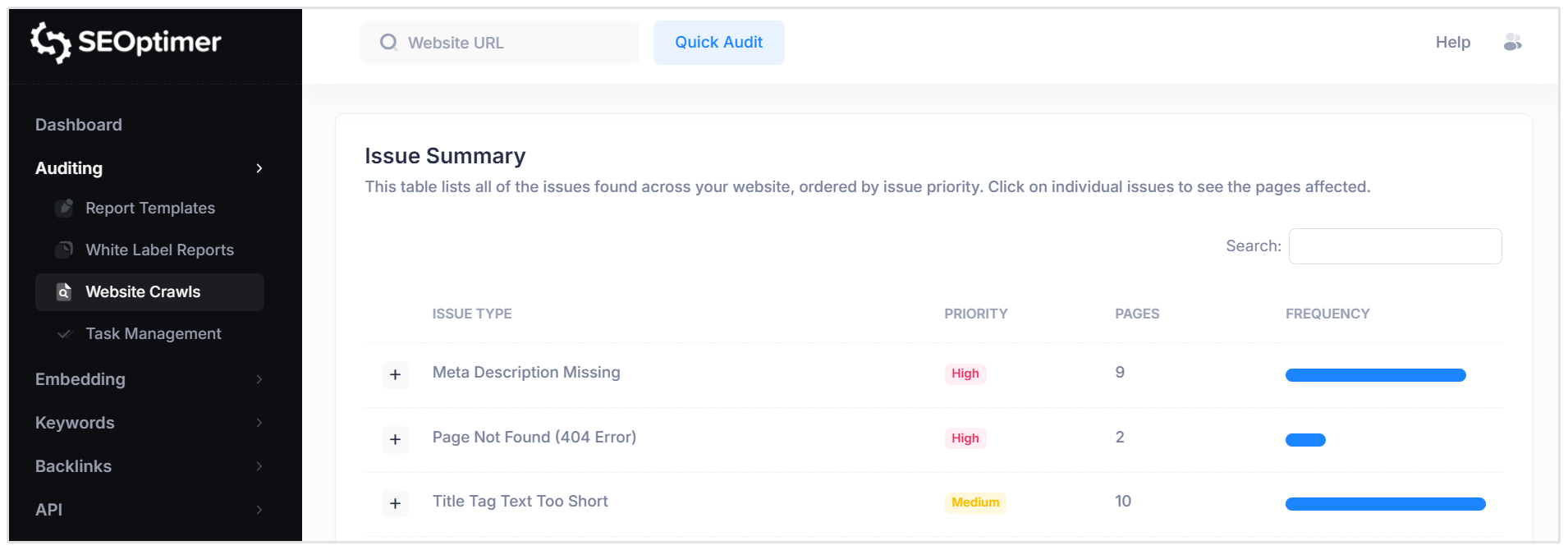
Once our tool has finished crawling your site, you'll not only see detailed insights on the exact problems, but we also show you how to fix these issues step by step.
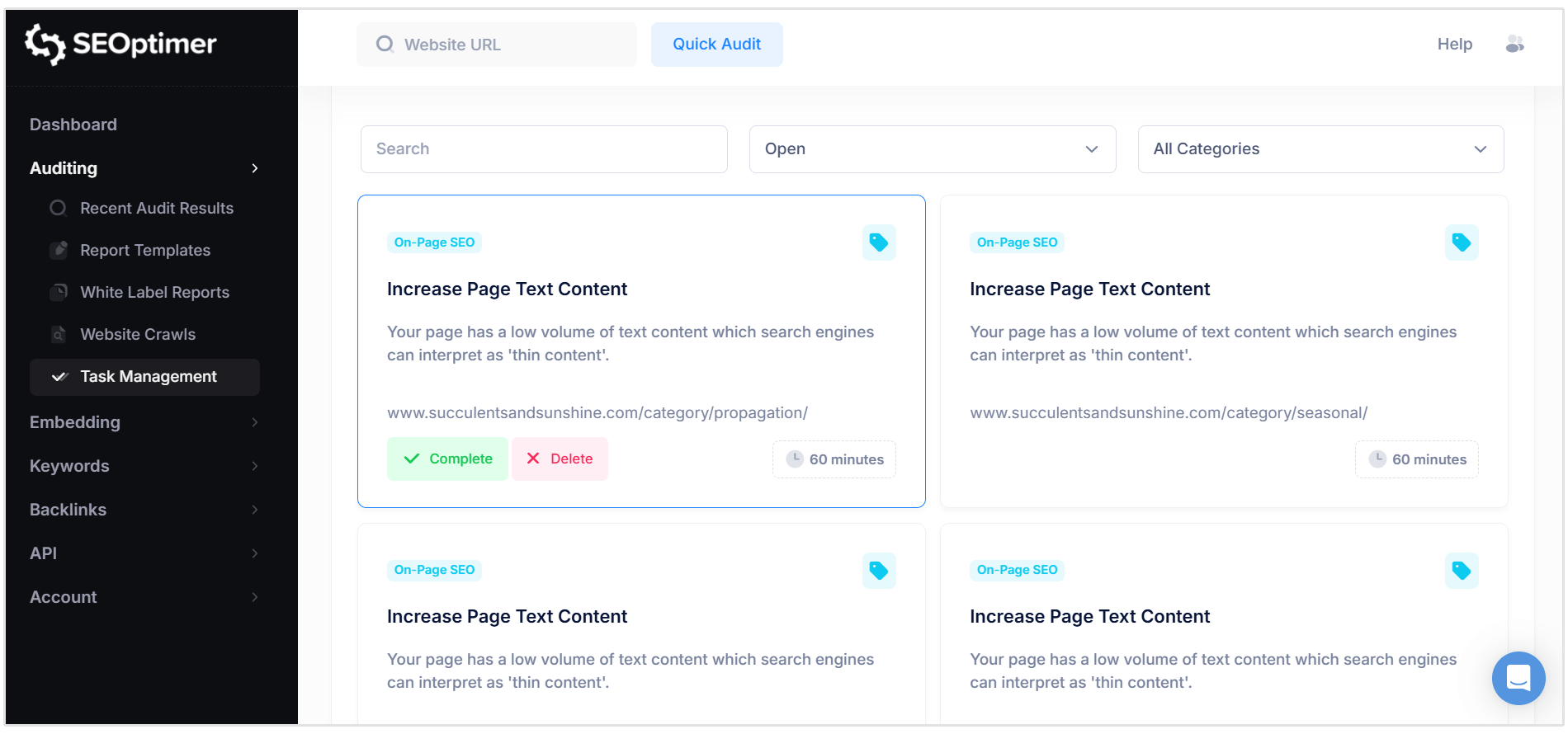
You can even track your progress with our Task Management feature which creates a task list so that you can approach holistic SEO in a logical and structured way.
2. Map Your Core Topics
Instead of focusing on individual keywords, identify the core topics that are most important to your business and audience.
For each core topic, plan a pillar page that provides a broad overview.
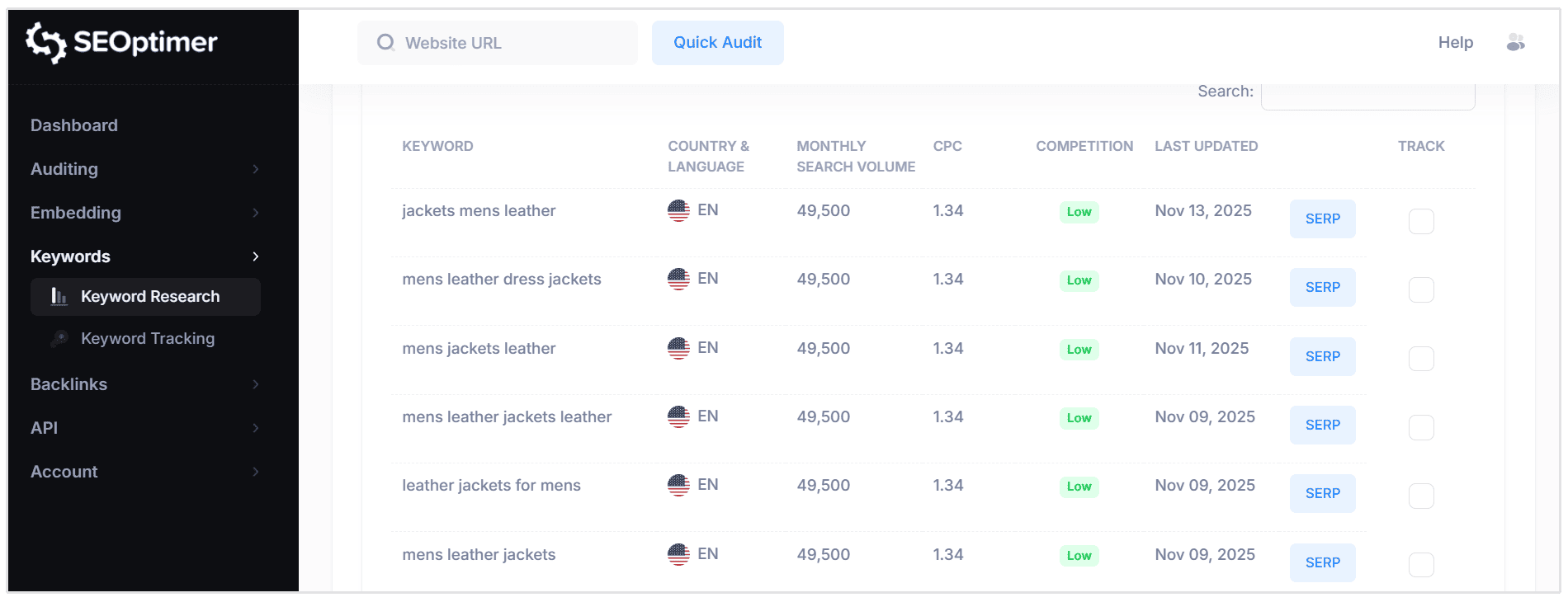
Then, use keyword research tools to find related subtopics and long-tail keywords that can be developed into cluster content.
3. Optimize User Experience
Use the insights from your website audit to identify areas where you can improve the user experience.
Ensure your page layouts match the search intent for your target queries. In fact, meeting search intent is likely one of the most important elements of a successful holistic SEO campaign.
As we have experienced at Brandualist, there has been a significant increase in organic traffic and engagement when we began to create content and messaging that reflected the user's intent not the search volume and then align our design and messaging with that user intent.
- Karina Tymchenko, Founder at Brandualist
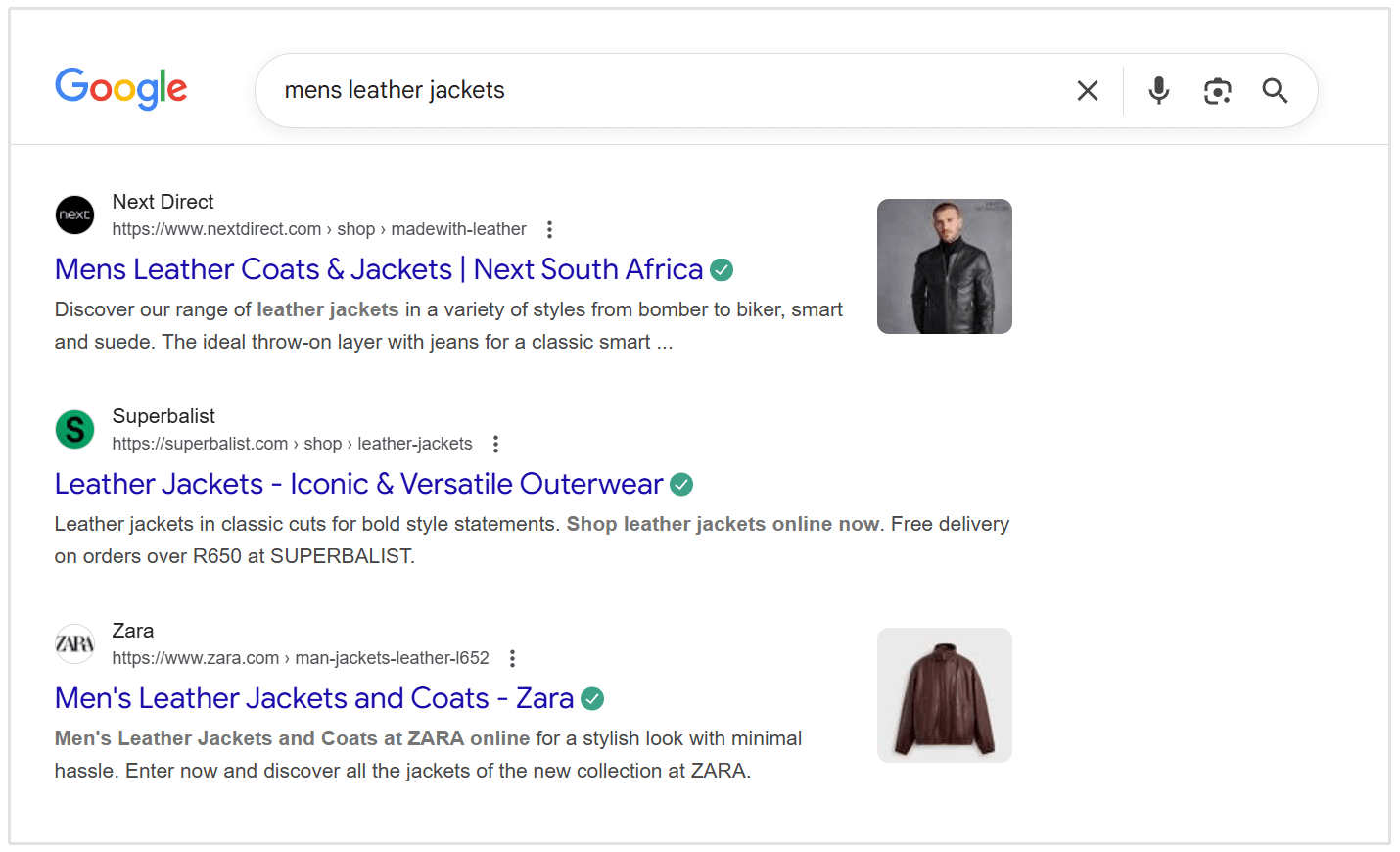
For example, a transactional query like "men's leather jackets" should lead to a product page.
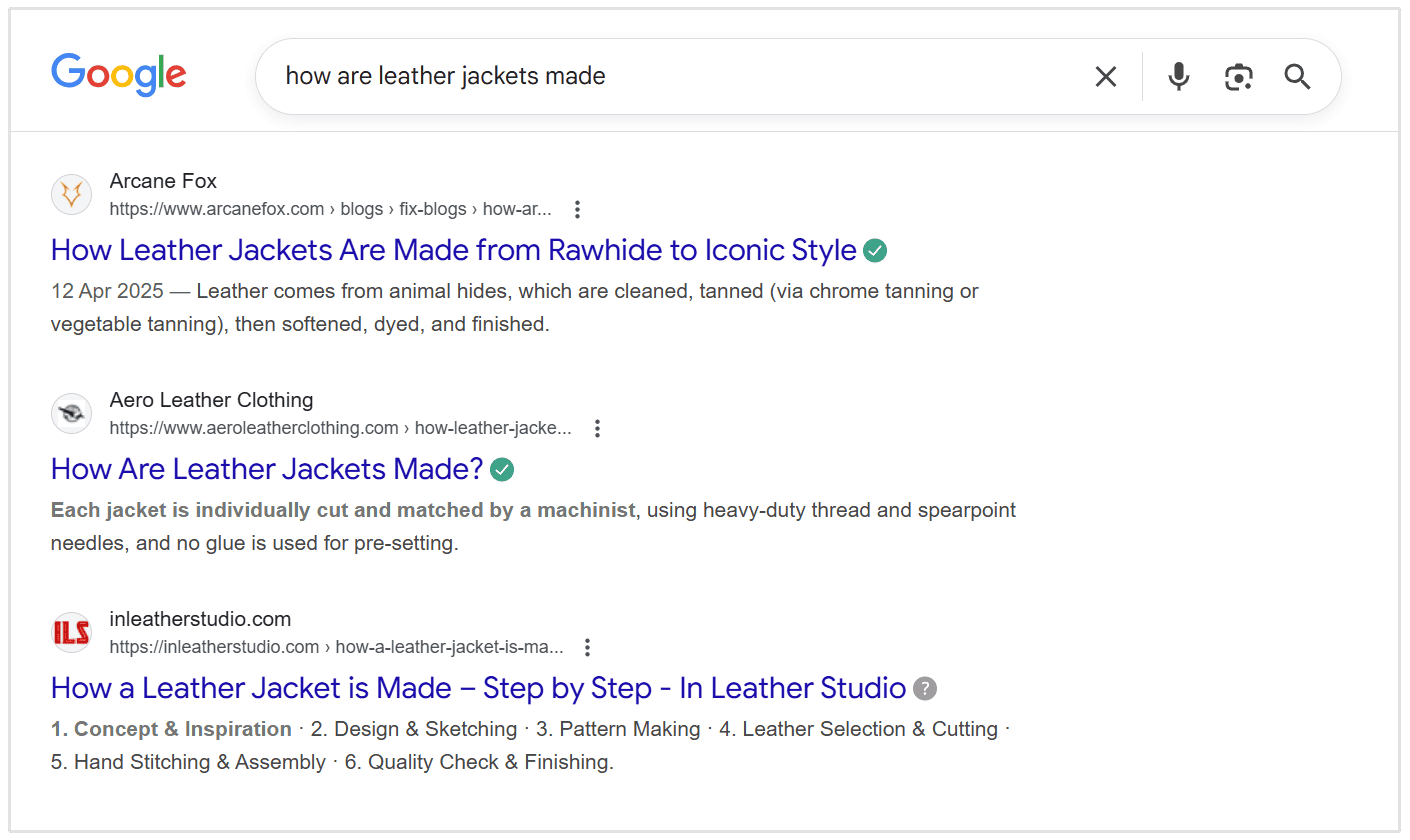
While an informational query like "how are leather jackets made" should lead to a blog post or guide.
4. Optimize Content for Search Intent
Review your existing content and create new content with a clear focus on satisfying user intent.
Smart marketers use tools to analyze top-ranking pages in order to understand what kind of content, formats, and language resonates with users for a particular query.
For instance, if you have a topic in mind and a primary keyword that you want to target, plug the target keyword into our Keyword Research tool. Then open the SERP to view the ranking pages.
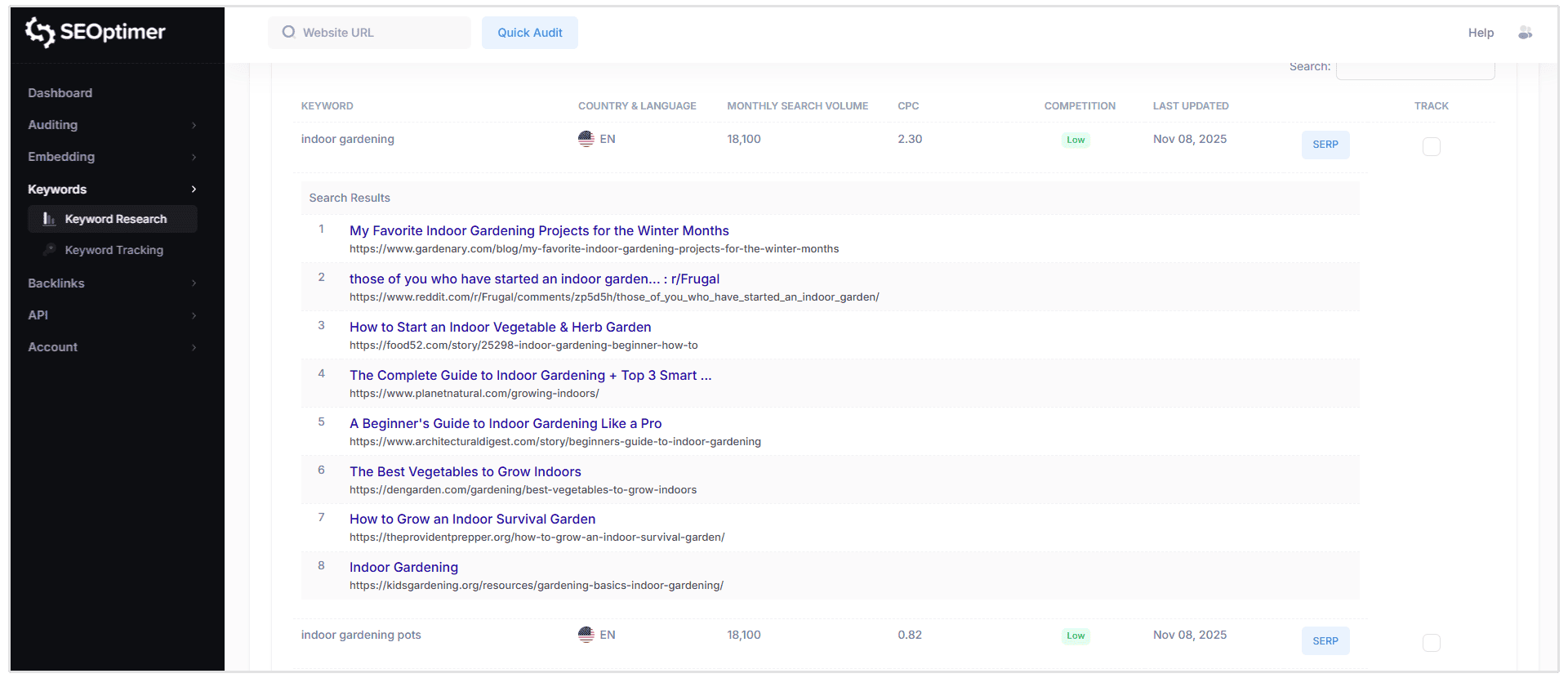
Check for the content format, title ideas, and general "lay of the land."
Answer common questions directly and provide practical, valuable information that solves your audience's problems.
5. Build Authority
Develop a long-term strategy for earning high-quality backlinks and building your brand's reputation.
This includes creating link-worthy content, engaging in digital PR, and building relationships with industry influencers.
Monitor for unlinked brand mentions and actively manage your online reputation by encouraging and responding to customer reviews.
6. Fix Technical Issues
Prioritize and fix the technical problems identified in your audit.
Ensure your site is secure with HTTPS, submit an up-to-date XML sitemap, and fix any broken links or crawl errors.
Implement structured data where appropriate to help search engines understand your content and improve your visibility in search results.
Conclusion
Holistic SEO is a long-term strategy for building a fundamentally better website.
By focusing on the interconnected pillars of user experience, authority, topical coverage, and technical SEO, you can create a site that both users and search engines will love.
This approach can lead to more stable rankings, higher-quality traffic, and a stronger brand.
While it requires a commitment to continuous improvement, the rewards are well worth the effort.
A holistic strategy insulates your site from the volatility of algorithm updates and builds a lasting competitive advantage.