Hreflang Checker
SEOptimer's Hreflang Checker Tool identifies the presence of alternative language tags on a page, which are recommended on multilingual sites.
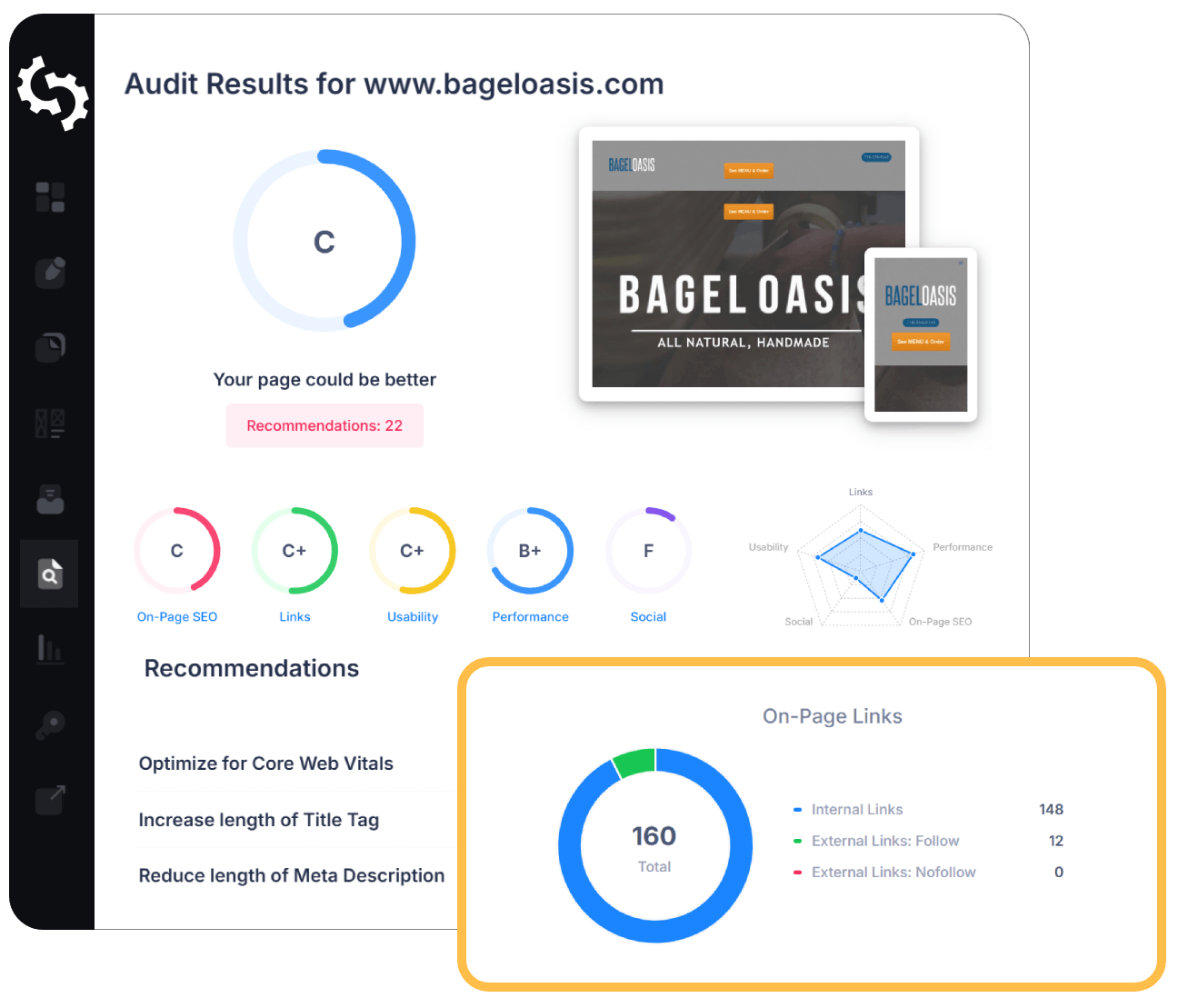
SEO Audit Any Site in Seconds
+ Comprehensive SEO / GEO Tools for Every Function
Run over 100 checks on your website across On-Page SEO, Usability, Performance, Social and Links. Now with GEO in every report. SEOptimer also offers keyword research, rank tracking, backlinks and a full site crawler.

About Hreflang Tags
What is an hreflang tag?
An hreflang tag tells search engines that a page has equivalent versions in other languages or for other regions, and which version belongs to which audience. It does not translate anything. It maps the relationships between pages that already exist.
The point is getting the right version in front of the right person. Without it, a search engine may serve your English page to a Spanish searcher, or treat near-identical regional pages as duplicates competing with one another.
It is also unusually easy to get subtly wrong, which is why an hreflang checker is worth running rather than assuming. The annotations live in the head where nobody looks, a single missing return reference breaks a whole set, and nothing about the page indicates a problem.
Do hreflang tags still matter in 2026?
For any site publishing in more than one language or targeting more than one country, yes. Search engines have become better at inferring intent, but inference is not instruction, and the cost of getting it wrong is showing a visitor a page they cannot read.
The commercial cost is sharper for regional variants than for languages. Serving UK pricing to a US customer, or the wrong currency and shipping terms, converts far worse than serving the wrong language, because the visitor often does not realise anything is wrong.
It remains one of the few areas where the correct implementation is genuinely intricate, which is why so many international sites have a set that is half working.
How hreflang relates to AI search
AI answers are generated in the language of the prompt, and the sources drawn on are expected to match. Explicit language and region annotations make it much clearer which version of your content belongs in which answer.
Without them, a set of translated pages can look like near-duplicates of a single document. That is a poor basis for choosing one to cite, and it risks your content being represented by whichever version happens to be strongest rather than the one that fits.
For regional variants the stakes are higher still, because the differences that matter are often factual: price, availability, legal terms. Being cited from the wrong regional page produces an answer that is wrong for the reader.
Hreflang best practices
- Make the references reciprocal. If page A points to page B, page B must point back to A.
- Include a self-referencing tag on every page in the set.
- Use valid language codes, and add a region code only when the content genuinely differs by region.
- Add an x-default for visitors matching none of your variants.
- Use absolute URLs, and never point at a page that redirects or is blocked from indexing.
- Keep hreflang and canonical tags consistent; a page should be canonical to itself within its own language.
Common mistakes
- Missing return references, which invalidates the relationship in both directions.
- Using a country code where a language code belongs, such as uk instead of en-GB.
- Pointing hreflang at one URL while the canonical points somewhere else.
- Annotating pages that are not genuinely equivalent, such as a full page and a stub translation.
- Omitting x-default, leaving visitors outside your target regions to be assigned arbitrarily.
What this tool checks
The hreflang checker reports whether the page carries any hreflang annotations. It does not validate the language codes, confirm that references are reciprocal, or follow the URLs, so a page can pass here and still have a broken hreflang set.
Treat a pass from the hreflang checker as confirmation that the markup exists, and a failure on a multilingual site as something to fix before anything else on this list.
Where to go next
Hreflang is one of three signals that tell a search engine who a page is for. Check the HTML lang attribute that declares the language of this page, confirm the canonical tag agrees with your hreflang set, and make sure each variant is listed in your XML sitemap.
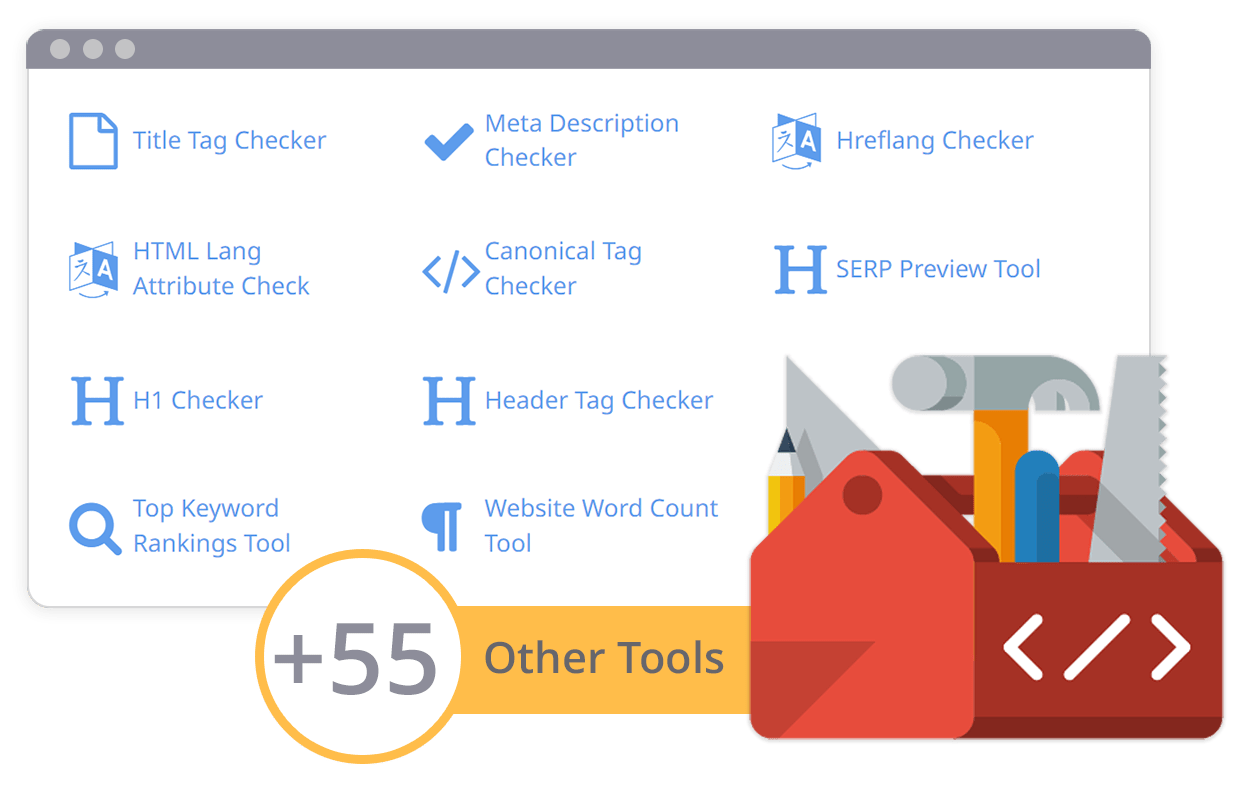
Comprehensive SEO Toolbox with over 55 Tools
Check Titles, Meta Descriptions, Headings, Schema, Core Web Vitals, SSL and Robots.txt. Generate Meta Tags, Sitemaps and .htaccess Rules, minify CSS, JS and HTML, and draft copy with our AI Writing Tools - instantly and for free.
Further Reading
See More
Hreflang Tag: How to Implement & Common Errors
Translated content on your website allows you to reach a wider audience, crossing language barriers and regions. But where do you begin if...

Multilingual SEO: How to Optimize Your Site for Any Language
Multilingual SEO opens up your website to millions—or even billions—of new potential customers.
You know the rush you get when you're r...

International SEO: 4 Challenges You Need to Overcome
It's a small world when it comes to SEO. With just a few clicks, you can reach new customers in every country.
In fact, tapping into in...

When to use Localized Domains, and their SEO Impacts
Does Domain Localization Help My SEO?
Over the last few years, we have seen the rise of local SEO. Here are local SEO stats by Soc...

Canonical URLs: Why They Are Important & How to Use Them
Canonical URLs help webmasters solve the problem of duplicate content issues.
Knowing how to implement them correctly is essentia...