HTML Lang Attribute Check
SEOptimer's check identifies the presence of the Lang attribute in your site's HTML. Having this attribute is highly recommended to prevent language confusion or misinterpretation by browsers or Search Engines.
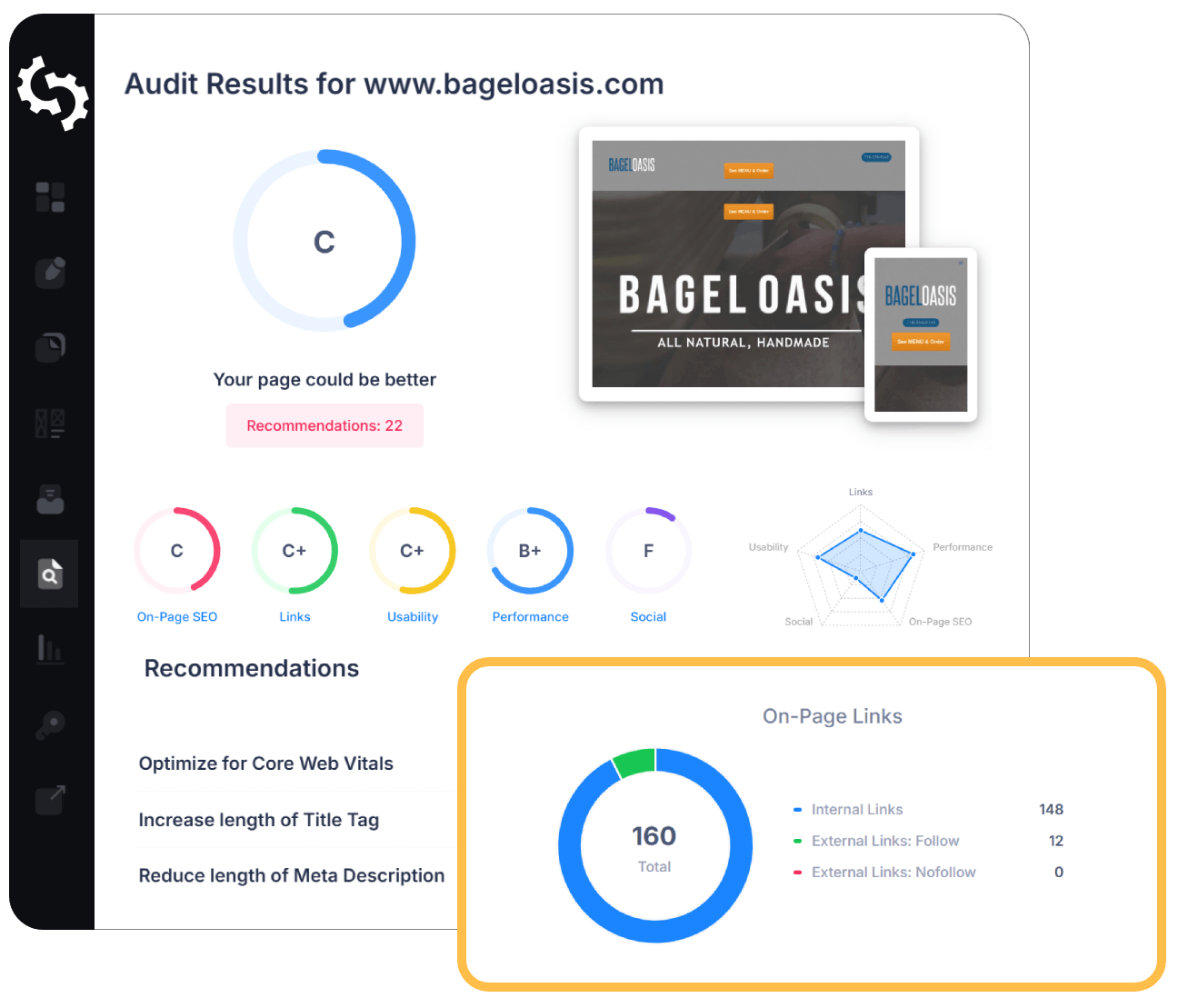
SEO Audit Any Site in Seconds
+ Comprehensive SEO / GEO Tools for Every Function
Run over 100 checks on your website across On-Page SEO, Usability, Performance, Social and Links. Now with GEO in every report. SEOptimer also offers keyword research, rank tracking, backlinks and a full site crawler.

About the HTML Lang Attribute
What is the HTML lang attribute?
The HTML lang attribute sits on the opening html tag and declares what language the page is written in. It is a single short attribute, and it is one of the most commonly omitted pieces of markup on the web.
Unlike hreflang, which describes relationships between pages, lang describes this page only. The two work together but answer different questions: lang says what language you are reading, hreflang says where the other versions are.
It costs nothing and takes seconds, which is why a failing HTML lang attribute check is usually a sign that nobody has looked at the template head rather than a considered decision.
Does the lang attribute still matter in 2026?
It matters most for accessibility, and that is not a marginal concern. Screen readers use it to choose pronunciation rules, and a page declaring the wrong language, or none at all, can be read aloud in an accent that renders it genuinely incomprehensible.
Browsers use it too: for offering translation, for hyphenation, for spell-checking in form fields, and for choosing the right font when several scripts are involved. Those effects are visible to ordinary visitors who would never think to look at the markup.
It is also a legal consideration in a growing number of jurisdictions, where accessibility standards that reference language declaration are increasingly enforced rather than merely published.
How the lang attribute relates to AI search
Language detection from text alone is reliable for long documents and much less so for short ones, pages heavy with product names or code, or content that mixes languages. An explicit declaration removes the guesswork entirely.
For a model assembling an answer in a particular language, knowing that a source is authoritative in that language is a meaningful filter. A mis-detected page is either excluded from answers it belongs in, or included in answers it does not.
Pages with a lot of untranslated technical vocabulary are the ones most often misclassified, and also the ones where being cited correctly matters most.
Lang attribute best practices
- Declare it on every page, on the opening html tag.
- Use the language the body content is actually in, not the language of your admin interface.
- Add a region subtag only where it changes the content, such as regional spelling conventions.
- Mark up passages in a different language inline, so mixed-language pages are still read correctly.
- Keep it consistent with any hreflang annotations on the same page.
- Check translated pages individually; templates often declare the original language on every variant.
What this tool checks
The tool reports whether the page declares a language attribute on the html element. It does not verify that the declared language matches the content, so a page written in French but declaring itself English will still pass.
That limitation is worth knowing on translated sites, where the most common fault is not a missing attribute but the same attribute repeated across every language version.
Where to go next
Language declaration is one part of telling search engines who a page is for. If you publish in more than one language, check the hreflang checker annotations that connect your versions together, and confirm the canonical checker points at the right variant rather than across languages.
Comprehensive SEO Toolbox with over 55 Tools
Check Titles, Meta Descriptions, Headings, Schema, Core Web Vitals, SSL and Robots.txt. Generate Meta Tags, Sitemaps and .htaccess Rules, minify CSS, JS and HTML, and draft copy with our AI Writing Tools - instantly and for free.
Further Reading
See More
HTML Lang Attribute: What Is It? Why Is It Important?
The HTML lang attribute specifies the language of the text content used on a web page. It is generally used to clearly signal what the on-...

Hreflang Tag: How to Implement & Common Errors
Translated content on your website allows you to reach a wider audience, crossing language barriers and regions. But where do you begin if...

Multilingual SEO: How to Optimize Your Site for Any Language
Multilingual SEO opens up your website to millions—or even billions—of new potential customers.
You know the rush you get when you're r...

International SEO: 4 Challenges You Need to Overcome
It's a small world when it comes to SEO. With just a few clicks, you can reach new customers in every country.
In fact, tapping into in...