


Key Takeaways
- Content briefs guide writers with clear instructions on objectives, keywords, and structure.
- Standardized briefs improve consistency and reduce revisions across multiple projects.
- Include key elements like title, length, target audience, outline, keywords, and brand guidelines.
- Briefs help agencies scale content production efficiently, especially when outsourcing.
- Well-structured briefs balance clarity and creativity, giving writers direction while allowing flexibility.
Content briefs are a cornerstone of effective content marketing. However, producing content on a regular basis takes proper planning and management.
Since agencies with multiple clients tend to have to produce content at scale, they need some way to effectively manage their content production efforts, especially when outsourcing to writers. Agencies often manage multiple content projects simultaneously, so streamlined processes are essential for tracking deliverables and ensuring alignment across teams.
Cue the content brief.
A well-defined content strategy provides the foundation for creating content briefs that align with your marketing objectives and target audience needs.
Agencies use content briefs to keep in-house and outsourced writers on the right track and to optimize their content creation efforts for their clients.
In this article, you will learn how to create the perfect content brief for writers. Creating content briefs is a foundational step in the content creation process, helping to improve quality, consistency, and SEO performance.
We’ll also share a downloadable content brief template that you can use in your agency.
As a tool used by hundreds of digital agencies, we here at SEOptimer have built relationships with agencies from all over the world.
As such, we’ve asked some agency founders and executives to share insights on how they structure their content briefs so that their writers can deliver outstanding content according to the client’s exact specifications.
This template helps agencies and writers align on key content specifications and maintain consistency across all content projects.
Our Experts
We’d like to thank the following founders and agencies who so generously gave up some of their time to share their insights:
- Matt Diggity, Founder at Diggity Marketing
- Michael Maximoff, Founder at Belkins
- Kevin Hall, Marketing Operations Specialist at Webserv
- Milosz Krasinski, Founder at Chilli Fruit Web Consulting
What is a Content Brief?
A content brief is a document that gives writers clear instructions and guidance on how to create a piece of content.
Irrespective of the deliverable, whether for a regular blog post, pillar post, ebook, or downloadable guide, most content briefs contain more or less the same elements.
The most common parts of a content brief include:
- word count or length
- target keyword(s)
- topic and title
- outline of what the end product should look like
- some brand guidelines
Including the buyer persona in the content brief ensures the content is tailored to the target audience. We’ll discuss all of the important elements of a content brief at a later stage in this article.
You should also take note that a meeting with a writer does not qualify as a content brief. Sure, you can still have a meeting with your writer to go over some important discussion points or to address any questions he/she might have.
However, a very important characteristic of a content brief is that it is documented and in writing.
The reason for this is so that there is no ambiguity on what’s expected of the writer. A content brief also sets clear expectations for all stakeholders involved, helping to align everyone on project guidelines and deliverables.
Content Brief Example
Before we dive into the elements of SEO content briefs, you’ll see an example of a brief that we created for one of our top-performing blog articles
Title
Benchmark Your SEO in 5 Easy Steps + Essential Metrics to Measure
Length in Words
1500
URL: /benchmark-your-seo
Notes & Guide
Intro
- What is SEO benchmarking?
Main content
- Why is it important to benchmark your SEO
- How to benchmark your SEO
- Determine which metrics to benchmark
- Do an analysis of the respective metrics
- Compare technical differences between you & your competitors
- Determine which areas you need to improve on
- Regularly monitor progress
- SEO metrics you need to understand & compare
- Organic traffic
- Landing page conversions
- Backlinks
- Number of keywords you are ranking for vs competitors
- Bounce rate
- Dwell time
- SEO benchmark tool (Add section on how SEOptimer can help website owners keep track of SERP performance)
Conclusion
Competitor and Reference Articles
- https://www.brightedge.com/blog/6-seo-benchmarks-you-cant-afford-to-miss
- https://monitorbacklinks.com/blog/seo/seo-benchmarks
- https://www.smartbugmedia.com/blog/5-seo-benchmarks-to-track-in-2020
- https://www.contentmarketingspot.com/search-engine-optimization/how-to-measure-seo-performance/
Keywords we’re targeting (that you should try to include)
| Keyword | Monthly Search Volume | Keyword Difficulty |
| benchmark your seo | 500 | 6 |
| seo benchmark tool | 60 | 19 |
| benchmark seo | 40 | 5 |
| seo benchmarking | 30 | 7 |
SEO Content Brief Template
There’s no formal layout or blueprint for creating a content brief for your team of writers. As such, the template that you can download here is customizable according to your own needs and requirements.
Using Google Docs makes it easy for your team to collaborate and update the template in real time, ensuring everyone stays aligned.
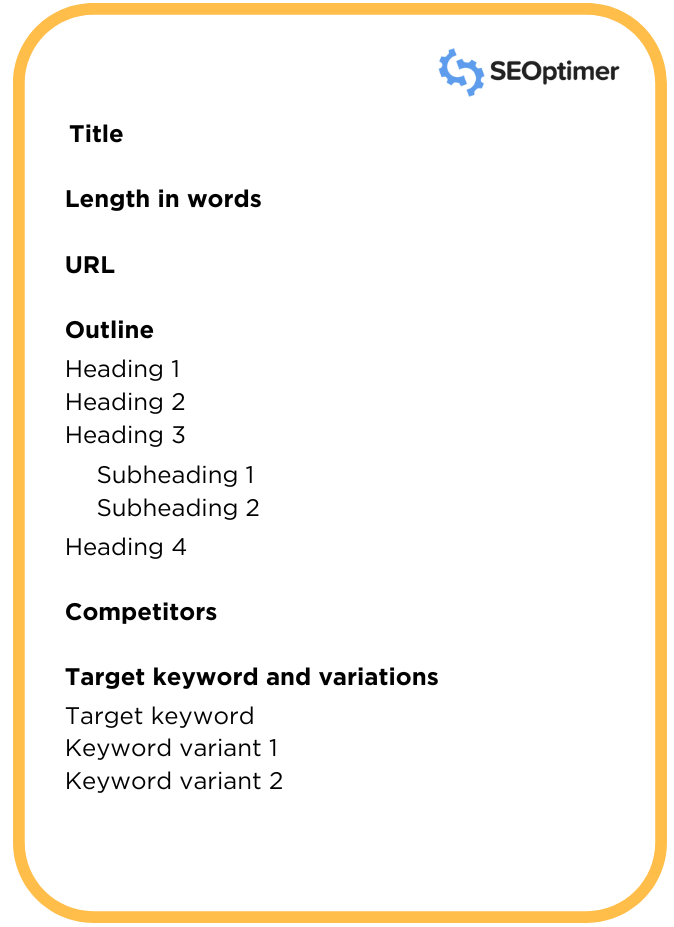
This content brief template is the exact one that we give to all our in-house and outsourced writers when producing content.
What to Include in a SEO Content Brief
To produce content that maintains a high standard you will need to standardize your briefs. The following sections provide a step by step guide to creating an effective content brief.
Luckily, content briefs can be used for a variety of content formats, even video content for YouTube, so you won’t have to change too many of the elements when creating briefs for different content types.
Standardizing your briefs helps ensure the final deliverable meets the required standards and objectives
Title
The intended title of the blog article or ebook will give the writer more context and information about what the end product must look like.
If you’ve got multiple title ideas for a piece, but haven’t settled on one yet, include all the variations in the content brief. Just as long as all the titles describe the same “big picture” idea to avoid any confusion.
Length
It’s essential that you include the target length of the article in the content brief. This is so that you can manage how much you’re going to pay for the blog article as well as have the best possible chance of obtaining a high ranking.
Imagine, you paid your freelance writer per word, and you omit the length in the brief. The writer might end up writing a 4,000-word guide on the intended topic, whereas you only had the budget for a 2,000-word article.
By including the intended length, the writer knows exactly how many words she has available to thoroughly and accurately discuss the topic at hand.
Content length also plays an important role in a blog article’s ability to achieve a high search engine ranking.
Data from Backlinko show that the average length for the top 10 results in Google is around 1,400 words.
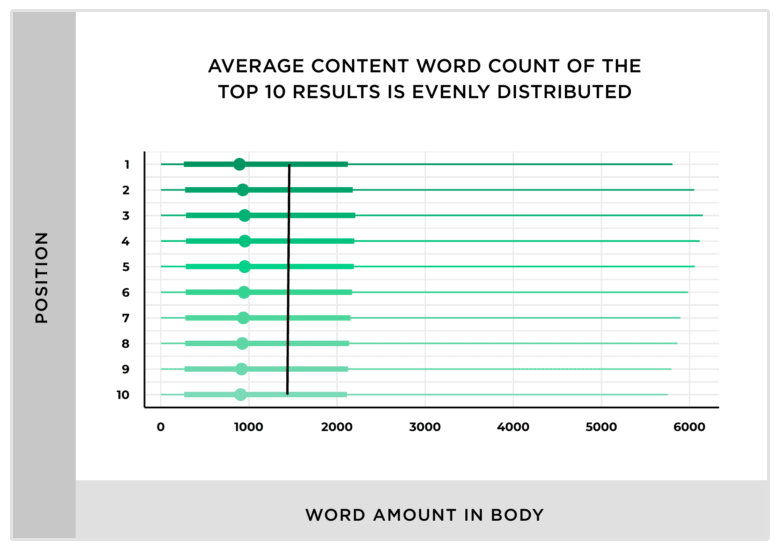
Now, this doesn’t necessarily mean all the content that you get produced should be 1,400 words in length.
Each industry and topic is unique, that’s why you need to do a SERP analysis to get the average length of the top-ranking results.
As a general rule of thumb, we like to set the target length to just a few hundred words more than the average word count of the top 10 ranking articles.
Objective
The writer needs to know the objective of the work that she needs to produce.
For instance, there’s a difference between a product page versus an informational blog post.
Likewise, there’s a difference between a transactional post and an informational one.
A transactional article will likely focus more on benefits and features, whereas an information-based piece will likely aim to educate or teach readers. Identifying the pain points of the target audience helps shape the objective by ensuring the content addresses their specific needs and challenges.
Determining the objective of a written piece of content will depend on the predetermined content marketing plan that you’ve discussed with the client or your team. Considering the perspective of a project manager or other key personas can help tailor the brief to address their unique requirements and pain points.
Target Keyword
Your content production workstream is likely aimed at improving search engine rankings for a particular search query or set of queries.
With that being said, it’s vital that you include the target keyword and two to three variations of the keyword in the content brief. Optimizing for these keywords helps search engines understand the content and improves its chances of ranking higher in search results.
In addition to the article objective, almost all writers use the target keyword as the starting point of a new article.
By highlighting the main keyword for a piece, the writer will know which keyword variant to prefer above others.
However, you should also include variations of this keyword so that the writer can mix it up a little and it also helps the content rank for various long-form, alternative keywords.
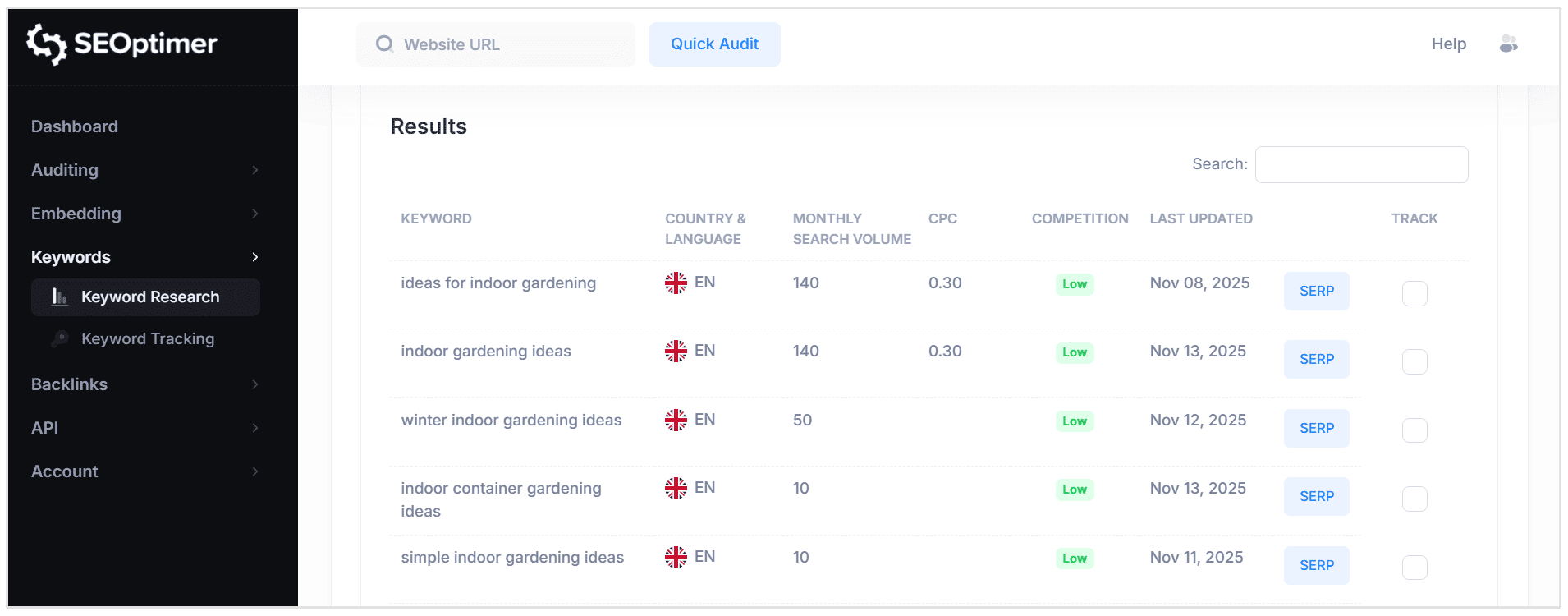
To obtain these keyword variations, it’s best to use a keyword research tool to find the ones with the lowest competition and the highest search volume.
Content Outline
When some people hear the term content brief, they immediately think of a content outline.
While this isn’t the only component of a content brief, it’s still quite essential, and no content brief is complete without one.
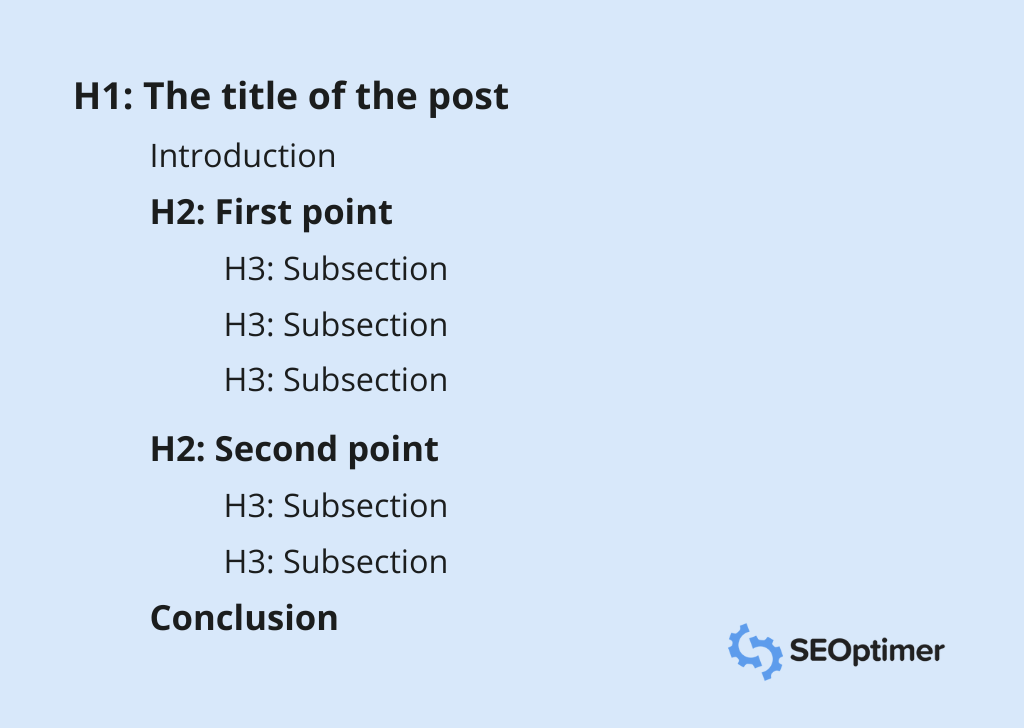
The content outline contains the main headers and subheadings that you want the writer to discuss. The outline should also indicate where to include internal links to support SEO and guide site navigation.
Some marketers prefer to give writers more autonomy. And as a result, won’t include a lengthy outline in the brief.
The level of detail that you include in content briefs will depend on the decision that you’ve made with your team beforehand.
However, all content outlines, irrespective of the level of autonomy, should have at least all the top-level headings such as the H2 and H3s you want to be covered in the content
Competitors
Including the top 5 competing articles in the brief will also give writers some more background information on the topic and assist them in creating the content.
These competing articles give writers the “lay of the land” and provide them with the elements that need to be included in order for the content to rank
Brand Guidelines
Brand guidelines are what keep your content creation from turning into chaos.
Every piece of content you create—whether it's a blog post, social media post, or advertising campaign—needs to reflect the same brand identity.
When you give your internal teams and freelance writers clear guidelines about your brand's mission, values, tone of voice, and visual elements, everyone stays aligned no matter how many creative projects you're juggling at once.
Here's what happens when you develop a content brief template: you need to include a dedicated section for guidelines.
This ensures every detailed content brief tells writers not just what to create, but exactly how to present it to your target audience.
Your brief template should outline key elements like tone of voice, primary keyword and secondary keywords, visual elements, and messaging frameworks.
When your creative team and content strategist have this level of detail, they can align their work with your content marketing strategy and campaign objectives.
The result? High quality content that actually supports your business goals and drives organic traffic.
Guidelines also streamline collaboration between your different teams and freelance writers.
Give everyone clear instructions on meta descriptions, internal and external links, and content optimization techniques, and they can focus on delivering quality content that meets search intent and user intent.
This cuts down on those frustrating rewrites and keeps consistency across all your creative assets, from social media channels to long-form blog posts.
Guidelines are a critical component of any content strategy you build.
Including them in your content brief templates and creative brief templates doesn't just ensure consistency and accuracy—it empowers your content team to produce effective creative work that stands out in search results and supports your company's business goals.
Make brand guidelines a central part of your content creation process, and you can create detailed content briefs that lead to high quality, optimized content. This reduces the need for revisions and maximizes the impact of every campaign you run.
Why Use a Content Brief?
There are several benefits of using content briefs for your writing.
A well-written content brief will also reduce the time it takes for a writer to deliver a final article since it aims to reduce the need for rewrites and revisions.
Additionally, gathering feedback during the content creation process can further improve the quality and alignment of the final draft
Content Briefs Give Writers Clear Instructions
The first, and most significant, reason for using a content brief is to give your writers clear instructions on what they should write about.
Without a well-written, clear content brief, a writer may produce something that is the total opposite of what your or your client requires.
As an example, let’s imagine that you’ve got an HVAC business as a client, and they require a blog article about how to reduce energy strain during the winter months.

If you just tell your writer to produce an article on this topic without giving him a content brief, he may leave out any key discussion points.
Or the article he produces might just simply be too short in comparison to what already exists and is currently ranking in the SERPs.
A content brief will highlight any important talking points, definitions, and examples that the writer should focus on in the piece and any other nuances that should be taken into account.
Content Briefs Save Time
Agency owners and project leads tend to be under a lot of pressure and stress to complete projects and deliver great results.
They don’t have the time to go back and forth with a writer on what needs to be included and removed in a final draft.
Content briefs eliminate the need to do this. A proper content brief will give a writer everything he/she needs in order to create a final draft without having to ask for feedback along the way.
A well-written content brief will also reduce the time it takes for a writer to deliver a final article since it aims to reduce the need for rewrites and revisions
Content Briefs are Essential when Growing an Agency
A team at a small agency won’t have the time or capacity to produce content especially if they’ve got multiple clients. As a result, they’ll need to probably outsource this activity to a writer or a team of writers.
By sending briefs to external writers, agencies can scale their content operations, and potentially take on even more clients.
Furthermore, as an agency grows, the team members who were once in charge of writing content will get assigned new responsibilities, and will probably move into managerial roles.
For such an agency to continue producing high-quality content, they’ll need to create content briefs for their writers.
How Agencies Structure Their Content Briefs
Matt Diggity - Diggity Marketing

Matt at Diggity Marketing says that they view content briefs as blueprints - detailed plans vital for constructing solid, compelling content. They're not simply a set of instructions; they're a comprehensive vision of what the end product should look like.
“First things first, we begin with the 'why' - the goal of the content. Is it to educate, sell, or entertain? Knowing the purpose helps us zero in on the right audience and message.
Next, we're all about the SEO. We identify the key search terms we want to rank for, and sketch out a keyword strategy. This becomes our scaffolding, shaping the structure of the piece.
Then comes the audience analysis. Understanding who we're speaking to helps us fine-tune the tone, language, and examples we use. It's like selecting the right materials to match the aesthetics of our 'building'.
Finally, we provide a detailed outline with potential headings, subheadings, and bullet points. This forms the skeleton of the content, with key points and subtopics acting as the beams and supports.”
Michael Maximoff - Belkins

What’s unique about how this agency uses content briefs is how they give their writers a level of autonomy and flexibility to produce content.
“When it comes to structuring our content briefs here at Belkins, we like to keep things pretty simple by giving our writers just the basic pointers and letting them decide the rest. Giving writers more autonomy over content production and decisions has been working out well for us in the past few years, so we have pretty much stuck with it.”
Michael also points out that they’ve got different versions of content briefs dependent on the skill of the assigned writer. 
“We also have a different version of our content briefs for writers who are not as experienced or are working on special pieces that require a little bit more guidance and attention on our side.
In essence, our content briefs contain the basic information about the piece such as the title, word count, and outline, followed by a short description, some main keywords, an audience persona, and a short style guide.
All of these are just simple pointers that let our writers know what we are expecting, and the rest is up to them. In my experience, this approach works really well with experienced content teams that are in tune with the agency and its goals and processes, but extra detail is needed to brief less experienced writers and/or freelancers.”
Kevin Hall - Webserv

“At Webserv we strategically structure content briefs beginning with the Objective, explicitly outlining the goals.
Next what we include is the Target Audience, specifying whom we're addressing. Following this, we provide SEO-oriented Keywords and the Desired User Action, clarifying what we want readers to do post-reading.
The Structure and Format details offer guidance on the layout, while any necessary Research sources provide data backing. We cap it off with the Tone and Style guide to ensure the content aligns with the brand voice, encapsulating the overall brand message effectively.”
Milosz Krasinski - Chilli Fruit Web Consulting

Milosz and his team at Chilli Fruit have an interesting take on the content brief.
They like to imagine each content brief as a map.
Now, without a map, you can still wander and eventually reach somewhere, but with it, you’ll reach your destination faster, and likely in a more enjoyable way. That's the magic of a well-structured content brief.
“Our approach starts with outlining the purpose. What's the endgame? This is the "X marks the spot" on our metaphorical map. Is it SEO? Lead generation? Branding? Once we know where we're going, we get into the nitty-gritty details - keywords, target audience, and tone of voice.
The real fun begins when we sketch the journey. We provide a clear content outline, like a trail through a forest, guiding our writers through every twist and turn. This includes main points, sub-points, and even examples they can draw upon.
Lastly, we pepper in supporting details – data, references, sources – like signposts along the path to back up the narrative.
This blend of clarity and direction gives our writers the freedom to infuse their creativity while staying on the path to the treasure – our ultimate content goal. So, to my fellow explorers in the content creation world, remember: Don't start the journey without your map!”
Conclusion
As you’ve learned, content briefs are essential to the content pipeline at agencies.
You’ve learned about the main elements that all content briefs should contain as well as how other agencies use content briefs in their content pipelines.
Feel free to use the content brief template that we’ve shared at the beginning of this article as a starting point for your content briefs.