AI Newsletter Generator
Create professional, engaging email newsletters in seconds with our AI Email Newsletter Generator. Just enter your topic, language, and tone, and get ready-to-send newsletter content.
Input
Output
Generated content:
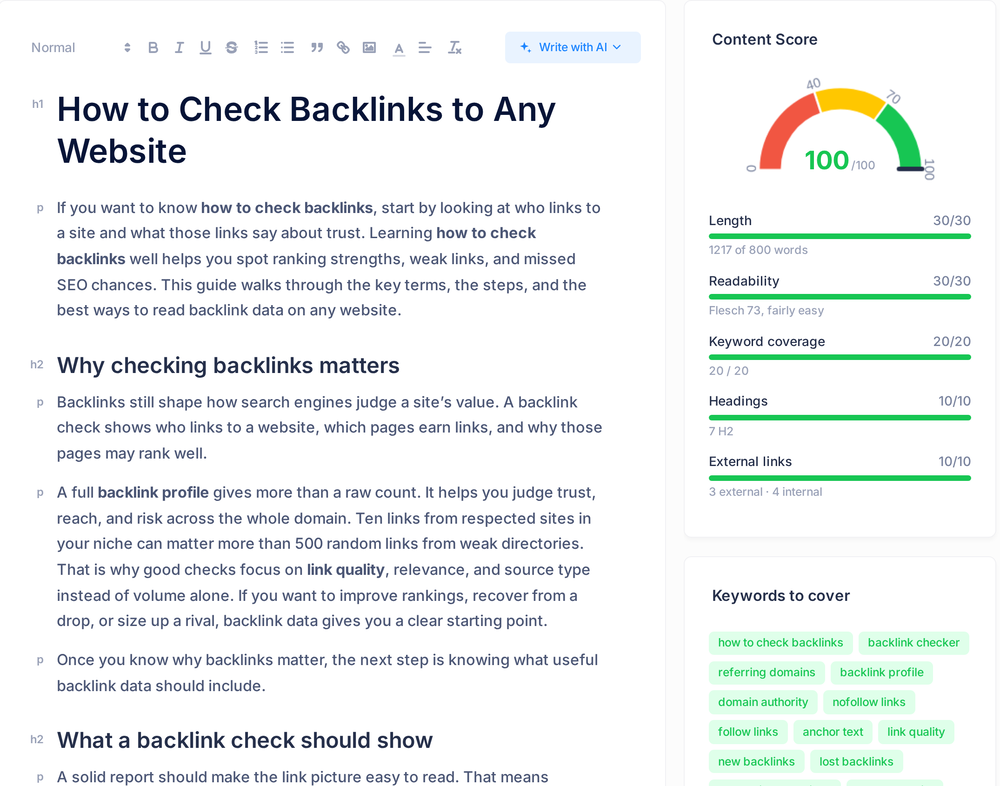
Write SEO Optimized Articles Instantly with AI Writer
AI Writer researches the pages ranking for your target keyword, instantly writes a full article and scores it for keywords, readability, links and length. Create the best content possible with the highest ranking potential with our proprietary algorithms.

About Writing Good Newsletters
What makes a good newsletter?
A good newsletter is worth opening next time. That is the only metric that compounds, and it is decided by whether this issue gave the reader something they could not get elsewhere without effort.
The format that works is narrow and consistent. Readers subscribe to a promise, and issues that wander outside it, or arrive at unpredictable intervals, quietly train people to stop opening them.
A newsletter is also not a blog post delivered by email. It is written to one person reading in an inbox, which usually means shorter, more direct, and more willing to have a point of view.
The underlying appeal is that a list is an audience you own outright, reachable without depending on anything ranking. Publishing the issues on your site as an archive is worth doing on top of that, when the writing is good enough to stand as content.
What to include in a newsletter
- A subject line that describes the value rather than teasing it.
- One clear reason this issue exists, established in the first two lines.
- Something genuinely useful: a finding, a method, a link worth the click.
- A voice. Newsletters survive on personality more than any other format.
- One call to action, not four competing ones.
- An easy unsubscribe, which protects deliverability as much as it does the reader.
Common mistakes
- Sending because it is Tuesday rather than because there is something to say.
- Company news nobody outside the company cares about.
- Subject lines that overpromise, which lift one open and cost the next three.
- Cramming in every link published since the last issue.
- Writing it as an announcement rather than to a person.
Where an AI newsletter generator helps, and where it does not
It handles structure and gets a draft moving, which matters for a format whose main failure mode is not sending. An AI newsletter generator will give you a serviceable shape in seconds.
What it cannot supply is the thing readers subscribed for: your view, your findings, your week. Newsletters live on voice, and generated voice is by definition the average one.
Used as a scaffold it saves time. Sent unedited, it produces exactly the newsletter people unsubscribe from.
Using the AI newsletter generator
Enter the topic of your newsletter and the tool drafts an issue. Describing the angle and the audience produces something far closer to usable than naming the subject alone.
Then rewrite it in your own voice, cut anything that is filler, and make sure the issue contains at least one thing the reader could not have found without you.
Where to go next
Newsletters depend on arriving. Confirm your SPF and DMARC records are configured, name the issue with the email name generator, and draft supporting content with the AI blog post generator tool.
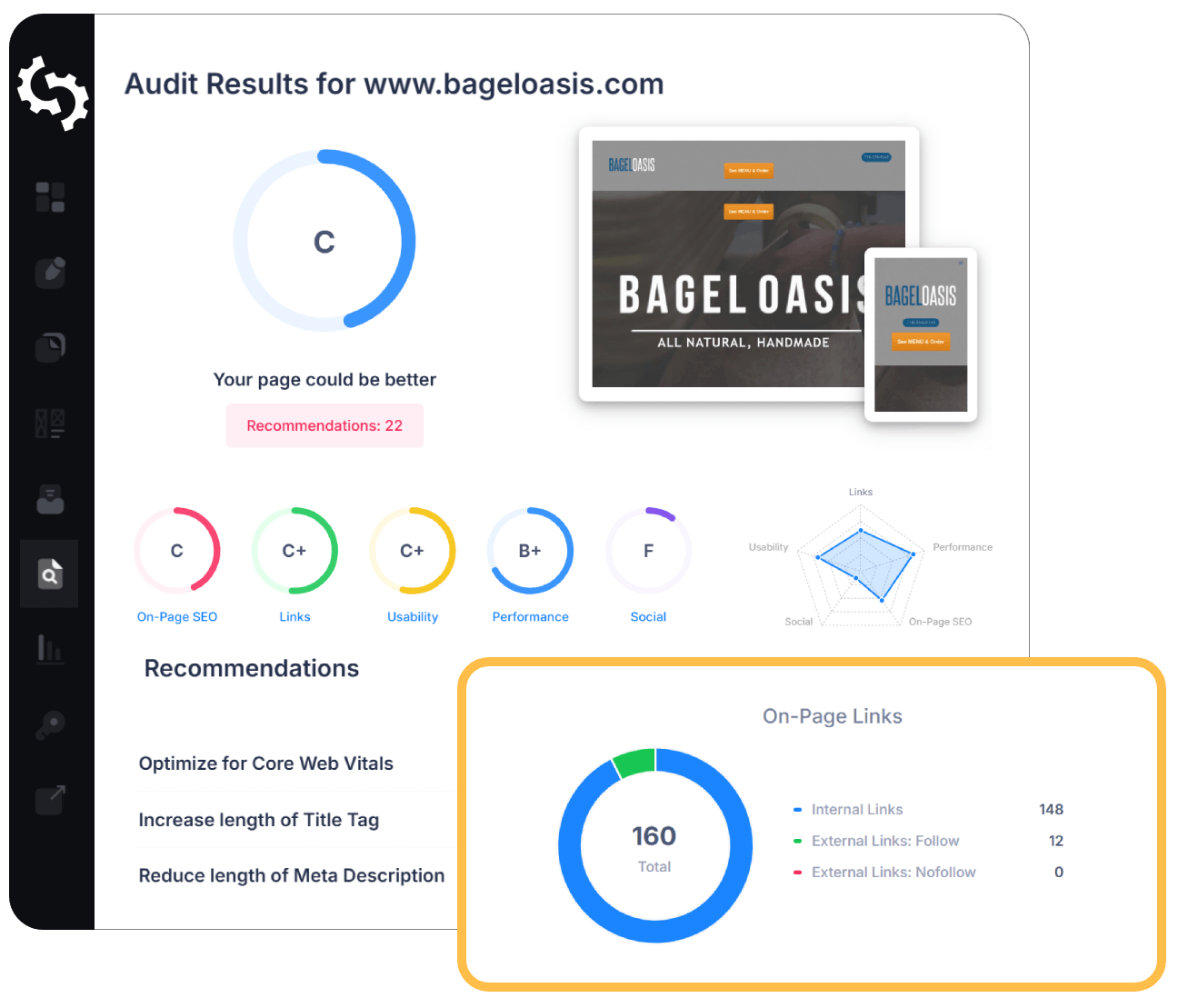
SEO Audit Any Site in Seconds
+ Comprehensive SEO / GEO Tools for Every Function
Run over 100 checks on your website across On-Page SEO, Usability, Performance, Social and Links. Now with GEO in every report. SEOptimer also offers keyword research, rank tracking, backlinks and a full site crawler.
Further Reading
See More
13 Best SEO Newsletters You Must Read this Year
SEO is ever-evolving, and remaining up to date with the newest SEO trends and happenings is absolutely necessary to defeat your organic comp...

SEO Copywriting Checklist for Higher Ranking Content
Following an SEO copywriting checklist is quite important if you want to improve your website’s search engine visibility and outrank your co...

12 Content Marketing Secrets to Make You Extraordinary
When it comes to content marketing, it seems like there are no secrets left.
No mystery unsolved. No stone left unturned.
But, belie...