Noindex Tag Test
SEOptimer’s Noindex Tag Test checks if a "Noindex" tag is present on your webpage, helping you to easily identify and remove it to ensure your page is indexable.
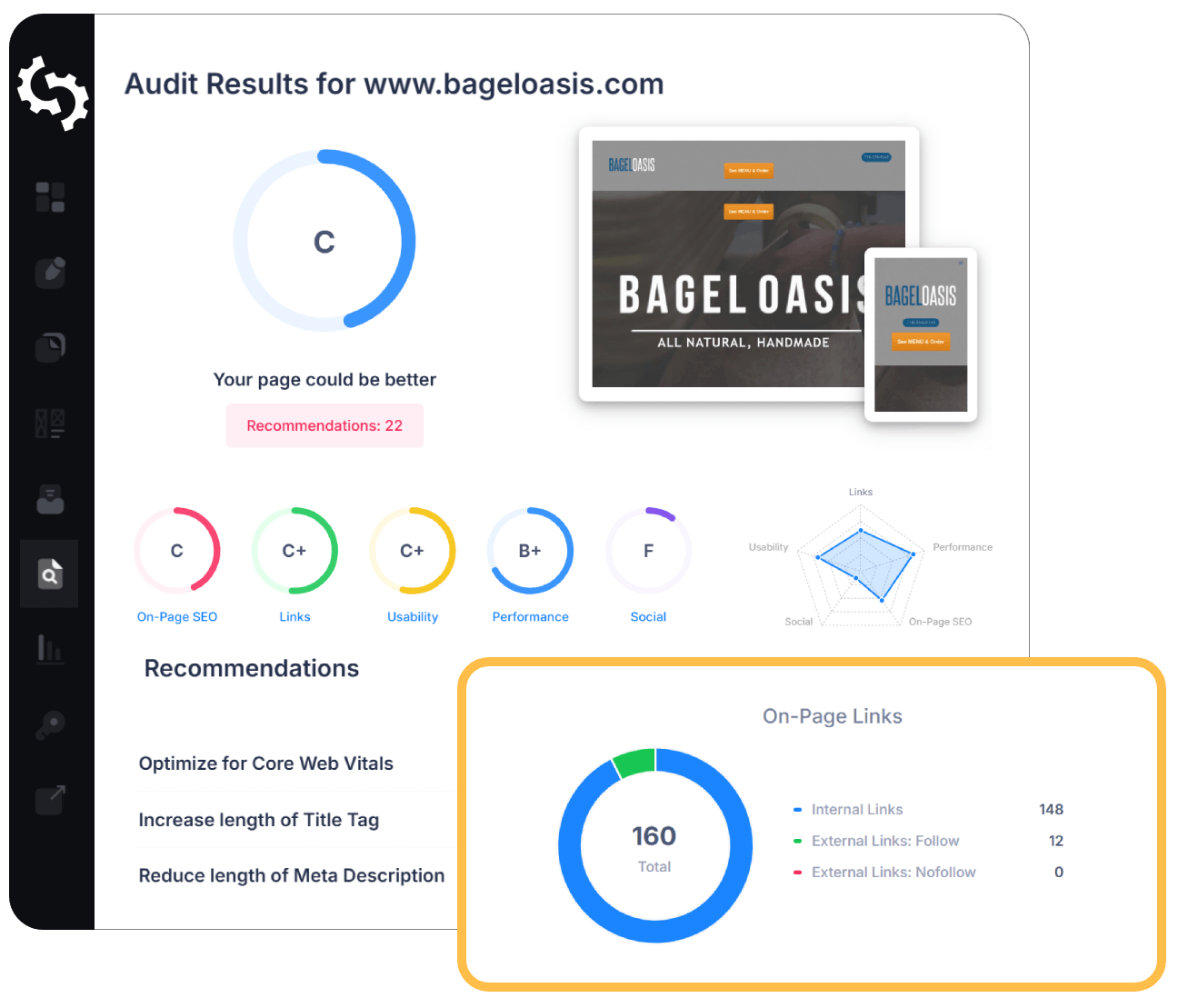
SEO Audit Any Site in Seconds
+ Comprehensive SEO / GEO Tools for Every Function
Run over 100 checks on your website across On-Page SEO, Usability, Performance, Social and Links. Now with GEO in every report. SEOptimer also offers keyword research, rank tracking, backlinks and a full site crawler.

About Noindex Meta Tags
What is a noindex tag?
A noindex meta tag tells search engines to keep a page out of their results. Unlike a robots.txt block, which prevents a page being fetched at all, noindex requires the page to be fetched and read, and is honoured reliably as a result.
It is the correct instrument for pages that must exist but should not be found: thank-you pages, internal search results, staging content, duplicate print views, filtered listings that would otherwise flood an index.
A noindex tags checker is worth running on any page that matters, because this is one of the few technical faults that is both invisible and total. The page looks perfect, loads correctly, and simply never appears.
Does noindex still matter in 2026?
It matters most as a mistake to catch. A stray noindex is one of the very few errors that can remove a page, a section or an entire site from search results outright, and it is easy to ship one by accident when a staging configuration reaches production.
Used deliberately it remains valuable. Keeping low-value pages out of the index concentrates crawling effort on the pages that earn it, which matters more as sites grow.
The recovery is also slower than the mistake. Removing a noindex does not restore a page immediately; the page has to be recrawled, reassessed and reinstated, which can take weeks.
How noindex relates to AI search
A page excluded from the index is generally excluded from the pool a model draws on, so a noindex removes a page from AI answers as well as from search results.
That makes an accidental noindex considerably more costly than it used to be. It no longer removes one traffic channel; it removes every channel that begins with an index, including the ones you have not started measuring yet.
The reverse is worth considering too. If there are pages you genuinely do not want quoted, noindex is a blunter and more reliable instrument than trying to control it at the crawler level.
Noindex best practices
- Use noindex rather than a robots.txt block when the goal is keeping a page out of results.
- Do not combine the two. A blocked page can never be read, so its noindex is never seen.
- Check it after every deployment, especially where staging and production share a codebase.
- Leave links on a noindexed page followable unless you have a specific reason not to.
- Keep noindexed pages out of your XML sitemap; submitting them sends contradictory signals.
- Remove it as soon as a page is ready to be found, since recovery is not instant.
Common mistakes
- Launching with the staging noindex still in place, which is the single most damaging version of this error.
- Applying it site-wide through a plugin setting intended for a single page.
- Using noindex on pages you also want to rank, in the belief it manages duplicate content; a canonical tag is the right tool there.
- Blocking a page in robots.txt and adding noindex, so the directive is never read.
- Forgetting that a directive can also arrive in the HTTP header rather than the HTML.
What this tool checks
The noindex tags checker reads the page HTML and reports whether a noindex directive is present in a robots meta tag. Finding one is reported as a failure, on the basis that a page you are testing is a page you want found.
It examines the HTML only. A directive delivered in the HTTP response header instead is a separate check, and worth running when a page will not index and the source looks clean.
Where to go next
Indexing depends on several signals agreeing. Check the X-Robots-Tag headers in case the directive is arriving in the response rather than the HTML, review your robots.txt for a crawl block that would stop the page being read at all, and confirm the page appears in your XML sitemap.
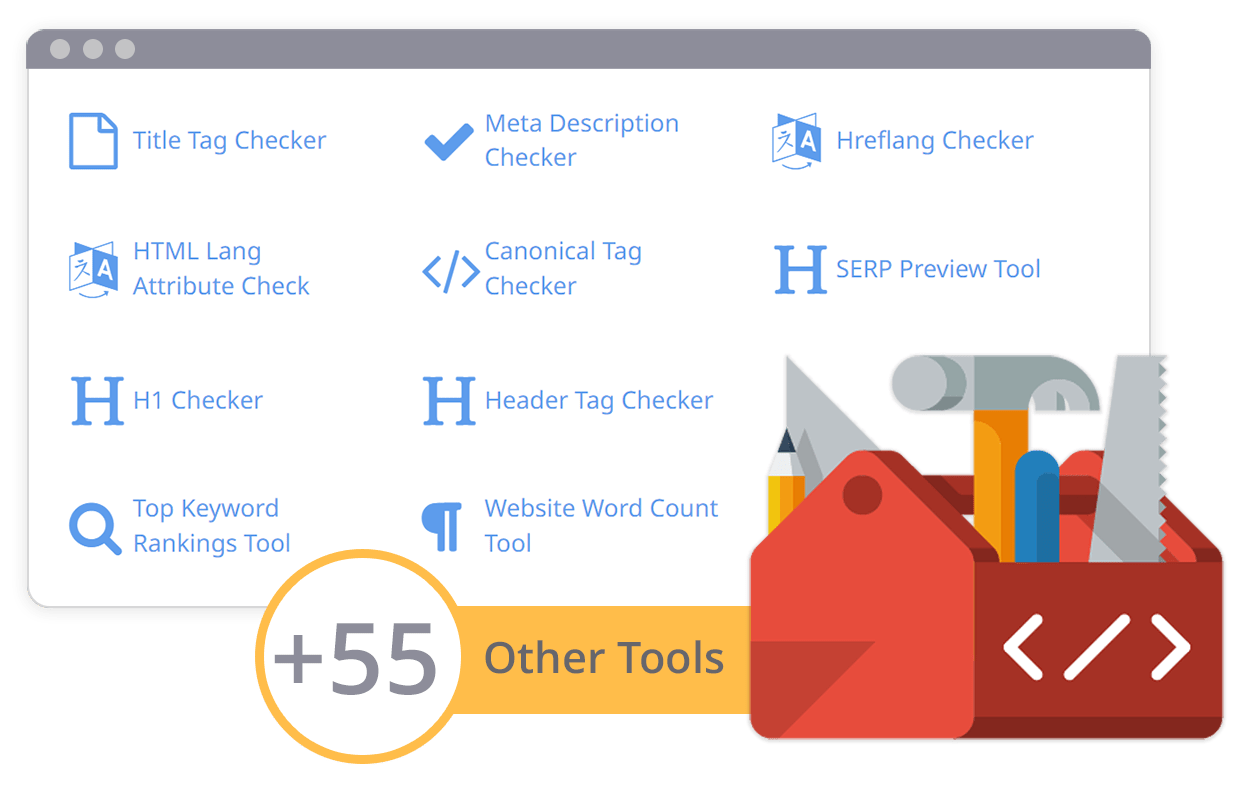
Comprehensive SEO Toolbox with over 55 Tools
Check Titles, Meta Descriptions, Headings, Schema, Core Web Vitals, SSL and Robots.txt. Generate Meta Tags, Sitemaps and .htaccess Rules, minify CSS, JS and HTML, and draft copy with our AI Writing Tools - instantly and for free.
Further Reading
See More
How to Fix 'Indexed, though blocked by robots.txt' in Google Search Console
If you received the warning ‘Indexed, though blocked by robots.txt’ notification in Google Search Console, you’ll want to fix it as soon a...

Robots.txt - The Ultimate Guide
What is Robots.txt?
Robots.txt is a file in text form that instructs bot crawlers to index or not index certain pages. It is also know...

Crawl Depth in SEO: What is It & How to Improve It?
Crawl depth influences how efficiently Google can index your content.
Googlebot has limited time and server resources. Therefore, th...

What is a Google Crawler?
You know when you use Google to search for a service, or find information? And once the page loads there is always one website at the very t...
What is an XML Sitemap? How to Create One & Submit to Google
An XML sitemap helps search engines find the most important pages on your website.
In this guide, we’ll show you what an XML sitemap...