Inline CSS Checker
SEOptimer’s Inline CSS Checker identifies inline CSS styles on your webpage, encouraging the use of external CSS files for better performance, cleaner code, and easier styling updates.

SEO Audit Any Site in Seconds
+ Comprehensive SEO / GEO Tools for Every Function
Run over 100 checks on your website across On-Page SEO, Usability, Performance, Social and Links. Now with GEO in every report. SEOptimer also offers keyword research, rank tracking, backlinks and a full site crawler.

About Inline CSS
What is inline CSS?
Inline CSS is styling written directly onto an element with a style attribute, rather than kept in a stylesheet. It applies to that one element and travels with the HTML every time the page is requested.
A small amount is normal and sometimes necessary. A page full of it usually means styling has been applied ad hoc over time rather than designed, often by a visual editor that writes a style attribute every time someone changes a colour.
An inline CSS checker is really measuring tidiness rather than performance. What it finds tends to correlate with how a page was built and how easily it can be changed later.
Does inline CSS still matter in 2026?
It is a maintainability problem more than a performance one, and it is worth being clear about that. Inline styles cannot be cached separately, are repeated on every element that needs them, and override stylesheets in ways that make later changes unpredictable.
The cost shows up when something needs to change. A colour defined once in a stylesheet is a one-line edit; the same colour written onto four hundred elements is an afternoon.
There is a deliberate exception. A small block of critical CSS inlined in the head to render the top of the page immediately is a recognised performance technique, not a mistake, and it is worth distinguishing from style attributes scattered through the body.
How inline CSS relates to AI search
It adds noise. Every style attribute is text a parser must step over to reach the content, and heavily inlined pages have a markedly worse ratio of content to markup.
It rarely prevents anything being read, so this is not a serious indexing risk. It makes the document harder to work with for no benefit, which is a mild cost repeated on every request.
The related habit that does matter is using presentational markup instead of semantic elements, since that removes meaning rather than merely adding clutter.
CSS best practices
- Keep styling in stylesheets so it can be cached and reused.
- Reserve inlining for genuine one-offs and for deliberate critical CSS.
- Watch WYSIWYG editors, which generate inline styles prolifically.
- Use classes for anything that appears more than once.
- Audit periodically; inline styles accumulate quietly and nobody removes them.
What this tool checks
The inline CSS checker scans the page markup for inline style attributes and reports whether any are present.
Finding them is reported as a failure, though a small number are often harmless, so treat this as a prompt to look at how the page was built rather than an instruction to refactor everything.
Where to go next
Inline styles usually indicate how a page was assembled. Check for deprecated HTML tags, which tend to come from the same editors, see what the markup weighs with the webpage file size tool, and if your stylesheets are unminified, the CSS minifier is a reasonable next step.
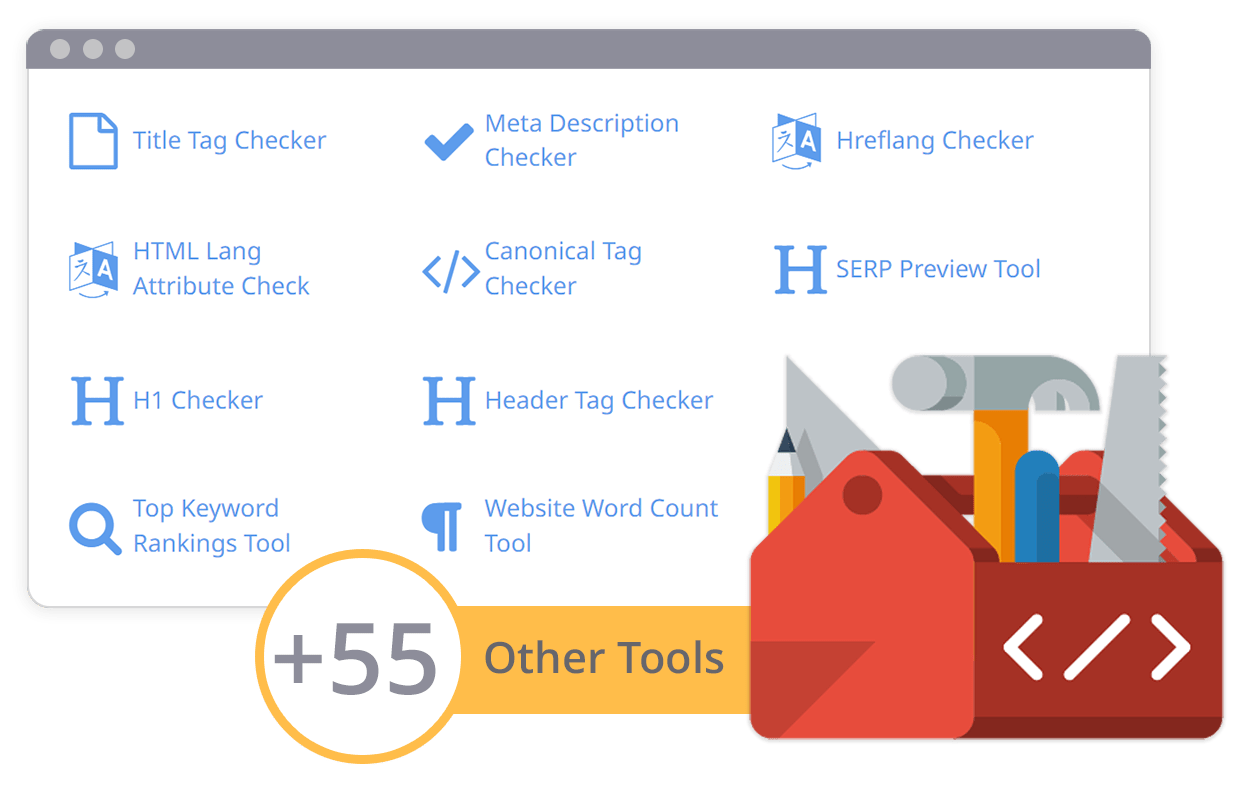
Comprehensive SEO Toolbox with over 55 Tools
Check Titles, Meta Descriptions, Headings, Schema, Core Web Vitals, SSL and Robots.txt. Generate Meta Tags, Sitemaps and .htaccess Rules, minify CSS, JS and HTML, and draft copy with our AI Writing Tools - instantly and for free.