

SEO skills have changed in the past few years. It is not just about link building and on-page optimization anymore.
With the rise of artificial intelligence and changes in how Google presents search results, such as AI overviews, the skills required for SEO now include entity SEO, AI content optimization, SXO (Search Experience Optimization), and GEO (Generative Engine Optimization).
Professionals with first-hand SEO knowledge and skills can achieve a higher rank in organic search results and manage brand reputation.
This post will help you know which 10+ SEO skills are necessary for long-term success in the future.
Why are SEO Skills Important?
Here are the top reasons why learning SEO skills is important:
Multiple Career Paths and Roles
When you invest in learning SEO skills, you create flexible career opportunities for yourself.
The search engine optimization career path has different SEO roles and salary ranges. Here are the possible SEO career routes you can take:
- Junior SEO
- SEO Specialist
- Technical SEO Expert
- Content Strategist
- Link Building Manager
- SEO Consultant
- SEO Project Manager
You can also choose broader roles such as digital marketing managers, growth marketers, or analytics specialists.
By learning organic marketing and earning relevant client management experience, you can even build your own agency or freelance business. This way, you can work with clients worldwide.
Strong Earning Potential
SEO professionals get competitive salaries. You can earn a high income by choosing SEO as a career.
The average salary of an SEO specialist in the USA is $55,048.
Employers are willing to pay good salaries to results-first SEO professionals.
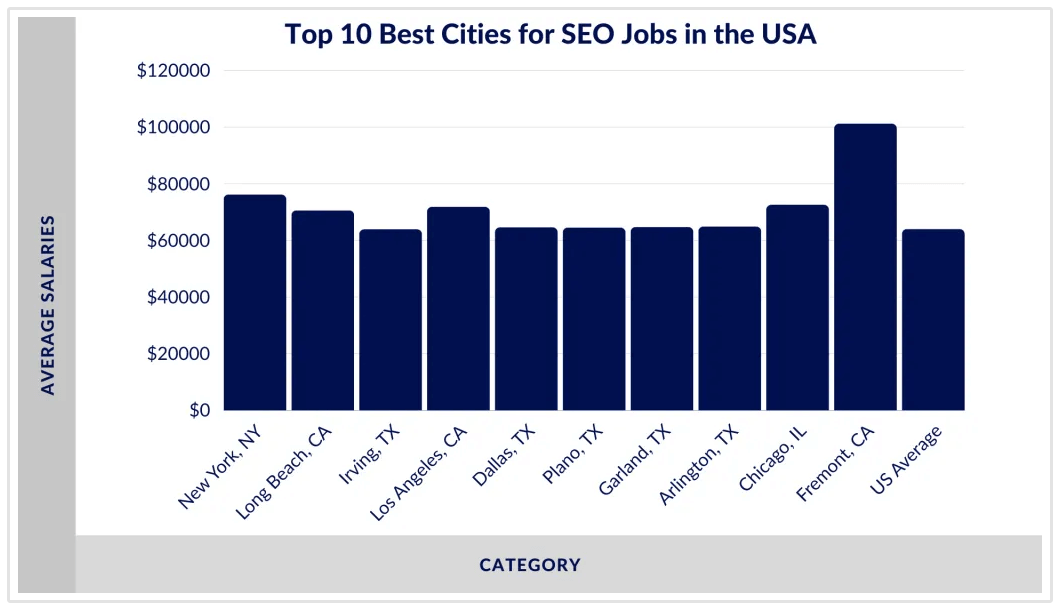
The best cities to get a job in the USA are Fremont, New York, Chicago, Long Beach, and others. Among these cities, Fremont offers the highest earning potential, with salaries as high as $101,239 annually.
You can land full-time or part-time positions depending on your experience. If you build advanced skills in areas like EEAT-friendly content optimization, GEO, SXO, and AI-prompt engineering, your earning potential increases even more.
As your expertise and experience managing a variety of client projects grows, you can charge more for your client retainers.
Also, you can even generate income through affiliate marketing, content monetization, or SEO training services.
High Value to Clients and Employers
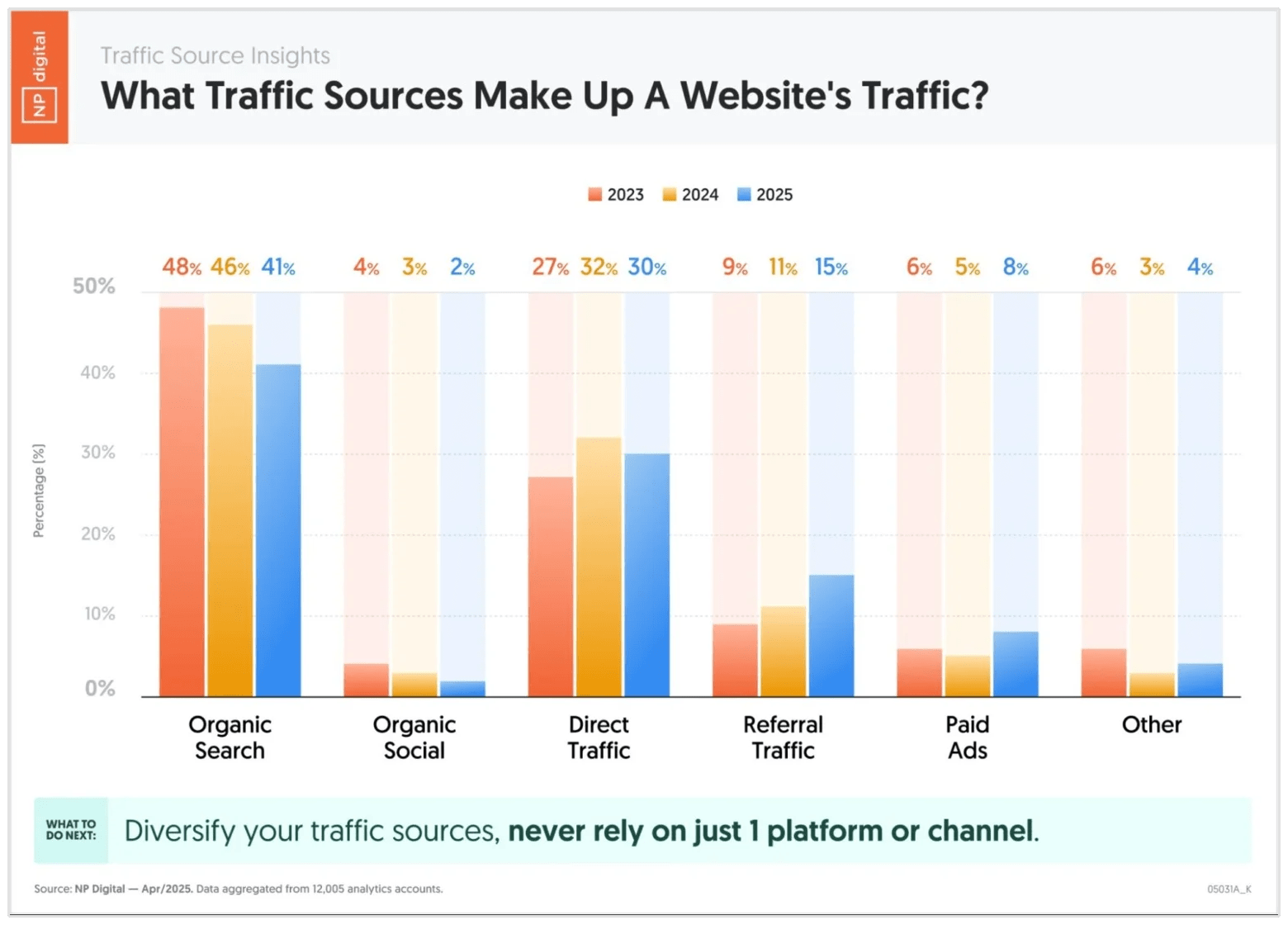
Organic search drives 41% of website traffic, making it the largest digital channel.
Moreover, studies from Backlinko show that the top result alone gets around 27.6% of clicks.
This means that effective SEO can significantly increase customer acquisition without relying on paid ads.
Organic search marketing is always in demand because companies want to invest less in paid ads and acquire more positions in Google Maps and unpaid search.
Demand for SEO Skills
SEO is a high-growth and in-demand profession. Be it ecommerce, SaaS, legal, and other niches, ROI-driven organic marketing is always in demand.
The global SEO services market is expected to reach $234.8 billion by 2030.
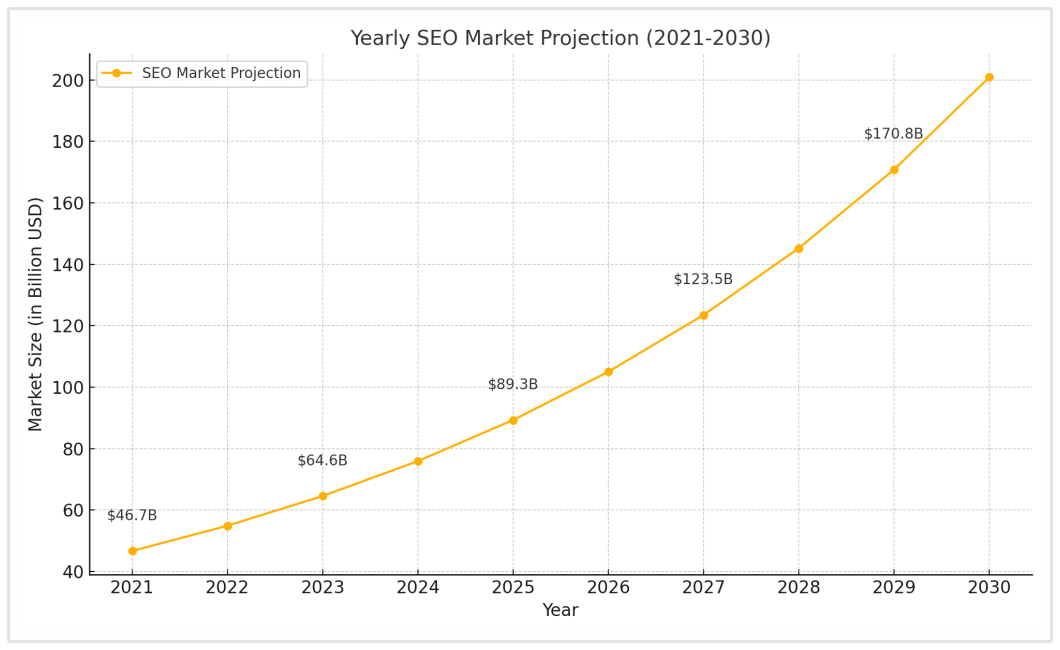
Generative engine optimization and AI overviews optimization have introduced new dimensions, requiring SEO specialists to adapt content for AI-generated summaries and search interfaces.
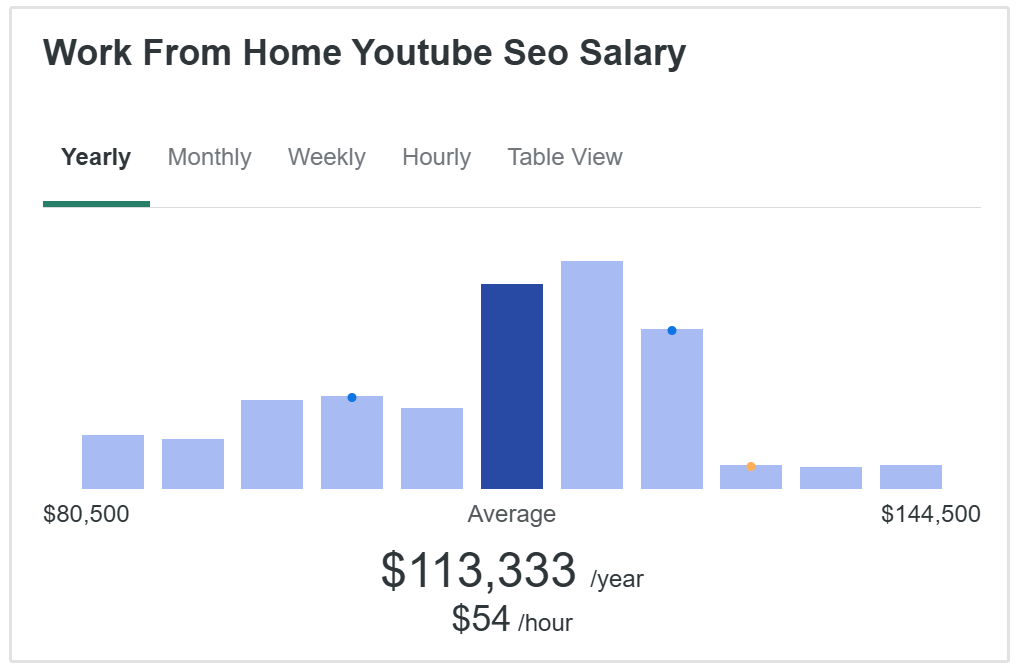
Beyond Google, Amazon and YouTube SEO professionals are also in high demand. Even the average work-from-home YouTube SEO professionals earn over $113,000 per year.
Essential SEO Skills for Success
Here are the top skills required for managing the multifaceted landscape of SEO management:
Technical SEO
Technical SEO ensures websites are easily discoverable, crawlable, and indexable by search engines.
It involves tons of activities, such as:
- Mastering how crawl budget, crawl rate, and crawl scheduling impact website visibility.
- Knowing how to audit indexable file types, non-text content, blocked resources, and anonymous user access.
- Managing JavaScript SEO, infinite scroll, pagination, and dynamic locale-based content, especially for mobile-first indexing.
- Migrating HTTP to HTTPS, creating a secure site, and handling site migrations with proper sitemap updates.
Learning technical SEO helps you fix critical issues like broken links, incorrect redirects, code errors, and missing metadata items. It also allows you to control how search engine bots crawl and index your site.
Understanding pagination, managing CMS limitations, and preventing crawl waste are also key parts of this extensive skill set.
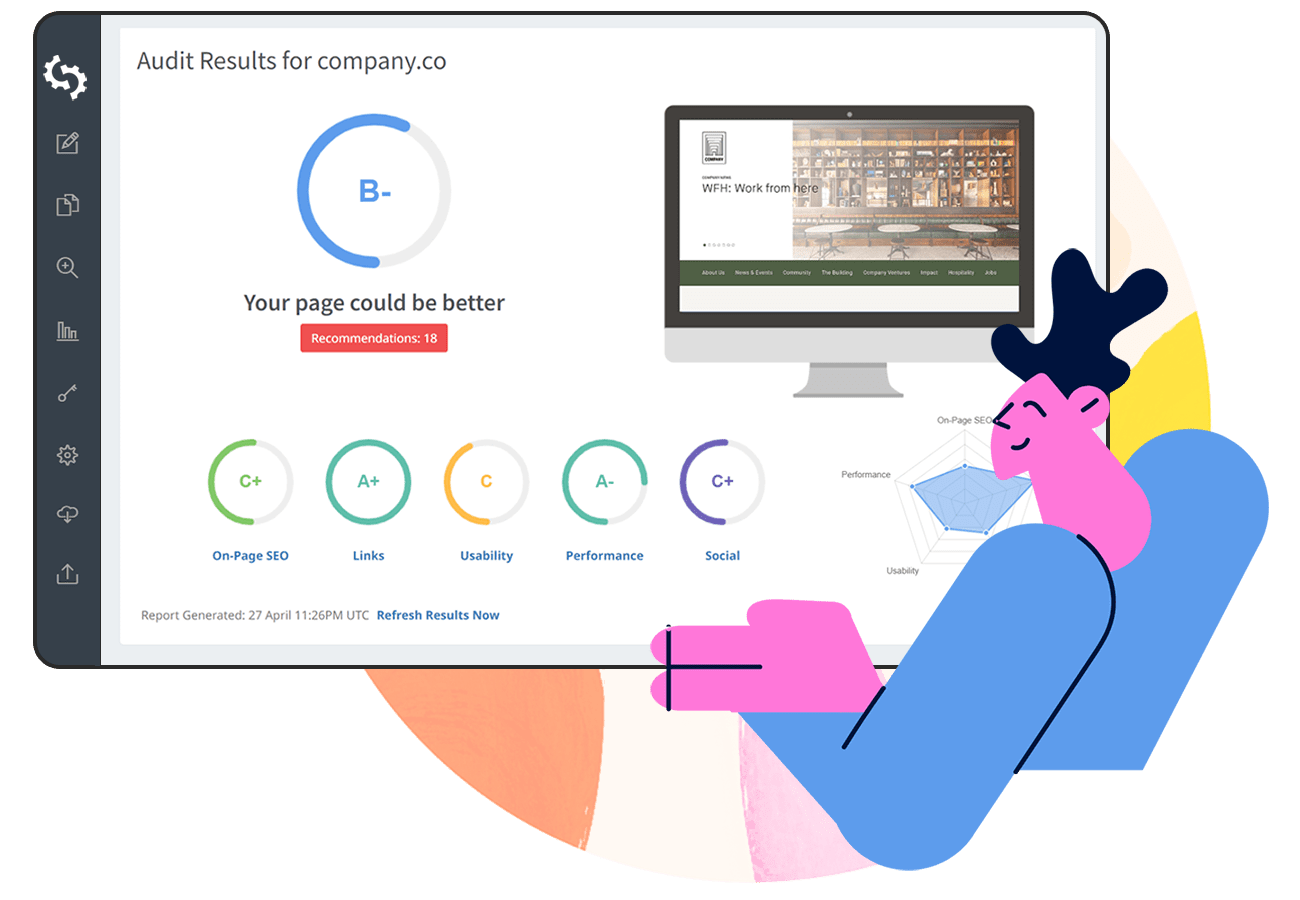
Tools like SEOptimer can help you perform extensive site audits to check over 100 technical and on-page issues.
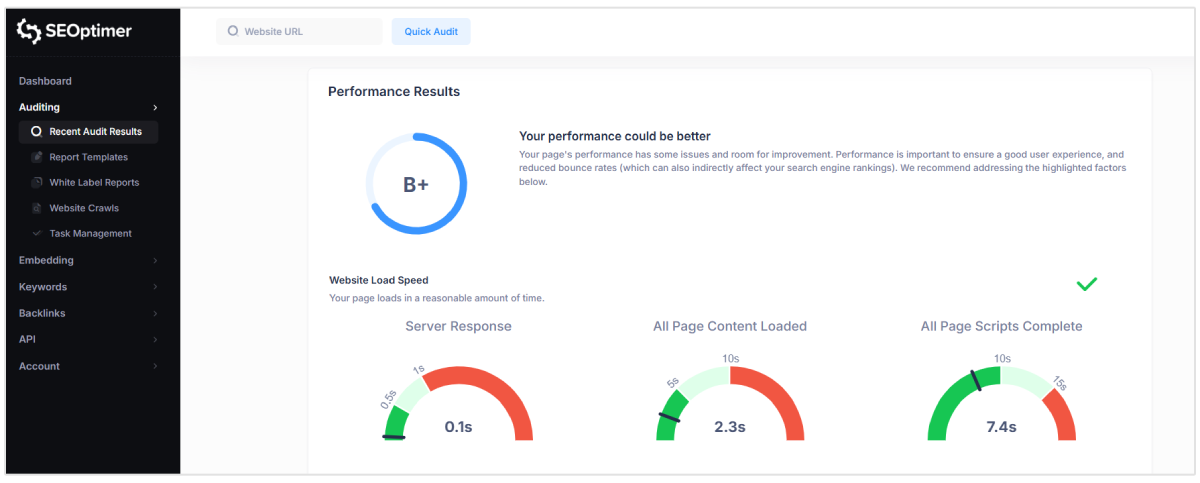
The tool accurately analyzes web page elements, like crawlability, redirect chains, page speed, metadata, link structure, website architecture, and more.
Keyword Research
Keyword analysis is one of the top SEO skills that is a must-have for digital marketers.
High-level keyword research involves:
- Identifying query clusters.
- Analyzing SERP structure.
- Understanding search intent segments (navigational, informational, transactional, commercial), and
- Evaluating keyword competitiveness.
You should use advanced keyword research tools to pick the best keywords.
SEOptimer has over 5 billion keywords in its database and collects over 900K SERPS monthly.
The tool shows essential keyword data like the monthly search volume, estimated traffic volume, competition, and estimated CPC.
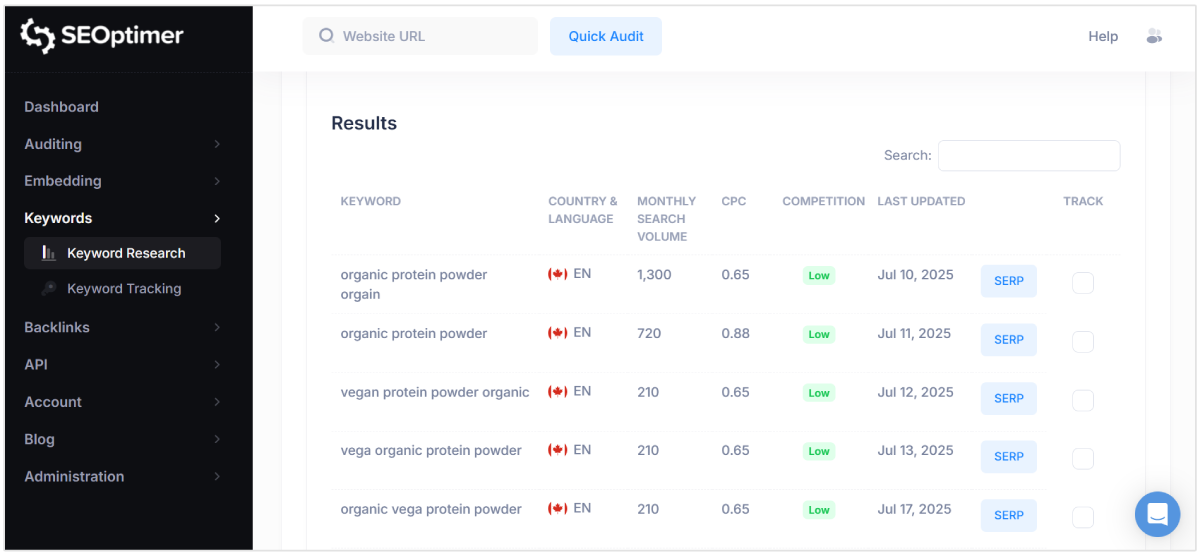
You should master keyword research because it’s the entry point to keyword-to-page mapping, content opportunity identification, and topic modeling.
Advanced keyword research also includes intent-based segmentation to allocate commercial keywords to landing pages and informational terms to upper-funnel content assets.
On-Page SEO
On-site analysis is the execution layer of your keyword strategy. Not everyone is proficient in on-page SEO.
Hence, you should invest your time to master this skill to advance your career as a search engine optimizer.
On-page optimization includes:
- Metadata and heading tag optimization
- Canonicalization handling
- Keyword placement and semantic structure analysis
- Internal linking optimization
- Content optimization
- URL structure analysis
- Structured data markup implementation
- Image optimization
- Anchor text management
- Logical site architecture and navigation optimization, and many other elements
With new SERP features, such as AI Overviews, you should know how to prepare content strategically to ensure Google prioritizes your page content above the top 10 search results.
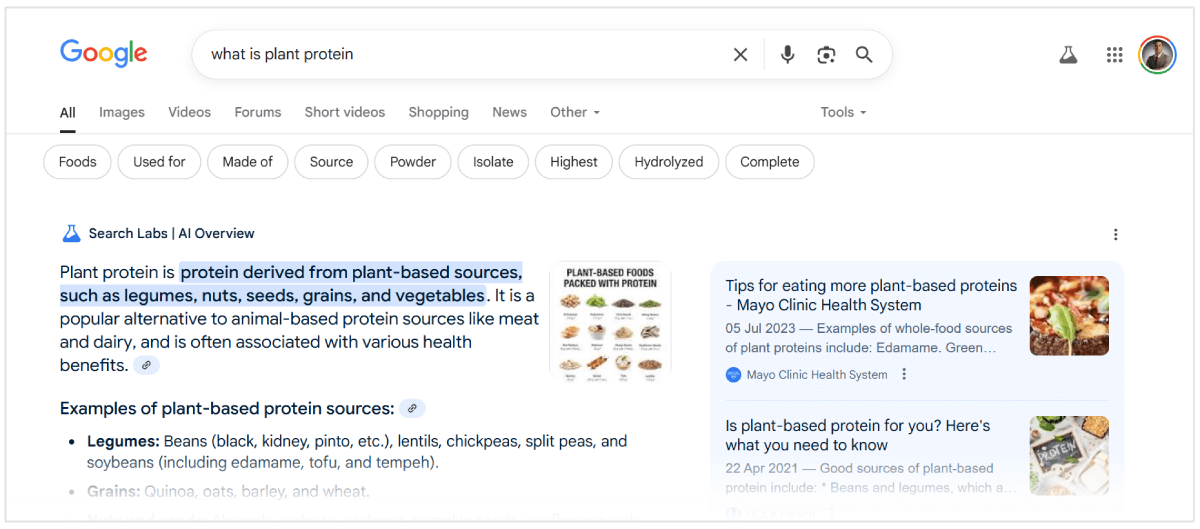
Hence, you should learn how to perform both basic and advanced SEO on large ecommerce sites, smaller SMB websites, and on specific landing pages.
Off-Page SEO and Link Building
High-quality and natural inbound link acquisition raises a domain’s reputation and helps it rank higher in organic SERP.
An SEO should learn the skill of acquiring contextually relevant and editorially earned external links.
As an SEO professional, you must understand the mechanics of link equity distribution, anchor text diversification, and natural link velocity.
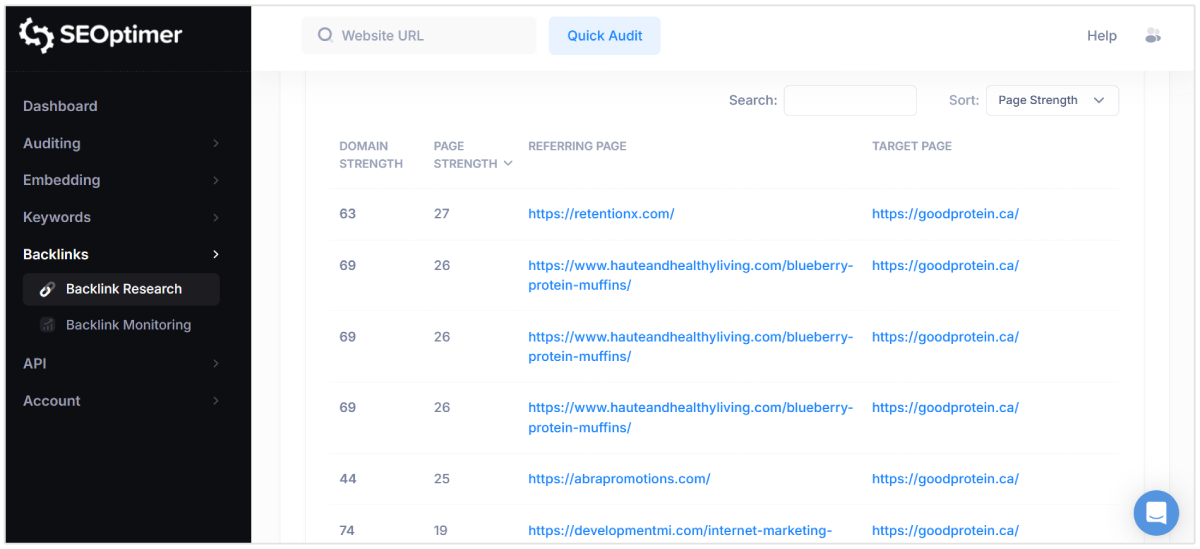
You should also be able to conduct competitor backlink profiling and gap analysis to identify high-value linking domains your competitors are getting links from, but you do not.
For instance, let's imagine that you run an online store selling plant based protein and other vegan health products.
Using SEOptimer's Backlink Research tool, I can easily find the domains linking to my competitors.
There are several link building techniques you should have experience on, like guest posting, resource page outreach, broken link replacement, unlinked brand mentions reclamation, and digital PR campaigns.
Local SEO
Several local businesses run local SEO campaigns to increase their company visibility for keywords that can get them new clients.
As an SEO expert, you also have the responsibility to boost a business’s visibility in Google Maps.
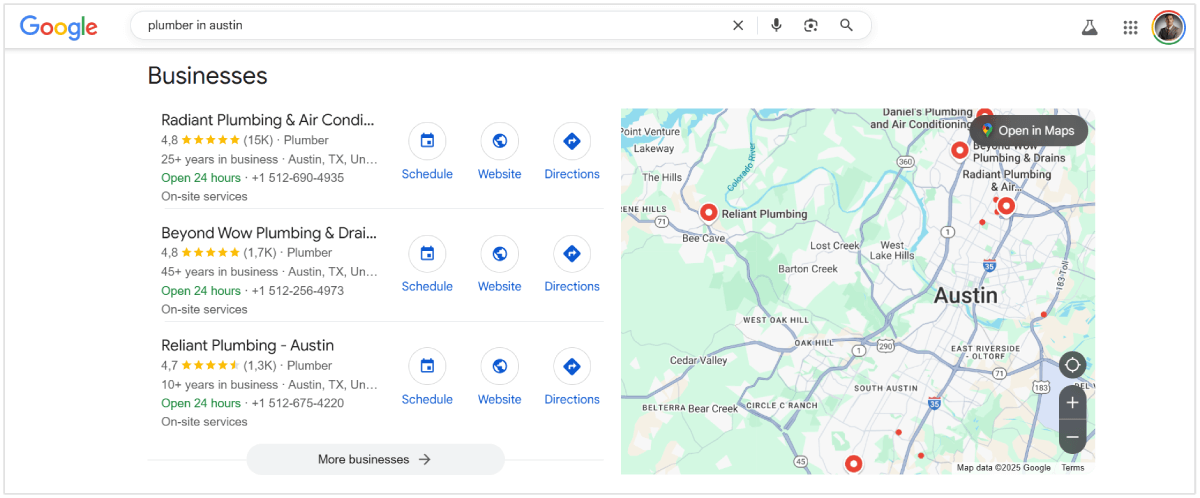
Without strong local visibility, even the best services stay hidden from people searching right in their area.
Local SEO continues to evolve as well, with growing emphasis on topical authority, engagement, and trust signals.
- Ivan Vislavskiy, CEO and Co-founder of Comrade Digital Marketing Agency
To optimize for local SEO, you should know how to:
- Create, claim, and update your Google Maps profile.
- Maintain accurate NAP (Name, Address, Phone) data.
- Build local backlinks.
- Creating region-specific content to build the domain’s local relevance.
- Acquire more positive customer reviews.
- Local SEO management is a must for local business services, so it's a skill you can’t miss to have your expertise on.
Analytics and Reporting
Your clients and your supervisors will always ask for well-built reports to calculate the ROI of SEO campaigns.
Hence, you should know how to accurately track keyword rankings, organic traffic, user engagement, and SEO conversions.
Data-led and actionable SEO reporting helps you adjust your strategy, fix weak points, and build on what delivers results.
Performance-focused executive summaries and traffic summary reports help you communicate progress to clients or teams.
A good SEO knows how to prepare keyword rankings, content performance, and link acquisition reports using basic and advanced SEO tools like Google Search Console, Google Analytics, SEOptimer, and others.
SEO Software Skills
SEO tools are a marketer’s best friend.
You will need a set of specialized tools to manage all the different SEO tasks. A person skilled in using advanced SEO software knows how to quickly analyze a website and its underlying issues to improve a site’s organic search visibility.
Leury Pichardo from Digital Ceuticals believes that a vital skill for SEO success is being able to automate workflows.
The most vital skill for SEOs in 2025 will be the ability to architect and automate workflows. We are rapidly moving beyond being practitioners who perform manual tasks and are becoming systems builders who design scalable SEO engines.
For example, at our agency, we no longer create one off content briefs. I built an semi automated system that uses a combination of NotebookLM, Zapier and Gemini.
- Leury Pichardo, Marketing Director at Digital Ceuticals
As an SEO professional, you should know how to run site audits, prepare search engine ranking reports, run outreach campaigns, and gather conversion data using different advanced SEO tools and technologies.
The top SEO tools you should have proficiency in are:
- Google Search Console
- Google Analytics
- SEOptimer
- Google Keyword Planner
- ScreamingFrog
- ChatGPT
- Yoast SEO, and others
Competitor Analysis
SEO competitive research is a skill that good SEOs use to outsmart their organic rivals. In data-led competitive analysis, you learn to assess a business’s online market share, keyword visibility, branded traffic, and top-ranking keywords.
A thorough competitive strategy identifies the value proposition and unique selling point of each rival, benchmarking their product differentiation, subscription tiers, pricing strategy, and funnel strategy. It also covers analyzing landing pages, checkout flows, and conversion offers such as promo codes, loyalty programs, and free trials.
It becomes easier to manage your campaigns when you know how to reverse engineer your competitor’s marketing plan.
Bonus: Emerging SEO Skills to Watch
The SEO landscape keeps expanding as search engines introduce new layers of complexity.
Two skills shaping the current state of SEO are AI Content Optimization and Entity SEO. Both require a deeper understanding of how search systems interpret and evaluate information.
AI Content Optimization
AI content optimization is the process where you use artificial intelligence tools to analyze, structure, and improve content for better search performance.
The need for artificial intelligence-powered content optimization grows as platforms like Google integrate AI Overviews, which summarize information directly on the search results page. If your content lacks structure, depth, or entity coverage, AI-driven search features may skip over your site entirely.
Content needs to be conversational, value adding, thoughtful, inspiring, and thought provoking. Because that is how the LLMs are cataloging content, and how people will be interacting with AI based search.
- Philip Bacon, Founder and CMO at Marketing Managed
Large language models like ChatGPT, Gemini, and Claude help you plan outlines, expand topical coverage, suggest related subtopics, and rewrite sections for clarity.
You should not rely on these tools to fully write content, but you should integrate them into your workflow to scale research, structure articles, and strengthen semantic signals.
The ability to integrate AI into research and content workflows will be a valuable asset.
- Sasha Berson, Co-Founder and Chief Growth Executive at Grow Law
Entity SEO
Entity SEO is the practice where you structure content to help search engines recognize and connect key topics, people, organizations, and concepts.
Search engines no longer rely only on keywords but build knowledge graphs that map relationships between entities.
You should learn the skill of defining entities clearly within your content by using consistent names, contextual explanations, and accurate associations between related topics. Schema markup helps search engines classify these entities correctly.
You should structure your pages so that search engines can link your content to existing knowledge bases, reducing ambiguity and improving relevance signals.
Search Experience Optimization (SXO)
SXO is a mix of SEO and UX. As an SEO specialist, you should learn the art of using your SEO knowledge and user experience optimization skills to make a website easy to find and enjoyable to use.
Imagine if someone clicks your website in organic search but leaves right away because the site is slow; your rankings might drop. SXO teaches you to combine strong SEO with a great user experience so visitors stay longer, trust your brand, and take action.
Generative Engine Optimization (GEO)
GEO is the process of optimizing your site content to help your business and its content get referred by AI-driven search engines such as ChatGPT, Gemini, Google AI Overviews, and others.
For instance, the below screenshot shows how The Hoth was referenced in a conversation I had with Gemini on broken links.
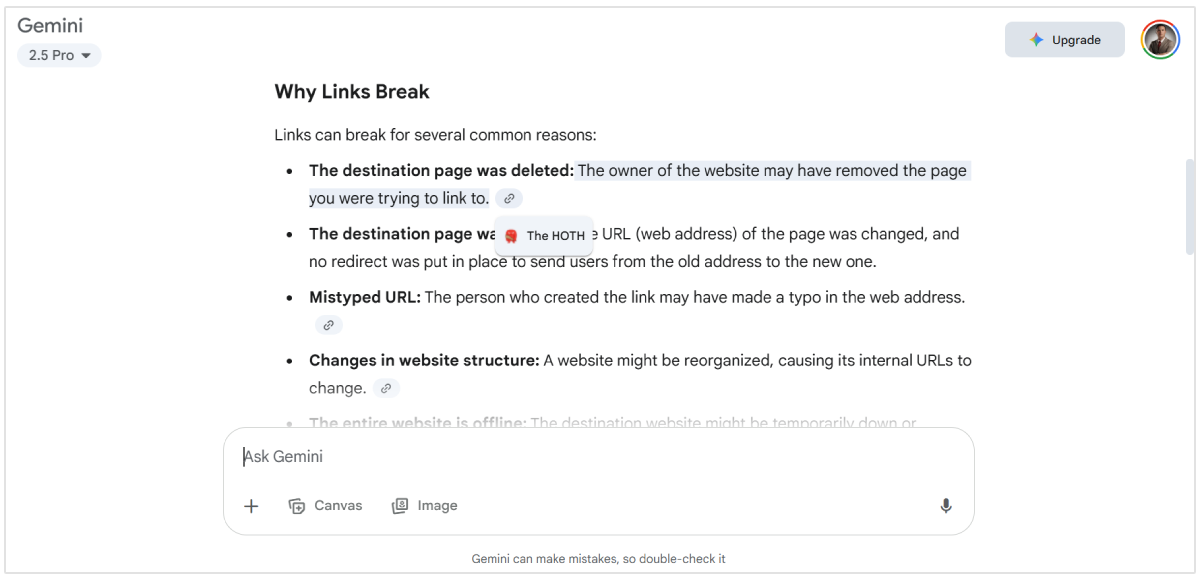
You should learn GEO because user search behavior is changing.
Traditional SEO was dependent on ranking in Google. However, as Logan Freedman from Manychat puts it:
SEO in 2025 isn’t about ranking number one on Google. It’s about being the first result an AI model spits out. It’s not just about on-page anymore.
It’s about brand mentions, YouTube visibility, social signals, PR, paid campaigns, and everything in between. SEOs who stay in their silo will lose. The ones who win will be those who can connect every part of the marketing team to show up as the trusted answer. If you don’t build for AI search now, catching up later will be nearly impossible.
- Logan Freedman, Global Head of SEO at Manychat
GEO now relies on your content appearing in answers from AI search and answer platforms. If you do not develop the skills to optimize your content for AI, you risk being left behind in a world where generative engines are shaping the future of search.
Soft Skills Needed for SEO Success
Most SEOs feel hard skills are more important than developing soft skills.
However, you can always have the upper hand over your competitors when you develop soft skills to turn your good work into long-standing business relationships.
Here are the most useful soft skills an SEO must have:
Adaptability
SEO is always adapting. It has changed a lot in recent years, and more updates are in line after the introduction of AI. Hence, adaptability is one of the most desirable traits for any SEO specialist.
Google's algorithm updates, SERP changes, AI-generated content, and new tools all demand continuous learning and fast recalibration. The ability to adapt shows maturity and commitment to your SEO journey.
In my view, the skills needed for SEO success in 2025 and beyond are adaptability and strategic thinking.
As we know, algorithms change, user behaviour changes, and the best SEOs I’ve worked with are those who stay curious, keep testing, and aren’t afraid to change direction when needed.
- Ciara Edmondson, SEO and Content Manager at Maxweb Solutions
As you move through different roles or transition from local SEO to technical audits, adaptability helps you embrace change. It improves collaboration across departments and supports success through constant transformation in SEO processes and campaign ROI expectations.
Critical Thinking
Critical thinking helps you make reasoned judgments. By learning this skill, you can analyze available data and facts to make accurate judgments. As you grow in your SEO career, critical thinking lets you see the bigger picture and come up with solutions.
By having a problem-solving mindset, you can improve your SEO forecasting and risk analysis skills. Also, by practicing data-based decision-making, you can contribute with confidence during high-level client meetings.
Communication
As an SEO team member, you will have to communicate with content teams, developers, UX experts, and C-level executives. Good communication will help you present your organic marketing strategies to others. Communication plays a highly important role when presenting performance-driven SEO data to non-technical stakeholders.
Good communication expands your visibility in the SEO community, boosts your presence in forums, podcasts, and events, and earns respect as a reliable team player with whom others want to collaborate.
Patience
SEO results take time, and so do educating clients, guiding teams, and managing multi-phase projects. Patience reflects your ability to stay focused across long SEO campaigns, from site migrations to link cleanups.
Persistence and long-term focus as an SEO skill builds credibility, trust, and stronger professional relationships. By acquiring this skill, you can stay calm during algorithm shifts, technical delays, content bottlenecks, or during client interactions. Persistence creates momentum others can rely on throughout your SEO journey.
How to Improve Your SEO Skills
Here are the best ways to gain SEO experience and improve your skills:
Practice Real SEO Projects
The best way to improve your SEO skills is to work on real websites. Theory helps, but you learn the most when you apply SEO on live projects.
You get to face real ranking issues, technical problems, content gaps, and link building challenges. Every project teaches you something new because no two websites behave the same.
Study Algorithm Updates
If you want to stay relevant, you have to follow Google’s algorithm updates closely.
In fact, check the below chart from Tinuiti to see the number of major updates Google released since 2011 unitl 2023.
If there's one thing you can be sure of, it's that SEO is constantly changing.
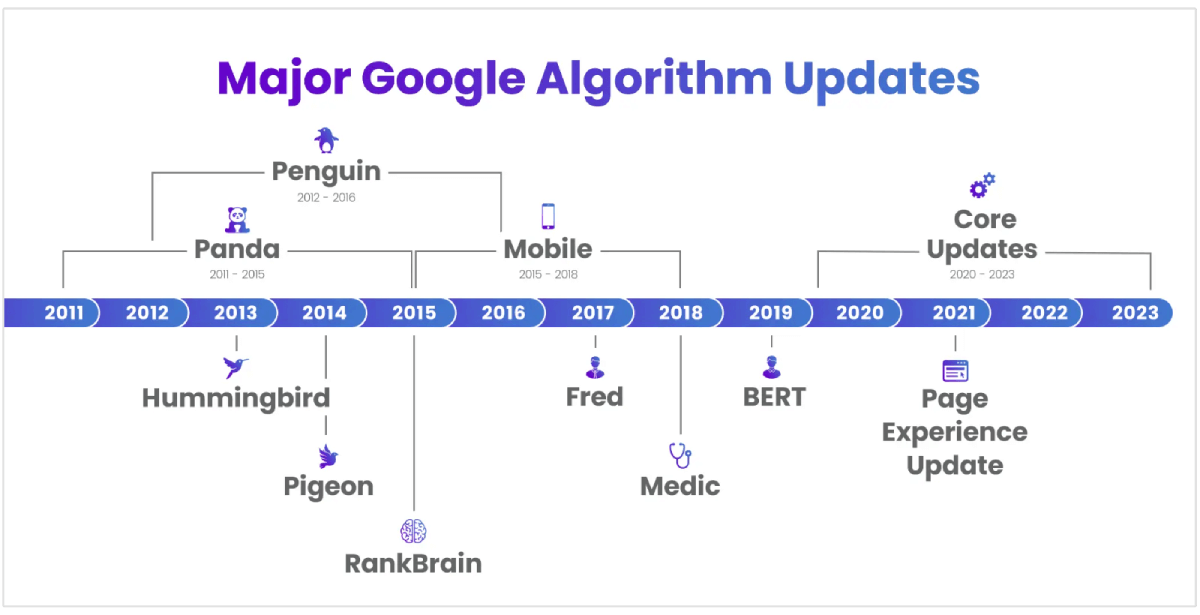
Every update teaches you what Google values right now.
Read official Google announcements, follow trusted SEO blogs, and study ranking shifts after updates are released. Having knowledge of the current search landscape lets you apply the most recent updates to your own projects and adjust your SEO work accordingly.
This is how you learn what strategies continue working and which ones become ineffective.
Learn to Use SEO Tools Properly
There are fewer chances of you being hired by any business for SEO work if you don’t know how to use SEO tools.
Basic and advanced SEO platforms make your work easier.
Market-leading SEO software helps you run full site audits to identify and fix issues related to website architecture. You should know how to use the leading SEO tools to get the best results easily and quickly.
Follow Industry Experts
Don’t forget to follow industry experts because they will help you keep up with evolving search engine algorithms, best practices, and advanced strategies.
Learning directly from experienced voices saves time and reduces guesswork. Here are some SEO experts who are worth following:
- Rand Fishkin
- Barry Schwartz
- Aleyda Solis
- Lily Ray
- Marie Haynes
- Cyrus Shepard
- Glenn Gabe
Test and Experiment
You do not improve in SEO by staying safe. Don’t be afraid to try new strategies and techniques. Look at what your competitors are doing and follow their tactics.
Try out new SEO and content optimization tools and implement the suggestions provided by them.
Make changes in your page content and include fresh statistics, hands-on experience data, and semantic keywords. Try different CTAs, headers, hero images, and other page elements to see what’s working. Testing shows you what looks good in theory versus what actually impacts rankings.
Build Technical Knowledge
Technical SEO is where many beginners face challenges. You should learn how websites function, including crawl efficiency, indexing, rendering, page speed, structured data, and basics like HTML and CSS.
A practical understanding of how websites operate helps you solve technical barriers that prevent ranking. Technical knowledge helps you become a complete SEO professional who can improve both content and performance.
Wrapping Up
An SEO career opens multiple opportunities when you have the right SEO skills. You can work with well-established SEO agencies, build your profile as a freelancer, or join as an in-house SEO consultant for other businesses.
To build your career in SEO, you should have good knowledge of analytics, UX and SEO, and CRO.
However, having technical knowledge alone is not enough. You also have to understand how to work with people. That means explaining ideas clearly, handling pressure when things go wrong, and knowing how to work alongside writers, developers, and clients.