

.png)
If you’re new to SEOptimer, you may notice that the platform offers both SEO Audits and Website Crawls. While both tools analyze websites and identify SEO issues, they serve slightly different purposes.
Understanding when to use each tool can help you provide the correct report for your business and help you spend your credit allocations more efficiently.
In this guide we’ll discuss what SEO audit and Website Crawls are, what the main differences are and when you should use the tools.
What are SEO Audits?
.png)
Our SEO audit is a high-level analysis of a website’s SEO performance. It evaluates a webpage against a wide range of ranking factors and provides recommendations for improvement.
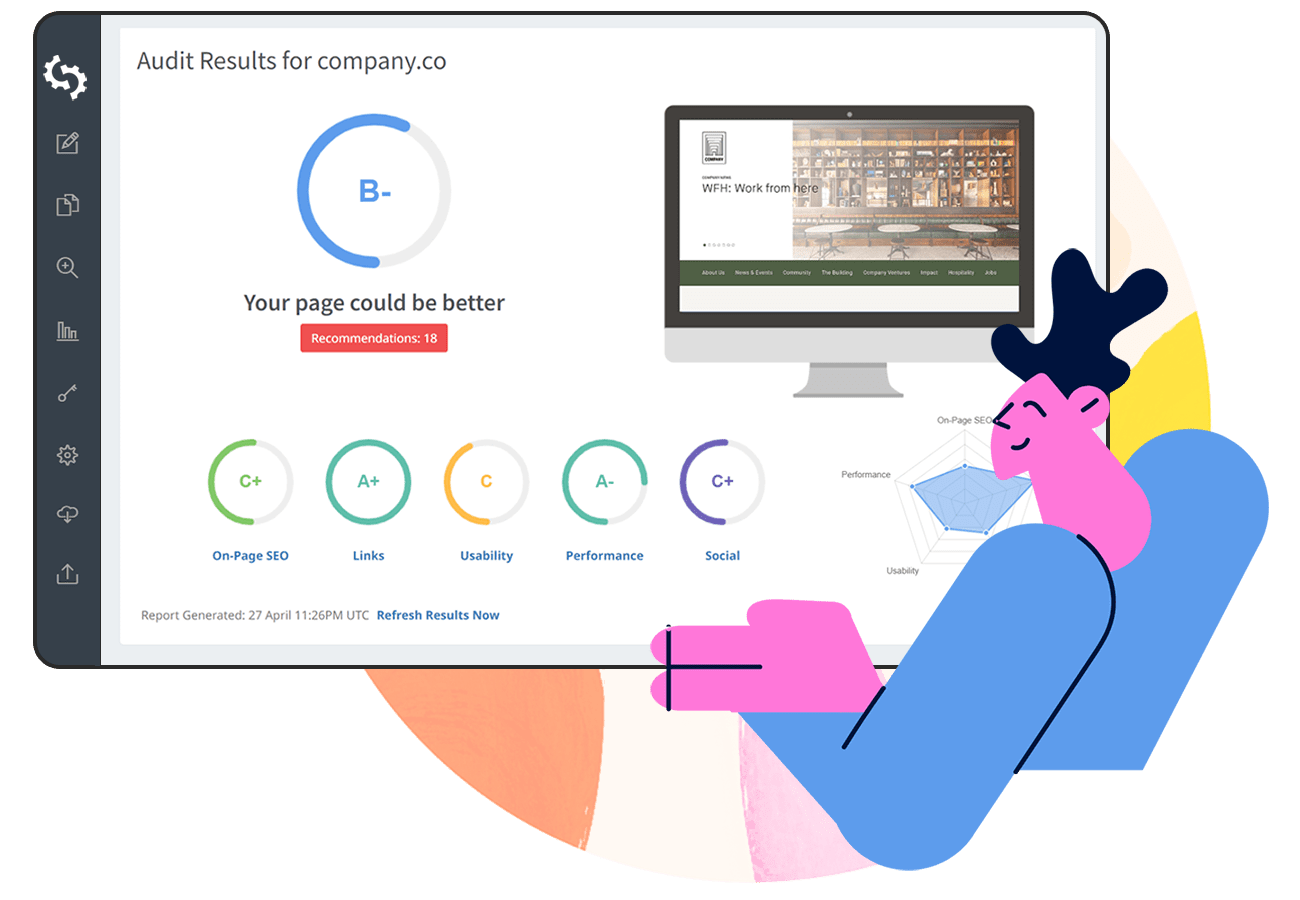
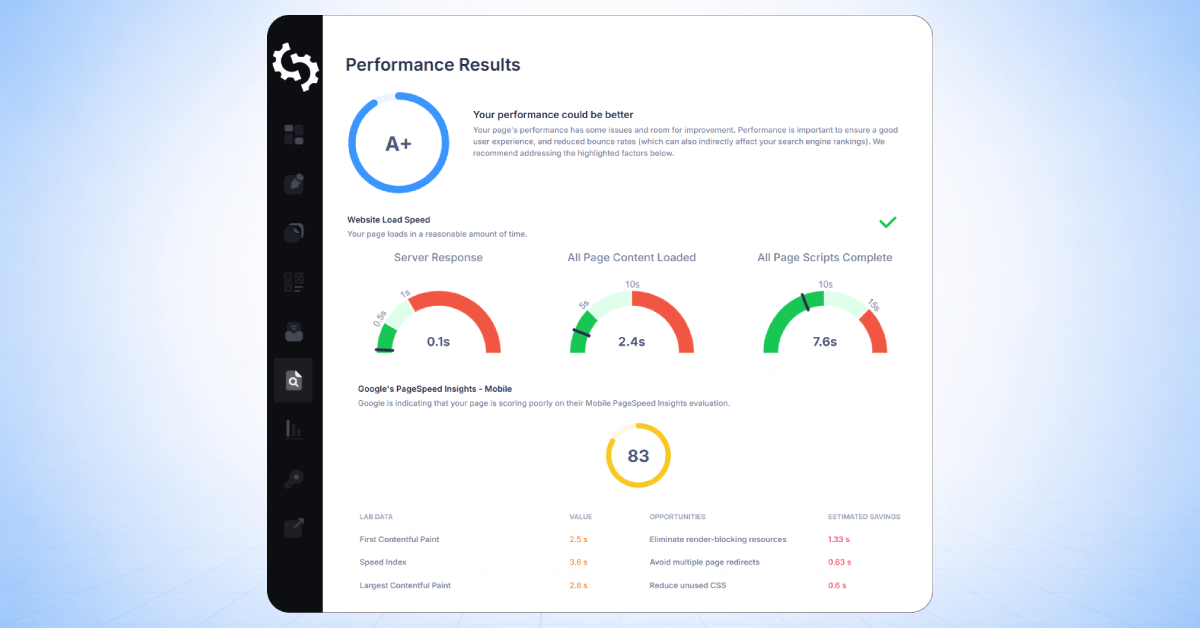
SEOptimer’s audit tool analyzes websites across more than 100 data points, covering areas like On Page SEO, Usability, Performance,Links, and Socials.
When you run an SEO audit, the tool generates a report that typically includes:
- An overall SEO score or grade and a score or grade for each section
- Key SEO issues affecting the page
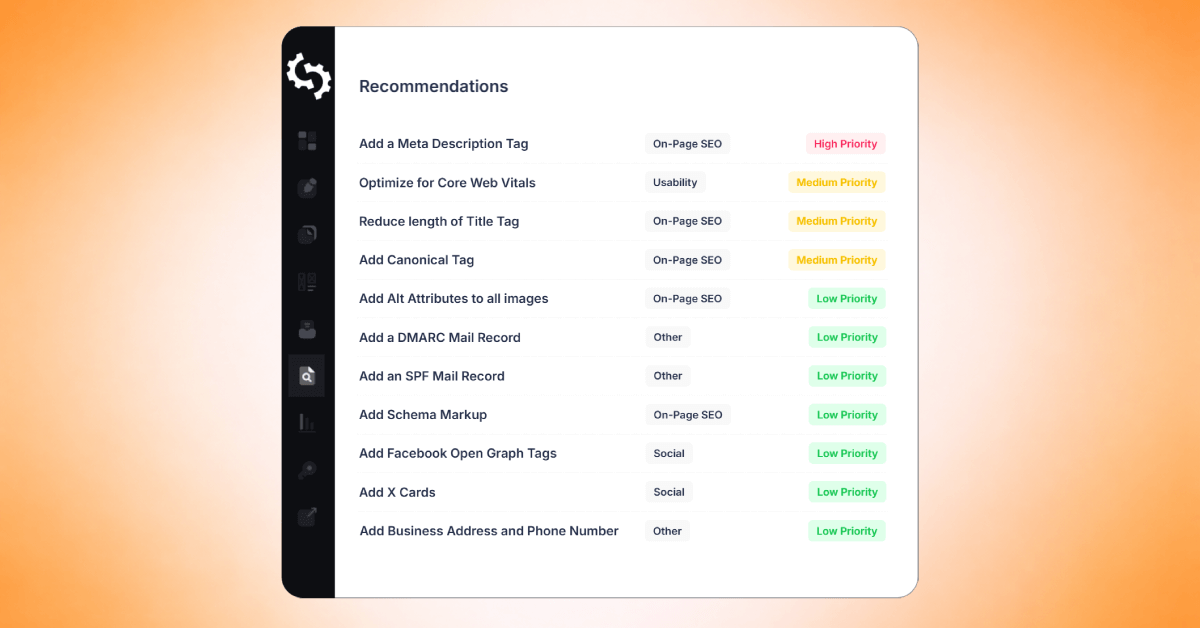
- Recommendations for improvement
- Insights across major SEO categories such as:
- On-page SEO
- Links and backlinks
- Website performance
- Usability
- Socials
SEO audits are designed to give you a quick snapshot of how well a website is optimized and what actions should be taken to improve its visibility in search engines.
What are Website Crawls?
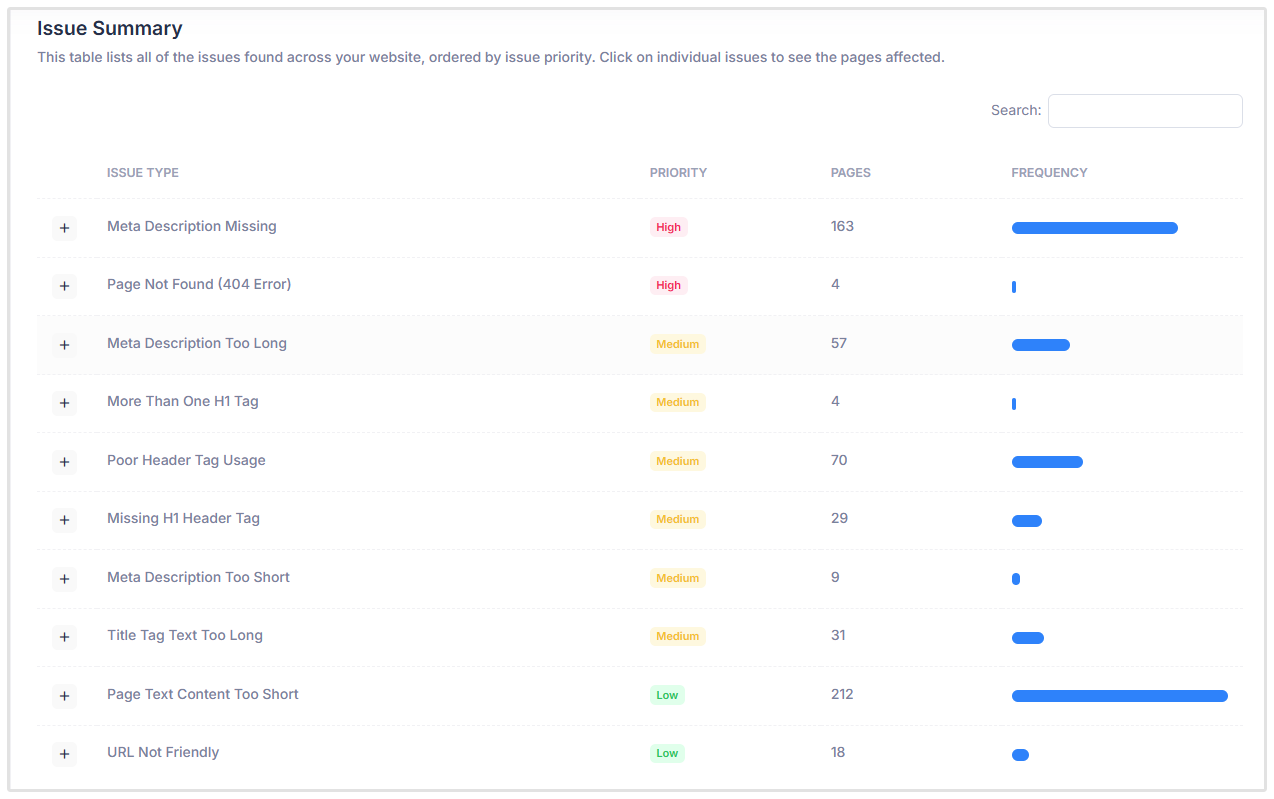
A Website Crawl is a more in-depth analysis that scans an entire website(up to 500 pages) rather than just a single page.
Instead of focusing only on the homepage or one URL, a crawler visits every accessible page on a website to identify issues with the site's On Page SEO.
SEOptimer’s SEO crawler helps uncover problems that can affect search engine indexing and overall SEO health by analyzing issues across multiple pages.
Typical issues detected during a crawl include:
- Missing meta titles or descriptions
- Title tags or meta descriptions that are too short
- Title tags or meta descriptions that are too long
- Missing H1 tag
- More than one H1 tag
- Poor header tag usage
- Page Text Content Too Short
- URL Not Friendly
- Page Not Found Errors
- No Redirect To HTTPS
- Favicon Not Found
- Analytics Tracking Missing
- Page Inaccessible or Server Error
Because crawlers analyze entire websites, they are particularly useful for larger websites where manual page-by-page analysis would be impractical.
Main Differences Between SEO Audits and SEO Crawls
While both tools analyze SEO performance, they serve different purposes. The SEO audit provides the option to create a comprehensive white labeled audit report that you can export as a PDF and send to your client without any further edits or customizations.
You could say this report is more of a customer facing report. This report covers various SEO areas including On Page SEO, Links, Performance and Usability and Socials however this is for a single page.
.png)
The Website Crawl report on the other hand is not white labeled and focuses on On Page SEO metrics across your website.
In simple terms, the SEO audit tells you how a page is performing, while Website Crawls show you what’s happening across your entire website for your On Page SEO.
When Should You Use SEO Audits?
SEO audits are best used when you need a quick overview of a website’s SEO performance.
Common situations where SEO audits are helpful include:
1. Evaluating a Website Quickly
If you want a fast snapshot of a site’s SEO health, running an audit can highlight the most important issues in seconds.
2. Lead Generation
Many agencies use SEO audits to generate leads by showing potential clients the improvements that can be made to their website.
3. Prospecting and Sales
Audit reports can be shared with potential clients to demonstrate SEO opportunities and start conversations about optimization.
4. Quick Website Reviews
Audits are also useful when you want to quickly review a page after making changes to confirm that key SEO elements are in place.
When Should You Use Website Crawls?
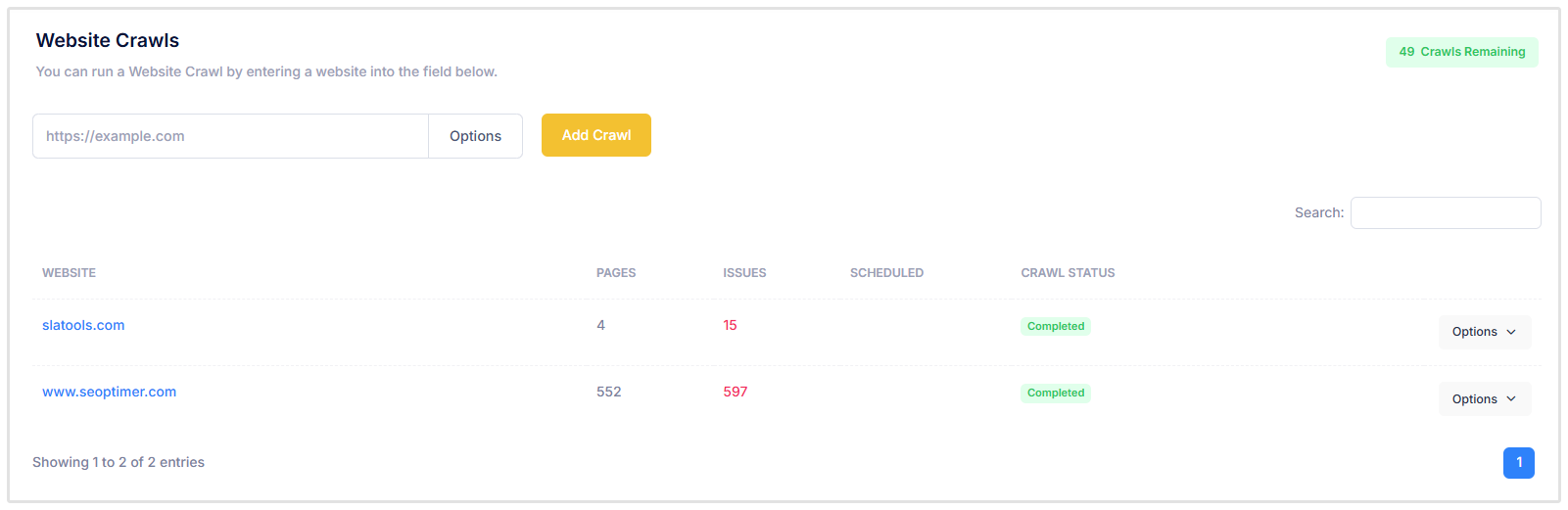
SEO crawls are best used when you need a deeper On Page analysis of a website.
Situations where SEO crawls are particularly useful include:
1. Auditing Large Websites
If your site has dozens or hundreds of pages, a crawler can analyze the entire site automatically and identify issues across all pages.
2. Monitoring On Page SEO
Running regular crawls allows you to track the On Page SEO of your site over time and catch new issues as they appear.
Wrapping Up
SEO audits and Website Crawls are both valuable tools for understanding and improving your website’s search performance. While audits provide a quick snapshot of how a single page is optimized, crawls offer a deeper look at On Page SEO issues across your entire site.
By using both tools together, you can identify immediate SEO improvements that may be affecting your website’s visibility in search engines.
Need Help?
Live Chat: Click Live Chat (bottom right)
Email: [email protected]
Response time: Within 24 hours
.png)