

Niche edits are one of the best ways to acquire organic inbound links to your website. It helps you build domain reputation, relevance, and authority in your business niche.
In link building, niche link insertions are highly popular because you don’t have to create content to acquire these links. Instead, you can pick existing pages on a website that are already ranking highly using your preferred anchor text.
Dofollow link insertions pass link equity and help you build a natural link profile, which is great for higher organic rankings.
Let us understand what niche edits are in link building and why they are so important in search engine optimization.
What are Niche Edits?
Niche edits are a powerful link building tactic where you place a contextual backlink into an existing content piece on an established website.
For instance, here's an example of a niche edit on the Klue blog linking to our guide on informational keywords.
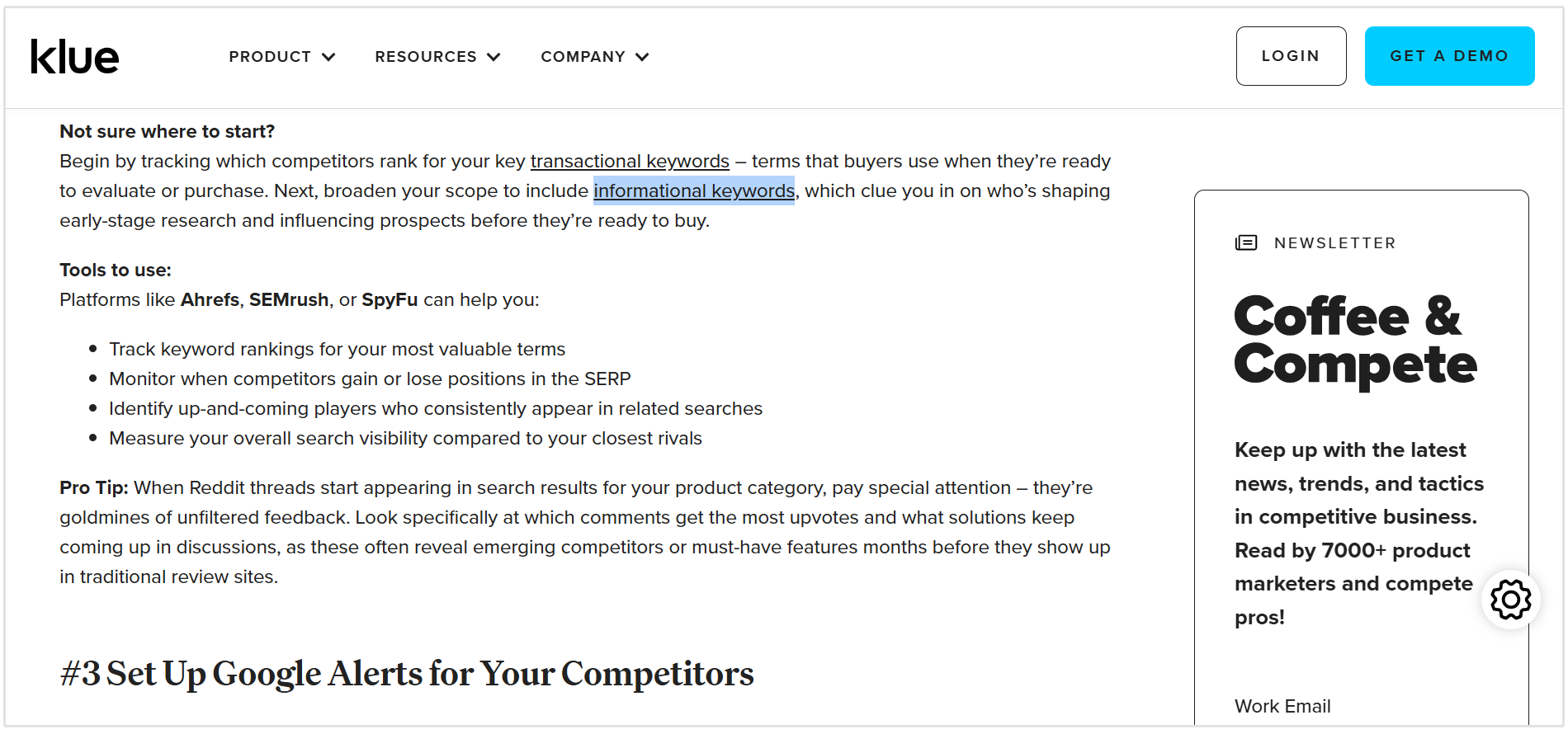
Unlike guest posts, where you write new articles, niche edits leverage content that is already published and indexed. In niche edits, you insert your website link naturally into a paragraph that is highly relevant to your topic.
Niche insertions are editorially given and hence are harder for Google to track as a technique for link spam. These links are embedded in aged articles and are seen as completely organic by search engines.
What is the Difference between Niche Edits and Guest Posts
Here are the primary differences between niche link placements and guest posts:
| Niche Edits | Guest Posts |
|---|---|
| Links are inserted into already-indexed and aged articles, giving them instant SEO credibility. | New content takes time to be indexed by search engines, so link building benefits build up more slowly. |
| Usually cheaper because no content needs to be created. | More expensive as new articles require to be created. |
| Offers faster turnaround since you are working with existing content. | Requires more time for writing, site approval, and content publication. |
| Links can be placed on high-authority pages that already have traffic and trust signals. | Links come from new pages, and they might not carry as much SEO authority as older pages. |
| Indexed almost instantly since the article is already live and visible to search engines. | Needs to be crawled and indexed from scratch, which can delay visibility and link juice flow. |
Are Niche Edits Safe for SEO?
Yes, niche link placements are safe for SEO when you do it in the right manner. Niche link insertions are done into pages that are already live and (in some cases) ranking higher in SERP for several keywords. Hence, you get instant link value, which helps your page rank faster.
You need to ensure that your website link is included in a well-maintained, topic-relevant article on a clean and respected site. Since dofollow niche links are editorial, you get the full link equity that builds up into a natural and high-quality link profile.
However, if you pick irrelevant, spam, and PBN sites for link insertions, then it might lead to an accumulation of unnatural backlinks.
Moreover, buying bulk links from low-quality content websites that publish content on all topics, instead of a particular niche, and links to low-quality domains can lead to link spam. Links from pages with a high-OBL count and exact-match anchors can also trigger search engine penalties and hurt your SEO instead of helping it.
Hence, you should always check the site’s authority, traffic, and content quality before placing a link. Avoid over-optimized anchor text and ensure the link fits naturally in the paragraph.
So yes, niche edits can be very safe for SEO if you build them from high-authority and relevant websites. They offer quick results without needing to create new content, but quality control is everything.
Benefits of Niche Edits
Here are the top advantages of niche link insertions:
They Help You Build a Natural Link Profile
White-hat niche edits help you build a more diverse and natural backlink profile by inserting links into well-known and niche-relevant blogs. The contextuality of these placements ensures that your links appear editorial and not promotional.
Unsure if your website has a natural link profile? Use our Free Backlink Checker tool to get a detailed summary of your site's link profile.
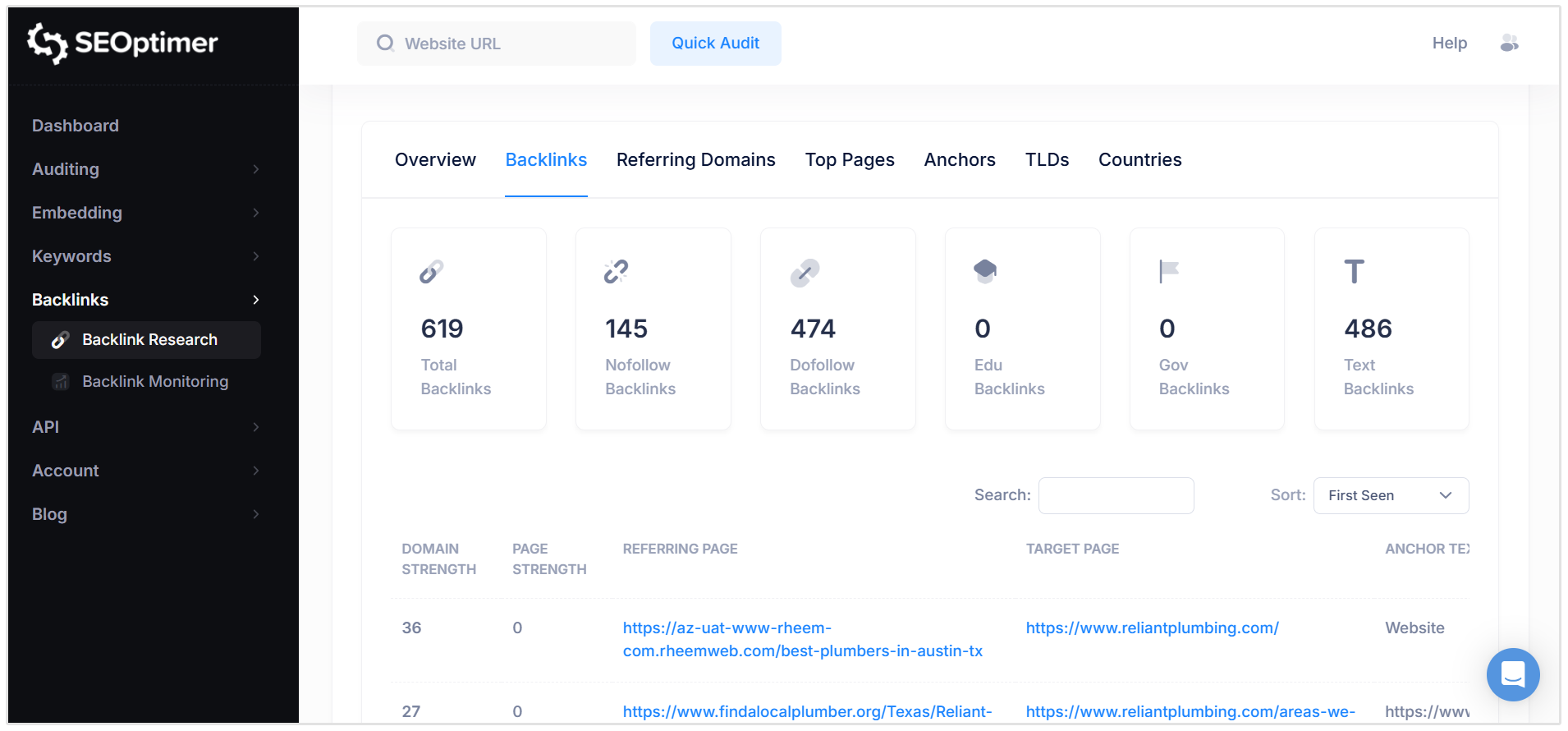
Niche link insertions using natural anchors follow search engine guidelines and hence don’t always lead to Google penalties. Most SEO experts leverage authority-building niche link placements to strengthen domain reputation without triggering spam filters or penalties.
Niche Edits are Faster to Acquire
With niche edits, there is no need to write new content or wait for editorial content review.
You can find relevant websites for niche edits by leveraging different tactics, such as broken link building, resource page link building, or direct outreach campaigns. Once your request is approved, you can easily gain quick backlinks.
Besides being faster to acquire, niche link placements lead to SEO-relevant link insertions directly into aged content. Hence, these organic and editorially given links are good for campaigns that need momentum.
Chris Kirksey, the Founder & CEO at Direction.com, an agency specializing in healthcare and medical SEO services, says that getting niche edits in evergreen content is a tactic they employ at their agency.
Another move that works well for me, is targeting evergreen pages like guides or resource lists. These pages often keep picking up new backlinks naturally because other writers keep referencing them.
If my link is sitting on that kind of page, the value of my edit grows over time without me lifting a finger. That is where niche edits turn from a one time boost into something that keeps delivering results.
- Chris Kirksey, the Founder & CEO at Direction.com
Since your links are placed on content that is already indexed, they gain visibility faster, and Google passes link equity more quickly than waiting for a guest post to be published and indexed.
They are Topically-Relevant and Lead to Relevant Referral Traffic
SEO niche edit link building is done on sites that are relevant to your theme, niche, or business.
They should be placed on content and paragraphs relevant to the linked page. These are not random placements and are carefully inserted into existing articles that already rank or hold authority in your industry.
Because of this high degree of contextuality, niche edit inbound links are seen by search engines as topically relevant, which strengthens your site’s topical authority. Google values topic-match relevance, and niche edits directly support that by associating your site with established, trustworthy content.
Your link is placed in the right context, and hence, this leads to relevant referral traffic and noteworthy leads.
Niche Edits are Affordable Compared to Guest Posts
According to RhinoRank, a link-building agency, the price of a guest post on a website with a Domain Authority of 50+ can cost anywhere between $800 to $1,000.
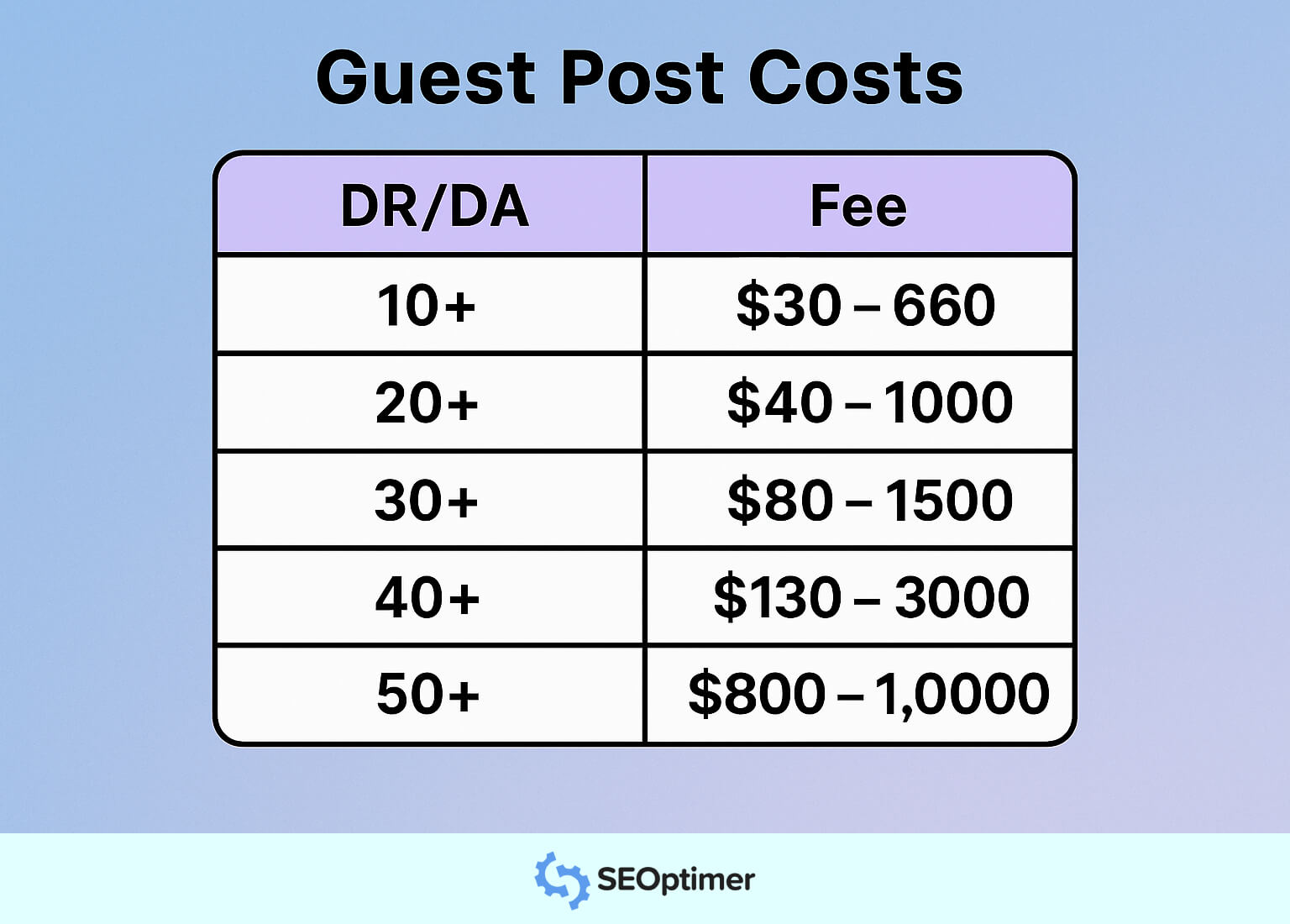
Guest posts are mostly costly compared to link insertions since you need a high-quality article that should be approved, edited, and published.
Most website owners nowadays ask for long-form content, which is generally more than 2000 words. Hence, the cost of content creation adds up. White-hat niche edits, on the other hand, skip the step of content creation.
In niche link placements, you do not pay for an article, but for a contextual, SEO-relevant link inside existing content. This makes niche edits more affordable while still retaining high content quality.
They Help You Build Links to Commercial Pages
Niche edit link building allows direct placement of contextual backlinks on commercial pages such as service pages, product listings, and landing pages. Most guest blogs avoid linking to money pages and add your link in non-impact sections like author bios.
Niche edits offer full flexibility for inserting SEO-relevant links within existing, topic-aligned content on authoritative websites. Contextual link placement in relevant paragraphs increases the likelihood of higher rankings for transactional keywords.
Hence, authority-building niche edit backlinks placed on already-ranking URLs lead to immediate organic growth.
Niche Edits Risks and Red Flags
Each link pointing to your website has a risk if they don’t meet the search engine guidelines. Hence, you should carefully review and audit your website’s backlink profile regularly to detect low-quality incoming links.
Here are some of the red flags to watch out for when building niche edit links:
Links Placed on Low-Quality or Abandoned Domains
One major concern with niche edits involves placement on websites that lack real readership or engagement.
There are link sellers in the market who use expired or recycled domains that have little to no current authority, even if the website metrics appear strong. Such domains may have once held value, but now serve solely as link farms offering minimal relevance or traffic.
Search engines can detect when links appear on sites with unnatural patterns or artificial signals. Links from low-quality domains lead to reduced SEO effectiveness or even algorithmic downgrades.
Hence, you should always assess whether the domain has recent, original content and active subscribers. Avoid relying solely on surface-level metrics like DA, DR, or Domain Reputation. You should always check organic traffic, page traffic, OBL count, and follow attributes before building niche links.
Here are some of the most important link building metrics to track.
Content Relevance Mismatch
A link inserted into unrelated content might be flagged as manipulative by ranking algorithms. According to Google and other search engines, all links, whether inbound or outbound, should be contextually relevant.
Furthermore, topical mismatches dilute the value of the incoming link and weaken its distribution of link equity.
Therefore, you should always determine link relevance not just at the domain level, but at the page and paragraph level. Avoid taking links from irrelevant, duplicate, or low-value content. Links should be placed in content that is helpful and people-first.
Over-Optimized Anchor Text Usage
Using exact match anchors aggressively across multiple placements is a common red flag. While targeting keywords is important, repeated use of commercial anchors should be avoided. Such a pattern triggers link spam filters and reduces the trustworthiness of your website’s backlink profile.
You should always use a variety of anchor types, like brand names, generic phrases, partial matches, and naked URLs when building niche backlinks. Focusing too heavily on transactional or keyword-dense phrases attracts scrutiny, especially if the linked pages are sales-driven. Monitor anchor distribution carefully to maintain a balanced and safe profile.
No Editorial Control or Manual Review
You have a chance of an unnatural link profile if you build links from sites with no editorial review. If links are inserted without review or are approved instantly for a fee, it suggests a pay-to-link model. Buying links is a practice that violates search engine guidelines and results in penalties.
Sites with no editorial oversight allow unrelated or spammy links in exchange for quick payments. Lack of editorial review leads to low-quality content, grammatical errors, or link stuffing. Hence, you should always prioritize sites that follow a real review process, where editorial link placements are evaluated for relevance and quality.
How to Do Niche Edits the Right Way
Here are the steps to follow for building niche edit backlinks:
Step 1: Prepare a List of Relevant Link Targets
First, you need to find industry-relevant websites that you can approach for niche link insertions.
A niche edit on a page related to your industry will always perform better than one on a random page.
- Sasha Berson, Co-Founder and Chief Growth Executive at Grow Law
Look for blogs, news sites, resource pages, or content hubs with articles that match the content of the page you are looking to link to.
The best way to find suitable link targets is by searching for them on Google.
You can find link insertion opportunities from resource pages, blog posts, listicles, tutorials, and roundup articles. Remember to look for pages with existing content that already covers your topic and has room for adding relevant external references without disrupting the flow.
Depending on your industry, pages like "best tools for email marketing," "top law firm resources," or "recommended crypto platforms" are perfect because they can naturally include outbound links and are updated over time. Mostly, these pages rank well for on-topic keywords, attract natural backlinks, and hold topical authority, which makes them ideal targets.
Relevance is absolutely key if you want your niche edits to be successful.
In fact, Ben Duffy from Quirky Digital suggests that relevance is even more important than the domain's authority.
When building niche edits, the priority should always be finding sites that closely match your industry. Many link-building strategies focus heavily on high DR websites, but a lower DR site can still be valuable if it’s a highly relevant site.
- Ben Duffy, Client Development Manager at Quirky Digital
You can use the following search operators to find the best sites for link insertion based on your industry:
- intitle:resources + [your keyword]
- inurl:blog + [your keyword]
- best [your keyword] tools
- top [your keyword] websites
- "useful links" + [your keyword]
- "recommended resources" + [your keyword]
- [your keyword] statistics
For example, if my target link is an ‘HR management software’, I should find pages that talk about HR management or have a list of HR management tools. I searched with the query ‘best HR management tools’ to find a list of pages that have compiled a list of top tools, so that I can suggest my tool if it is not already listed.
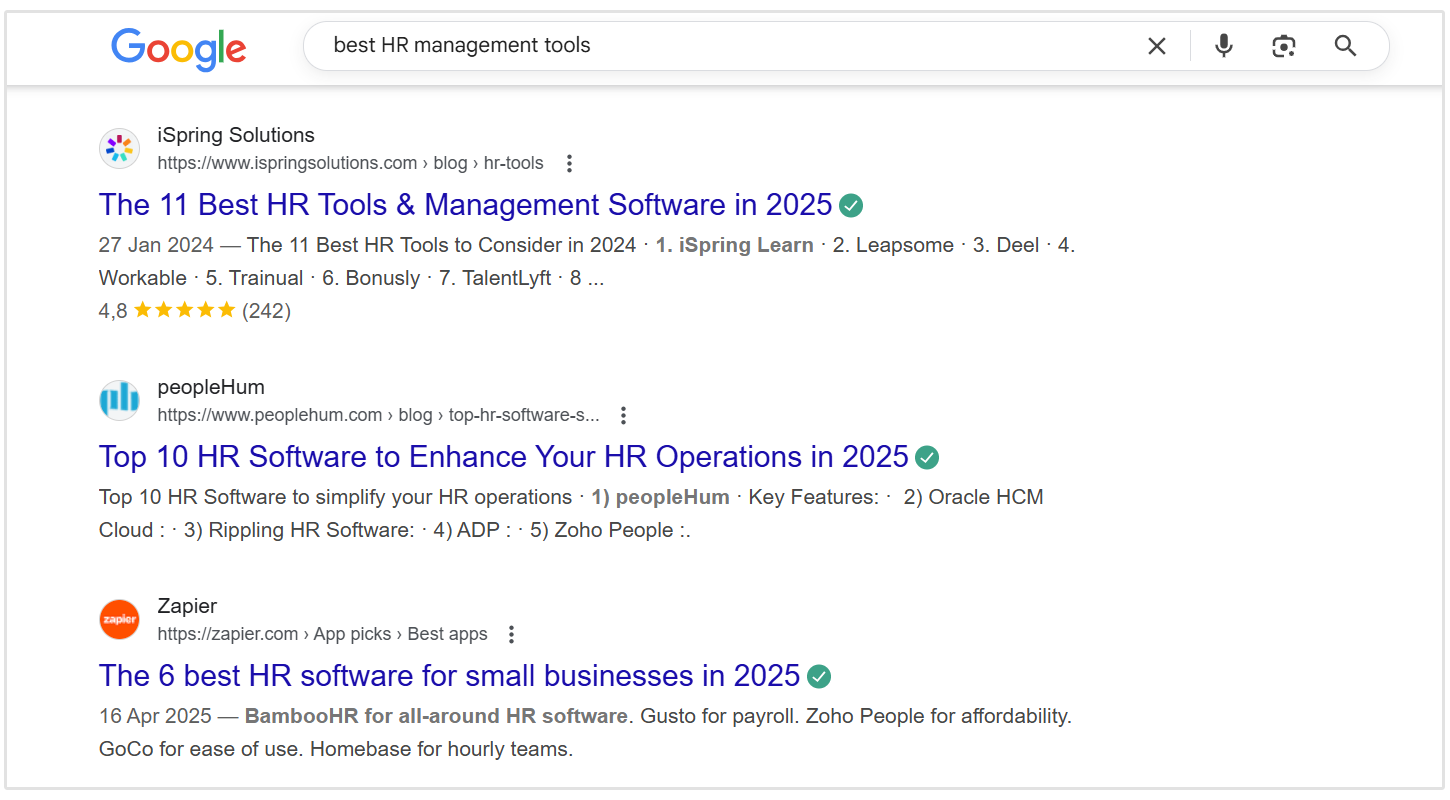
As you can see in the above screenshot, there are several pages that list the top HR management tools. However, you should continue your research to find websites that are not your direct competitors, as your organic rivals might not provide a link back to your site.
When I continued my research, I found more websites that do not sell HR software and instead have a resource page that lists the top HR tools. These are my ideal targets for link insertions.
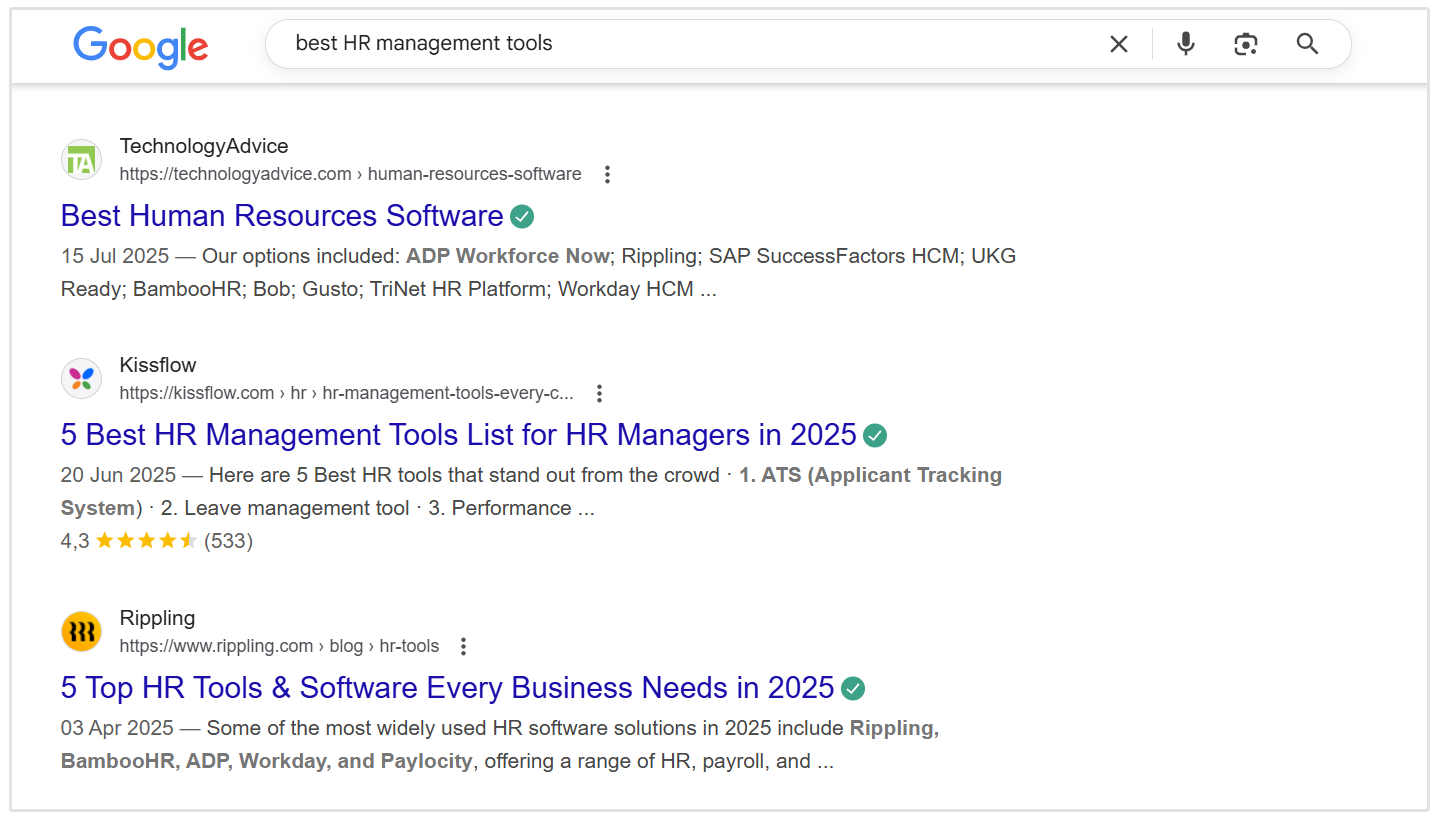
For the above resource pages, I should prepare a short snippet about my tool and give it to the website manager so that they can add it to the list along with my software link.
You should also search with other keywords to find even more resource pages. For instance, when I searched with the keyword ‘HR management statistics’, I found more pages that I can use to reach more link opportunities.
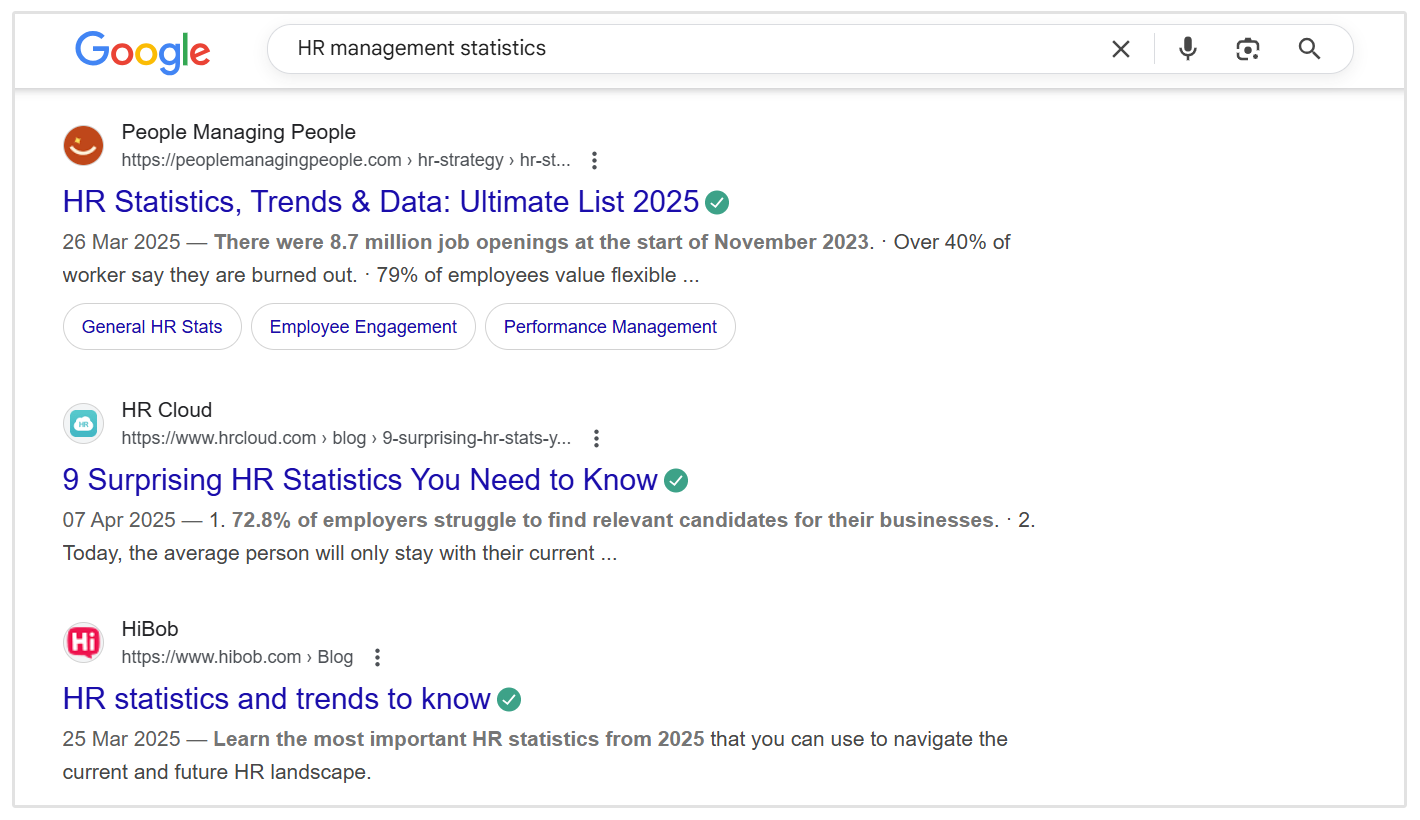
When you approach these resources, remember you should have the statistics listed on your page. You can try with different keywords to prepare a list of resource pages that can link to your primary page using your target or branded keyword.
By the end of the first step, you should have a list of target pages in Google Sheets or Excel.
Step 2: Analyze Their Metrics
Next, you should analyze domain-level and page-level metrics of each of the selected pages.
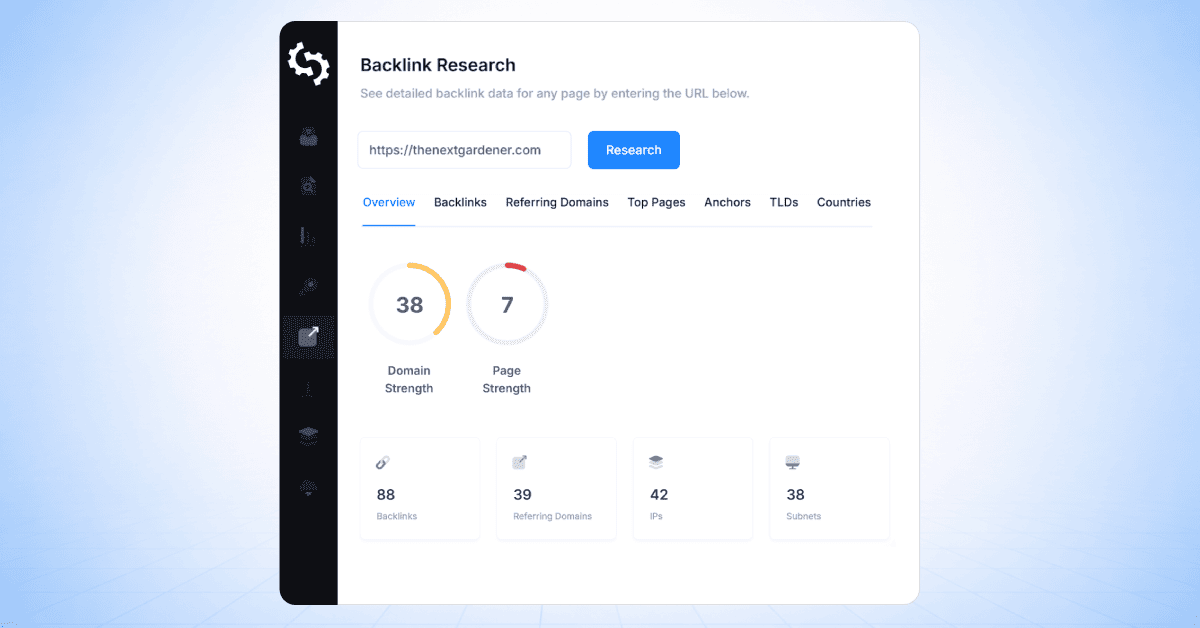
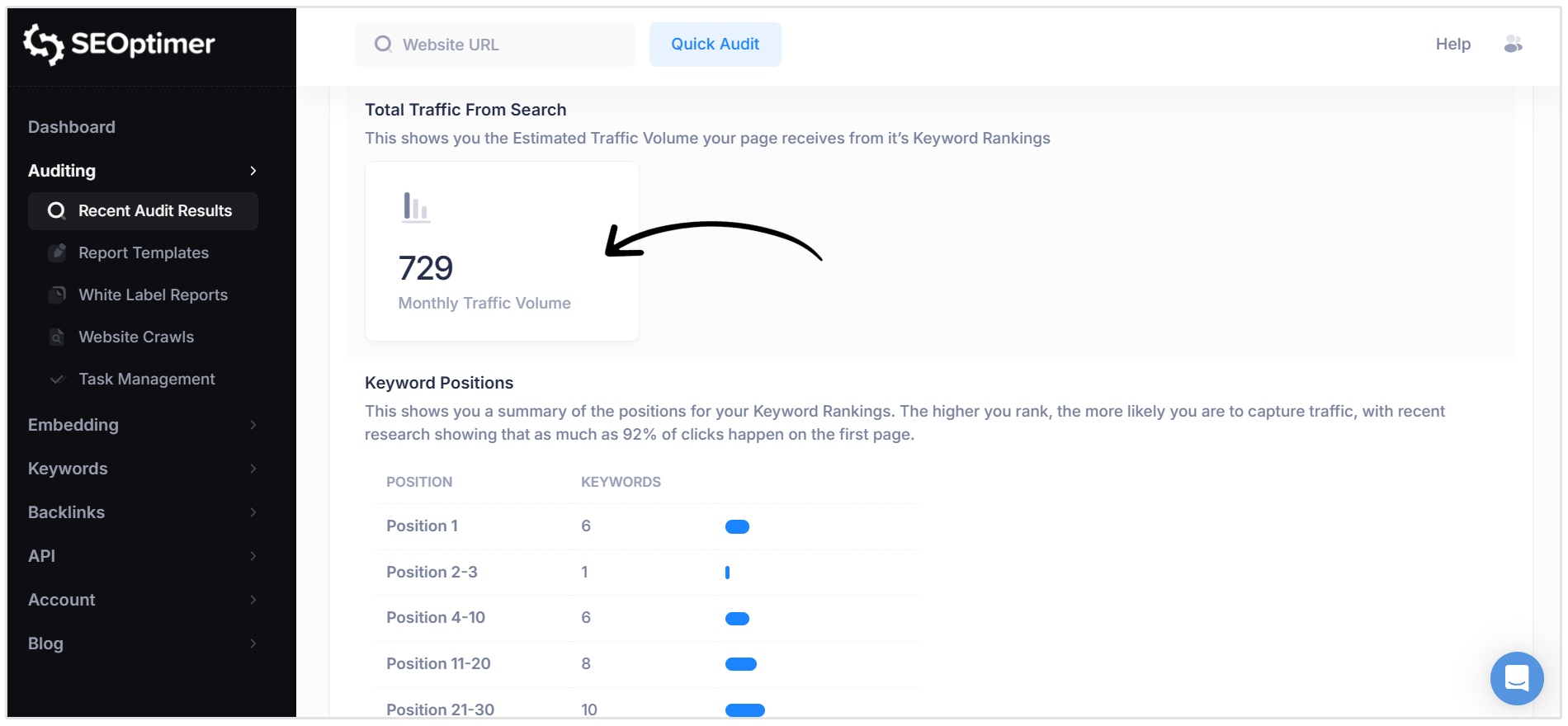
Use the SEOptimer SEO tool to analyze different website metrics to shortlist your ideal prospects.
Enter the URL one by one in the tool, and SEOptimer will provide useful information about the website and the page.
Note down the monthly traffic volume.
The Domain and Page Strength.
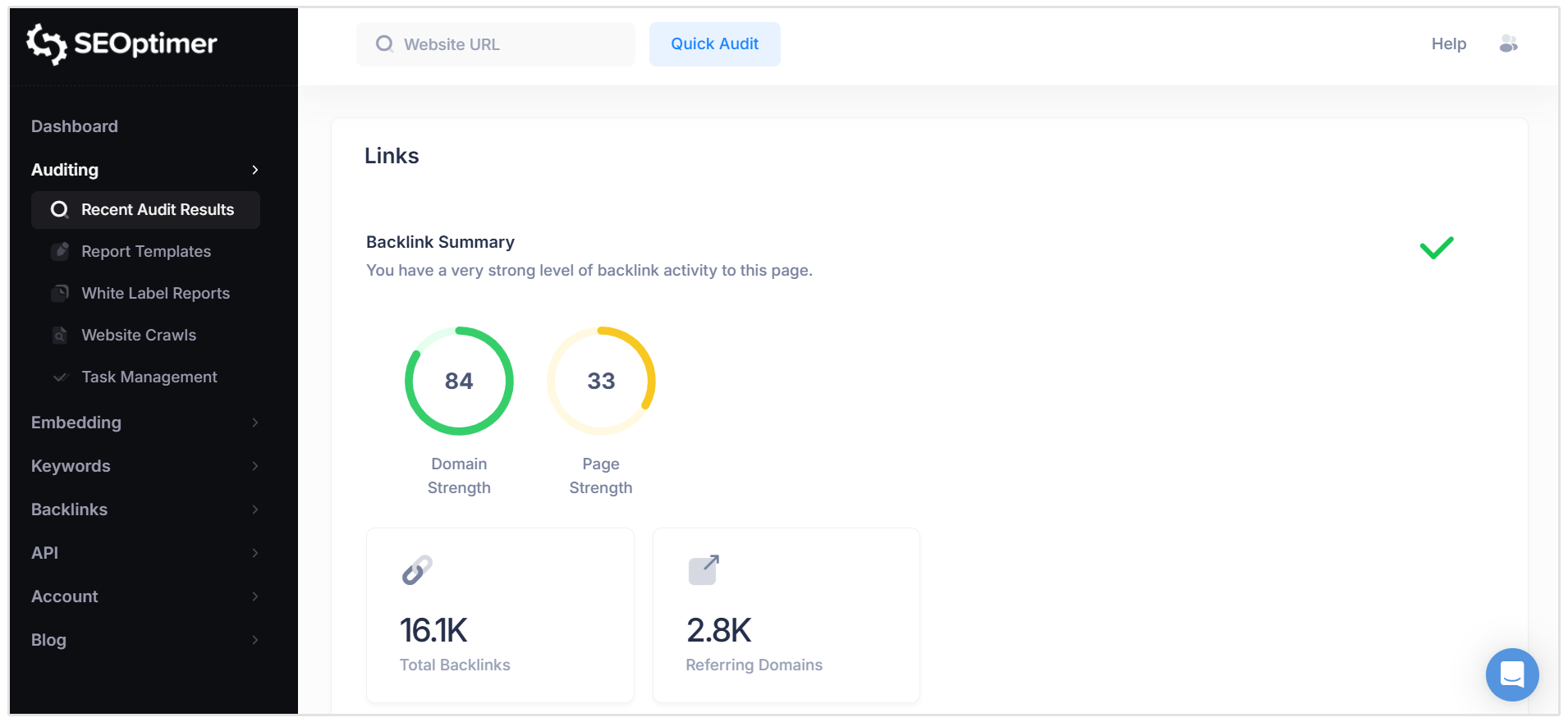
Enter this information in your tracking sheet. Now, check the number of OBLs and the link type on the page using a tool like the Small SEO Tools Website Links Count Checker.
The tool will show you the link type (dofollow/nofollow), the anchor text, and the number of external links on the page.
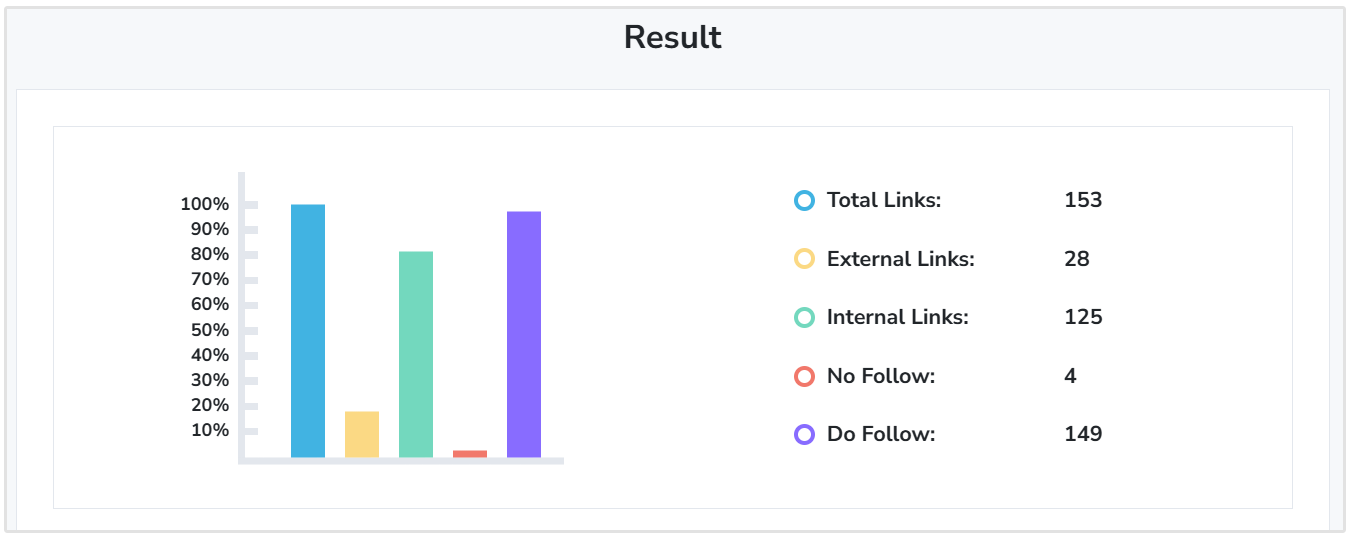
Pick pages having fewer than 30 external links.
The higher the number of external links, the lower the link equity transferred to your page.
Enter this information into your sheet for each of the URLs you have selected in step 1.
Step 3: Find Their Contact Information
Once you have shortlisted valuable niche link resources, find the contact email of the website’s admin, content manager, or the person responsible for editing the site.
You can scan the website’s contact page for the email or use tools like Hunter.io to find verified emails.
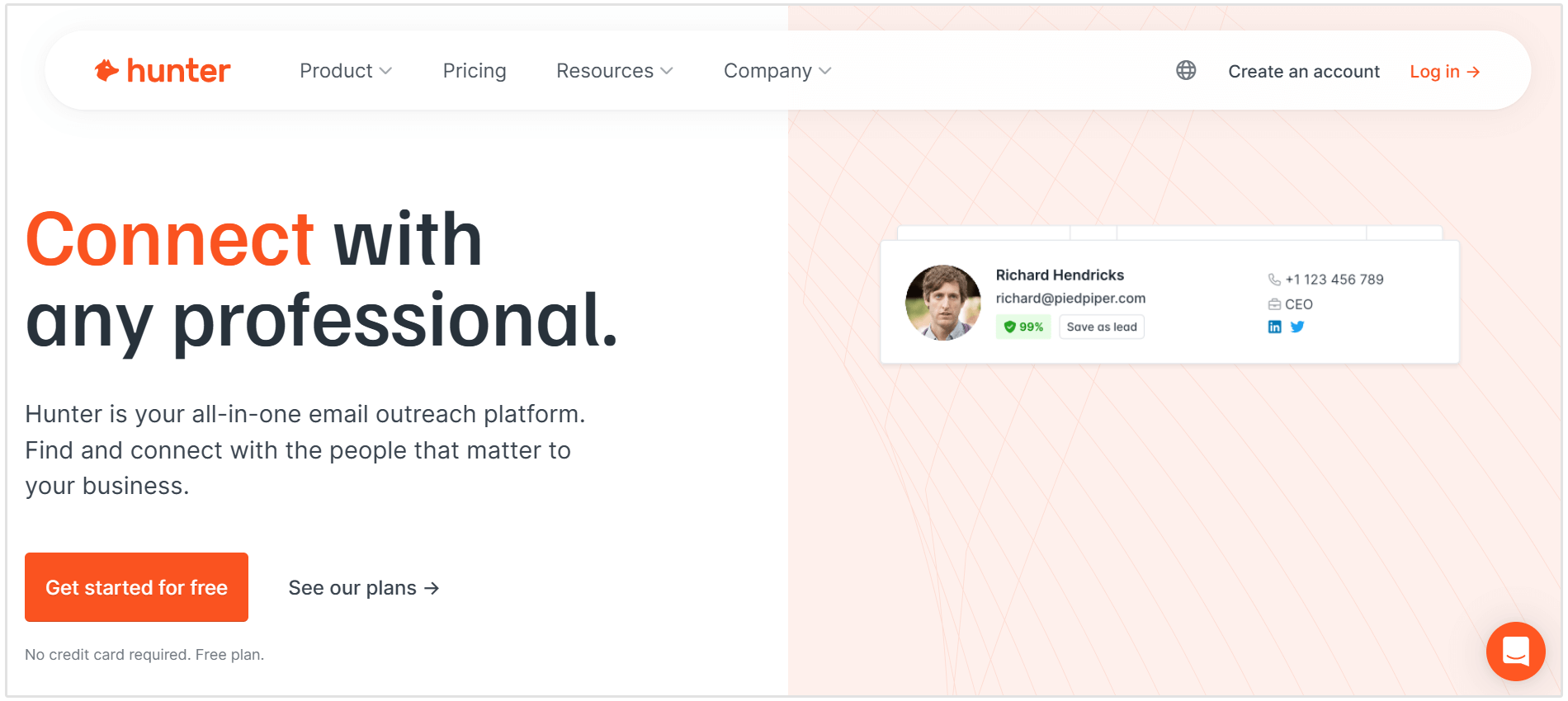
LinkedIn can also be beneficial in revealing verified professional contacts. Once you find the contact email, you can note it down in your sheet.
Step 4: Send a Personalized Email with Full Information
The most important aspect of your niche link building campaign is email writing. You should know how to prepare powerful emails that can initiate replies.
Remember, most of the website admins you are approaching already receive dozens of emails every day, so unless you tell them exactly what you need and why accepting your proposal is useful for them, your emails will get ignored.
Avoid generic templates that everyone else is sending. Prepare a human-written and compelling email that shows genuine interest. Keep it concise and mention the original benefit they will get by linking to your site. It should look like an opportunity they can’t miss. Here is a sample email:
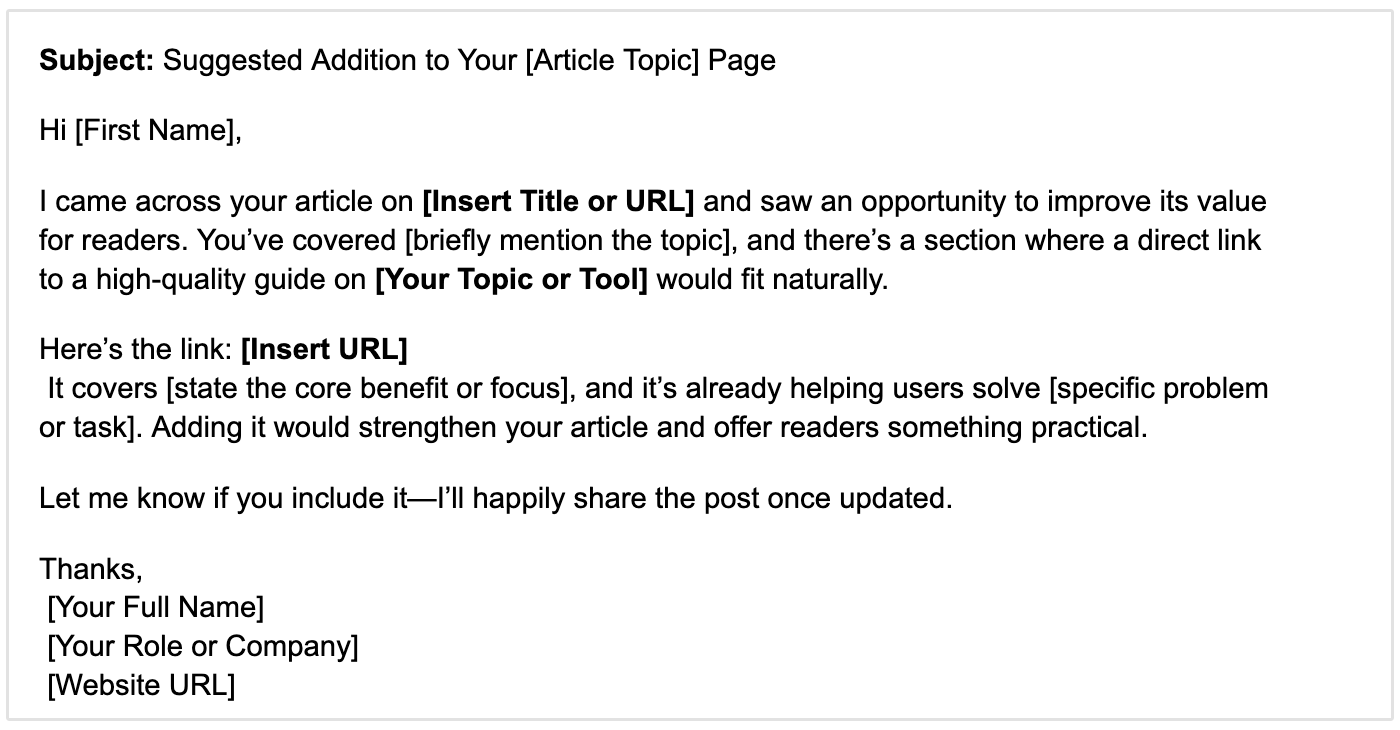
Please note: Most website owners nowadays might ask for a small fee for link insertion, which you should be ready to pay. Free link insertions are hardly approved, but paid ones get approved easily.
Step 5: Follow-Up
If there’s no response after 4–7 days, send a polite follow-up. Reiterate your original offer and express continued interest.
If necessary, send a second follow-up after another week. Use tools like Mailtrack or GMass to monitor email opens and time your follow-ups strategically. These tools share an instant notification as soon as your email gets opened.
According to a study done by BuzzStream, follow-ups can drastically improve response rates. They found that follow-up emails boost reply rates by 85%.
Follow-ups are important because most link insertions are live after 2-3 follow-ups.
Step 6: Monitor Your Links
Once the link is live, document it with the placement URL, anchor text, and date added.
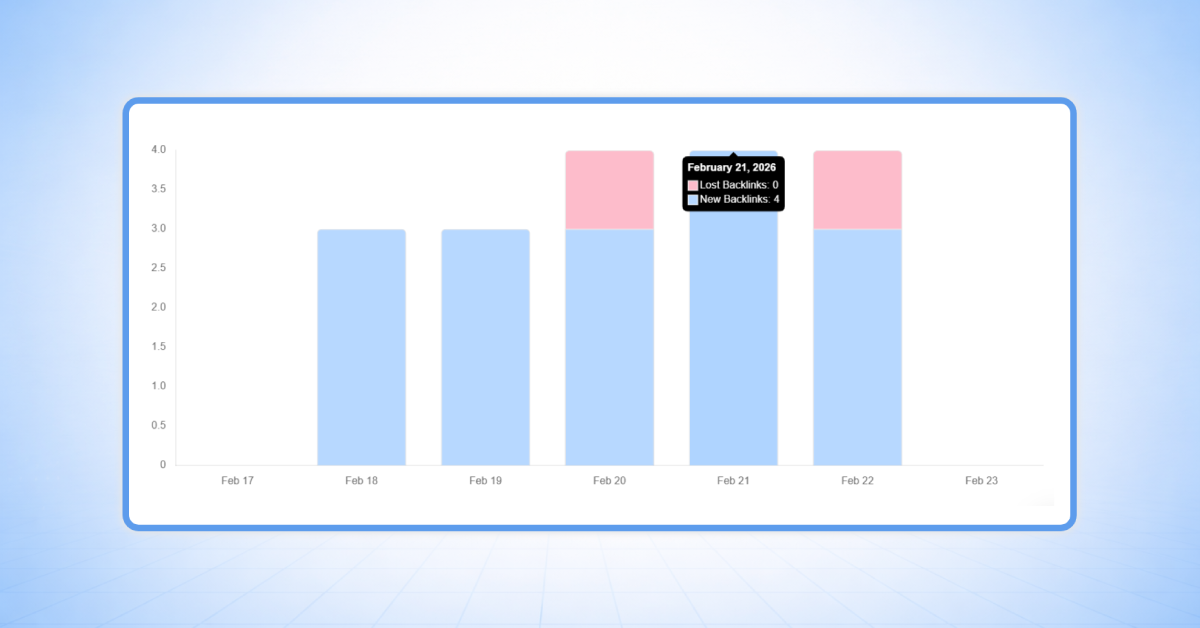
Use the SEOptimer backlink monitoring tool to track your links. With the help of SEOptimer, you can monitor all your backlink activity in one place, spot valuable new links, recover lost ones, and identify harmful backlinks before they affect your rankings.
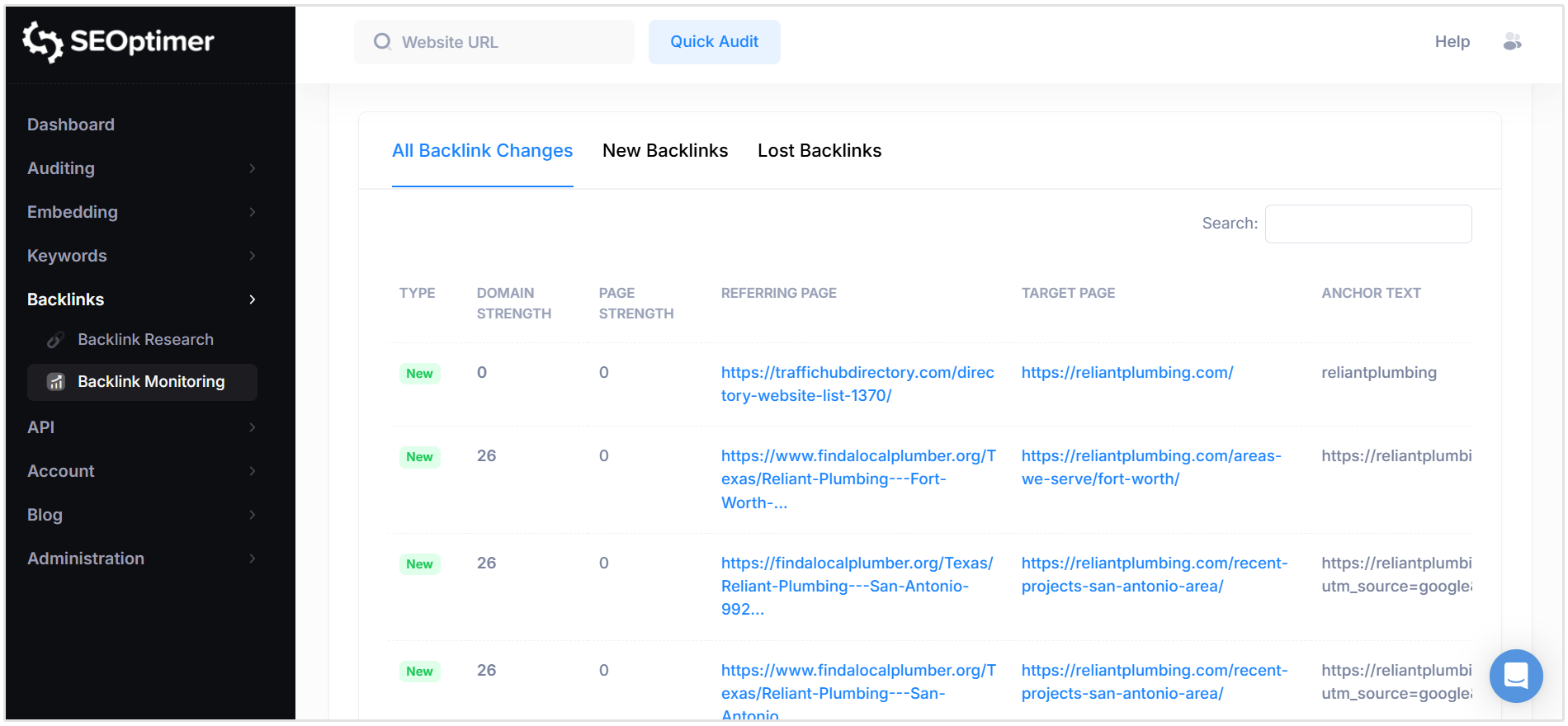
You can also track competitor link profiles to uncover new outreach opportunities and get real-time insights into how your SEO campaigns are performing. It simplifies backlink management and gives you full control over your link profile growth.
FAQs
What does niche edits mean in SEO?
Niche edits are a link building technique in SEO that helps you gain higher organic rankings and a natural link profile. Niche links are placed on pages that are already indexed and ranking.
Moreover, each link edit is placed within a paragraph that matches the target keyword or theme. Hence, they are safe when done in moderation and lead to a quick increase in domain reputation.
Are niche edits still useful?
Yes, niche edits are useful as a white-hat link acquisition strategy in 2025. When you place your links on trusted domains with decent organic traffic, quality content, and well-placed outbound links, you can enhance your site’s organic visibility.
Moreover, niche links are affordable when compared to other highly popular link building techniques like guest posts.
Can niche edits lead to Google penalties?
Most of the time, it won’t lead to a Google penalty, since niche links are one of the safest ways to build inbound links. However, improper use of niche edits can trigger penalties. You should avoid placing links on irrelevant websites and link farms.
Always check website metrics like organic traffic, number of ranking pages, Domain Strength, page reputation, OBL count, and dofollow link attribute before outreaching sites for niche edits.
What is the difference between niche edits and guest posts?
Niche edits refer to the practice of link building where links are placed in existing content, while guest posts require creating and publishing new articles. Niche edits deliver faster link value through aged authority compared to guest posts.
However, guest posts provide more control over the content compared to niche edit link insertions.
Conclusion
Niche edits offers smarter link acquisition by building links on aged content that already holds value in search engines.
Avoid link farms, PBNs, or shady marketplaces offering bulk edits at rock-bottom prices.
These are risky and violate Google’s webmaster guidelines. Instead, you should leverage genuine outreach, transparency, and relevance when doing niche edit link building.