

If you're not optimizing your site for AI tools like ChatGPT, Gemini, and AI search, you're missing out on valuable referrals and brand mentions.
As more people use these tools to find answers online, the way websites, content, and businesses get discovered is changing.
As a result, optimizing for traditional SEO alone is no longer enough.
That’s why we’re excited to introduce a new set of Generative Engine Optimization (GEO) checks designed to help you get your site ready for the new era of AI in Search.
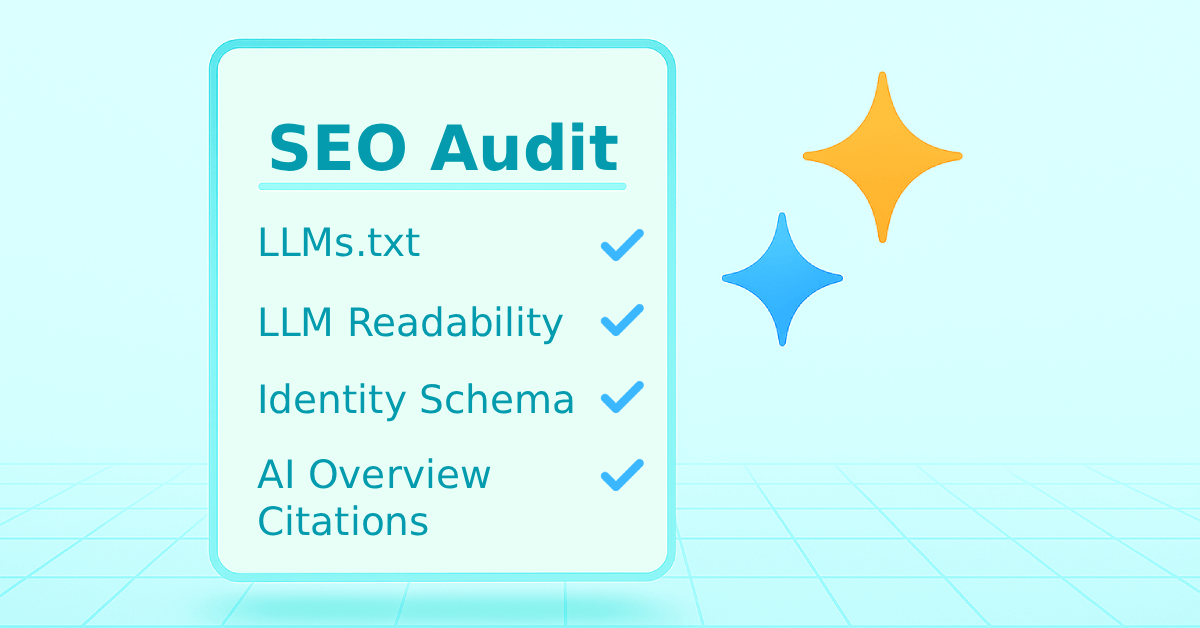
Here’s what’s new inside SEOptimer:
- AI Overview Citations and Traffic: Understand how your brand and website appear in AI Overviews and how much traffic is being driven from AI mentions.
- LLMs.txt File: Ensure your site has an LLMs.txt file so AI platforms know which pages to prioritize.
- Rendered Content (LLM Readability): Verify that your content is fully rendered and accessible to AI engines.
- Identity Schema: Check your site for essential structured data that helps AI correctly interpret your business details.
These checks give you a good starting point for optimizing your site for large language models (LLMs) and AI search engines.
Note: This update introduces our first set of Generative Engine Optimization (GEO) checks. We’ll continue adding new GEO insights and metrics in future releases to help you stay ahead as AI-driven search grows.
We've also released two Pay-Per-Click (PPC) performance checks for businesses running paid ads on Google.
All of these checks are available on all SEOptimer plans so you don't need to do anything extra to get access to them.
Let's take a closer look at each one and how it's useful.
Feature update
New AI Visibility Checks are Here. Is Your Site Ready?
Run a free audit to see how well your site is optimized for Google AI Overviews and LLMs.
Run Free Audit1. AI Overview Citations and Traffic
Google AI Overviews (previously known as Search Generative Experience) was first unveiled at Google I/O in May 2023 and officially rolled out in the U.S. in May 2024.
Since then, AI Overviews have started appearing in more and more search results.
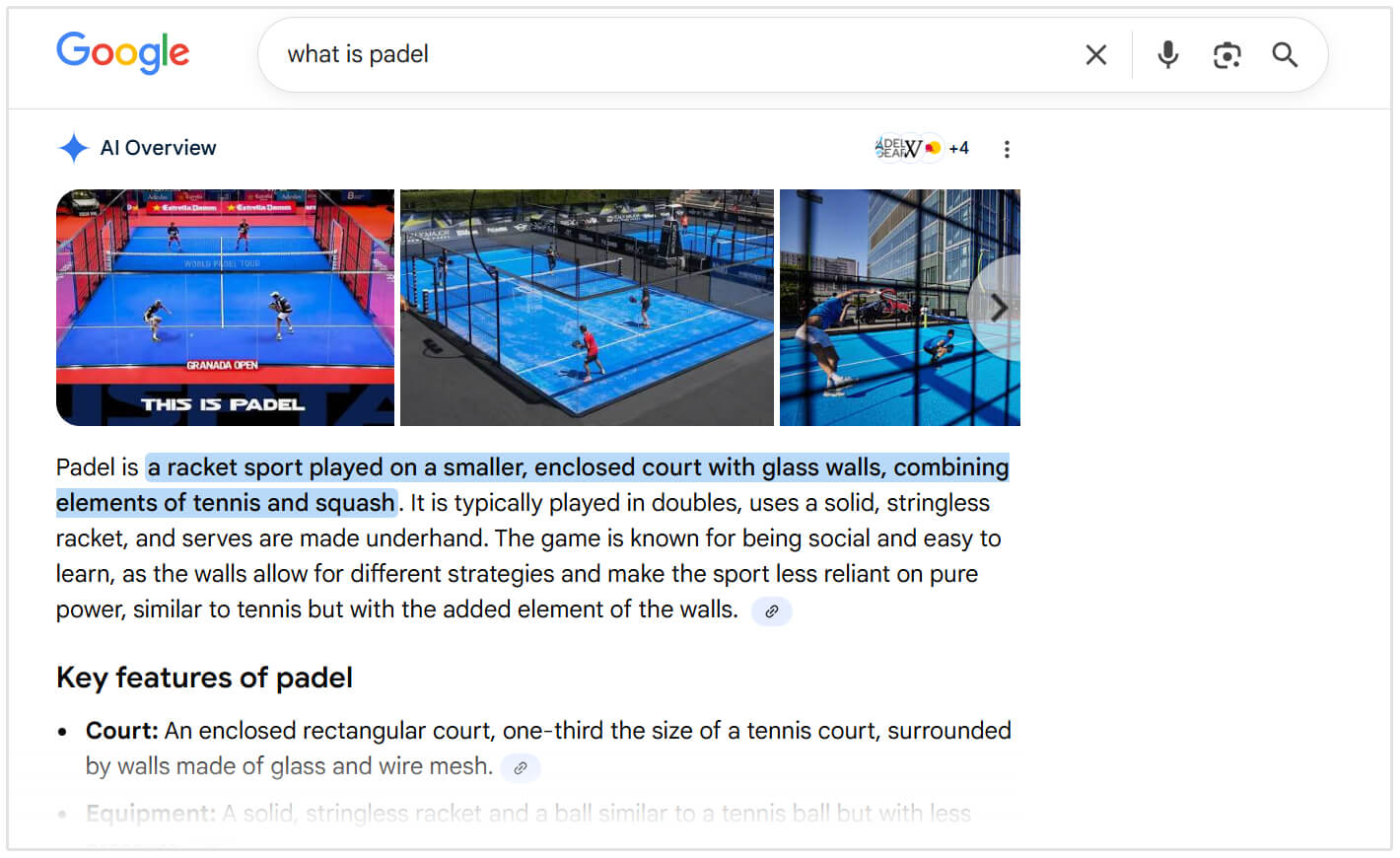
Optimizing for AI Overviews is now a central part of modern SEO.
These AI-generated summaries tend to include source links back to websites, which means that appearing in an AI Overview can boost both visibility and referral traffic from AI-driven search experiences.
With our new series of checks, you’ll now be able to track traffic from AI Overviews and see the top queries that trigger AI Overviews with your site cited.
You can view the traffic from AI Overviews at the top of the "Rankings" section in each report. (see the below screenshot)
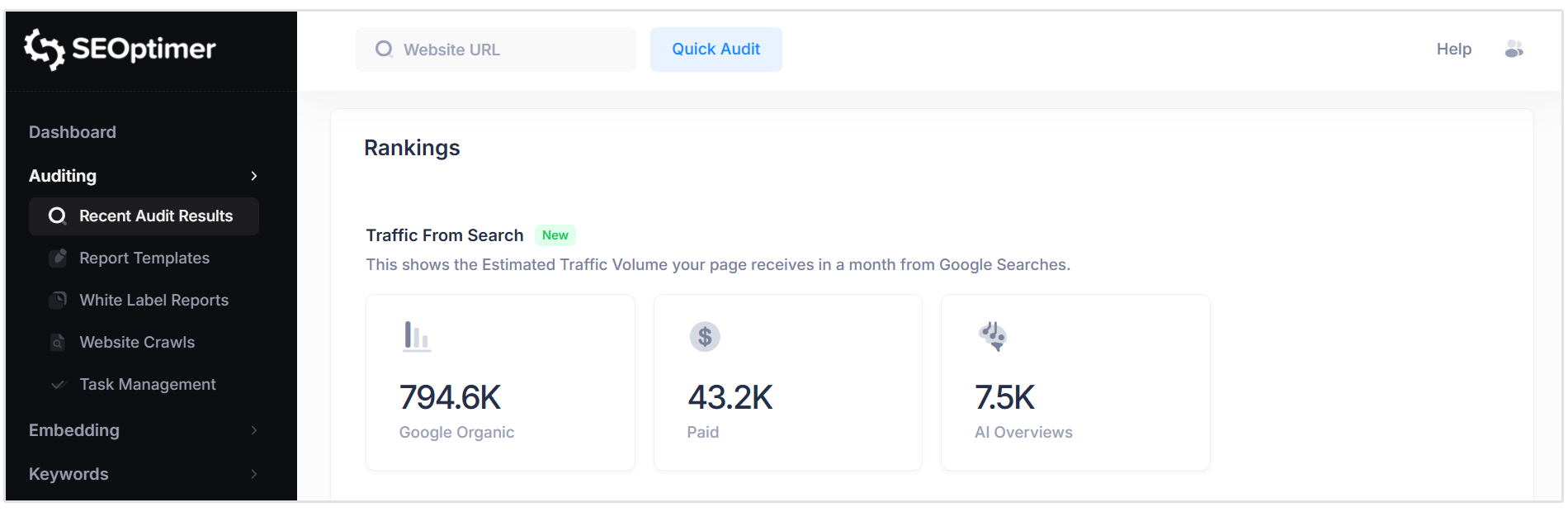
So with every audit that you run, you'll also see a table titled "Top AI Overview Citations" which shows the following data points about your presence in AI Overviews:
- Keyword / search query that triggered the AI Overview
- Country
- Position
- Total searches
- Estimated traffic
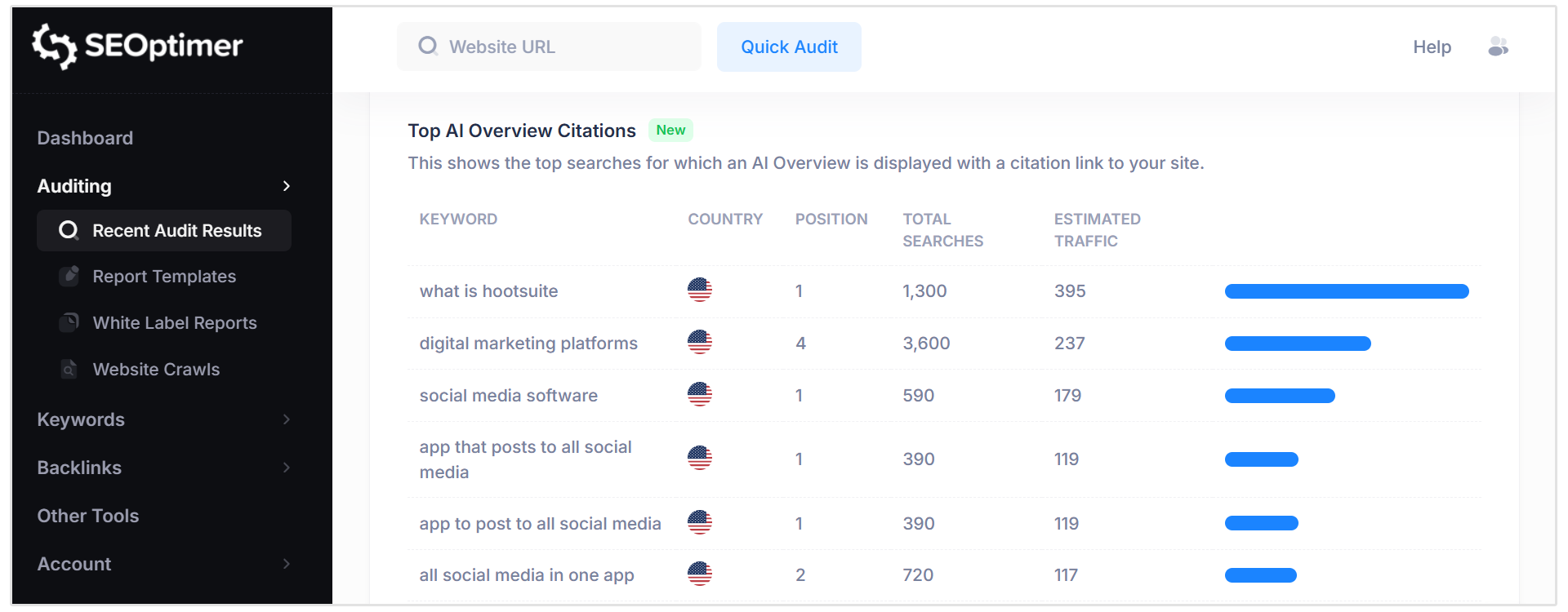
This table gives you a complete view of your brand's visibility in AI Overviews.
With this data, you have everything you need to gauge overall AI Overview performance and identify which queries drive the most traffic.
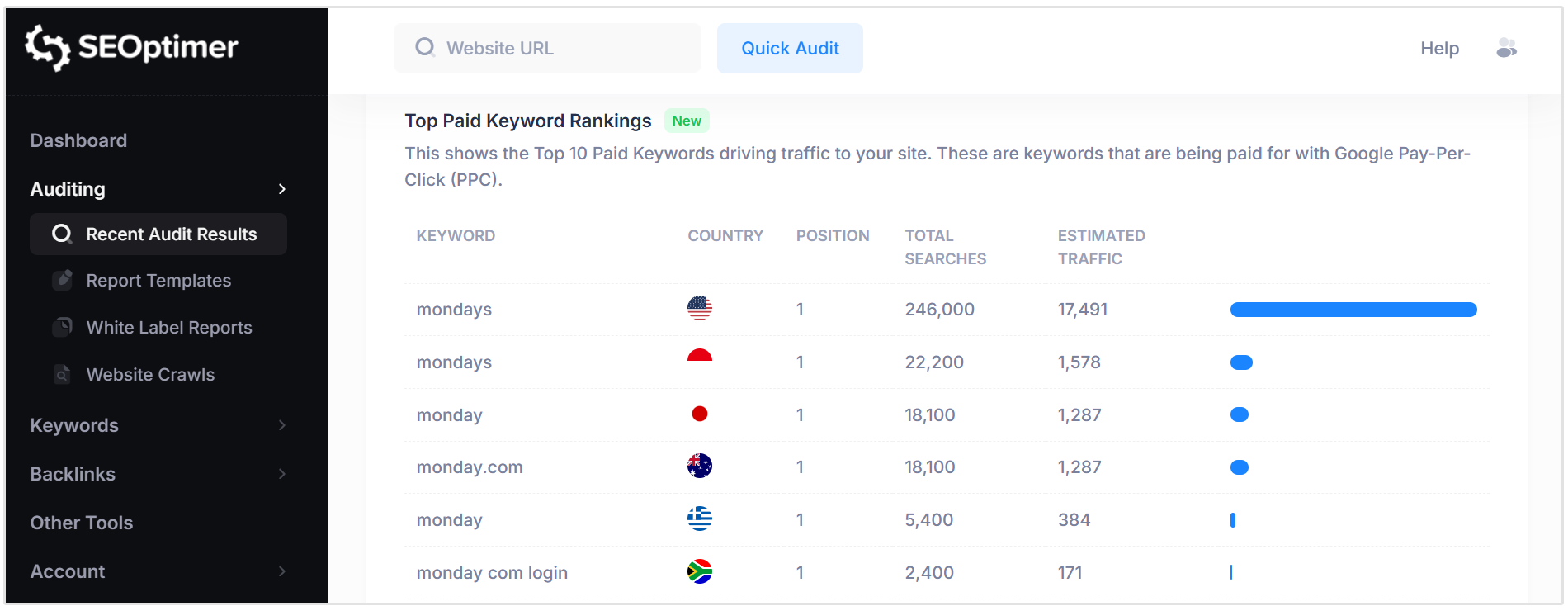
We also added some useful data on PPC marketing performance to get a complete overview of your presence on search.
As you can see from the above screenshot, you can see traffic from Paid ads.
But if you scroll down further you'll see a table with even more detailed PPC performance metrics like:
- The keyword you are bidding for
- Country
- Your position in sponsored results
- Total Searches
- Estimated Traffic
2. LLMs.txt File Check
The next check we are introducing is our LLMs.txt file check.
LLMs.txt is a proposed web file designed to help AI platforms identify and prioritize your site’s most important content.
Although it sounds very similar in name to robots.txt and sitemap.xml, its purpose is entirely different.
Unlike these two files, which control crawling or indexing, LLMs.txt is meant specifically to guide AI models to your key pages, such as high-value blog posts, product pages, or important documentation.
The file is placed at your site’s root (for example, yoursite.com/llms.txt) and uses headings and links to highlight the pages you want AI to notice.
For instance, you can view Hootsuite's LLMs.txt file at www.hootsuite.com/llms.txt.
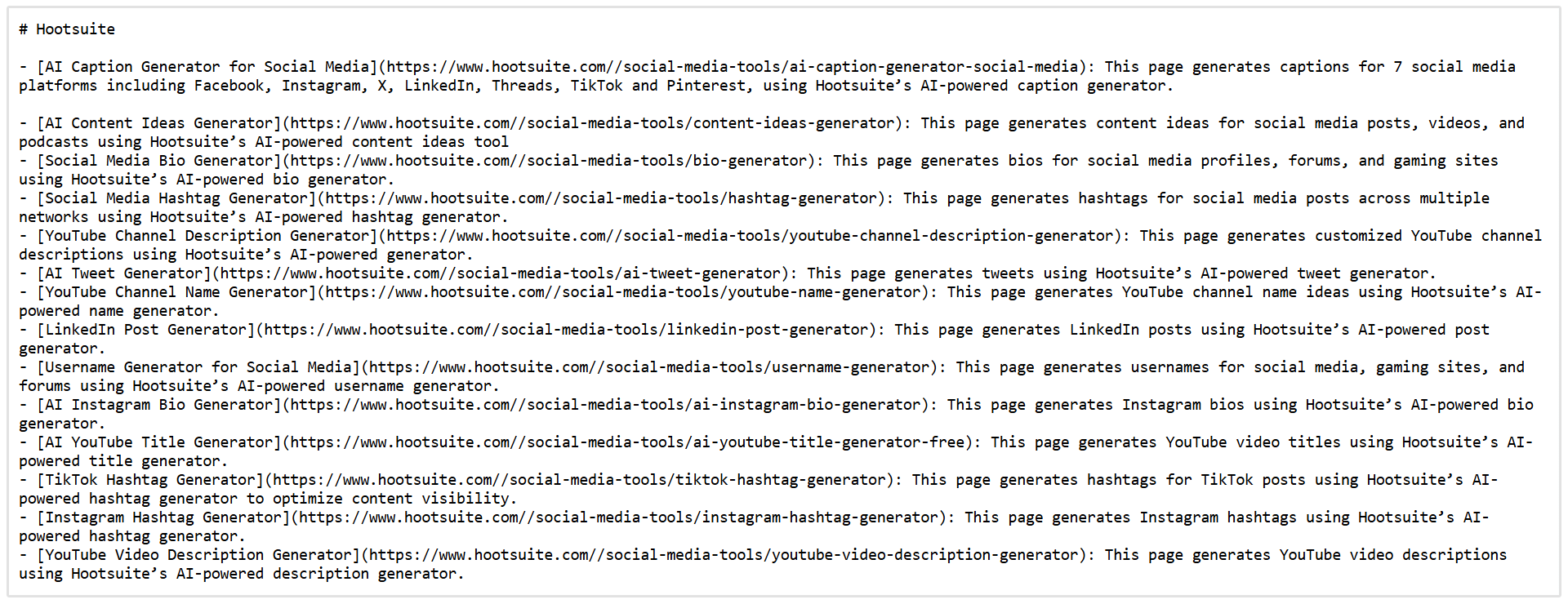
As you can see from the above screenshot, the LLMs.txt file contains a header (like Instagram Hashtag Generator) with a matching link to a page (in this case, Hootsuite's hashtag generator tool). And then there's a relevant description of the page content.
Our new LLMs.txt File check automatically scans your website to detect whether this file is present and correctly placed.
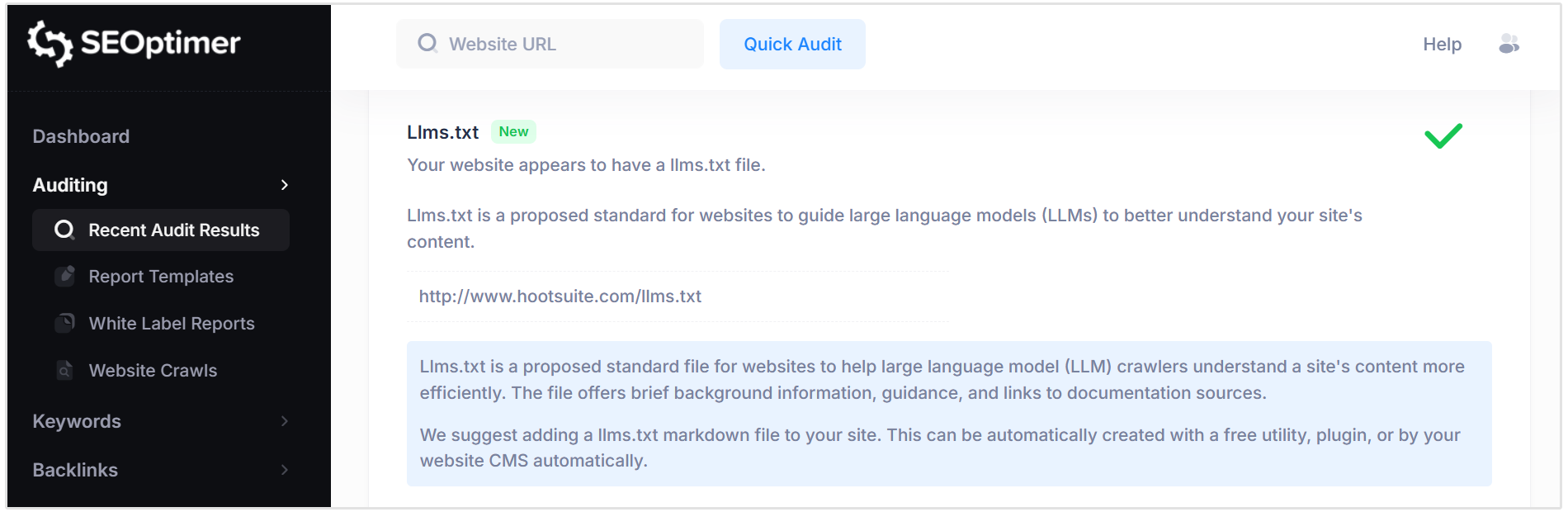
While no major AI platform has officially committed to using LLMs.txt yet, it’s a low-risk way to make your content more AI-friendly and if popular LLMs start using it in the future, you'll already be prepared.
3. Rendered Content (LLM Readability)
AI crawlers tend to only read the raw HTML of a webpage rather than the fully rendered version that users see in their browsers.
This is because LLMs are designed to parse static content (like text files or documents) more efficiently.
And rendering JavaScript-heavy websites at scale can take up a lot of resources, be expensive, and slow.
This means that any content loaded after the initial page load using JavaScript might not be visible to AI crawlers or large language models.
For example, a paragraph of text that’s hard-coded in your page’s HTML is static and easily readable by AI.
But if a key section of your page like product descriptions or testimonials is generated only after the browser executes JavaScript, that content may not appear in the raw HTML that LLMs see.
For example, research by DigitalPositions found that on Allbirds’ Men’s Collection page, the raw HTML shows almost no product names or prices until the JavaScript on the page runs.
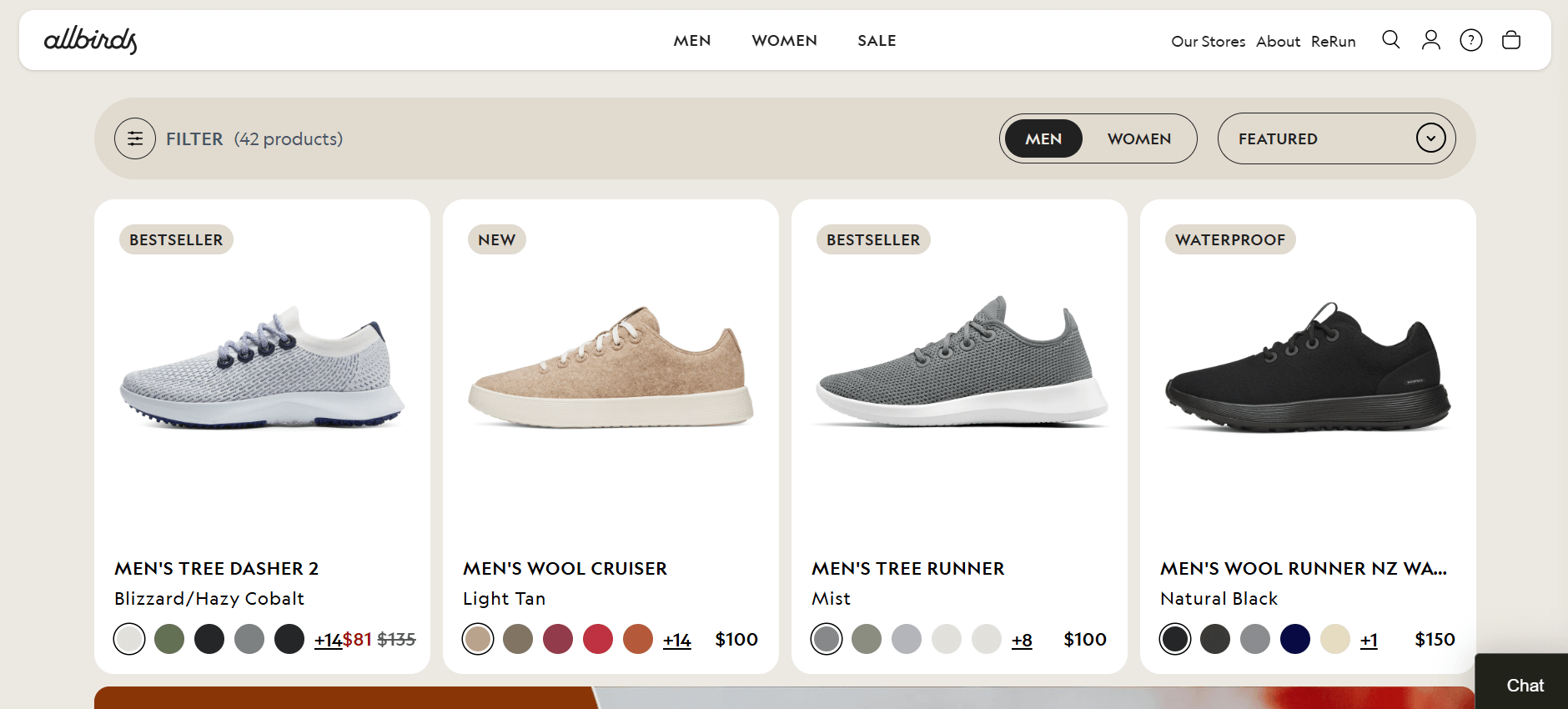
As a result, the information on the page is practically invisible for AI crawlers and bots.
Our new Rendered Content (LLM Readability) check analyzes your pages to identify whether important content is accessible in the static HTML or hidden behind dynamic rendering.
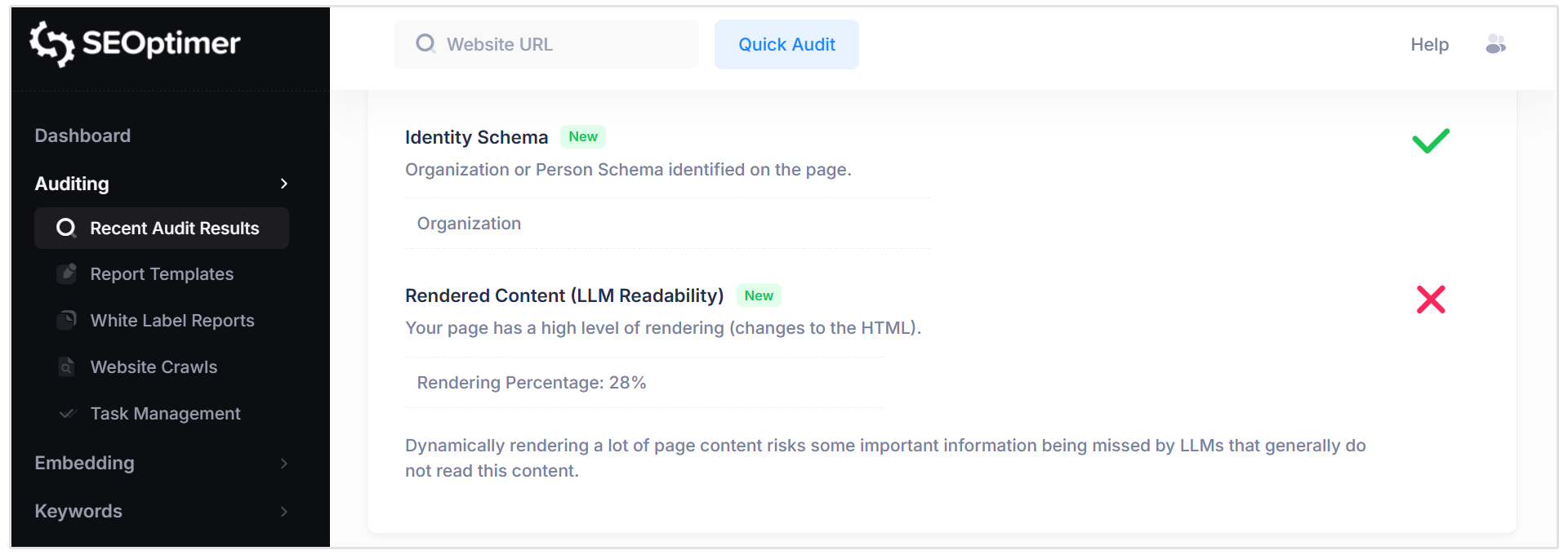
The higher the percentage, the more rendered content our system picked up on your site.
You want to try and get the Rendering Percentage score as low as possible.
To improve readability for AI platforms, ensure that all critical text and metadata are included in the initial HTML response whenever possible.
Avoid relying on plugins or frameworks that add important content dynamically, and consider server-side rendering for essential information if your site uses JavaScript frameworks like React or Vue.
Feature update
New AI Visibility Checks are Here. Is Your Site Ready?
Run a free audit to see how well your site is optimized for Google AI Overviews and LLMs.
Run Free Audit4. Identity Schema
Search engines and AI platforms rely on structured data to understand context.
Some of the most important types of structured data for AI visibility are Organization, Local Business, and Person Schema.
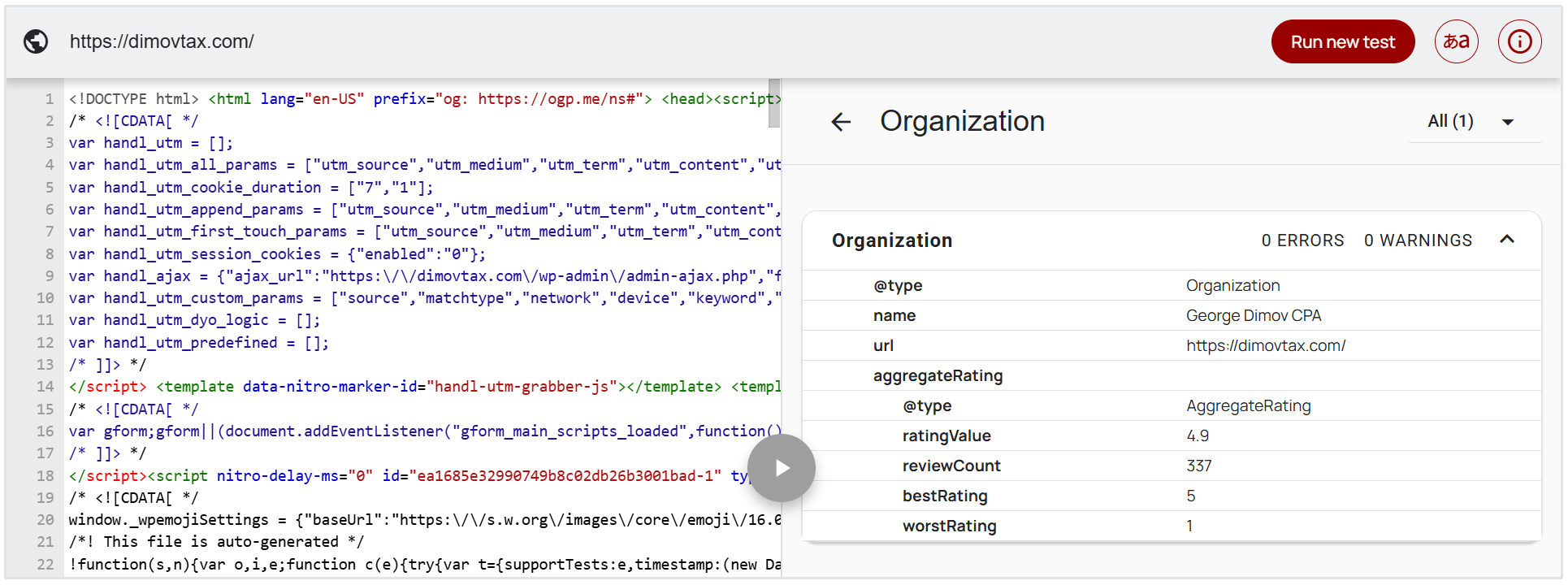
These schema types help clearly signal who you are to both search engines and LLMs, making it easier for them to connect your content, services, or expertise with your brand.
Without this data, AI platforms may struggle to confidently determine the ownership of a website, which can lead to missed opportunities in answering brand-related queries or even confusion with similarly named individuals or companies.
For example, if multiple people or businesses share the same name, having proper identity schema ensures that AI and search engines attribute the right content to you.
Our new Identity Schema check scans your website for the presence of these markup types and flags when they’re missing.
You can find the Identity Schema check in each audit right under the Schema.org Structured Data check.
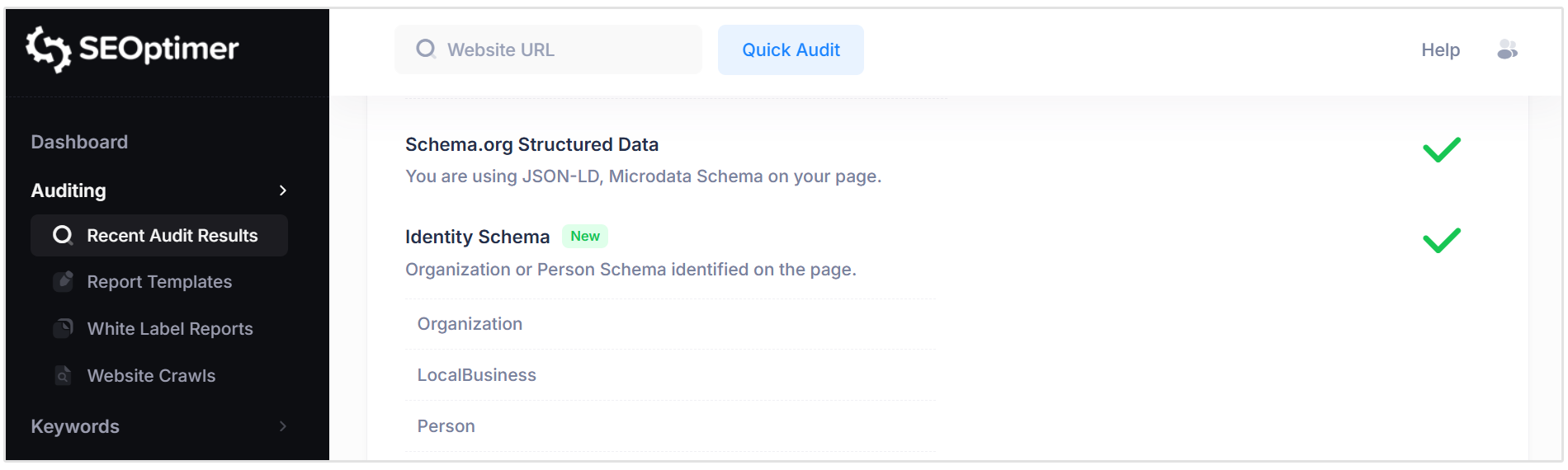
This makes it easier to confirm that your brand identity is clearly communicated to both search engines and AI models.
Implementing this schema depends on your website setup.
Many CMS platforms (like WordPress, Shopify, or Webflow) offer built-in fields or plugins to add schema automatically.
If yours doesn’t, you can generate it manually using an online schema generator and paste the JSON-LD code into your site’s <head> section.
For instance, Google has a Structured Data Markup Helper tool which you can use to generate identity schema for your site.
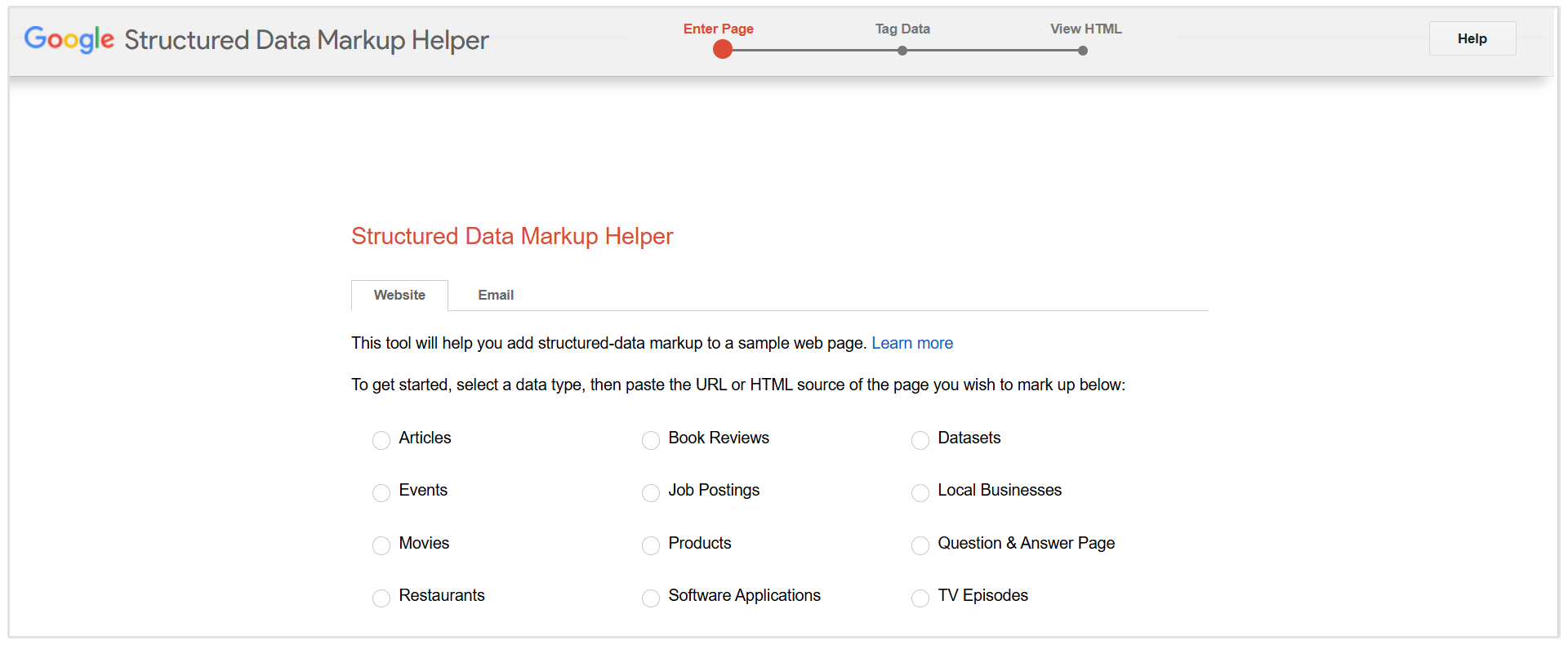
Adding clear identity schema helps AI and search engines better understand your brand, recommend your services, and display accurate details in knowledge panels or AI-generated answers.
Is Your Site GEO-Ready?
You can explore all of these new Generative Engine Optimization checks when you run an audit of your site.
Feature update
New AI Visibility Checks are Here. Is Your Site Ready?
Run a free audit to see how well your site is optimized for Google AI Overviews and LLMs.
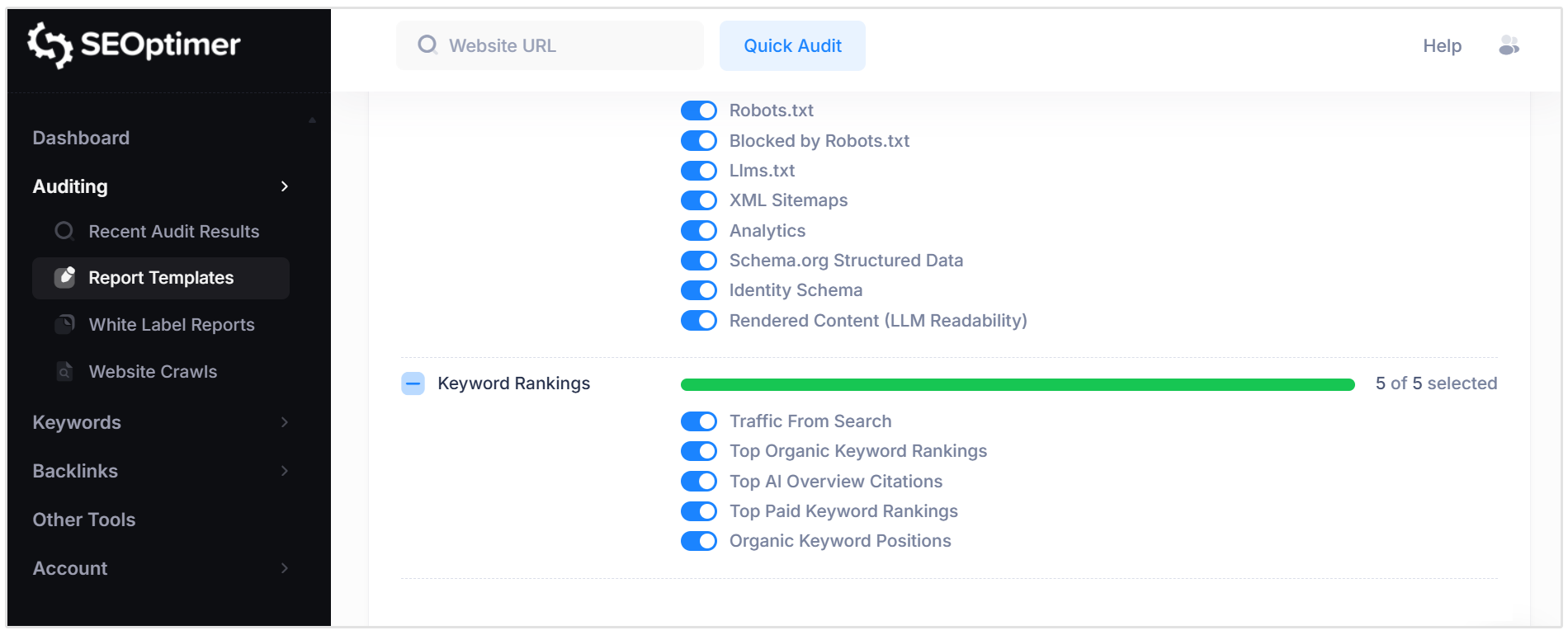
Run Free AuditIf you’d like to customize your reports, you can easily choose to show or hide these checks in the "Checks and Sections" area of your report template settings.
This gives you full control over which insights are visible to your clients or team members.
These new additions mark the first step in helping you optimize not just for traditional search engines, but for AI search.
If you want to learn more about this new era of AI and search, check out these helpful resources from our blog: