


Competitive intelligence in SEO is the process of analyzing your market rivals to understand their tactics, strengths, and weaknesses.
It is not about copying what competitors are doing. It is about gathering data to make informed decisions that can help you improve your keyword rankings.
By looking at who ranks above you and why, you can uncover the blueprint for your own success.
This guide explores exactly what SEO competitive intelligence is, why it is essential for your organic marketing strategy, and the practical steps you can take to gather these insights.
What is Competitive Intelligence in SEO?
Competitive intelligence for SEO is the practice of collecting and analyzing data about your competitors’ organic search performance.
Competitive intelligence in SEO goes beyond simply knowing who your competitors are. It involves a deep dive into their digital footprint to understand the specific strategies driving their traffic.
When you perform competitive intelligence, you are looking for the "why" and "how" behind their rankings.
You are investigating their keyword choices, the structure of their content, the quality of their backlinks, and the technical health of their websites.
Think of it as reverse-engineering their success.
If a competitor ranks #1 for a high-value keyword, competitive intelligence helps you deconstruct that page to see if they are winning because of superior content depth, faster page load speeds, or a stronger backlink profile.
Why is Competitive Intelligence Important?
It Removes the Guesswork
SEO can often feel like a trial-and-error process. You might write a blog post and hope it ranks. Competitive intelligence changes this.
Competitive intelligence is essential for SEO because it helps identify what’s already working in your market and where opportunities exist.
By understanding competitors’ strengths, gaps, and strategies, you can prioritize the right keywords, content formats, and link-building efforts. This insight reduces guesswork and allows you to make more data-driven SEO decisions.
- Alexa Rees, Senior SEO Strategist at seoplus+
It Uncovers Market Gaps
Your competitors might be dominating certain high-volume keywords, but they are likely neglecting others.
Competitive intelligence helps you spot these topics relevant to your audience that your competitors haven't covered well. These content gaps represent low-hanging fruit where you can gain easy traffic.
It Highlights Emerging Trends
If you notice several competitors suddenly creating content around a specific new topic or optimizing for a new feature (like AI Overviews), it is a strong signal of a shifting market trend.
Monitoring these moves allows you to adapt quickly rather than playing catch-up later.
It Benchmarks Your Performance
Success is relative. You might be happy with a 20% increase in traffic, but if your main competitor grew by 50% in the same period, you are actually losing share of voice in search.
Competitive intelligence gives you the context needed to set realistic and ambitious goals.
What Can You Learn from SEO Competitive Intelligence?
The data you gather is only as good as the insights you draw from it.
Here are the key areas where competitive intelligence can provide game-changing information.
Keyword Opportunities
This is often the first stop in any analysis.
You can discover which keywords drive the most traffic to your competitors.
Content Strategies
Analyzing competitor content tells you what your audience actually wants to read. You can learn:
- Content Formats: Are they using long-form guides, videos, or listicles?
- Publishing Frequency: How often are they posting new content or updating old pages?
- Topic Clusters: How are they grouping their content to build authority on specific subjects?
If a competitor’s "Ultimate Guide to X" is ranking #1, you know that to beat them, you need to create something even more comprehensive and valuable.
Backlink and Authority Insights
Backlinks remain a top Google ranking factor.
By analyzing where your competitors are getting their links, you can build a list of outreach targets.
If a specific industry blog linked to three of your competitors, there is a high probability they will link to you too, provided you offer high-quality content.
SERP Features and Search Visibility
Search Engine Results Pages (SERPs) are no longer just a list of ten blue links.
They now include AI Overviews, Featured Snippets, "People Also Ask" boxes, Local Packs, and more.
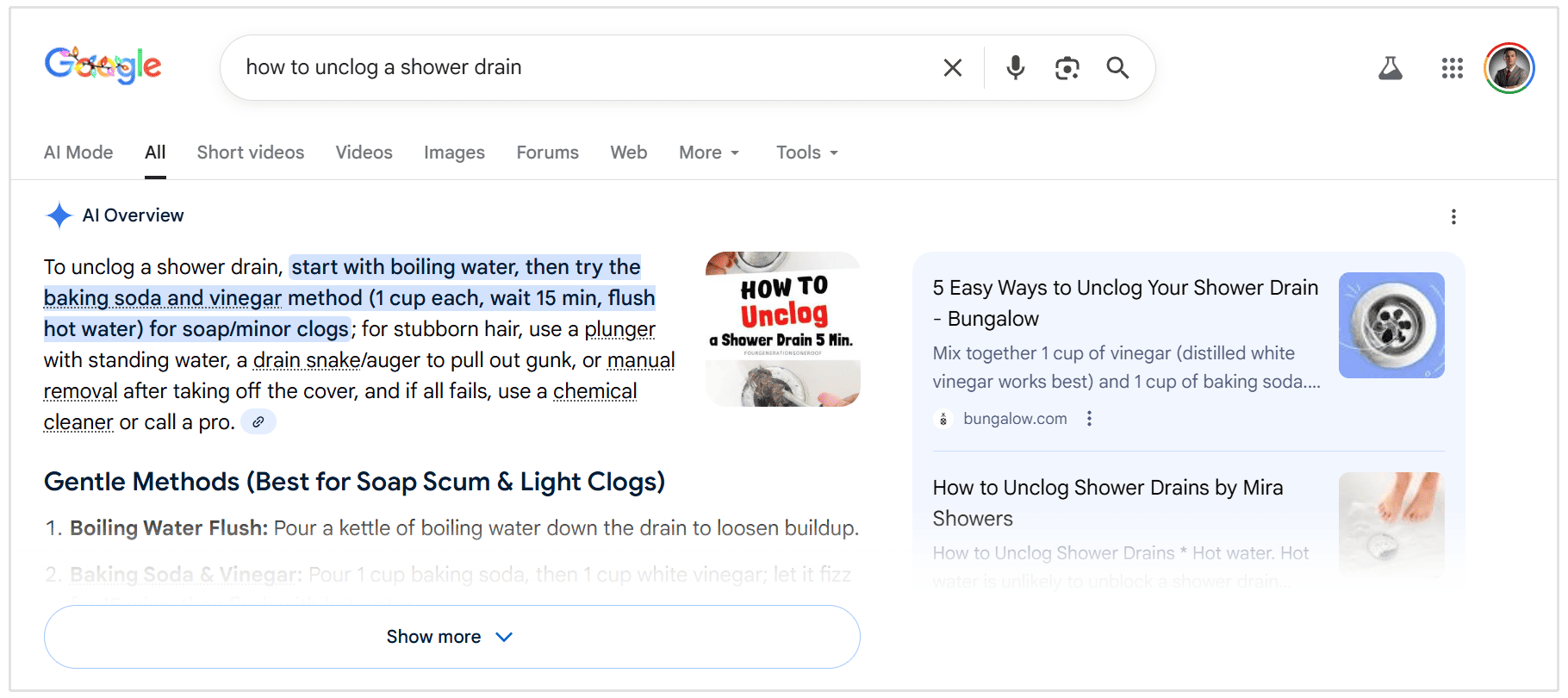
Competitive intelligence reveals if your competitors are winning these features.
If they are mentioned in an AI Overview for a key search term, you can analyze their formatting (e.g., using clear bullet points or definitions) to try and steal that spot.
One of the most valuable resources I find when conducting competitor research is the SERPs themselves. It almost sounds too simple, but really everything you need is right there. Look at what’s ranking higher for the key phrases you want to own.
What formats are winning, how deep the content goes, what questions are being answered, and what Google seems to reward.
- Taylor Darling, Content Strategist at Crimson Park Digital
How to Gather Competitive Intelligence for SEO
Now that we understand the "what" and "why," let’s look at the "how."
Analyzing Competitor Keywords
Start by identifying the keywords that are bringing your competitors the most traffic.
You want to look for two things:
- Head Terms: High-volume, broad keywords that drive massive traffic but are hard to rank for.
- Long-Tail Keywords: More specific, lower-volume phrases that often convert better because the user intent is clearer.
To find their top keywords, I'd suggest using SEOptimer's Keyword Research tool.
Simply paste your competitor's domain in the "Search by Domain" tab in the keyword research tool.
The tool will show you the keywords that your competitors are ranking for and those that are driving the most traffic to their site.
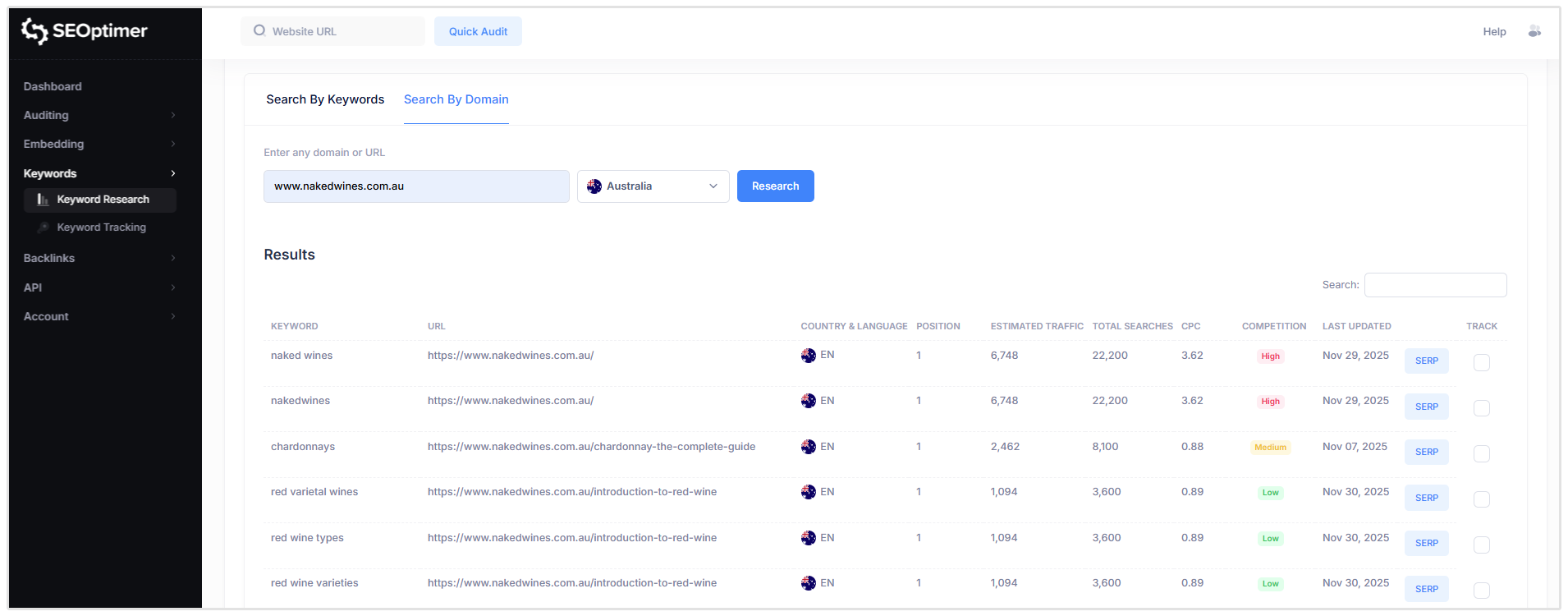
Look at the specific pages ranking for these keywords.
Are they product pages or blog posts?
This helps you understand search intent so you can match it.
Reviewing Competitor Content Performance
Next, you want to review your competitor's content and how it performs on different platforms and marketing channels.
You should try to find which of their pages get the most shares on social media and which pages attract the most backlinks.
When reviewing their content, ask these questions:
- Is their content easier to read than mine?
- Do they use custom images or generic stock photos?
- Is the content up-to-date, or is it referencing old data?
If you find a high-performing article that hasn't been updated in two years, that is a prime opportunity for you to swoop in with a fresh version of that topic.
Tracking Backlinks and Referring Domains
You need to know who is talking about your competitors and giving them backlinks.
For this, you should use a backlink research tool to see their "referring domains" (the unique websites linking to them).
SEOptimer's Backlink Research tool will show you all the domain metrics you need for effective competitor intelligence.
Just add your competitor's domain and click on "Research".
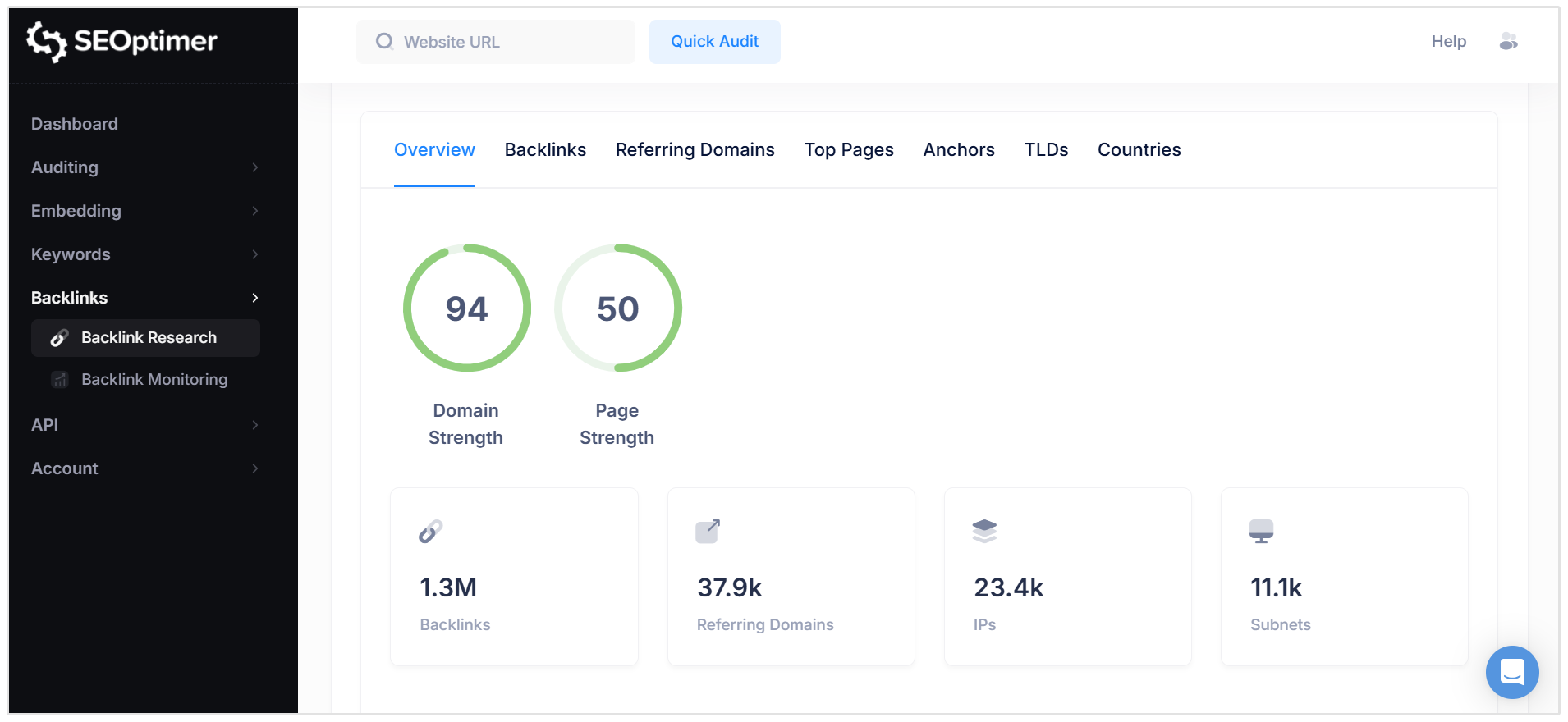
Next, you'll see an overview of the competitor's backlink profile, including their Domain Strength, Page Strength, Backlinks, Referring Domains, and more.
The "Backlinks" tab is where you'll see more specific details on the links pointing to their domain.
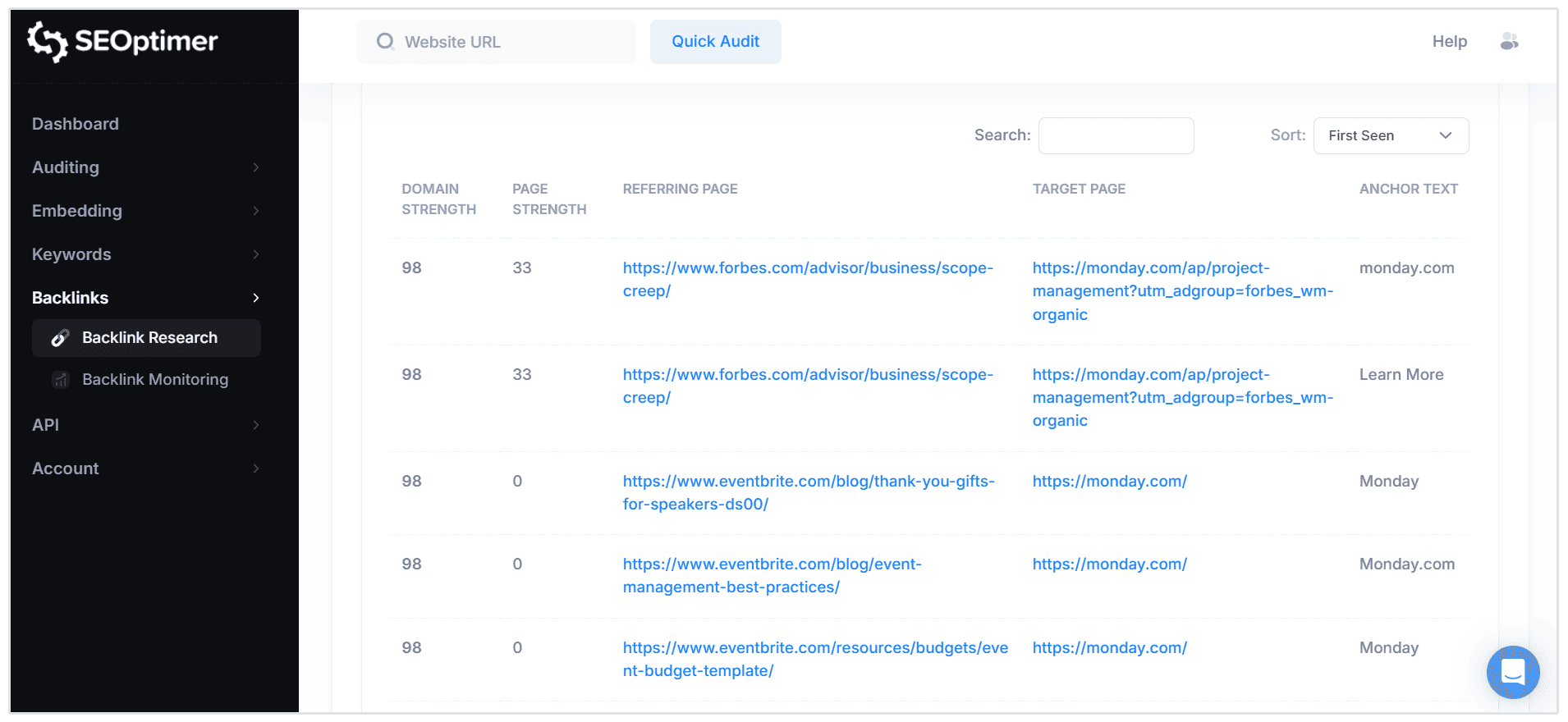
You'll see the following:
- Page Strength and Domain Strength
- Target Page
- Referring Page
- Anchor Text
- Follow or Nofollow
In the table, you should try to identify any common patterns.
Again, you can ask yourself some questions to assist your analysis:
- Are they getting a lot of links from guest posts?
- Are they being mentioned in news articles?
- Do they have strong partnerships with suppliers who link to them?
- Do they have a lot of link placements in directories and review sites?
This analysis helps you build your own link-building strategy based on proven sources rather than shooting in the dark.
Evaluating Technical SEO Signals
Sometimes, a competitor beats you simply because their site works better.
Technical SEO intelligence involves checking:
- Site Speed: Do their pages load instantly?
- Mobile Experience: Is their site easy to navigate on a phone?
- Site Structure: Is it easy to find content, or is it buried deep in the site?
If your competitor has a high Core Web Vitals score and you don't, no amount of keyword stuffing will save you. You need to fix the technical foundation first.
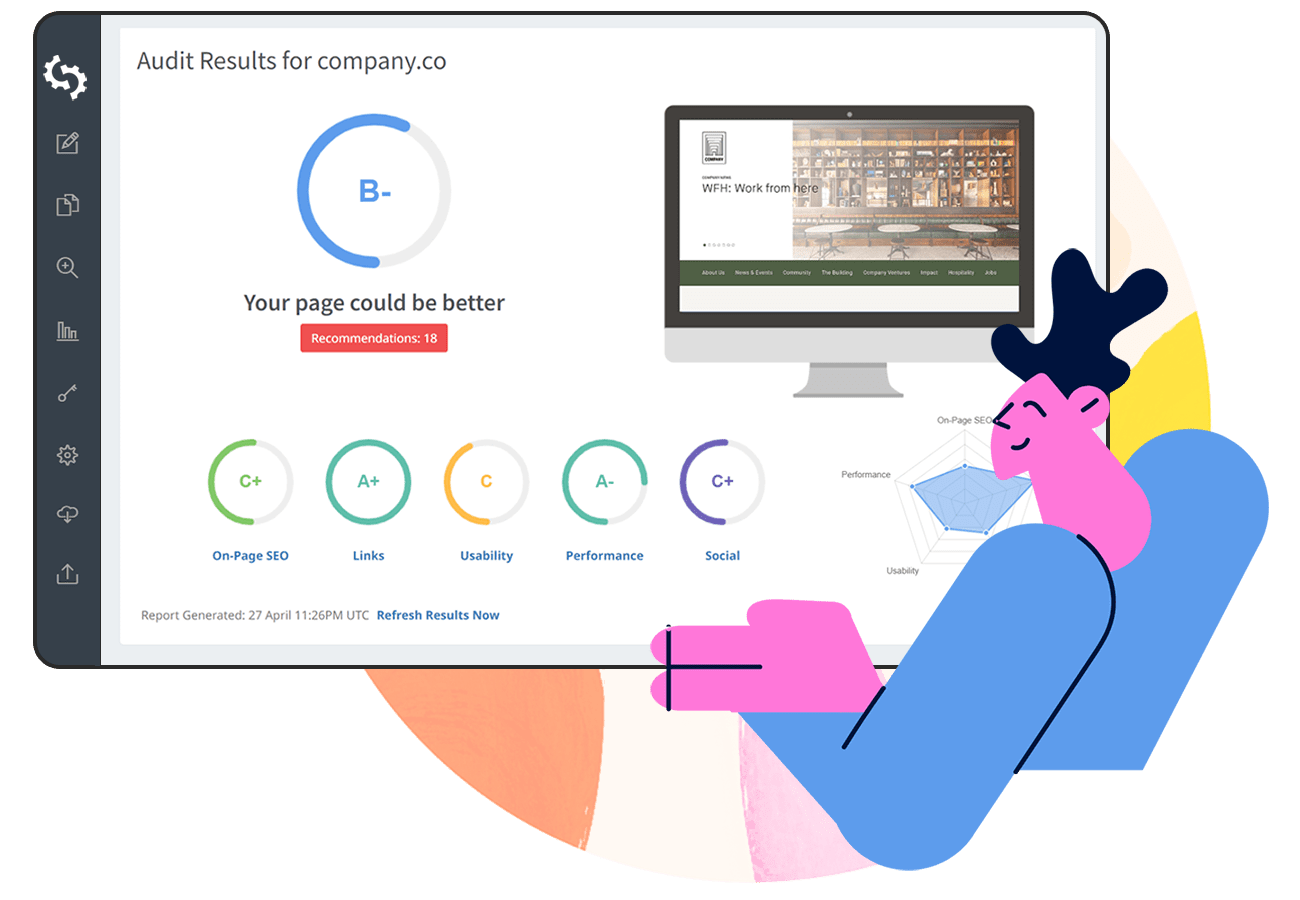
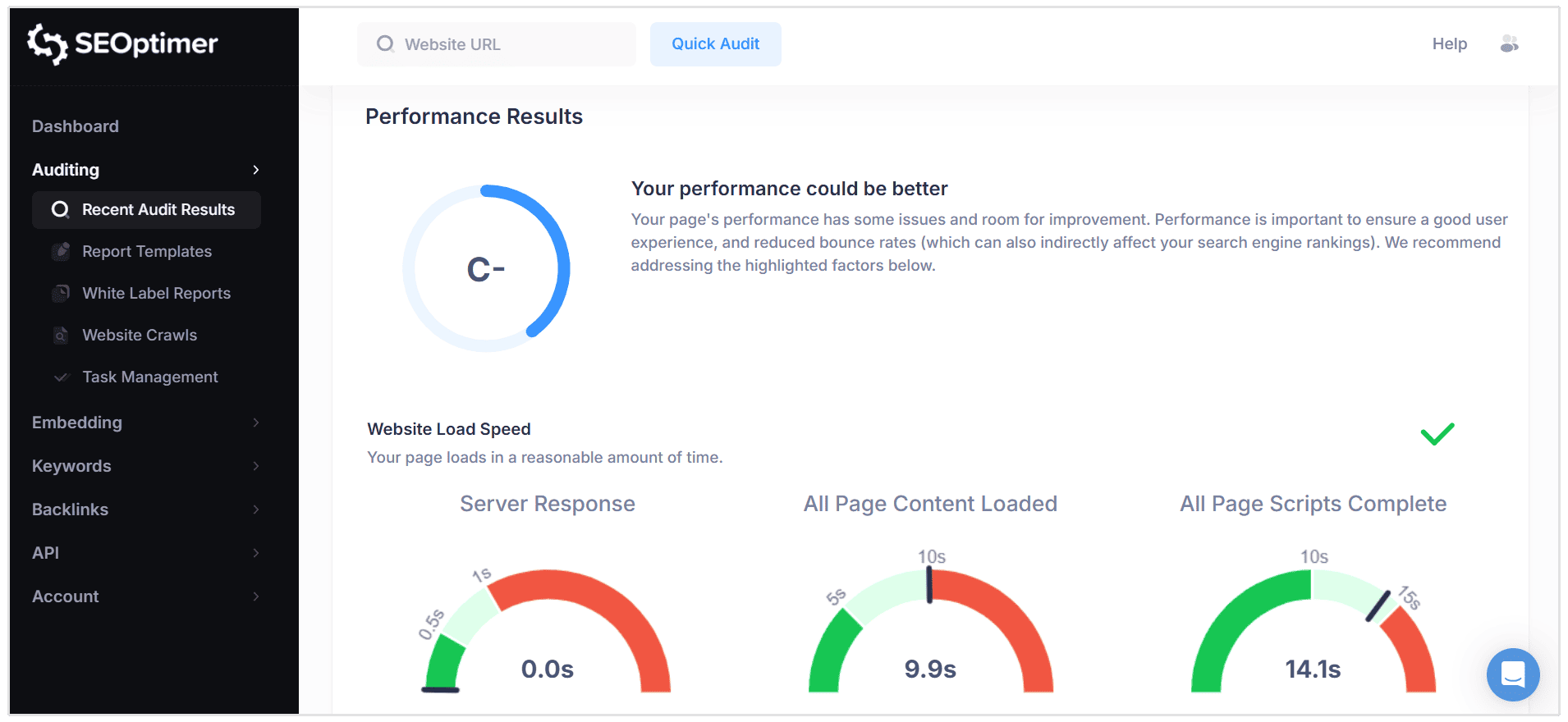
To compare your competitor's technical performance with yours, I'd suggest running a free audit with SEOptimer.
You'll be able to see a bunch of useful data points.
Each website audit checks:
- On-page SEO
- Rankings
- Off-page SEO (backlinks)
- Usability across different devices
- Performance (this includes website loading speed, website download size, compression rates, and more)
When evaluating their technical SEO signals, you're going to be spending most of your time looking at the Usability and Performance sections of the website report.
Monitoring Competitor Changes Over Time
Competitive intelligence isn't a one-time task. The SERPs change daily.
You need to monitor your competitors for significant changes in their rankings.
Tracking these changes over time helps you correlate specific actions with results, giving you a clearer picture of cause and effect in SEO.
My team and I track competitors nonstop. If someone starts climbing fast, we immediately look at what they changed. New backlinks, content updates, schema tweaks, it’s usually one of those. Figuring out their playbook early puts our client ahead of the curve.
- Ivan Vislavskiy, CEO and Co-founder of Comrade Digital Marketing Agency
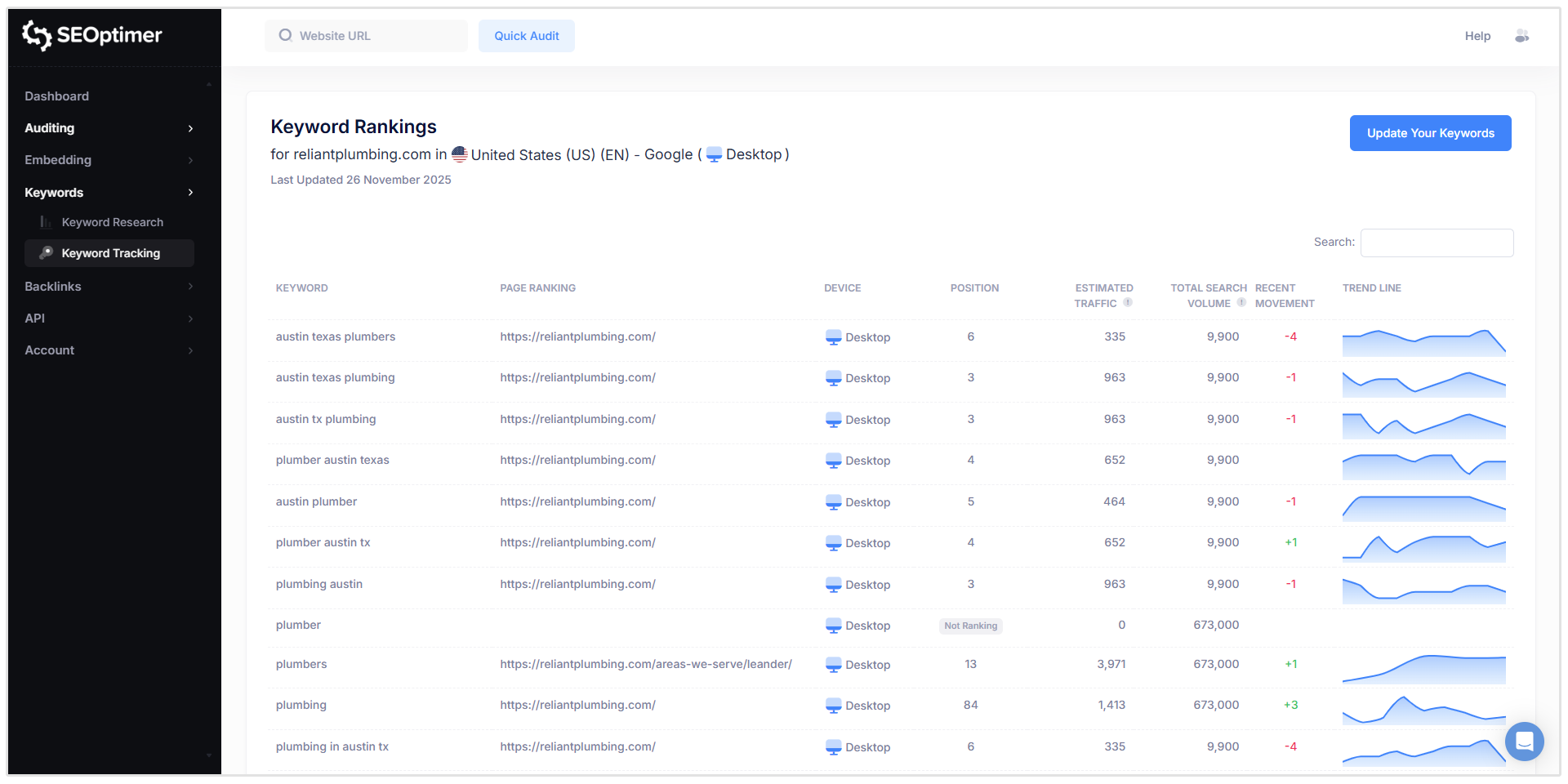
Now, you could manually record how their rankings are changing, or you could just automate the process by using a keyword tracking tool. SEOptimer offers one of the most accurate rank trackers on the web.
You can easily set up keyword tracking on both Google and Bing search engines. Users can also track rankings on Desktop and/or Mobile devices.
Our tool will monitor rankings and update weekly to show you how your competitor's rankings change.
Best SEO Competitive Intelligence Tool
While you can do some of this research manually, it is incredibly time-consuming and often inaccurate.
To get reliable data at scale, you need the right tools.
While there are many expensive enterprise suites out there, you need a solution that balances power with usability.
Why SEOptimer is the Smart Choice
For most businesses and agencies, SEOptimer stands out as the ideal tool for gathering competitive intelligence without the steep learning curve or excessive price tag of legacy tools.
SEOptimer offers a comprehensive suite of features designed specifically for competitive analysis:
- Keyword Research Tool: You can quickly uncover high-volume keywords your competitors are targeting. The tool provides data on search volume, competition levels, and even estimated Cost Per Click (CPC), helping you prioritize the terms that will bring the highest ROI.
- Backlink Checker: Understand exactly who is linking to your competitors. SEOptimer’s backlink tool helps you inspect domain authority and identify the specific pages earning links, giving you a roadmap for your own outreach.
- SEO Crawler & Audit: You can run crawls and audits on competitor sites to see their technical strengths and weaknesses. If you spot that a competitor has poor mobile optimization or slow load times, you know exactly where you can outperform them.
- Keyword Tracking: Once you launch your strategy, SEOptimer allows you to track your rankings.
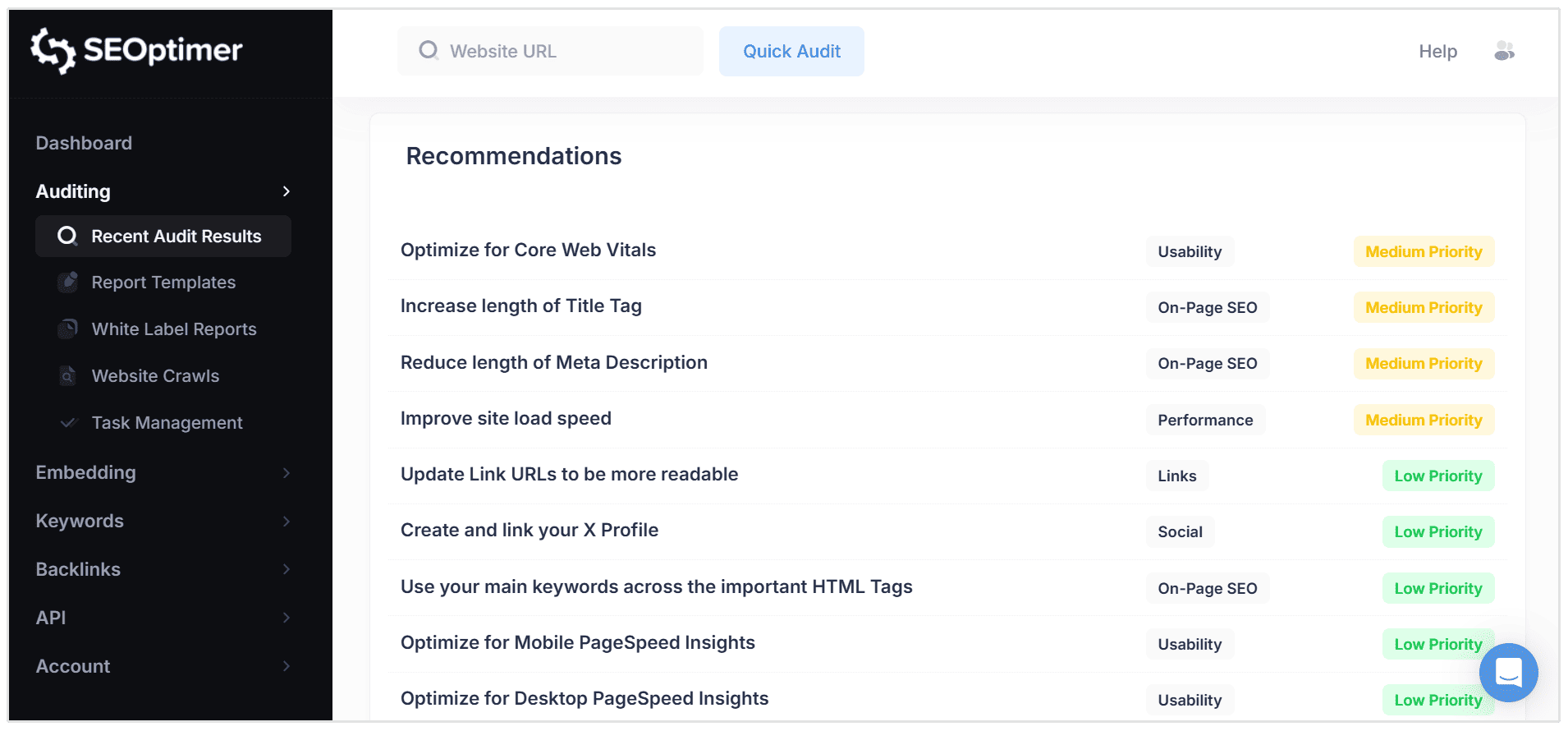
What makes SEOptimer particularly valuable is its focus on actionable reporting.
Instead of drowning you in raw data, it provides clear recommendations and instructions on how to fix each problem on your website.
Whether you are a small business owner doing it yourself or an agency generating white-label reports for clients, SEOptimer simplifies the complex process of competitive intelligence.
FAQ
Is competitive intelligence ethical?
Yes, absolutely. Competitive intelligence involves analyzing publicly available information. You are looking at search results, public content, and code that is visible to any browser.
How often should I perform competitive analysis?
You should run a quick check monthly to spot any major moves.
However, a deep-dive analysis should be performed quarterly or whenever you are planning a major new content campaign.
With SEOptimer, you can set up monthly or weekly audits to run automatically and be sent to your email.
Can I do this without tools?
Technically, yes, but it is very limited and tools like SEOptimer can save you hundreds of hours.
You can manually search keywords to see who ranks, but you won't be able to see backlink data, search volumes, or technical health scores without software.
What if my competitor is a huge brand?
If you are competing against giants, don't try to beat them on broad head terms (e.g., "running shoes").
Use competitive intelligence to find long-tail keywords they are ignoring (e.g., "best trail running shoes for flat feet"). Big brands may leave gaps that smaller, agile competitors can fill.
Conclusion
Competitive intelligence in SEO is the difference between hoping for traffic and engineering it. By taking the time to analyze your competitors, you move away from guesswork and toward a data-backed strategy.
You don't need to reinvent the wheel. The answers to "what should I write about?" and "how do I rank higher?" are often hiding in plain sight—on your competitors' websites.
By analyzing their keywords, content, backlinks, and technical setup, you can build a detailed SEO roadmap.
Remember, the goal isn't to obsess over every move a competitor makes, but to use their data to make your own site better, faster, and more relevant to your users.
So begin here: Identify your top three competitors, run their sites through a tool like SEOptimer, and discover the opportunities you have been missing.