Free Ping Tester
The Free Ping Tester will query your website to determine if there is a response and the delay time.
Site to Ping
Result
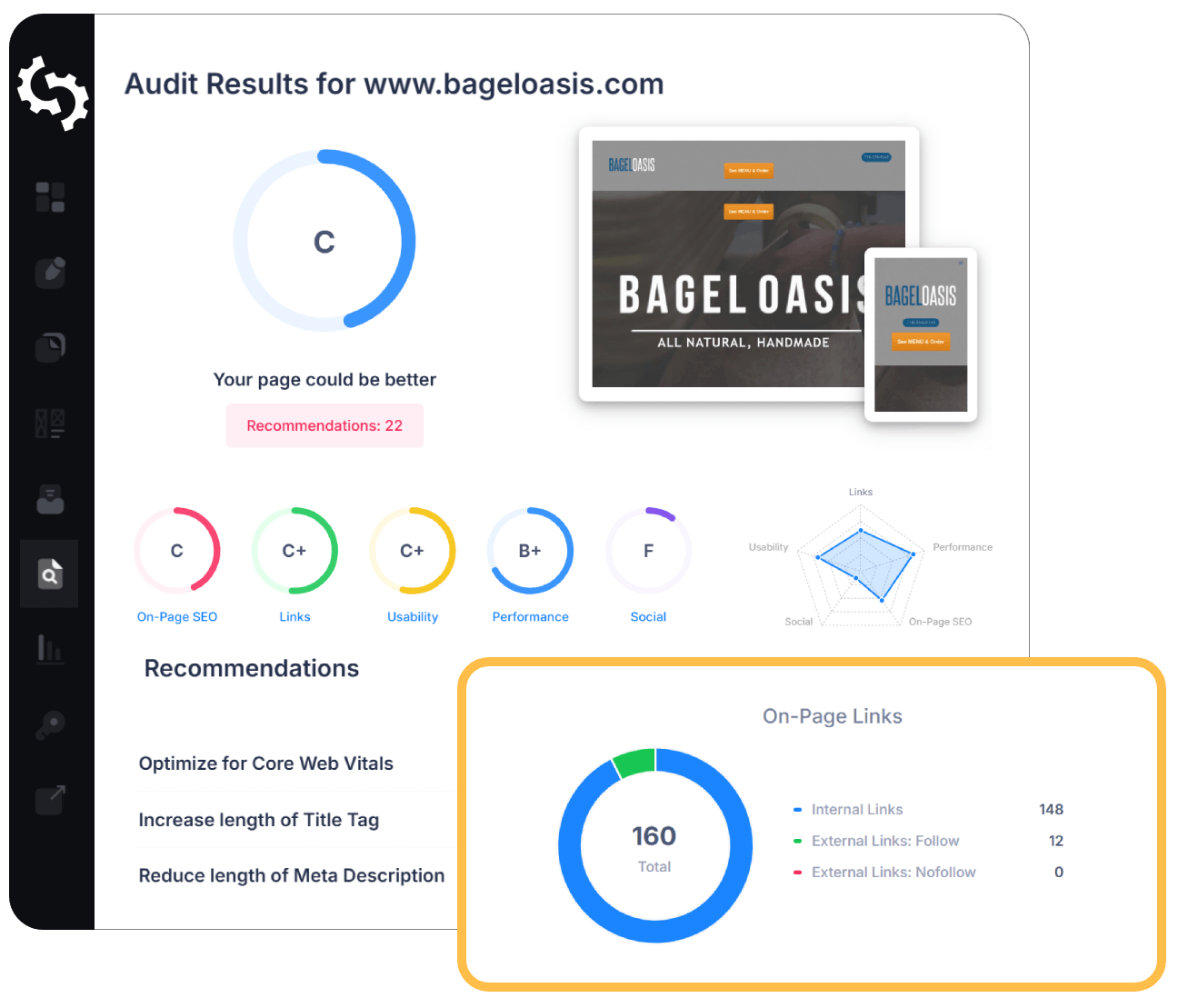
SEO Audit Any Site in Seconds
+ Comprehensive SEO / GEO Tools for Every Function
Run over 100 checks on your website across On-Page SEO, Usability, Performance, Social and Links. Now with GEO in every report. SEOptimer also offers keyword research, rank tracking, backlinks and a full site crawler.

About Website Ping Tests
What is a website ping?
A ping sends a very small message to a server and measures how long the reply takes to come back. It is the simplest possible question one machine can ask another: are you there, and how far away are you.
It operates well below the level of your website. A ping never requests a page, runs any code, or touches your application, so it measures the network path and the server being awake, nothing more.
That narrowness is the point. When a site is misbehaving, a ping test separates two very different problems: the server being unreachable, and the server being reachable but slow to build pages.
What counts as a healthy ping?
The number is a round trip in milliseconds, and it is dominated by physical distance. Within the same country, anything under 50ms is good. Across a continent, 50 to 100ms is normal. Between continents, 150 to 300ms is expected and nothing to worry about.
Consistency matters more than the raw figure. Several pings returning 40, 42 and 41ms describe a healthy path; 40, 300 and 45ms describe an unstable one, and instability causes more visible problems than a uniformly higher number.
Packet loss is the other half of the reading. If some replies never arrive at all, the connection is dropping traffic, which browsers hide by retrying and users experience as a page that sometimes stalls for no reason.
Why a server might not respond to a ping
A failed ping does not mean a site is down, and this catches people out constantly. Many servers, firewalls and CDNs are configured to ignore ping requests deliberately, because responding to them makes a host easier to find and easier to attack.
Cloud platforms and CDN providers block them as a matter of course. If your site sits behind a major CDN, a silent ping is the expected result rather than a fault, and the address being pinged is the edge rather than your server anyway.
The reliable interpretation is asymmetric: a good ping tells you the path is healthy, while a failed ping tells you very little on its own. Load the site in a browser before concluding anything from silence.
What a ping test is good for
A ping is a narrow measurement, and that is exactly why it is useful. When something is wrong, it answers the first question worth asking - is the machine reachable at all - before you spend time on anything more complicated.
It also remains the quickest way to sanity-check network distance. If a server on another continent is answering slowly, no amount of caching or code optimisation changes the physics, and a CDN is the actual answer.
For everyday performance work, server response time is the more useful measurement, because it includes the part where your application does its work.
How this relates to AI search
Ping itself has no bearing on how content is read or cited. Crawlers make HTTP requests rather than ping requests.
Reachability underneath it does matter. A server that is intermittently unreachable, or that drops traffic under load, is a server that gets crawled less thoroughly, and the gaps that creates are invisible from the inside.
Aggressive firewall rules are the common cause worth checking. Configurations written to block scrapers frequently catch legitimate crawlers in the same net.
What this tool checks
The ping tester sends a small number of requests to the host behind the domain you enter and reports the round trip time for each, along with any that received no reply.
It measures the network path to whatever answers publicly, which behind a CDN is an edge server rather than your origin. Read it as a check on reachability and distance rather than as a measurement of your site.
Where to go next
A ping only tells you the server is reachable. Measure how long it takes to actually build a page with the website load speed test, confirm which IP address is answering, and check the web server and DNS configuration behind it.
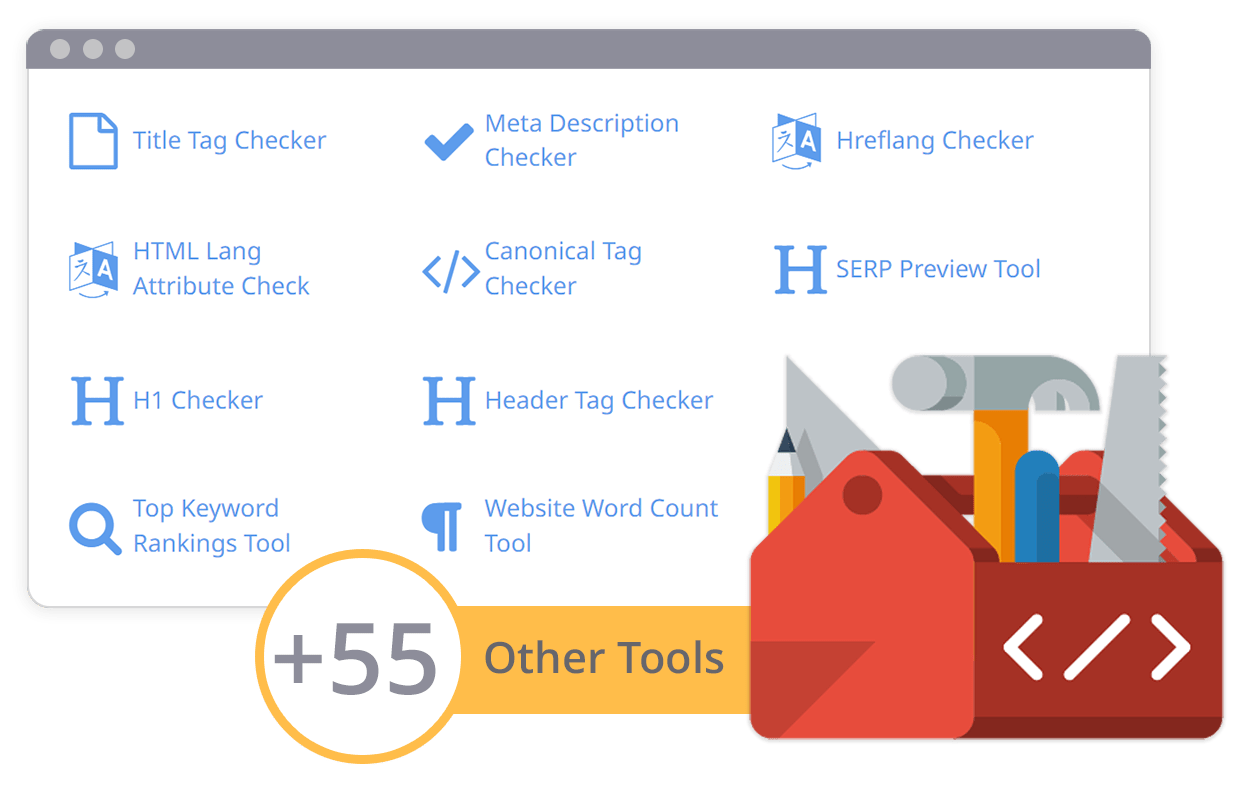
Comprehensive SEO Toolbox with over 55 Tools
Check Titles, Meta Descriptions, Headings, Schema, Core Web Vitals, SSL and Robots.txt. Generate Meta Tags, Sitemaps and .htaccess Rules, minify CSS, JS and HTML, and draft copy with our AI Writing Tools - instantly and for free.
Further Reading
See More
Page Speed: What It Is, and How It Impacts SEO
What is Page Speed?
The term page speed refers to the amount of time your media content or web page will take to download from the...

How to Measure SEO Performance: 9 SEO Metrics You Need to Track
Your value as an SEO comes from your ability to demonstrate your results.
It’s being able to point to the search results and say, “You...