Check the Web Server being used by a Website
SEOptimer’s Web Server Checker tool identifies the web server software powering a website.
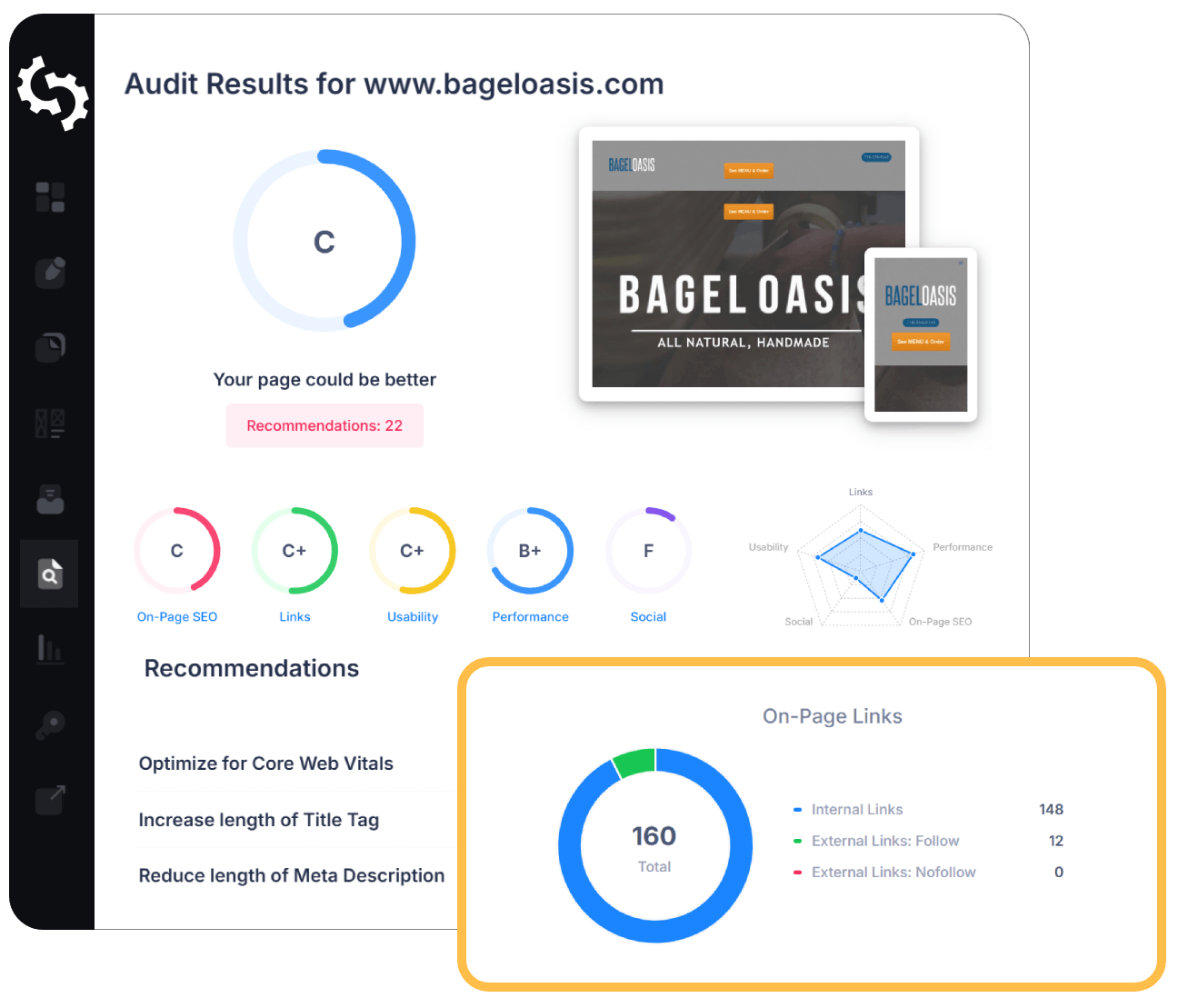
SEO Audit Any Site in Seconds
+ Comprehensive SEO / GEO Tools for Every Function
Run over 100 checks on your website across On-Page SEO, Usability, Performance, Social and Links. Now with GEO in every report. SEOptimer also offers keyword research, rank tracking, backlinks and a full site crawler.

About Web Server Software
What is web server software?
The web server is the program that receives requests and returns responses. Apache, Nginx, LiteSpeed and IIS are the common ones, and most announce themselves in a response header without being asked.
Behind a CDN the header often reports the CDN rather than the origin, which is why the answer is sometimes less informative than it looks. Some operators also suppress the header deliberately, on the reasonable grounds that advertising your software version helps nobody but an attacker.
A web server check tells you what is answering publicly. That is useful for understanding a site you did not build, and for confirming that a migration or a CDN rollout actually took effect.
Does the server software still matter in 2026?
Not for ranking. Every mainstream server can be configured to serve pages quickly and correctly, and the difference between them is dwarfed by how well any of them is configured.
What matters is the configuration itself: compression, caching, HTTP/2 or HTTP/3, TLS settings and sensible rate limits. Those are where real gains live, and they are largely independent of which software is underneath.
Knowing the server does help you predict the shape of a problem. Apache uses .htaccess files that Nginx ignores entirely, and a rule someone wrote for one will silently do nothing on the other.
How the server relates to AI search
Only through reliability and speed. A server that responds slowly, or fails under crawler load, gets less of its content read.
Rate limiting deserves particular attention here. Aggressive limits aimed at scrapers routinely block legitimate search and AI crawlers as collateral, quietly removing a site from the pool of sources without anything visibly breaking.
That failure is invisible from the inside, because the site works perfectly for every human who visits it.
Server best practices
- Keep the software patched; this is a security matter more than a performance one.
- Enable compression, caching and a modern HTTP version.
- Consider suppressing detailed version numbers in response headers.
- Set rate limits that stop abuse without blocking search and AI crawlers.
- Check crawler access explicitly after any firewall or CDN change.
- Monitor response times under real load rather than trusting an idle benchmark.
What this tool checks
The tool reads the server header from the response and reports what it says.
It is informational, and the value may identify a CDN rather than the origin server, or be deliberately suppressed. An empty result is a configuration choice rather than a fault.
Where to go next
The server decides how quickly and reliably everything else arrives. Measure how long it takes to respond with the website load speed test, confirm it is negotiating HTTP/2, and check that responses are compressed.
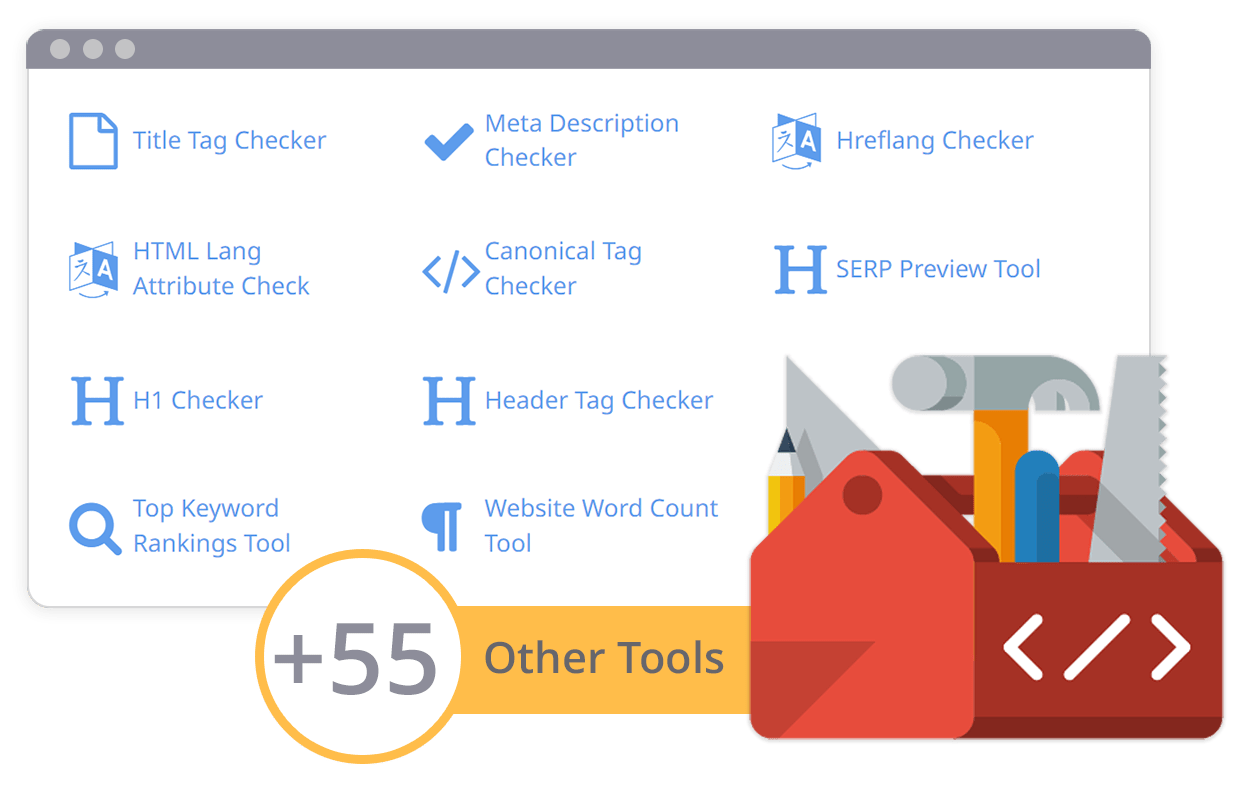
Comprehensive SEO Toolbox with over 55 Tools
Check Titles, Meta Descriptions, Headings, Schema, Core Web Vitals, SSL and Robots.txt. Generate Meta Tags, Sitemaps and .htaccess Rules, minify CSS, JS and HTML, and draft copy with our AI Writing Tools - instantly and for free.