Website DNS Lookup Tool
SEOptimer’s Website DNS Lookup Tool performs a DNS lookup to display detailed information about a website's domain name system records
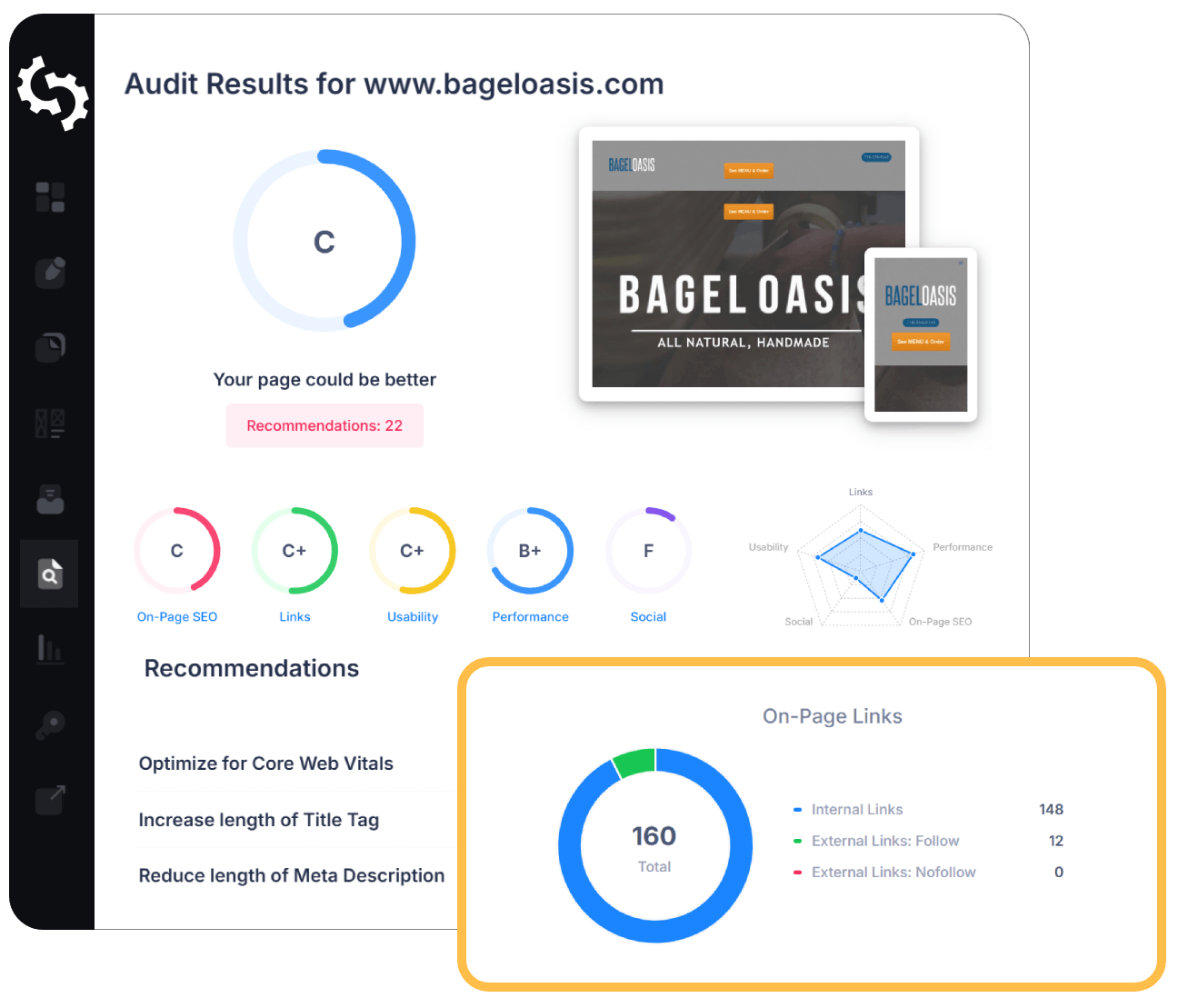
SEO Audit Any Site in Seconds
+ Comprehensive SEO / GEO Tools for Every Function
Run over 100 checks on your website across On-Page SEO, Usability, Performance, Social and Links. Now with GEO in every report. SEOptimer also offers keyword research, rank tracking, backlinks and a full site crawler.

About DNS Records
What is DNS?
DNS translates a domain name into the server address a browser needs to connect to. Every visit begins with a DNS lookup, before any content is requested, which makes it the first thing that can go wrong and the last thing anyone checks.
A domain carries several record types serving different purposes. A and AAAA records point at servers, CNAME creates an alias to another name, MX directs email, NS names the servers authoritative for the domain, and TXT carries verification strings and email policy such as SPF and DMARC.
A DNS lookup tool shows you what a domain currently resolves to from the outside, which is frequently different from what the person who configured it believes.
Why DNS is worth checking
It is the single point of failure nobody thinks about until it breaks. A DNS misconfiguration does not degrade a site, it makes it vanish, and it takes the email with it.
Lookup speed also contributes to load time on every first visit, before any of your performance work applies. DNS providers differ measurably here, and the slow ones are usually the free ones bundled with a registrar.
Ownership is the quieter risk. Domains are the asset most often lost track of, and a domain that expires or whose records nobody can edit is a business problem rather than a technical one.
How DNS relates to AI search
Crawlers resolve domains like any other client. Slow or unreliable resolution means fetches that fail or time out, and a domain that intermittently fails to resolve is one that gets visited less often.
The records themselves carry no meaning for content, but they determine whether content is reachable at all, which makes them upstream of everything else in this list.
Propagation is worth understanding for the same reason. A change made today may be visible to some crawlers and not others for as long as the previous TTL allows.
DNS best practices
- Use a reputable provider with redundant nameservers in different locations.
- Keep TTLs sensible, and lower them well ahead of a planned migration.
- Remove records for services you no longer use; stale entries are a security risk as well as clutter.
- Keep SPF, DKIM and DMARC records current if the domain sends email.
- Enable registrar lock and keep the renewal payment method current.
- Document who controls the domain and where, before you need to know urgently.
What this tool checks
The DNS lookup tool queries DNS for the domain and reports the records it finds.
It is informational rather than pass or fail, giving you a view of the current configuration as the outside world sees it. Whether that configuration is correct depends on what you intended, which the tool cannot know.
Where to go next
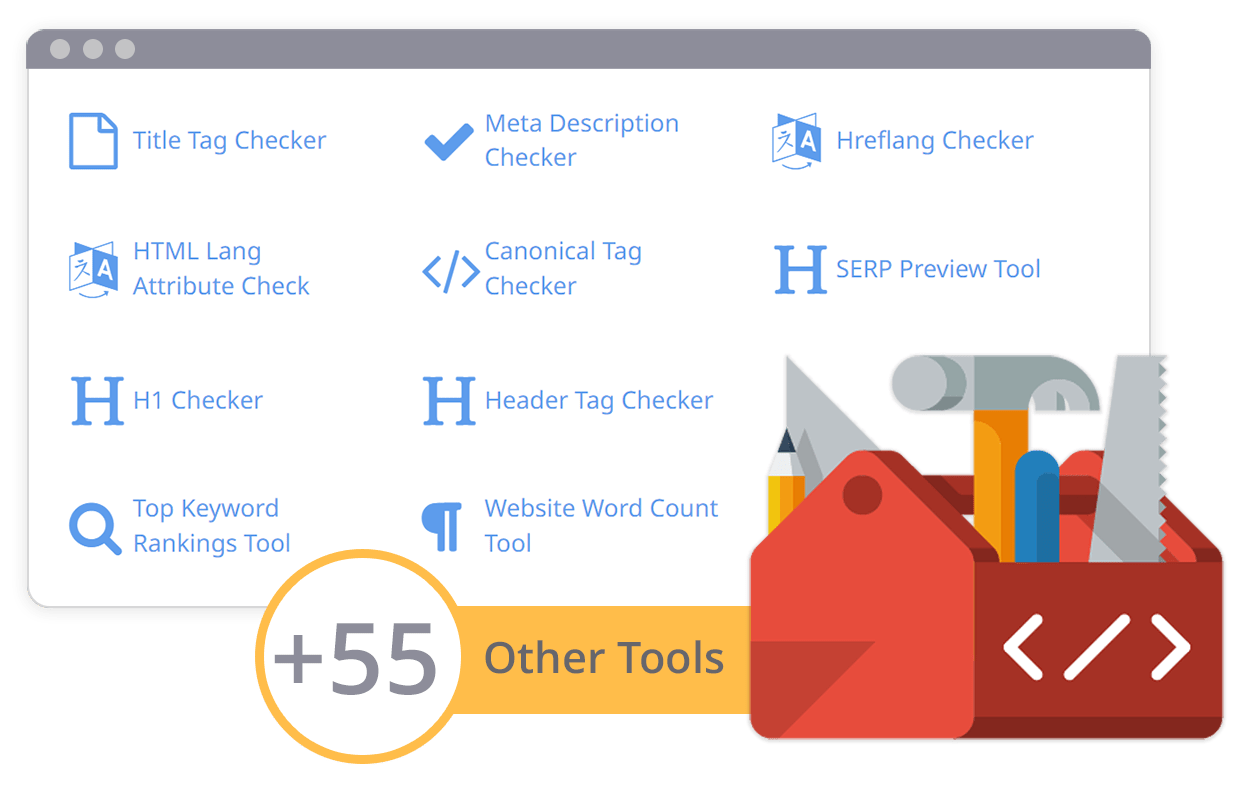
Comprehensive SEO Toolbox with over 55 Tools
Check Titles, Meta Descriptions, Headings, Schema, Core Web Vitals, SSL and Robots.txt. Generate Meta Tags, Sitemaps and .htaccess Rules, minify CSS, JS and HTML, and draft copy with our AI Writing Tools - instantly and for free.