Free Open Graph Generator
Generate the Open Graph tags that control how your page looks when it is shared on Facebook, LinkedIn and anywhere else that reads them.
Output
Your Open Graph Tags:
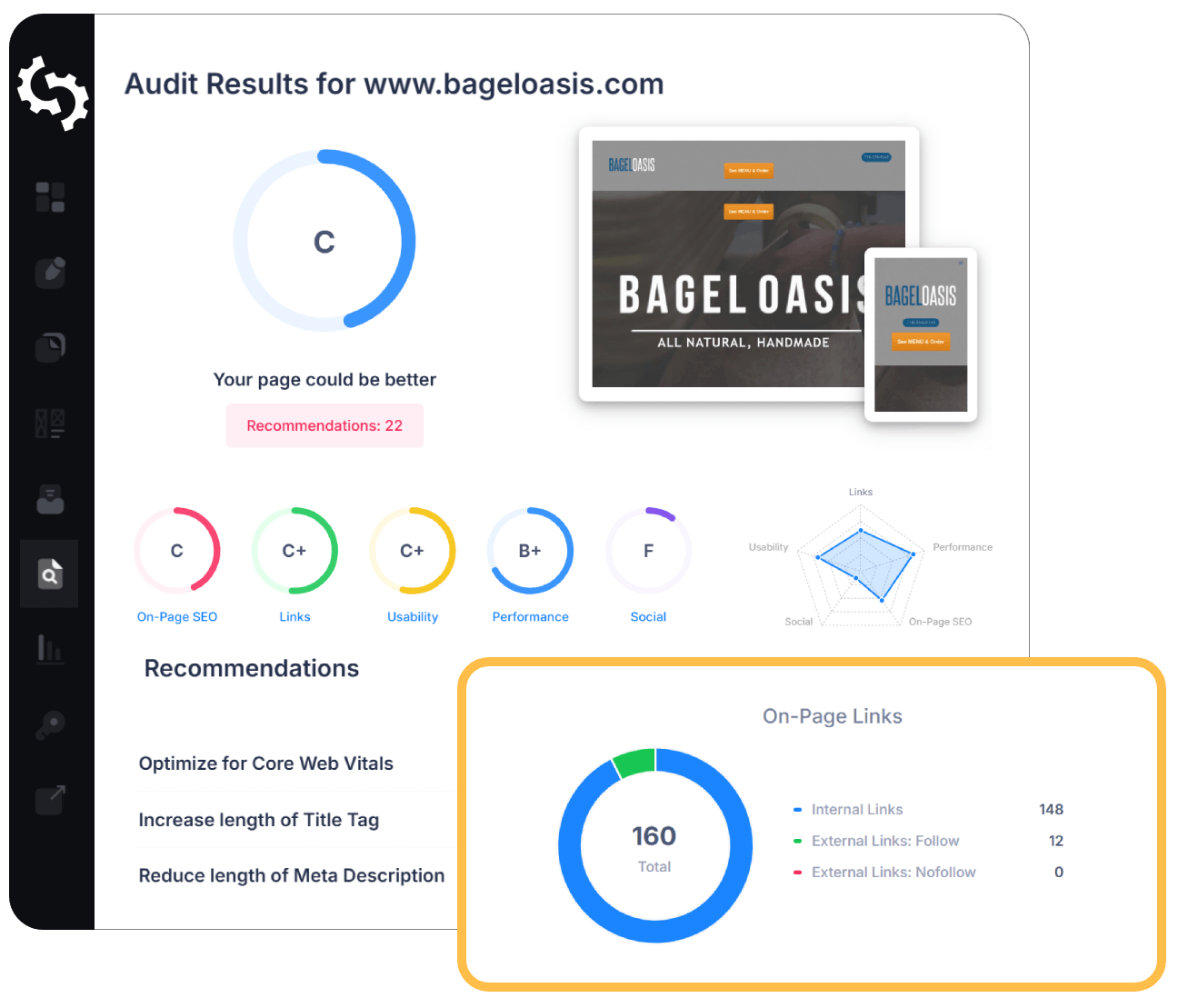
SEO Audit Any Site in Seconds
+ Comprehensive SEO / GEO Tools for Every Function
Run over 100 checks on your website across On-Page SEO, Usability, Performance, Social and Links. Now with GEO in every report. SEOptimer also offers keyword research, rank tracking, backlinks and a full site crawler.

About Open Graph Tags
What Open Graph tags control
Open Graph tags decide what a link to your page looks like when someone shares it. The headline, the summary beneath it, and the image that takes up most of the card.
Without them the platform guesses, and its guesses are poor: the first image it finds, which is often your logo or a stock photo, and whatever text it can scrape from the top of the page.
The format started at Facebook and is now read by LinkedIn, WhatsApp, Slack, Discord and most other places a link gets pasted. One set of tags covers all of them.
What to set
- og:title - the headline on the card, around 60 characters before it truncates.
- og:description - two lines at most. Say what the reader gets rather than repeating the title.
- og:image - an absolute URL, 1200x630, and the single biggest influence on whether the link is clicked.
- og:url - the canonical URL, so shares of tracking variants all count as the same page.
- og:type and og:site_name - small, and take a second to add.
Common mistakes
- A relative image path, which platforms cannot resolve.
- An image with text so small it is illegible at card size.
- Titles written for search rather than for a person seeing a link in a feed.
- Duplicating the same tags across every page from a template.
- Forgetting the platform caches. Changes need the share debugger to take effect.
Do Open Graph tags affect SEO?
Not directly, and it would be misleading to claim otherwise. They are not a ranking factor.
What they affect is whether a shared link gets clicked, and a link that gets clicked and passed on is worth more than one that scrolls past. That is where the return comes from.
They are also a fallback when other tags are missing, so a page with good Open Graph data is less likely to be represented badly somewhere you did not anticipate.
Using the Open Graph generator
Fill in what applies and paste the result into the head of the page. Per-page tags beat a sitewide default by a wide margin, since the image and headline are what make one page look different from another in a feed.
Then share the page privately once to see the card before anyone else does.
Where to go next
Check what you published with the Open Graph tester, cover X separately with the X Card generator, and confirm the social media links profiles you name are actually linked from the site.
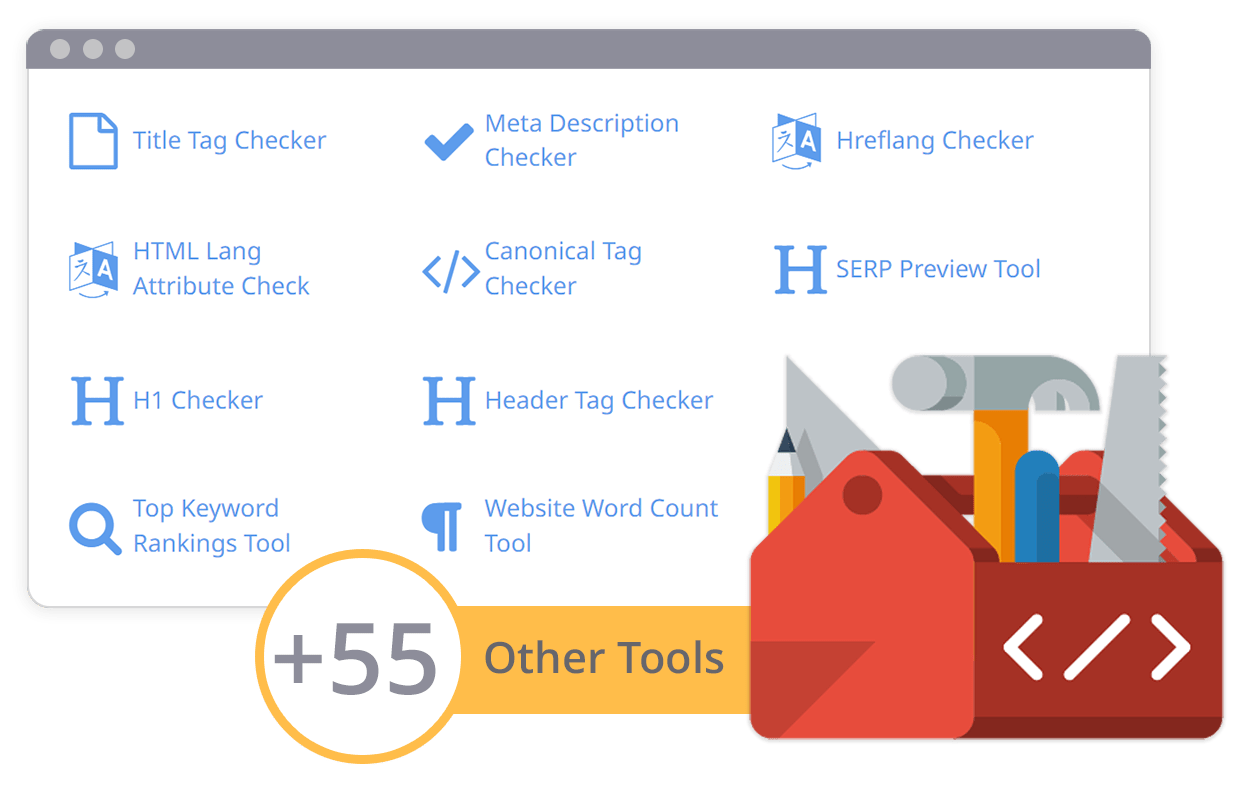
Comprehensive SEO Toolbox with over 55 Tools
Check Titles, Meta Descriptions, Headings, Schema, Core Web Vitals, SSL and Robots.txt. Generate Meta Tags, Sitemaps and .htaccess Rules, minify CSS, JS and HTML, and draft copy with our AI Writing Tools - instantly and for free.
Further Reading
See More
Why are Social Media Links Important for Your Website?
If you’ve created a Facebook page or Twitter account for your business, chances are, you would've already linked to your website within yo...

How to use Social Media Marketing to Promote Your Website
In this day and age, you’d be hard-pressed to find a business that doesn’t have a Facebook page. But if you’re simply posting on your social...

How to Drive Up Your CTR and SEO
What Is CTR?
CTR stands for Click Through Rate, and is defined as the percentage of people who click a search result after seeing it.
To see...
What is a Title Tag? How to Write Better SEO Titles
What is a Title Tag?
A title tag is an HTML element that tells search engines and users what a webpage is about. It appears as the c...